




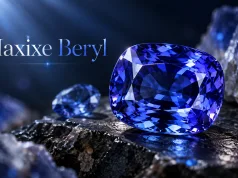

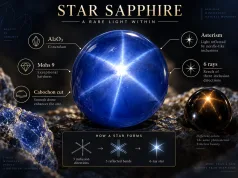
Rare & Unique Gemstones
Rare and unique gemstones represent the most exceptional mineral creations found in nature. These stones are not classified as “precious,” but their scarcity often makes them even more valuable. Examples include alexandrite, which changes color under different light; benitoite, a deep blue gemstone found only in California; and paraíba tourmaline, known for its electric neon blue hues.
These gemstones form under extremely specific geological conditions, often in single localities or limited deposit zones. Some occur only in tiny veins or pockets inside volcanic or metamorphic rock. Their rarity, combined with striking optical characteristics, makes them highly sought after by collectors and gem experts.
Because they are difficult to mine and occur in limited quantities, rare gemstones can reach exceptional market prices. They are ideal for investment collections, museum exhibitions, and high-end custom jewelry. Their distinctiveness lies not only in their appearance but also in the scientific story behind their formation.

Rainbow Hematite
Rainbow hematite is a form of hematite, a common iron oxide mineral with the chemical formula Fe2O3. What sets rainbow hematite apart from typical...

Color Change Garnet
Color Change Garnet is a fascinating and relatively rare gemstone known for its unique ability to change color under different lighting conditions. It is...

Andesine
Andesine is a silicate mineral, a member of the plagioclase feldspar group. Plagioclase feldspars are a series of minerals that form a continuous series...

Green Zircon
Green zircon refers to a variety of the mineral zircon (ZrSiO4) that exhibits a green coloration. Zircon itself is a popular gemstone known for...
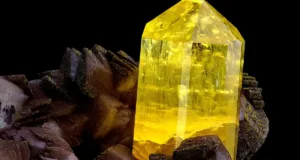
Yellow Apatite
Yellow Apatite is a variety of the mineral apatite, which belongs to the phosphate group. Apatite itself is a group of phosphate minerals that...

Allanite
Allanite is a complex mineral belonging to the epidote group, which consists of silicate minerals. The mineral was first identified by mineralogist Thomas Allan...

Kornerupine
Kornerupine is a mineral that belongs to the cyclosilicate group. It is composed of aluminum, boron, and magnesium, with the chemical formula (Mg,Fe)3Al6(Si,Al,B)5O21(OH). The...

Dravite (Brown Tourmaline)
Dravite is a mineral that belongs to the tourmaline group, which is a group of complex borosilicate minerals. Tourmalines are well-known for their diverse...
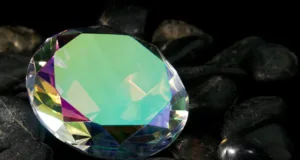
Mystic Topaz
Mystic Topaz is a unique and captivating gemstone known for its stunning rainbow-like iridescence. It belongs to the family of topaz gemstones, but what...
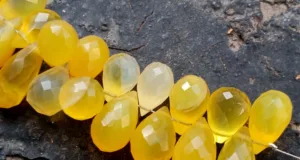
Yellow Chalcedony
Yellow chalcedony is a variety of chalcedony, which itself is a form of microcrystalline quartz. Chalcedony encompasses a broad range of cryptocrystalline quartz varieties...
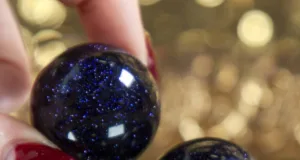
Blue Goldstone
Blue Goldstone is a type of synthetic glass that is often mistaken for a natural gemstone due to its glittering appearance. It is also...
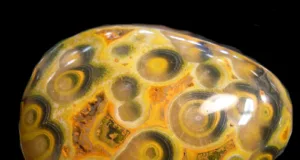
Bumble Bee Jasper
Bumble Bee Jasper, also known as Orpiment or Eclipse Jasper, is a unique and vibrant form of volcanic rock that is primarily composed of...