















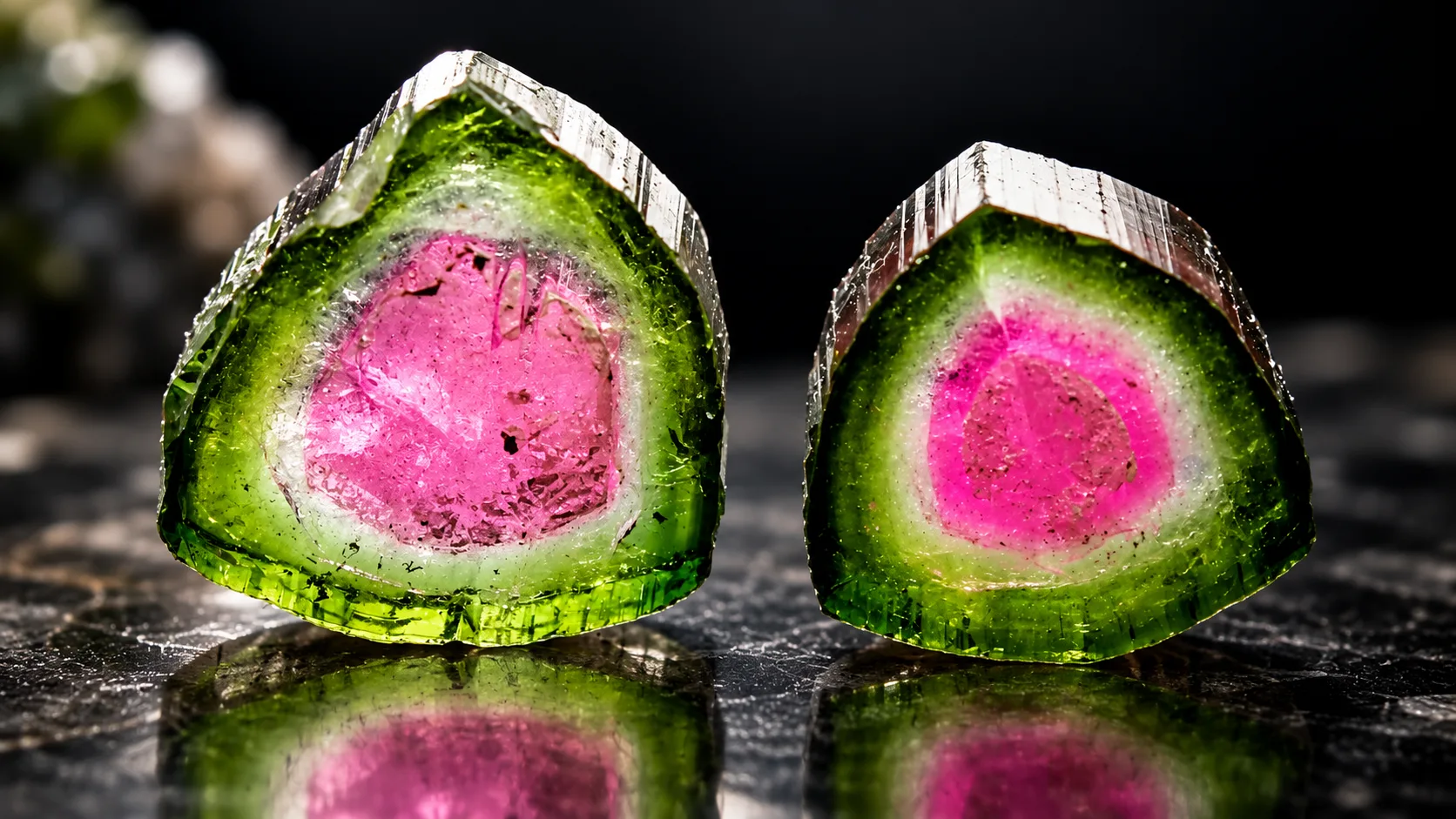
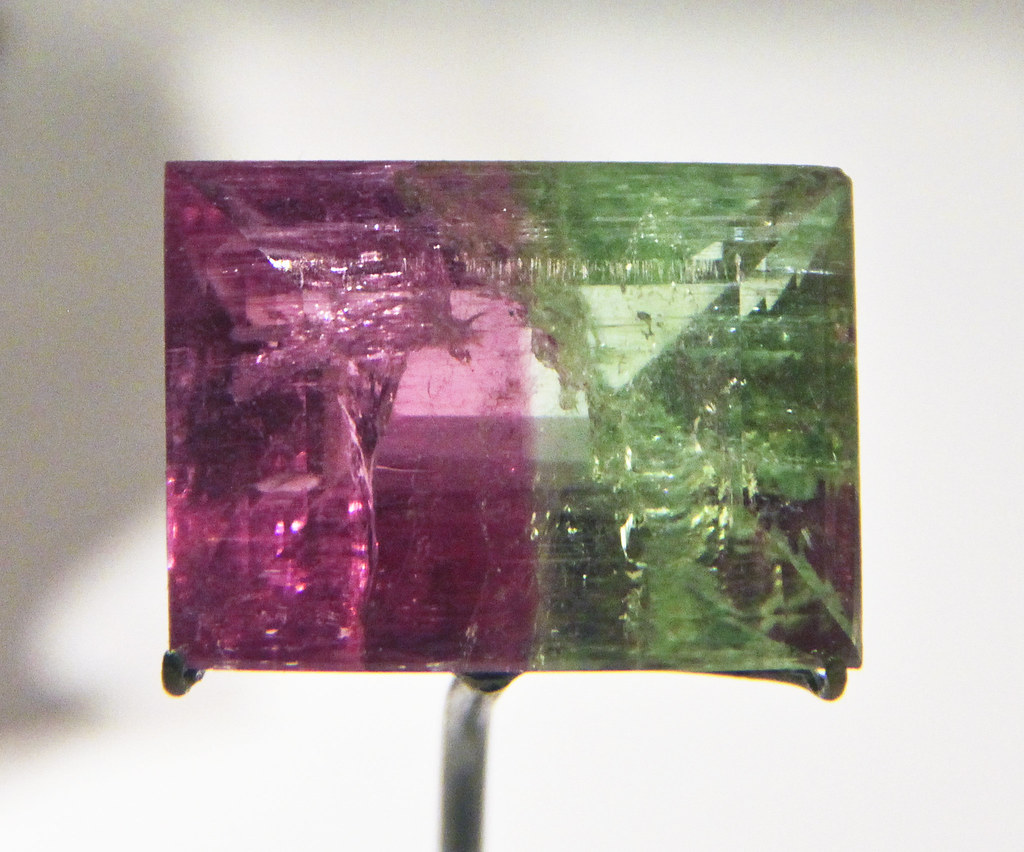
Watermelon tourmaline is a color-zoned variety of tourmaline distinguished by a pink to red center and a green outer zone, sometimes separated by a pale band. The pattern is most visible when a crystal is cut across its length, giving it the appearance of a watermelon slice. It is a descriptive gemstone variety, not a separate approved mineral species; most examples belong to the lithium-rich tourmaline species elbaite.
The contrasting colors formed as the chemistry of the crystal-growing environment changed. These zoning patterns offer clues to the growth history of minerals in granitic pegmatites and provide a distinctive appearance valued by collectors, lapidaries and jewelry designers.
What Does Watermelon Tourmaline Look Like?
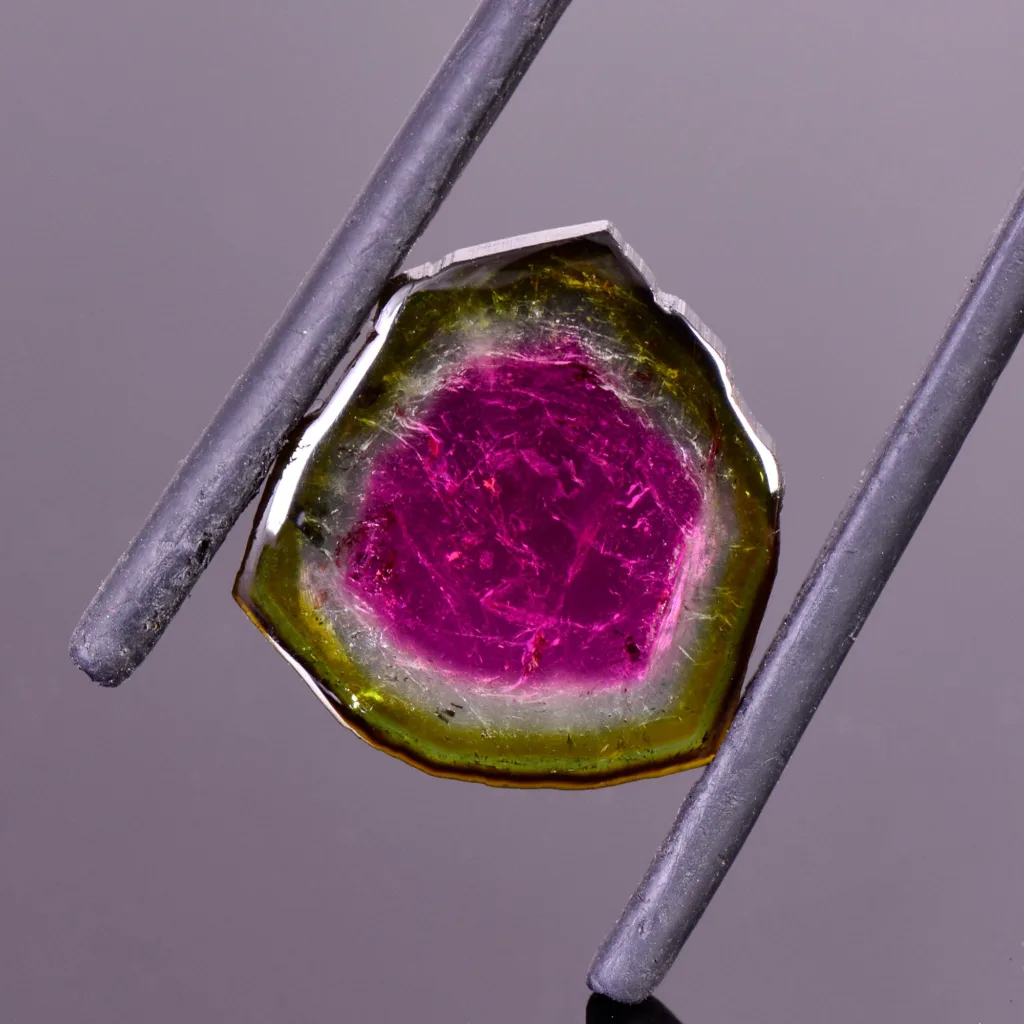
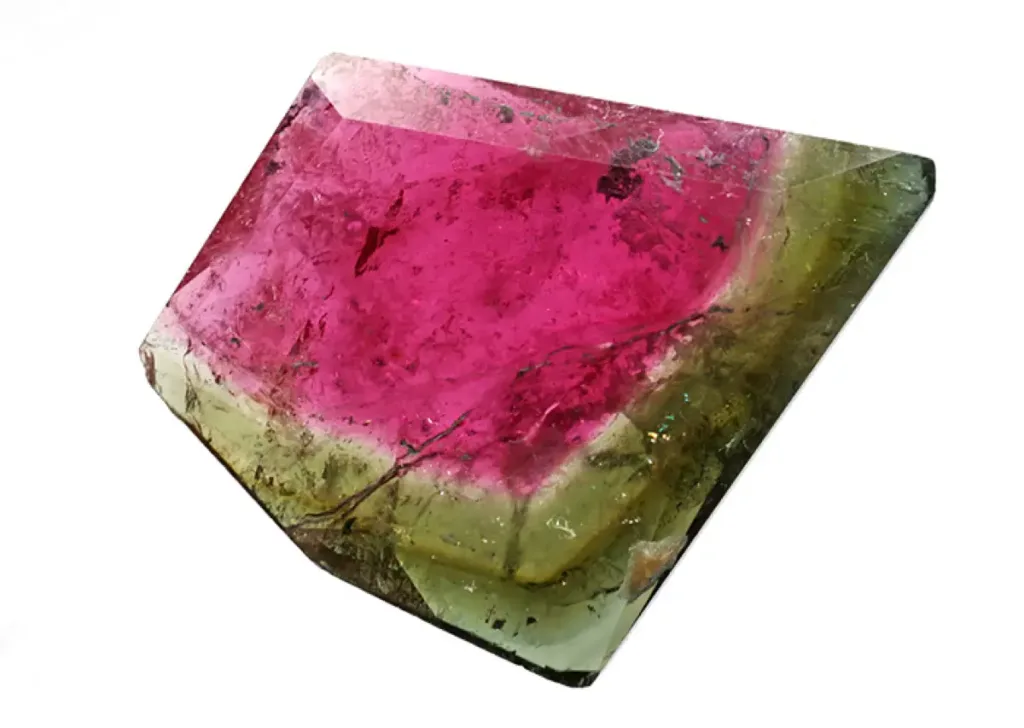
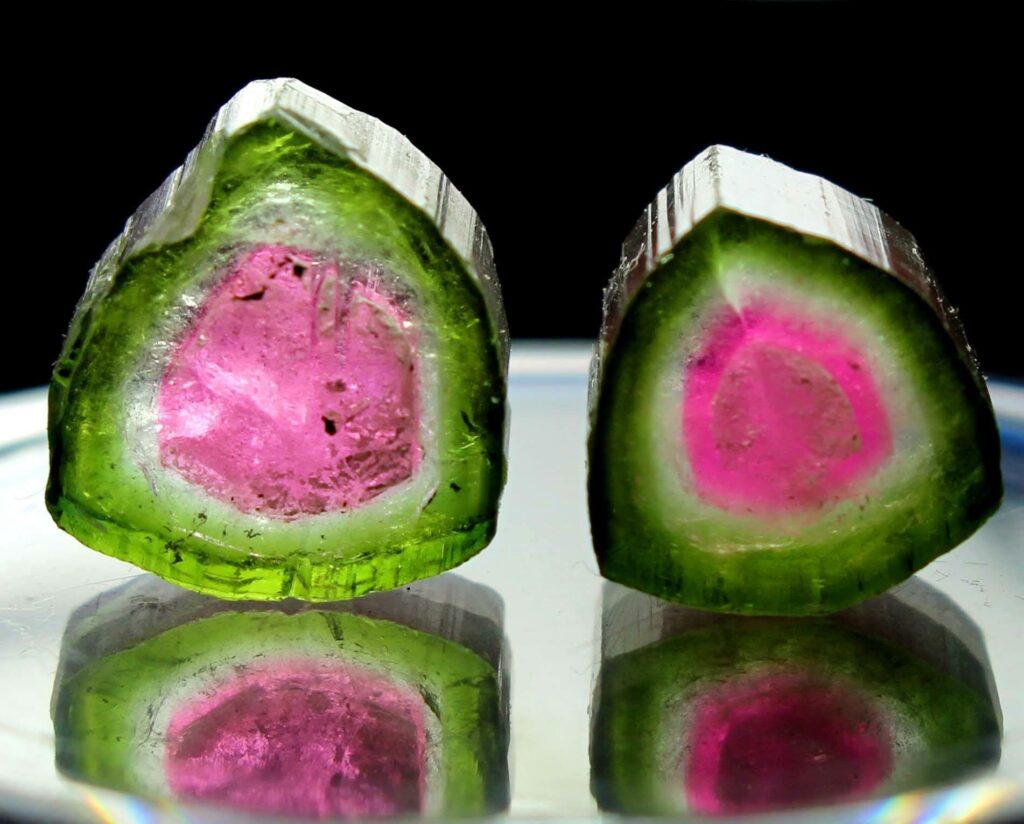
The classic pattern is concentric: a pink or reddish core inside a thin white or nearly colorless transition zone, bordered by a green rim. Some crystals have uneven zoning, multiple green bands or only partial pink-green contrast. The striking circular pattern is best displayed in slices cut perpendicular to the long crystal axis.
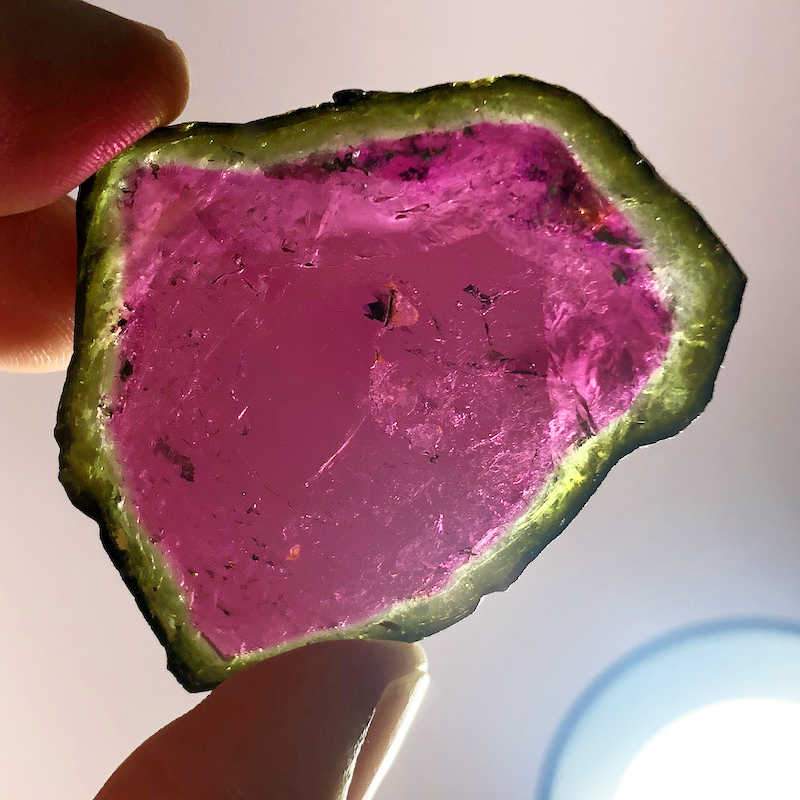
Rough tourmaline commonly forms elongated prismatic crystals with longitudinal striations. A long side view may reveal green material with less obvious pink zoning, while the same crystal’s cross section may show a striking two- or three-color pattern. Transparent material is prized for faceting, but translucent or included slices can retain a visually strong watermelon pattern.
Mineral Identity and Physical Properties
| Property | Characteristic |
|---|---|
| Gem variety | Watermelon tourmaline (color-zoned tourmaline) |
| Common mineral species | Primarily elbaite; other tourmaline-group species can show similar zoning |
| Mineral group | Tourmaline, complex borosilicates |
| Chemical composition | Variable among species; elbaite is a Na–Li–Al-rich borosilicate with OH and/or F |
| Crystal system | Trigonal |
| Crystal habit | Elongate, commonly vertically striated prisms |
| Mohs hardness | Approximately 7–7.5 |
| Specific gravity | Commonly approximately 3.0–3.2; species-dependent |
| Luster | Vitreous |
| Cleavage | Indistinct or poor; uneven to conchoidal fracture |
| Color | Pink/red inner zones; green outer zones; sometimes pale intermediate bands |
| Pleochroism | Often present; appearance can change with viewing direction |
Tourmaline is not a single chemical composition. It comprises multiple related mineral species. The commonly used label “watermelon tourmaline” describes an optical pattern, whereas mineral classification depends on crystallographic and chemical data. Mindat’s variety entry identifies elbaite and related tourmaline compositions among examples of watermelon zoning.
How Does the Pink-and-Green Color Zoning Form?
Color zoning develops during repeated stages of crystal growth. In boron- and lithium-enriched pegmatitic environments, the surrounding melt-derived fluids can change composition as minerals crystallize and react with their surroundings. Each successive growth zone can incorporate different trace elements and color-producing defects.
Manganese is an important contributor to pink and red tourmaline colors. Green colors in tourmalines can involve iron, titanium, chromium, vanadium or other chromophores depending on the species and deposit. The exact causes require mineral-chemical and spectroscopic investigation rather than assuming every green rim contains the same coloring element.
The central zone grew before the outer zones in a crystal with conventional outward growth. A thin, colorless ring can mark an interval when the growing crystal incorporated fewer visible-light-absorbing chromophores. Bands do not necessarily correspond to discrete geological events of equal duration, because growth rates vary.
Geological Formation and Pegmatite Environments
Watermelon tourmaline is most commonly associated with evolved granitic pegmatites. These unusually coarse-grained igneous bodies can become enriched in volatile components, boron, lithium and other elements excluded from earlier crystallizing minerals. Open cavities and fluid-rich pockets provide favorable conditions for well-formed tourmaline crystals.
Tourmaline forms where its chemical components are available under suitable pressure-temperature conditions. Crystals can grow while the composition of the remaining fluid or melt evolves; the surrounding wall rocks may also affect local chemistry. Pegmatite textures and associated minerals provide context for interpreting each crystal’s growth history.
Common associations in lithium-rich pegmatites include quartz, albite, microcline, lepidolite, spodumene and other tourmaline varieties. These associations are not universal, and the presence of pink-green coloring alone does not prove a specific geological age or locality.
Where Is Watermelon Tourmaline Found?
Brazil: Pegmatite districts in Minas Gerais are an important source of multicolored gem tourmalines, including crystals with pronounced pink-green zoning.
United States: Pegmatite deposits in Maine and California have yielded pink, green and multicolored tourmaline specimens. Maine’s gem-bearing pegmatites are particularly well known among collectors.
Madagascar: Complex granitic pegmatites can yield attractive zoned tourmaline in several gem districts.
Afghanistan and Pakistan: Pegmatite areas in the Hindu Kush and Himalayan region produce varied gem tourmaline crystals, including multicolored examples.
Africa and other regions: Tourmaline occurs in many countries, but the presence of a deposit does not mean well-defined watermelon zoning is common there. Reliable geographic provenance requires documentation and, in some cases, laboratory study.
Cutting Styles and the Watermelon Pattern
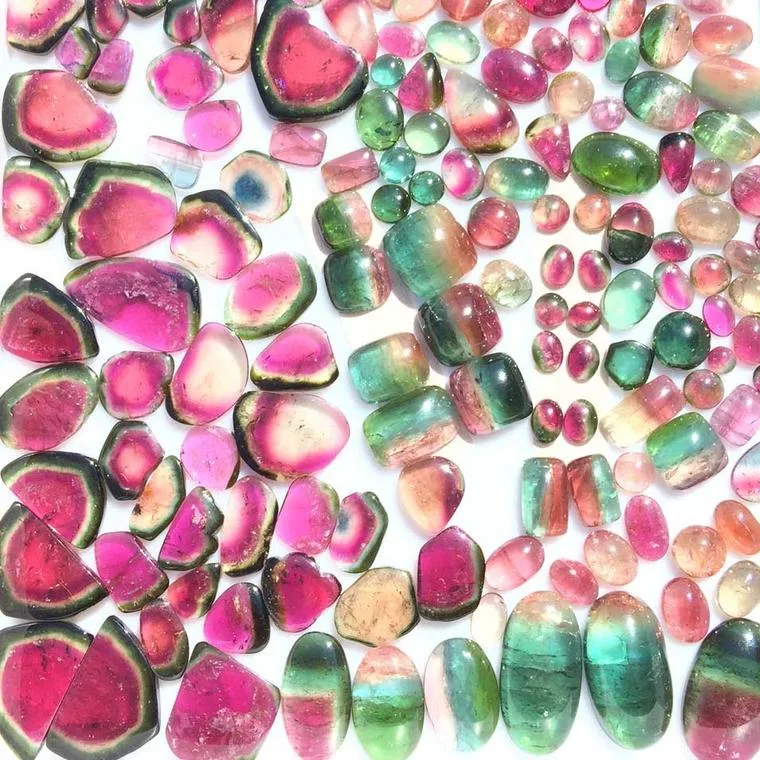
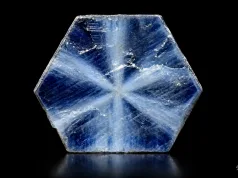
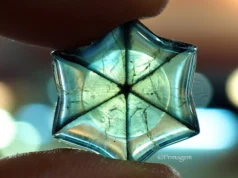
Cross-sectional slices: Cutting perpendicular to the long crystal axis often reveals the full pink core, pale transition zone and green outline. The resulting slice may have a roughly triangular or irregular rounded shape corresponding to the crystal’s original outline.
Cabochons: A smoothly polished dome can highlight bands and color transitions in translucent material. Some stones show their zoning more clearly when held against transmitted light.
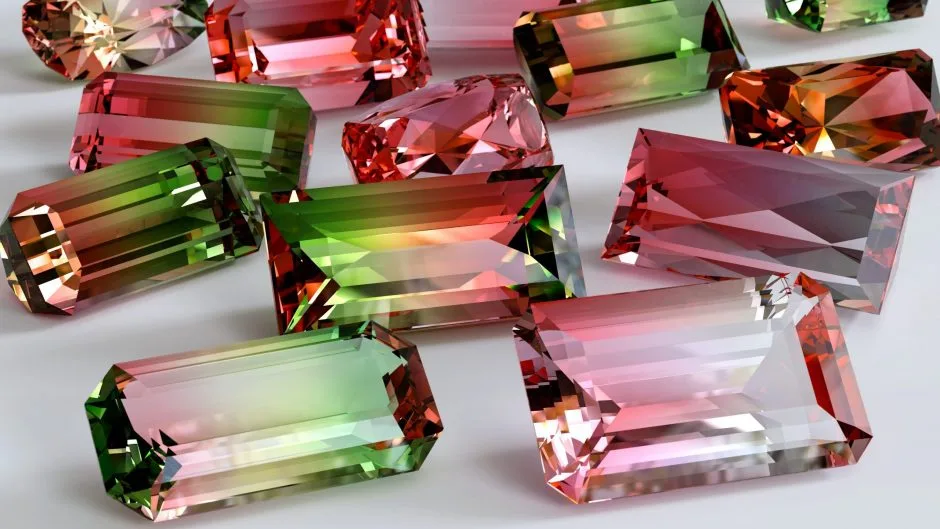
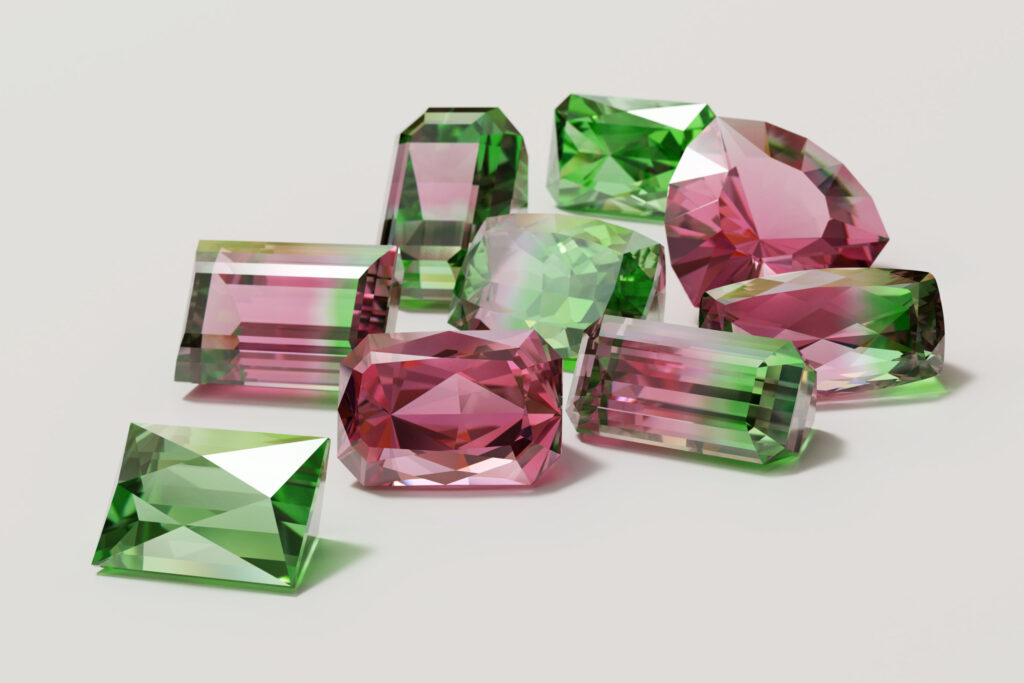
Faceted stones: Faceting transparent crystals may emphasize color contrast and brilliance, although the original concentric pattern may be less recognizable. The cutting orientation can produce parti-colored or bicolor effects.
Lapidaries must consider the rough crystal’s shape, color placement, fractures and inclusions. A cut that maximizes total carat weight is not necessarily the one that best displays the watermelon pattern.
Watermelon Tourmaline vs Other Tourmaline Varieties
| Variety | Color pattern | Key distinction |
|---|---|---|
| Watermelon tourmaline | Usually pink center and green outer zone | Concentric zoning is characteristic |
| Bicolor tourmaline | Two distinct color areas | May be lengthwise or irregular, not necessarily concentric |
| Parti-colored tourmaline | Multiple zones of color | General trade description for multicolored material |
| Rubellite | Pink to red tourmaline | Color-based name, without a required green outer rim |
| Green tourmaline | Mostly green material | No required pink core |
| Liddicoatite | Tourmaline mineral species | May display complex color zoning but is a species, not a color-pattern name |
A stone advertised as watermelon tourmaline should show a recognizable green-and-pink relationship, though trade usage varies. The term itself cannot establish the species, untreated status or geographic origin.
Identifying Natural Watermelon Tourmaline
Check the pattern. Natural color zones generally follow crystal growth geometry. In cross sections, the boundaries may be uneven or polygonal rather than perfectly symmetric.
Inspect crystal features. Natural prismatic crystal faces, longitudinal striations and appropriate fracture patterns can support identification in rough specimens. Polished stones require gemological testing.
Measure physical and optical properties. Refractive index, birefringence, specific gravity and microscopic inclusions can help identify tourmaline. Species determination can require advanced analysis.
Evaluate treatments and assembled stones. Dyed, coated, assembled or imitative materials can mimic the pattern. A dealer’s claim of natural origin should be supported by disclosure and reliable laboratory findings where value warrants.
Do not rely on a photograph alone. Lighting, saturation and photo editing can substantially change perceived colors. A professional gemologist can evaluate material when a purchase involves significant expense.
Treatments, Imitations and Disclosure
Some tourmaline gemstones can undergo heat treatment or irradiation to modify color. Treatment possibilities and results depend on the gem’s composition. A specific specimen should not be described as untreated merely because its pink and green zones look natural.
Glass, composite pieces and other colored materials can imitate watermelon-like patterns. Commercially grown tourmaline is not a routine equivalent of common synthetic gems such as corundum; broad claims that synthetic watermelon tourmaline is widely marketed should be treated cautiously. For valuable gems, request accurate treatment disclosure and a report from a reputable independent laboratory.
The GIA review of tourmaline microfeatures discusses color zoning, inclusions and the different treatment processes relevant to gem tourmaline.
Value, Rarity and Buying Factors
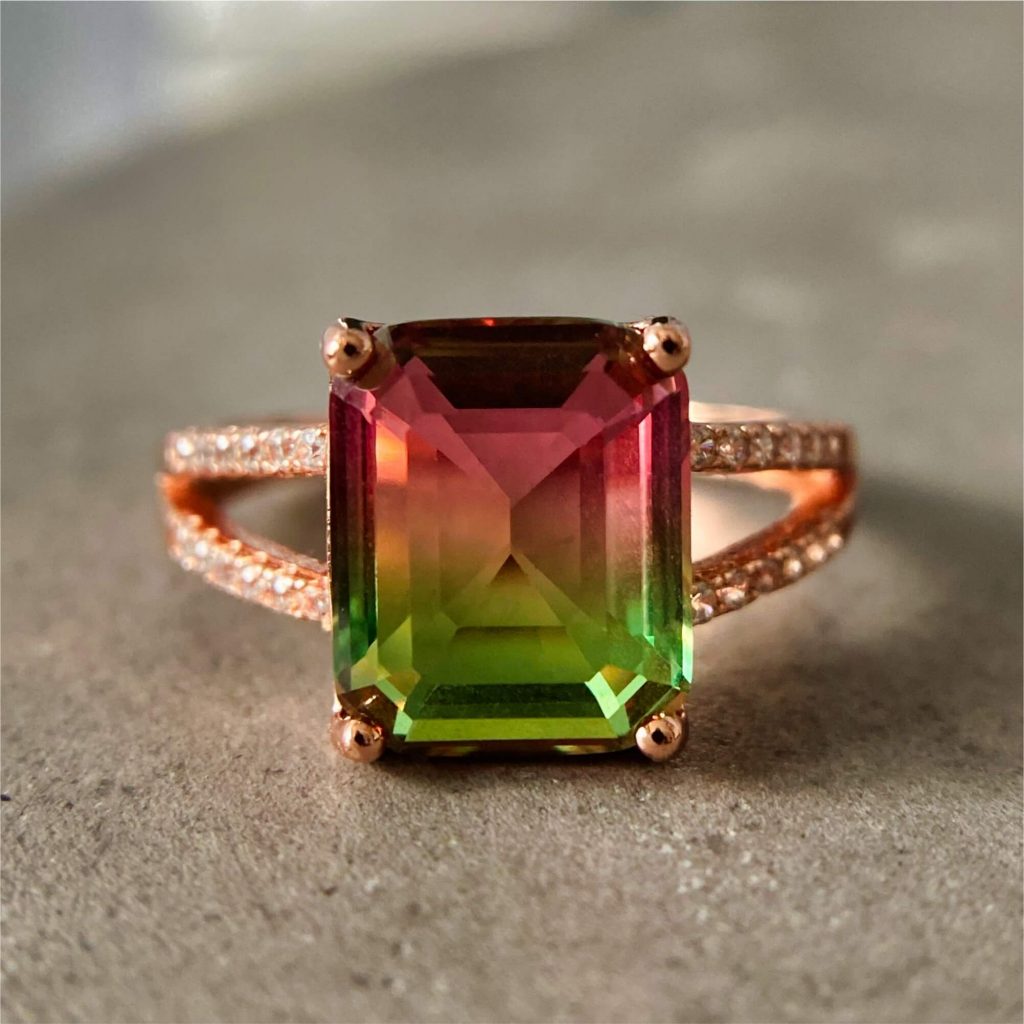
Value depends on color contrast, transparency, symmetry of the zoning, cutting quality, size, durability and market demand. Large eye-clean stones with sharply defined pink-and-green zones can be uncommon, but rarity varies strongly by mine, specimen form and market category.
A polished slice may be priced differently from a faceted gem with comparable weight. Matrix specimens can carry collector premiums for undamaged crystal form and trustworthy provenance. Fixed price-per-carat figures are misleading without a specific market date, quality grade and type of material.
When comparing listings, examine multiple photographs under consistent lighting. Ask about fractures, fillings, polishing, dye or coating, and whether the item is a natural crystal, cut slice or assembled ornament.
Jewelry, Care and Durability
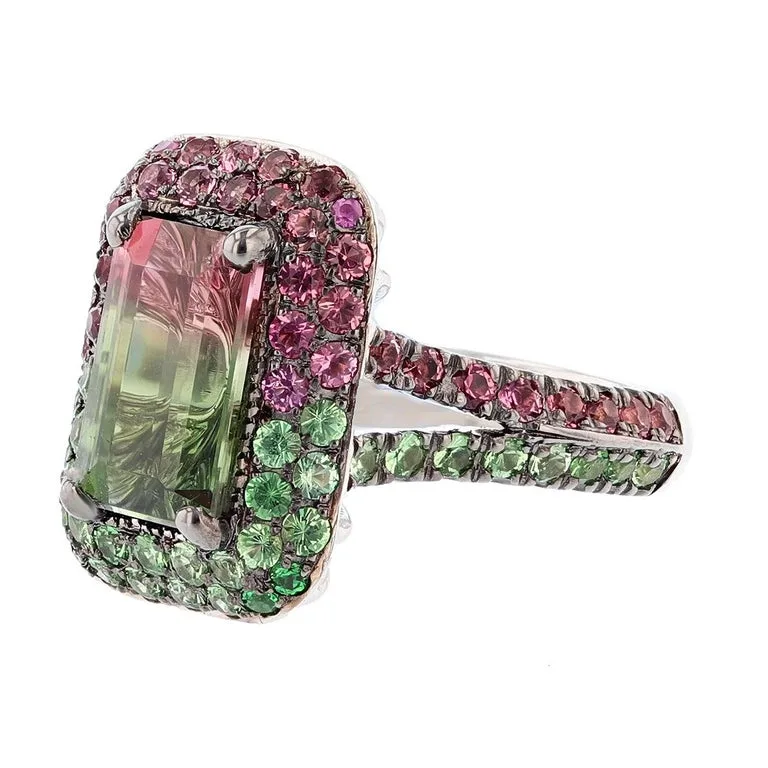
Tourmaline’s Mohs hardness of approximately 7–7.5 makes it suitable for many types of jewelry, including pendants and earrings. It can also be used in rings, although thin slices and stones with prominent fractures are susceptible to damage under impact.
Clean with lukewarm water, mild soap and a soft brush, then dry carefully. Avoid sudden temperature changes, steam cleaning, harsh chemicals and prolonged rough contact with harder gemstones. Ultrasonic cleaning is generally best avoided for stones with fractures, inclusions, fillings or uncertain treatment history.
Cultural Meanings and Scientific Evidence
Watermelon tourmaline is sometimes described in crystal-healing traditions as a stone of emotional balance or relationships. These are cultural and personal beliefs, not scientifically established health effects. Gemological properties such as hardness, color zoning and optical behavior can be measured; claims that wearing a crystal treats medical or psychological conditions have not been demonstrated in reliable clinical studies.
Frequently Asked Questions
Is watermelon tourmaline a separate mineral species? No. It is a descriptive color-zoned variety of tourmaline, most often elbaite and sometimes related species.
Why is the middle of watermelon tourmaline pink? Differences in color-producing trace elements and defects during growth can produce a manganese-associated pink or red central zone.
What causes the green outer rim? The outer growth zone incorporated different color-producing components; these may include iron and other chromophores depending on the specimen.
Does every crystal show a white band? No. A pale intermediary band is common in the classic pattern, but not universal.
Is watermelon tourmaline a quartz variety? No. Tourmaline is a complex borosilicate mineral group; quartz is silicon dioxide (SiO₂).
Where is the best place to see the color zoning? A transverse slice across the long axis commonly displays the pink core and surrounding green rim.
Can watermelon tourmaline be used in rings? Yes, but setting design and care matter. Thin slices and fractured stones are more vulnerable to impacts.
Scientific References and Image Notes
Gemological Institute of America — Tourmaline Quality Factors. Color zoning, cutting and appearance.
Gemological Institute of America — Tourmaline Description. Tourmaline species and gemological characteristics.
Gemological Institute of America — Micro-Features of Tourmaline. Growth zoning and treatments.
Mindat — Watermelon Tourmaline Variety. Mineral classification and related species.
National Museum of Natural History and Science — Watermelon Tourmaline. Gemological classification.
The ten existing images were retained to preserve visual coverage; their original photographer attribution and redistribution licenses were not present in the retrieved post. Captions describe the illustrated color zoning without claiming an unverified locality or author.