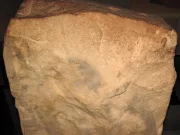





























Sedimentary petrology is the branch of geology that investigates the composition, mineralogy, textures, origin and post-depositional evolution of sedimentary rocks. It combines petrography, sedimentology, mineralogy and geochemistry to reconstruct sediment sources, depositional conditions and the processes that transform sediment into rock.
Sedimentology focuses broadly on sediment generation, transport, deposition and sedimentary systems, whereas sedimentary petrology emphasizes the constituents and properties of the resulting rocks and their subsequent modification. The disciplines overlap in the interpretation of geological history, sedimentary basins and reservoir properties.
Formation of Sedimentary Rocks
Sedimentary rocks form through the accumulation of particles, precipitation of minerals from solution or concentration of biological material. Siliciclastic sediment is commonly generated by physical breakdown and chemical alteration of pre-existing rocks. Carbonate sediment can be produced directly within a depositional environment by organisms, chemical precipitation and reworking of earlier carbonate material.
| Process | Geological significance |
|---|---|
| Weathering | Releases particles and dissolved substances; alters unstable minerals |
| Erosion and transport | Removes, redistributes and sorts sediment by water, wind, ice or gravity |
| Deposition | Accumulates sediment when transport conditions or chemical equilibria change |
| Burial and compaction | Rearranges grains, expels pore fluids and may reduce pore space |
| Cementation and other reactions | Precipitates minerals or modifies grains and pores during diagenesis |
Lithification is the conversion of loose sediment into coherent rock. Compaction and cementation are common mechanisms, although chemically precipitated rocks may become coherent without substantial compaction. Lithification rates vary widely; there is no universal minimum time required.
Related reading: Erosion and Weathering and Sedimentary Rocks.
Classification of Sedimentary Rocks
Sedimentary rocks are classified using grain size, composition, depositional texture and the nature of their components. Genetic categories help describe their origins, but natural rocks can contain mixed siliciclastic, carbonate, biogenic and chemical components.
| Group | Main constituents or origin | Examples |
|---|---|---|
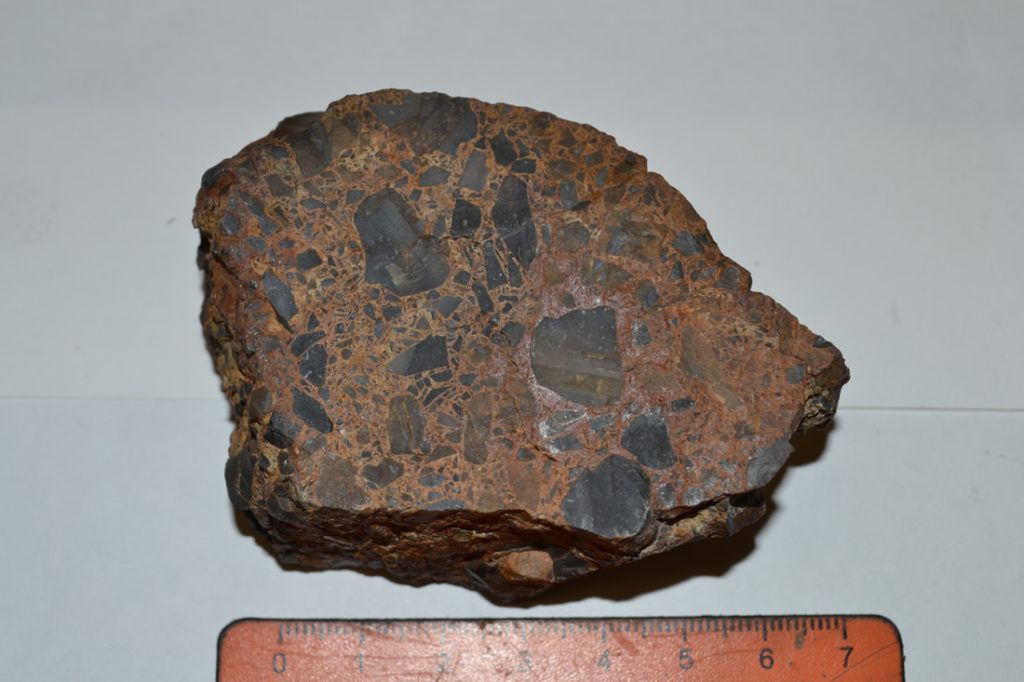
| Siliciclastic | Detrital silicate grains and rock fragments | Conglomerate, sandstone, siltstone, shale |
| Carbonate | Calcite, aragonite or dolomite; skeletal and non-skeletal components | Limestone, dolostone |
| Evaporitic | Minerals precipitated as brines become concentrated | Rock salt, gypsum rock, anhydrite |
| Siliceous | Biogenic or chemically formed silica, sometimes modified by diagenesis | Chert, diatomite |
| Organic-rich | Accumulated and transformed organic matter | Coal; organic-rich mudrocks |
Siliciclastic Grain Size: The Udden–Wentworth Scale
| Grain class | Particle diameter (mm) | Common rock name |
|---|---|---|
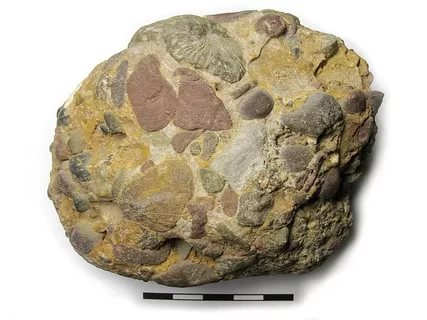
| Gravel | > 2 | Conglomerate or breccia |
| Sand | 0.0625–2 | Sandstone |
| Silt | 0.00390625–0.0625 | Siltstone |
| Clay | Below 0.00390625 | Claystone or other fine-grained mudrock |
Gravel includes granules, pebbles, cobbles and boulders. The rock name also depends on relative proportions, sorting and composition. Rounded gravel clasts typically characterize conglomerate, whereas angular gravel clasts characterize breccia. Shale is a fissile mudrock; not every clay-rich sedimentary rock is shale.
The phi scale expresses grain diameter as φ = −log₂(d), where d is measured in millimeters. For example, 0.25 mm sand corresponds to φ = 2. Grain size, sorting, roundness and grain fabric provide complementary evidence about sediment transport and deposition.
Sandstone Petrography and QFL Classification
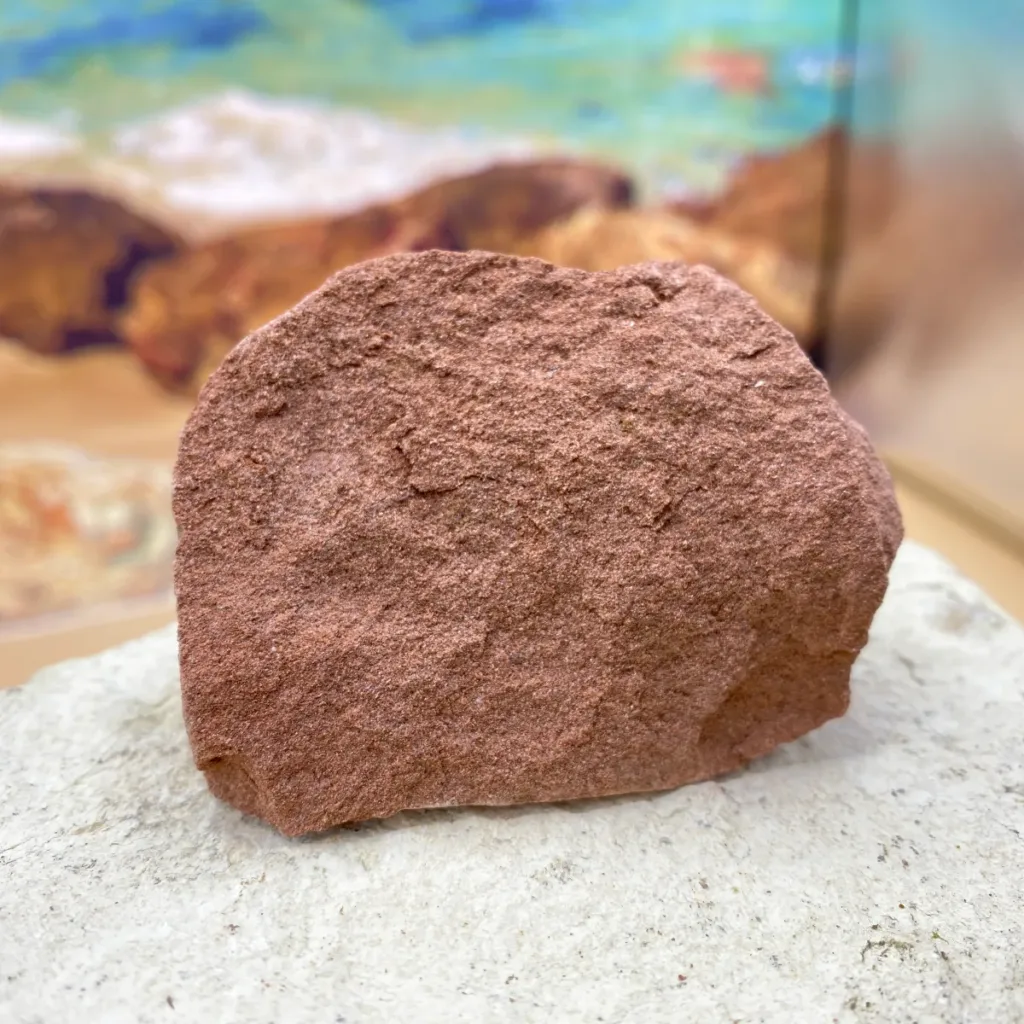
Sandstone classification commonly uses the relative abundance of quartz (Q), feldspar (F) and lithic fragments (L). Framework composition can be estimated by point counting representative thin sections. Matrix, cement and porosity are recorded separately. The QFL components are normalized to 100% for plotting on a ternary diagram.
| Framework component | Interpretive significance |
|---|---|
| Quartz | Common resistant detrital mineral; abundance also reflects source and recycling |
| Feldspar | May record feldspar-rich source rocks and preservation from alteration |
| Lithic fragments | May retain evidence of volcanic, sedimentary or metamorphic source rocks |
Worked example: Of 300 counted framework grains, 180 are quartz, 60 feldspar and 60 lithic fragments. The normalized QFL composition is Q60–F20–L20. A specific sandstone name must be assigned using the boundaries of an explicitly identified classification scheme.
Quartz arenite, feldspathic sandstone and lithic sandstone are traditional compositional terms. Arenite and wacke terminology additionally considers matrix abundance, with thresholds varying across classification schemes. No single QFL composition uniquely determines tectonic setting: weathering, hydraulic sorting, recycling and diagenesis can change the detrital signal.
Detailed rock description: Sandstone. For the limitations and updated use of framework-based terminology, see Garzanti (2019).
Carbonate Petrology: Limestone and Dolostone
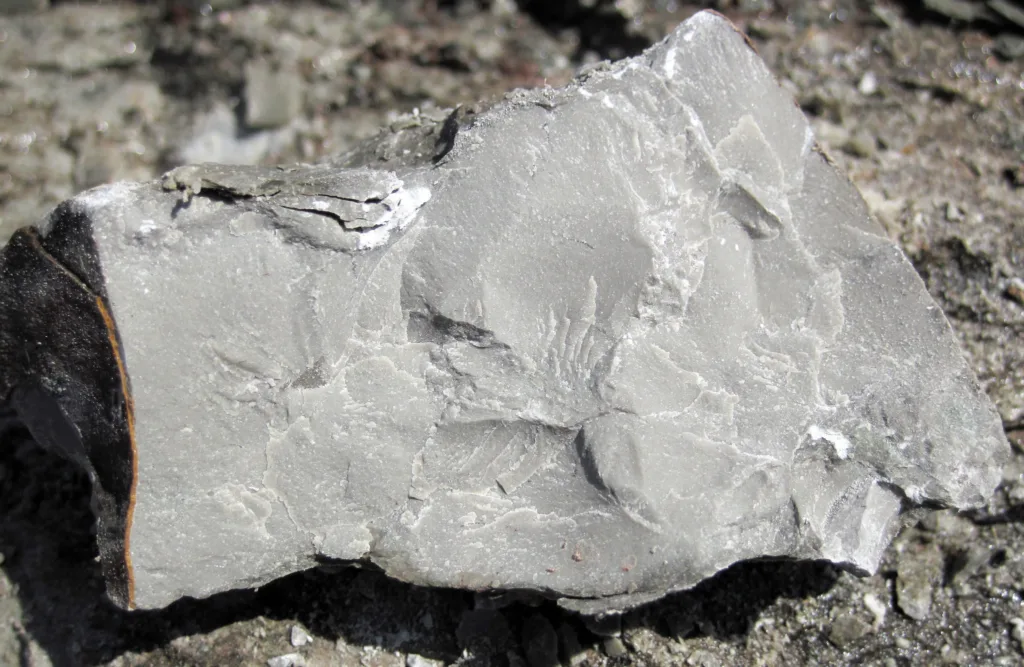
Carbonate rocks are commonly composed of calcite, dolomite or their precursors. Their depositional components include skeletal fragments (bioclasts), ooids, peloids and intraclasts. Micrite is fine carbonate mud or its lithified equivalent; sparry carbonate crystals may form as cement or through recrystallization.
Dunham Carbonate Classification
Dunham’s classification emphasizes depositional texture: whether the grains or mud support the original framework, whether carbonate mud is present, and whether the components were organically bound during deposition.
| Class | Depositional texture |
|---|---|
| Mudstone | Mud-supported, fewer than 10% grains |
| Wackestone | Mud-supported, at least 10% grains |
| Packstone | Grain-supported, carbonate mud present |
| Grainstone | Grain-supported, no depositional carbonate mud |
| Boundstone | Original components bound together during deposition |
| Crystalline carbonate | Original depositional texture cannot be recognized |
This carbonate-specific use of mudstone is distinct from siliciclastic mudstone. The extended Dunham scheme includes coarse-grained carbonates and subdivisions of boundstone. Folk classification emphasizes allochems and carbonate mud or sparry cement, providing another way to describe carbonate petrography.
Dolomitization involves formation of dolomite, commonly through reactions between magnesium-bearing fluids and precursor carbonate material. It can modify porosity, crystal texture and original sedimentary fabrics. See Limestone and Dolostone.
Chemical and Biogenic Sedimentary Rocks
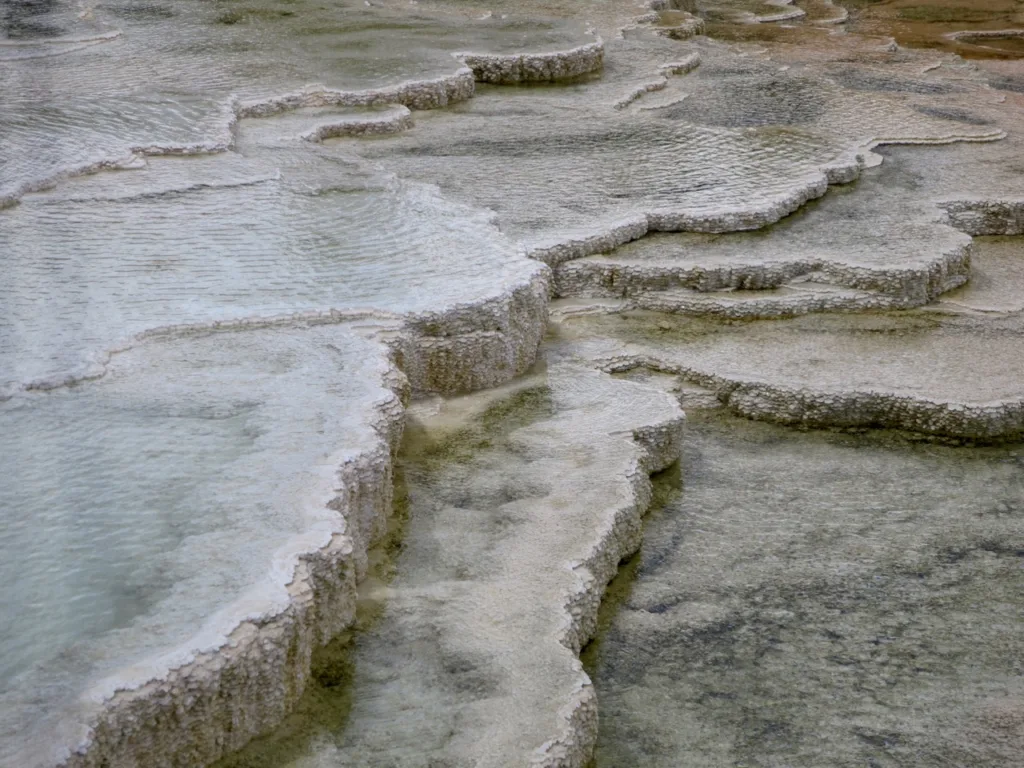
Evaporites form when solution chemistry favors precipitation of salts such as gypsum, anhydrite and halite, often in restricted basins. Chert may originate from silica-rich biological material or other silica sources and commonly develops through diagenetic processes. Travertine forms by carbonate precipitation, commonly associated with spring waters and CO₂ degassing.
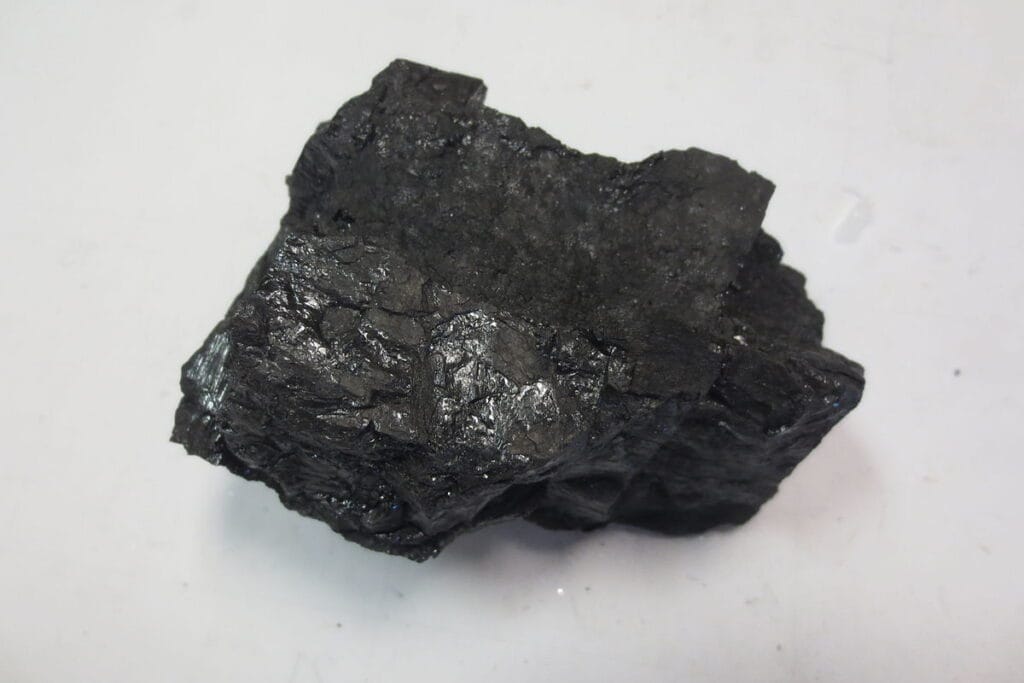
Coal forms from concentrated plant-derived organic matter that undergoes burial and coalification. Organic-rich mudrocks contain significant organic material within a predominantly mineral framework. The preservation and maturation of organic matter depend on productivity, oxygen availability, burial history and other environmental factors.
Related rock guides: Travertine, Chert and Coal.
Sedimentary Textures and Structures

Textures describe the size, shape, sorting and arrangement of components at grain scale. Structures are larger features such as beds, laminae and cross-strata. These properties may preserve information about depositional processes, although later compaction, cementation or deformation can modify them.
| Structure | Process or interpretation |
|---|---|
| Bedding and lamination | Changes in sediment accumulation, composition or transport conditions |
| Cross-bedding | Migration of bedforms such as ripples or dunes |
| Ripple marks | Movement of sediment under currents or oscillatory waves |
| Normal graded bedding | Progressive decrease in grain size upward, for example during waning sediment-gravity flows |
| Desiccation cracks | Shrinkage during drying of wet sediment |
| Bioturbation and trace fossils | Biological disturbance of sediment and organism activity |
Sedimentary structures are interpreted in association with grain properties, bed geometry, fossils and stratigraphic relationships. Cross-bedding orientation can help reconstruct paleoflow after correction for later tilting where necessary. Read Sedimentary Structures and Textures.
Depositional Environments and Sedimentary Facies
A sedimentary facies is a body of sediment or rock with distinguishable characteristics such as lithology, texture, structures and fossil content. Facies associations and their lateral and vertical relationships help reconstruct depositional systems.
| Depositional environment | Typical deposits and features |
|---|---|
| Fluvial | Channel sand and gravel, cross-bedding, floodplain muds |
| Aeolian | Well-sorted dune sand, large cross-sets |
| Glacial | Poorly sorted till and sorted meltwater deposits |
| Deltaic | Channel sands, distributary-mouth bars and finer prodelta sediments |
| Shallow marine | Wave- and tide-influenced sand, mud and carbonate deposits |
| Deep marine | Turbidites, pelagic mud and other sediment-gravity-flow deposits |
| Restricted evaporitic basins | Gypsum, halite and associated fine sediments |
Individual structures or rock types are rarely unique to one environment. Facies analysis combines multiple lines of evidence, including stratigraphic geometry, fossils and geochemistry. Sedimentary petrology helps distinguish original depositional signals from changes during burial.
Diagenesis of Sedimentary Rocks
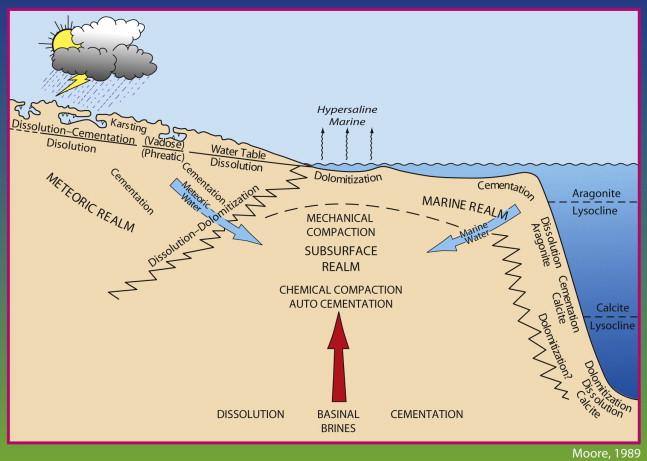
Diagenesis encompasses physical, chemical and biological modifications of sediment after deposition and during burial or later fluid circulation, before or apart from conventional metamorphism. These processes alter the original texture, mineralogy and pore network.
- Mechanical compaction: grain rearrangement, deformation and pore-space reduction.
- Chemical compaction: dissolution at stressed grain contacts and development of features such as stylolites.
- Cementation: precipitation of quartz, carbonate, iron oxides or other minerals in pores.
- Dissolution: removal of unstable grains or cement, potentially creating secondary porosity.
- Replacement and recrystallization: modification of existing minerals and crystal fabrics, including some pathways of dolomitization.
Diagenetic histories are commonly reconstructed through cross-cutting relationships, grain contacts, cement generations and petrographic observations. Early cements can preserve grain frameworks from compaction, while later cement can reduce connectivity. Read Diagenesis of Sedimentary Rocks.
Porosity and Permeability
Porosity is the fraction of the bulk rock volume occupied by voids. Primary porosity develops during deposition; secondary porosity develops through later processes such as dissolution and fracturing. Effective porosity concerns connected pore space that can participate in fluid transport.
Porosity example: A rock sample with a bulk volume of 100 cm³ and pore volume of 18 cm³ has a total porosity of 18%. This value alone does not establish permeability.
Intrinsic permeability describes the ability of a porous material to transmit fluids through connected pathways and has dimensions of area (m²). Hydraulic conductivity also depends on fluid properties. A fine-grained mudrock may have appreciable porosity but very low permeability because its pores and pore throats are small.
| Property | Common controls |
|---|---|
| Porosity | Grain packing, sorting, compaction, cementation, dissolution |
| Permeability | Pore-throat dimensions, connectivity, fractures and anisotropy |
| Reservoir quality | Combined influence of pore volume, connectivity, fluid properties and geological heterogeneity |
Sediment Provenance and Basin Evolution
Provenance analysis reconstructs the source regions and transport history of sediment. Framework mineralogy, lithic fragments, heavy mineral assemblages, detrital zircon ages and isotopic or elemental signatures can be combined to constrain source rocks and tectonic evolution.
Sediment recycling and selective mineral survival can obscure the original source signature. A quartz-rich sandstone does not necessarily indicate direct derivation from a quartz-rich igneous rock. Mineral textures and stratigraphic relationships help identify changes in drainage systems, uplift, erosion and basin filling.
Analytical Methods in Sedimentary Petrology
| Technique | Purpose |
|---|---|
| Hand-specimen and field description | Identify lithology, grain size, sedimentary structures and context |
| Polarizing microscope | Identify minerals, pore types, cement, grain contacts and textures |
| Point counting | Estimate modal abundances of sedimentary components |
| X-ray diffraction (XRD) | Identify crystalline mineral phases, including appropriate analysis of clay minerals |
| Scanning electron microscopy and EDS | Examine fine textures, pore surfaces and elemental composition |
| Cathodoluminescence | Distinguish some cement generations and mineral growth zones |
| Stable isotopes and elemental geochemistry | Constrain mineral sources, fluid interactions and preservation |
| Core analysis | Measure porosity, permeability and other rock properties |
A systematic workflow starts by describing the field setting and collecting representative samples. Thin-section petrography and mineralogical measurements then support classification and help select further analyses. Interpreting depositional and diagenetic history requires combining these observations rather than relying on a single test.
Applications of Sedimentary Petrology
Sedimentary petrology contributes to groundwater exploration, hydrocarbon and geothermal reservoir characterization, mineral deposits, geological carbon storage and reconstruction of ancient environments. In engineering geology, the composition, bedding, cementation, porosity and weathering of sedimentary rocks can influence excavation behavior and foundation conditions.
Engineering properties must be established through appropriate site investigations and tests: the name of a sedimentary rock alone does not determine its strength, deformability or hydraulic behavior. Related disciplines include Igneous Petrology and Metamorphic Petrology.
Frequently Asked Questions
What is the difference between sedimentary petrology and sedimentology?
Sedimentary petrology investigates rock composition, textures and post-depositional changes. Sedimentology emphasizes sedimentary processes and depositional systems; the fields overlap.
What is the difference between sandstone and shale?
Sandstone consists mainly of sand-sized grains, while shale is a fine-grained fissile mudrock.
What is the QFL diagram?
A ternary framework-composition diagram based on normalized quartz, feldspar and lithic fragment proportions.
What is the Dunham classification used for?
It classifies carbonate rocks using depositional texture, mud content, grain support and binding during deposition.
What is the difference between lithification and diagenesis?
Lithification turns loose sediment into coherent rock. Diagenesis includes a broader range of post-depositional physical, chemical and biological changes.
Can a rock have high porosity and low permeability?
Yes. Small or poorly connected pores may store fluid while restricting its movement.
Why are sedimentary rocks important for paleontology?
Sedimentary strata commonly preserve fossils, trace fossils and geological context that help reconstruct past life and environments.
Scientific References
- Garzanti, E. (2019). Petrographic classification of sand and sandstone. Earth-Science Reviews, 192, 545–563.
- AAPG Wiki — Carbonate sedimentary rocks classification, including Dunham and Folk schemes.
- Earle, S. Physical Geology, 2nd edition. BCcampus Open Education.
- Wentworth, C. K. (1922). A Scale of Grade and Class Terms for Clastic Sediments. Journal of Geology, 30, 377–392.