



















Engineering Geology
Engineering geology is the branch of geology that applies geological knowledge to the planning, design, construction, and maintenance of engineering projects. It investigates the properties of soil, rock, groundwater, and geological structures to understand how ground conditions may affect buildings, roads, tunnels, dams, bridges, and other infrastructure.
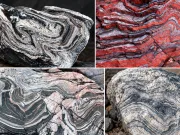
Every construction project interacts with the ground. Beneath the surface, geological conditions can vary significantly over short distances. Soil layers may differ in strength and compressibility, rock masses may contain fractures and faults, and groundwater can influence excavation stability and foundation performance.
Engineering geology helps identify, characterize, and evaluate these geological conditions so that engineering projects can be planned and carried out with a better understanding of ground-related risks.
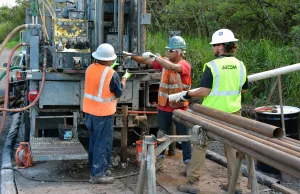
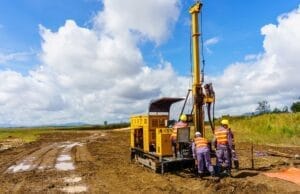
Engineering geologists combine field observations, geological mapping, drilling, sampling, laboratory testing, and geophysical investigations to develop an understanding of the subsurface.
Their work provides essential information for engineering design, construction planning, geological hazard assessments, and the management of natural and human-made environments.
Why Is Engineering Geology Important?
Ground conditions are among the most important factors affecting construction safety and performance.
Insufficient knowledge of subsurface geology can contribute to foundation settlement, slope instability, excavation difficulties, groundwater problems, and unexpected construction costs.
Engineering geological investigations help identify such conditions before and during construction.
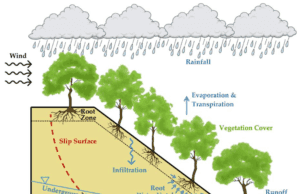
They are particularly important in areas affected by landslides, faults, karst, weak soils, highly fractured rock, and variable groundwater conditions.
Engineering geology also supports environmental protection by assessing how geological materials and groundwater systems interact with construction activities.
Engineering Geology and Geotechnical Engineering
Engineering geology and geotechnical engineering are closely related disciplines that often work together on the same projects.
Engineering geology emphasizes the geological origin, distribution, structure, and behavior of earth materials, including the identification of geological hazards and subsurface uncertainties.
Geotechnical engineering focuses more directly on the engineering behavior of soil and rock, including analysis and design for foundations, slopes, retaining structures, excavations, and other geotechnical works.
Their responsibilities overlap considerably, especially during ground investigations, testing, geological modeling, and interpretation of site conditions.
Together, these disciplines connect geological understanding with safe and effective engineering solutions.
What Does an Engineering Geologist Do?
Engineering geologists investigate geological conditions and provide information needed for engineering decisions.
Their work may include field mapping, supervising drilling operations, logging soil and rock cores, describing geological discontinuities, assessing groundwater conditions, and interpreting laboratory and in-situ test results.
They also prepare geological cross-sections, identify potential ground hazards, and contribute to ground investigation reports.
Depending on the project and professional role, engineering geologists may work alongside geotechnical engineers, civil engineers, hydrogeologists, drilling contractors, and construction teams.
Major Areas of Engineering Geology
Engineering geology covers several interconnected technical fields.
The following sections introduce the main areas of study, from geological site investigation and material characterization to engineering applications and geological risk assessment.
Site Investigation and Geological Mapping
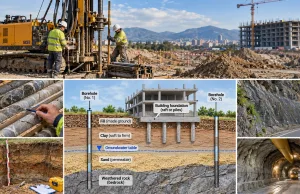
Site investigation examines subsurface conditions through geological observations, boreholes, sampling, field testing, and geophysical methods.
Geological mapping and borehole logging help establish the distribution, thickness, and characteristics of soil and rock layers.
These investigations provide the foundation for developing a reliable engineering geological model of a site.
Soil Mechanics
Soil mechanics studies the physical and mechanical behavior of soils under different loading and groundwater conditions.
Important topics include soil classification, density, moisture content, permeability, effective stress, shear strength, consolidation, and settlement.
Understanding these properties is essential for evaluating soil behavior beneath foundations, embankments, and excavations.
Rock Mechanics
Rock mechanics investigates how intact rocks and rock masses respond to stress, deformation, and failure.
Engineering assessments consider rock strength, weathering, fractures, bedding, joints, and other discontinuities.
These characteristics are important for tunnels, rock slopes, underground excavations, and foundations on rock.
In-Situ Geotechnical Testing
In-situ tests measure or infer ground properties under field conditions.
Common investigation methods include the Standard Penetration Test (SPT), Cone Penetration Test (CPT), pressuremeter tests, dynamic penetration tests, and field permeability measurements.
The results help characterize subsurface variability and support geotechnical interpretation.
Laboratory Testing of Soil and Rock
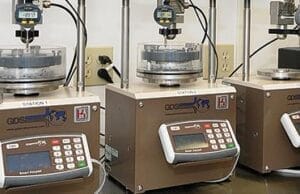
Laboratory testing determines physical and mechanical properties using samples collected during ground investigations.
Typical soil tests include particle-size distribution, Atterberg limits, compaction, consolidation, and shear strength testing.
Rock tests may include unconfined compressive strength, point load strength, and other methods used to evaluate material behavior.
Groundwater and Hydrogeology
Groundwater can significantly influence soil strength, effective stress, excavation stability, seepage, and foundation performance.
Engineering geological assessments consider groundwater levels, hydraulic conditions, permeability, and possible changes during construction.
Understanding groundwater behavior is especially important for deep excavations, tunnels, slopes, and underground structures.
Geological and Geotechnical Hazards
Engineering geologists investigate natural and ground-related hazards that may affect infrastructure.
These include landslides, rockfalls, subsidence, sinkholes, seismic ground shaking, liquefaction, and other geological processes.
Hazard assessments combine field evidence, geological interpretation, and appropriate engineering investigations.
Engineering Applications
Engineering geological knowledge supports a wide range of projects, including building foundations, tunnels, highways, railways, dams, retaining structures, quarry slopes, and underground works.
The geological model of a site helps engineers select suitable investigation strategies and evaluate potential construction challenges.
Engineering Geological Reports and Standards
Engineering geological reports document site conditions, investigation methods, geological observations, test results, interpretations, and relevant uncertainties.
Clear reporting is essential because subsurface conditions cannot usually be observed continuously across an entire project site.
Engineering projects are also guided by applicable national standards, technical specifications, and geotechnical design frameworks.
In France, geotechnical investigation and engineering missions are commonly organized using the NF P 94-500 framework, while Eurocode 7 provides requirements and principles for geotechnical design.
Explore Engineering Geology
Engineering geology brings together geological science, field investigations, laboratory analysis, and engineering practice.
Understanding these subjects is essential for recognizing ground-related risks and interpreting how geological conditions affect infrastructure.
Explore the topics below to learn about site investigation methods, soil and rock properties, geotechnical tests, groundwater, geological hazards, and the practical applications of engineering geology.