

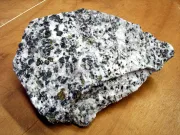
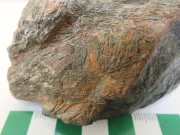
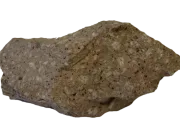




Diamictite is a lithified, extremely poorly sorted sedimentary rock containing a mixture of fine matrix and much larger clasts. Gravel, pebbles, cobbles or boulders may be scattered through mud- or sand-rich material. The term describes the rock’s texture and does not establish how the deposit formed.
Some diamictites are ancient glacial tills, but others originate from submarine debris flows, landslides, volcanic mass flows and related sediment-gravity processes. The distinction is critical: a diamictite is not automatically a tillite or proof of an ice age.
What Does Diamictite Look Like?
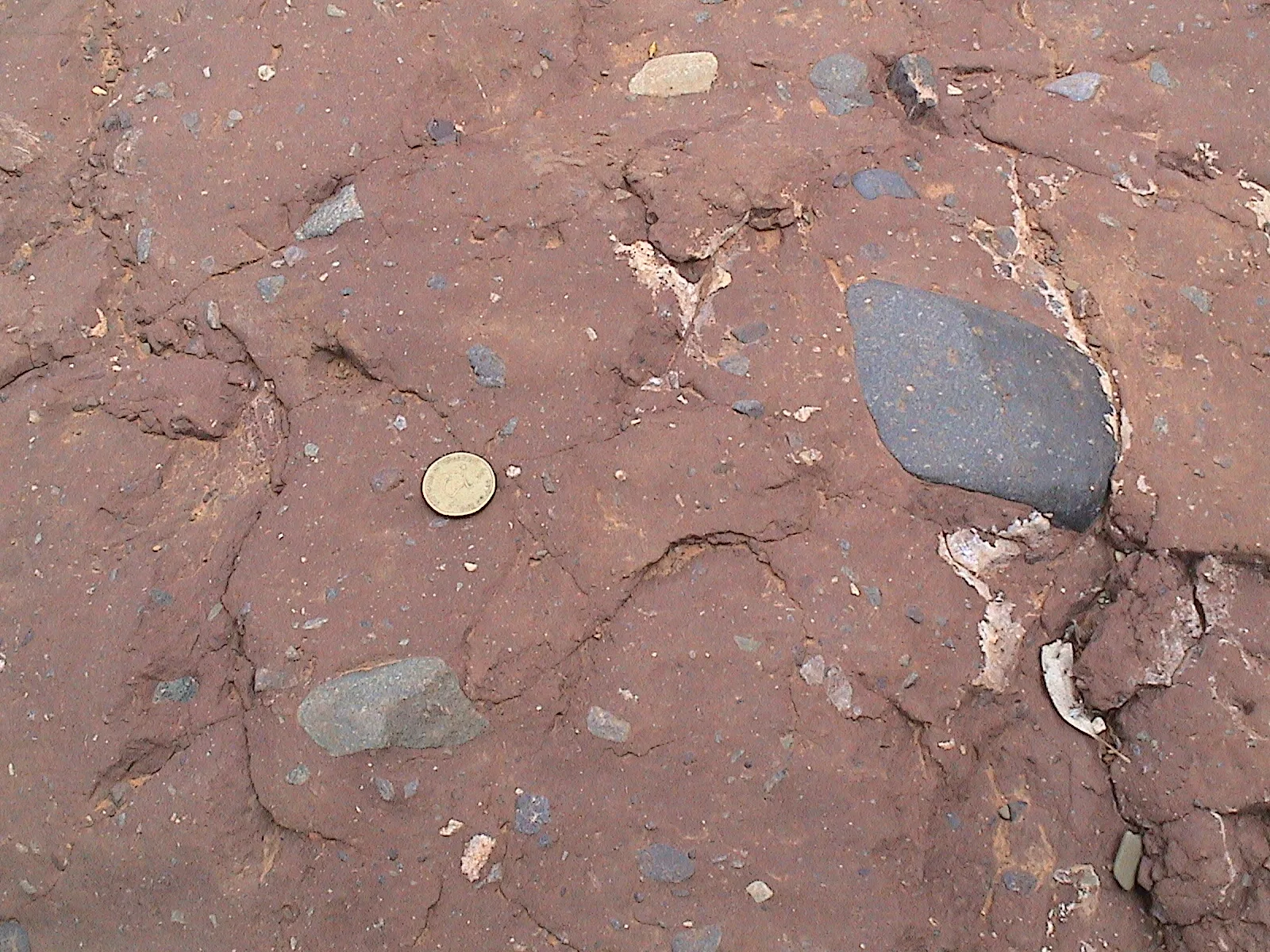
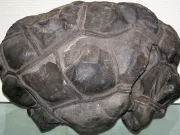
The defining visual feature is an unsorted mixture: relatively large, often irregular rock fragments embedded in much finer material. A fresh cut may show angular and rounded clasts side by side. Gray, greenish, brown or reddish matrix colors reflect source material and alteration, not a unique mineral composition.
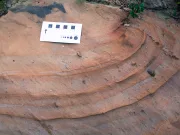
Matrix-supported examples have isolated clasts that do not touch one another. Clast-supported variants may resemble polymict conglomerate. Diamictite may be massive, weakly laminated, sheared or deformed; the presence or absence of bedding should be recorded rather than assumed.
Composition, Grain Size and Sorting
Diamictite is commonly siliciclastic, composed of a mixture of quartz, feldspar, rock fragments, clay minerals and variable carbonate or iron-oxide cement. Clasts can be of several lithologies, reflecting multiple sources. The matrix may range from mud to sandy material. There is no universal mineral recipe or characteristic Mohs hardness for diamictite.
Poor sorting means that grains with widely different diameters occur together. A geological log should record the largest clast, the distribution of sizes, the proportion of matrix, clast lithology, angularity and any preferred orientation. These details are more informative than merely calling the deposit ‘unsorted’.
How Does Diamictite Form?
The rock forms when a heterogeneous sediment mixture is deposited and subsequently lithified. Deposition may occur directly beneath glacier ice, from ice-marginal sediment flows, in submarine or sublacustrine debris flows, through slope collapse or in volcanic debris flows. Some deposits include outsized clasts released from floating ice into finer sediment.
Lithification involves burial, compaction and cementation. Later tectonic strain may stretch or rotate clasts, producing a metadiamictite or metatillite where metamorphism is demonstrated. The rock’s final texture therefore records both sedimentation and later modification.
Glacial Diamictite: Tillite and Metatillite
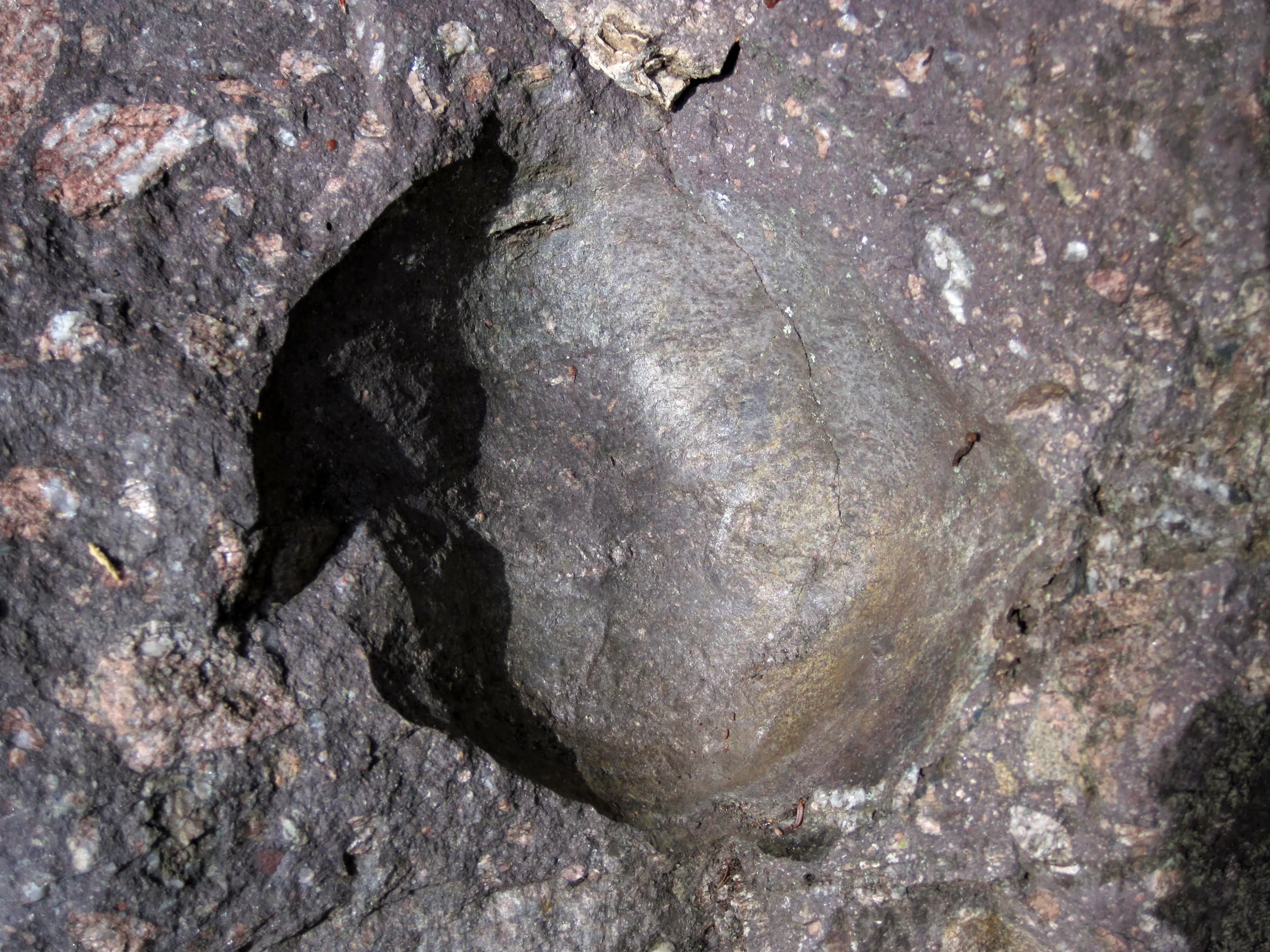
Tillite is lithified till deposited directly by glacier ice. Diamictite is a broader, descriptive category. A deposit must have evidence of direct glacial deposition before tillite is an appropriate genetic name. Metatillite refers to tillite that has undergone metamorphism.
Potential glacial indicators include striated or faceted clasts, a glacially striated substrate, glaciotectonic deformation, associated glacial facies and regional paleogeographic context. None of these clues should be evaluated in isolation. Dropstones in laminated marine sediment may support ice rafting but do not necessarily prove direct deposition of till.
Non-Glacial Diamictites
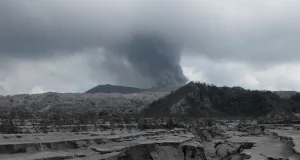
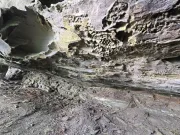
Submarine debris flows can transport boulders and mud together down continental slopes or basin margins, creating chaotic, poorly sorted beds. Such deposits may be associated with turbidites, slump folds, erosional basal contacts or stacked mass-transport units. Volcanic lahars and other terrestrial debris flows can create comparable mixtures.
A convincing interpretation requires mapping the depositional architecture, measuring bed geometry, examining grading and sedimentary structures, and comparing adjacent beds. Do not label an isolated matrix-supported conglomerate glacial merely because it looks like till.
Outcrop Examples and Geological Context
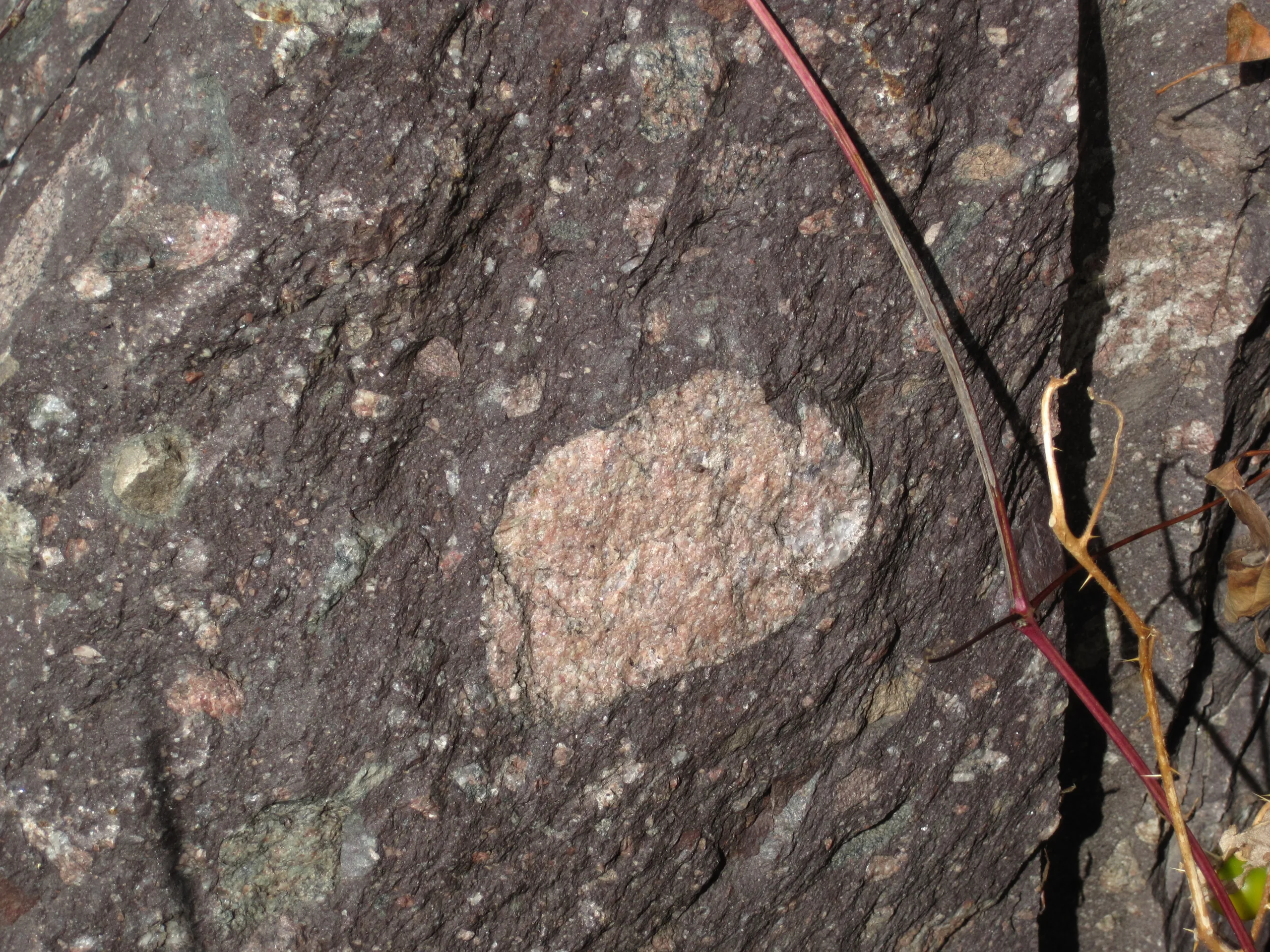
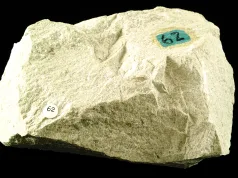
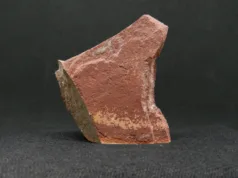
The Konnarock Formation in Virginia contains Neoproterozoic diamictite with documented glacial interpretation and subsequent very low-grade metamorphism. Large granitic clasts are enclosed in finer material. This is an example of a glacial diamictite, not a representative photograph of every possible depositional origin.
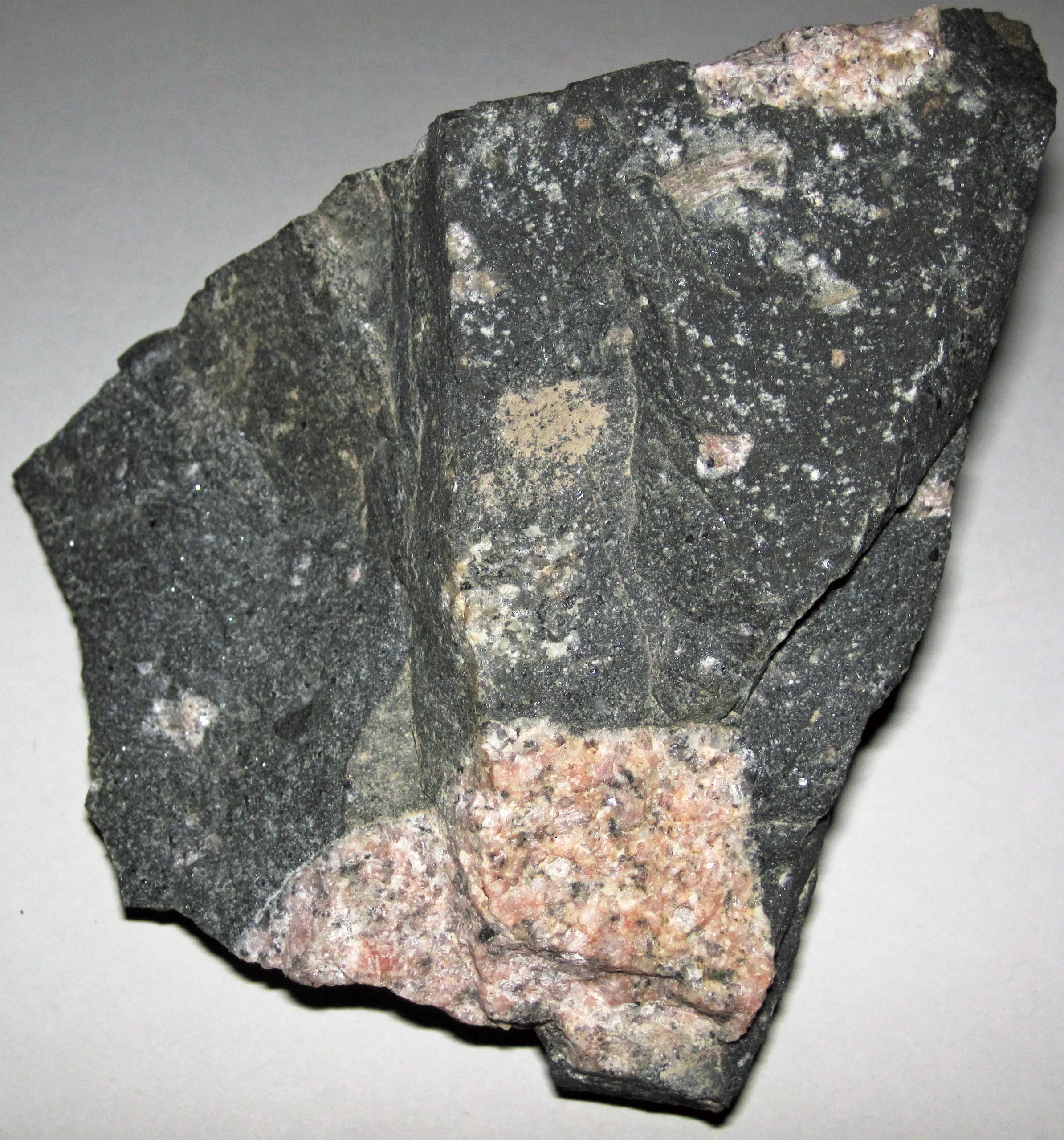
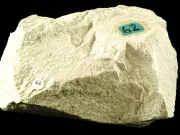
The Paleoproterozoic Gowganda Formation of Ontario is part of a much older glacial succession. Its diamictite and associated deposits are important evidence for ancient cold-climate conditions. Field relations, sedimentary facies and geochronology matter more than the isolated appearance of one hand specimen.
Hand Specimen and Field Identification
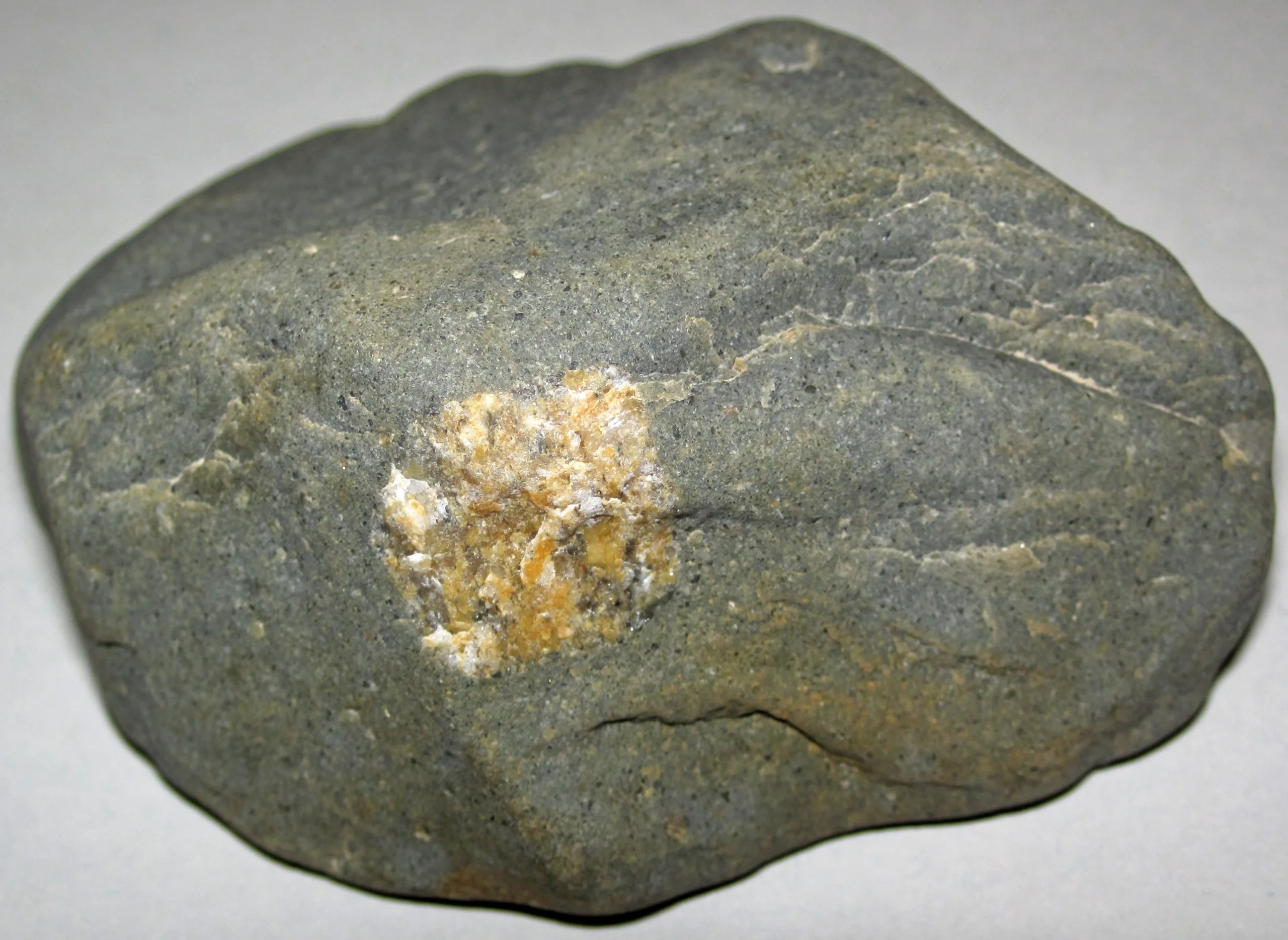
1. Assess sorting. Check whether clay, silt, sand and gravel-sized material occur together without clear size segregation. A single large clast in otherwise well-sorted sandstone is not enough.
2. Examine matrix support. Estimate the percentage of fine matrix and whether large grains touch. Note any preferred orientation or fabric.
3. Describe clasts. Record lithology, angularity, maximum size, surface striations, faceting and deformation. Compare clast populations across beds.
4. Map contacts. Search for erosional bases, shearing, underlying striated pavements, associated graded beds, laminations or slump structures.
5. Interpret only after context. Compare glacial and non-glacial hypotheses using several independent observations. Petrography and provenance analysis can help when field evidence is ambiguous.
Diamictite vs Tillite, Conglomerate and Breccia
| Term | Meaning | What it does not prove |
|---|---|---|
| Diamictite | Lithified, very poorly sorted mixture of clast sizes | Glacial origin |
| Diamicton | Unlithified counterpart | Any single depositional process |
| Tillite | Lithified till deposited directly by ice | That every diamictite is tillite |
| Conglomerate | Rock containing substantial rounded gravel-sized clasts | A particular sorting or matrix proportion |
| Breccia | Rock with angular gravel-sized fragments | A particular origin; can be sedimentary, tectonic or volcanic |
The comparison is deliberately based on descriptive versus genetic terminology. The future dedicated Tillite article should address criteria for identifying direct glacial till deposition in depth, while this article focuses on recognition and differential interpretation of the broader diamictite texture.
Thin Section and Laboratory Analysis
Thin sections can reveal matrix mineralogy, clast provenance, microfractures, deformation fabrics and cement. Grain-size analysis, point counts, X-ray diffraction and geochemical provenance methods can supplement outcrop observations. An apparent matrix-supported fabric may reflect later compaction or strain, so petrographic evidence should be interpreted together with sedimentary context.
In glacial studies, microscopic scratches on clasts are useful only when they can be distinguished from tectonic or transport-related abrasion. Paleomagnetic and geochronological constraints can help reconstruct regional ice-age histories but cannot independently identify a particular diamictite as tillite.
Diamictite and Ancient Climate
Some Neoproterozoic diamictites form part of the evidence for widespread Cryogenian glaciations. Their significance comes from integrated stratigraphy, glacial landforms, sedimentary facies, age constraints and associated carbonate successions. A single poorly sorted rock cannot demonstrate a Snowball Earth event.
Diamictites also occur outside glacial intervals, particularly in tectonically active sedimentary basins. Their abundance therefore must not be used as a simple count of past glaciations.
Frequently Asked Questions
Is every diamictite glacial? No. Submarine debris flows, landslides and volcanic mass flows can produce similar poorly sorted deposits.
What is the difference between diamictite and tillite? Diamictite is a descriptive rock name; tillite requires evidence that the original deposit was glacier-laid till.
What is diamicton? Diamicton is the unconsolidated sediment equivalent of diamictite.
Can diamictite be metamorphosed? Yes. Low-grade metamorphism can produce metadiamictite; glacially derived examples may be called metatillite.
How can I identify diamictite in a hand specimen? Look for very poor sorting, large clasts in a much finer matrix and varied grain sizes. Confirm the origin using outcrop and stratigraphic evidence.
Scientific Sources and Image Credits
Geosciences LibreTexts: Evidence of Glaciation; Sandatlas: Diamictite and lithified till examples; Flint, Sanders and Rodgers (1960), ‘Diamictite, a substitute term for symmictite’, Geological Society of America Bulletin 71:1809–1810. Photographic authors and licenses are specified beneath each image. Featured image: Konnarock Formation diamictite, James St. John, CC BY 2.0.