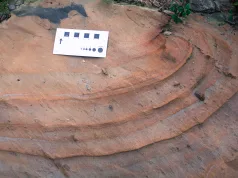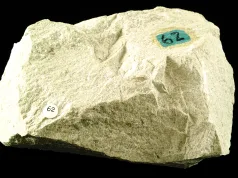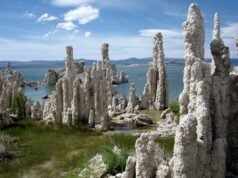














Travertine is a calcium-carbonate sedimentary rock formed when mineral-rich groundwater or spring water precipitates calcite or aragonite. It commonly develops around hot springs, freshwater discharge zones and cave systems as layered, banded or porous deposits. Travertine is a variety of limestone, but its precipitation-dominated formation differs from the accumulation of marine skeletal debris that produces many conventional limestones.
The rock ranges from creamy white to tan, rust, gray and brown, often with visible holes and growth bands. Natural travertine builds the white terraces at Pamukkale and Mammoth Hot Springs; cut and polished travertine is also used as building stone, cladding and flooring. The appearance and durability of a piece depend on its deposit, mineral fabric, porosity and later alteration.
What Does Natural Travertine Look Like?
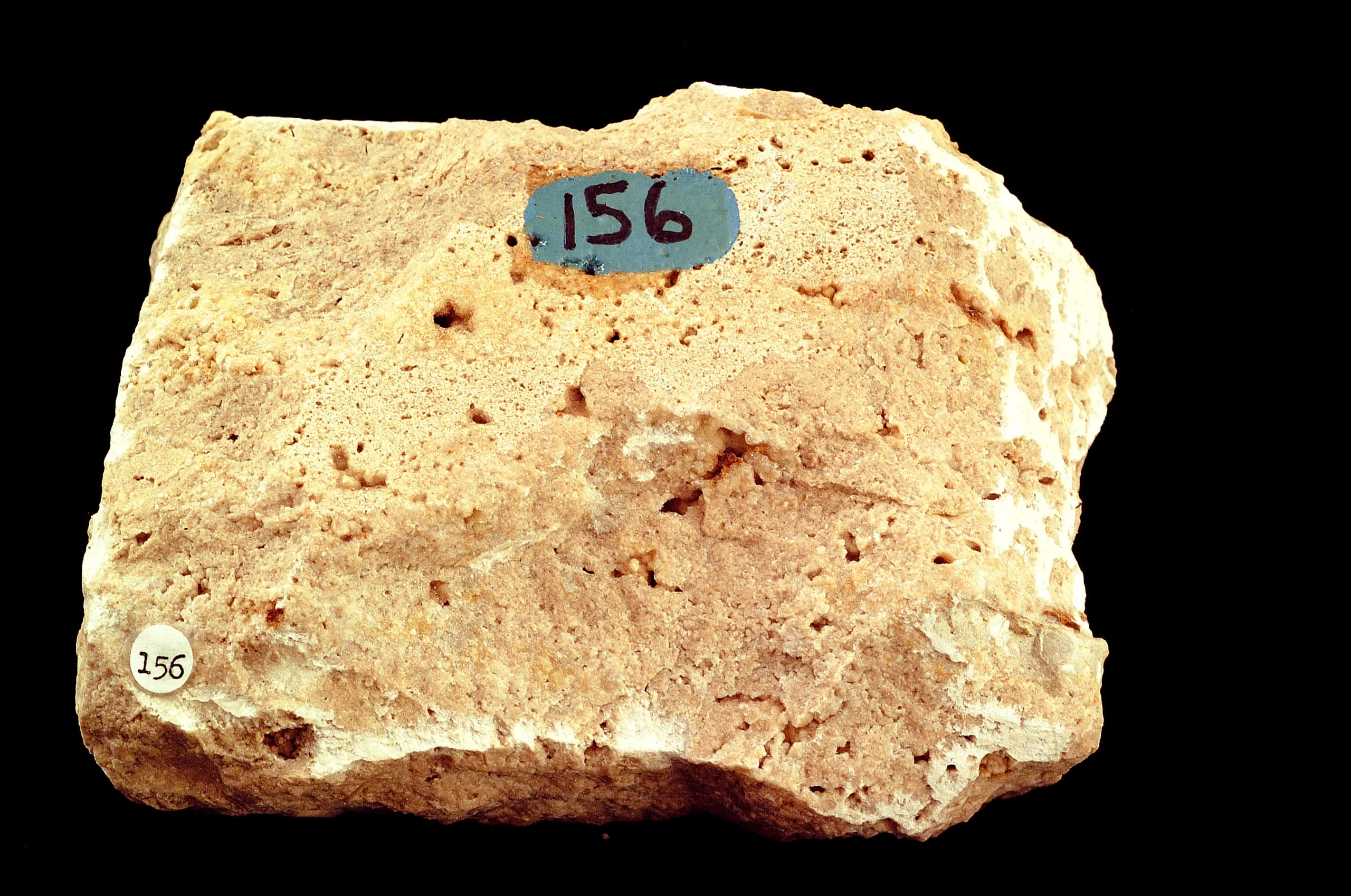
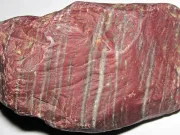
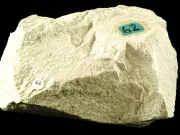
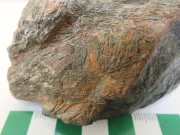
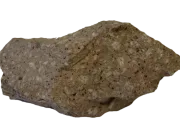
Travertine typically has light-colored carbonate layers and a distinctly textured surface. White and cream tones are common where relatively pure calcium carbonate precipitates; yellow, orange, rust and brown bands may reflect iron oxides, organic material or microbial activity. Pores can be rounded, irregular or elongated parallel to bedding.
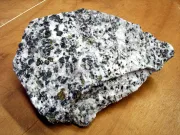
A freshly broken specimen may show porous bands alternating with denser crystalline zones. Some pieces look nearly solid and others contain conspicuous vugs; the balance is controlled by deposition, biological templates, gas bubbles and later dissolution or cementation. The polished stone sold in building-material markets can look quite different from an active spring deposit.
Travertine Composition and Physical Properties
| Property | Typical observation |
|---|---|
| Rock group | Sedimentary limestone (chemical or biochemical carbonate deposit) |
| Main minerals | Calcite, commonly with aragonite in some fresh or active deposits |
| Chemical composition | Primarily CaCO₃; trace constituents vary |
| Color | White, cream, beige, brown, gray, yellow or reddish |
| Texture | Banded, porous, crystalline, laminated or vuggy |
| Mineral hardness | Calcite has Mohs hardness 3; rock performance depends on porosity and structure |
| Acid reaction | Calcite-rich travertine commonly fizzes with dilute hydrochloric acid |
| Porosity | Often prominent but highly variable; some bands become strongly cemented |
| Water absorption | Depends on connected pore space and surface treatment |
Travertine is not a separate mineral species. It is a rock made mainly of calcium-carbonate minerals, with calcite commonly dominant. Fresh, rapidly precipitated deposits may contain aragonite, which can later recrystallize. The commonly seen dark streaks, orange films or porous layers do not mean that the entire rock has a uniform impurity content.
Bulk density, absorption and mechanical properties cannot reliably be assigned from color alone. A filled and polished commercial tile may behave differently from a porous natural block cut from the same deposit.
How Does Travertine Form?
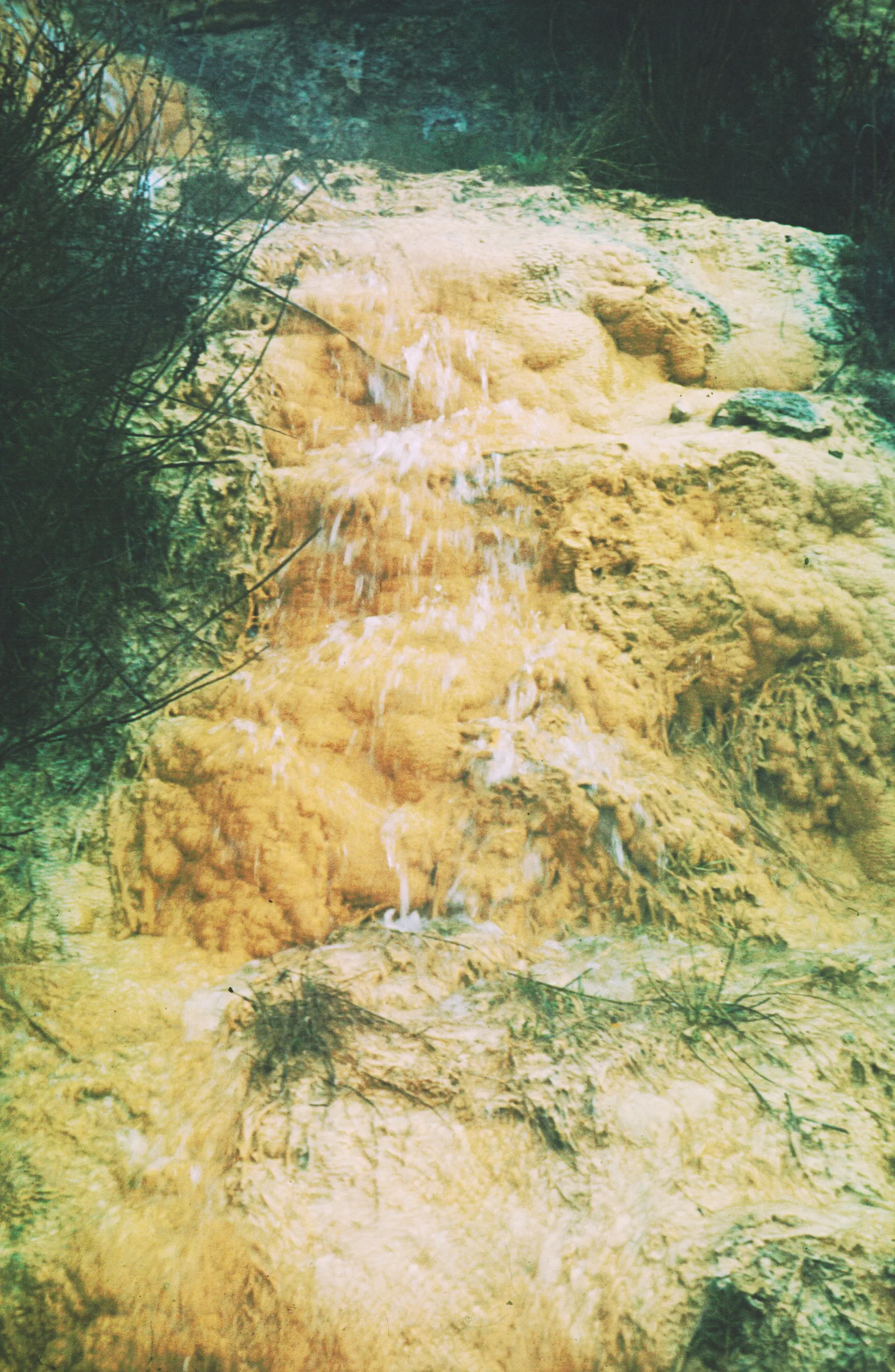
Groundwater can dissolve limestone and other carbonate-bearing rocks while circulating through the subsurface. Dissolved calcium and bicarbonate are transported toward springs and discharge zones. As the water reaches lower pressure, loses dissolved CO₂, changes temperature or encounters biological activity, it can become supersaturated and deposit calcium carbonate.
A simplified precipitation reaction is Ca²⁺ + 2HCO₃⁻ → CaCO₃(s) + CO₂(g) + H₂O. This expresses a common pathway, not a complete description of every spring. Water chemistry, pH, flow velocity, microbial biofilms and temperature all influence the rate and shape of deposition.
Travertine can accumulate on ledges, around plant stems, in flowing streams, at spring vents and as cave dripstone. Fresh deposits may be soft and porous before recrystallization and additional calcite cement make them denser. Thermal springs provide striking examples, but travertine formation does not require hot water in every classification system.
The USGS Yellowstone Volcano Observatory describes CO₂ degassing, calcite/aragonite precipitation and biological influences on travertine formation.
Calcite Precipitation, Microbes and Layered Growth
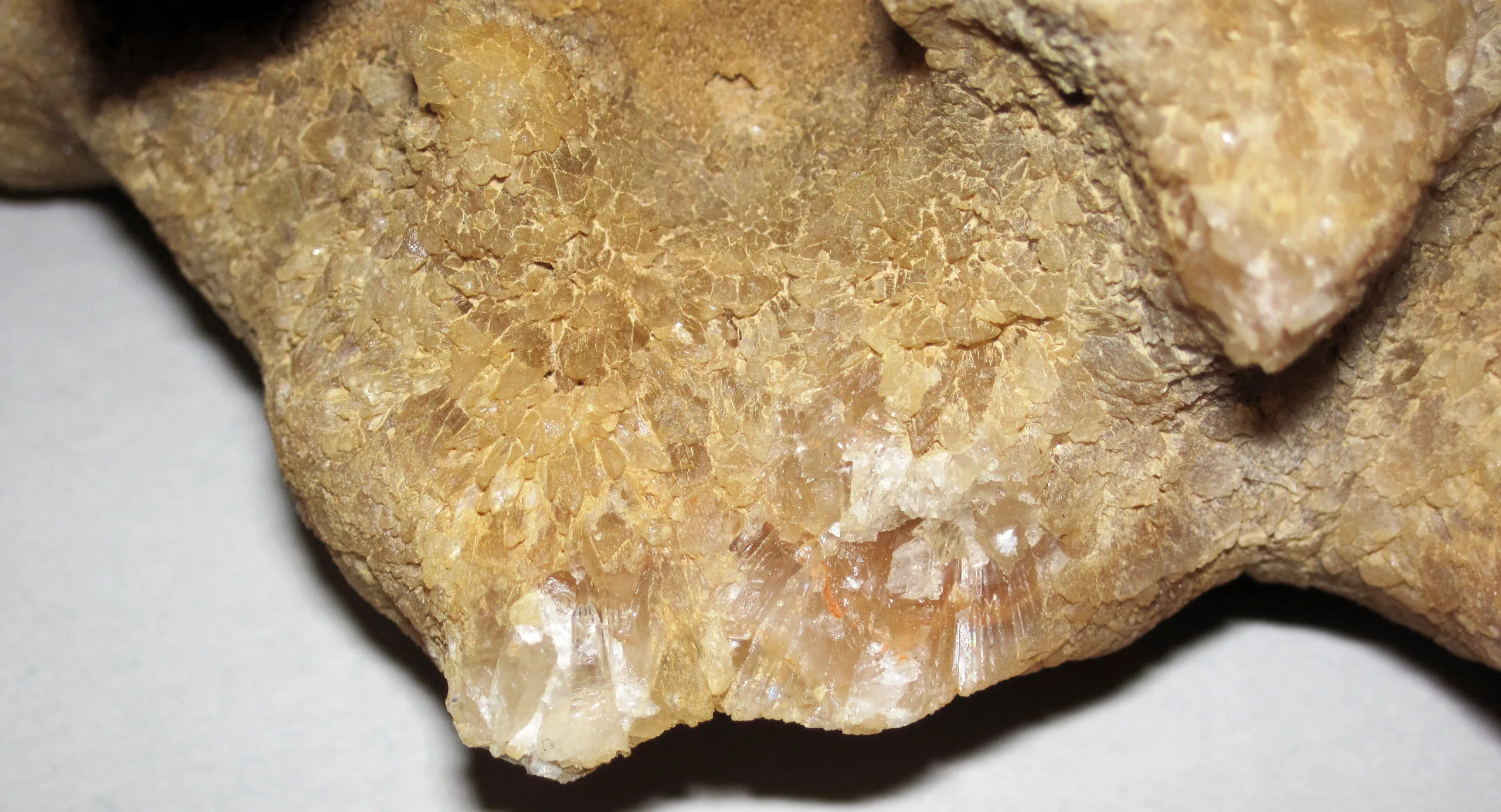
Travertine growth can be surprisingly rapid at active spring outlets because water continuously supplies dissolved calcium carbonate. Thin mineral films accumulate on existing surfaces; the resulting bands record changes in water flow, chemistry, seasonal conditions and biological mats. Repeated wetting and drying may form crusts, while submerged surfaces can develop more continuous precipitates.
Microorganisms may encourage precipitation by changing local water chemistry or creating surfaces where carbonate crystals can nucleate. Their activity can also influence delicate microstructures. However, not every lamination in travertine is a microbial feature, and biochemical explanations should be supported by microscopy and geochemistry.
Aragonite needles or calcite crystals may grow in different parts of a spring system, and mineral replacement can transform original textures over time. This is why two specimens from the same spring can have different pore patterns and crystalline fabrics.
Travertine Textures: Bands, Pores and Growth Structures
Banding: Parallel, wavy or concentric layers can reflect successive episodes of precipitation. Saw-cut sections commonly reveal pale and dark laminae resembling natural wood grain.
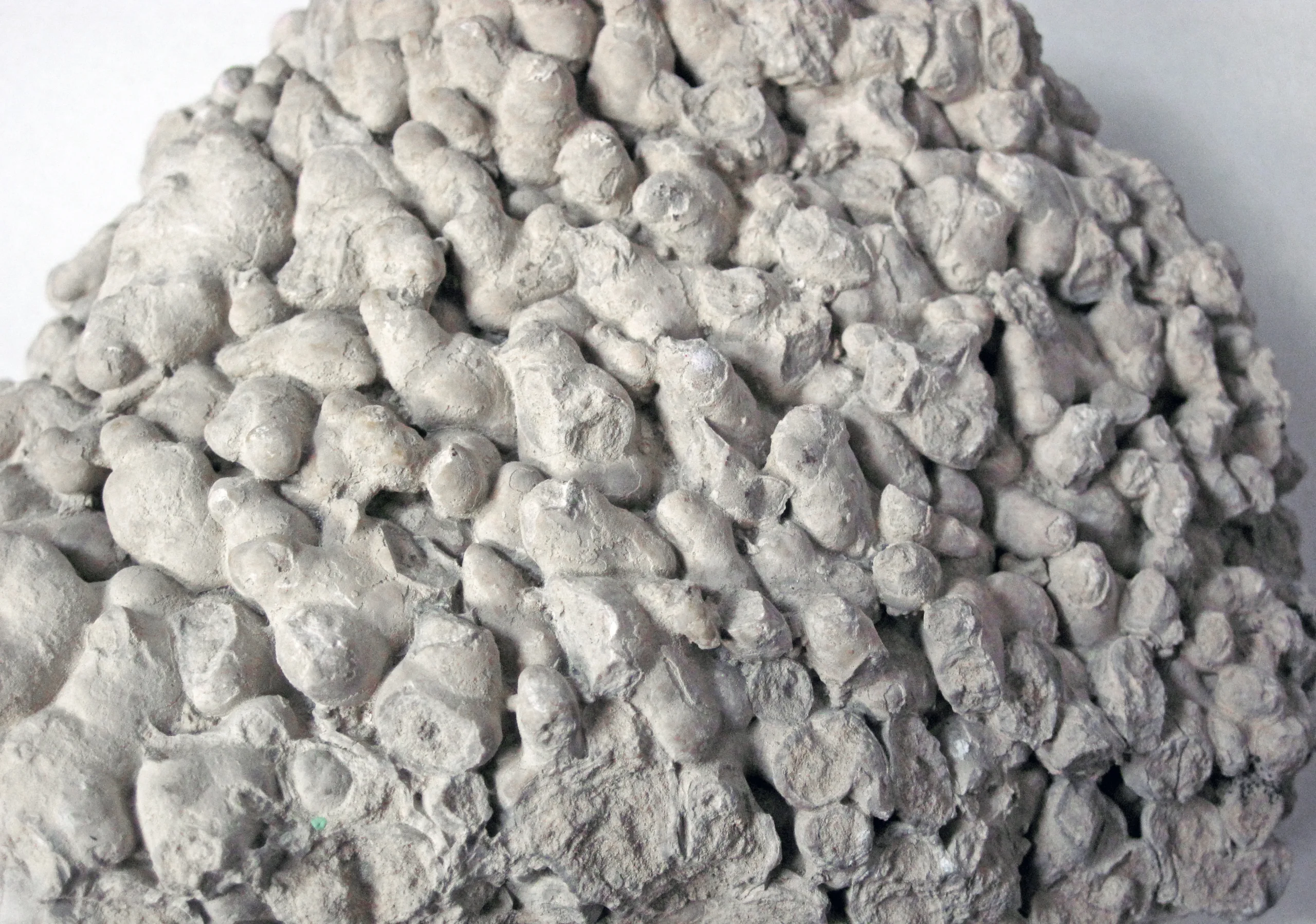
Vugs and pores: Holes may originate where plants or gas bubbles occupied space, where crystal growth enclosed cavities, or where carbonate was later dissolved. Large open pores are not a universal feature of every travertine.
Crystalline crusts: In some settings, calcite precipitates as dense, sparkling crusts; in others, rapidly formed deposits are chalky and delicate. Porosity can vary sharply across adjacent layers.
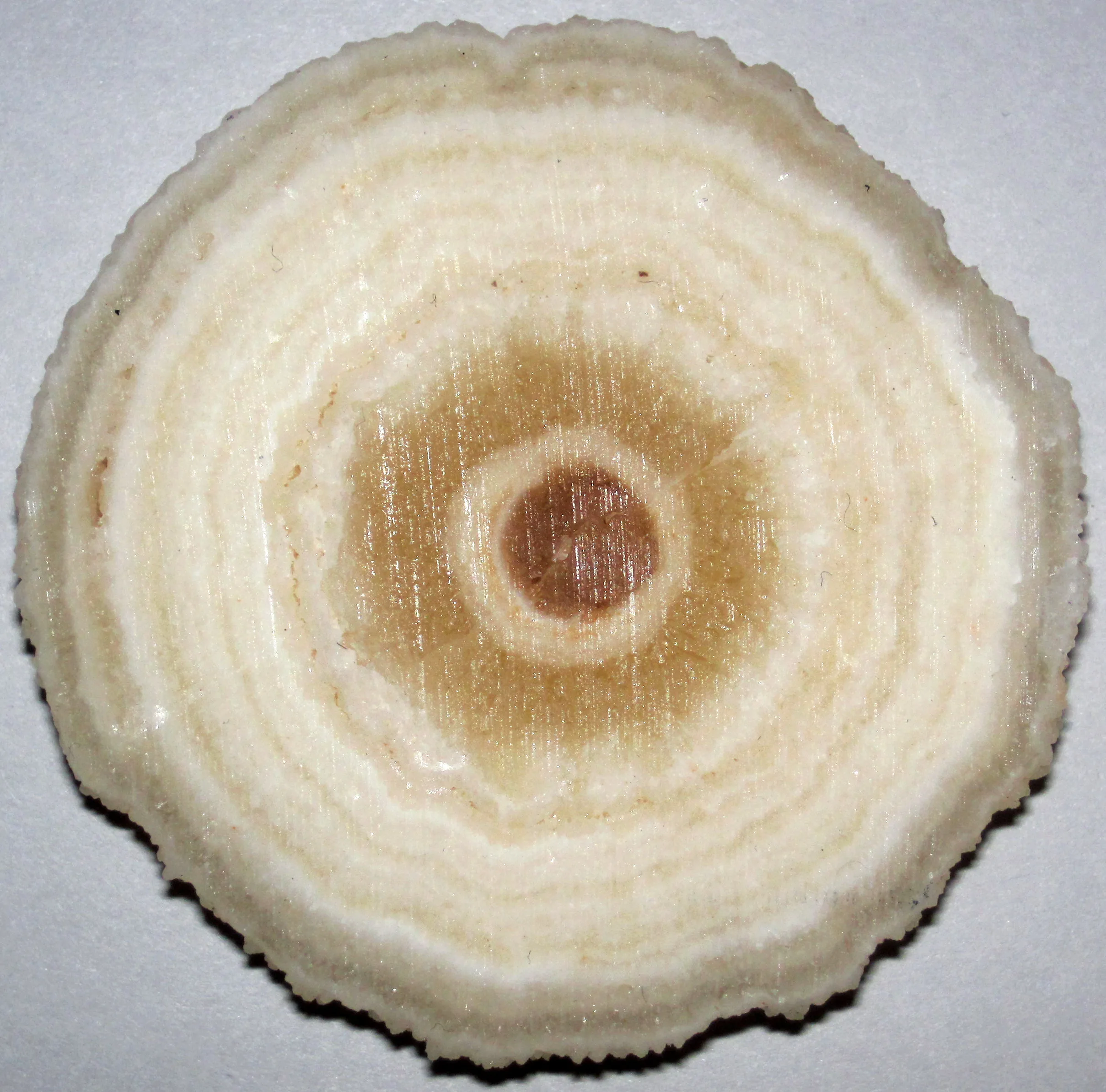
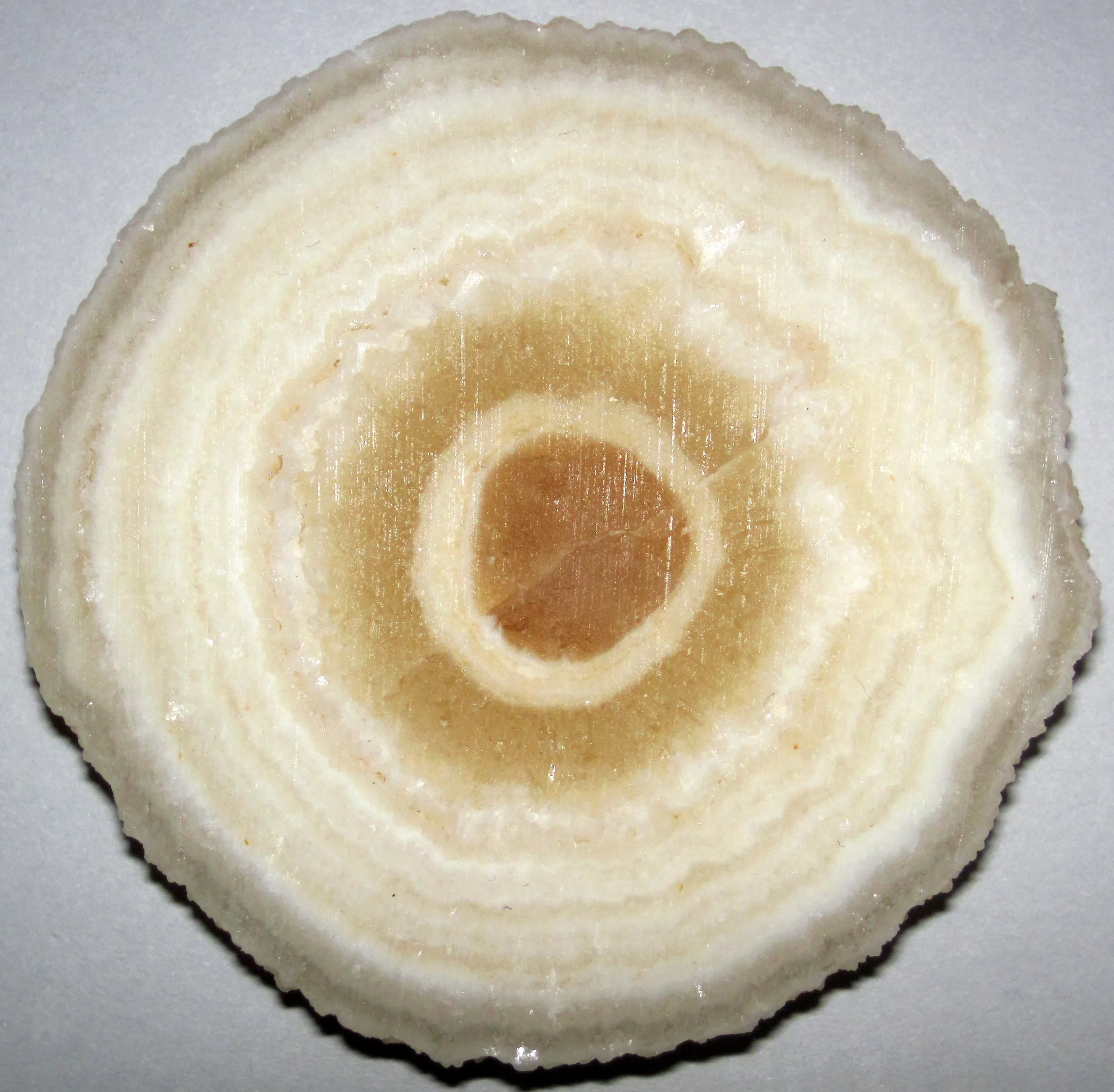
Concentric dripstone bands: Cave stalactites and similar deposits grow around a central water pathway or surface. A cut section may display nested carbonate layers that reflect changes in dripwater supply.
Main Types of Travertine
| Descriptive type | Appearance | Typical context |
|---|---|---|
| Spring or terrace travertine | Layered crusts, flowstone and terrace rims | Groundwater discharge and hot springs |
| Banded travertine | Conspicuous parallel or wavy laminae | Repeated calcite precipitation |
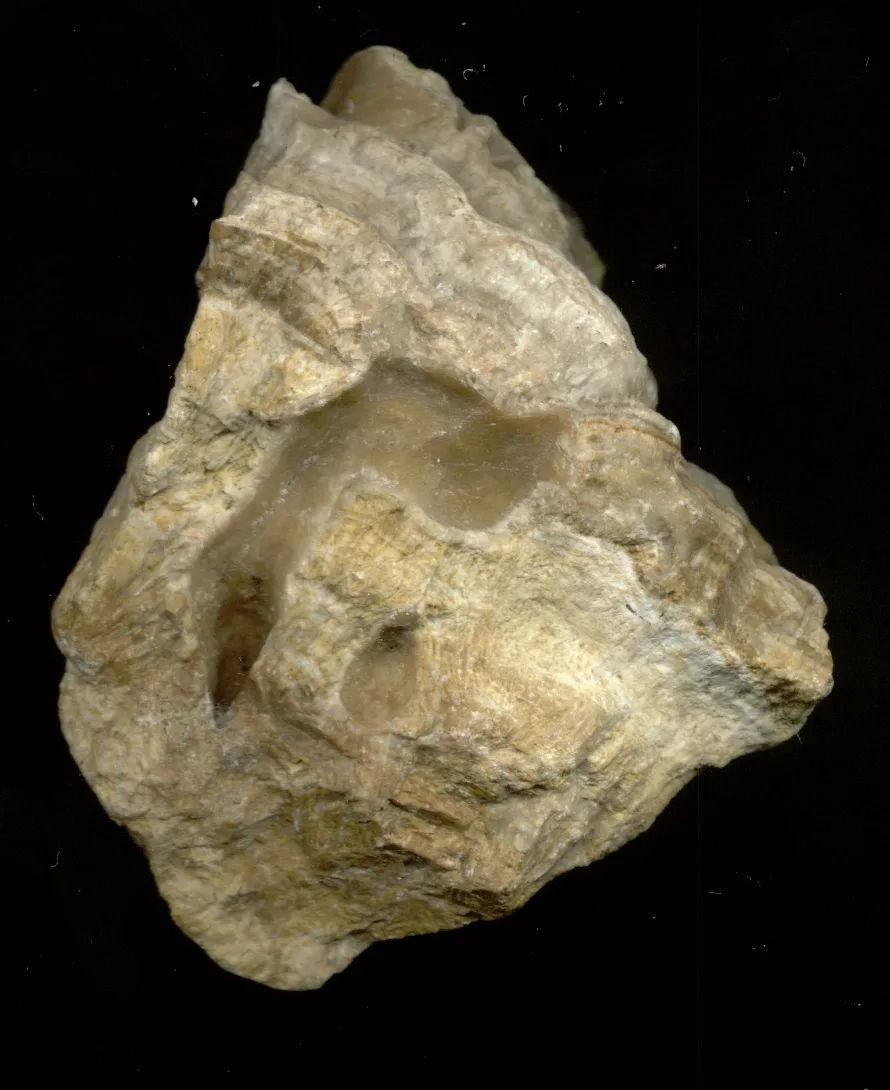
| Vuggy or porous travertine | Open holes and irregular cavities | Biological templates, gas spaces or later dissolution |
| Dense crystalline travertine | More compact, harder-looking calcite bands | Cementation and recrystallization |
| Cave travertine / dripstone | Concentric layers, flowstone, stalactites | Precipitation from cave seepage |
| Commercial vein-cut or cross-cut travertine | Different patterns exposed by saw orientation | Stone-finishing terminology rather than geological type |
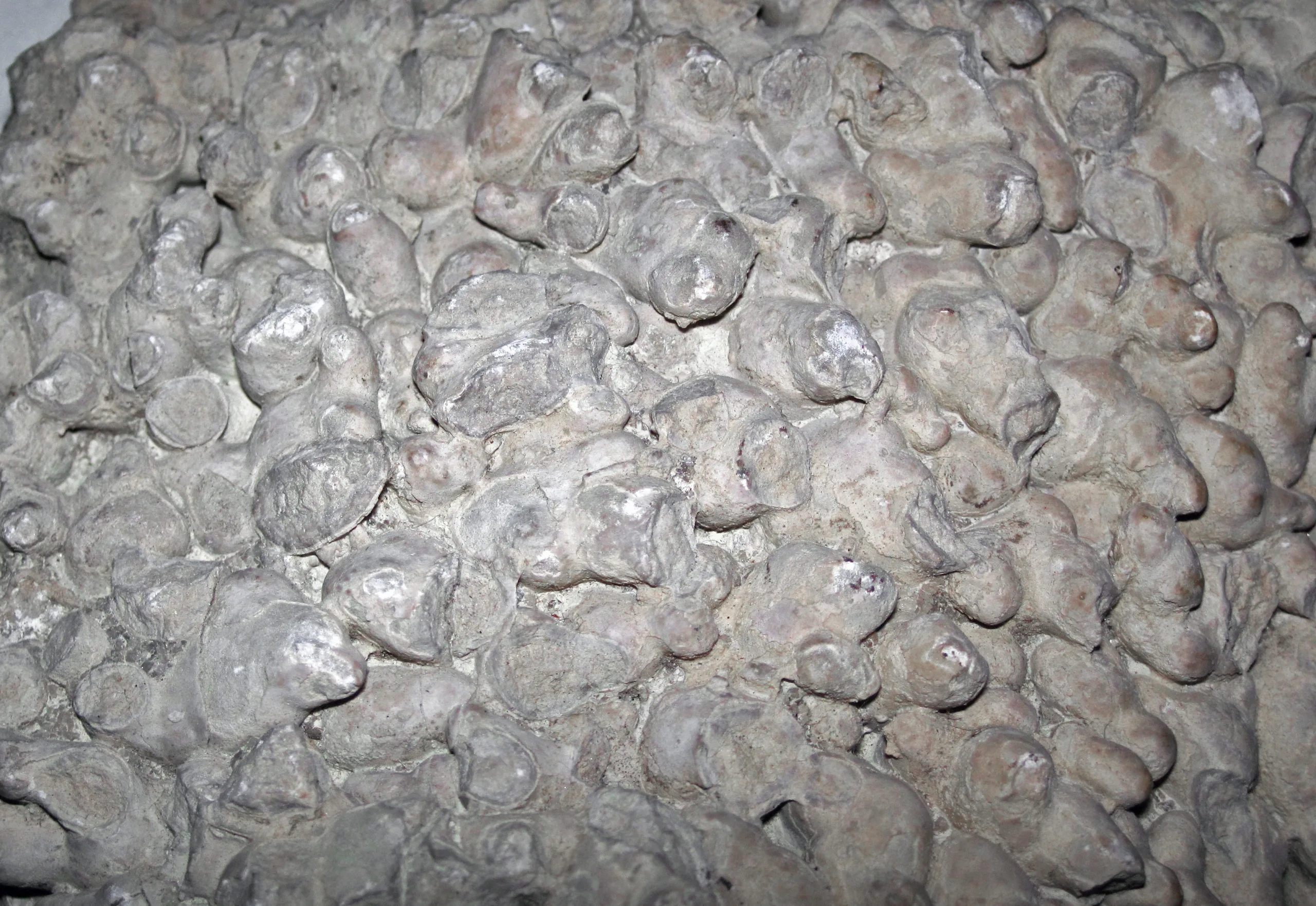
Color-based retail names such as silver, walnut or ivory travertine describe appearance and trade practices, not separate geological species. The terms ‘vein cut’ and ‘cross cut’ refer to the orientation of cutting relative to natural bedding, which can change how the same rock looks.
Travertine Terraces and Hot Spring Landscapes
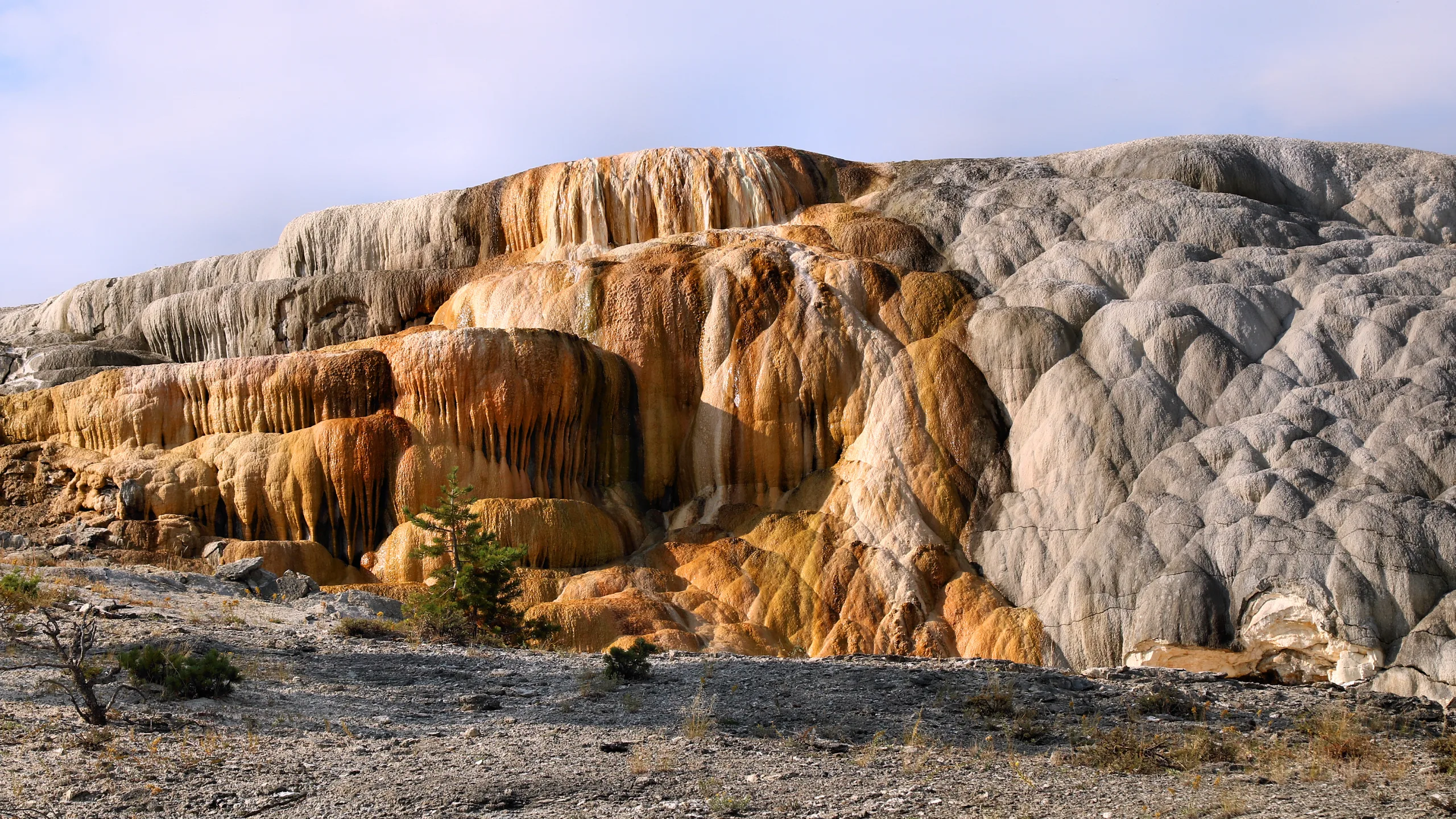
Travertine terraces grow when carbonate-saturated water flows across the ground and precipitates CaCO₃ along pool rims and steps. Tiny irregularities can trap more mineral deposits, reinforce barriers and gradually create cascades of terraces. Bright white indicates relatively fresh carbonate, while yellow or orange colors may relate to microbial communities or mineral coatings.
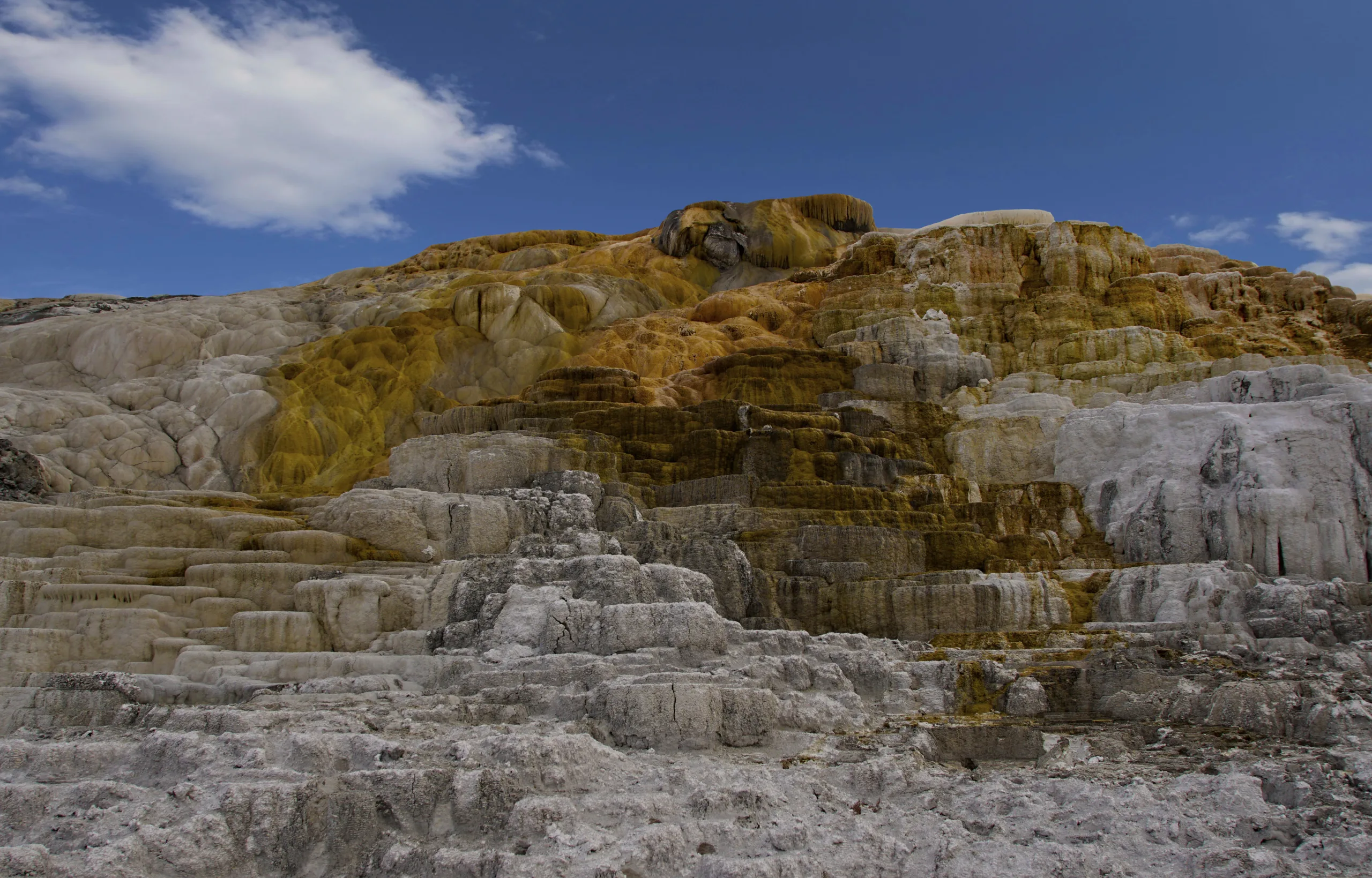
Mammoth Hot Springs in Yellowstone: The discharge waters have interacted with carbonate-bearing rocks in the subsurface. As they emerge, the release of CO₂ promotes calcium carbonate precipitation. Flow paths can change, leaving some terraces inactive while others grow.
The National Park Service Yellowstone guide explains the connection between spring chemistry, carbonate rock and travertine terrace growth. Active hydrothermal deposits should never be approached outside designated visitor routes.
Travertine in Caves and Speleothems
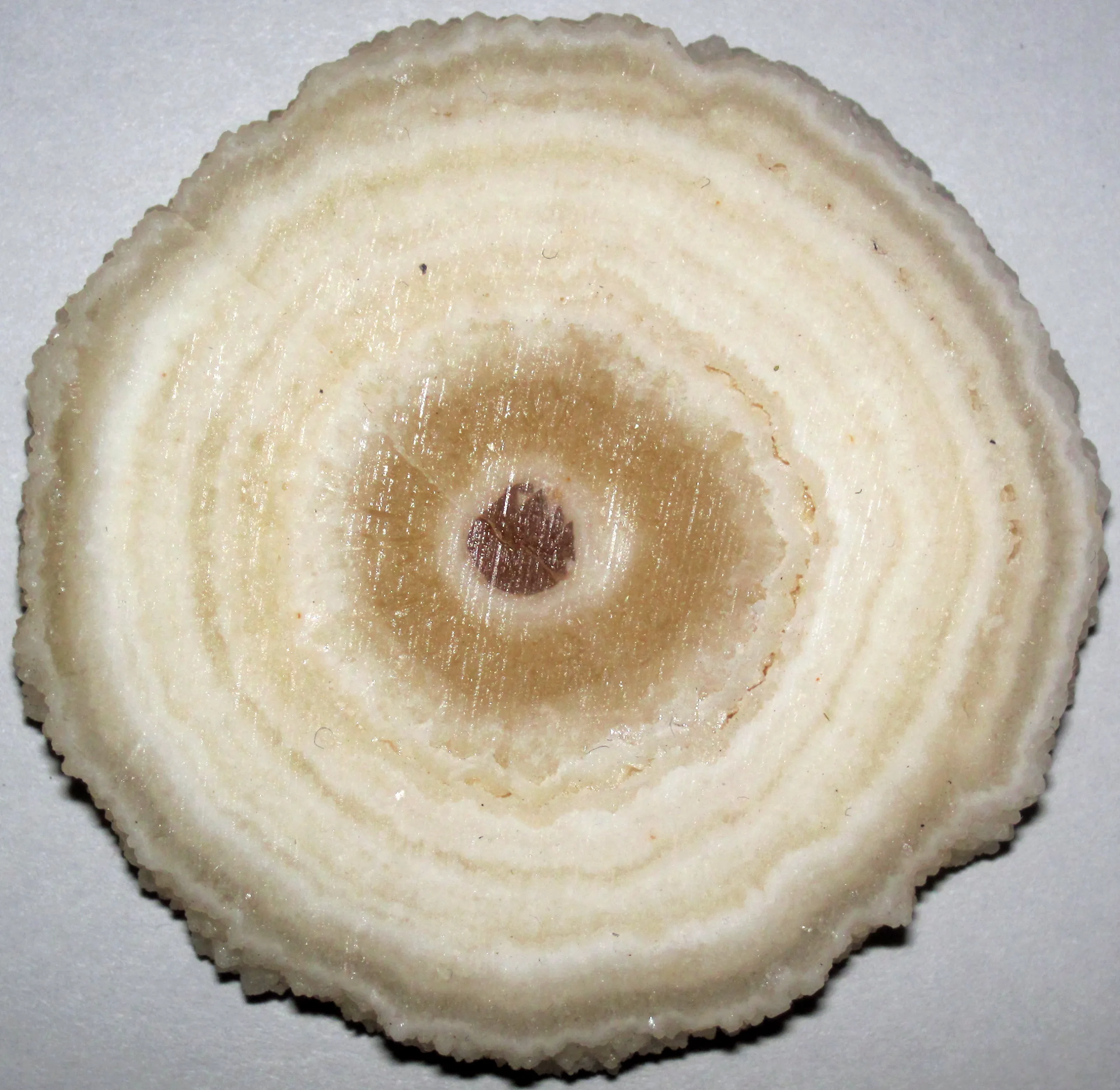
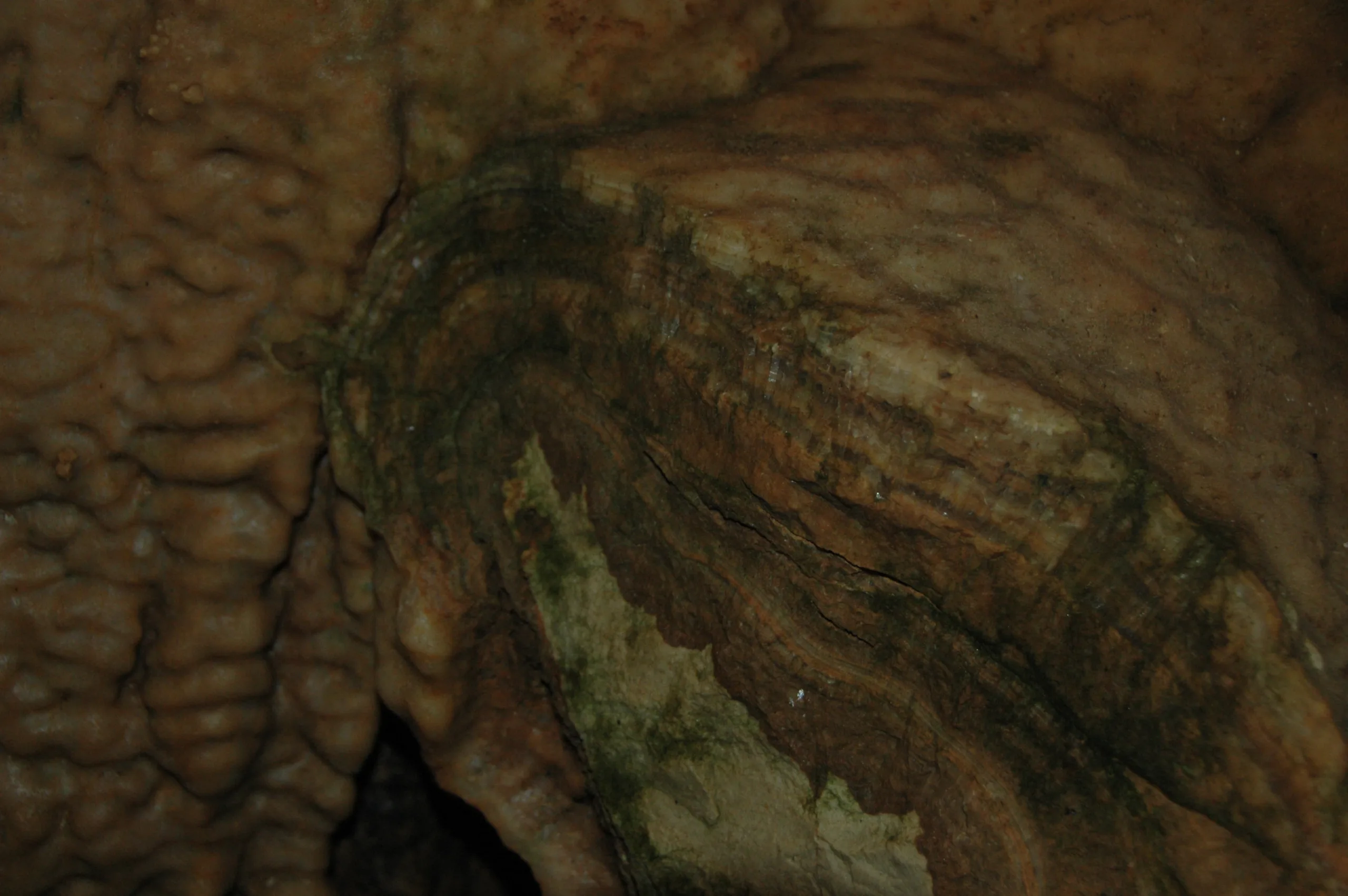
Calcium-carbonate-rich seepage inside caves can build stalactites, stalagmites, curtains and flowstone. Some geological literature groups these deposits as travertine, while other classifications reserve travertine for spring deposits and use the terms ‘speleothem’ or ‘cave calcite’ for cave formations. The context should be stated rather than applying a single broad label indiscriminately.
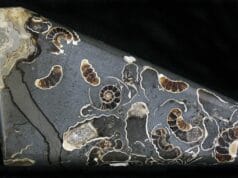
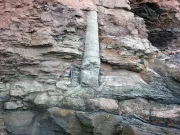
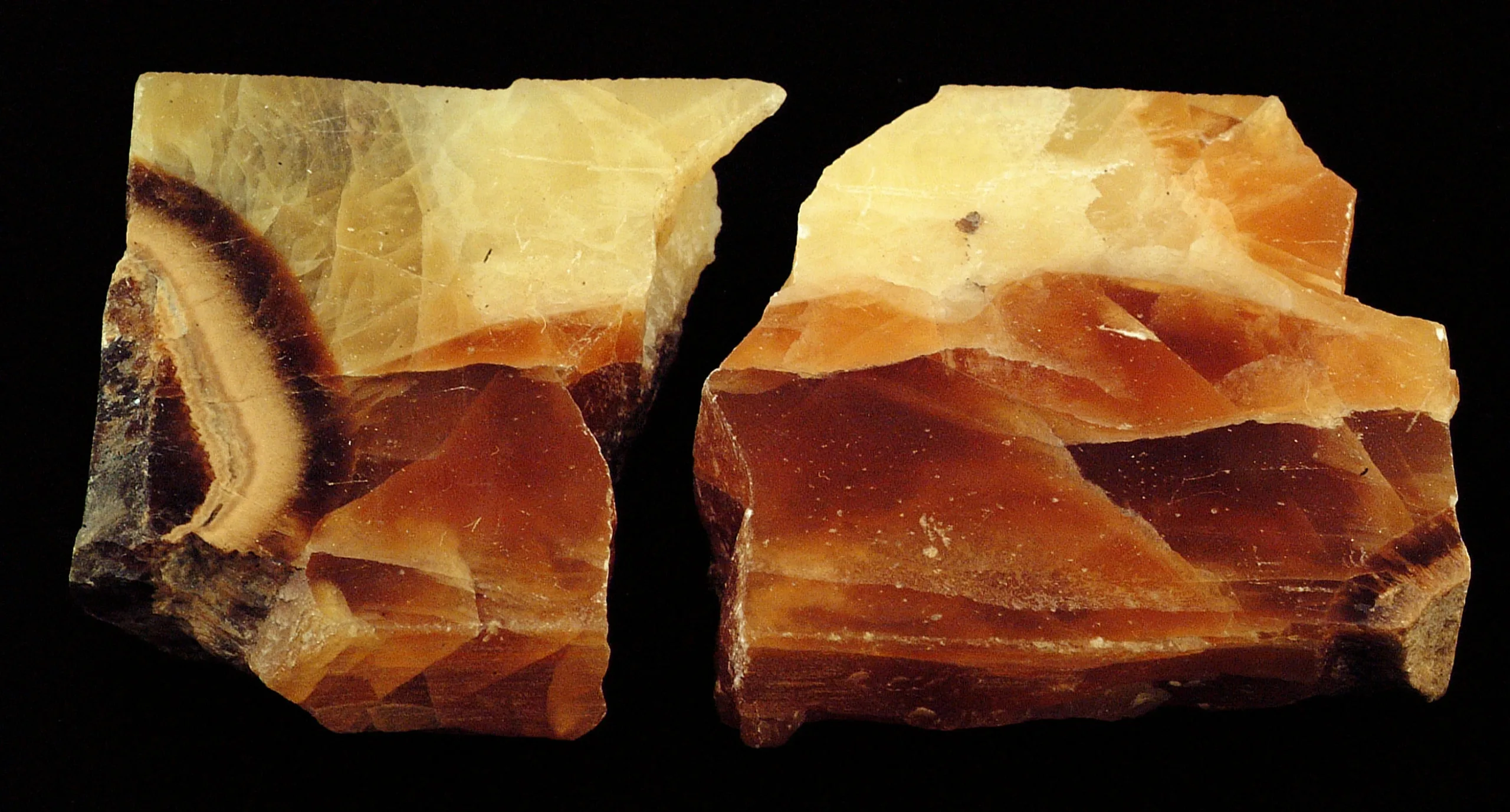
Stalactites commonly develop along dripping pathways from ceilings, whereas stalagmites grow upward from cave floors. Calcite layers may preserve variations in water chemistry and drip rate over time. When cut, many speleothems show concentric or layered growth, as illustrated by the specimen above.
Living caves are fragile; removing mineral formations or disturbing dripwater systems damages scientific and conservation value.
Travertine vs Tufa, Limestone, Marble and Onyx
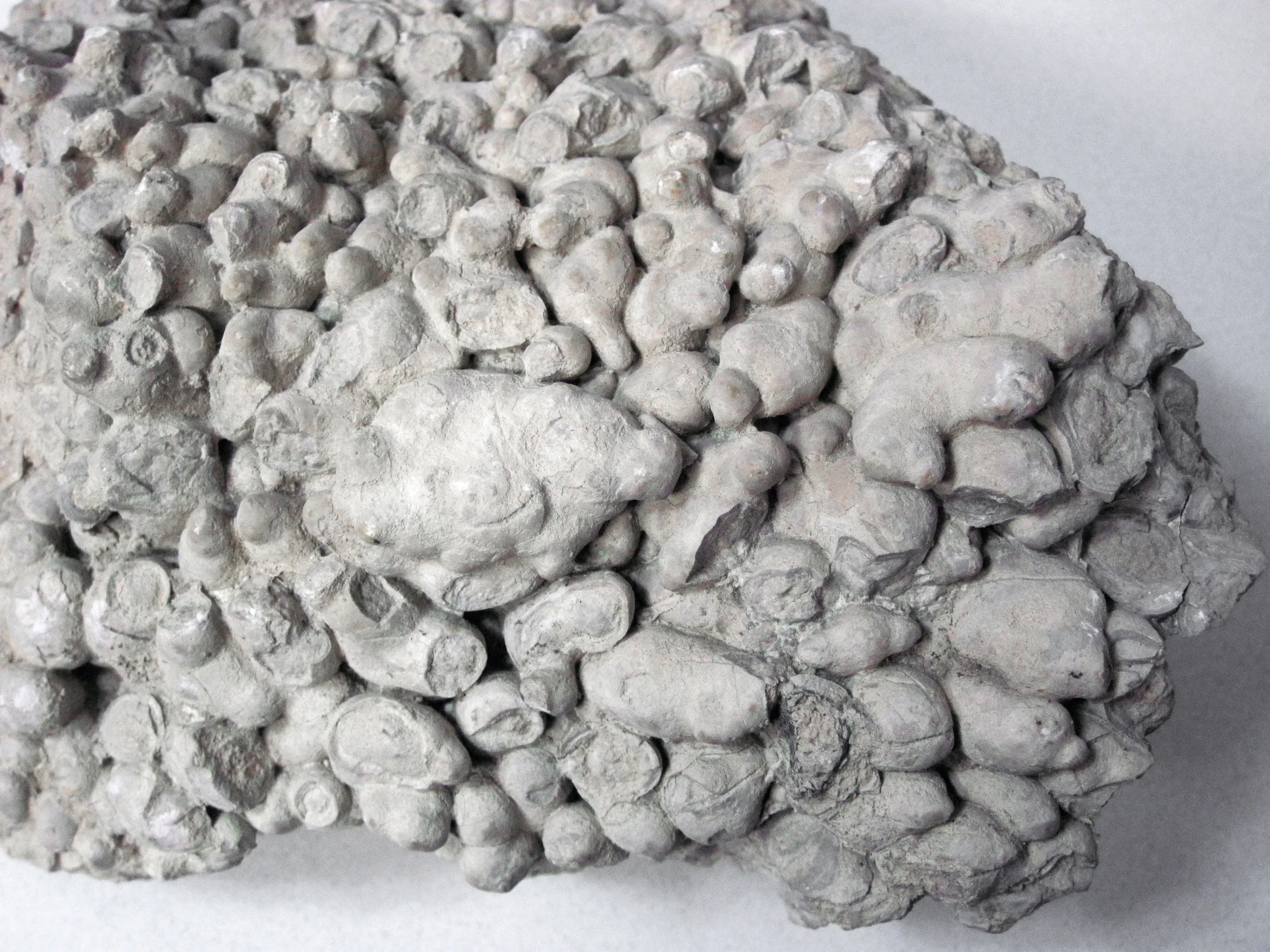
| Material | Difference |
|---|---|
| Travertine | Calcium carbonate precipitated from spring water and related systems; often banded or porous |
| Calcareous tufa | Typically freshwater carbonate deposited under ambient-temperature conditions, often closely linked to plants and microbial activity; naming conventions overlap with travertine |
| Limestone | A broad carbonate sedimentary-rock category that includes travertine and many biogenic limestones |
| Marble | Metamorphosed, recrystallized carbonate rock rather than a normal spring deposit |
| Commercial ‘onyx marble’ | Translucent, banded calcite/aragonite deposited from water, sometimes described as onyx or calcite onyx in stone trade; it is not the silica mineral variety of onyx |
The travertine–tufa distinction is not applied consistently in all geological publications. Many authors use travertine mainly for thermal spring carbonates and tufa for cooler freshwater carbonates, while others place both under a broader travertine family. Accurate usage benefits from describing the depositional setting.
A stone described commercially as ‘onyx travertine’ should not be confused with banded chalcedony onyx or agate. Mineralogical analysis can confirm whether a specimen is carbonate or silica.
How to Identify Travertine in the Field
1. Identify carbonate mineralogy. Travertine usually reacts with dilute hydrochloric acid because it contains abundant calcite. Acid testing requires appropriate protection and should not be performed on protected formations or finished stone.
2. Look at the layering. Thin, curved or parallel bands, mineral crusts and irregular vugs support a precipitation origin.
3. Check the local geological setting. Spring outlets, old hydrothermal terraces, freshwater streams and cave deposits provide evidence; banded appearance alone does not identify an origin.
4. Inspect fresh and weathered surfaces. Fresh carbonate can be white or creamy; iron-rich surface films and biological growth produce color. A polished commercial tile may obscure the original rock fabric.
5. Compare lookalikes. Regular marine-bedded limestone, metamorphic marble, freshwater tufa and banded calcite may have similar appearance. Petrography, isotope studies and depositional context may be needed for a defensible classification.
Where Is Travertine Found?
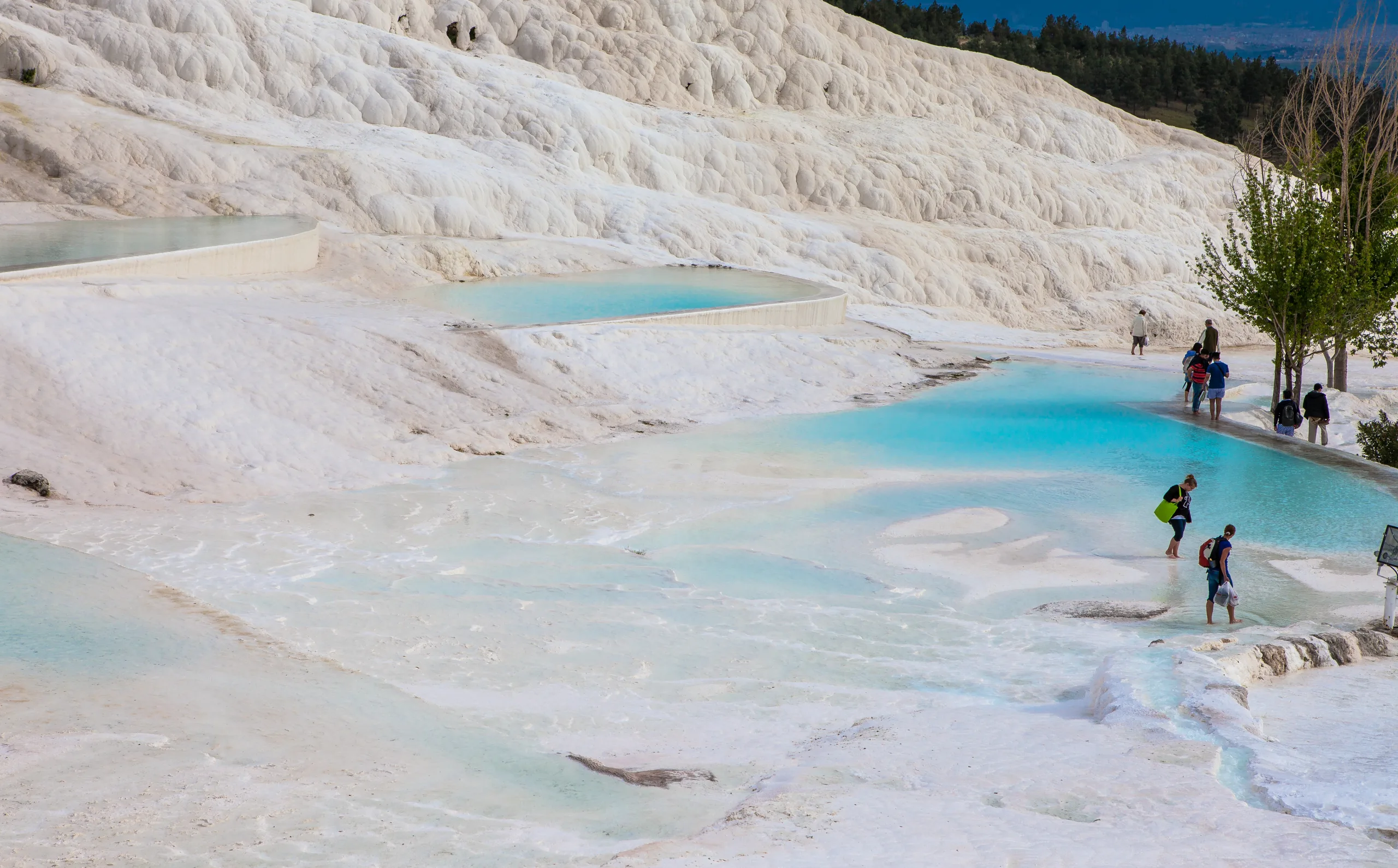
Pamukkale, Türkiye: Mineral-rich water deposits white calcium carbonate and constructs step-like terraces. The visible pools and slopes are active landscape features, not an indication that all commercial travertine is mined at this location.
Mammoth Hot Springs, Wyoming, USA: Yellowstone contains extensive hot-spring travertine terraces supplied by carbonate-bearing waters and influenced by CO₂ degassing.
Tivoli and Rapolano Terme, Italy: Quarried travertine deposits have supplied decorative and structural stone for centuries. Roman construction helped make Tivoli travertine particularly well known.
Other spring regions: Travertine and related freshwater carbonates occur in many carbonate-bearing areas where suitable groundwater flows reach the surface, including geothermal fields, river valleys and karst systems.
A particular deposit can record several phases of active spring growth and later cementation, erosion or deformation. Quarry deposits and spectacular active terraces therefore represent different parts of the broader travertine story.
Mechanical Properties, Porosity and Durability
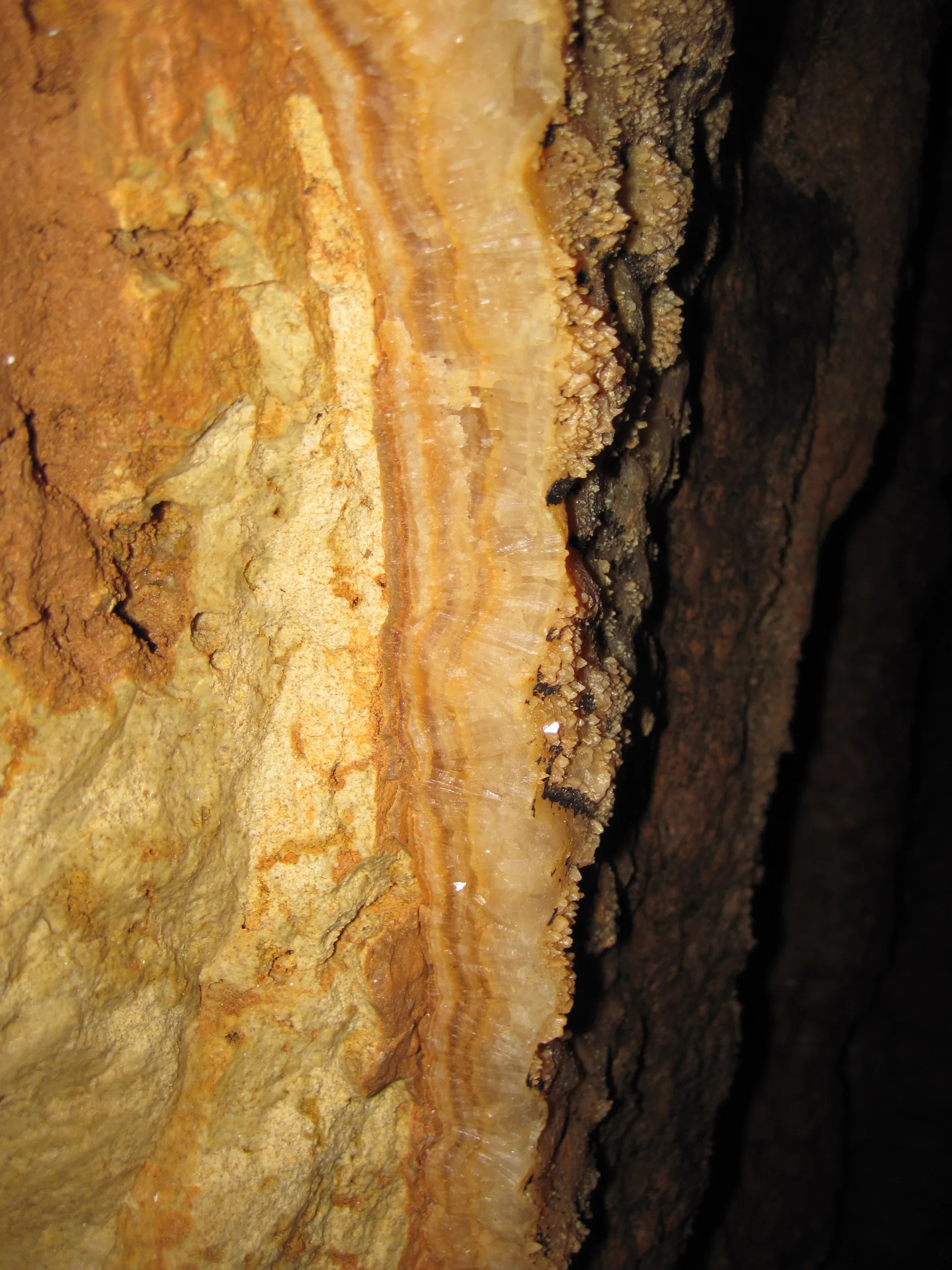
Natural travertine can have high variability in pore size, connected porosity, density and fracture patterns. Dense beds may perform well as dimension stone, whereas strongly vuggy layers or weak bedding contacts may reduce strength and durability. Filling visible holes with resin or cement improves appearance but does not automatically make different blocks identical in engineering performance.
For cladding, paving or exterior installations, evaluate strength, flexural resistance, freeze–thaw durability, water absorption, surface finishing and intended exposure. Some applications require particular stone grades and certified performance testing. The direction of bedding and cut orientation may influence mechanical behavior and visual continuity.
Staining and weathering can be affected by permeability and surface treatments. Carbonate stone is acid-sensitive, so cleaning methods should be matched to the material rather than applied indiscriminately.
Travertine Uses in Architecture and Construction
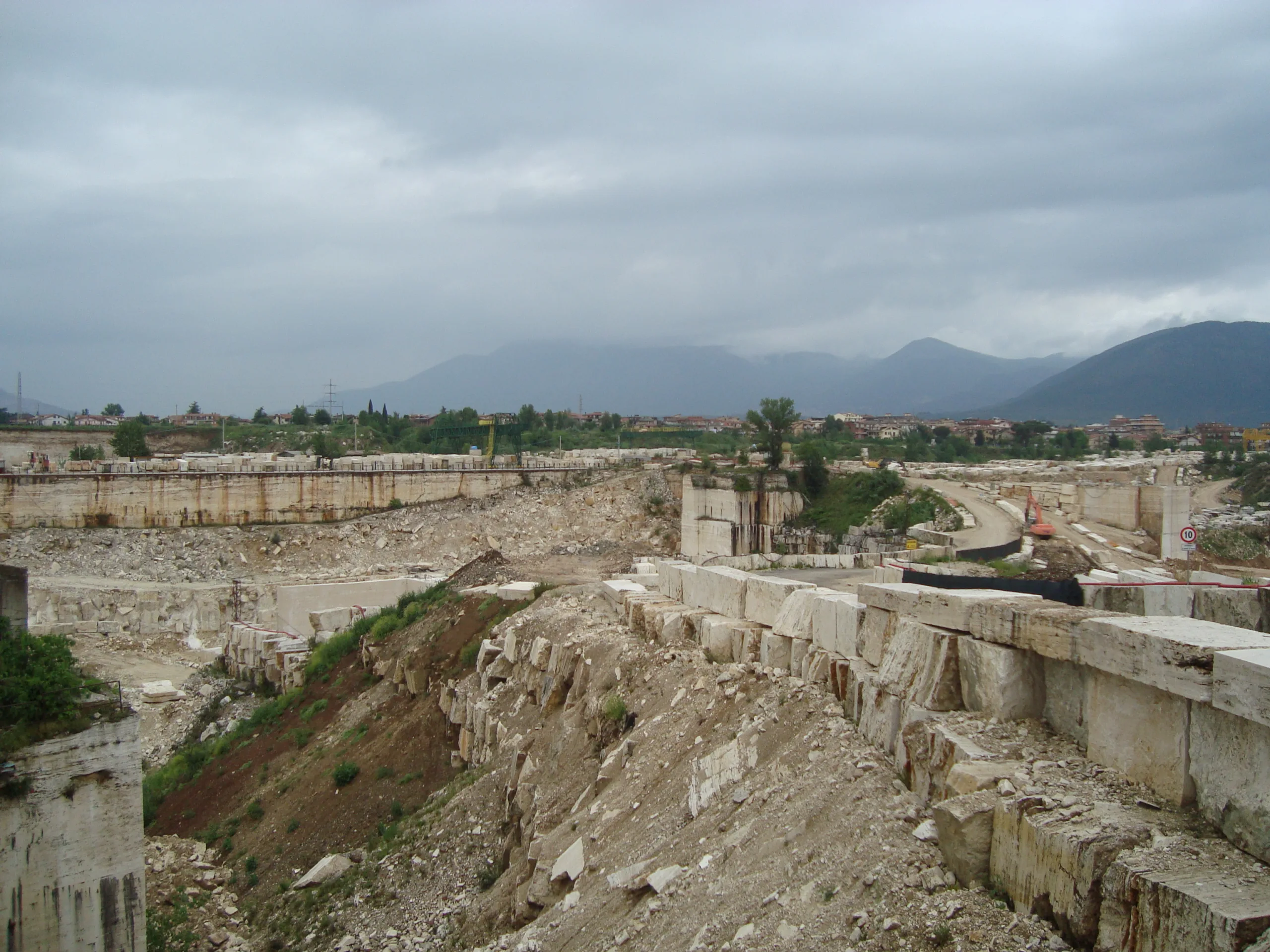
Travertine is used as a building stone, flooring, wall cladding, stairs, paving and decorative elements. Its light colors and visible depositional banding suit both modern and historical architecture. The Romans used significant amounts of travertine from the Tivoli area, including in the Colosseum alongside other materials.
Vein-cut travertine exposes relatively linear bands, while cross-cut travertine tends to show more irregular cloud-like patches. Finish types include honed, polished, brushed or tumbled, chosen for appearance, slip resistance and wear.
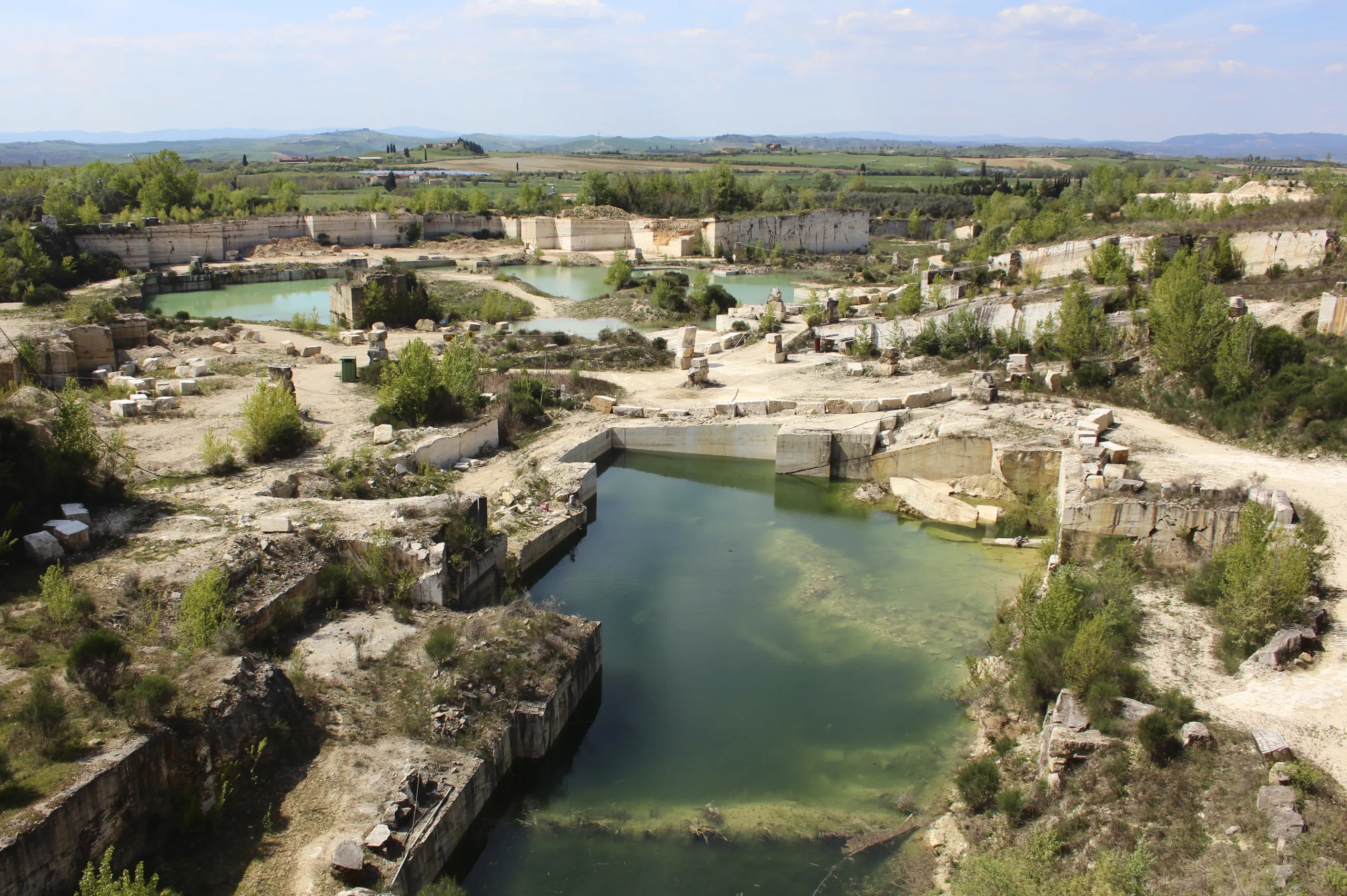
Commercial stone production requires selection of sound quarry blocks, accurate cutting and appropriate filling or surface protection. In wet or exterior environments, designers must consider slip resistance, frost risk and drainage. Travertine is not automatically suitable for every application simply because it is natural stone.
Travertine Care, Cleaning and Stain Prevention
Travertine is mainly calcium carbonate. Acidic cleaners, vinegar, lemon juice and many descalers can etch a finished surface. Routine care should generally use a pH-neutral stone-compatible cleaner, gentle wiping and prompt removal of spills. Different surface sealers and filling compounds require their manufacturer’s instructions.
Sealing may reduce the penetration of some liquids into connected pores but does not eliminate acid etching and must not be treated as waterproofing. For outdoor paving, assess freeze–thaw durability, suitable joints and whether water is trapped under the slabs. Avoid using aggressive abrasives that may damage polished finishes.
Natural holes and bands are normal features, although fractures and loose fill should be distinguished from sound stone. A specialized stone professional can evaluate damaged or deeply stained material.
Travertine as a Record of Hydrothermal and Climate History
Travertine deposits can preserve information about past groundwater flow, spring locations, precipitation chemistry and environmental change. Researchers study carbonate fabrics, stable isotopes of carbon and oxygen, trace elements and uranium-series ages. These proxies must be interpreted with the local groundwater system in mind.
At Yellowstone, dated travertine deposits have been used to examine the timing and location of hydrothermal activity and its relationship with climatic variations. Ancient travertine ridges and terraces may reveal former groundwater discharge zones even after spring activity has ceased.
The USGS study of Yellowstone travertine and climate history demonstrates why these carbonate deposits are valuable geological archives, not only attractive landscapes or building stone.
Frequently Asked Questions
Is travertine a type of limestone? Yes. Travertine is a carbonate sedimentary rock, commonly considered a chemically precipitated variety of limestone.
What mineral makes up travertine? Mostly calcite (CaCO₃), with aragonite in some deposits.
Does travertine always form in hot springs? No. Thermal springs are a major and well-known setting, but terminology may also include cooler spring and cave carbonate deposits.
Why does travertine have holes? Pores may result from gas bubbles, organic templates, crystal growth or later carbonate dissolution.
Is travertine the same as marble? No. Travertine forms by carbonate precipitation, while marble is produced by metamorphic recrystallization.
Is Pamukkale made of travertine? Yes. Its white terraced deposits are composed predominantly of calcium carbonate precipitated from spring water.
Can travertine be used outdoors? Yes, if the chosen product is tested and specified for the climate, exposure, frost conditions and intended use.
Why does acid damage travertine? Its calcite reacts with acids, which dissolve or etch the surface.
How old is travertine? Individual deposits can range from actively forming today to much older geological accumulations; age must be established for each location.
Is all travertine porous? No. Many deposits contain substantial pores, but some bands are dense and strongly cemented.
Scientific References and Photo Credits
USGS — Travertine: Yellowstone’s Hydrothermal Timekeeper. Formation, mineralogy, microbiology and precipitation.
National Park Service — Yellowstone Hydrothermal Features. Travertine spring chemistry and terrace growth.
USGS — Geology and Thermal History of Mammoth Hot Springs. Detailed geological setting and CO₂ degassing.
USGS — Travertine and Yellowstone Hydrothermal History. Dating and environmental interpretation.
GeologyScience — Limestone. Related sedimentary carbonate rock overview.
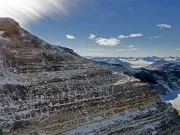
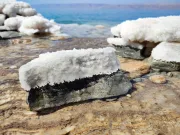
Each photograph depicts a real travertine hand specimen, spring terrace, cross-section, quarry or geological outcrop. Image captions identify original Wikimedia Commons sources and reuse licenses. Files were converted to WebP.