























Sedimentary structures are geometric features formed during or shortly after sediment deposition. Bedding, cross-bedding, ripple marks, graded bedding, mud cracks and sole marks preserve clues to transport, flow direction, exposure and stratigraphic orientation. Sedimentary texture describes grain size, sorting, shape and packing rather than larger arrangements of layers.
Interactive Sedimentary Structures Identifier
No structures match your filters.
Compare multiple observations and geological context. One photograph does not establish a depositional environment or original stratigraphic orientation.
Sedimentary Structures and Textures: Main Differences
Structures are arrangements of sediment or bed surfaces, commonly millimeters to meters in scale. Texture describes individual grains and their relationships. The same sandstone may have well-sorted rounded grains and large-scale cross-bedding: these observations provide complementary evidence. Primary structures form during deposition; early deformation and bioturbation may modify them before lithification. Later tectonic deformation can rotate or distort their original geometry.
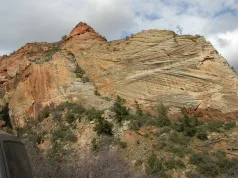
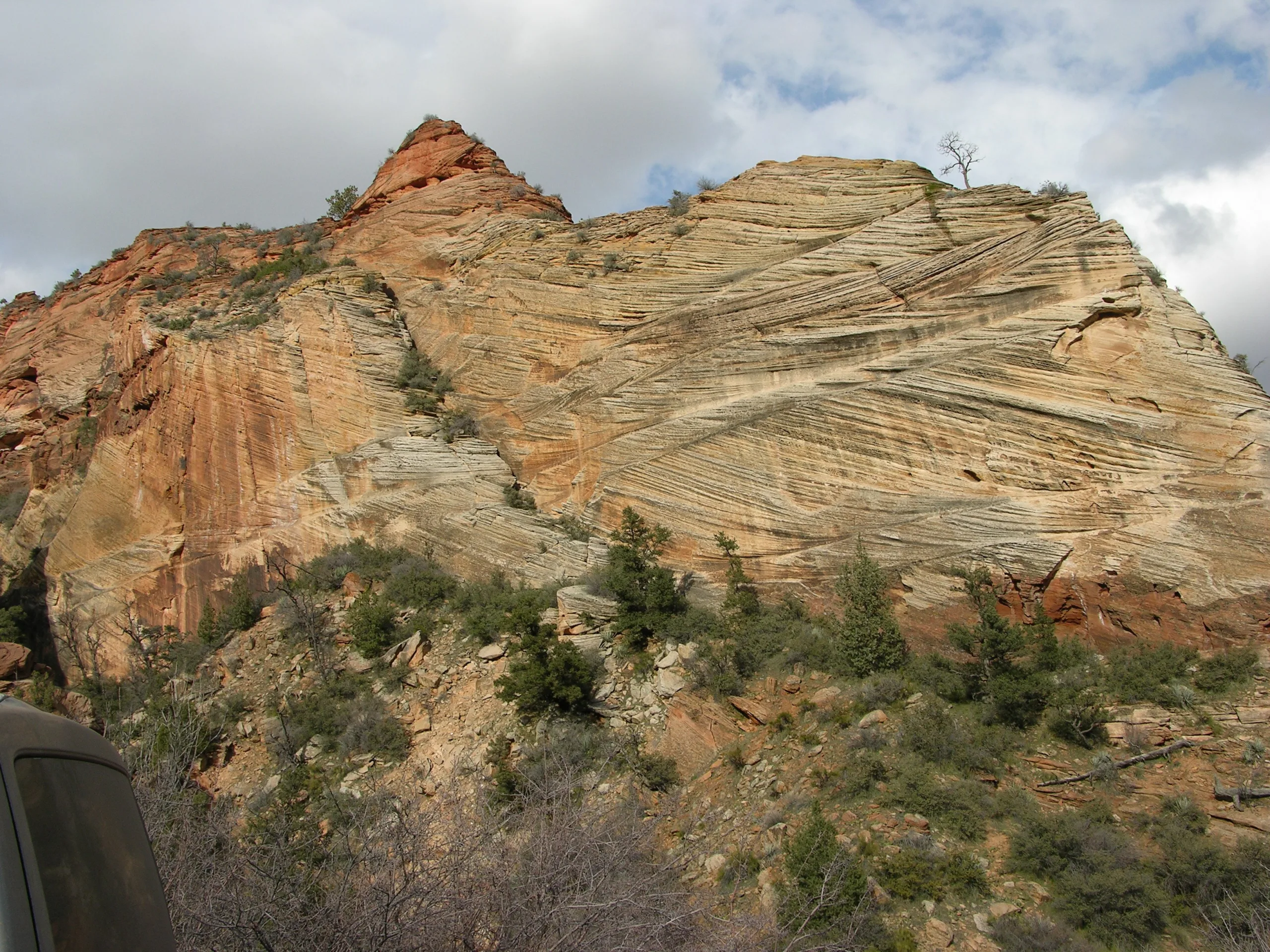
Cross-bedding
Inclined foresets bounded by surfaces that truncate older laminae. Migration of dunes or ripples under flowing water or wind. Foreset dip may record local migration direction; check original bedding and true dip.
Ripple marks
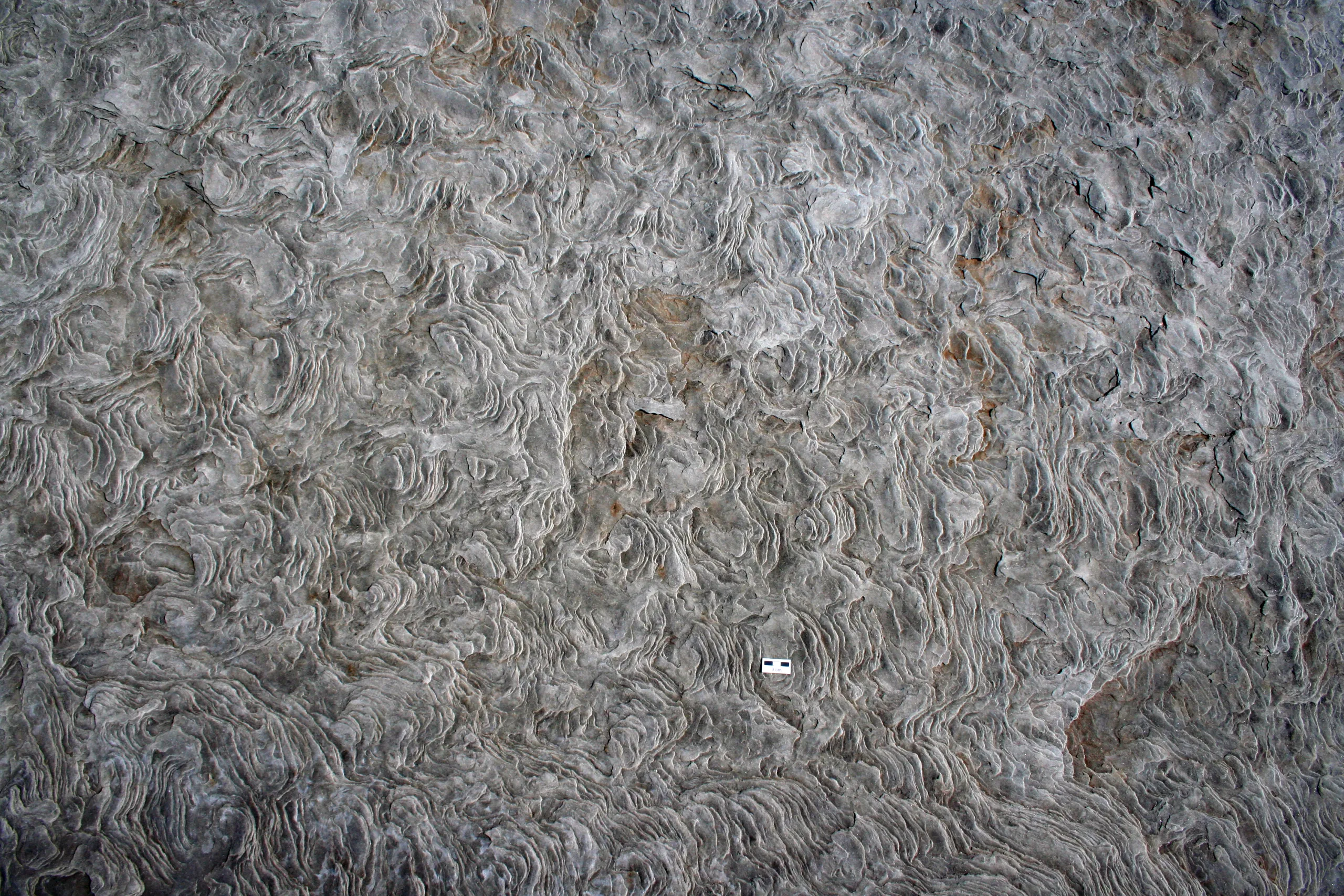
Parallel or curved small ridges on a bedding plane; profiles may be symmetric or asymmetric. Oscillatory waves, currents or wind move sediment into bedforms. Asymmetry can indicate local current direction; symmetric ripples often suggest oscillatory motion.
Normally graded bedding
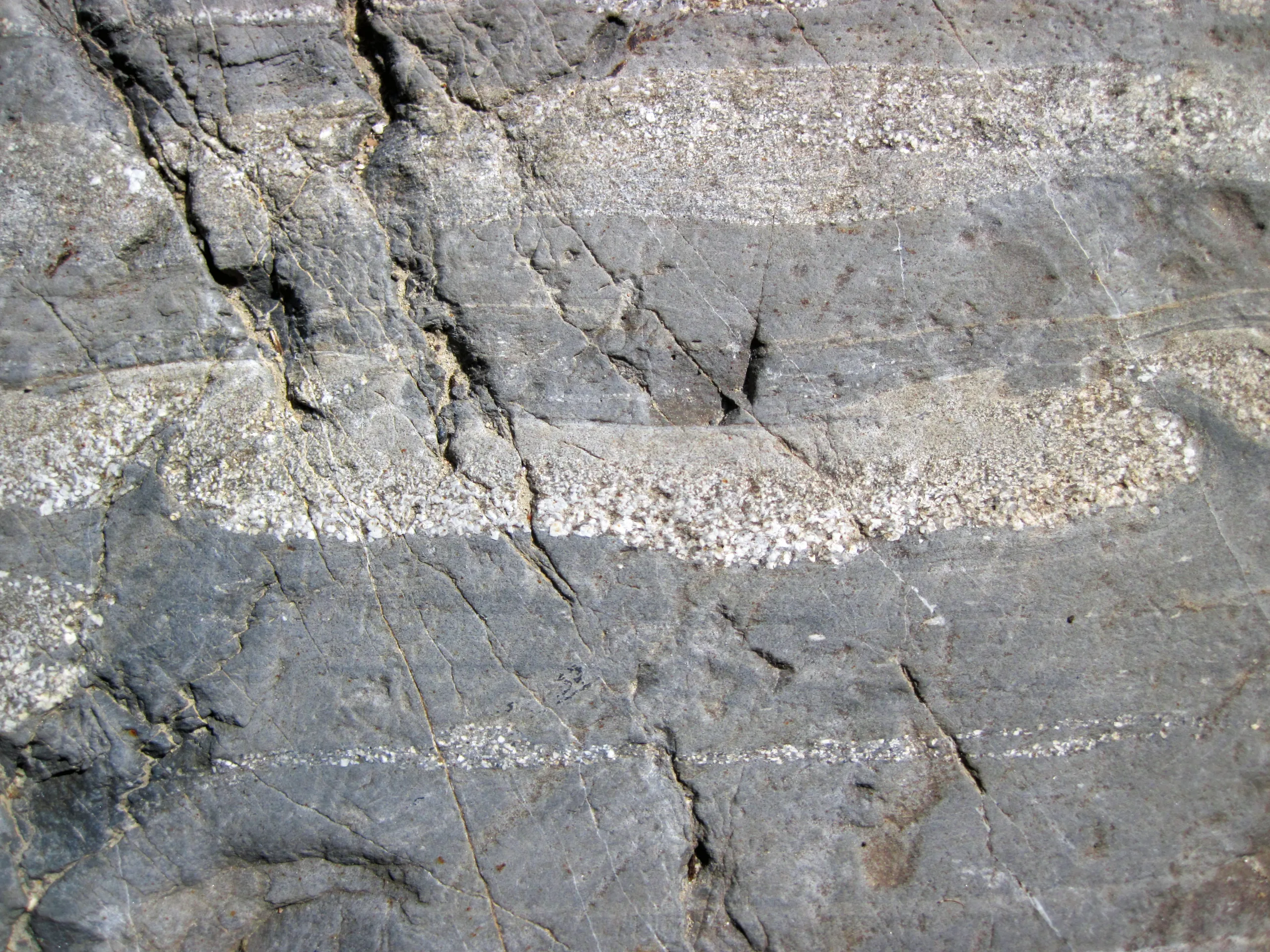
Grain size decreases from the bed base upward. Sediment settles as a flow loses competence; common in turbidites. Fining upward may help establish way-up; inverse grading also occurs.
Mud cracks
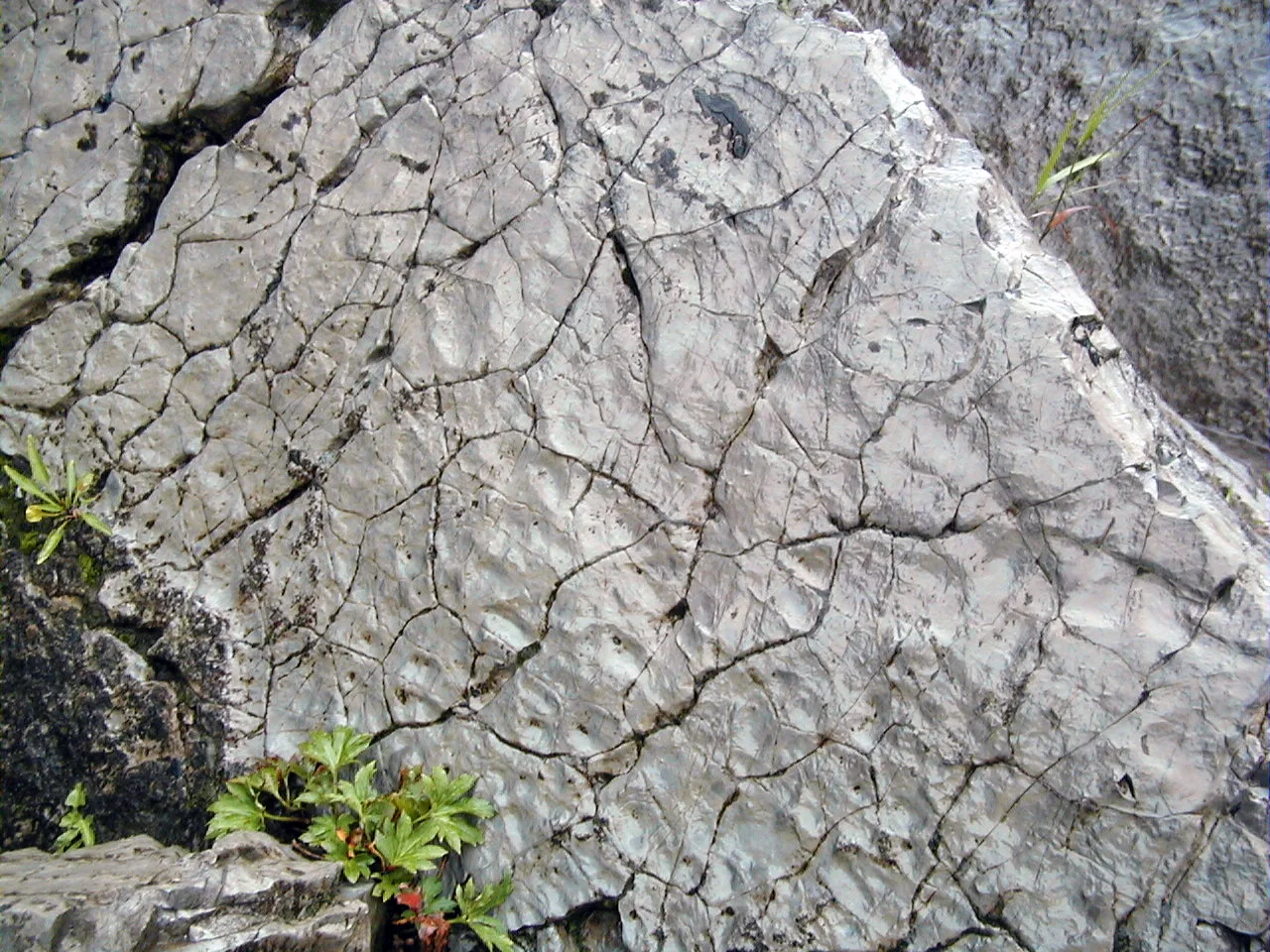
Polygonal cracks on a fine-grained bedding surface or sand-filled casts. Shrinkage during drying of wet sediment. Desiccation cracks indicate exposure; consider subaqueous shrinkage and later fractures as alternatives.
Flute casts
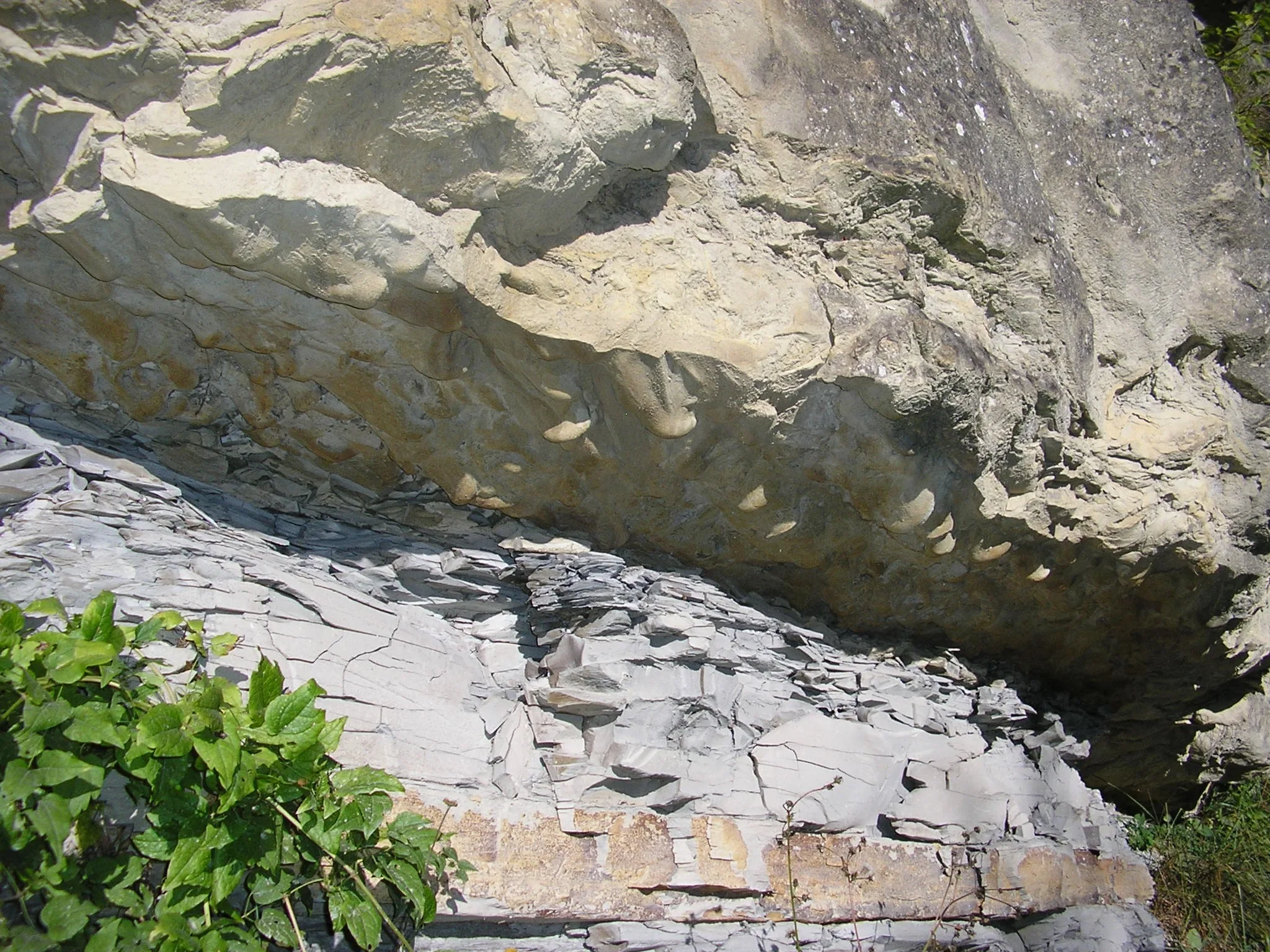
Spoon-shaped casts protrude from the underside of a bed. Erosion of soft sediment by turbulent flow followed by infill. A blunt upstream end and downstream taper indicate flow direction; casts identify bed undersides.
Geopetal structure
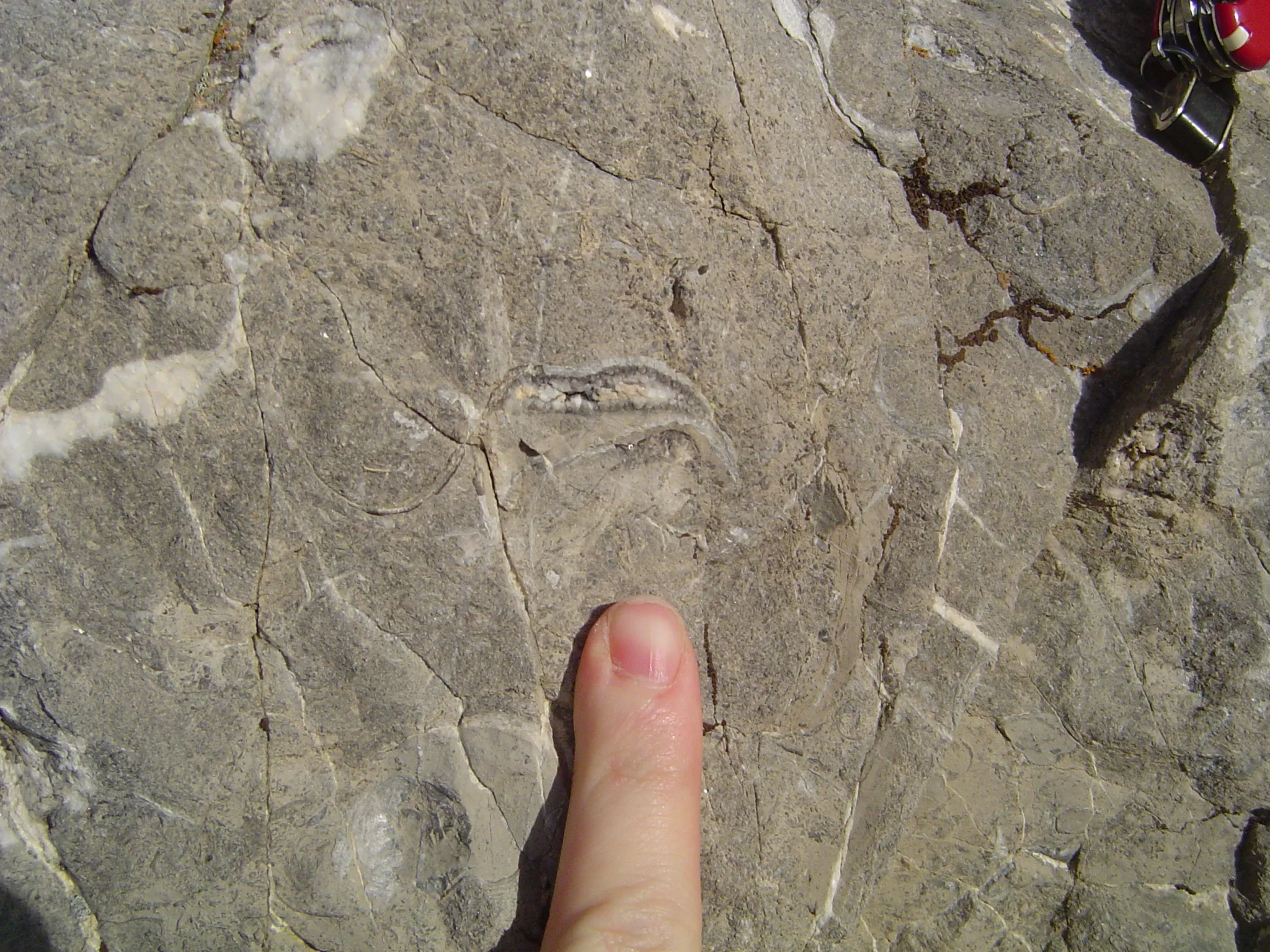
A cavity contains sediment in its lower part and later cement above. Gravity-controlled sediment accumulation followed by cementation. The sediment–cement boundary may preserve paleo-horizontal and way-up.
Bedding, Lamination and Grain Texture
Bedding separates layers that differ in composition, grain size, color or depositional history. Lamination describes thin layering. Grain size is commonly expressed using the Wentworth scale; sorting describes the spread of sizes, while rounding and sphericity describe different aspects of grain shape. Texture alone is rarely sufficient to identify a depositional environment because multiple processes can produce similar sediments.
Field Identification Workflow
Begin with a wider view of the outcrop to determine bed boundaries, bedding orientation and relationships. Inspect the feature at a suitable scale, identify whether it occurs on a bed surface or in cross-section, record geometry and sediment type, and compare independent indicators. Correct paleocurrent measurements for bedding tilt where necessary. For normally graded beds and geopetal features, establish stratigraphic orientation rather than assuming the modern vertical is original.
Interpreting Ancient Environments
Cross-bedding may occur in rivers, dunes, tidal channels and other settings. Ripples and mud cracks occur in multiple environments; graded beds are common in turbidity-current deposits but are not exclusive to deep water. Combine structure, grain characteristics, sedimentary facies, fossils and regional stratigraphy before interpreting depositional conditions.
Frequently Asked Questions
Are sedimentary textures and structures the same?
No. Texture concerns grain characteristics; structures are larger arrangements or bed-surface features.
Can ripple marks indicate flow direction?
Asymmetric current ripples can, but wave ripples are often symmetric and later deformation must be considered.
Which structures indicate original way-up?
Normal grading, cross-bed truncations, desiccation cracks, flute casts and geopetal fills can help when their origin and orientation are established.
Related reading: Cross-Bedding · Geology Tools.
Scientific References
Steven Earle, Physical Geology: Sedimentary Structures and Fossils. Photographic credits and source links appear beneath each field example.