




















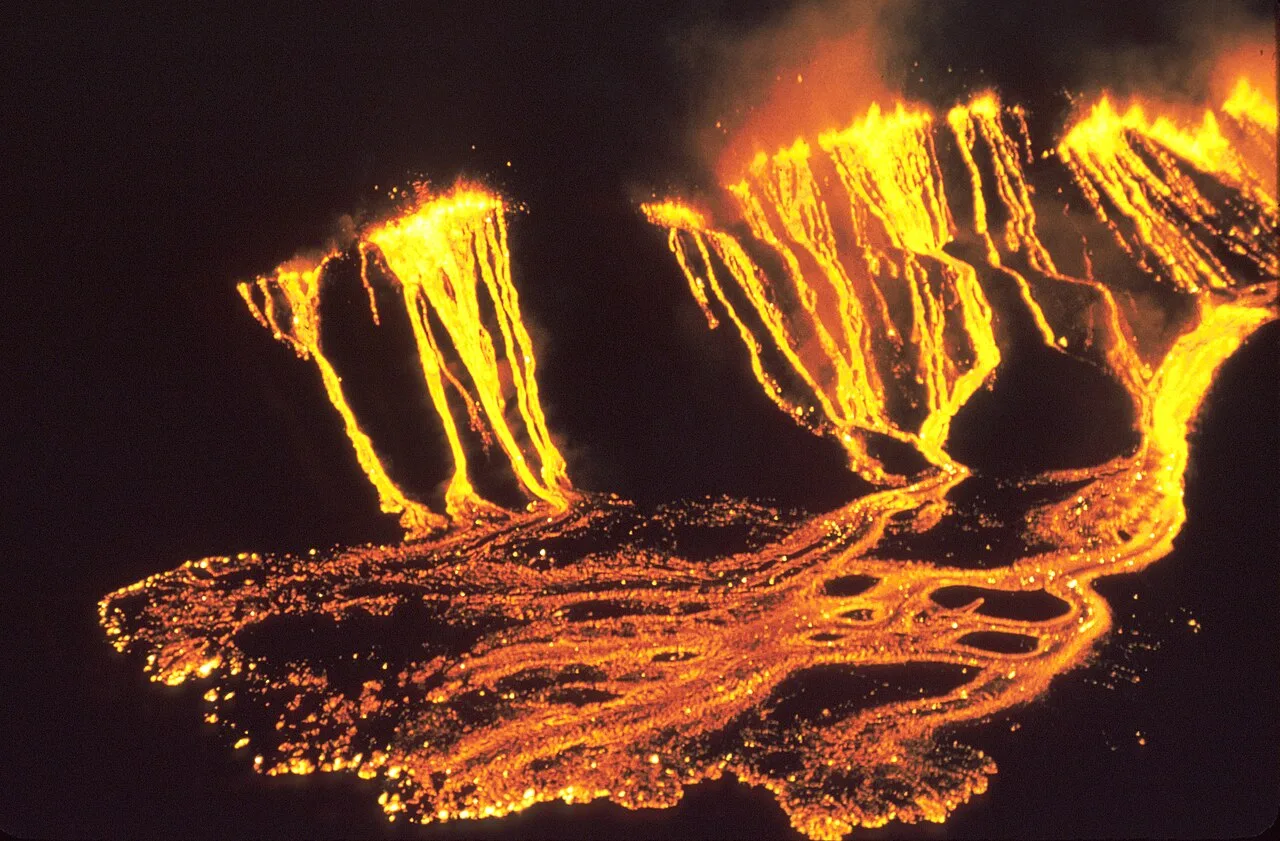
Carbon trapped inside Hawaiian volcanic crystals may carry a chemical signature from Earth’s metallic core. A study led by Yves Moussallam, published online in the Proceedings of the National Academy of Sciences on November 9, 2026, suggests that carbon could move from the core into the mantle and ultimately reach the surface through volcanic activity. Yale’s Department of Earth and Planetary Sciences highlighted the discovery on November 24. The results also provide new clues to the meteorites that supplied carbon during Earth’s formation.
Tiny pockets of magma hold the evidence
The researchers examined melt inclusions in olivine crystals from Kīlauea and the Tantalus Rift on Oʻahu. These microscopic pockets form when growing crystals enclose liquid magma. Because the selected inclusions trapped melt before substantial gas loss, they preserve information about dissolved carbon that would otherwise be difficult to recover from erupted lava.
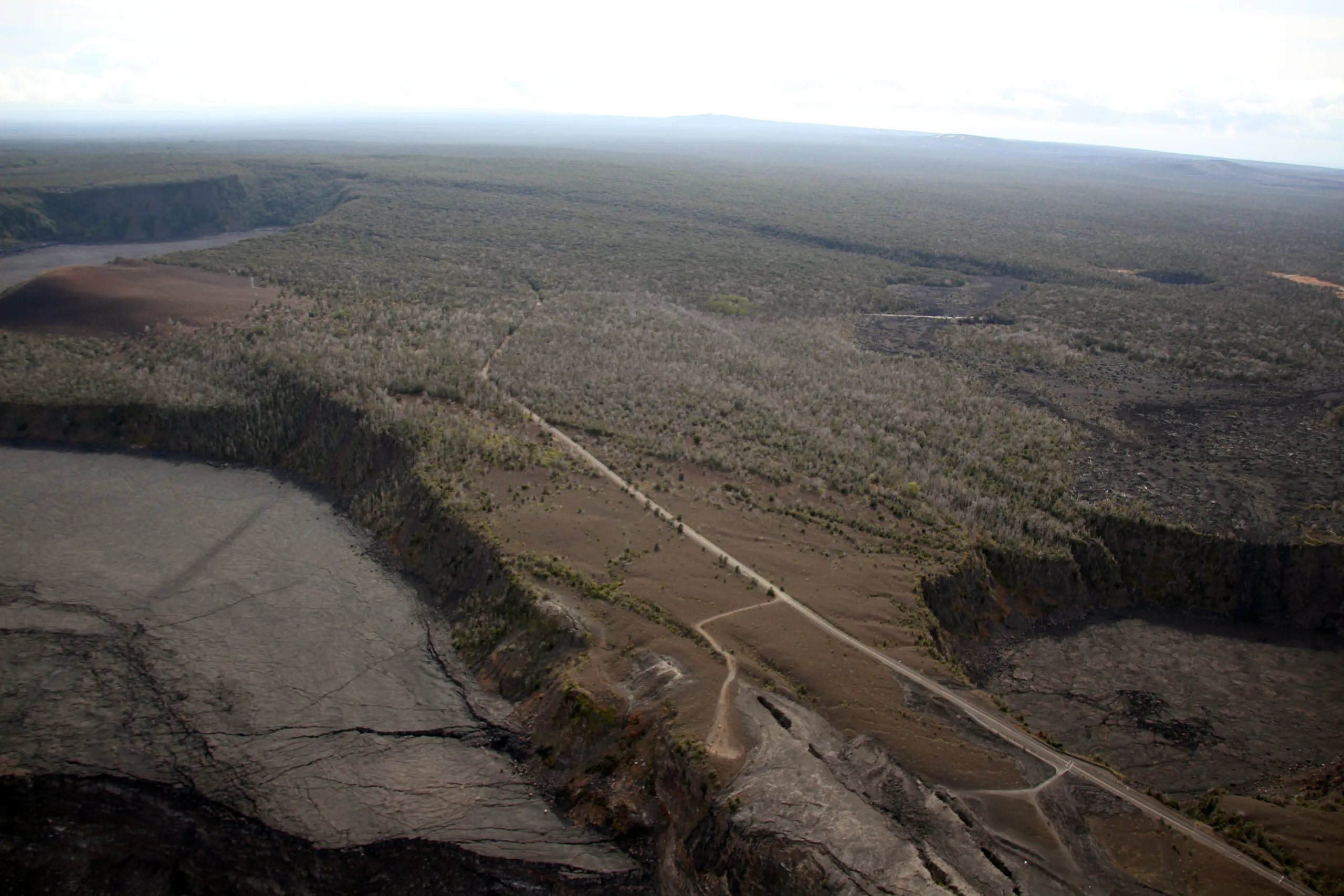
The samples represent contrasting portions of the Hawaiian mantle plume. The researchers used carbon isotope measurements to compare those sources rather than relying on the total amount of carbon in the rocks. For background on the host mineral, see the GeologyScience guide to olivine.
An unusual carbon isotope signature
Carbon occurs naturally as different isotopes, including carbon-12 and carbon-13. Geochemists express their relative abundance using δ¹³C, in parts per thousand relative to a reference standard. A higher value indicates relatively more carbon-13. In the study, inclusions associated with the central part of the Hawaiian plume approached −1 ± 2‰, whereas those representing the plume’s margins recorded approximately −7 ± 2‰.
This contrast is significant because the latter value is consistent with typical mantle carbon. The scientists propose that the heavier signature reflects exchange between Earth’s core and the lower mantle. The measurements themselves are observations; the proposed source is a geological interpretation, not a direct sample of the core.
A possible connection to Earth’s formation
Earth’s core lies beneath roughly 2,900 kilometers of mantle. Direct sampling is impossible with current drilling technology. Mantle plumes, however, can carry material upward from great depths. If carbon crosses the core–mantle boundary, melting in a rising plume could eventually deliver some of it to volcanic systems.
The inferred isotope signature resembles carbon found in carbonaceous chondrites, a class of primitive meteorites. This supports a scenario in which carbon-rich material from the outer solar system contributed substantially to Earth’s carbon inventory late in its accretion. It does not mean that the carbon atoms in an individual lava sample have been independently dated to 4.5 billion years.
What remains unknown
The study does not establish how much carbon is exchanged across the core–mantle boundary today or whether the Hawaiian signature occurs in other mantle plumes. Independent isotope measurements and additional samples would help test whether the proposed mechanism is widespread. The work concerns the long-term geological carbon cycle and does not predict changes in volcanic hazards.
Related reading: Formation of the Earth.
Scientific sources
Moussallam et al. (2026), Isotopically heavy carbon in the core, PNAS, online November 9, issue November 17. Columbia Climate School, November 18; Yale Earth & Planetary Sciences, November 24.