






















The Ménard Pressuremeter Test is a prebored in-situ geotechnical test that expands a cylindrical probe against the wall of a borehole to measure the ground’s pressure–deformation response. It is used extensively in France to estimate the Ménard pressuremeter modulus EM, Ménard limit pressure plM and other interpretation parameters relevant to foundations and excavation design.
Unlike the Standard Penetration Test or dynamic probing, the pressuremeter does not count hammer blows or determine a cone penetration resistance. It measures how soil or weak rock responds to controlled radial loading. The results are method-dependent and should be used within geotechnical design procedures compatible with the test and the applicable Eurocode 7 framework.
What Is the Ménard Pressuremeter Test?
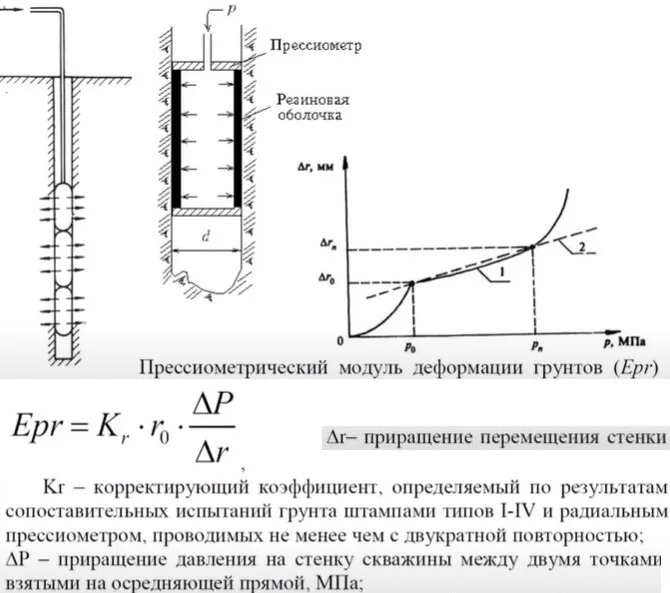
Developed by Louis Ménard and used in geotechnical practice since the twentieth century, the test involves expanding a probe inside a previously drilled borehole. The applied pressure and associated expansion are recorded during loading. Different phases of the curve reveal seating, a quasi-linear range and progression toward limiting deformation.
The internationally recognized procedure is EN ISO 22476-4:2021. It is distinct from other pressuremeter configurations, such as self-boring pressuremeters and other prebored test methods, which may disturb the ground differently and use different interpretation equations.
Ménard Pressuremeter Equipment and Probe
A typical system includes a cylindrical pressuremeter probe, measuring cell, guard cells where relevant, pressure-volume controller, pressure source, lines and recording system. The probe must fit the borehole, expand in a controlled way and be calibrated according to the relevant standard.
The equipment is not just a simple balloon. Probe stiffness, membrane resistance, compressibility and losses in the equipment influence the raw observations. Their effects must be characterized and corrected; raw pressure-volume points do not automatically give meaningful ground parameters.
Borehole Preparation and Ground Conditions
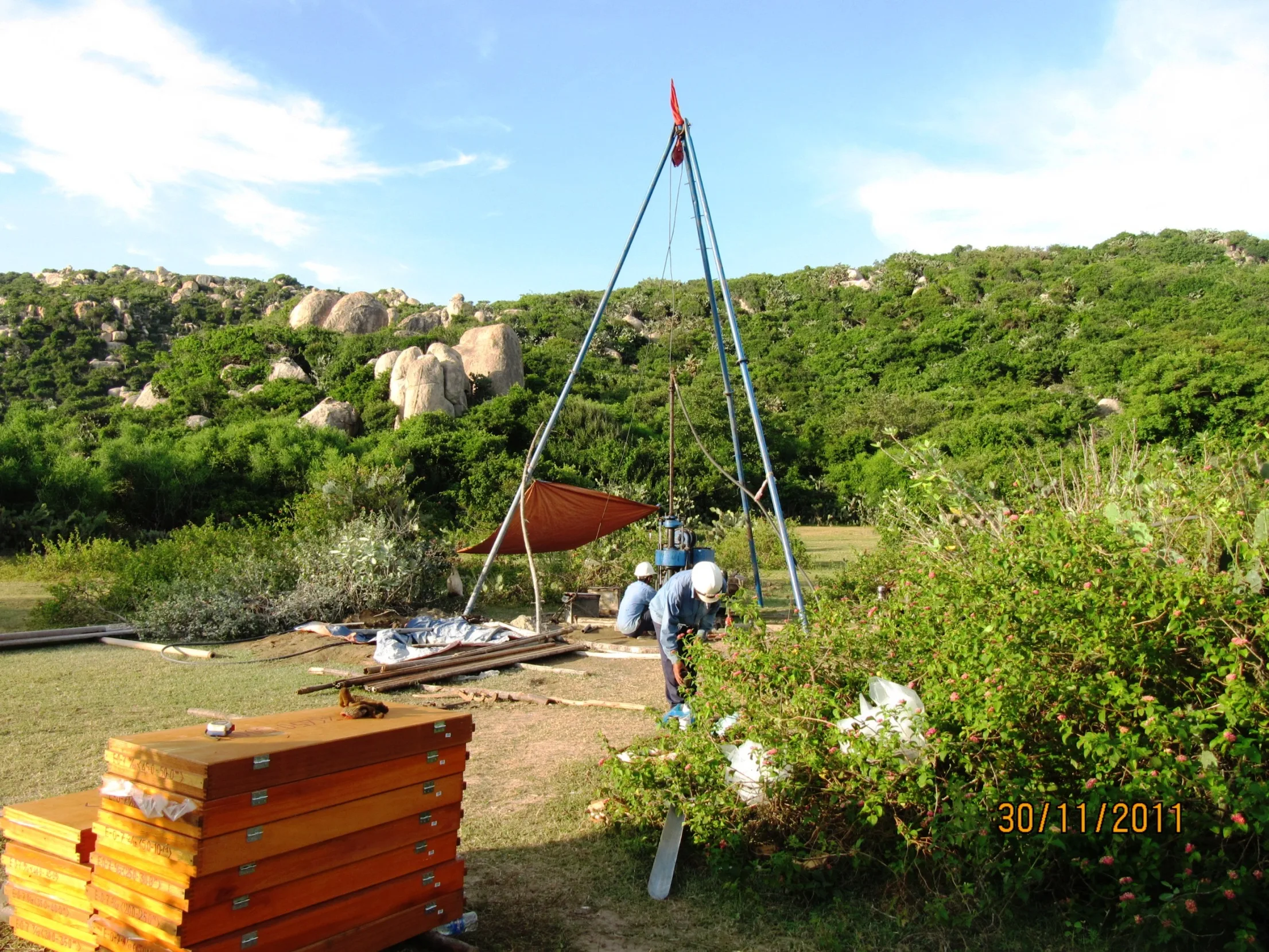
The condition of the prebored hole is crucial. The diameter, drilling tools, method of advancement, use of casing or flushing fluid, debris removal and elapsed time before testing can alter the ground surrounding the cavity. An oversized or disturbed borehole may display a large seating stage and produce results not representative of intact in-situ behavior.
In sand, clay, rock or weathered material, choose drilling methods and testing intervals suitable for the geological conditions. Particularly gravelly or fractured horizons may produce poor contact, irregular cavity shape, fluid losses or unusable curves. Groundwater should be recorded carefully because hydrostatic and effective stress influence interpretation.
The field-oriented ARSCOP practical sheet discusses reliable test execution and common field problems.
Pressuremeter Field Procedure: Step by Step
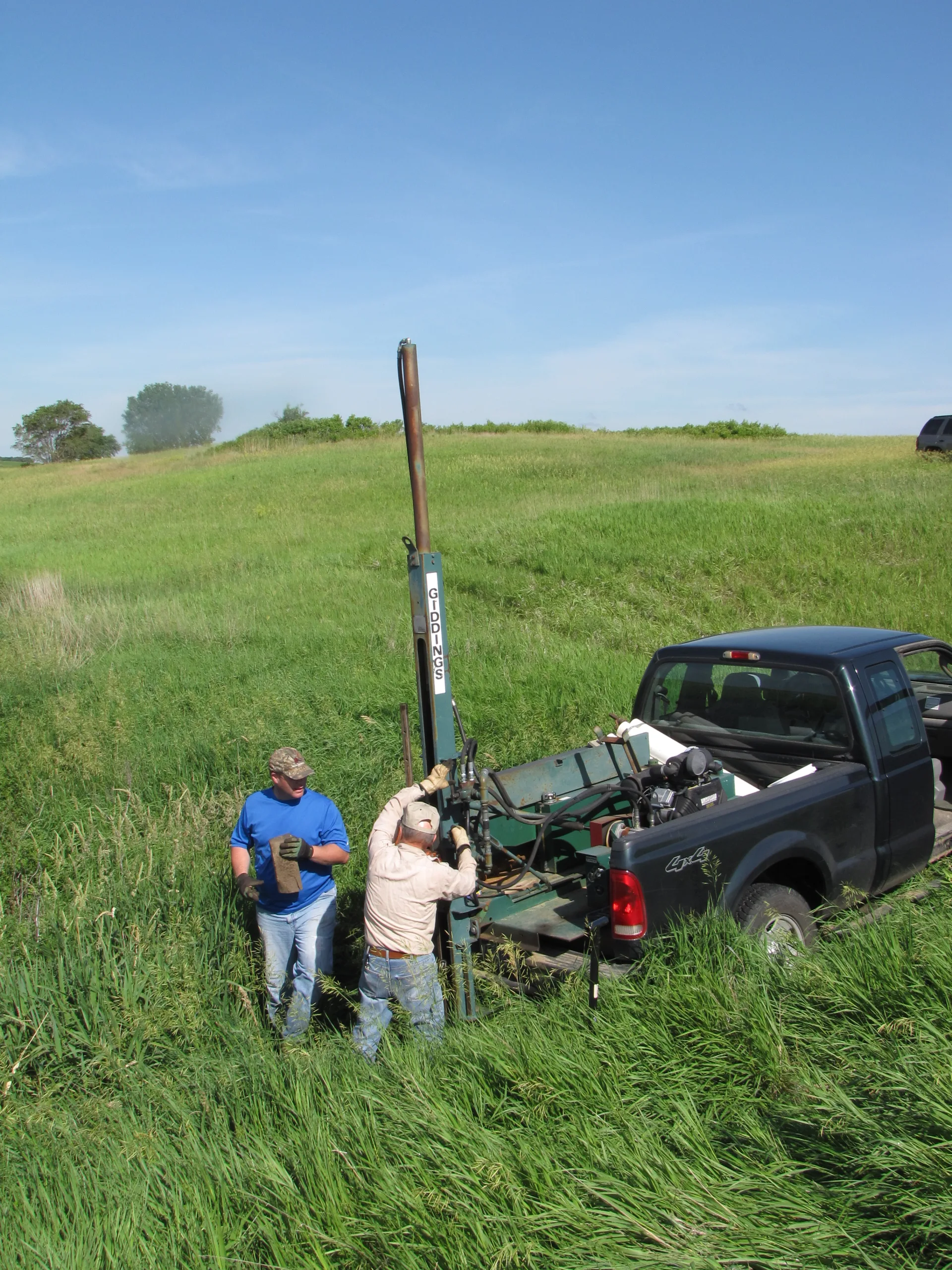
1. Plan the investigation. Establish borehole locations, test depths and expected materials from the site geological model. Check underground services, drilling safety and groundwater.
2. Drill the test pocket. Prepare a borehole of suitable geometry and minimal disturbance for the equipment. Record drilling parameters and the actual ground encountered.
3. Lower and calibrate. Position the probe, ensure hydraulic/pneumatic connections and equipment corrections are available, then perform the loading sequence required by the standard.
4. Measure staged expansion. Apply pressure in controlled increments and observe injected volume or radial expansion at specified time intervals. Record pressure, time, volume, deviations and any signs of leakage or unusual behavior.
5. Interpret and report. Apply the instrument and pressure corrections, identify usable portions of the curve, derive required parameters and document any uncertainty or rejected tests.
Pressure–Volume Curve and the Three Main Regions
Initial seating: the probe expands to contact the borehole wall. This stage may reflect clearance and drilling disturbance rather than intact material behavior. Quasi-linear response: a range is identified for modulus estimation after corrections. Nonlinear expansion: increasing cavity deformation reflects further yielding and the approach toward a limiting pressure.
The conceptual graph above intentionally has no numerical axis scale. Real Ménard curves are governed by test procedures, probe calibration and definitions of measured volume and pressure. Do not pick a modulus by reading an arbitrary straight-line segment from a raw plot.
Ménard Pressuremeter Modulus E_M: Meaning and Calculation
The Ménard modulus EM describes the interpreted stiffness response from the standardized pressuremeter test, normally reported in MPa. It is evaluated from the slope of the selected corrected pressure–volume segment together with the probe geometry and volume terms prescribed by the method.
In a simplified conceptual statement, a larger slope Δp/ΔV corresponds to a stiffer response when other factors remain unchanged. The actual EM formula includes instrument-specific volume information and a Poisson-related assumption; omitting these factors gives an incorrect value.
EM is not automatically the same as a laboratory Young’s modulus E. Loading path, strain range, stress state, anisotropy, drainage, disturbance and test interpretation mean that direct substitution can be inappropriate. French design methods use Ménard-derived parameters within calibrated foundation and settlement frameworks.
Limit Pressure p_lM and Creep Pressure p_f
Ménard limit pressure plM characterizes the expansion resistance extrapolated or determined under the standard test definition. For foundation design, a net limit pressure may be used after accounting for relevant initial pressure terms. The precise definition and correction scheme should be stated; plM is not simply an allowable bearing pressure.
Creep pressure pf is associated with a change in time-dependent deformation behavior during the pressuremeter loading sequence. Its interpretation relies on measurements taken at defined times and the correct equipment model. Neither pf nor plM should be inferred by eye from the illustration.
A pressuremeter report should distinguish the measured values, applied corrections, calculated parameters and characteristic or design parameters. Project-specific safety factors and foundation geometry belong in later design stages.
How to Read Pressuremeter Results in a Borehole Log
A profile usually lists pressuremeter test levels with EM, plM, possibly pf, and comments on the reliability of each curve. It should be compared with lithology, stratigraphic contacts, drilling observations, groundwater level and any weak or disturbed horizons.
High stiffness and higher limit pressures are often associated with competent strata, but a single high value may reflect a local hard layer or test artifact. Low values may result from genuinely weak soils, excessive borehole disturbance, poor equipment contact or leakage. Do not interpret the parameter profile without quality checks.
The original bar chart is a fictional teaching exercise and cannot be used for a design pressure, settlement or foundation depth recommendation.
Applications: Foundations, Excavations and Settlement
In French practice, pressuremeter results are important in the geotechnical design of shallow foundations and piles. Interpreted limit pressure and Ménard modulus parameters can contribute to assessments of soil resistance and settlement, when used under the correct methodology and regional design rules.
They may also aid in evaluating excavations, ground improvement zones and changes in material stiffness with depth. However, complex rock masses, strongly fissured layers, karst voids and very heterogeneous fill require a broader ground investigation than pressuremeter values alone.
See Site Investigation Techniques and In-Situ Testing for complementary investigation methods.
Ménard Pressuremeter vs SPT and CPT
| Method | Measured behavior | Important caveat |
|---|---|---|
| Ménard pressuremeter | Cavity expansion, modulus E_M, pressure p_lM | Sensitive to the prebored hole and probe corrections |
| SPT | Dynamic sampler blow count N | Hammer energy, gravel and drilling influence results |
| CPTu | Static cone resistance qc, sleeve friction fs and pore pressure u2 | Often no soil sample; coarse material can cause refusal |
| Dynamic probing | Blows per cone advance increment | Energy and cone specifications differ from SPT |
These tests are not directly interchangeable. There is no universal site-independent factor that converts EM, qc and SPT N into equivalent values for every soil. Correlations can be used only within their stated calibration and geological setting.
Common Failure Modes and Data Quality
Potential problems include a borehole too wide for the probe, inadequate wall contact, remolded soft soil, water loss, leakage, membrane damage, incorrect calibration, long delays before testing and invalid late-stage extrapolation. Poor ground conditions must be explicitly logged rather than quietly edited out of the results.
Field reports should identify the testing standard, borehole procedure, probe identification, corrections, groundwater, pressure-time-volume records and any deviation from the procedure. Only an interpreted, quality-checked dataset should be used to select design parameters.
Frequently Asked Questions
What does a Ménard pressuremeter measure? Ground response to radial expansion in a borehole, from which method-specific modulus and pressure parameters are derived.
Is the pressuremeter test the same as SPT? No. It is an expansion test; SPT is a dynamic sampler penetration test.
What is E_M? The Ménard pressuremeter modulus evaluated from a specified corrected pressure–volume response.
What is p_lM? The Ménard pressuremeter limit pressure as defined and evaluated under the relevant standard.
Can E_M replace Young’s modulus? Not automatically. It is a method-specific parameter used with appropriate empirical or analytical design procedures.
Why does hole quality matter? Disturbance, irregular diameter and wall condition affect the early response and reliability of the derived parameters.
Can pressuremeter data design a foundation alone? No. Ground models, representative parameters, groundwater and applicable design methods remain necessary.
Which standard governs the Ménard test? EN ISO 22476-4:2021 for the prebored Ménard pressuremeter procedure.
Standards, References and Image Credits
ISO 22476-4:2021 — Prebored Pressuremeter Test by Ménard Procedure.
ARSCOP — Practical Ménard Pressuremeter Test Sheet.
CFMS — Pressuremeter Practice and Foundation Characterization.
OGC Geotechnical Interoperability Engineering Report.
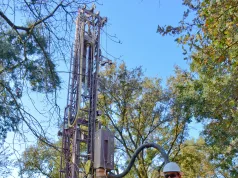
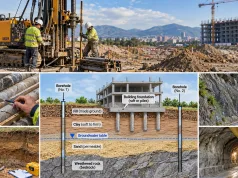
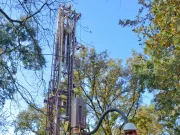
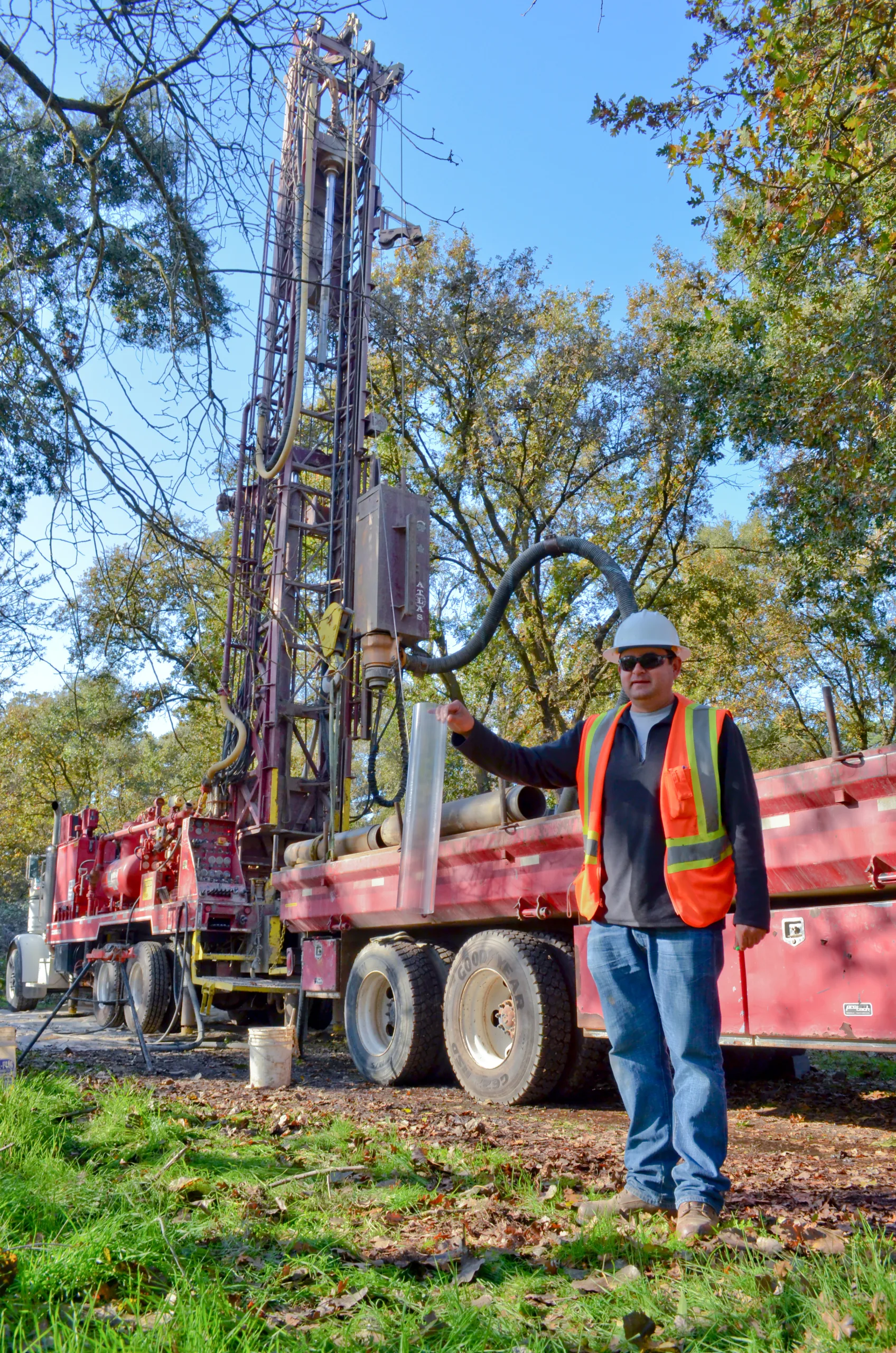
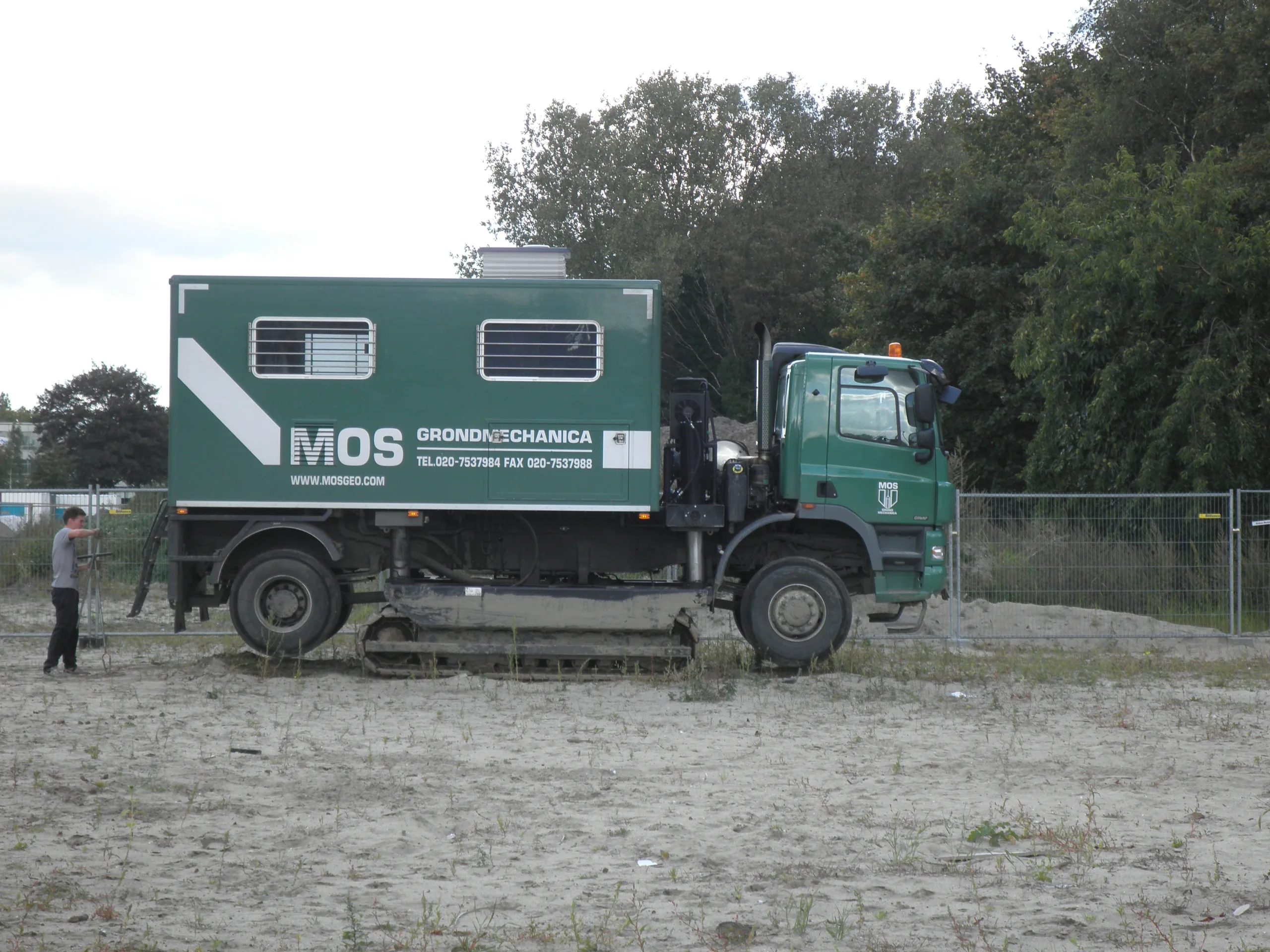
One photograph shows a real pressuremeter apparatus; other photographs are explicitly labeled as contextual drilling and field investigation scenes. Captions link to the original Commons files. Three GeologyScience diagrams use schematic or synthetic material, never reported as real test data.