

























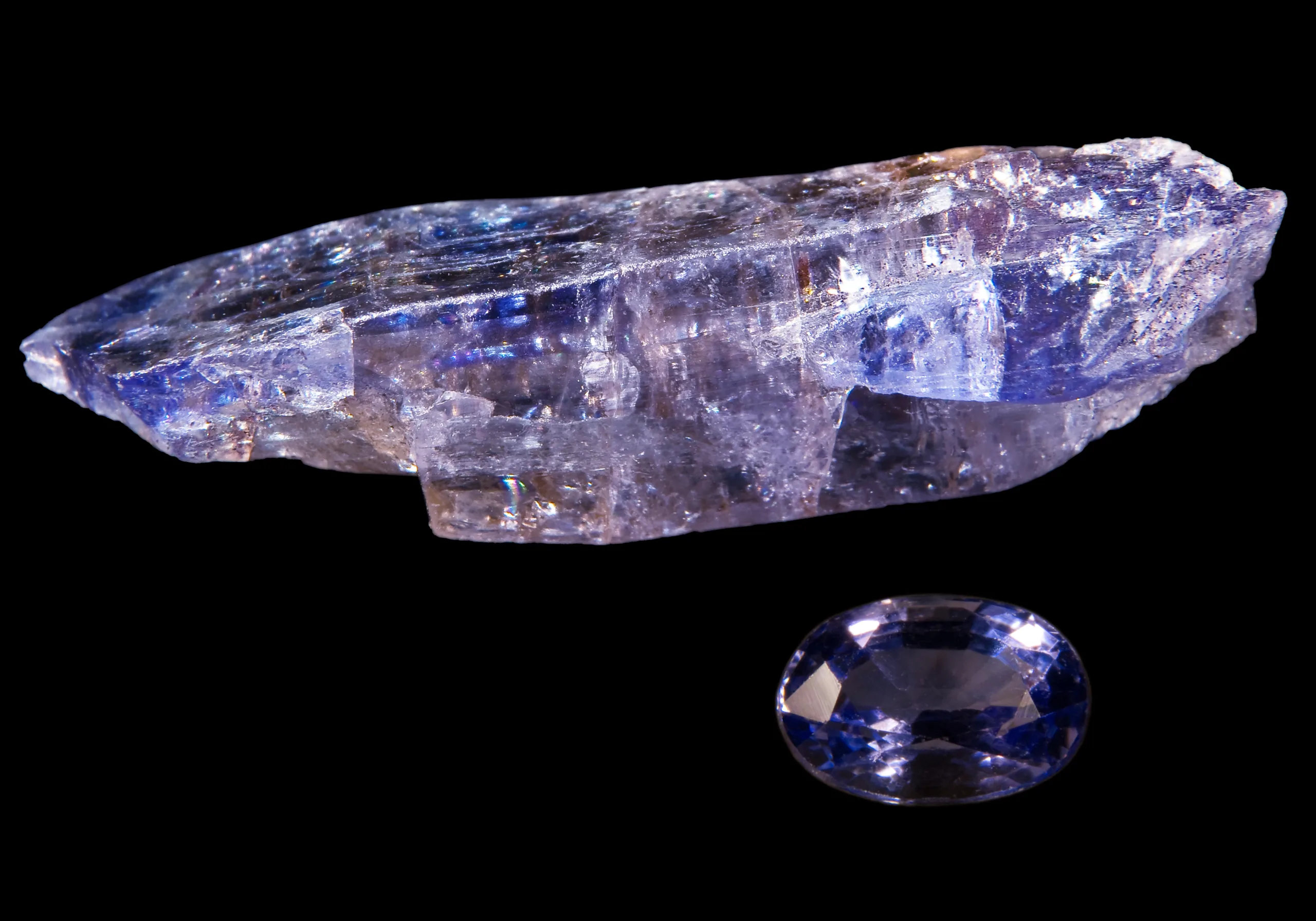
Tanzanite is the transparent blue-to-violet gemstone variety of zoisite, a calcium–aluminum silicate mineral colored chiefly by trace vanadium. Gem-quality tanzanite is commercially associated with the Merelani (Mererani) Hills of northern Tanzania. Its striking appearance comes from strong pleochroism, and most commercial material has been heated to improve its blue-violet color.
Tanzanite is not a separate mineral species or a form of sapphire. Its value depends mainly on color, clarity, cut and carat weight, while its perfect cleavage requires more careful handling than the appearance of a polished gem might suggest. Its natural geological occurrence, optical behavior and routine treatment make it distinctive among colored gemstones.
What Does Natural Tanzanite Look Like?
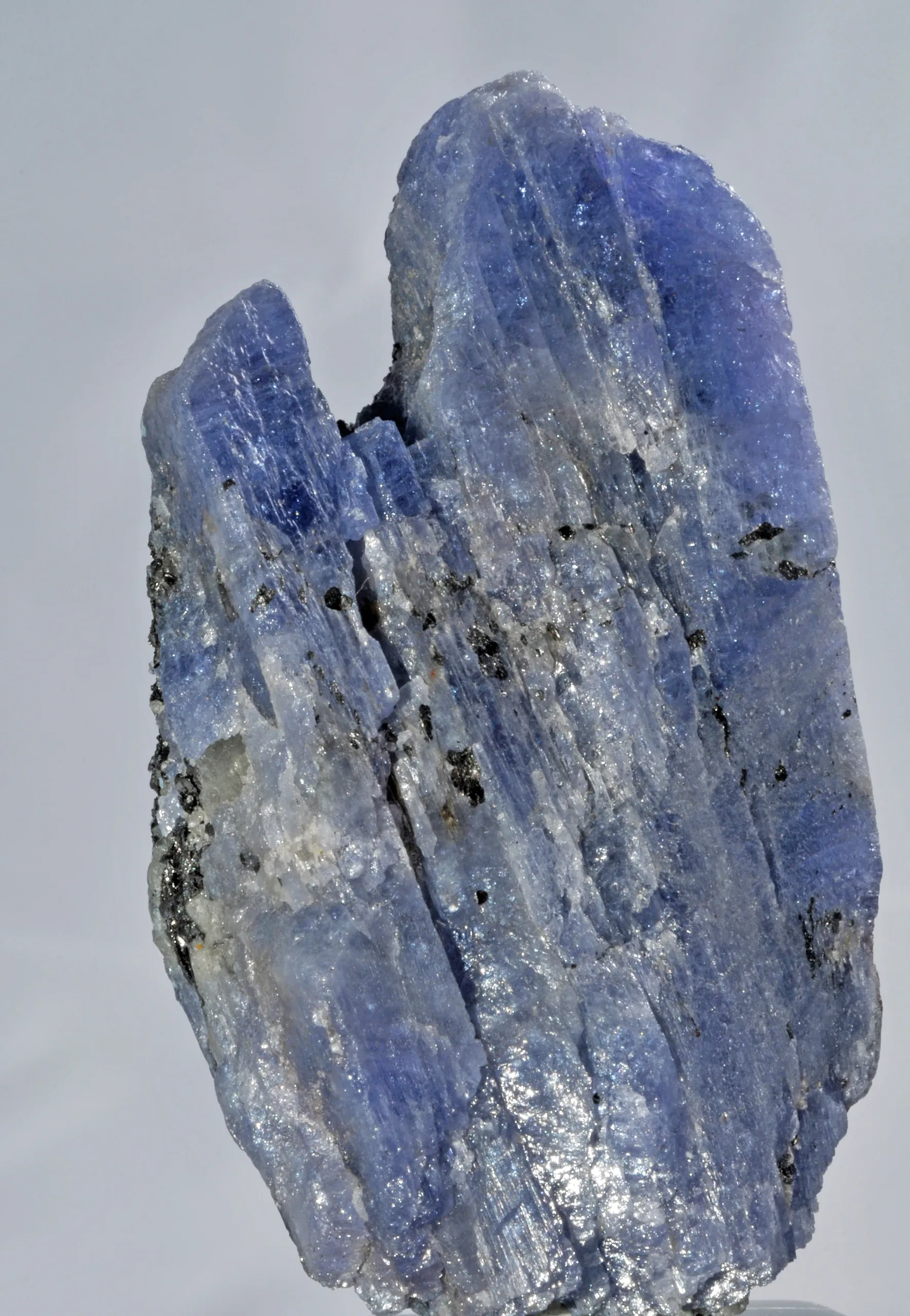
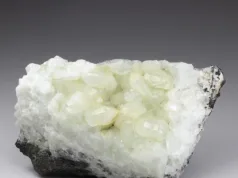
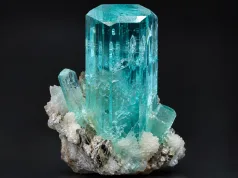
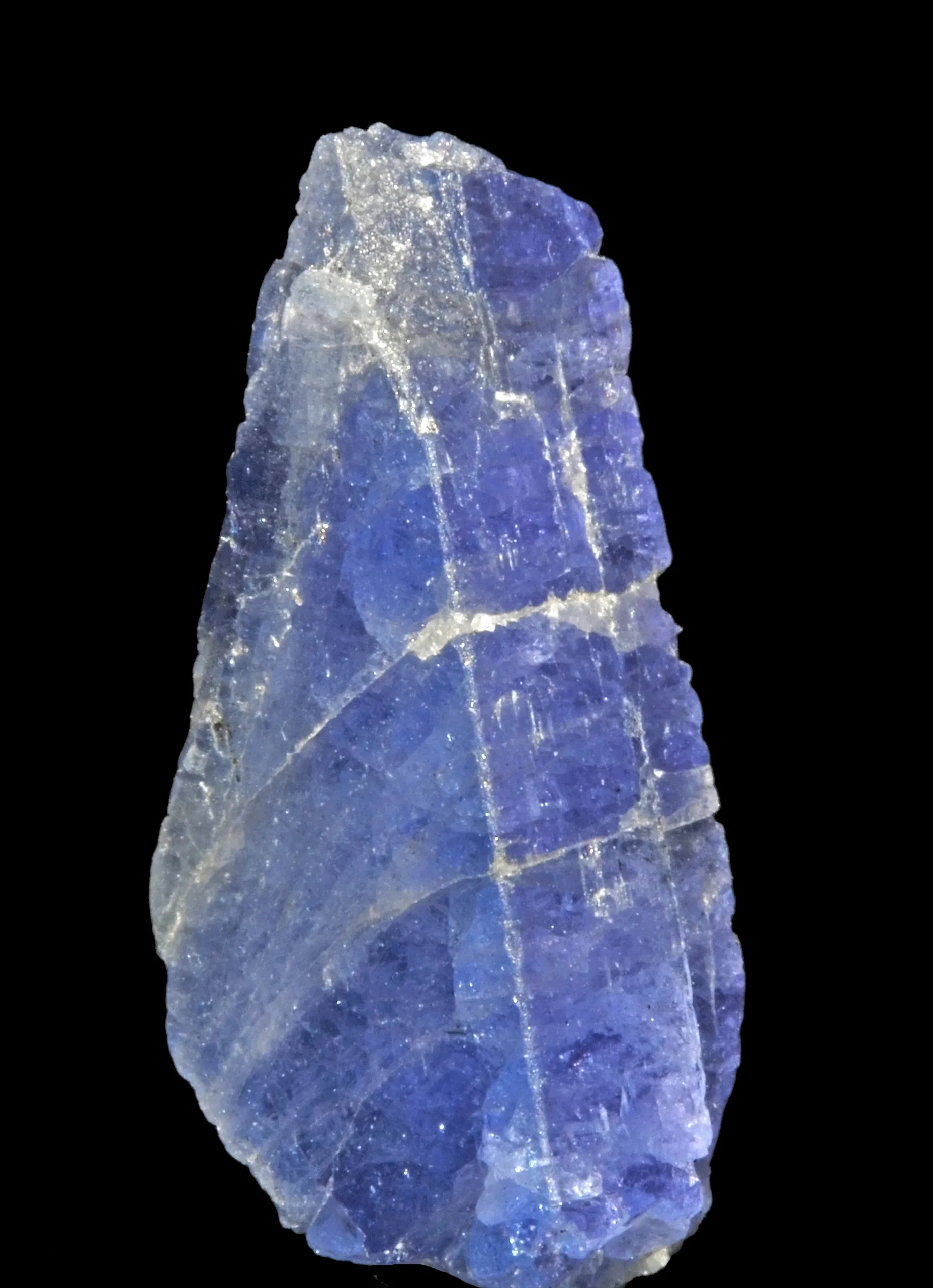
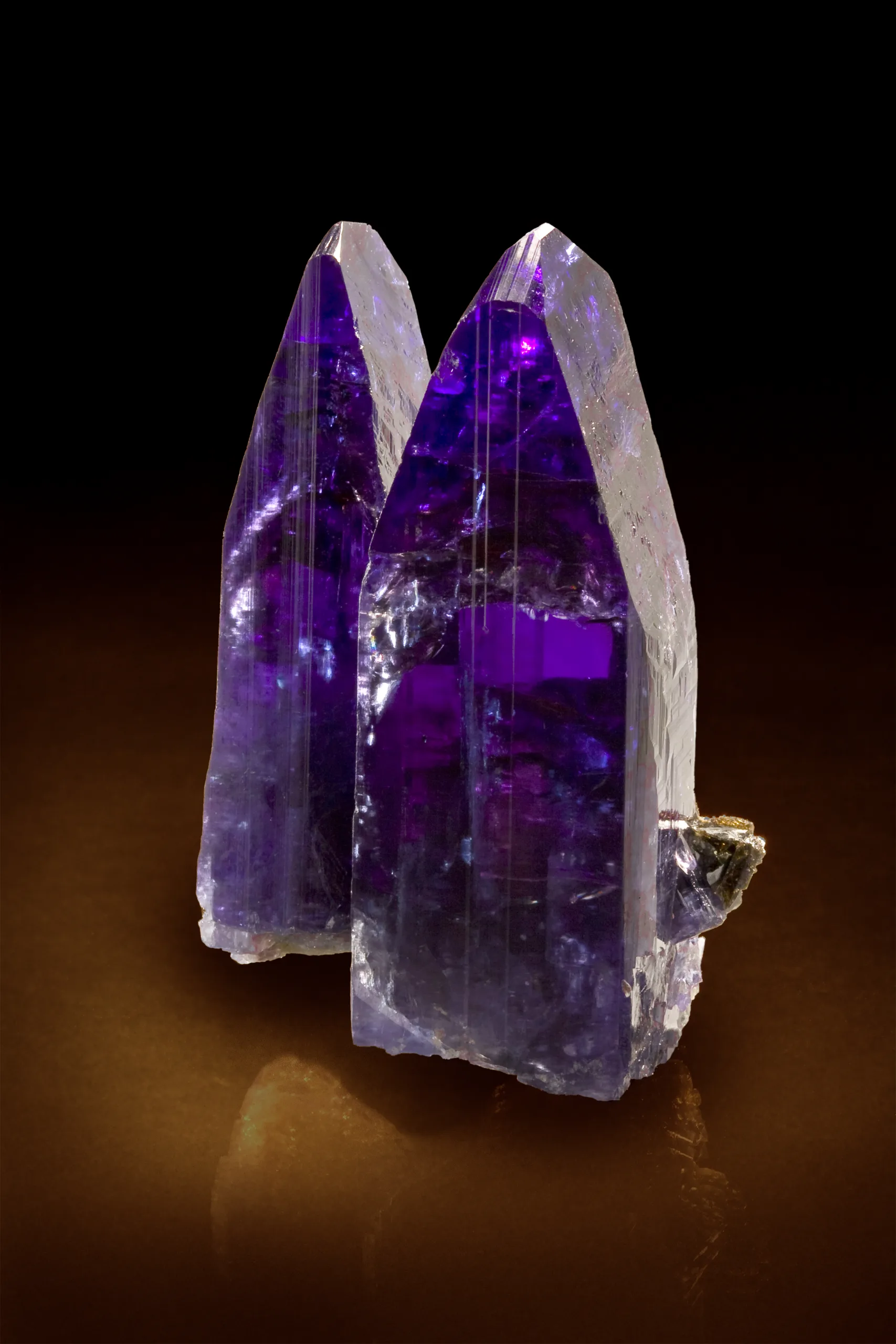
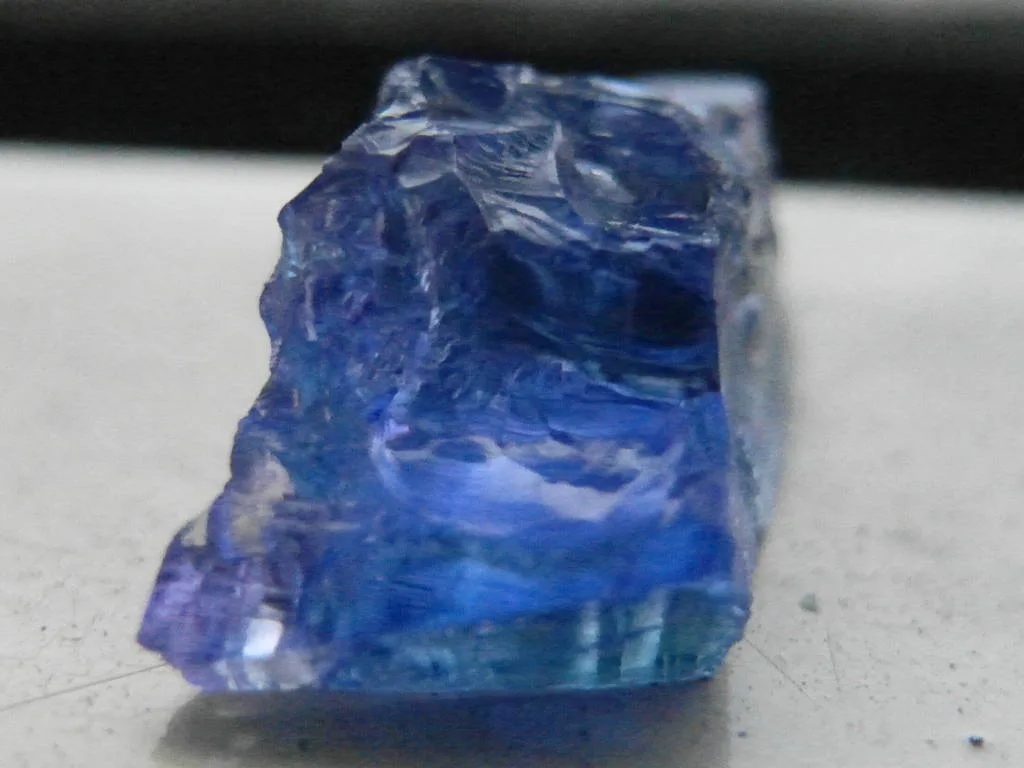
Natural tanzanite appears as transparent to translucent, elongated zoisite crystals, usually with a glassy luster. Prismatic rough specimens may show blue, purple, brownish or greenish hues depending on crystal direction and whether they have been naturally or artificially heated. Some specimens show more than one color on their different faces.
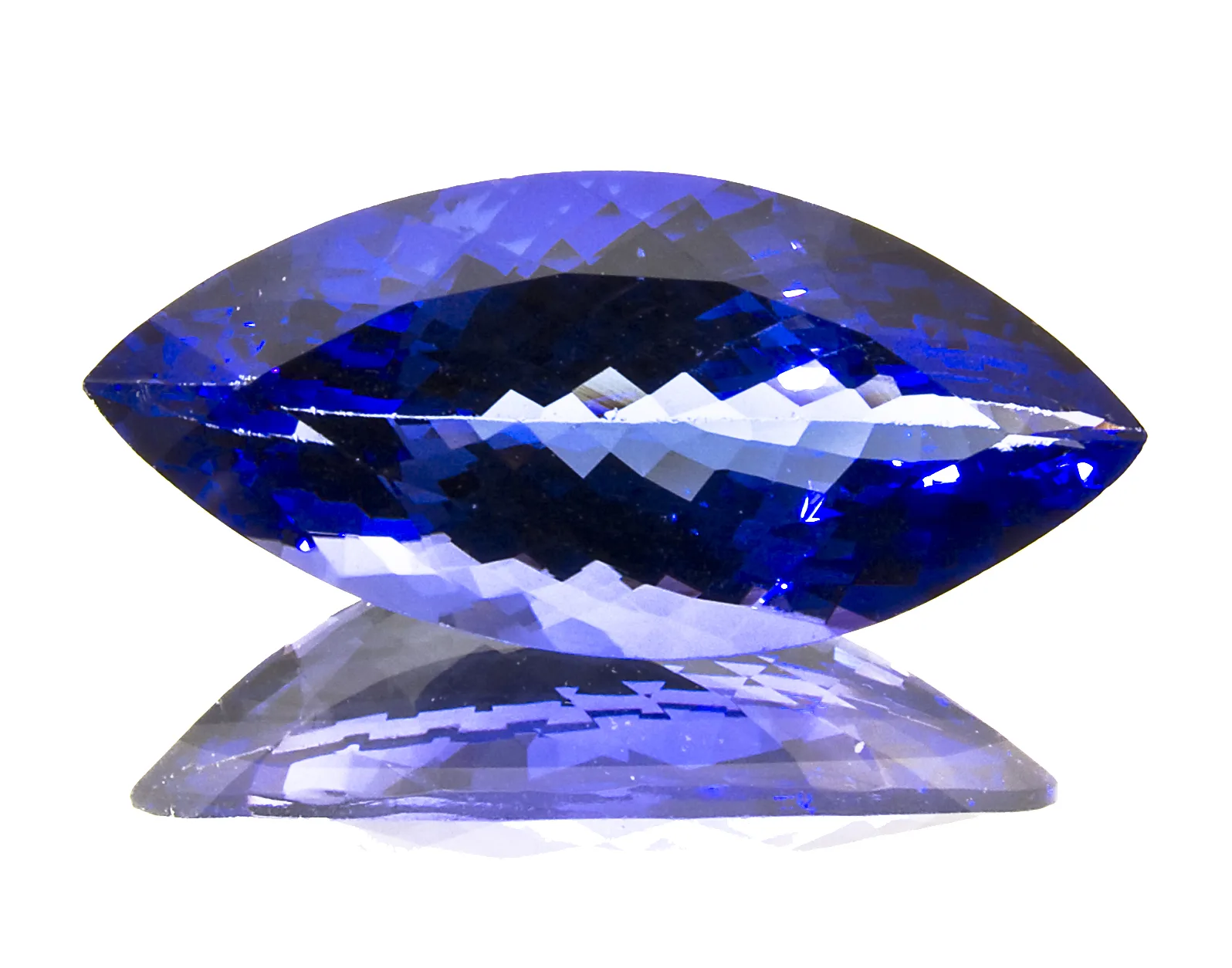
Faceted stones are often bluish violet, violetish blue or saturated blue. Under different types of light, the relative blue and violet components can appear to change. The face-up color of a finished gem is also affected by the cutter’s orientation of the rough; a stone that photographs as intensely blue may display more violet in person.
Gem tanzanite is usually cut for transparency and color, but natural crystal specimens reveal the elongated mineral habit and its association with other metamorphic minerals. An attractive photograph cannot by itself establish species, natural origin or treatment history.
Tanzanite Is a Variety of Zoisite: Composition and Crystal Structure
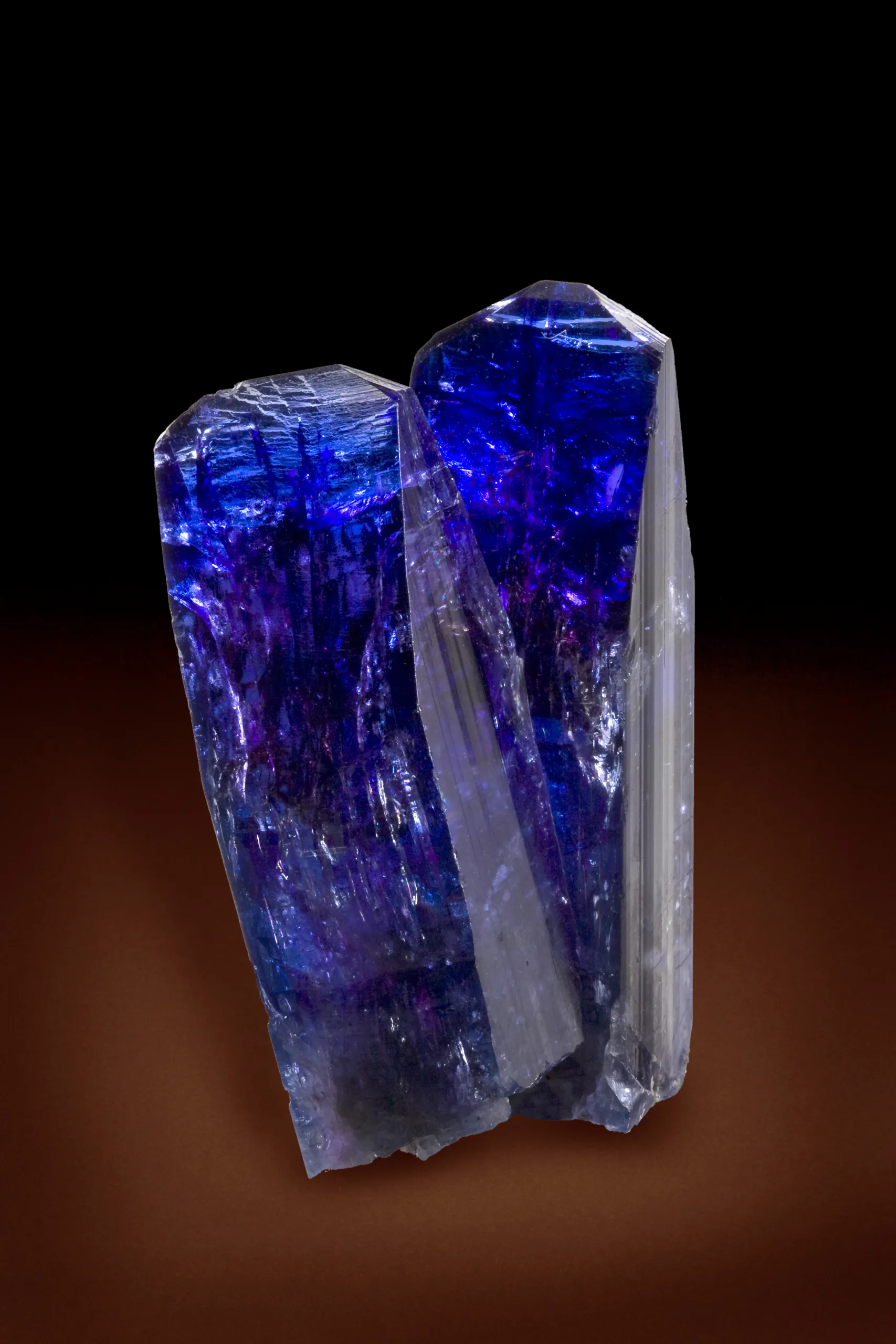
Tanzanite belongs to the zoisite mineral species of the epidote group. Zoisite is an orthorhombic sorosilicate with the idealized formula Ca₂Al₃(Si₂O₇)(SiO₄)O(OH). Calcium, aluminum and silicate groups form the structure; trace vanadium is primarily associated with the characteristic blue and violet colors.
The mineral’s crystal structure causes anisotropic optical properties, meaning light behaves differently along different crystal directions. This produces its pronounced pleochroism. Zoisite also occurs in other colors and geological settings, but the commercially famous transparent blue-violet variety has its own gem name: tanzanite.
The distinction matters when identifying samples: a dark blue crystal from another location is not necessarily tanzanite, and zoisite itself is not exclusively a Tanzanian mineral.
Physical and Optical Properties of Tanzanite
| Property | Typical value or observation |
|---|---|
| Mineral species | Zoisite, epidote group |
| Crystal system | Orthorhombic |
| Idealized formula | Ca₂Al₃(Si₂O₇)(SiO₄)O(OH) |
| Color | Blue, violet, violetish blue; untreated material can show brownish or greenish components |
| Mohs hardness | Approximately 6–7 |
| Specific gravity | Approximately 3.35 |
| Refractive index | Approximately 1.69–1.70 |
| Transparency | Transparent to translucent |
| Luster | Vitreous |
| Pleochroism | Strong, with distinct colors along optical directions |
| Cleavage | Perfect in one direction |
| Common treatment | Heat treatment that often reduces brownish or greenish modifiers |
The listed values are representative and are not a substitute for measurements on a particular gemstone. Mohs hardness measures scratch resistance, whereas cleavage describes how readily a mineral may separate along crystallographic planes. Tanzanite can be scratched by harder materials and damaged by sharp impacts even when its color remains unaffected.
Professional identification can combine refractive-index measurements, pleochroism, specific gravity, inclusions, microscopy and spectroscopy. No single visible property is a universal proof of authenticity.
How Tanzanite Forms in Nature
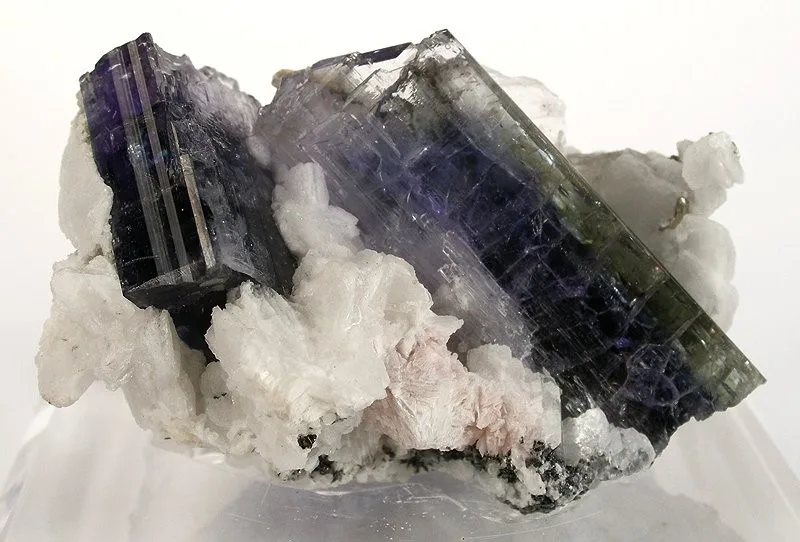
Merelani tanzanite occurs in complex high-grade metamorphic rocks in northeastern Tanzania, part of the regional Mozambique metamorphic belt. The host sequence contains calc-silicate rocks, graphite-rich gneisses and metacarbonate units that have undergone deformation and later fluid-related alteration.
Gem-bearing zoisite is associated with structurally controlled fractures, veins and boudinaged rock zones. Metamorphism, chemically suitable fluids, vanadium availability and local mineral reactions all contributed to crystal growth. The geological history is therefore more complicated than cooling of a single lava or direct precipitation of the gemstone from an ordinary surface spring.
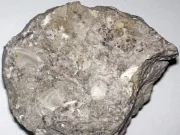
Minerals found with tanzanite may include calcite, grossular garnet, diopside, quartz and graphite, depending on the specific geological zone. Associations can help interpret mineralization, but not every tanzanite specimen displays the entire assemblage.
Detailed geological interpretation appears in research on the origin of Merelani gem mineralization and related Tanzanian petrological studies.
Where Tanzanite Is Found and Its Discovery
The Merelani or Mererani mining area is in northern Tanzania, in the wider Arusha and Mount Kilimanjaro region. Tanzanite’s modern commercial discovery is generally dated to 1967, after which its blue-violet gem material became recognized and marketed internationally. Tiffany & Co. helped popularize the name based on its Tanzanian origin.
Zoisite, the mineral species, occurs outside Tanzania, but commercially significant gem-quality tanzanite is overwhelmingly associated with Merelani. This geographic concentration is notable; it does not, however, provide a rigorous basis for claims such as being exactly ‘1,000 times rarer than diamond’.
The Gemological Institute of America explains tanzanite’s discovery, name and principal commercial source.
Why Tanzanite Is Blue and Violet
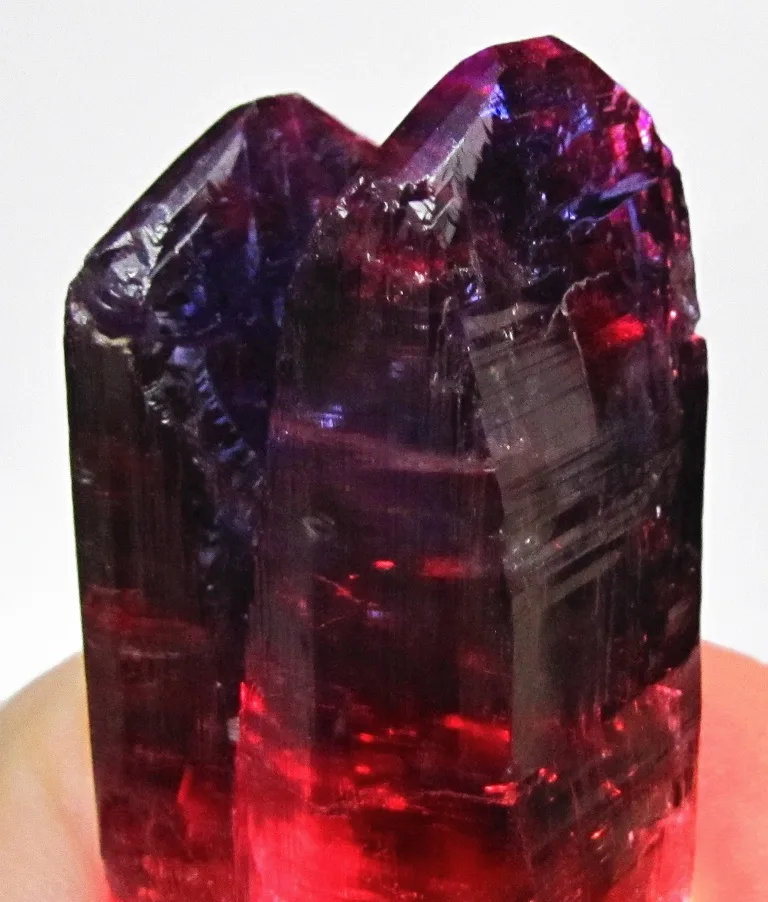
Trace vanadium incorporated in the zoisite crystal structure is a major cause of its absorption of visible light. Because light absorption varies with direction through the orthorhombic crystal, the rough may show blue from one direction and more purple or brownish hues from another.
Common heating practices reduce some undesirable brown or yellow-green color components and can emphasize an appealing blue-violet appearance. The final color depends on the original optical absorption, chemical state of trace elements and orientation of the faceted gemstone.
Color comparisons should be made in controlled lighting. Phone cameras, color filters and gemstone seller photographs can exaggerate saturation and make one tanzanite look significantly bluer than it appears in person.
Tanzanite Pleochroism: Blue, Violet and Brownish Directions
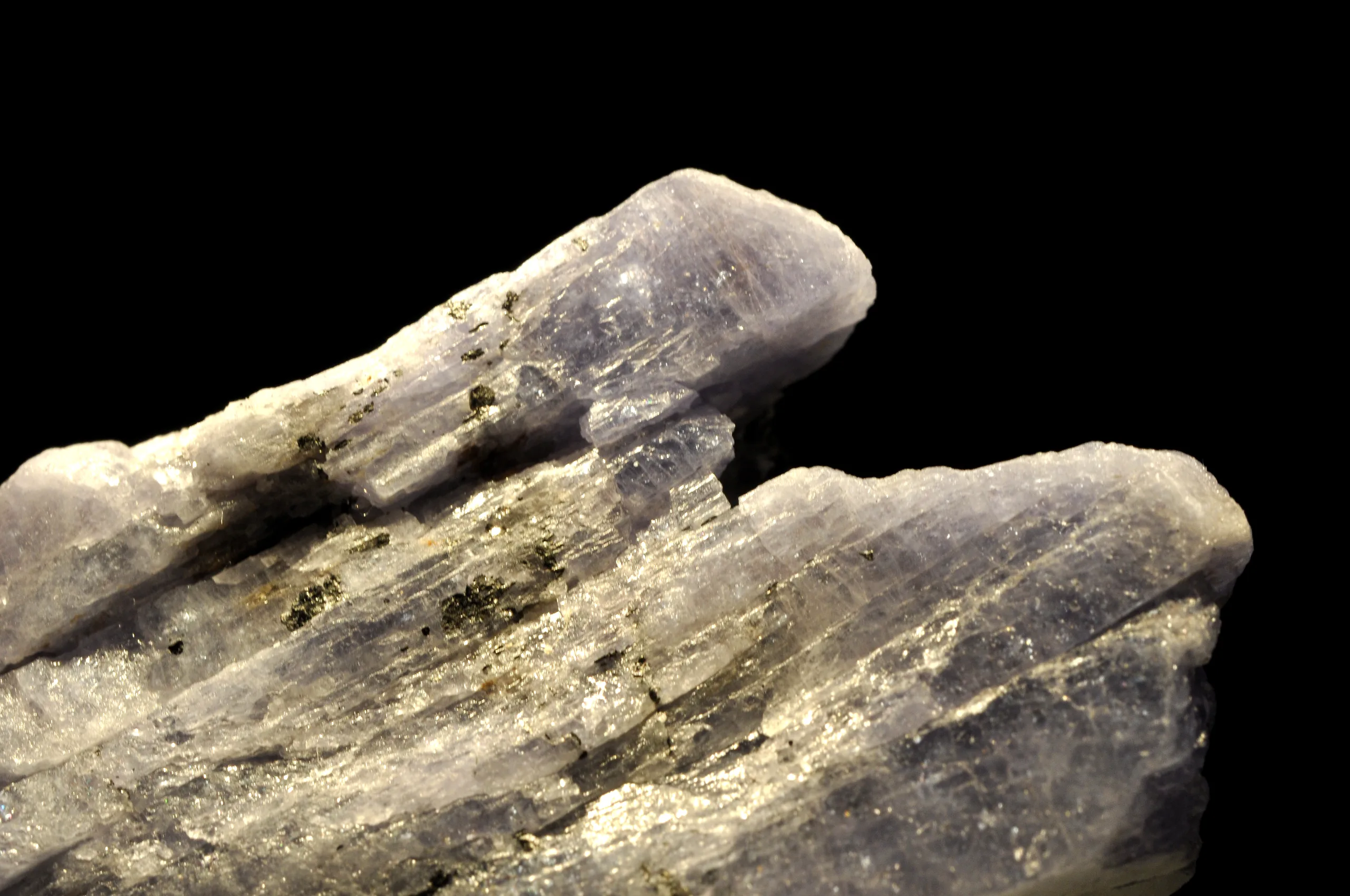
Pleochroism is a property of anisotropic crystals whereby different viewing directions show different colors. Zoisite is orthorhombic and may show three distinct optical color directions, commonly termed trichroism. This is different from a gemstone changing its composition or possessing three separate colored layers.
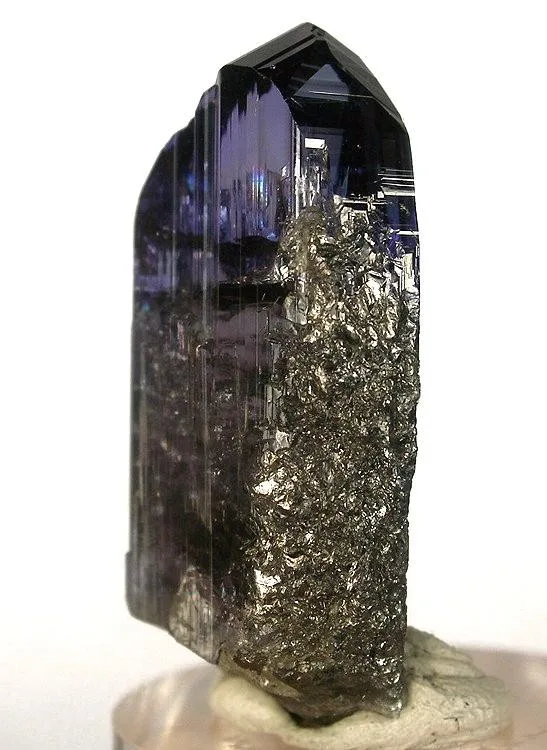
Unheated rough can display purple, blue and brownish or yellow-green directions. Controlled heating often weakens the brownish components. A polished stone may then appear dominantly blue or violet according to how the cutter oriented the crystal.
A dichroscope and controlled rotation of a gemstone can reveal this effect, but interpreting a photograph of three differently colored surfaces is not enough to establish whether heating has occurred. Orientation, lighting and camera exposure all influence the result.
Heat Treatment and Untreated Tanzanite
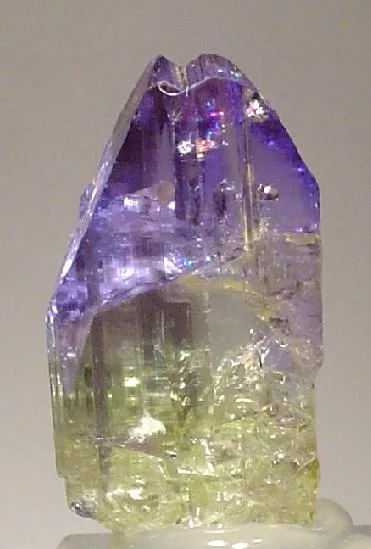
Heating is widely accepted in the colored-gem trade for tanzanite and is frequently used to improve its color. Studies describe treatment temperatures commonly around 500–600 °C, but this is not a recommendation for domestic heating or an assurance that every stone responds the same way.
Heat treatment can reduce brownish or greenish tones by altering optical absorption associated with vanadium. It does not convert an unrelated mineral into tanzanite. Under ordinary wearing conditions the resulting color is generally stable, although gems must still be protected from sudden temperature changes and torch heat during repairs.
A significant gemological limitation is that laboratories cannot always determine whether a stone’s color was caused by deliberate heating or by natural geological heating. A seller’s ‘unheated’ claim therefore deserves appropriate qualification. Treatment and disclosure terminology is described by the Laboratory Manual Harmonisation Committee’s 2025 information sheet.
Tanzanite Value Factors: Color, Clarity, Cut and Carat
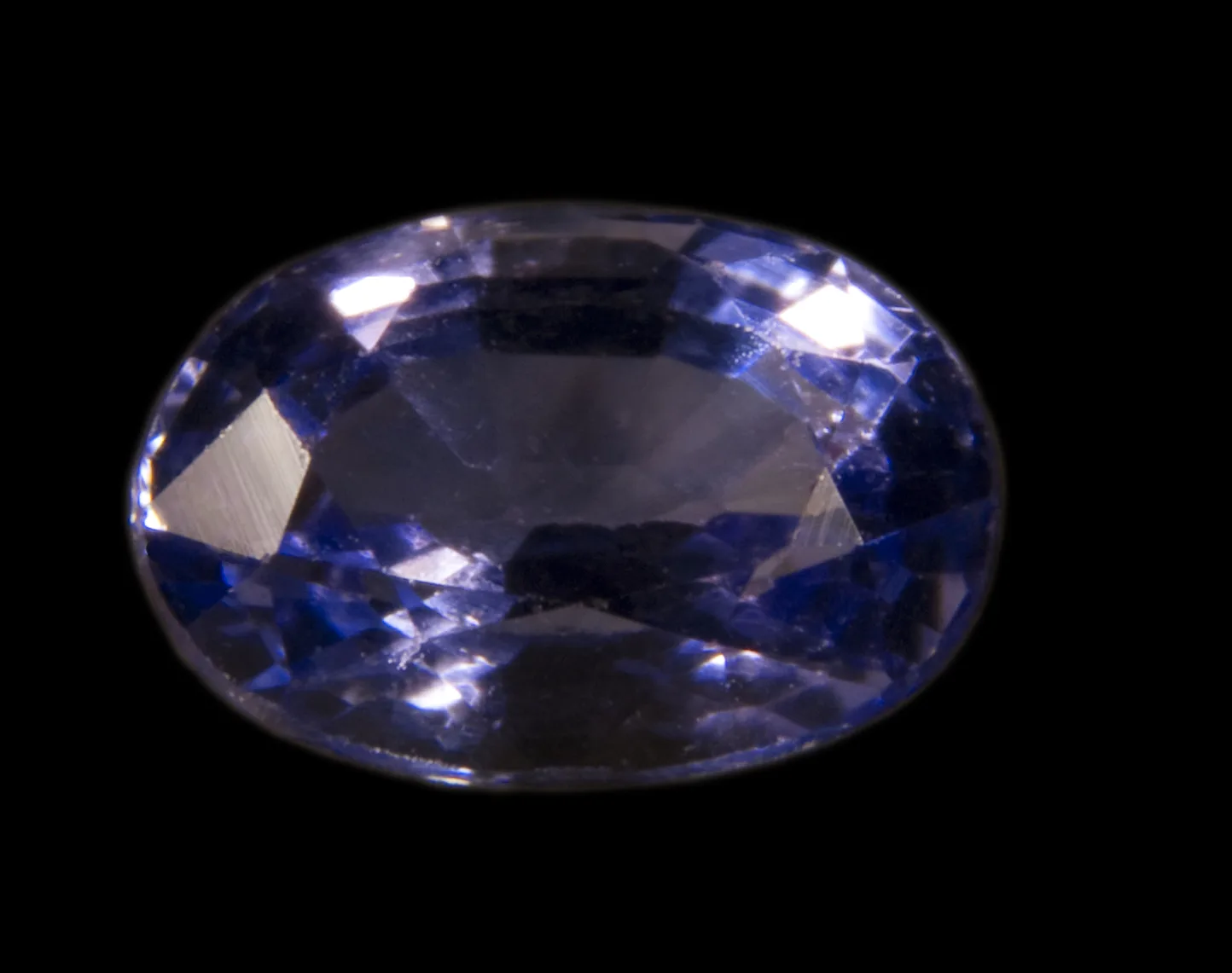
Color and saturation
Rich, saturated blue-to-violet hues are often preferred to pale, grayish or unevenly colored stones. Both the strength of color and its face-up distribution matter. Color should be judged under appropriate lighting rather than by an artificially saturated marketing photograph.
Clarity and transparency
Highly transparent stones without prominent visible fractures are desirable. Some natural crystals have inclusions and feathers, but a lack of inclusions does not by itself indicate a synthetic material. Internal damage can reduce durability, especially near cleavage directions.
Cut and optical orientation
Pleochroism requires the cutter to balance the best face-up hue against weight retention and symmetry. Some stones may appear too dark, show windowing or have uneven brightness because of their proportions. A well-cut gem presents its color and brilliance effectively.
Carat weight and market context
Larger high-quality stones can be desirable, but carat weight alone is not a reliable price predictor. Prices reflect color, clarity, orientation, cutting quality, reported treatment, supply and individual commercial conditions. Retail systems using labels such as AAA are not universal GIA gem grades.
See the GIA tanzanite quality guide for an established description of color, clarity, cut and carat weight.
How to Identify Tanzanite in a Gemological Examination
Observe color and pleochroism. Tanzanite often displays a strong relationship between crystal orientation and violet or blue hue. The visual appearance is suggestive, not diagnostic.
Measure optical properties. A refractive index around 1.69–1.70, appropriate birefringence and optical characteristics, and specific gravity near 3.35 can support zoisite identification in a trained laboratory.
Examine inclusions and structure. Microscopy and spectroscopy can help distinguish tanzanite from similarly colored gems. Internal fractures, inclusions and the optical response must be interpreted together.
Avoid damaging home tests. Scratching, hitting, heating or applying chemicals to a cut gemstone can cause permanent damage and does not constitute a reliable identification protocol.
Tanzanite vs Sapphire, Iolite and Colored Glass
| Material | Distinction from tanzanite |
|---|---|
| Tanzanite | Blue-violet zoisite, orthorhombic, strong pleochroism, Mohs about 6–7 |
| Blue sapphire | Corundum, Mohs 9, with different refractive and optical properties |
| Iolite | Cordierite gem, commonly strongly pleochroic but with different measured optical and density values |
| Blue or violet glass | Noncrystalline imitation material with optical properties unlike zoisite |
| Other blue-violet gemstones | Color can overlap; refractometry and other standard tests are needed for identification |
A violetish blue gem should not be called tanzanite merely because it resembles a product photograph. Sapphire, iolite and some imitations can look similar, especially in artificial lighting. Gemological testing is the correct way to establish species.
The word ‘synthetic’ must also be used accurately: manufactured imitation glass is not synthetic tanzanite, and different colored stones must be identified by the material they actually contain.
Merelani Tanzanite Mining and Responsible Sourcing
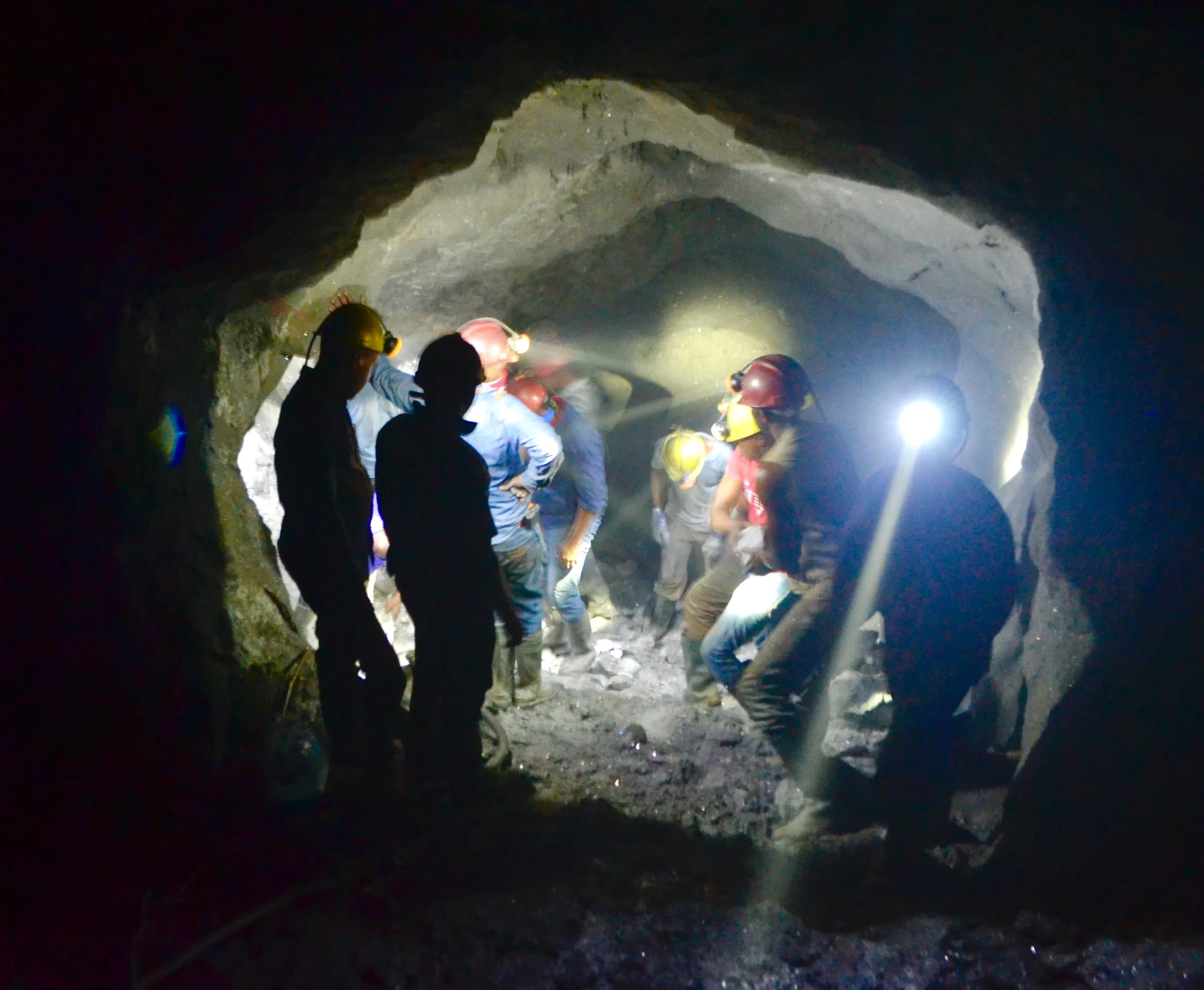
Tanzanite production comes from a geographically restricted mining district where gem-bearing zones follow complex structural controls. Miners encounter variable rock conditions and pockets of valuable crystals rather than a continuous uniformly gem-rich bed. Extraction conditions depend on depth, local geology and the engineering of individual workings.
Responsible sourcing requires consideration of worker safety, supply-chain documentation, environmental protection and applicable national regulations. A geographically famous origin should not be treated as proof of ethical practices, nor does a high retail price demonstrate how much a miner received.
Tanzanite’s concentrated source makes its supply sensitive to mining operations and market changes, but available information does not establish a scientifically reliable date when the deposit will be exhausted.
Tanzanite Cutting, Faceting and Crystal Orientation
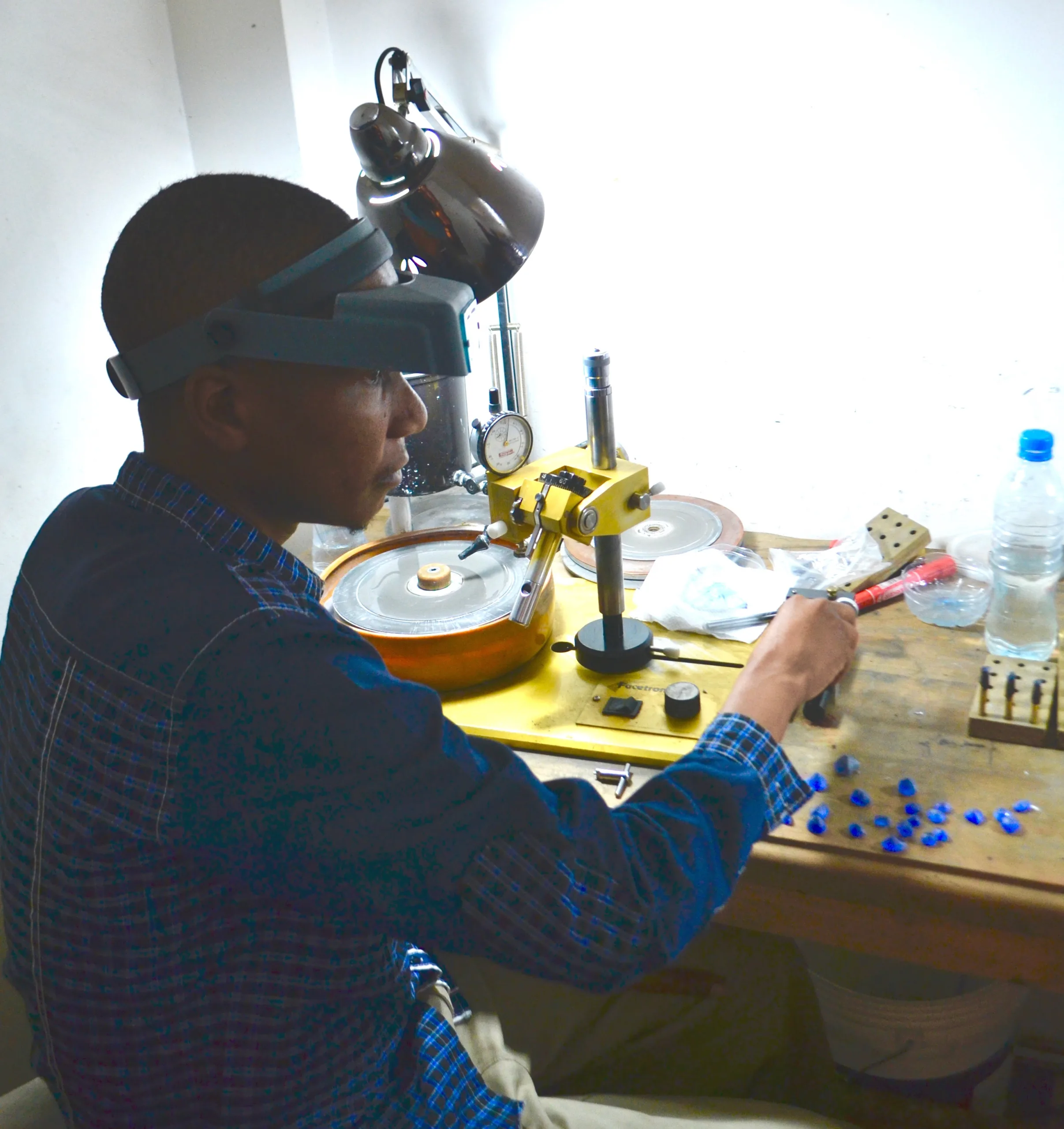
Gem cutters must account for tanzanite’s strong pleochroism and its cleavage. Rough crystals are examined to determine the best orientation for a blue or violet face-up color while also preserving weight and avoiding internal fractures.
Oval, cushion, pear, emerald, round and marquise shapes are all used. Different cut proportions change brightness, apparent size and the distribution of color. Two gems of similar weight can therefore look very different under the same lighting.
Heating and faceting have different purposes: heating modifies color absorption, whereas cutting controls optical presentation and the amount of usable gemstone retained. A precise description should not conflate these processes.
Tanzanite Jewelry, Cleaning and Durability
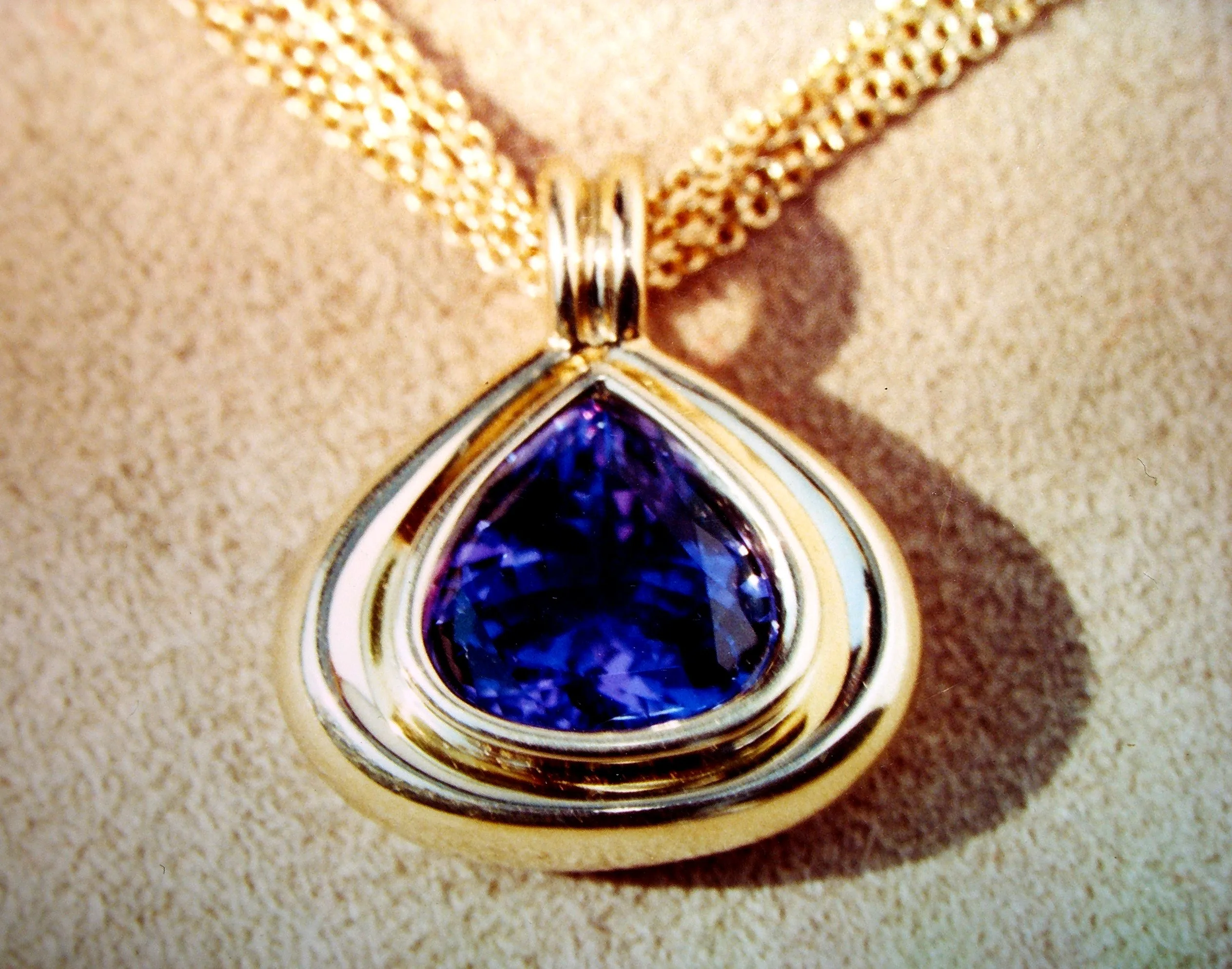
Tanzanite is used in earrings, pendants and rings, often with precious metals. The mineral’s perfect cleavage and relatively limited toughness make it more vulnerable to sharp impacts than sapphire. Protective settings and careful handling are particularly valuable in rings.
Cleaning: Use mild soap, lukewarm water and a soft cloth or brush when compatible with the mount. Ultrasonic and steam cleaning are generally discouraged for tanzanite, especially when fractures or uncertain treatments are present.
Storage: Keep tanzanite separate from harder stones and protect it from knocks and sudden temperature changes. Jewelry repair involving heat should be performed by a professional aware that the stone is tanzanite.
Gemstone hardness does not mean indestructibility. A stone can resist some scratches yet chip along a cleavage plane.
Buying Tanzanite: Treatments, Laboratory Reports and Quality
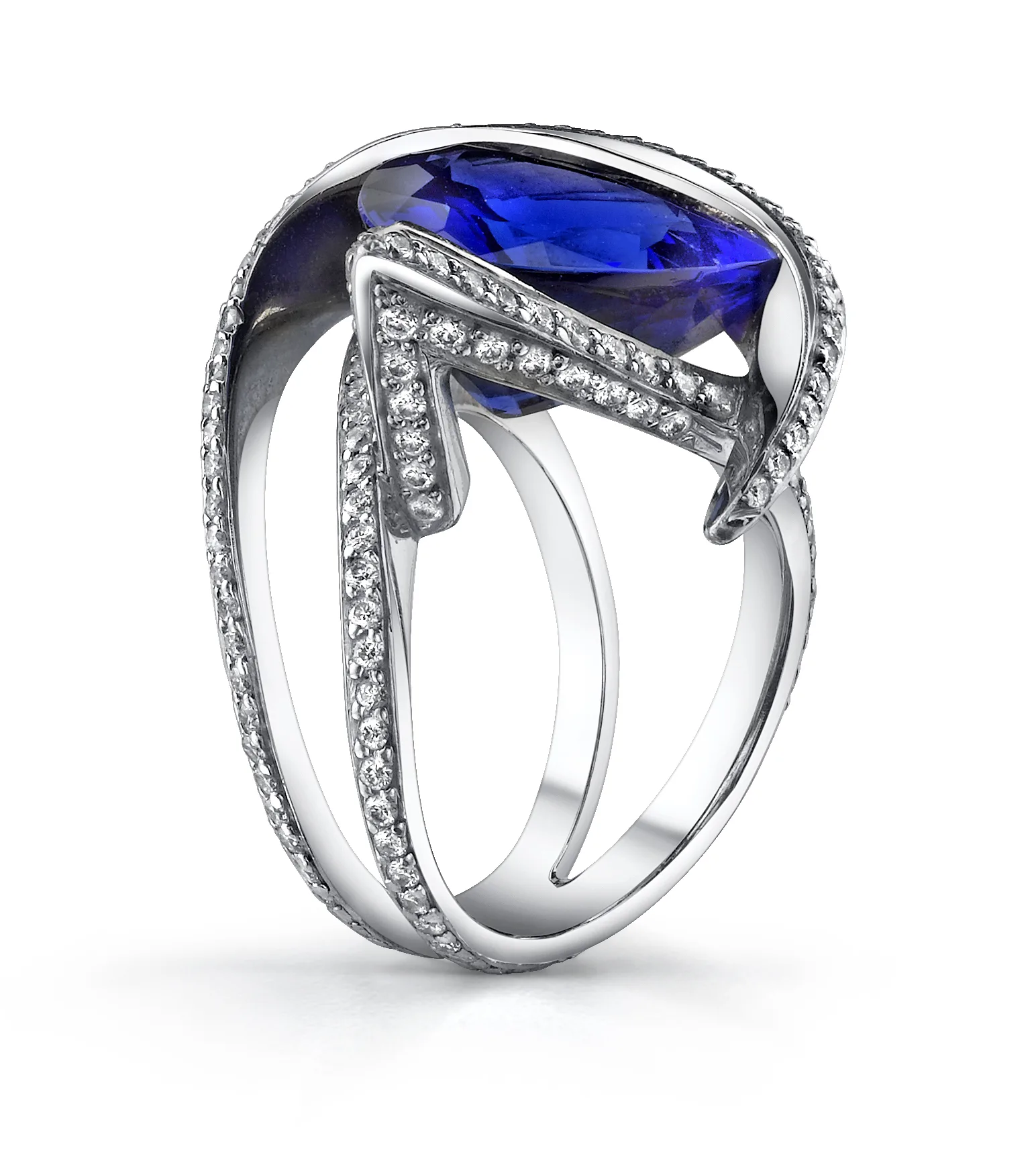
Compare tanzanite stones face-up under consistent lighting. Examine hue, saturation, transparency, cutting symmetry, apparent windowing, visible damage and the quality of the setting. Understand that retailer grades such as AA or AAA may describe proprietary systems rather than an internationally standardized gemological scale.
Ask for written disclosure of heat treatment and any additional treatments. A gemological report can help identify the stone as zoisite and record observations and detectable treatments, but some heat histories may be impossible to prove conclusively.
Claims about ‘rarity multiples’, guaranteed future appreciation or precise exhaustion dates should be treated as sales language unless backed by credible data. Origin and responsible-sourcing claims benefit from traceable documentation.
GIA provides a tanzanite buyer’s guide and information about its colored-stone reports.
Frequently Asked Questions
Is tanzanite a mineral? Tanzanite is the transparent blue-violet gem variety of the mineral zoisite, not a separate mineral species.
Where is tanzanite found? Commercial gem-quality tanzanite is primarily sourced from Merelani (Mererani), northern Tanzania.
What makes tanzanite blue? Vanadium-related absorption within the zoisite structure is chiefly responsible for its blue-violet color.
Why does tanzanite show several colors? It is strongly pleochroic, showing different hues along different crystal directions.
Is most tanzanite heated? Yes. Heat treatment is common and generally accepted to emphasize blue-violet color.
Can laboratories always confirm heat treatment? No. Detecting deliberate heating can be inconclusive for individual stones.
How hard is tanzanite? Its Mohs hardness is approximately 6–7, but a perfect cleavage direction makes it vulnerable to impacts.
Is tanzanite rarer than diamond? Its commercial source is geographically limited; precise numerical rarity comparisons are not established geological metrics.
Is tanzanite the same as sapphire? No. Tanzanite is zoisite, while sapphire is corundum.
Can tanzanite be worn in a ring? Yes, especially with a protective setting and attention to impacts, scratches and cleaning.
Scientific References and Image Credits
GIA — Tanzanite Description. Mineral identity, discovery, source and optical character.
GIA — Tanzanite Quality Factors. Color, clarity, cut and carat weight.
GIA — Tanzanite Buyer’s Guide. Buying and care.
LMHC — Tanzanite Information Sheet (2025). Treatment terminology and disclosures.
Mindat Mineral Database. Zoisite mineral structure and chemistry.
South African Journal of Geology — Origin of Tanzanite at Merelani. Metamorphic host rocks and gemstone mineralization.
Tanzania Journal of Science — Petrology of the Merelani Region. Regional petrology and structural geological history.
All photographs are real tanzanite crystals, faceted gemstones, mining operations, lapidary scenes or jewelry. Captions provide the original Wikimedia Commons file, photographer and reuse-license information. Images were re-encoded as WebP.