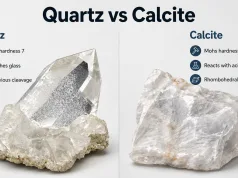




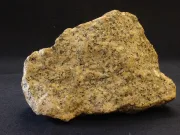
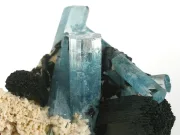
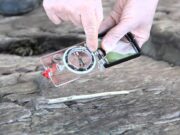





















Mineral identification combines observations of physical properties to narrow down possible mineral species. Color alone is rarely sufficient: hardness, luster, streak, cleavage and magnetism often provide better clues. This interactive mineral finder compares your observations with 150 mineral reference entries, including selected groups and compositional varieties, displaying specimen photographs and links to their individual descriptions.
Interactive Mineral Identification Tool
150 reference entries · Observe → Test → Compare
Start with the properties you can observe. Add measured properties for a more useful shortlist.
Advanced crystal observations
Use only existing, reliable observations. Do not break, bend or scratch a specimen to obtain these values. External form alone does not establish crystal symmetry. Tenacity and fracture are not documented for all reference records.
Hardness and density measurement assistant
Common reference points: fingernail ≈ 2.5, copper ≈ 3, ordinary glass ≈ 5.5; reference objects vary. Use measured bounds rather than assuming a fixed tool hardness.
Density = mass ÷ volume. Do not immerse soluble, hazardous or valuable samples.
For existing hydrostatic measurements of a suitable compact specimen only. SG ≈ mass in air ÷ (mass in air − apparent immersed mass). Near room temperature the numeric density in g/cm³ is approximately the same. Never immerse unknown, water-soluble, hazardous or valuable minerals.
How to interpret density and test results
Density refers to a clean, compact mineral specimen, not a porous rock or mixed mineral aggregate. A streak plate may be scratched by hard minerals; select the unavailable option. Acid observations refer to cold dilute hydrochloric acid in an appropriate supervised laboratory test on a suitable specimen. Do not taste, grind, heat or handle hazardous minerals unnecessarily.
The report includes observations and up to 30 ranked candidate records, including their properties and conflicts. A heuristic evidence rank is not a probability or a confirmed mineral identification.
Browse the full reference library by name
Reference properties and photos. This lookup is separate from the identification results.
Reference entries include mineral groups and series as well as individual species. Hard minerals may scratch ordinary porcelain instead of leaving a usable streak. The algorithm does not score streak for reference minerals with a minimum hardness of 7 or higher. This curated library is not exhaustive; individual guide values and image identification require further review. Values are approximate and may vary with composition, impurities or specimen condition. For species-level data and confirmation, consult the Handbook of Mineralogy and appropriate analytical methods. A match is not a confirmed identification. Unknown observations are ignored. Color is less diagnostic than hardness, streak, cleavage and density. Consult the Mineralogical Society of America mineral identification key for further testing. Photographs are reference examples, not image-based identification.
How to Identify an Unknown Mineral
Start with luster: metallic minerals reflect light like metal, whereas vitreous minerals resemble glass. Observe a fresh surface when possible; weathering and coatings can change appearance. Select a color only if the specimen has a characteristic color. A single mineral species may occur in many colors.
Use existing hardness measurements or suitable reference materials only when the specimen is known to be safe for testing. Avoid destructive testing of unknown, fibrous, toxic or valuable material. A fingernail is approximately 2–2.5, and ordinary glass is around 5–5.5; actual hardness varies. Check that the scratch is a groove, rather than loose powder transferred from the reference. A streak plate can reveal powder color for softer minerals, but harder minerals may scratch the plate instead of leaving a useful streak. Leave streak unselected in that case.
Cleavage, Fracture and Magnetism
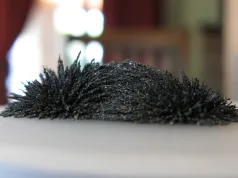
Cleavage is the tendency to break along repeated flat crystallographic planes; fracture describes other broken surfaces. Count directions rather than individual parallel faces. Poor or unobserved cleavage should not be confused with confirmed absence. Magnetite is strongly attracted to a magnet, while hematite normally is not strongly attracted; mixed minerals and inclusions can affect a specimen’s magnetic behavior.
Examples of Mineral Identification
A black specimen strongly attracted to a magnet is consistent with magnetite. A steel-gray or reddish specimen with a reddish-brown streak suggests hematite. A purple glassy mineral with hardness near 4 may be fluorite, while purple quartz typically has hardness 7. Recheck uncertain observations if candidates conflict. The ranked mode weighs supporting and conflicting evidence, while strict mode excludes documented conflicts. Neither mode establishes a confirmed identification.
Limitations
A hand specimen may contain more than one mineral. The reference database groups typical properties, so unusual varieties, weathered surfaces and ambiguous measurements can produce missing or misleading matches. Streak, cleavage and hardness values are simplified screening features rather than exhaustive mineralogical descriptions. Professional identification may require microscopy, Raman spectroscopy or X-ray diffraction. For expensive gems, seek a qualified gemologist before performing destructive tests.
References and Further Reading
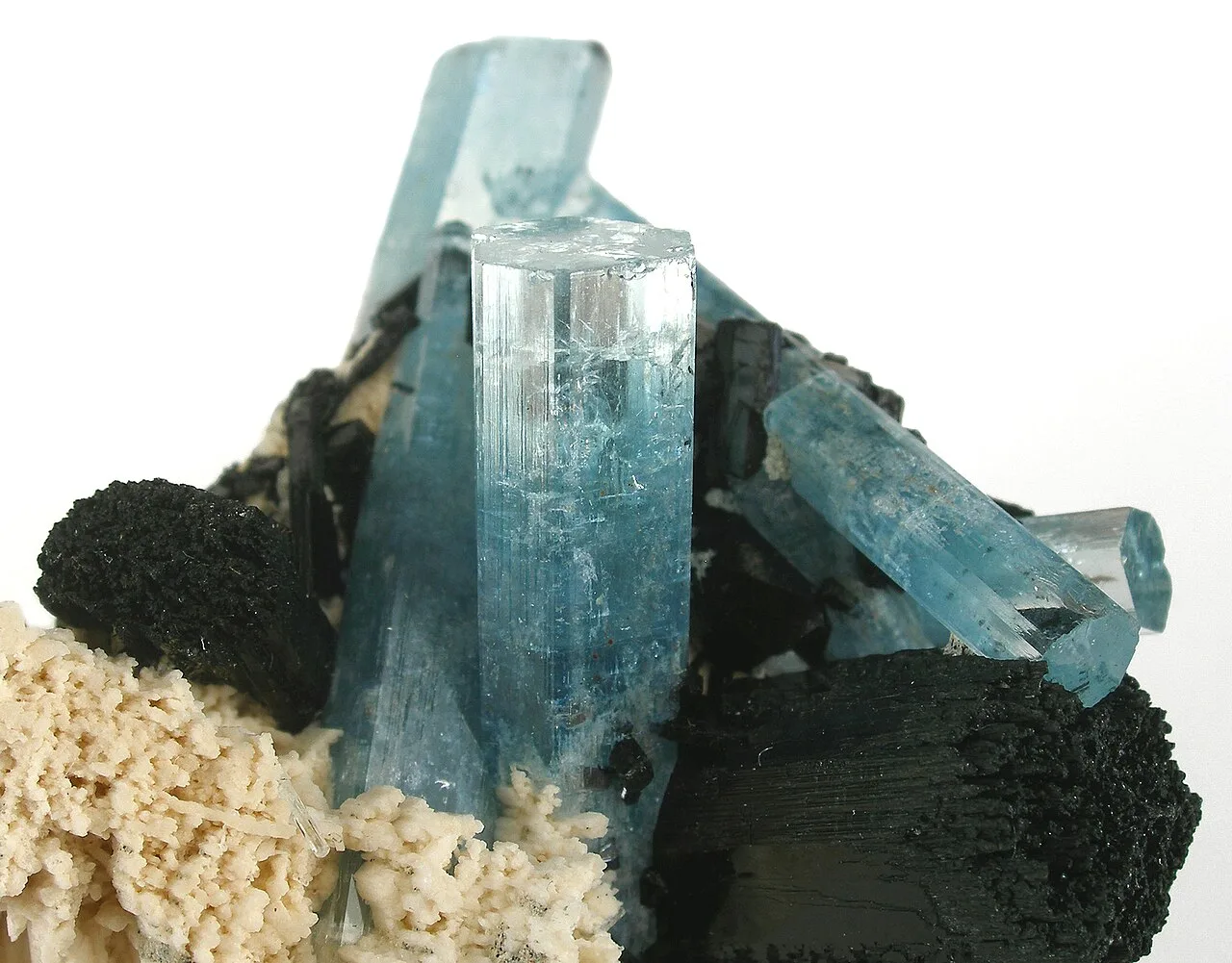
GeologyScience mineral encyclopedia; Geology.com — streak test; Geology.com — mineral properties. Featured photograph: Rob Lavinsky / Wikimedia Commons, CC BY-SA 3.0.