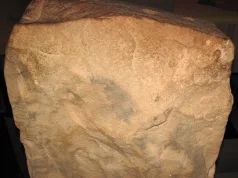




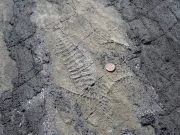






















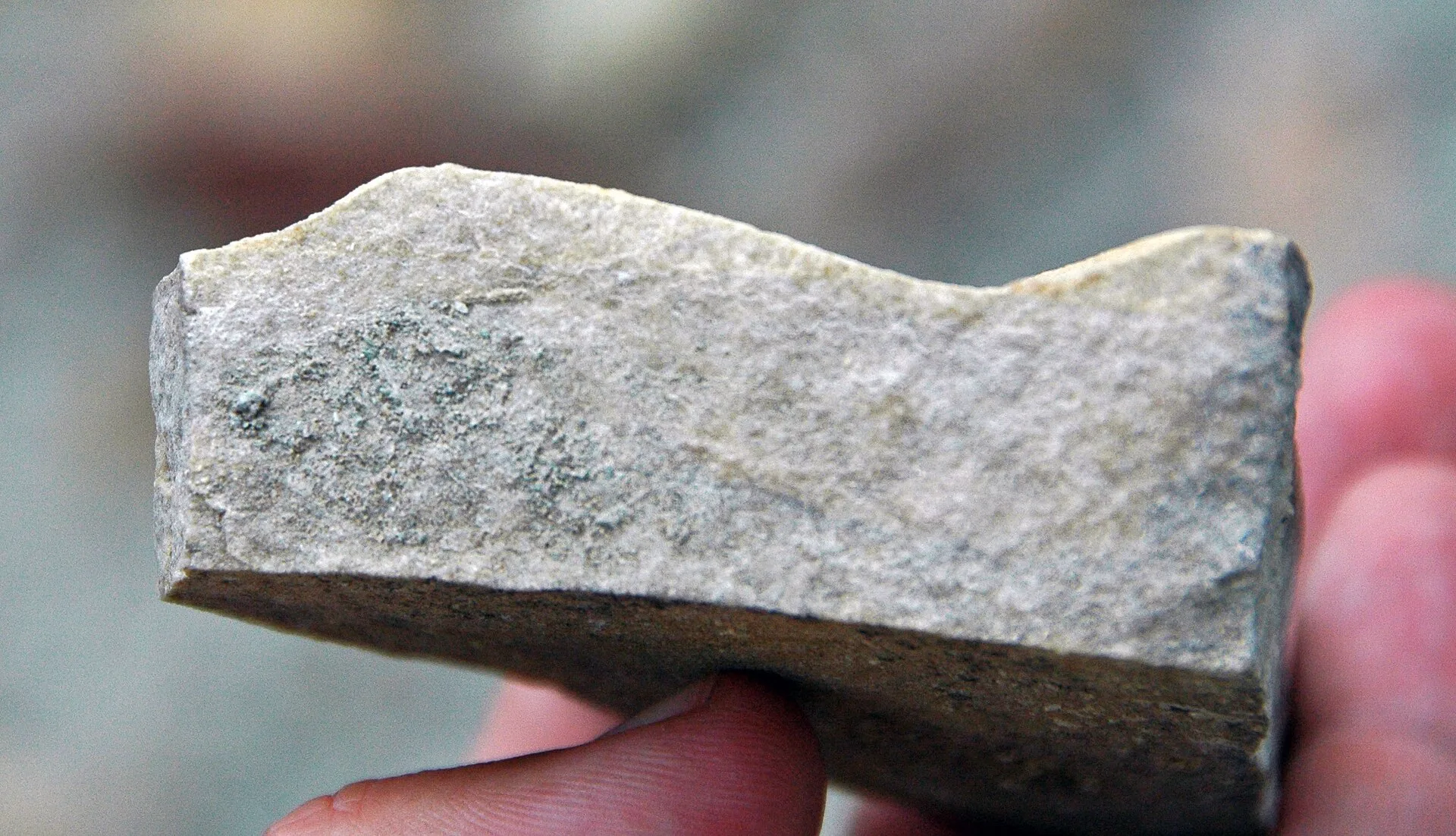
Ripple marks are small, regularly spaced ridges and troughs that form on loose sediment surfaces as water or wind moves grains. Preserved ripple marks provide evidence of ancient currents, wave motion, sediment transport and depositional environments. Their shape and internal lamination help distinguish current ripples from wave ripples.
What Are Ripple Marks?
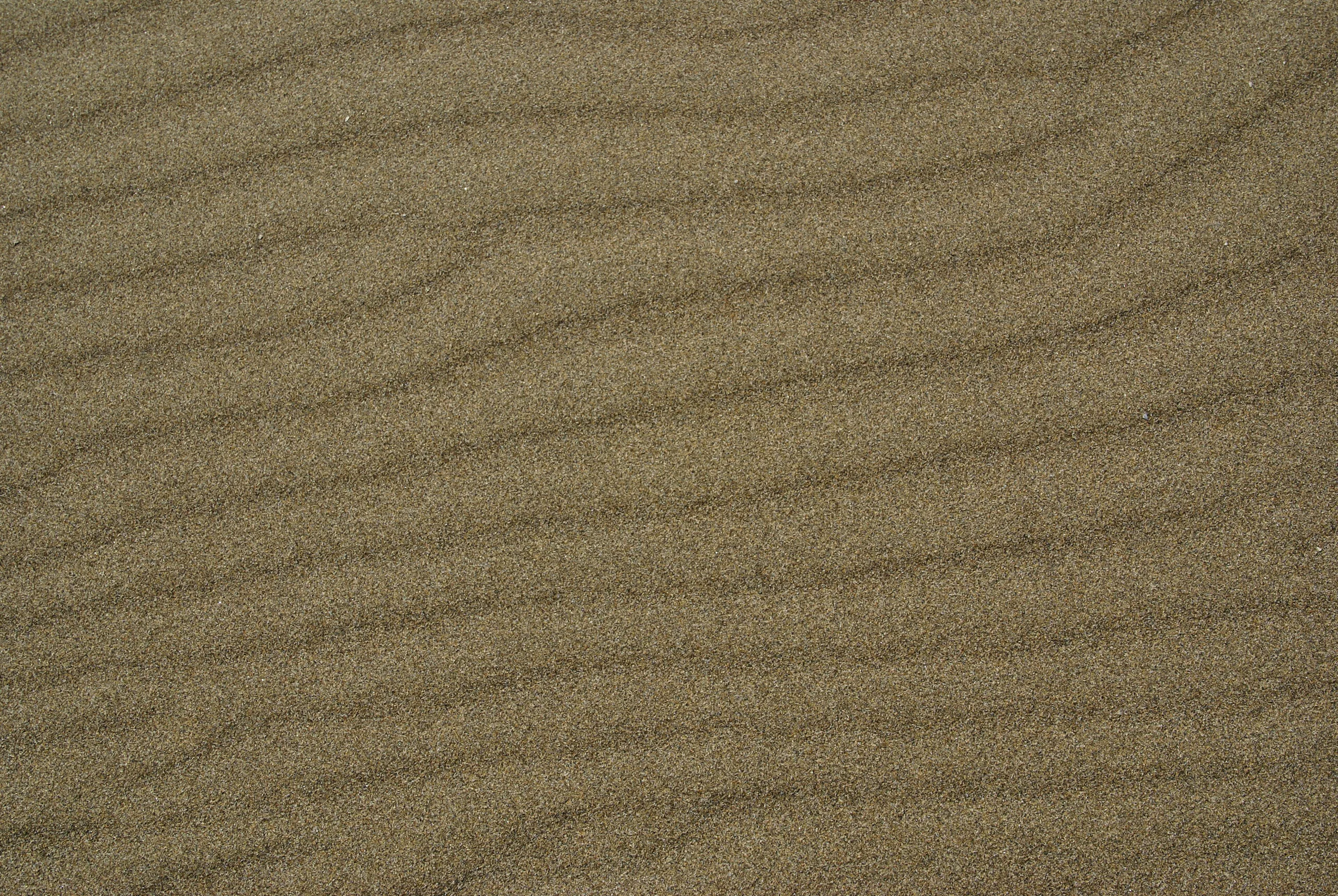
Ripple marks develop when sediment grains are repeatedly eroded, transported and deposited into low-relief bedforms. They occur most commonly in sand and silt, but may also form in other unconsolidated granular sediment. Once buried and lithified, their crests and troughs can remain visible on bedding planes in sandstone and siltstone.
How Ripple Marks Form
Wind ripples require a distinct explanation: saltating sand grains strike the bed and displace other grains by splash and short hops. This feedback between impacts, grain movement and bed topography can build wind ripples; it is not identical to subaqueous ripple formation. See Kelley et al. (2025), Aeolian Research.
When a current flows over loose sediment, small irregularities disturb the flow. Sediment grains move up the gentle stoss side of a ripple and accumulate on its steeper lee side. Repeated erosion and deposition can cause the ripple to migrate, producing small inclined laminae within the sediment. Oscillatory wave motion, in contrast, moves water back and forth near the bed and can create more symmetrical ridge profiles.
Ripple formation depends on grain size, flow velocity, water depth, sediment supply and bed roughness. Ripple marks do not by themselves reveal a precise water depth or a unique depositional setting.
Main Types of Ripple Marks
Current Ripples
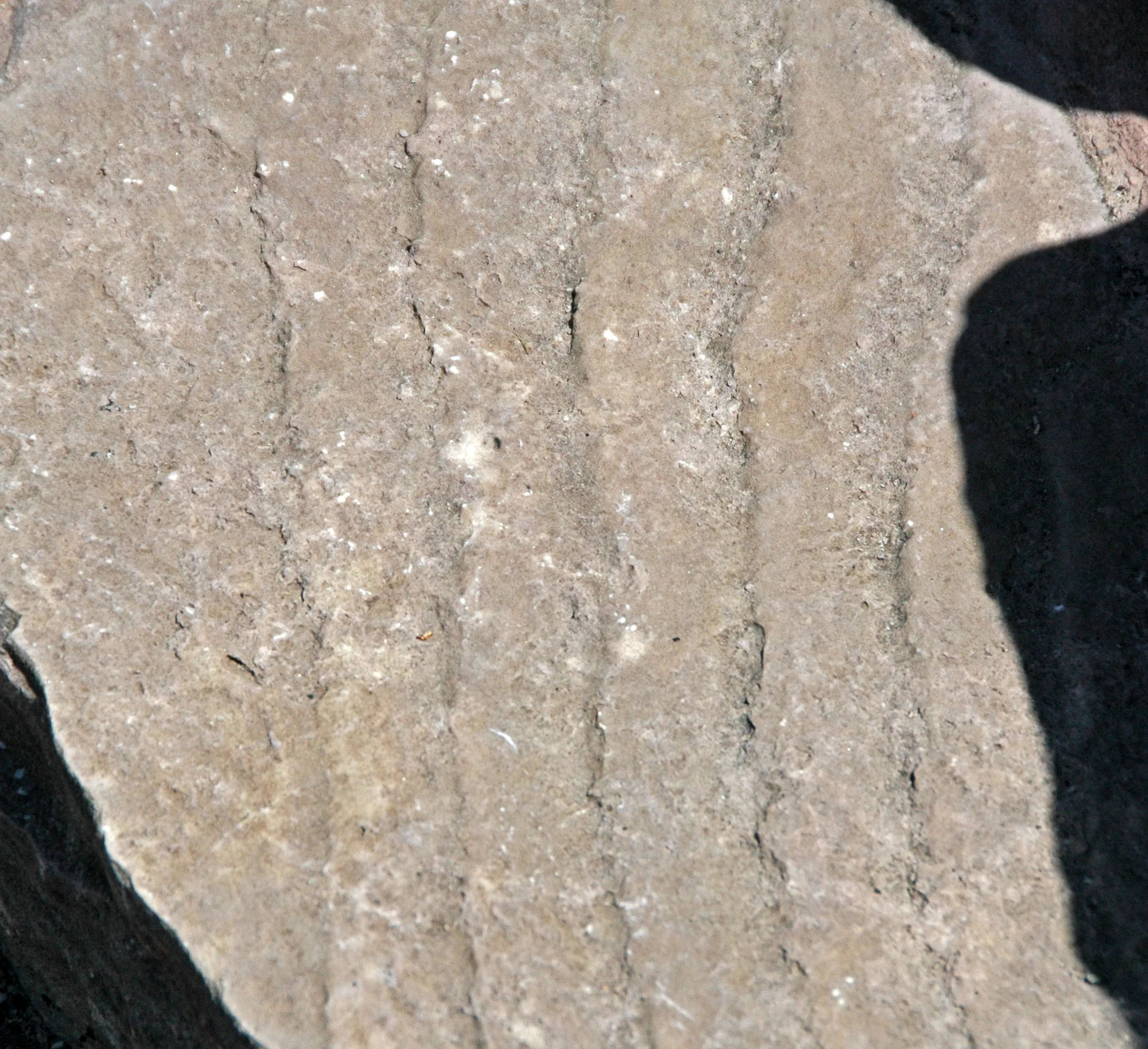
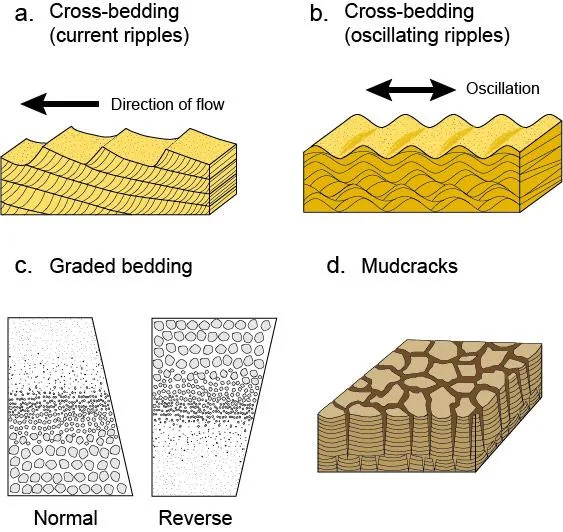
Current ripples typically have asymmetric cross sections, with a gentler upstream slope and a steeper downstream lee slope. They form under predominantly one-directional water flow and may also develop in windblown sand. Their internal cross-lamination commonly records bedform migration.
Wave Ripples
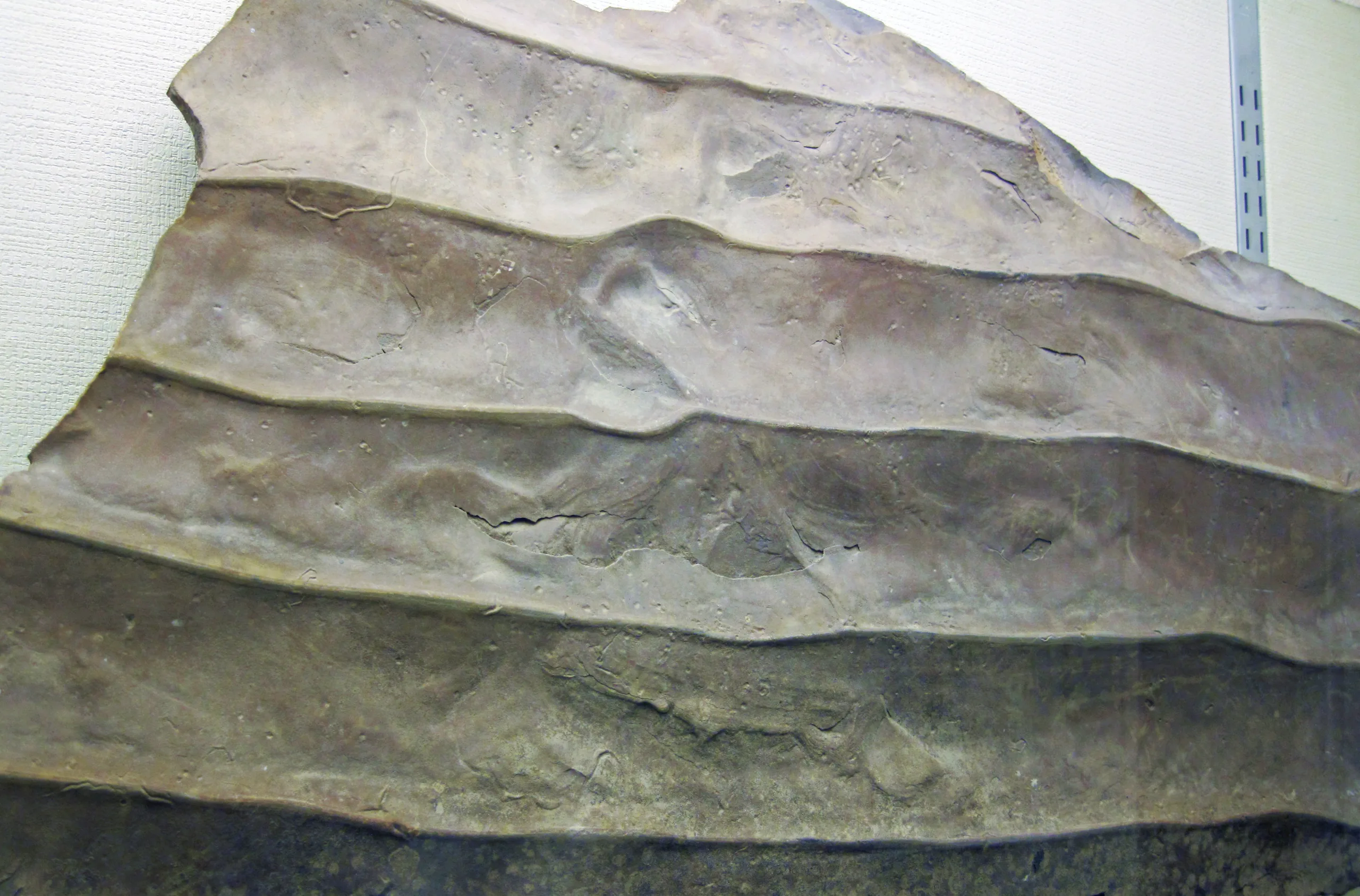
Wave ripples commonly have more nearly symmetrical profiles and form under oscillatory motion generated by waves. They are frequent in shallow marine and lake environments, although wave-driven currents can produce complex or asymmetric shapes.
Interference Ripples
Interference patterns develop where two or more ripple sets intersect, reflecting changes in current or wave direction. Their appearance can be complex, so individual crests should be mapped before interpreting the flow history.
Climbing Ripples
Climbing ripple cross-lamination develops when ripples migrate while sediment simultaneously accumulates rapidly on the bed. The resulting inclined stacks may indicate high suspended-sediment supply, such as in some river or turbidity-current deposits.
Current Ripples vs Wave Ripples
| Feature | Current ripples | Wave ripples |
|---|---|---|
| Typical profile | Asymmetric | More nearly symmetrical |
| Dominant motion | Unidirectional flow | Oscillatory wave motion |
| Common settings | River channels, tidal currents, windblown sand | Lake and shallow marine beds |
| Interpretive caution | Flow direction may vary over time | Combined wave-current flows can distort symmetry |
These are useful tendencies rather than absolute rules. Bedform shape should be evaluated together with sedimentary facies and associated structures.
Ripple Marks and Cross-Bedding
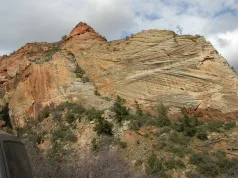
Ripple marks describe the ridges and troughs on a sediment surface. As ripples migrate and sediment is deposited on their lee slopes, they can generate ripple cross-lamination. Larger migrating dunes form cross-bedding. Both structures record sediment transport, but the bedform scale and preserved geometry differ.
Where Ripple Marks Are Found
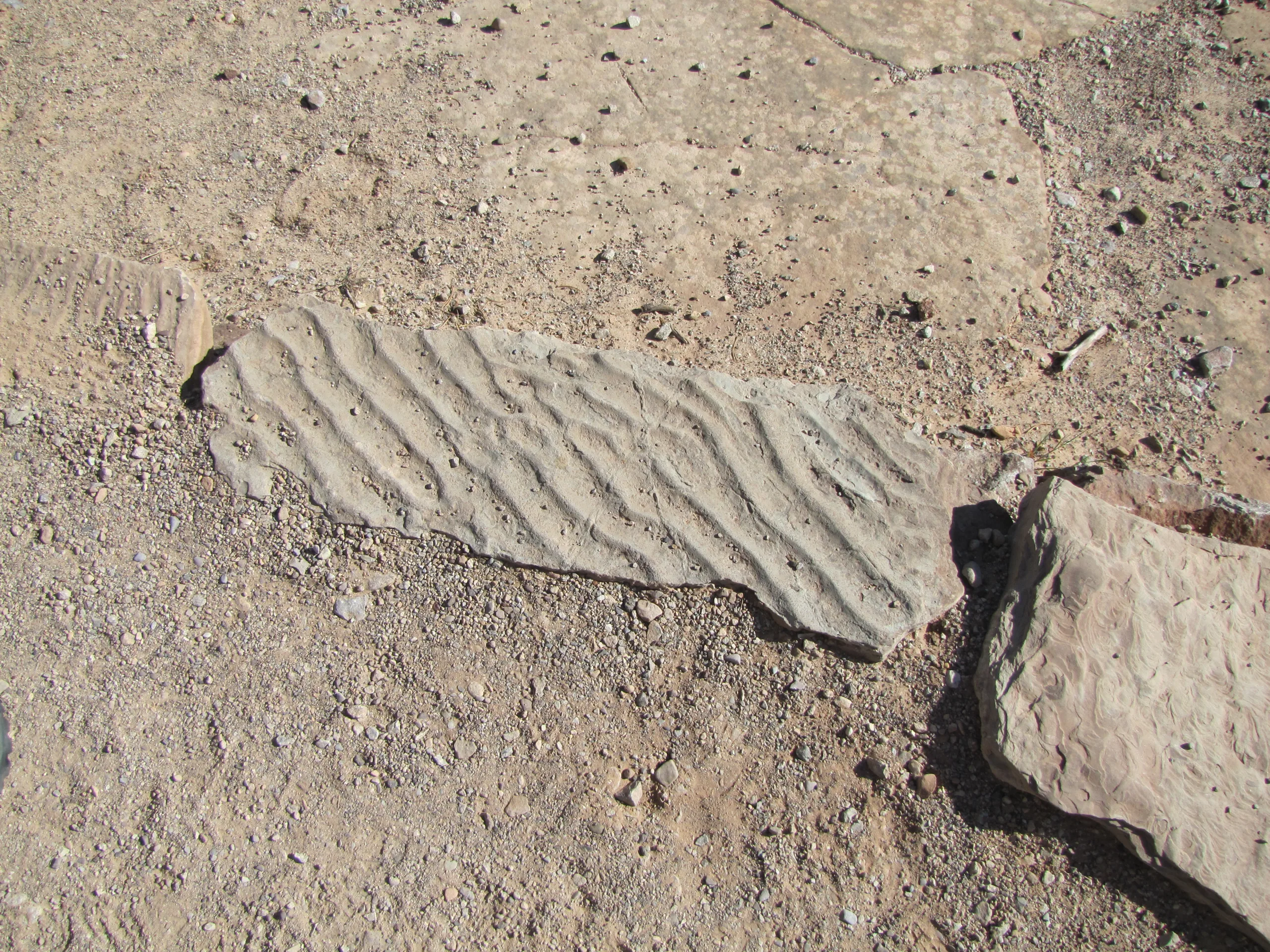
Ripple marks occur on modern beaches, tidal flats, riverbeds, lake margins and some desert dunes. Ancient examples are preserved on bedding surfaces in sedimentary rocks. Their presence may support an interpretation of shallow water or current activity, but does not uniquely establish a beach, river or marine environment.
Associated mud cracks, trace fossils, graded bedding and grain-size changes often provide stronger environmental evidence than ripple marks alone.
How to Identify Ripple Marks in the Field
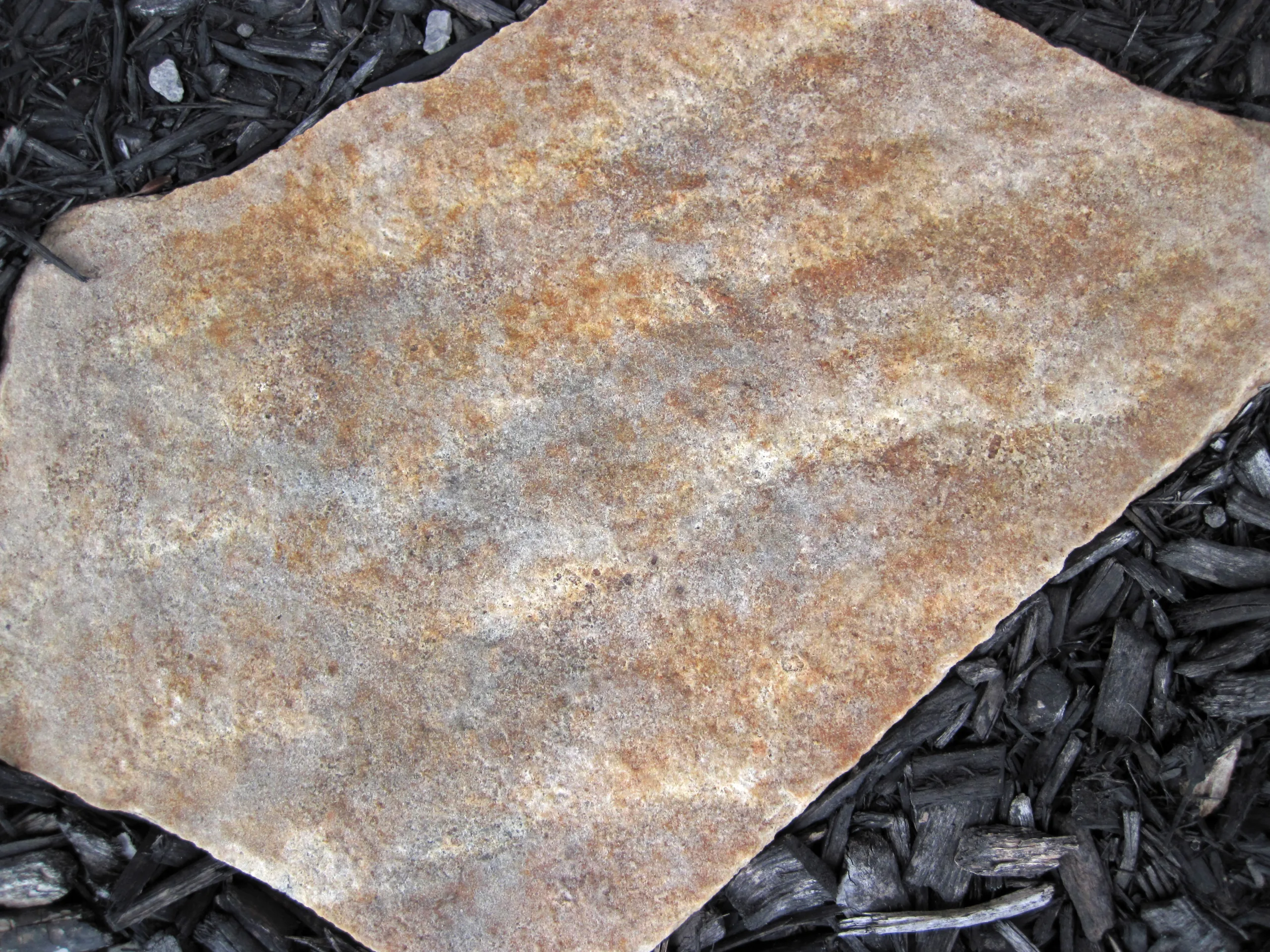
- Identify a bedding plane bearing repeated ridges and troughs rather than fractures or weathering grooves.
- Measure crest orientation, wavelength and ripple height at several locations.
- Examine ripple symmetry and, where exposed, the direction of internal cross-lamination.
- Check for changes in crest orientation and overlapping ripple sets.
- Record nearby structures such as mud cracks, burrows and cross-bedding.
- Interpret paleocurrents from multiple observations; avoid using a single ripple as definitive evidence.
In current ripples, the steep lee side usually faces downstream. For wave ripples, the crest orientation and symmetry do not establish a unique net transport direction.
Ripple Geometry: Wavelength, Height and Crest Shape
Geologists describe ripple wavelength as the horizontal spacing between neighboring crests and ripple height as the vertical distance from trough to crest. Crest shape may be straight, sinuous, linguoid or discontinuous. These properties vary with grain size, sediment availability and flow conditions. A single wavelength does not yield a unique ancient flow velocity because different combinations of sediment and hydrodynamic conditions can produce similar forms.
Internal Structures and Preservation
Ripple crests are frequently eroded or reworked before burial. Their preservation depends on rapid covering by younger sediment, low subsequent disturbance and cementation. Where ripples migrate, thin cross-laminae dip toward the lee side; climbing ripples show how simultaneous vertical aggradation can preserve multiple successive ripple profiles. Bioturbation, soft-sediment deformation and weathering may obscure these features.
Ripple Marks as Way-Up Indicators
On exposed bedding surfaces, positive relief and casts on bed soles can help determine which side originally faced upward, provided the observer distinguishes original surface relief from a sediment-filled mold. Ripple geometry should be used with graded beds, cross-lamination and other younging indicators in deformed successions.

Geological Importance
Ripple marks are valuable indicators of ancient sediment transport and bedform migration. They can help reconstruct depositional environments and, when preserved with other sedimentary structures, contribute to interpretations of shoreline movement, river dynamics and storm processes. In stratigraphic studies, ripple morphology and cross-lamination also assist in recognizing bed tops and changes in sediment supply.
Frequently Asked Questions
Are ripple marks fossils?
No. Ripple marks are physical sedimentary structures, not the remains or traces of organisms.
Can ripple marks form in deserts?
Yes. Wind can form ripples on sand surfaces, although wind ripples and water ripples may differ in grain sorting and migration processes.
Do ripple marks always indicate shallow water?
No. Ripple-forming currents occur in several settings, including some deeper-water environments. Associated deposits are needed for environmental interpretation.
What is the difference between ripple marks and cross-bedding?
Ripple marks are surface bedforms. Cross-bedding is the internal inclined stratification preserved as bedforms migrate and sediment accumulates.
Related Topics and References
See Sedimentary Structures and Textures and Cross-Bedding. Further reference: U.S. Geological Survey and Encyclopaedia Britannica: Ripple mark.