













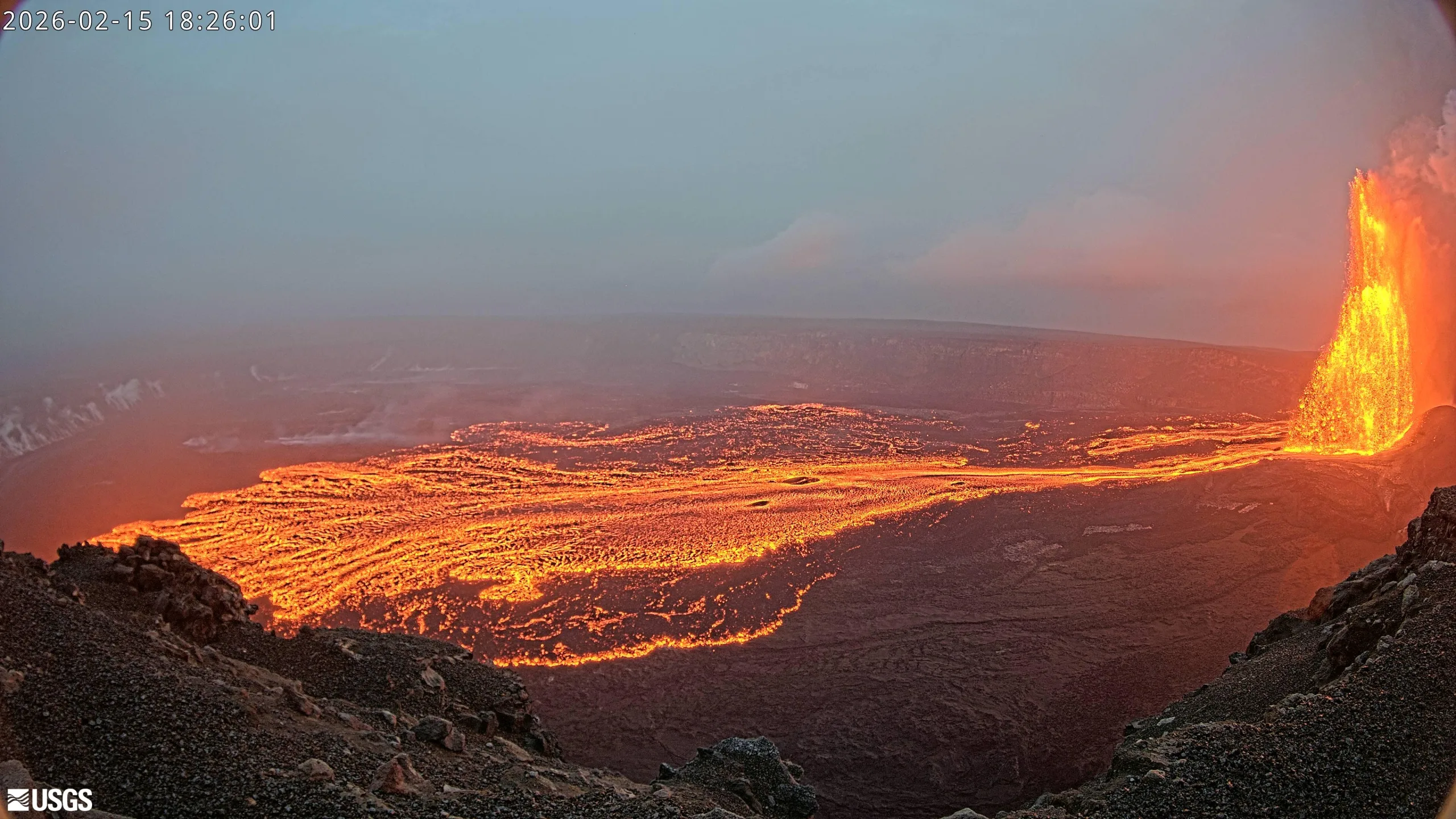
November 23, 2026. Low-level lava began overflowing from vents inside Kīlauea’s Halemaʻumaʻu crater in Hawaii on November 22, prompting the US Geological Survey (USGS) to raise the volcano alert level to WATCH and the aviation colour code to ORANGE. These small, intermittent flows are precursors to a potential new period of high lava fountaining—not confirmation that the anticipated episode 57 has already reached its main fountaining phase.
Lava Overflows Began at 1:21 a.m. Hawaii Time
According to the Hawaiian Volcano Observatory, intermittent overflow activity began around 1:21 a.m. HST on November 22 at the north vent in the western part of Halemaʻumaʻu. Additional activity developed at the southwest vent. Overnight observations included persistent glow and spattering, indicating that molten lava was moving close to the vent margins.
HVO issued its elevated alert shortly after the first overflow. This is a summit eruption confined to the existing Halemaʻumaʻu vent area in the observations available at the time of writing. The notice does not report a new lava flow advancing towards residential areas.
Episode 57 Remains a Forecast, Not a Completed Event
Kīlauea has erupted episodically at its summit since December 23, 2024. The preceding episode 56 ended on November 5, 2026. Following a pause, summit instruments recorded gradual reinflation, consistent with magma accumulating beneath the surface.
The November 22 USGS update estimated a November 22–26 window for the start of the next sustained lava-fountaining phase. Forecast windows are probabilistic and can shift as deformation and vent behaviour change. The report distinguishes precursor overflows from the more vigorous fountaining that characterises the main numbered episodes.
What Makes Kīlauea’s Repeated Eruptions Possible?
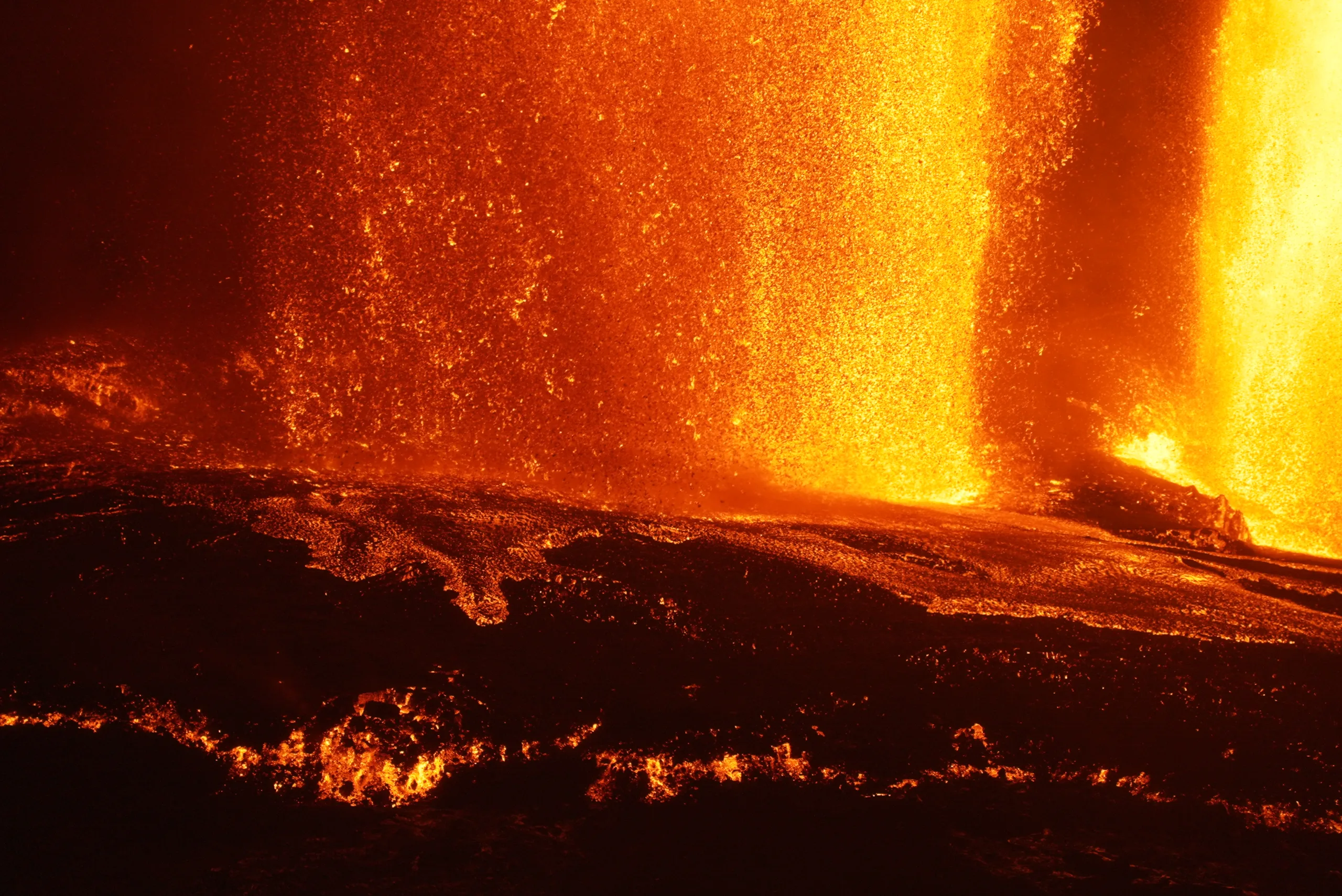
Kīlauea is a basaltic shield volcano supplied by magma produced above the Hawaiian mantle plume. Compared with silica-rich magma, basaltic melt is generally more fluid and can feed lava lakes, overflows and powerful fountains. Gas-rich magma rising through the vent can accelerate and fragment, throwing hot material into the air before it falls back and builds spatter deposits.
The repeated cycles of inflation, vent overflow and vigorous fountaining provide an unusually detailed record of how pressure changes in a shallow volcanic plumbing system. Scientists track summit tilt, seismicity, thermal signals and live cameras to identify changes in activity. Our background articles cover Kīlauea’s geology and the differences between shield and stratovolcanoes.
Volcanic Gases and Other Hazards
Volcanic gas remains a concern even when lava activity is confined to the summit crater. Sulphur dioxide can react in the atmosphere to form volcanic smog, or vog, and fine particles may be transported downwind. Higher fountains can also produce hot fragments, fine tephra and strands of volcanic glass known as Pele’s hair. The effect on nearby areas depends on wind direction and eruptive intensity.
The WATCH/ORANGE designation signals heightened activity and a need for closer monitoring; it should not be confused with a universal evacuation order. The USGS and Hawaiʻi Volcanoes National Park issue the authoritative operational updates, and conditions can change after publication.
What Happens Next?
HVO expects additional precursory overflows and continues to evaluate the likelihood of sustained fountaining during the forecast window. The height and duration of any later fountain episode cannot be established from the first small lava flows. Distinguishing these different stages helps readers interpret dramatic eruption imagery without overstating what the latest observations show.
Research Sources and Photograph Credits
USGS / Hawaiian Volcano Observatory, November 22 eruption update; USGS volcanic alert upgrade; Kīlauea monitoring updates.
Featured archive image: Kīlauea episode 42, February 15, 2026, not the November 22 precursor flows. USGS photo and attribution; public domain; adapted for web display.