


























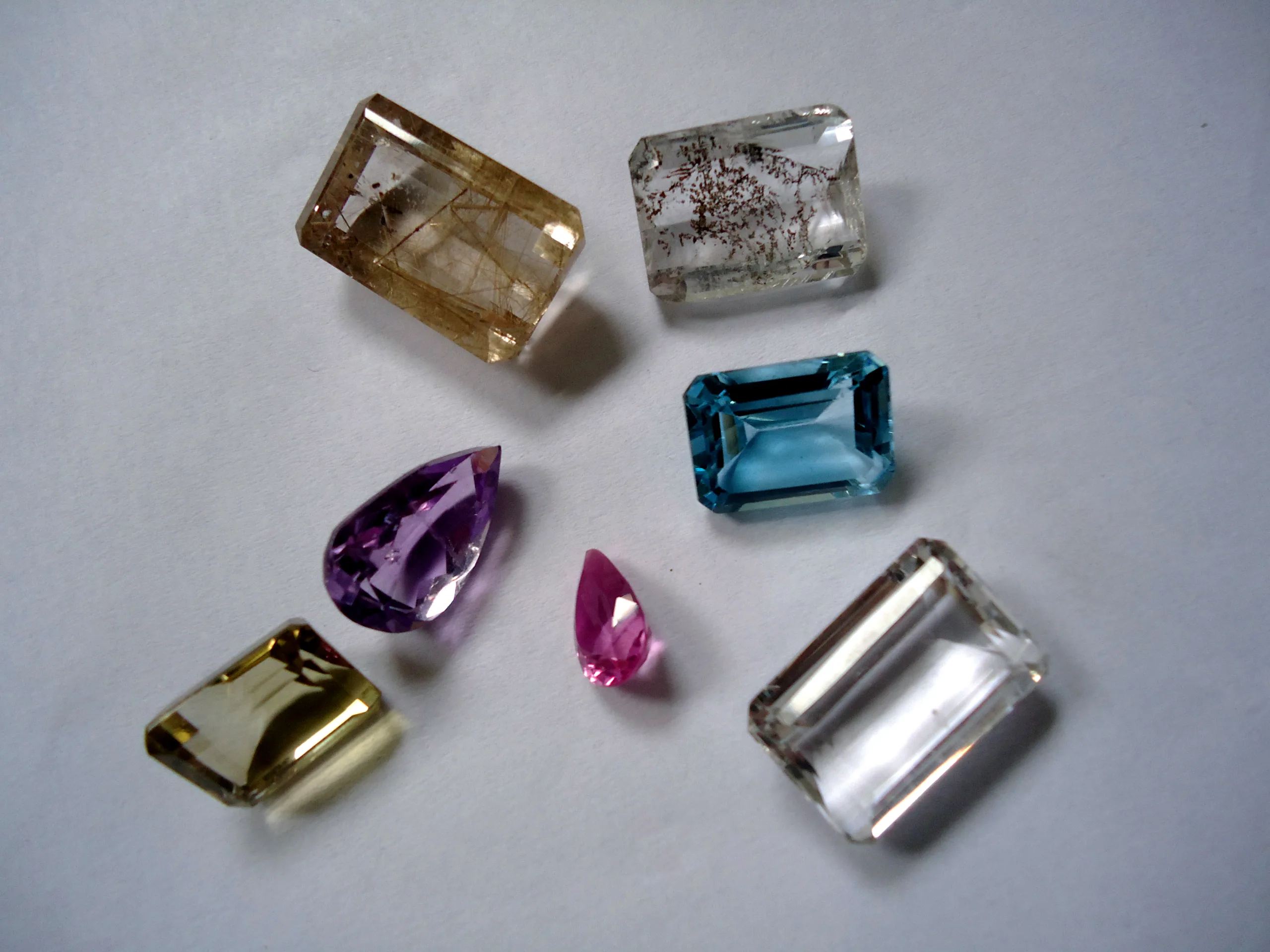
Gemstones occur in a wide range of colors because their chemical composition, crystal structure, defects, inclusions and optical properties affect how they absorb, transmit and scatter light. This color chart and interactive finder compare common gemstone materials by hue, typical Mohs hardness and transparency. Color helps narrow possibilities, but cannot establish species, authenticity or treatment on its own.
Interactive Gemstone Finder
Select a color to compare gemstones with similar appearance. Refine by transparency or minimum typical hardness. Compare 60 gemstone materials and varieties. Each result links to its mineral or gemstone profile. Color is not proof of identity, origin or treatment.
Typical property ranges only. The collection includes mineral species, varieties, rocks and organic or fossil gem materials; these are not 60 distinct mineral species. Some varieties may fall outside these categories; hardness filtering includes materials whose upper typical hardness reaches the chosen threshold. Do not scratch valuable gemstones. Authenticity and treatments require gemological testing.
Gemstones by Color Chart
| Color | Examples | Possible causes |
|---|---|---|
| Red | Ruby, garnet, spinel, red beryl | Chromium, iron or manganese depending on species |
| Blue | Sapphire, aquamarine, tanzanite, turquoise | Iron, iron–titanium charge transfer, vanadium or copper |
| Green | Emerald, peridot, jade, malachite | Chromium, vanadium, iron or copper |
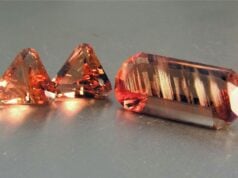
| Yellow / orange | Citrine, topaz, garnet, yellow sapphire | Iron, manganese, defects or charge transfer |
| Pink / purple | Rose quartz, amethyst, spinel, pink sapphire | Trace ions, irradiation-related defects or inclusions |
| Black / white / clear | Diamond, opal, sapphire, moonstone | Absorption, scattering, inclusions or absence of visible-light absorption |
| Multicolored | Tourmaline, agate, precious opal | Growth zoning, banding, diffraction or other optical effects |
What Causes Gemstone Color?
In transparent gems, selective absorption removes some wavelengths from transmitted light. In opaque materials, reflected and scattered light dominates appearance. Trace ions can create absorption bands, but their effect depends on the host crystal and oxidation state. Chromium produces red in ruby and green in emerald. Blue sapphire commonly involves iron–titanium charge transfer; titanium alone is not a universal blue colorant. Irradiation-related defects and color centers are important in amethyst and some diamonds. Precious opal’s play of color is a structural optical effect, not simply a trace-element pigment.
Red Gemstones
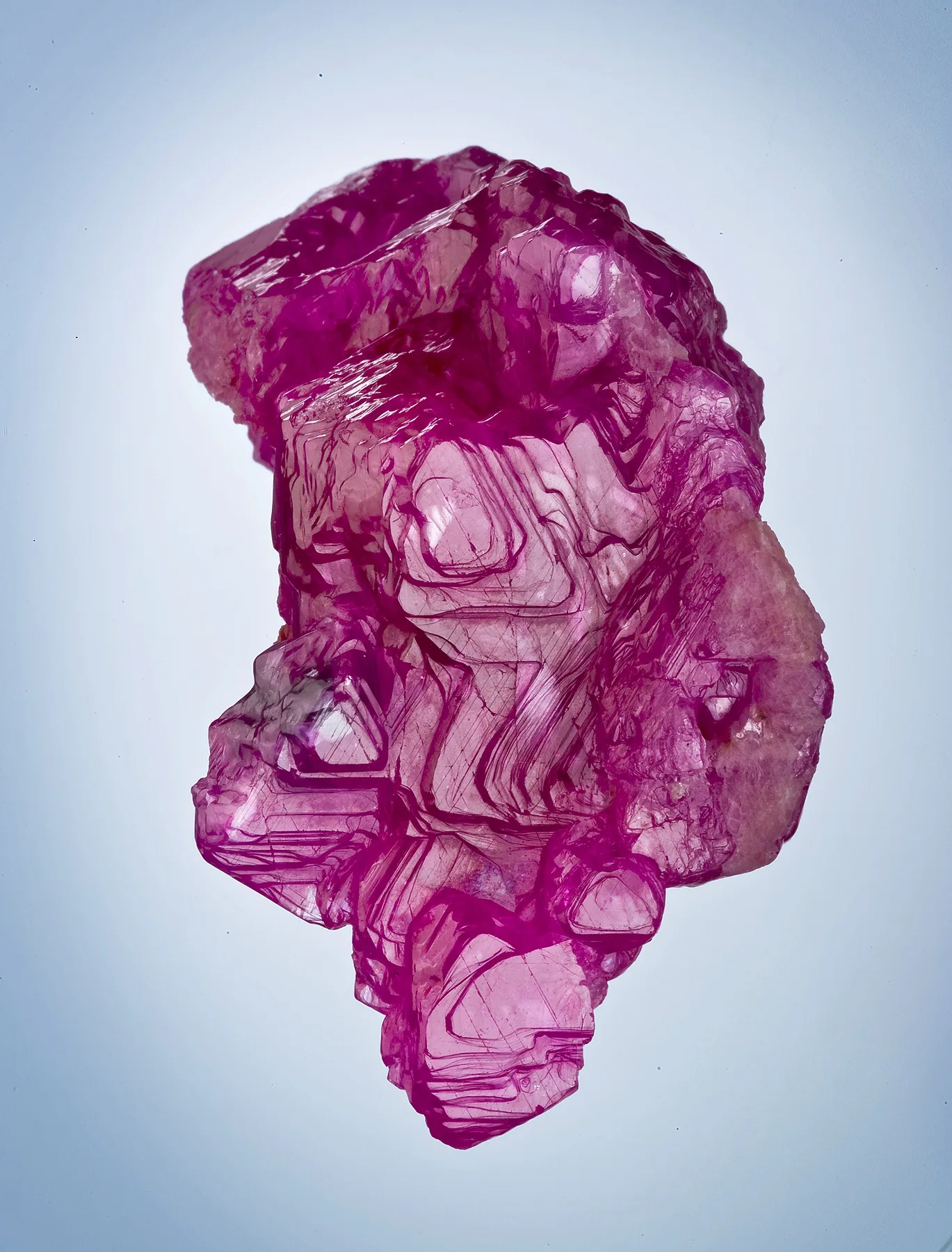
Ruby is red corundum with Mohs hardness 9. Red garnet and spinel may resemble ruby but have different structures and physical properties. Fine red beryl is uncommon; color alone cannot establish rarity or value.
Blue Gemstones
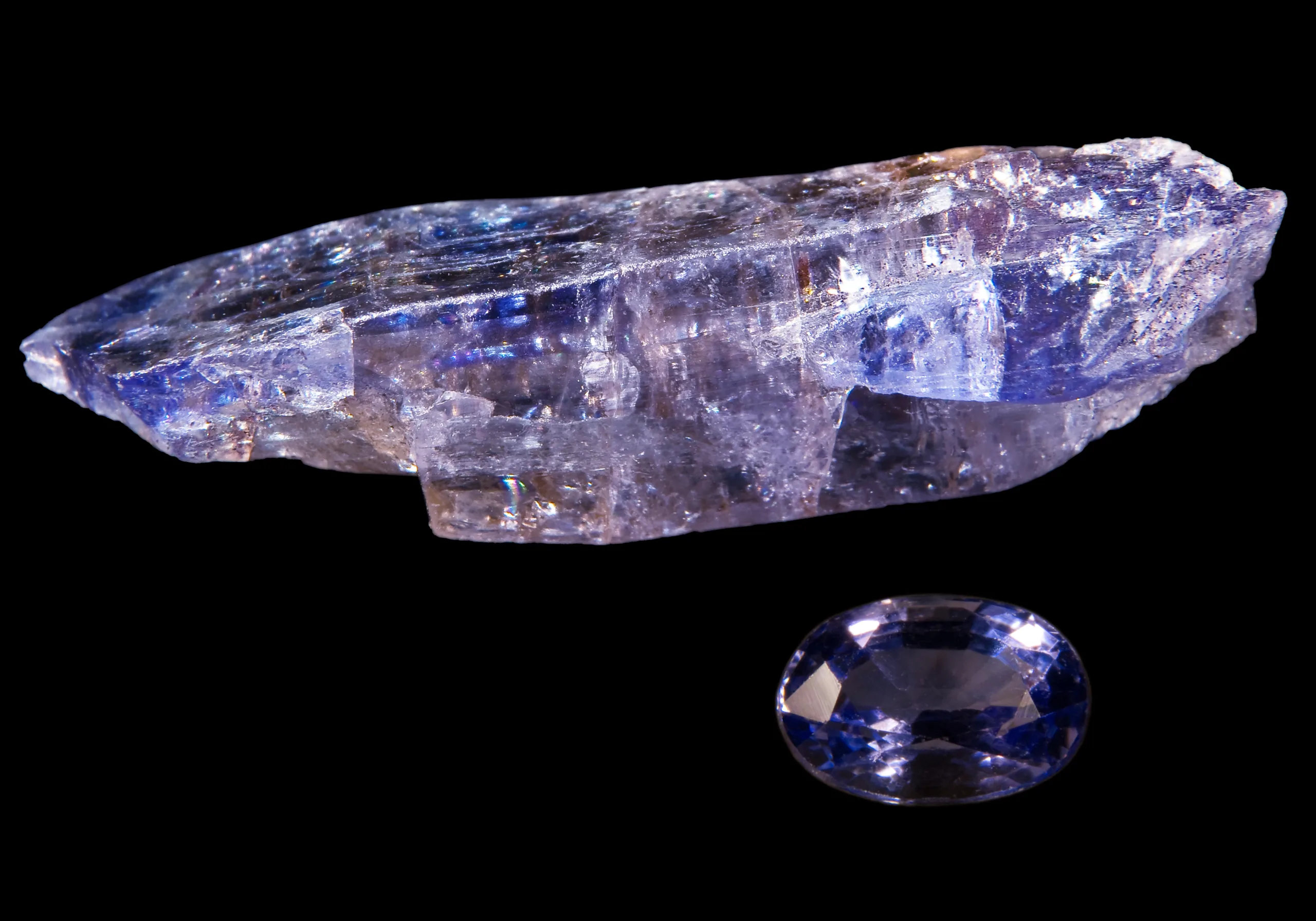
Blue sapphire is corundum, while aquamarine is beryl. Tanzanite commonly shows blue-violet pleochroism. Turquoise is generally opaque, and lapis lazuli is a rock rather than a single mineral species.
Green Gemstones

Emerald is green beryl, commonly colored by chromium or vanadium. Peridot is gem-quality olivine, with iron contributing its characteristic green hue. Jade refers to jadeite and nephrite; malachite is a softer green copper carbonate.
Yellow, Orange and Brown Gemstones
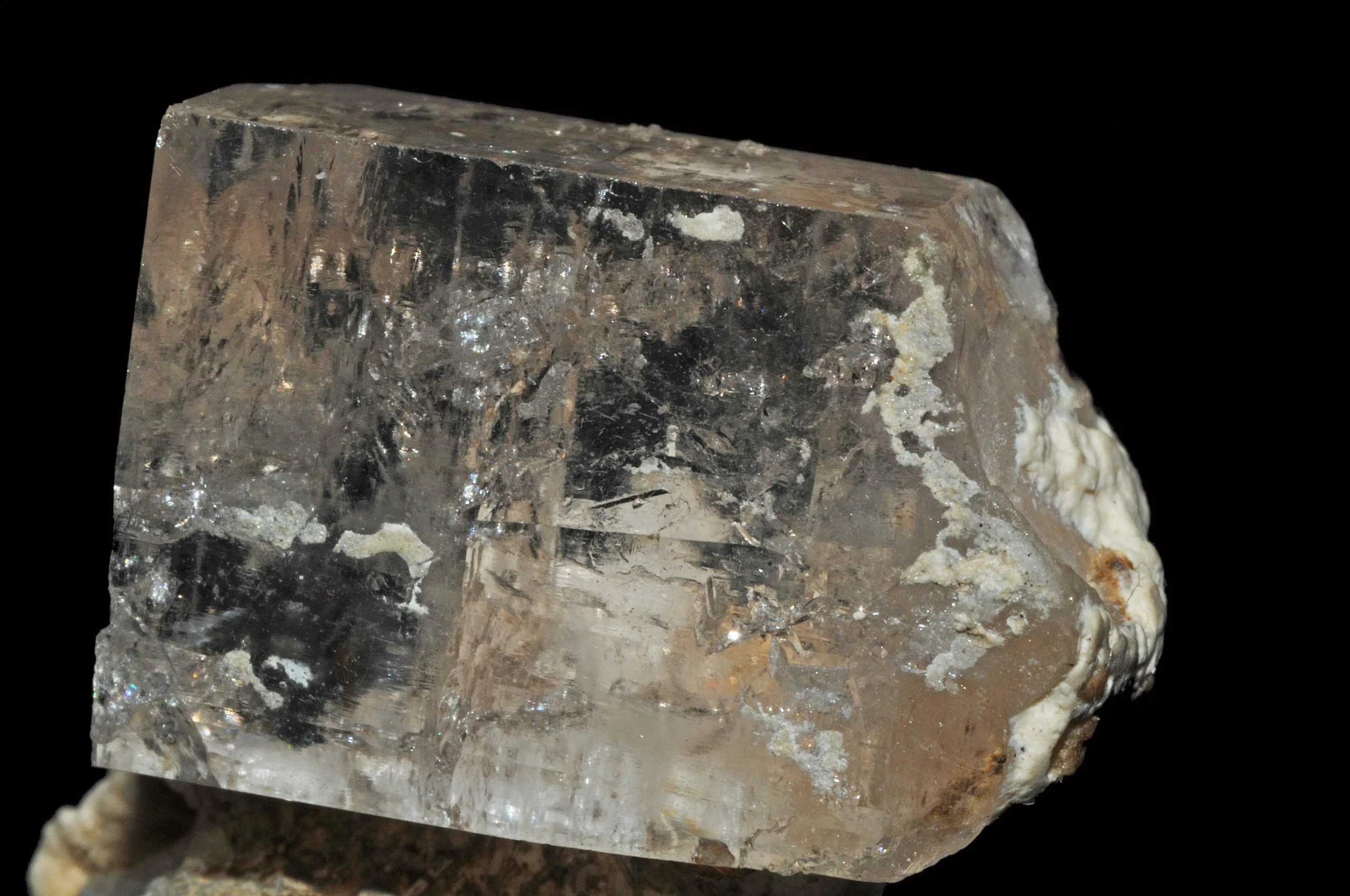
Citrine is yellow to orange quartz. Topaz, sapphire and garnet also occur in yellow or orange varieties. Brown diamonds may owe color to lattice deformation or other defects. Natural and treated stones can look alike.
Pink and Purple Gemstones
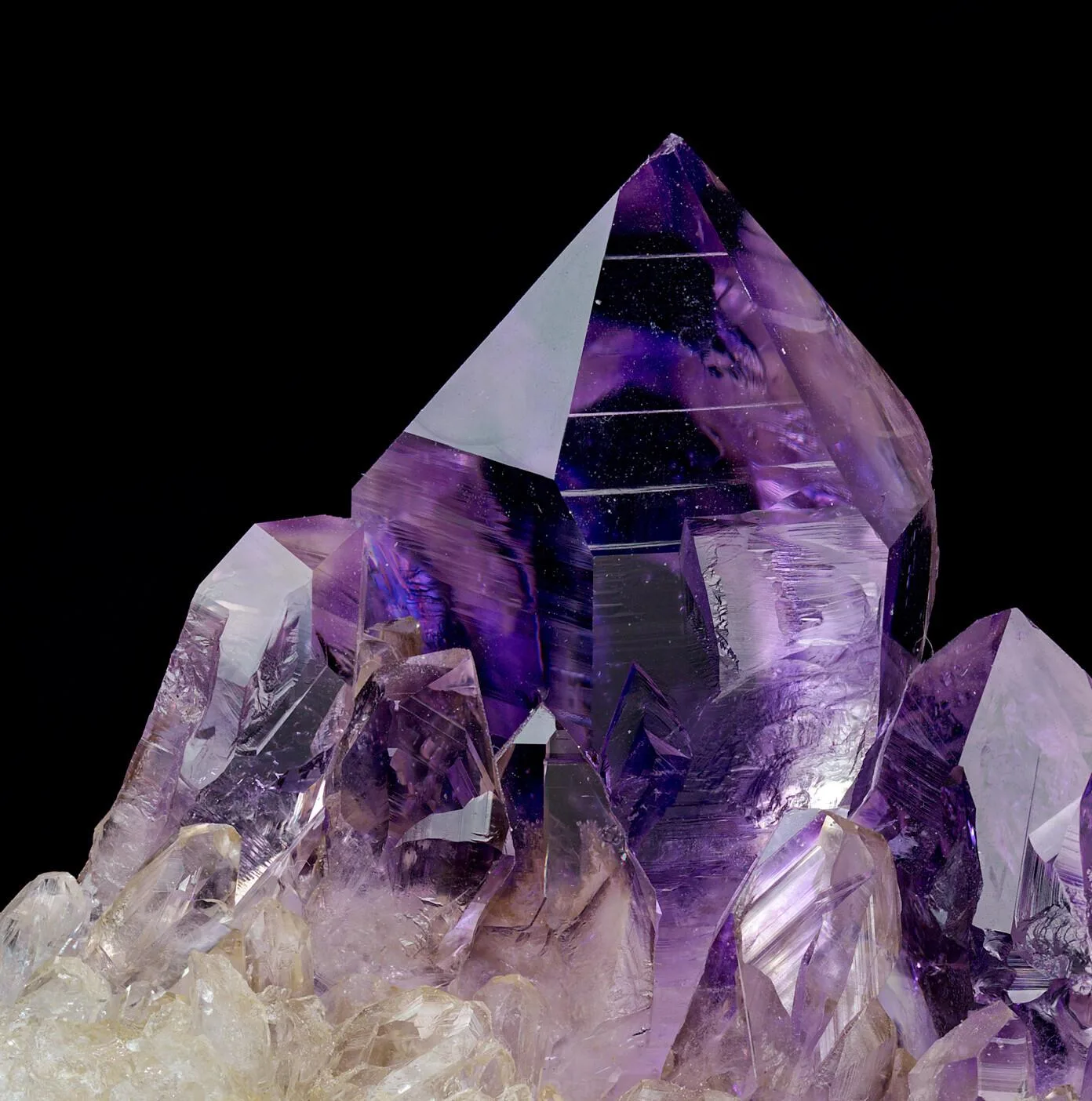
Amethyst owes its purple coloration to iron-related defects influenced by irradiation. Rose quartz is typically pink and translucent; coloration mechanisms vary with its form. Pink sapphire and spinel can have similar hues but distinct mineralogical properties.
Black, White, Clear and Multicolored Gemstones
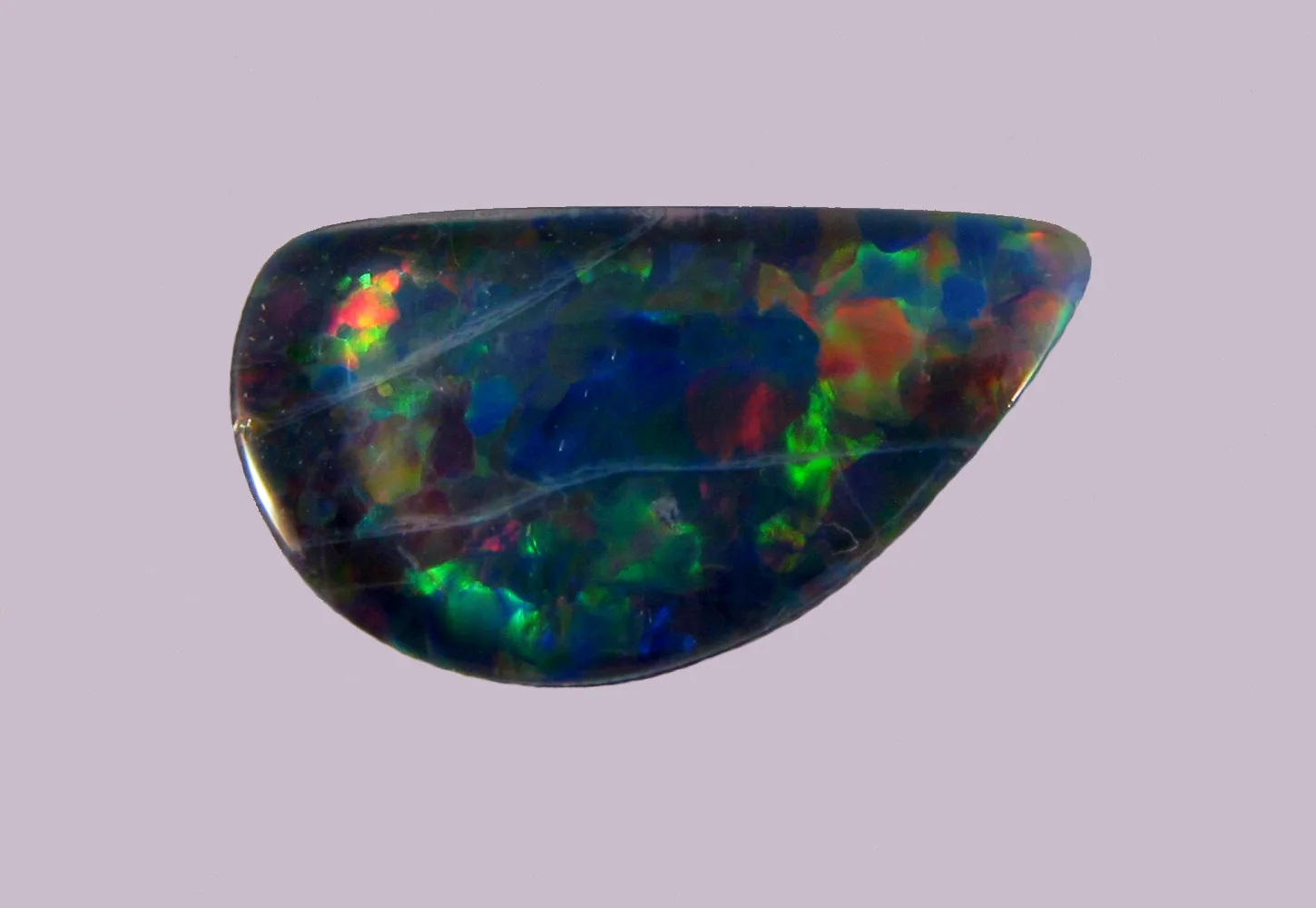
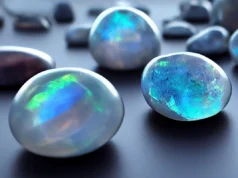
Colorless gems transmit visible light with relatively little selective absorption. Dark colors may result from strong absorption or inclusions. Moonstone’s adularescence results from light scattering in fine intergrowths, whereas precious opal’s play of color arises from ordered silica microstructure. Tourmaline may show contrasting color zones produced as growth conditions change.
Using Color for Identification
Compare stones under neutral white light, since different illumination and backgrounds can change their appearance. Record transparency, luster and any optical effects. Use the finder to narrow candidates rather than perform scratch tests on jewelry. A gemologist may use refractive index, specific gravity, microscopy and spectroscopy to distinguish natural, treated, synthetic and imitation materials. Cultural birthstone associations are traditions, not scientific tests.
Frequently Asked Questions
Can different gemstones have the same color? Yes. Ruby, red spinel and red garnet are examples.
Why does a gemstone change color in different light? Some materials, such as alexandrite, have absorption properties that produce different perceived colors under different light sources.
Does color determine gemstone value? Color is one factor; clarity, size, cut, rarity, treatment and documented origin also matter.
References
GIA — Causes of Color in Corundum; GIA — Color in Gems; Gemstone encyclopedia; GIA Gem Encyclopedia; International Gem Society — Mohs hardness of selected gems.
Featured image: Faceted quartz, amethyst, blue topaz and spinel. Mauro Cateb / Wikimedia Commons, CC BY-SA 3.0.