







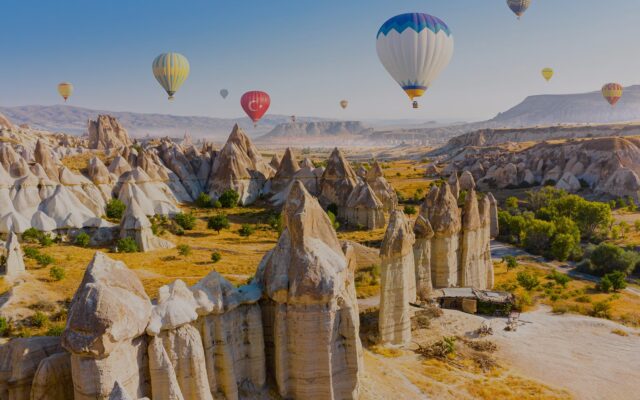
A Landscape That Looks Borrowed From Another World
There are very few places on Earth where geology, history, and imagination blend as seamlessly as they do in Cappadocia, located in central Turkey.
When travelers first arrive, they often describe the same feeling — as if they’ve stepped onto another planet.
Fairy chimneys rise like stone towers; valleys ripple with soft, pastel-colored rock; and ancient cave dwellings carved into cliffs whisper stories from thousands of years ago.
It’s a place where geology becomes architecture, where nature and human creativity coexist in perfect harmony.
Where Is Cappadocia? – The Geographic Setting
Cappadocia is located in Central Anatolia, primarily within the provinces of Nevşehir, Ürgüp, Göreme, Avanos, Aksaray, and Kayseri.
The region sits on a high plateau over 1,000 meters above sea level.
While today Cappadocia is famous for tourism and natural beauty, its foundation is geological — shaped by forces that began millions of years ago.
This landscape falls within the Central Anatolian Volcanic Province, surrounded by towering extinct volcanoes:
- Mount Erciyes (3,917 m)
- Mount Hasan (3,268 m)
- Mount Güllüdağ
These volcanic giants helped sculpt the masterpiece we see today.
How Cappadocia Formed – A Geological Masterpiece
Volcanic Origins
Around 10–15 million years ago, massive eruptions from the region’s volcanoes blanketed the plateau with thick layers of ash, pumice, and lava.
This material eventually solidified into tuff — a soft, easily eroded volcanic rock — and basaltic lava that formed harder capstones.
These layers created a geological sandwich:
- Soft tuff (erodes easily)
- Hard basalt/andesite caps (protects underlying rock)
This combination is responsible for the region’s iconic fairy chimneys, valleys, and rock formations.
Erosion and Sculpting by Nature
Over time, wind, rain, temperature changes, and rivers carved Cappadocia’s soft tuff into:
- Cones
- Pillars
- Domes
- Mushroom-shaped chimneys
- Deep ravines
- Wave-like valleys
Each formation showcases nature’s slow, patient artistry.
The Fairy Chimneys – Cappadocia’s Signature Formations
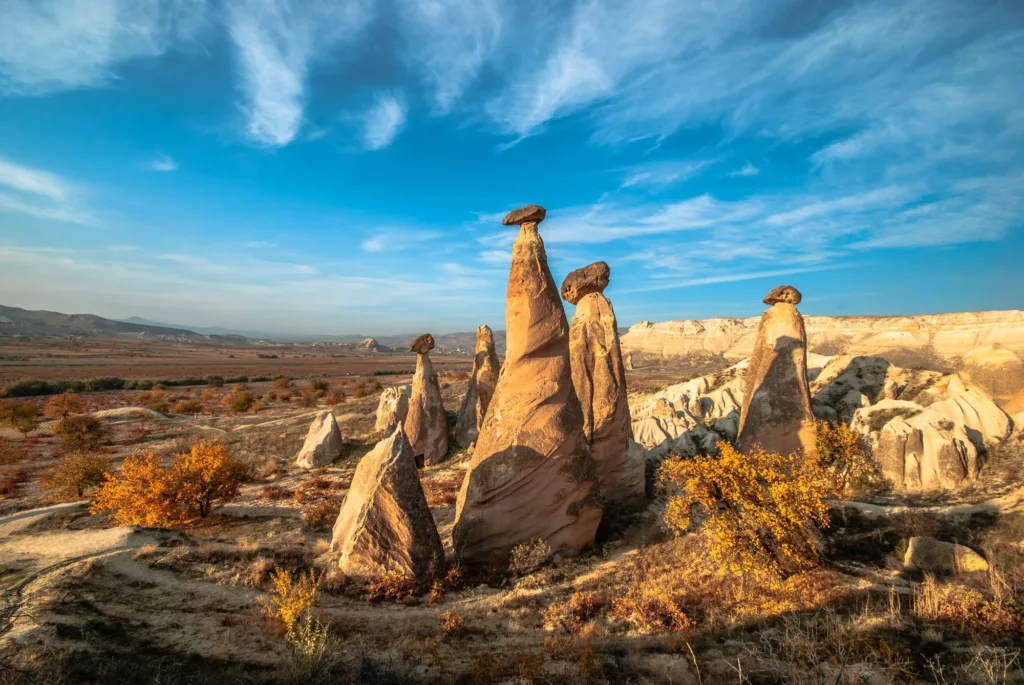
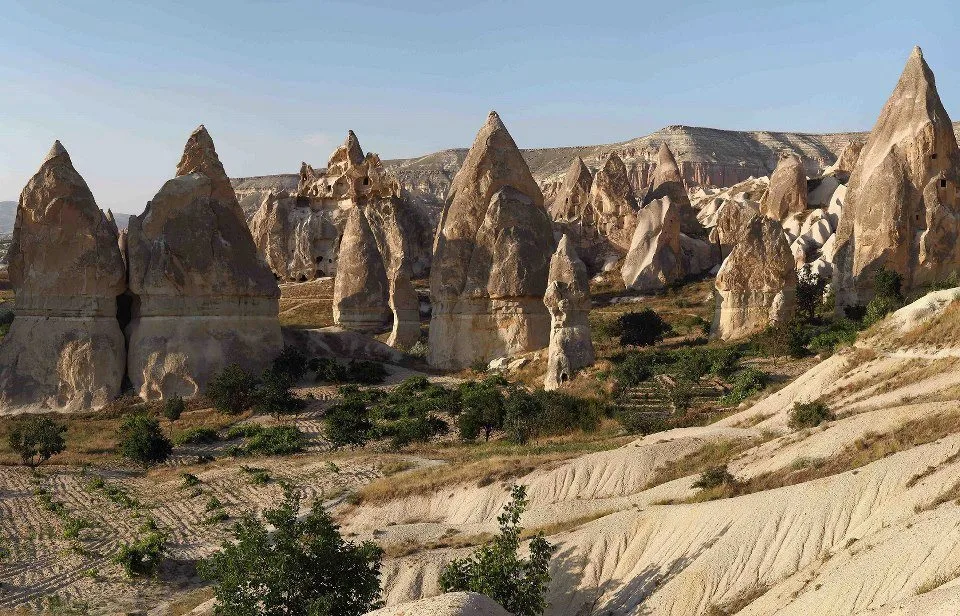
Fairy chimneys (Peri Bacaları) are perhaps the region’s most iconic geological wonders.
They are formed when a resistant capstone protects the softer underlying tuff.
As erosion removes surrounding material, tall pillars remain standing like stone towers.
Different shapes emerge depending on erosion patterns:
- Mushroom chimneys
- Conical spires
- Columns with balanced boulders
- Multiple-hat formations (Üç Güzeller in Ürgüp is a famous example)
These formations are not static — they continue to evolve.
Eventually, erosion will remove the caps, and the chimneys will collapse, making Cappadocia a landscape in perpetual transformation.
Valleys Shaped by Time
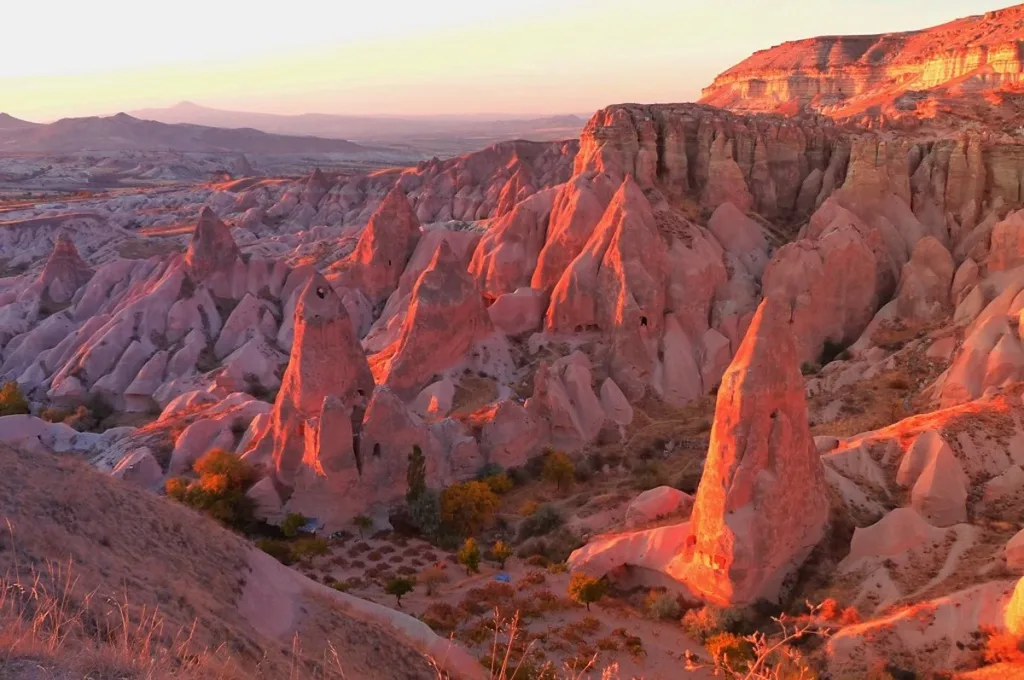
Cappadocia is filled with valleys carved into unique shapes, each telling a different geological story:
? Rose Valley
Known for its pink and red tones at sunset due to iron-rich minerals.
? Love Valley
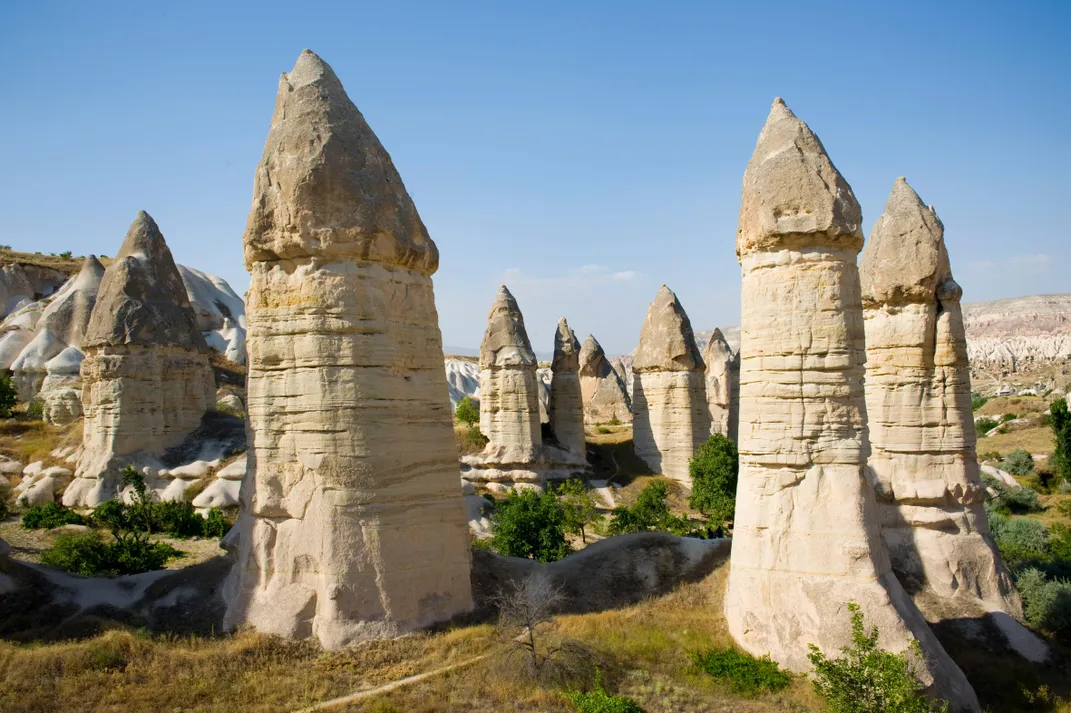
Famous for its tall, phallic-shaped rock pillars — natural sculptures formed by vertical erosion.
⛏️ Pigeon Valley
Named after ancient pigeon houses carved into rock walls; erosion created smooth, rounded slopes.
⚪ White Valley
Bright white tuff layers eroded into gentle waves.
Every valley is a natural exhibition of how volcanic rock responds to wind, rain, and time.
Human History Intertwined With Geology
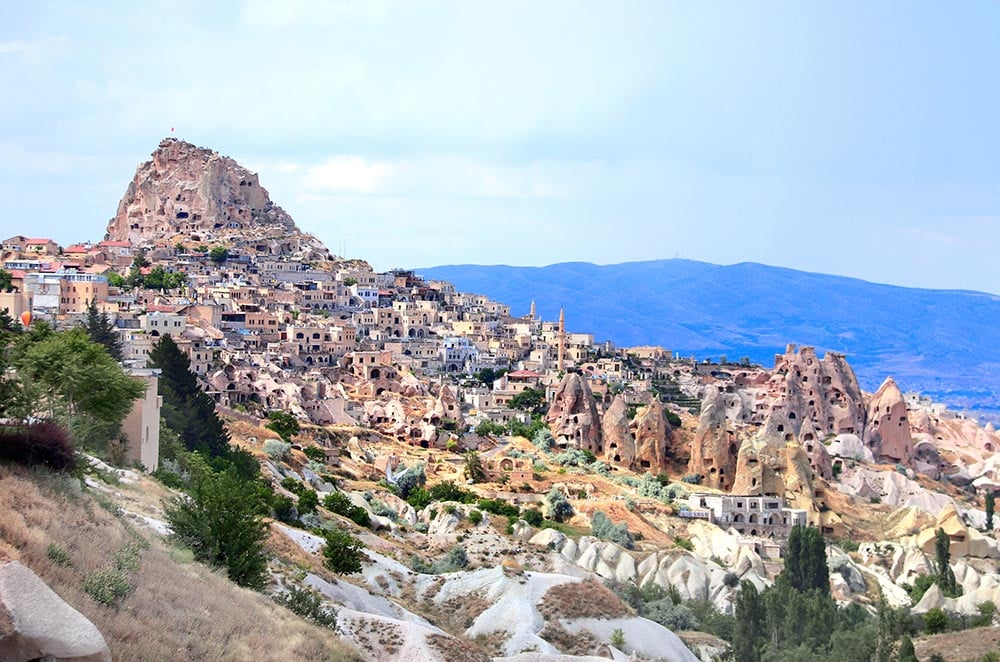
Cappadocia isn’t just a geological marvel — it’s a place where humans carved an entire world out of stone.
Cave Homes and Churches
For thousands of years, people carved:
- Houses
- Monasteries
- Churches
- Storage rooms
- Wine cellars
directly into the cliffs and chimneys.
Tuff is soft enough to cut with simple tools yet sturdy enough to remain standing for centuries.
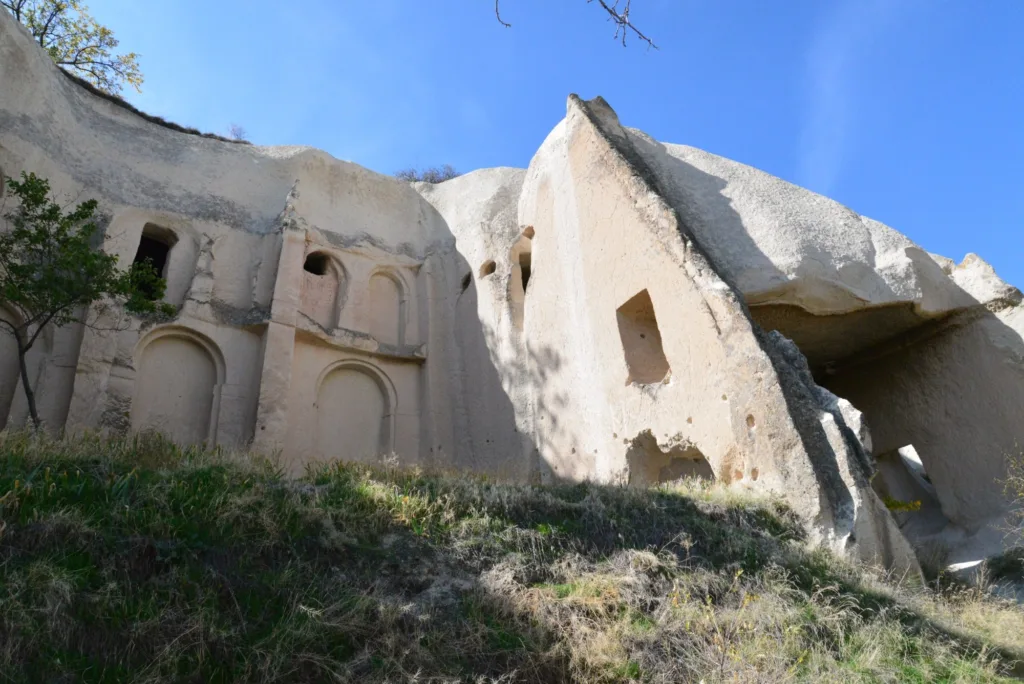
Rock-Cut Churches of Göreme
One of the world’s most impressive examples of rock-cut architecture, Göreme Open Air Museum includes:
- 10th–12th century Byzantine churches
- Frescoes
- Underground chapels
- Monastic complexes
The soft volcanic tuff allowed monks to carve entire communities into the valley walls.
Underground Cities – A Hidden World Beneath the Rocks
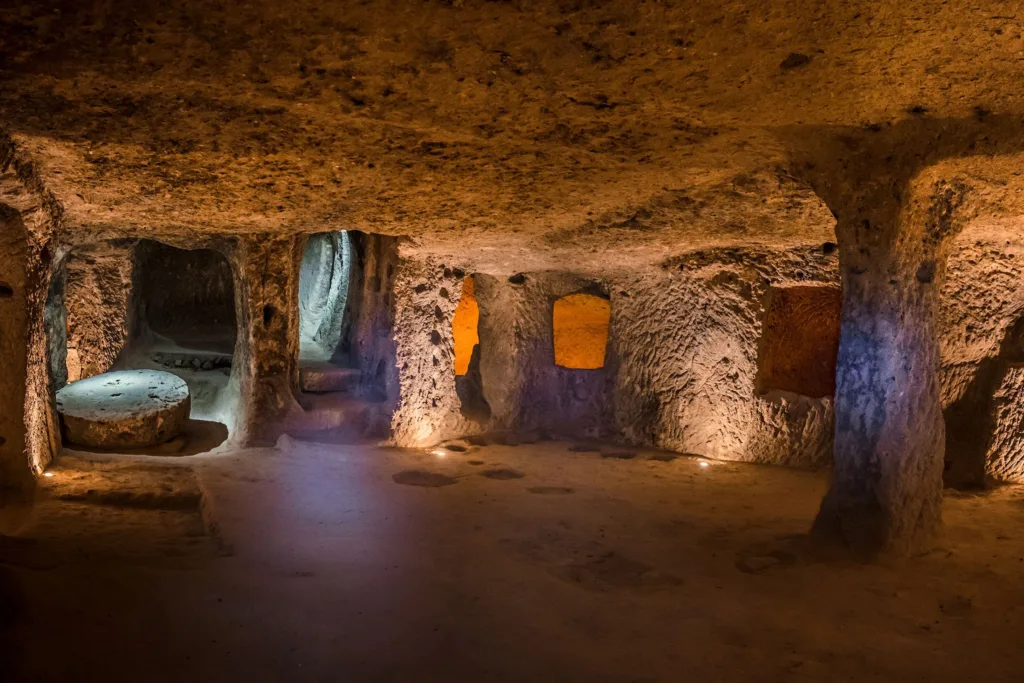
Perhaps the most remarkable human achievement in Cappadocia lies underground.
Derinkuyu, Kaymaklı, Özkonak, and several other underground cities reach depths of 60–85 meters.
They include:
- Ventilation shafts
- Kitchens
- Stables
- Schools
- Chapels
- Storage areas
These cities were used by ancient Anatolian civilizations as:
- War shelters
- Refuge from invasions
- Safe havens during Byzantine–Arab conflicts
The geology made this possible. Tuff is easy to carve but resistant enough to form stable chambers without collapse.
Volcanoes of Cappadocia
The landscape exists because of its ancient volcanoes.
Their eruptions over millions of years produced:
- Lava flows
- Pyroclastic deposits
- Ash layers
- Welded tuff
- Basalt caps
Mount Erciyes, still snow-capped, dominates the skyline and reminds visitors that Cappadocia’s story began with fire.
Modern Tourism – Hot Air Balloons and Natural Beauty
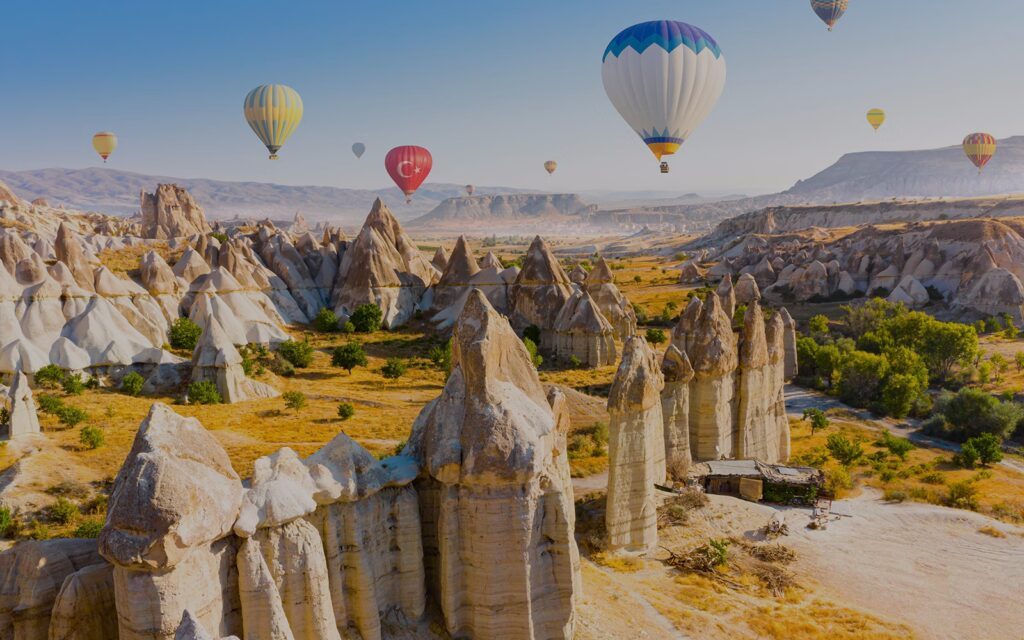
Cappadocia is one of the world’s most popular hot-air balloon destinations.
Every morning at sunrise, hundreds of balloons rise over the valleys, drifting gently above the chimneys.
It creates a dreamlike scene — a moving painting of color and stone.
Visitors come for:
- Balloon rides
- Hiking
- Photography
- History
- Geological interest
- Cave hotels carved into tuff
The combination of geology + culture makes Cappadocia a uniquely immersive experience.
Climate and Best Time to Visit
Cappadocia has a continental climate:
- Hot, dry summers
- Cold winters with snow
- Wide temperature swings between day and night
Best times to visit:
- April–June
- September–October
These seasons offer pleasant temperatures and the clearest skies for ballooning.
Geologic Features of Cappadocia
Cappadocia’s landscape is one of the most remarkable geological environments on Earth — shaped by ancient volcanoes, soft volcanic rocks, and millions of years of erosion.
The region combines dramatic rock formations, deep valleys, cave systems, and volcanic structures that together create a natural outdoor museum of geological processes.
Below are the major geological features that define Cappadocia.
Tuff Formations (Volcanic Ash Layers)
The foundation of Cappadocia is tuff, a soft volcanic rock formed when ash, pumice, and dust from massive eruptions settled and hardened over time.
Layers of tuff differ in color and hardness depending on:
- Mineral composition
- Temperature of deposition
- Density of ash
- Weathering intensity
These tuff layers make it possible for:
- Fairy chimneys to form
- Humans to carve homes and churches
- Valleys to erode into smooth wave-like shapes
Basalt and Andesite Caprocks
Many fairy chimneys have dark, resistant basalt or andesite capstones.
These hard volcanic rocks protected the softer tuff underneath from erosion, allowing tall pillars to remain standing while surrounding material was washed away.
This caprock–tuff relationship is the key mechanism behind:
- Mushroom-shaped chimneys
- Tall pillars in Love Valley
- Balanced rock formations
Without these caps, erosion would flatten the entire region.
Fairy Chimneys (Hoodoo Formations)
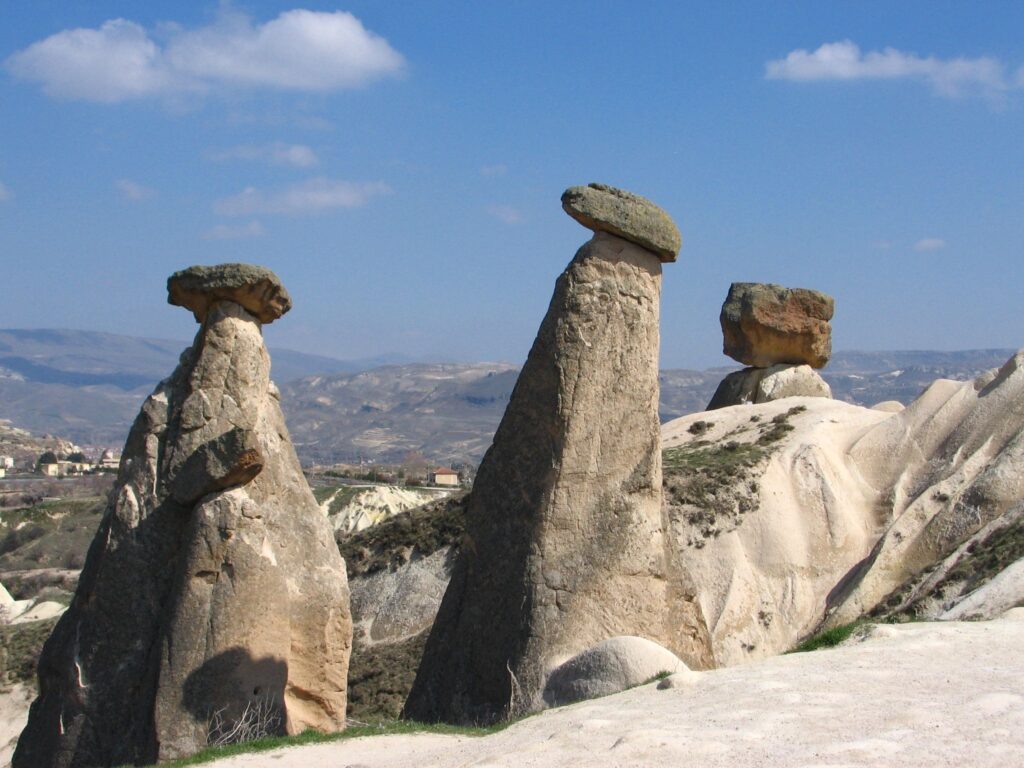
Fairy chimneys are Cappadocia’s signature landforms.
They form when erosion selectively carves into tuff, leaving behind tall columns protected by harder stone hats.
Types of fairy chimneys:
- Conical chimneys
- Mushroom-shaped pillars
- Columns with balanced boulders
- Pointed spires
This is one of the world’s best examples of hoodoo development outside North America.
Erosional Valleys
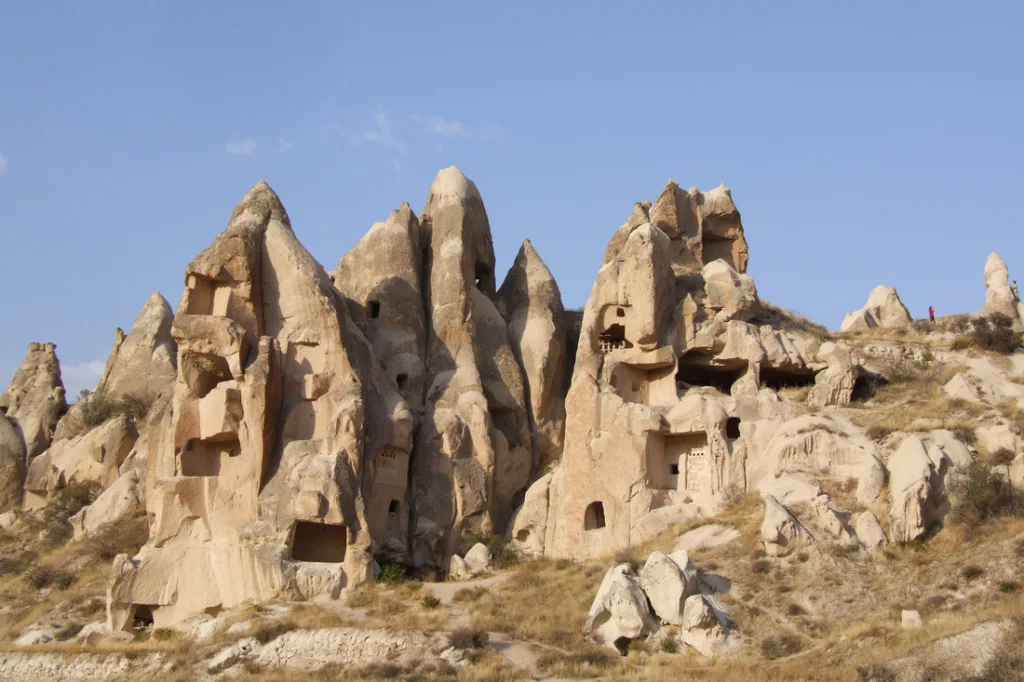
Millions of years of wind and water shaped Cappadocia’s iconic valleys.
Each valley shows a different erosional pattern and mineral coloration.
Famous valleys include:
- Rose Valley: Pink hues from iron oxide minerals
- White Valley: Bright white tuff layers
- Love Valley: Unusually tall chimney formations
- Zemi & Pigeon Valleys: Smooth, wave-like slopes carved by runoff
This complex valley system makes Cappadocia a prime study area for erosion rates in volcanic terrains.
Ignimbrite Plateaus
Beneath Cappadocia’s surface lies extensive ignimbrite — solidified pyroclastic flows created by explosive volcanic eruptions.
These massive sheets cover kilometers of land and form flat, broad plateaus.
Ignimbrites provide:
- Stronger structural support than soft tuff
- Elevated areas where fairy chimneys rise
- Striking cliffs with layered patterns
Their chemical composition varies depending on the eruption source (Erciyes, Hasan, Göllüdağ).
Volcanic Domes and Lava Flows
Although the volcanoes around Cappadocia are extinct, their ancient activity left behind:
- Lava domes
- Basalt flows
- Andesite ridges
- Welded tuff exposures
Mount Erciyes and Mount Hasan produced repeated eruptions, building the volcanic architecture that erosion later sculpted into modern Cappadocia.
Cave Systems and Rock-Cut Architecture
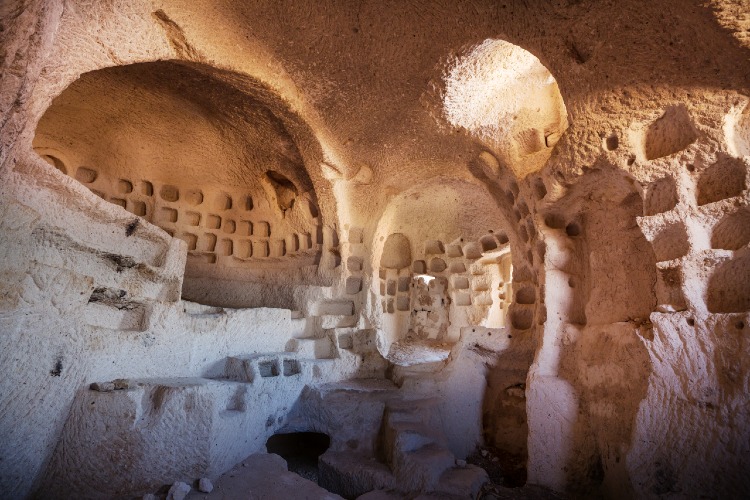
The natural geologic advantage of soft tuff allowed people to carve:
- Underground cities
- Cave homes
- Churches
- Storage rooms
- Monastic complexes
Geologically, these caves remain stable because:
- Tuff is porous and absorbs moisture
- Temperature fluctuations are minimal
- The material doesn’t crumble easily when carved correctly
This makes Cappadocia one of the best examples of human–geology interaction.
Folds, Faults, and Fractures
Cappadocia also features structural geology elements:
- Fracture zones from cooling of volcanic deposits
- Fault lines that guided valley formation
- Tilted sedimentary layers exposed in canyon walls
These structures influenced how water flowed, where erosion occurred, and how caves were carved.
Mineral Colors and Rock Chemistry
Cappadocia’s distinctive colors come from minerals inside tuff:
- Iron oxides → Red, pink, orange
- Zeolites → Pale yellow
- Silica-rich layers → White
- Basaltic caps → Dark gray or black
This creates a multi-colored landscape that changes with sunlight throughout the day.
Erosional “Waves” and Dome Structures
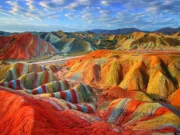
In places like Rose Valley and White Valley, erosion forms smooth, curved wave patterns that resemble frozen sand dunes.
These shapes result from:
- Sheet wash
- Differential weathering
- Soft tuff deformation
Importance in Geology and Earth Sciences

Cappadocia is a natural laboratory for:
- Tuff formation
- Erosion dynamics
- Volcanic history
- Rock weathering
- Karst-like erosion (though volcanic, not limestone)
- Human–geology interaction
Geologists study Cappadocia to understand how volcanic provinces evolve and how landscapes respond to millions of years of weathering.
Cappadocia’s Cultural Legacy
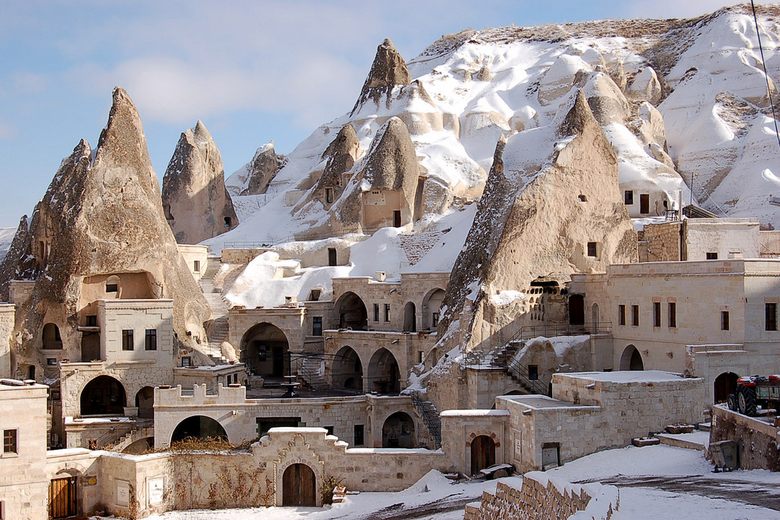
The region holds:
- UNESCO World Heritage Sites
- Thousands of cave dwellings
- Rock-cut monasteries
- Ancient trade routes
- Ethnographic traditions
It is a place where geology shaped culture — and culture shaped the landscape in return.
Summary – Where Geology Meets Imagination
Cappadocia is more than a destination — it’s a story carved in stone.
It reminds us that landscapes are alive, shaped not only by erosion and volcanoes but by the people who chose to live among its unique forms.
Standing at the edge of a valley at sunrise, watching hot air balloons drift above fairy chimneys, it’s easy to forget the world beyond this surreal place.
Cappadocia invites its visitors to pause, breathe, and marvel at the quiet poetry of time.
FAQs – Cappadocia, Turkey
1. How was Cappadocia formed?
By volcanic eruptions, ash deposits, and millions of years of erosion.
2. What is Cappadocia famous for?
Fairy chimneys, hot air balloons, underground cities, and rock-cut churches.
3. Can people still live in cave houses?
Yes. Many cave homes have been restored as hotels and residences.
4. Is Cappadocia safe to visit?
Yes, it’s one of Turkey’s most visited and safest regions.
5. Why do hot air balloons fly there?
Stable winds, open valleys, and extraordinary scenery make it ideal.