






















Geology Fundamentals
Geology is the science that explores how the Earth was formed, how it changes, and what its physical materials reveal about the planet’s long and complex history. From the deep interior of the Earth to the landscapes we see on the surface, geology connects every process that shapes our environment. It explains earthquakes, volcanoes, mountain building, erosion, sedimentation, and the formation of rocks and minerals, giving us a complete picture of how our world works.

The Formation and Evolution of Oceans
Oceans are a vital component of the Earth's system and play a crucial role in shaping the planet's climate, weather patterns, and overall habitability....
Rivers and Streams
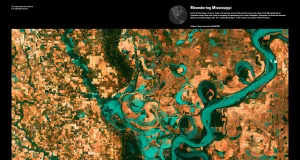
Rivers and streams are natural channels that transport water and sediment, shape drainage basins and create fluvial landforms through erosion and deposition.

Economically Important Metal Concentrations in Earth’s Crust
Metal concentrations in Earth's crust, ore grades, enrichment factors and geological processes determine the potential for economic mineral extraction.
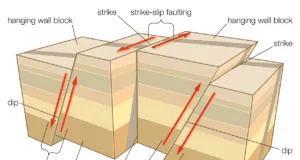
Fault and Types of Faults
Fault is a fracture or crack where two rock blocks slide past one to another. If this movement may occur rapidly, it can be causes earthquike or slowly, in the form of creep.Types of faults include strike-slip faults, normal faults, reverse faults, thrust faults, and oblique-slip faults.
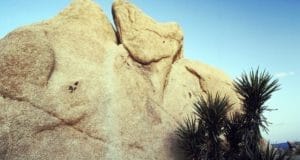
Weathering Types
Weathering is the combination of processes that breaking down of rocks, soil and minerals, eventually transforming into sediment. On the other hand, disintegration or alteration of the rock surface in its natural or original position through physical, chemical and biological processes induced or modified by wind, water and climate.
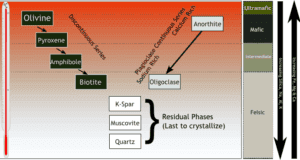
Bowen’s Reaction Series
GEOLOGYSCIENCE · IGNEOUS PETROLOGY · MAGMATIC CRYSTALLIZATIONBowen’s Reaction Series SimulatorExplore idealized mineral crystallization trends as silicate magma cools.Open toolScientific guide
When magma cools, it doesn’t...
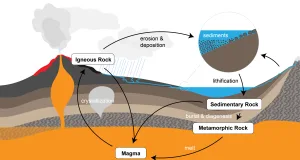
The Rock Cycle
The rock cycle connects igneous, sedimentary and metamorphic rocks through geological processes. A labeled interactive diagram, 20 transformation pathways and a 3D geological model illustrate how rocks form and change.
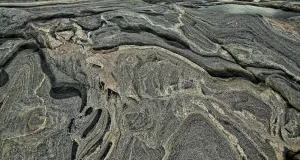
What Is Geology?
Geology is the study of the Earth. Like so many scientific words, "geology" is constructed from root words dating back to ancient times: geo comes from the Creek word meaning "the Earth"; it is a prefix used in other related fields, too, such as geography, geodesy, and geophysics. The alogy suffix comes from the Creek logos, meaning "discussion," and is roughly translated as "the study of."
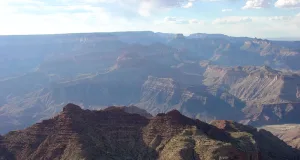
Unconformities
Unconformities are stratigraphic surfaces representing missing geological time through erosion or nondeposition. Their geometry records changes in sedimentation and tectonics.
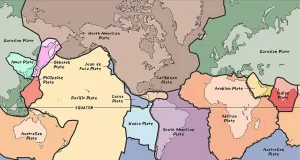
Plate Tectonics: How Earth’s Moving Plates Shape Continents, Mountains, and Oceans
GEOLOGYSCIENCE · TECTONICS · EARTH DYNAMICSPlate Tectonics & Continental DriftExplore plate boundaries, relative plate motion and continental reconstructions.Plate simulatorContinental driftScientific guidePlate tectonics is the...
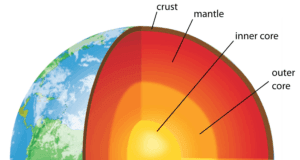
Structure of Earth
GEOLOGYSCIENCE · GEOPHYSICS · PLANETARY STRUCTUREEarth Interior ExplorerExplore the major internal layers of Earth and the evidence used to infer their properties.Open toolScientific guide
The...