
























Regolith is the layer of loose, fragmented or weathered material that covers coherent bedrock. It includes soil, weathered rock, rock fragments and transported sediments. Its thickness and composition vary with climate, parent rock, topography, erosion and geological history.
Regolith, Soil and Bedrock
Soil is the biologically and chemically modified near-surface part of the regolith. Regolith is a broader geological term: a gravel deposit, deeply weathered rock or volcanic ash layer may be regolith without having developed a mature soil. Bedrock is the underlying coherent geological material. These boundaries can be gradual, especially where weathered rock retains its original structure.
How Regolith Forms

Physical weathering breaks rock into fragments through processes such as frost action, stress release and thermal cycling. Chemical weathering alters primary minerals through dissolution, hydrolysis and oxidation. Biological activity can accelerate both processes. See types of weathering for the mechanisms involved.
Material may remain in place as residual regolith or be moved by gravity, running water, wind or ice. When weathering produces material faster than erosion removes it, a thick cover may develop. When removal is rapid, even intensive weathering can coexist with thin regolith.
Main Types of Regolith
Residual regolith: material formed by weathering of the underlying rock, commonly retaining some inherited mineralogical or structural characteristics.
Transported regolith: sediments deposited after movement, including alluvium, colluvium, glacial till and windblown material.
Saprolite: deeply chemically weathered rock that may preserve the original rock fabric despite losing much of its mechanical strength. It is especially common in long-lived weathering profiles.
Planetary regolith: fragmented surface material on bodies such as the Moon and asteroids. Impact fragmentation and space weathering are major processes on airless surfaces.
Recognizing a Regolith Profile in the Field
A field description records horizon boundaries, grain size, color, moisture, rock fragments, roots, weathering grades and the presence of inherited structures. A typical residual profile can pass from soil through weathered material into fractured bedrock, but erosion and transported deposits often interrupt or obscure that sequence.
The presence of rounded clasts, sorting or bedding may suggest transport, while preserved joints or mineral fabrics may indicate weathering in place. Borehole logs and laboratory tests help distinguish these materials when exposure is poor.
Why Regolith Matters
Regolith controls infiltration and groundwater recharge, stores water and nutrients, and supplies sediment to rivers. Its mineralogy influences soil fertility and geochemical exploration. In engineering geology, variability in thickness, strength, permeability and compressibility affects foundation design and slope stability; a regolith description alone is not a substitute for site investigation.
On the Moon, regolith differs from terrestrial soil because biological soil-forming processes and liquid-water weathering are absent under present surface conditions. It is important in landing-site assessment and the study of planetary surface history.
Frequently Asked Questions
Is regolith the same as soil?
No. Soil is generally part of regolith, which also includes weathered rock and loose geological deposits.
Does regolith always form in place?
No. It may be residual or transported from elsewhere.
Can regolith be hundreds of metres thick?
Some deeply weathered terrains have exceptionally thick weathering profiles; local thickness depends on geological history and the definition used.
Scientific References
USGS — Approaches to modeling weathered regolith
USGS — Where fast weathering creates thin regolith and slow weathering creates thick regolith
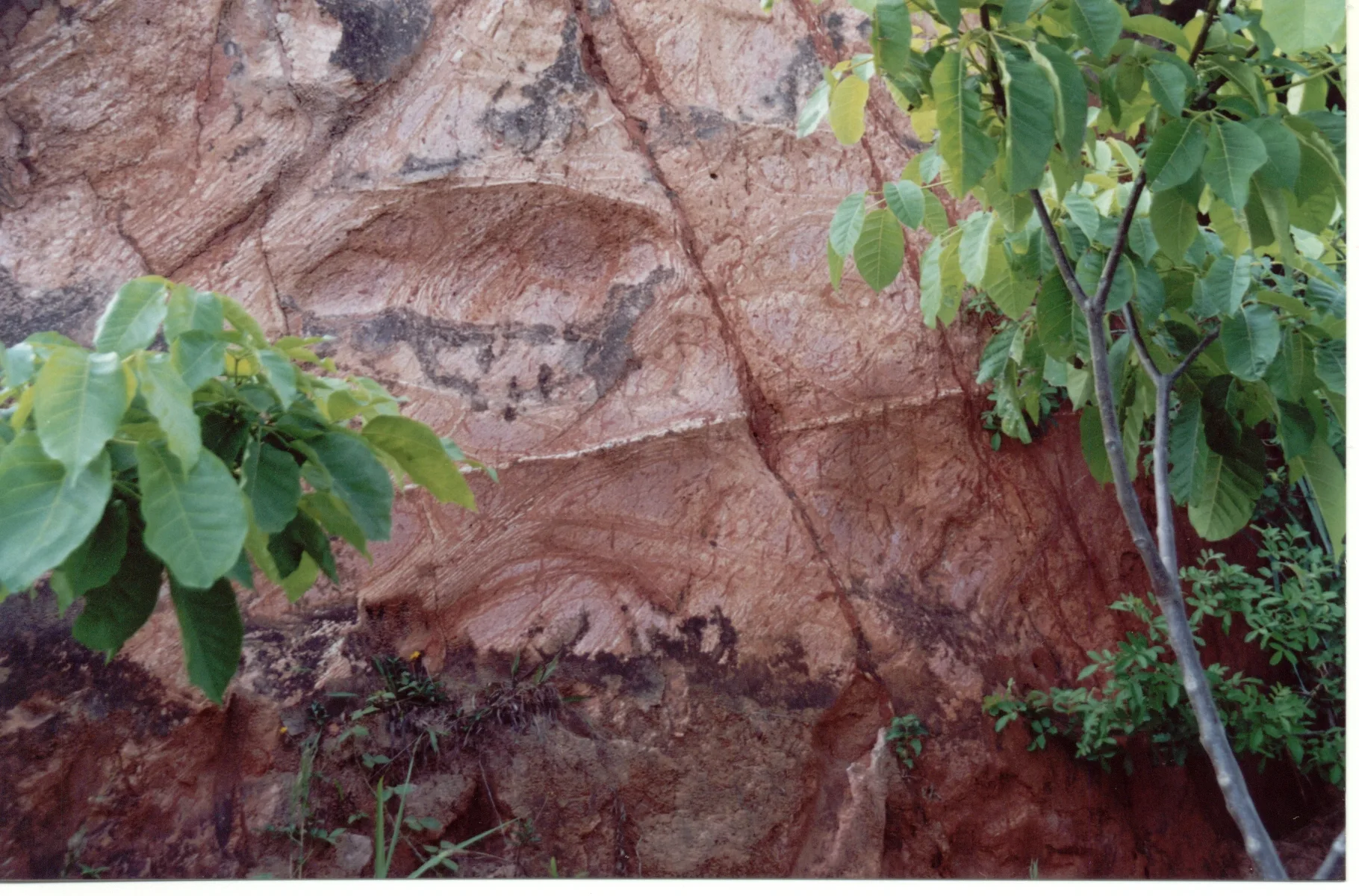
Featured photograph: Eurico Zimbres, Wikimedia Commons, CC BY-SA 2.5.