




Diopside
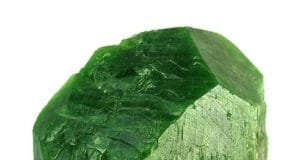
Diopside is a member of pyroxene group mineral with formula is MgCaSi2O6. Specimens can be colorless but are more often bottle green, brownish green, or light green in color. It has two distinct prismatic cleavages at 87 and 93° typical of the pyroxene series. Diopside occurs in the form of equant to prismatic crystals that are usually nearly square in section.
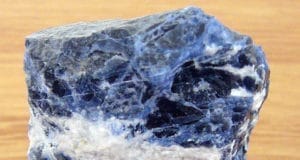
Sodalite
Sodalite is a feldspathoidal tectosilicate mineral that is rich royal blue widely used as an ornamental gemstone. Chemical formula is Na8 (Al6Si6O24) Cl2. Specimens can be blue, gray, pink, colorless, or other pale shades. They sometimes fluoresce bright orange under ultraviolet light. Sodalite nearly always forms massive aggregates or disseminated grains.
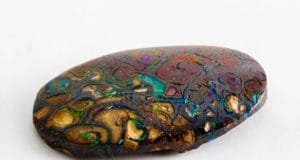
Opal
Opal is one of the most visually extraordinary gemstones on Earth. Some specimens flash with brilliant rainbow colors that appear to move and shift...
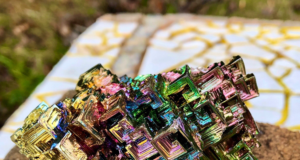
Bismuth
As a native metal, bismuth has been known since the Middle Ages. A German monk named Basil Valentine first described it in 1450. Bismuth is often found uncombined with other elements, forming indistinct crystals, often in parallel groupings. It is hard, brittle, and lustrous. It is also found in grains and as foliated masses. Silver-white, it usually has a reddish tinge that distinguishes it. Specimens may have an iridescent tarnish. Bismuth is found in hydrothermal veins and in pegmatites and is often associated with ores of tin, lead, or copper,

Corundum
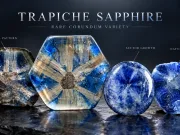
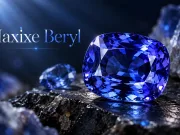
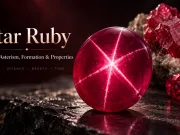
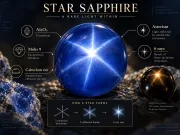
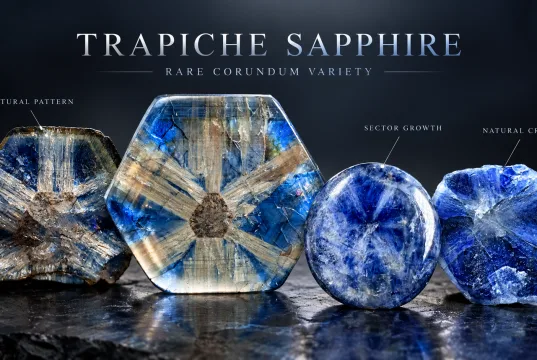
Corundum is a mineral that is primarily composed of aluminum oxide (Al2O3) and is one of the naturally occurring crystalline forms of aluminum oxide....
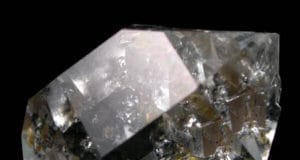
Diamond
The hardest known mineral, diamond is pure carbon. Its crystals typically occur as octahedrons and cubes with rounded edges and slightly convex faces. Crystals may be transparent, translucent, or opaque. They range from colorless to black, with brown and yellow being the most common colors. Other forms include bort or boart (irregular or granular black diamond) and carbonado (microcrystalline masses).
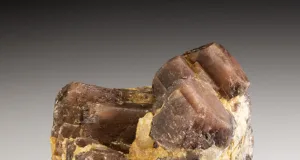
Andalusite
Andalusite is a rock forming minerals and is an aluminium nesosilicate minerals with the chemical formula Al2SiO5.At higher temperatures and pressures, andalusite may convert to sillimanite.andalusite is an aluminosilicate index mineral, providing clues to depth and pressures involved in producing the host rock.
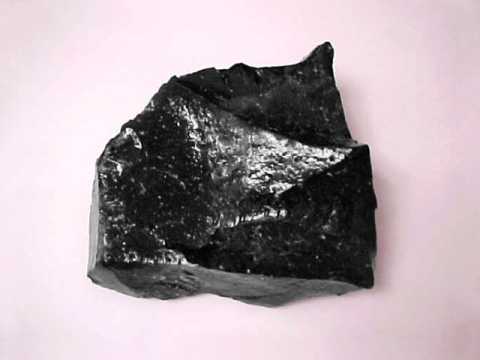
Obsidian
Obsidian is an igneous rock that forms when molten rock material cools so rapidly that atoms are unable to arrange themselves into a crystalline structure. It is an amorphous material known as a "mineraloid." The result is a volcanic glass with a smooth uniform texture that breaks with a conchoidal fracture .

Fluorite (Fluorspar)
Fluorite, also called fluorspar, common halide mineral, calcium fluoride (CaF2), which is the principal fluorine mineral. It is usually quite pure, but as much as 20 percent yttrium or cerium may replace calcium. Fluorite occurs most commonly as a glassy, many-hued vein mineral and is often associated with lead and silver ores; it also occurs in cavities, in sedimentary rocks, in pegmatites, and in hot-spring areas
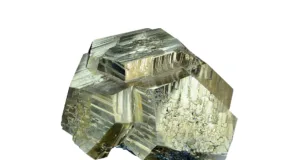
Pyrite (Fool’s Gold)
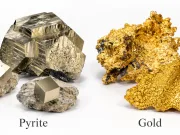
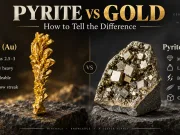
Known since antiquity, pyrite is commonly referred to as “fool’s gold.” Although much lighter than gold, its brassy color and relatively high density misled many novice prospectors. Its name is derived from the Greek word pyr, meaning “fire,” because it emits sparks when struck by iron.

Spinel
Spinel is the name of both an individual mineral and of a group of metal-oxide minerals that share the same crystal structure. Minerals in this group include gahnite, franklinite, and chromite. Spinel is found as glassy, hard octahedra, or as grains or masses.

Hematite
Hematite is one of the most defining minerals in Earth’s geological and industrial history. Known for its striking metallic luster, its surprising weight, and...