





Sapphire
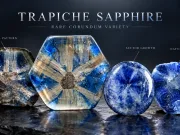
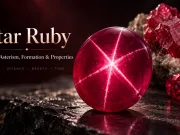
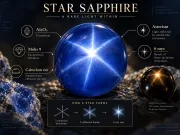
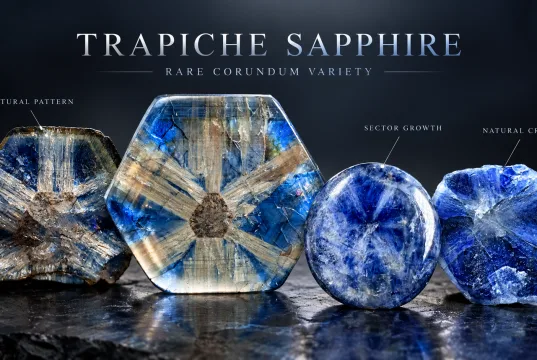
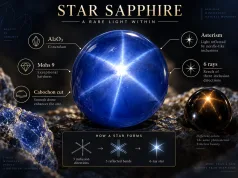
Sapphire is a precious gemstone that is a variety of the mineral corundum, which is composed of aluminum oxide. It is typically blue in...

Agate
Agate is a fascinating and versatile mineral that has captivated human interest for thousands of years. Agate is a variety of chalcedony, a mineral...
Chalcedony
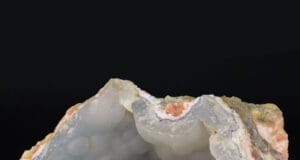
Chalcedony is a mineral that is composed of microscopic crystals of quartz. It is a cryptocrystalline form of silica, meaning that its crystals are...

Amethyst
A Gemstone Forged by Earth’s Hidden ForcesAmethyst is more than a beautiful purple gemstone — it is a geological story written in quartz crystals,...
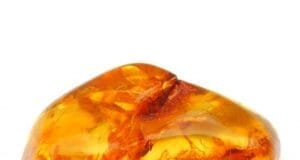
Amber
Amber is a fascinating organic gemstone that has captured human fascination for millennia. It's not a mineral, but rather a fossilized resin from ancient...

Pearl
A pearl is a hard, shiny object produced in living tissue such as a crustacean mollusk or fossil conulariids. It is generally composed of calcium carbonate and mainly aragonite.
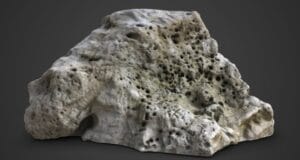
Coral
Coral is skeletal material produced by marine animals. Coral is organic and created by living organisms. When coral polyps die, the hardened skeleton remains and this material is used as a gemstone. Most corals are white, but nature can create coral in many other colors, including the popular orange to red forms. Usually its compound is calcium carbonate.

Turquoise
Turquoise is a
member of phosphate mineral with chemical the formula CuAl6 (PO4)4(OH) 8·4H2O.
Turquoise is an opaque, blue-to-green mineral that is a hydrated phosphate of
copper...

Chrysoberyl
Chrysoberyl is a member of oxide mineral or gemstone with the formula: BeAl2O4.In spite of the similarity in their names, chrysoberyl and beryl are absolutely extraordinary stones, despite the fact that both include beryllium. Chrysoberyl is the third most commonplace herbal stone and is found at 8.5 at the Mohs
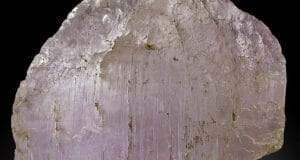
Spodumene
Spodumene is a pyroxene member of inosilicate mineral with chemical formula is LiAl(SiO3)2, lithium aluminium. It can also be pink, lilac, or green. Crystals are prismatic, flattened, and typically striated along their length. Gem varieties of the mineral usually exhibit strong pleochroism.

Beryl
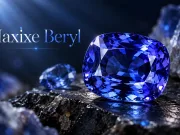
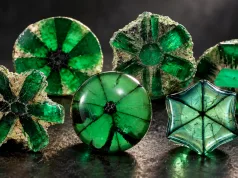
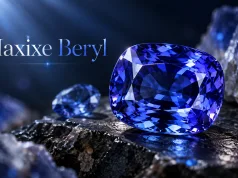
Beryl is a member of cyclosilicate minerals with composed of beryllium aluminium. Chemical formula: Be3Al2Si6O18. Few people have ever heard of the mineral beryl but almost everyone has heard of its principal gemstone varieties emerald and aquamarine.

Rutile
Rutile is oxide group mineral with formula: titanium dioxide (TiO2). It often appears as pale golden, needlelike crystals inside quartz. When not enclosed in quartz, it is usually yellowish or reddish brown, dark brown, or black.