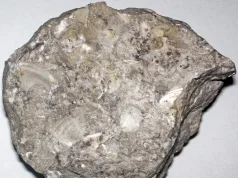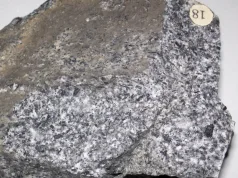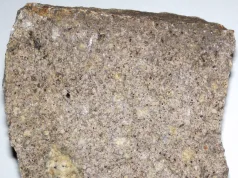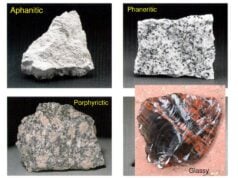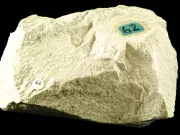
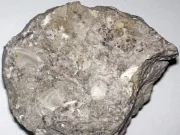


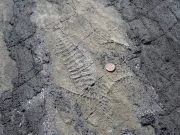























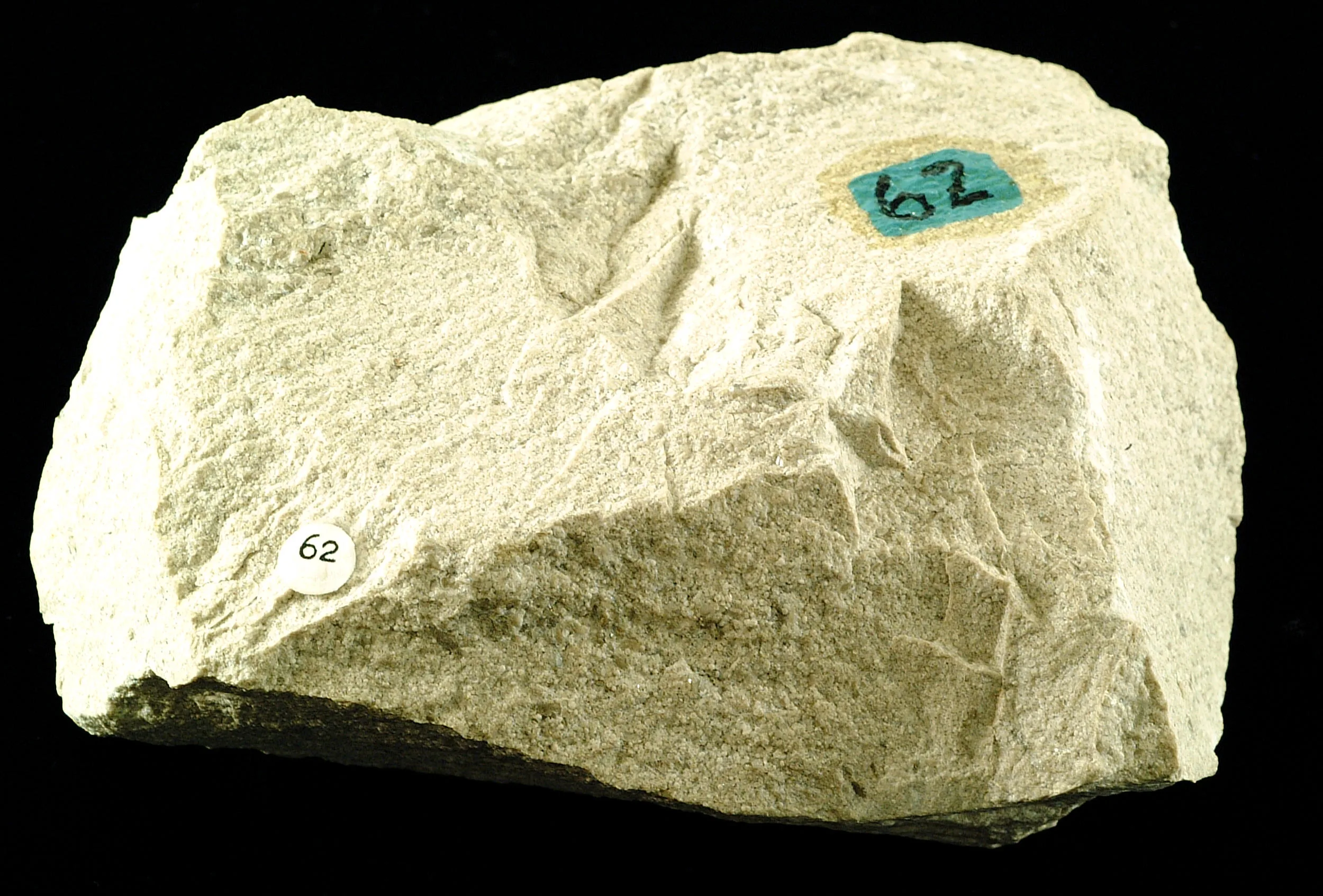
The Folk classification is a petrographic naming system for limestones based on carbonate grains (allochems), microcrystalline carbonate mud (micrite), and sparry calcite cement (sparite). Developed by Robert L. Folk in 1959 and expanded in 1962, it distinguishes names such as biomicrite, oosparite and intrasparite by the types of grains and the nature of the material between them. It complements the depositional-texture approach of the Dunham classification.
Interactive Folk Classification Calculator
Enter measured carbonate solid volume percentages. Use the examples to compare different petrographic rock types.
Composition triangle only: the dot locates total allochems, micrite and spar, not a complete Folk naming-field map. The name is derived separately from constituent thresholds and matrix/cement dominance.Carbonate Rock Components
| Component | Description |
|---|---|
| Intraclasts | Reworked fragments of penecontemporaneous carbonate sediment |
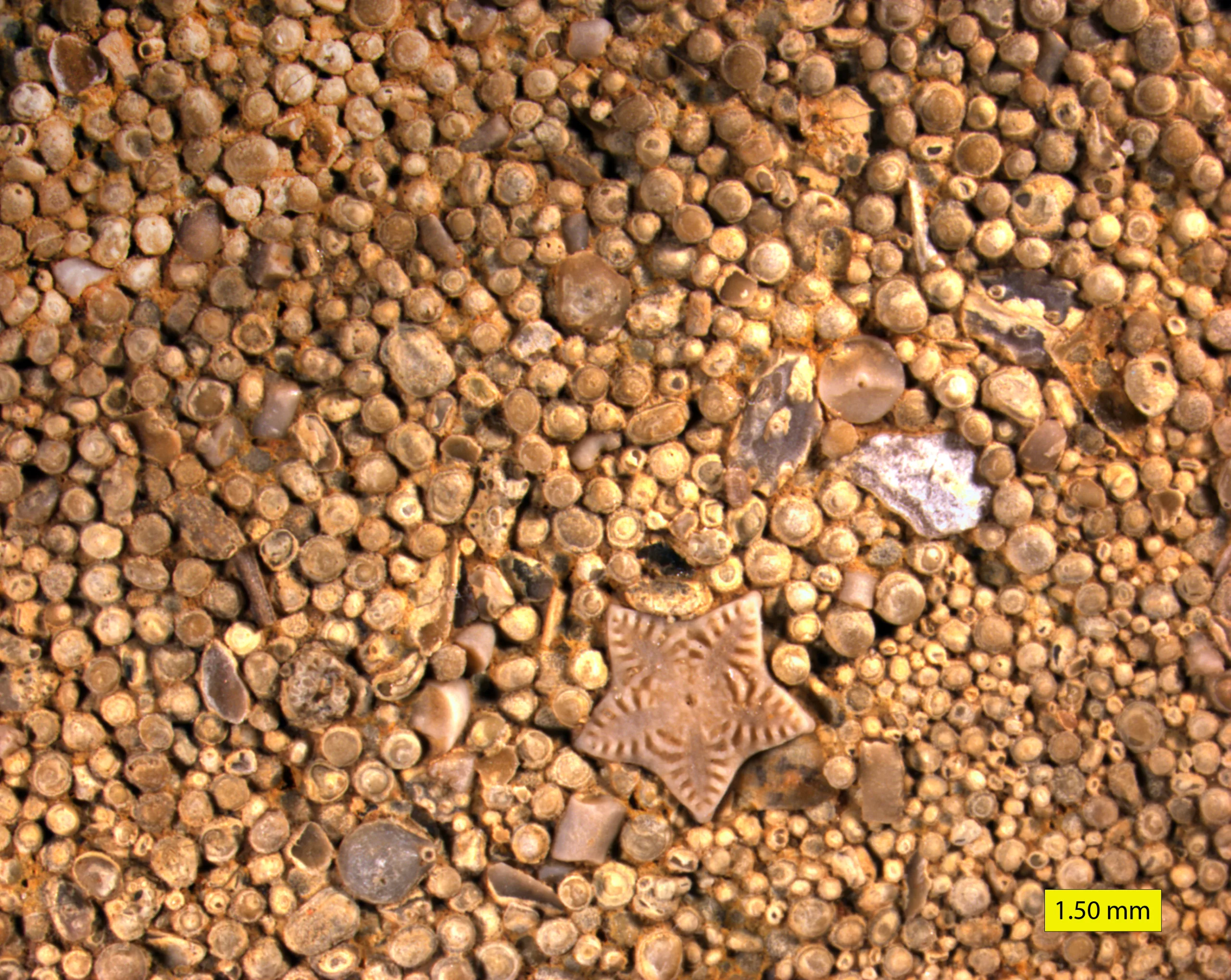
| Ooids | Coated grains with concentric or radial structures around a nucleus |
| Bioclasts | Skeletal fragments or recognizable fossils |
| Pellets and peloids | Rounded or irregular micritic grains; pellet implies a more specific origin |
| Micrite | Microcrystalline carbonate matrix, classically about 1–4 µm |
| Sparite | Coarser crystalline calcite, commonly pore-filling cement |
A carbonate thin section may contain replacement dolomite, fractures, open pores or detrital quartz in addition to these components. Record those separately. Micrite must not be identified solely by a dark color, and sparry replacement crystals must not automatically be interpreted as original pore-filling cement.
Folk Classification Chart and Naming Rules
| Grain criterion (relative to allochems) | Micrite exceeds spar | Spar exceeds micrite |
|---|---|---|
| >25% intraclasts | Intramicrite | Intrasparite |
| <25% intraclasts; >25% ooids | Oomicrite | Oosparite |
| Both below 25%; fossils : pellets >3:1 | Biomicrite | Biosparite |
| Both below 25%; fossils : pellets 1:3–3:1 | Biopelmicrite | Biopelsparite |
| Both below 25%; fossils : pellets <1:3 | Pelmicrite | Pelsparite |
The table summarizes the classic allochemical root names for rocks with more than 10% allochems. The 25% cutoffs apply to the allochem population, not the whole rock. Intraclasts are evaluated first; only when they are below their threshold are ooids considered. Fossil/pellet ratios distinguish the remaining groups. The dominant interstitial material determines the suffix. Exact 10% or 25% boundaries and equal matrix/cement proportions require explicit conventions; the tool flags them rather than fabricating precision.
Micrite and Fossiliferous Micrite
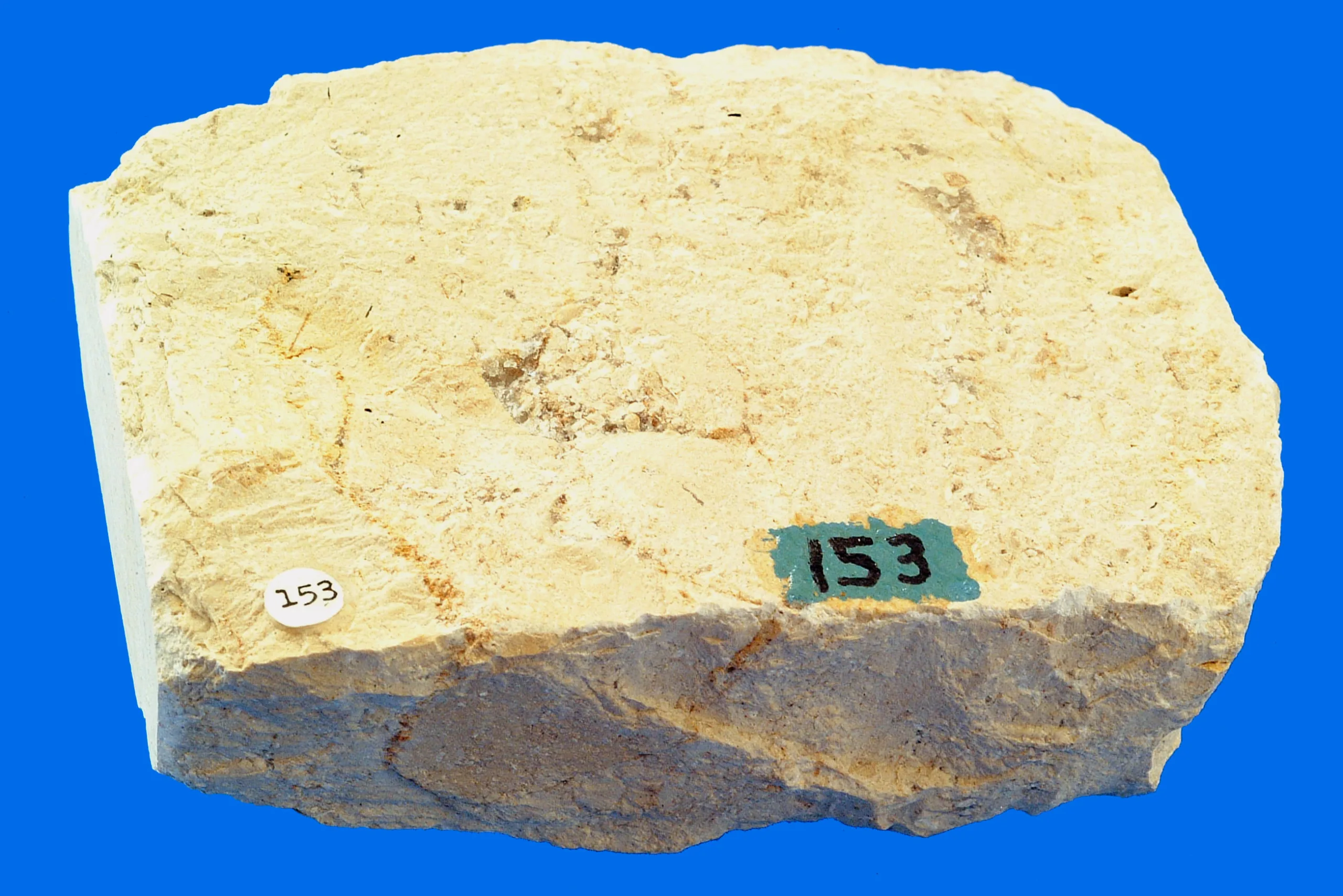
Limestones with less than 10% allochems are treated as microcrystalline rocks when micrite dominates. Below approximately 1% allochems, the simple name micrite is appropriate. Between 1% and 10%, terms such as fossiliferous micrite, oolitic micrite, intraclastic micrite or pelletiferous micrite can identify the principal minor grain component. Dismicrite describes particular disturbed micritic fabrics with spar-filled cavities and is not inferred from percentages alone.
Oosparite and Oomicrite
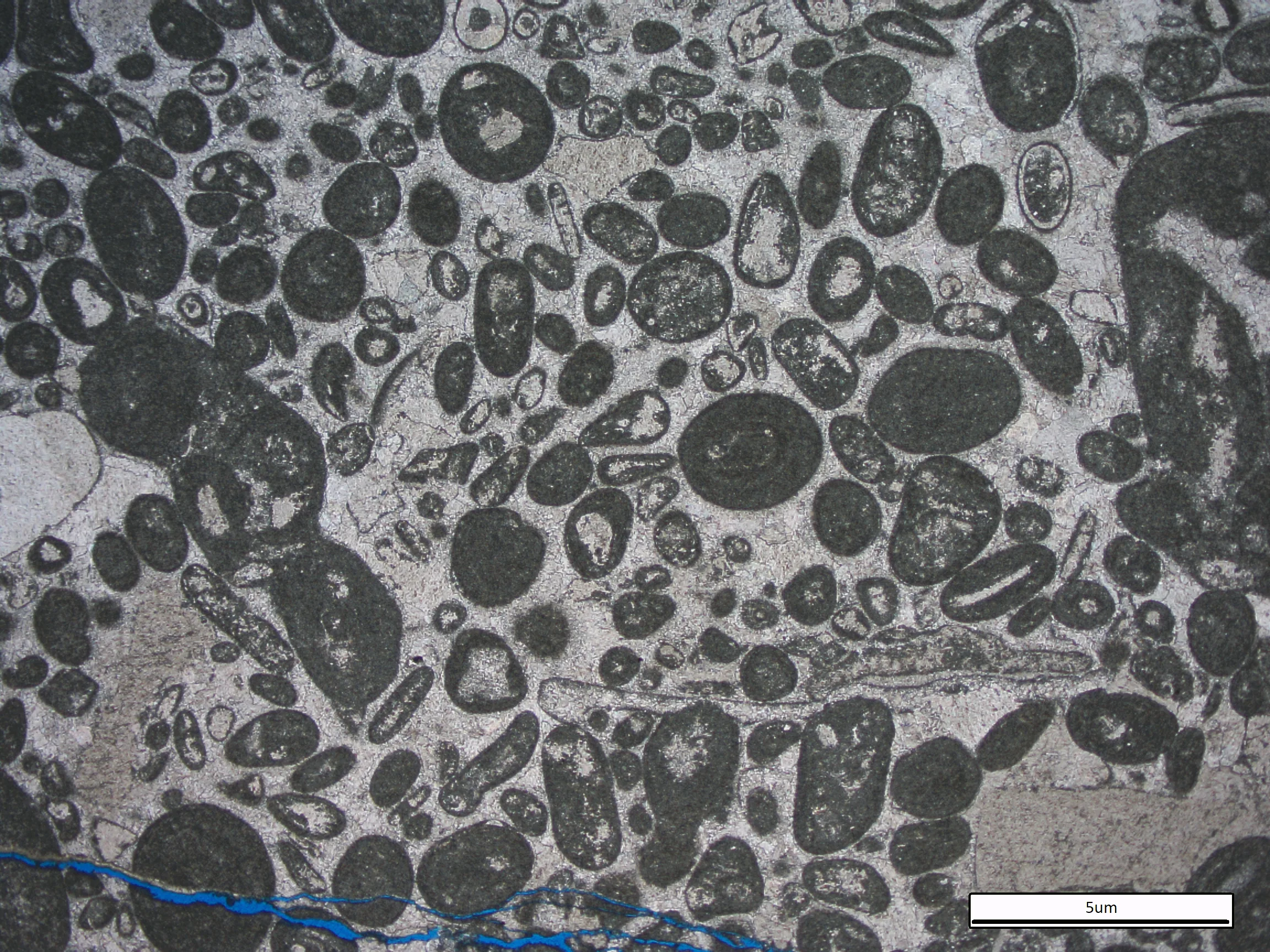
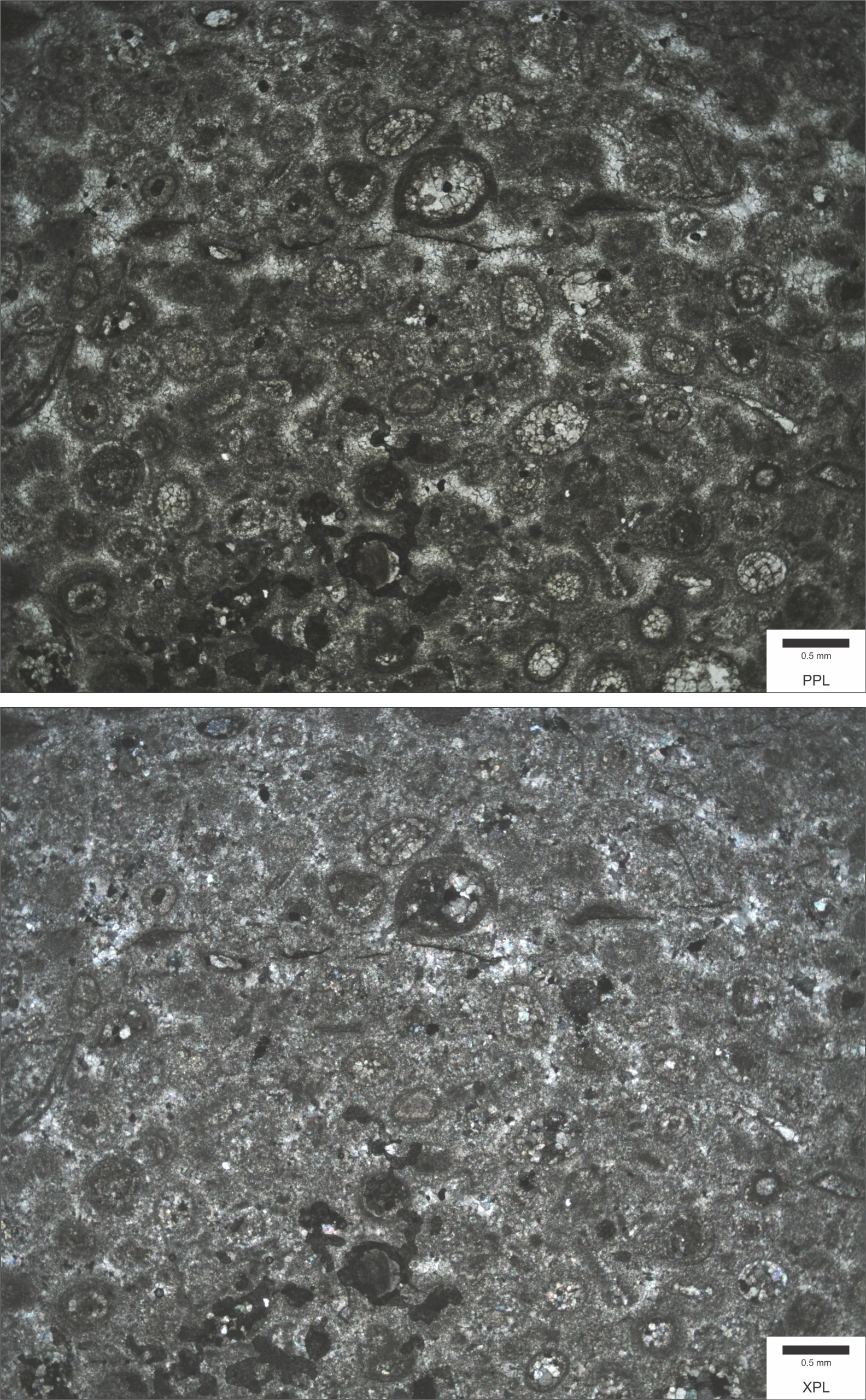
Oosparite contains abundant ooids and predominantly sparry cement. Oomicrite contains ooids with predominantly micritic interstitial material. The two names distinguish interstitial composition even where their grain types are similar. Neither name alone guarantees a particular hydraulic environment.
Biomicrite and Biosparite
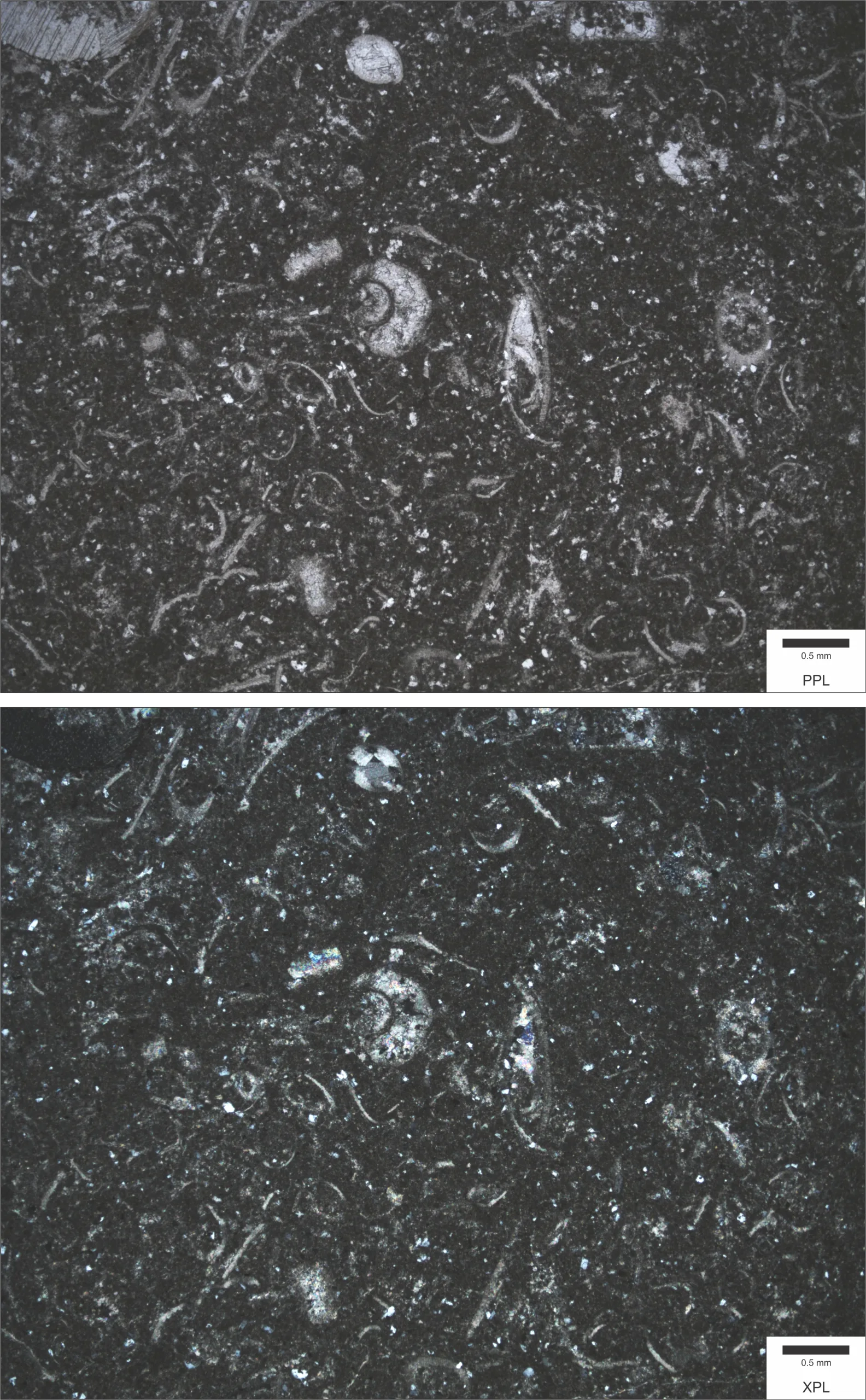
Biomicrite has a skeletal-grain-dominated allochem assemblage and more micrite than spar. Biosparite is the spar-cement-dominated counterpart. Identify shell fragments, echinoderm ossicles, foraminifera and other skeletal grains, while recording diagenetic alteration and cement separately.
Intrasparite, Intramicrite and Pelletal Limestones
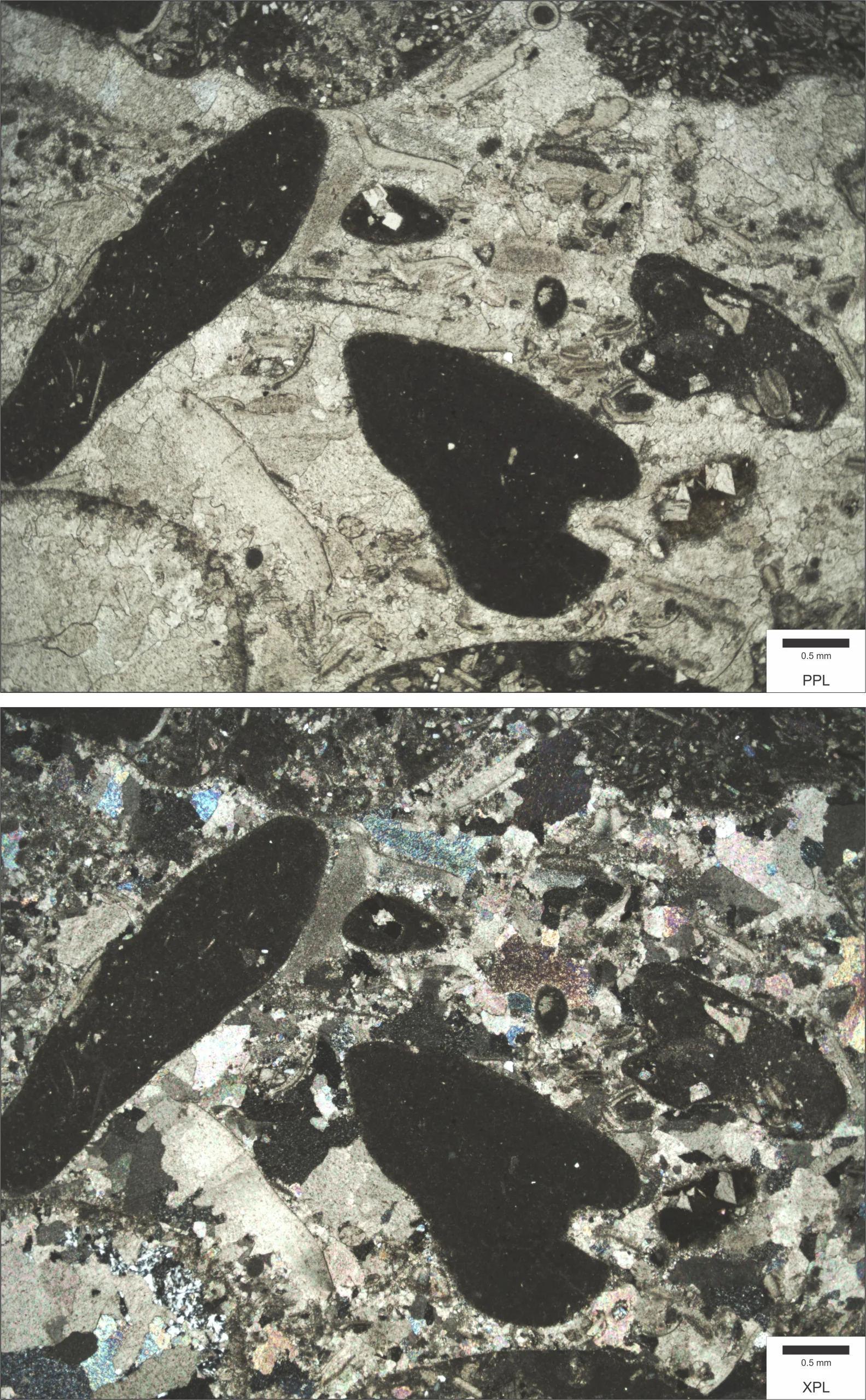
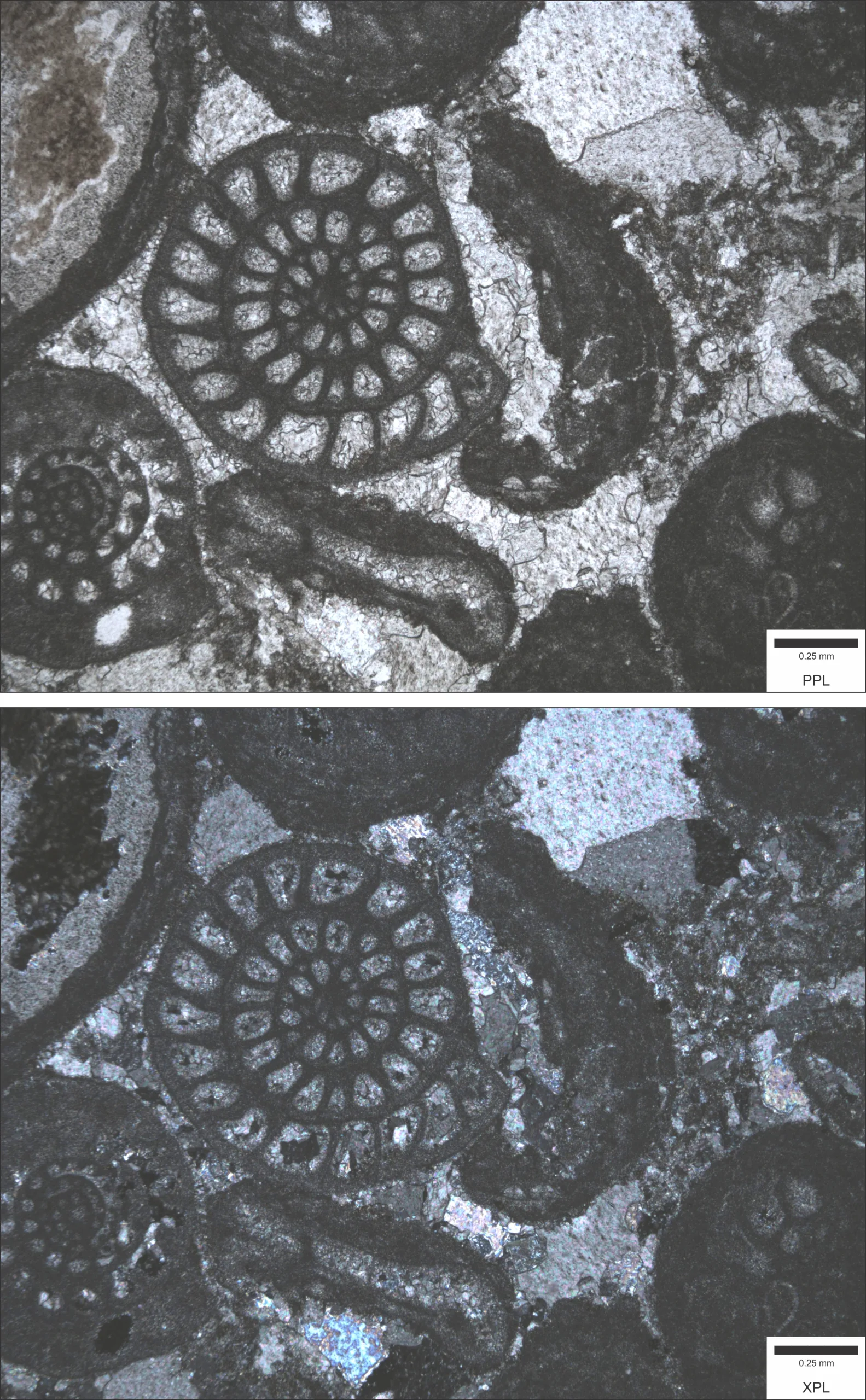
Intraclasts are pieces of sediment reworked within a carbonate depositional system. Their occurrence is not necessarily proof of a high-energy environment; storms, erosion, early lithification and redeposition can produce intraclasts in different settings. Pellets and peloids may resemble micritized grains; the classification requires petrographic judgment.
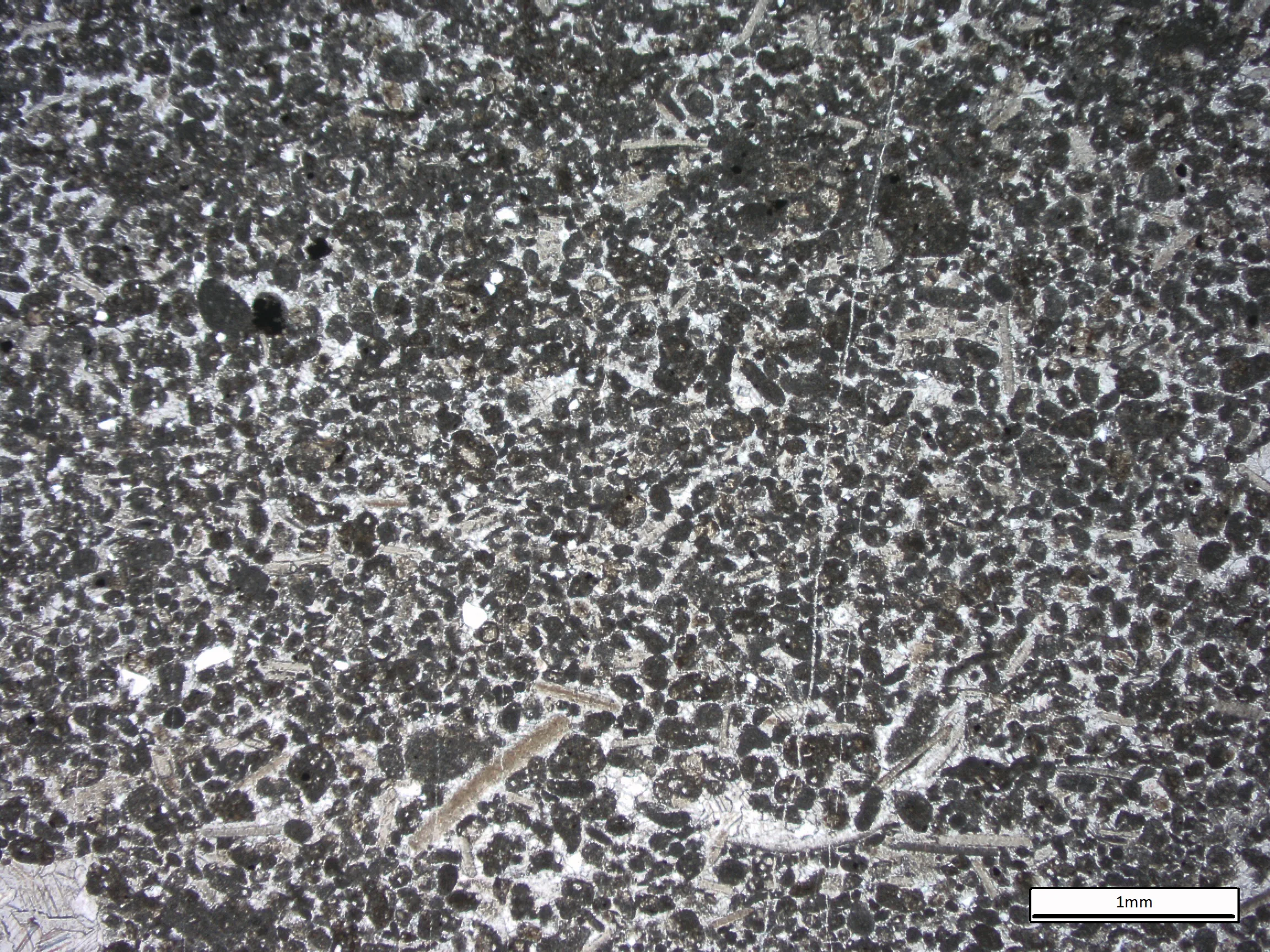
Worked Example: Calculating a Folk Name
| Measured carbonate solid component | Volume % |
|---|---|
| Intraclasts | 5 |
| Ooids | 60 |
| Bioclasts | 5 |
| Pellets | 0 |
| Micrite | 5 |
| Spar | 25 |
| Total | 100 |
The total allochem fraction is 70%. Intraclasts make up 5/70 × 100 = 7.14% of the allochems, while ooids make up 60/70 × 100 = 85.71%. The intraclast threshold is not reached, but the ooid threshold is exceeded. Sparry cement (25%) exceeds micrite (5%), giving the root name oosparite. The numbers are illustrative, not measured from the photographs.
A second sample containing 40% bioclasts, 5% ooids, 5% pellets, 45% micrite and 5% spar has 50% allochems, only 10% ooids among allochems, and a fossil-to-pellet ratio of 8:1. Because micrite exceeds spar, it is biomicrite.
Folk Versus Dunham Classification
| Feature | Folk | Dunham |
|---|---|---|
| Classification basis | Grain type and interstitial material | Depositional grain/mud support and binding |
| Examples | Oosparite, biomicrite | Grainstone, wackestone |
| Input | Modal percentages, petrography | Depositional texture, grain abundance |
Folk names cannot be converted automatically into Dunham names without checking depositional texture. A biomicrite may be a mud-supported wackestone or a grain-supported packstone. An organically constructed carbonate may be termed biolithite in Folk terminology, whereas Dunham uses boundstone and the modified system recognizes bafflestone, bindstone and framestone.
Limitations and Diagenesis
The calculator implements core Folk limestone root names. It does not assign all grain-size-related names, spectral sorting subdivisions, replacement dolomite descriptors or compound grain modifiers from the 1962 expansion. If original grains have been destroyed by recrystallization, a crystalline or replacement-carbonate description may be more defensible. Use representative point counts, note uncertainty near boundaries, and distinguish porosity and cement from depositional mud.
Frequently Asked Questions
What is an allochem?
A recognizable carbonate grain such as an ooid, bioclast, intraclast or pellet.
What is the difference between micrite and sparite?
Micrite is microcrystalline carbonate matrix; sparite commonly refers to coarser pore-filling calcite cement.
Is the 25% cutoff based on the whole rock?
No. In the classic naming procedure it is calculated relative to the allochems.
Is Folk classification the same as Dunham?
No. Folk emphasizes constituents and interstitial material; Dunham emphasizes depositional support and binding.
Can the calculator classify a photograph automatically?
No. It uses observed or measured component percentages entered by the user.
References
Folk, R.L. (1959). Practical petrographic classification of limestones. AAPG Bulletin, 43, 1–38.
Folk, R.L. (1962). Spectral subdivision of limestone types. In: Ham, W.E. (ed.), Classification of Carbonate Rocks, AAPG Memoir 1, 62–84.
AAPG Wiki — Carbonate sedimentary rocks classification
Featured image: oolitic limestone specimen, GeoDIL 297, Wikimedia Commons, CC0.