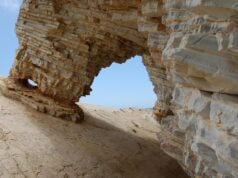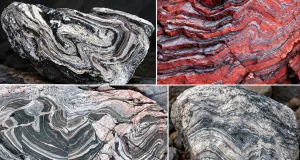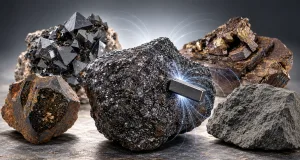

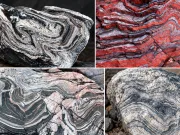
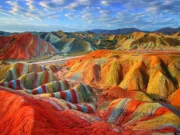

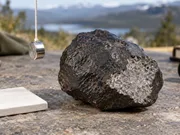
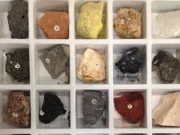

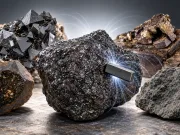


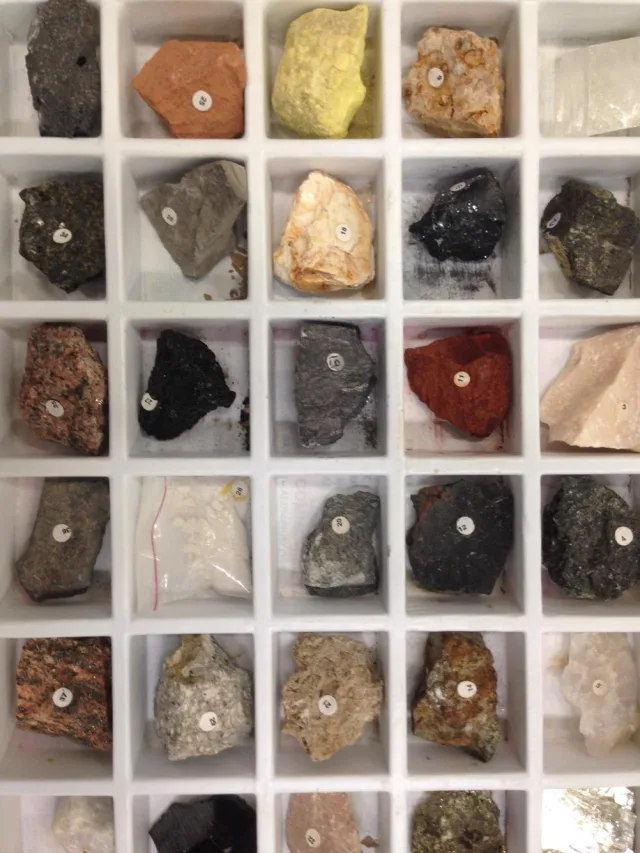
You are walking along a beach, through the mountains, in your backyard, or beside a road when you notice an unusual rock. Maybe it has a strange color, sparkling crystals, or unusual lines across its surface. The first question is usually the same: What kind of rock is this?
Identifying a rock may seem difficult at first. The same type of rock can occur in different colors, while completely different rocks may sometimes look surprisingly similar. This is why geologists do not identify rocks by color alone. They look at texture, grain size, mineral composition, hardness, layering, fracture, magnetic properties, and sometimes simple chemical reactions.
The good news is that you do not need a laboratory to make a basic rock identification. A hand lens, magnet, steel nail, ceramic tile, and sometimes even a little vinegar can help you distinguish many common rocks.
In this guide, we will go step by step through how to examine a rock, how to distinguish igneous, sedimentary, and metamorphic rocks, and how to recognize common rocks such as granite, basalt, sandstone, limestone, obsidian, schist, and gneiss.
Quick Rock Identification Chart
The following chart is a good starting point when you are trying to identify a rock.
| Rock | Type | Common Color | Texture | Grain Size | Key Identification Feature |
|---|---|---|---|---|---|
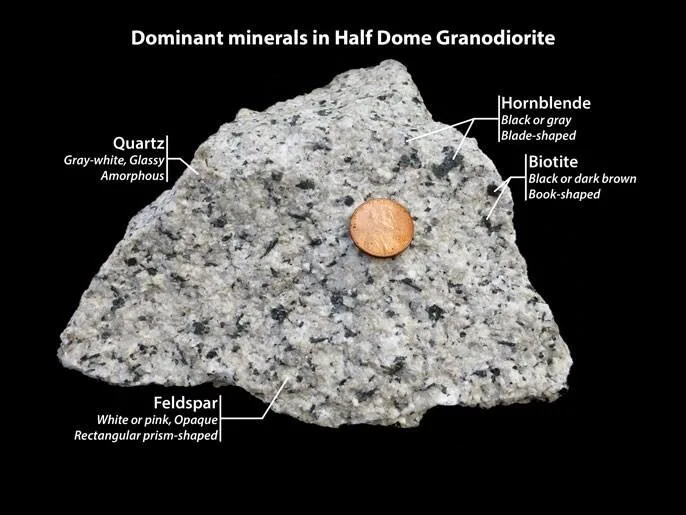
| Granite | Igneous | Gray, pink, white | Crystalline | Coarse | Visible quartz and feldspar crystals |
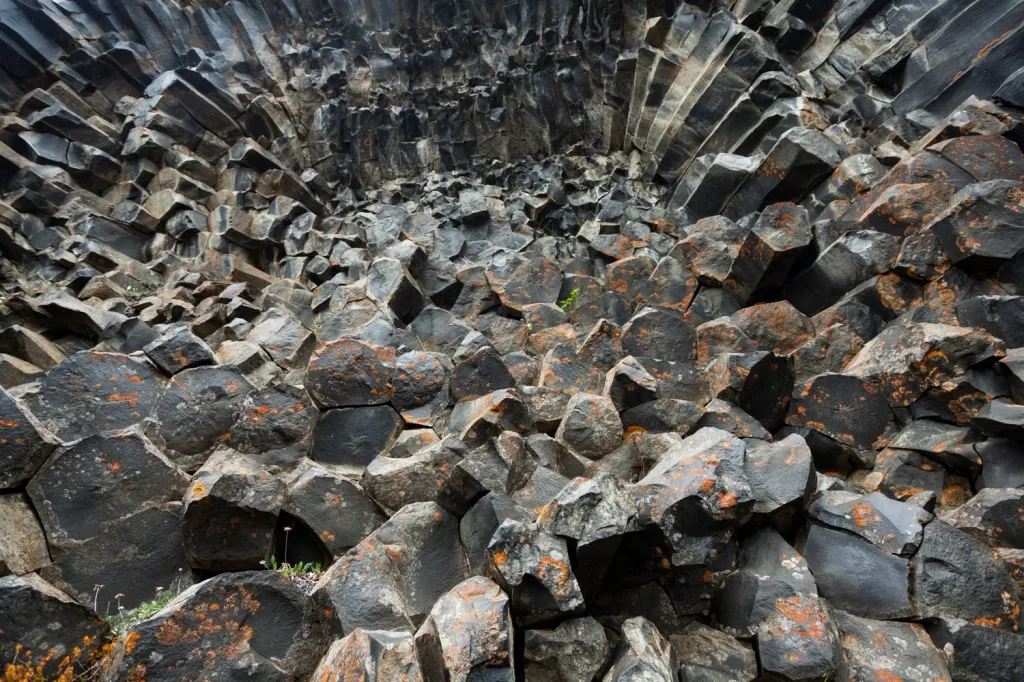
| Basalt | Igneous | Black, dark gray | Fine-grained | Very fine | Dark and dense |
| Obsidian | Igneous | Usually black | Glassy | No visible crystals | Looks like volcanic glass |
| Pumice | Igneous | White, light gray | Vesicular | Fine | Extremely light and full of holes |
| Sandstone | Sedimentary | Brown, red, tan | Gritty | Sand-sized | Feels like sandpaper |
| Limestone | Sedimentary | White, cream, gray | Variable | Usually fine | Reacts with acid |
| Shale | Sedimentary | Gray, black, brown | Layered | Very fine | Splits into thin layers |
| Conglomerate | Sedimentary | Variable | Clastic | Coarse | Contains rounded pebbles |
| Marble | Metamorphic | White or colored | Crystalline | Medium to coarse | Recrystallized calcite |
| Slate | Metamorphic | Gray, black | Foliated | Very fine | Splits into flat sheets |
| Schist | Metamorphic | Gray, silvery | Foliated | Medium to coarse | Shiny mica minerals |
| Gneiss | Metamorphic | Black and white | Banded | Coarse | Distinct light and dark mineral bands |
| Quartzite | Metamorphic | White, gray, pink | Massive | Medium | Very hard and quartz-rich |
This chart cannot provide a definite identification on its own, but it is a strong starting point for narrowing down the possibilities.
First: Is It a Rock or a Mineral?
One of the most common mistakes in rock identification is treating rocks and minerals as the same thing.
A mineral is a naturally occurring solid material with a specific chemical composition and crystal structure.
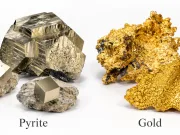
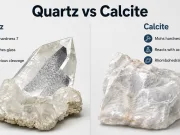
Quartz, calcite, feldspar, pyrite, and mica are minerals.
A rock, on the other hand, is made from one or more minerals.
Granite, for example, commonly contains quartz, feldspar, and mica. When you look closely at granite, you usually see several different colored crystals rather than one uniform material.
Some rocks can be made almost entirely from one mineral. Quartzite is mostly quartz, while marble is mainly composed of calcite.
If your specimen appears to be one single crystal or one uniform crystalline material, it may be worth considering whether it is a mineral rather than a rock.
How to Identify a Rock
The best way to identify a rock is to examine several characteristics together instead of relying on only one.
A systematic examination will usually give you the best result.
1. Look at the Color
Color is usually the first feature people notice, and it can provide a quick clue.
For example:
- Granite is commonly white, gray, or pink.
- Basalt is usually dark gray or black.
- Sandstone may be red, brown, tan, or light-colored.
- Limestone is often white, cream, or gray.
- Obsidian is commonly black.
However, color alone cannot reliably identify a rock.
The same type of rock can have different colors depending on its mineral content, oxidation, weathering, and environmental conditions.
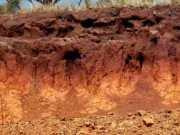
Granite, for example, may be pink or almost white. Sandstone may become strongly red when iron oxides are present.
Use color as your first clue, but always combine it with other features.
2. Examine the Rock Texture
Texture is one of the most useful clues because it can tell you a great deal about how a rock formed.
Clean the specimen if possible and examine it in good natural light. A small hand lens can be very useful.
Can You See Individual Crystals?
If you can clearly see large crystals that appear to interlock with one another, the rock may have formed from magma that cooled slowly underground.
Granite, diorite, and gabbro are classic examples.
Is the Rock Very Fine-Grained?
If the individual crystals are difficult or impossible to see with the naked eye, lava may have cooled quickly at or near Earth’s surface.
Basalt, andesite, and rhyolite are commonly fine-grained volcanic rocks.
Does It Look Like Glass?
If the rock is shiny, glass-like, and breaks into very sharp edges, it may be obsidian.
Is It Full of Holes?
If the rock contains many small or large holes, gas bubbles may have been trapped in lava as it cooled.
Pumice and scoria are typical examples.
Can You See Sand Grains?
If the surface feels gritty or similar to sandpaper, sandstone is a strong possibility.
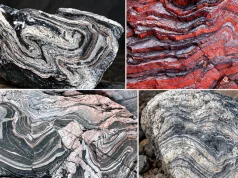
Does It Have Light and Dark Bands?
Distinct alternating bands of light and dark minerals are one of the strongest clues for identifying gneiss.
Does the Surface Sparkle?
If the rock contains many shiny, flaky minerals, especially mica, it may be schist.
3. Check the Grain Size
Grain size is particularly useful when identifying igneous and sedimentary rocks.
Coarse-Grained Rocks
If individual crystals are easily visible to the naked eye, the rock is considered coarse-grained.
Examples include:
- Granite
- Gabbro
- Diorite
- Pegmatite
Fine-Grained Rocks
If crystals are difficult or impossible to see without magnification, the rock may have cooled much more quickly.
Examples include:
- Basalt
- Andesite
- Rhyolite
Very Fine-Grained Rocks
Rocks such as shale and slate have extremely small grains.
4. Test the Hardness
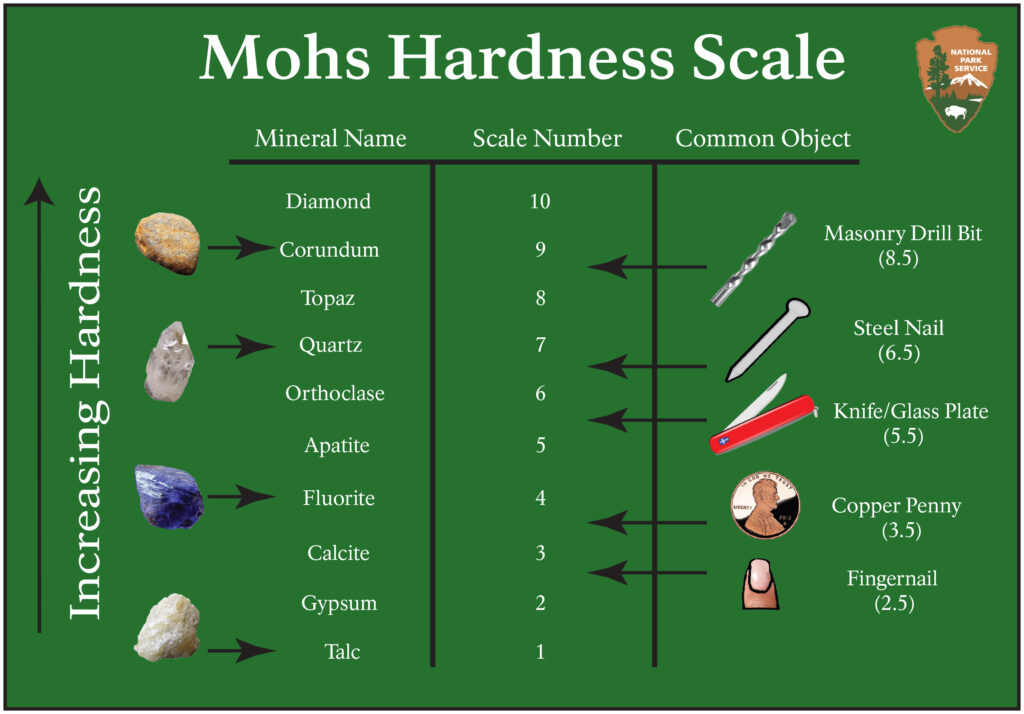
Different rocks and minerals have different hardness levels.
- Fingernail: about Mohs 2.5
- Copper coin: about Mohs 3
- Steel nail or knife: around Mohs 5–5.5
- Glass: around Mohs 5.5
If your specimen can easily scratch glass, it may contain a large amount of quartz.
5. Try the Streak Test
For a streak test, use an unglazed white porcelain tile.
Rub the specimen across the tile and observe the color of the powder it leaves behind.
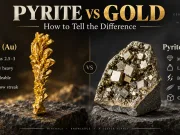
This test is especially useful for minerals such as hematite, magnetite, and pyrite.
6. Test It With a Magnet
A small strong magnet can help detect magnetite and other iron-rich minerals.
However:
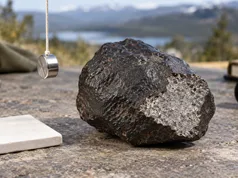
A magnetic rock is not automatically a meteorite.
Many Earth rocks and industrial materials are magnetic.
7. Try the Acid Test
Calcite-rich rocks react with acid.
Limestone commonly produces visible fizzing when dilute hydrochloric acid is applied.
Marble can also react because it contains recrystallized calcite.
Vinegar can sometimes be used as a weaker home test.
8. Look for Layers, Foliation, and Bands
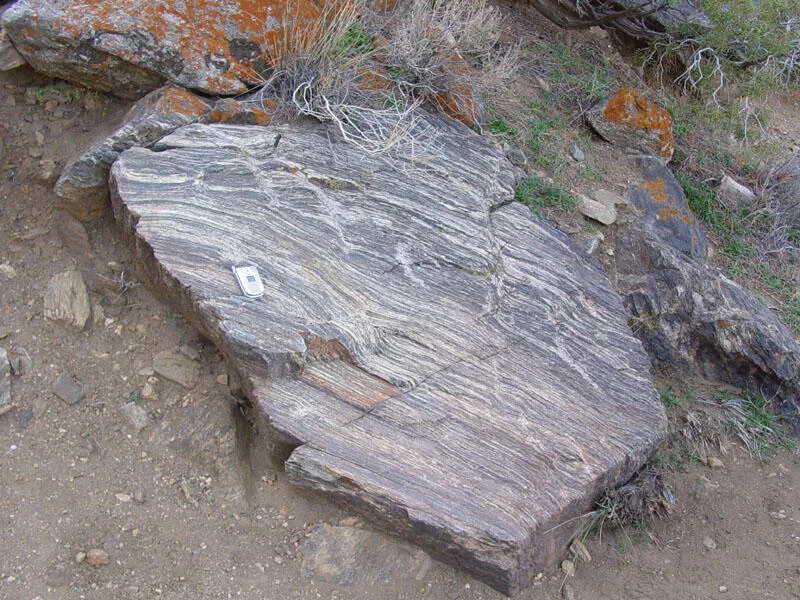
Directional structures can tell you a lot about a rock’s history.
Sedimentary Layers
Stacked layers may indicate sandstone, shale, limestone, or another sedimentary rock.
Does It Split Into Thin Sheets?
Shale and slate may both split into thin pieces, but slate usually has a more regular metamorphic cleavage.
Light and Dark Bands
Alternating light and dark mineral bands are characteristic of gneiss.
Shiny, Aligned Minerals
Aligned shiny minerals are common in schist.
How to Identify the Three Main Rock Types
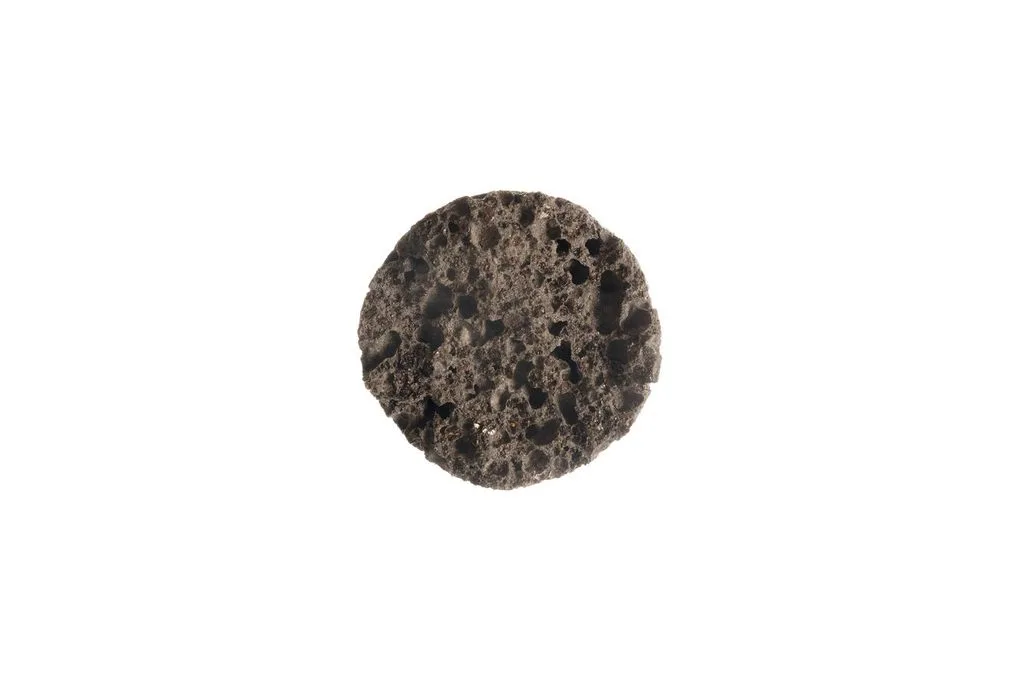
Most rocks belong to three major groups:
- Igneous rocks
- Sedimentary rocks
- Metamorphic rocks
How to Identify Igneous Rocks
Igneous rocks form when magma or lava cools and solidifies.
Common features include:
- Interlocking crystals
- Glassy textures
- Vesicles
- Mineral crystals
- Usually no fossils
Examples include granite, basalt, obsidian, pumice, gabbro, diorite, and rhyolite.
How to Identify Sedimentary Rocks
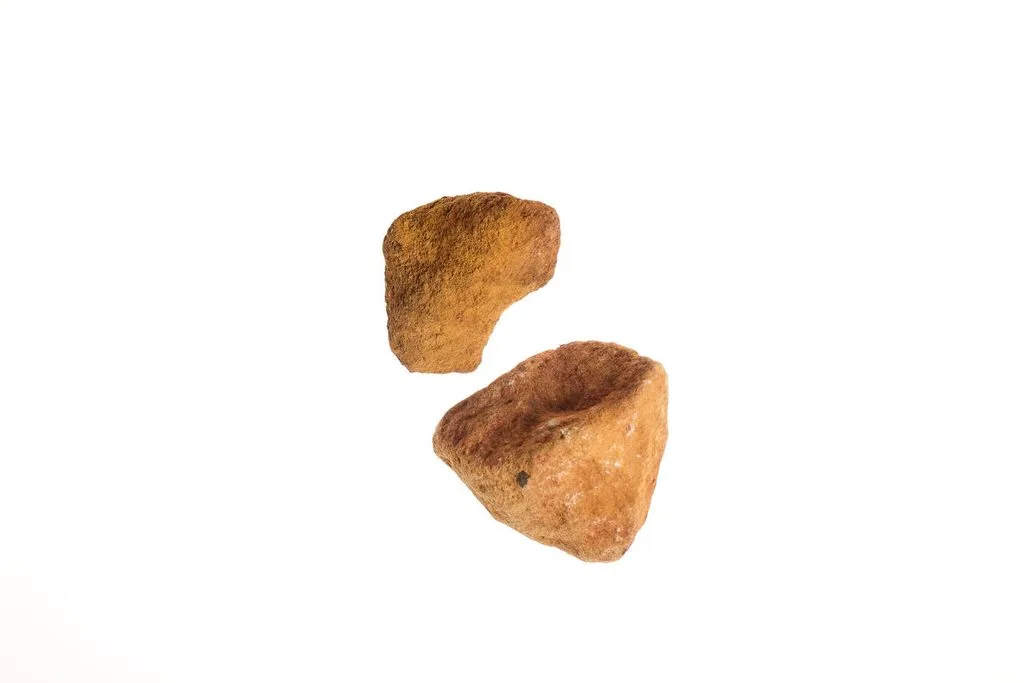
Sedimentary rocks commonly form from accumulated sand, mud, gravel, shells, or chemical precipitates.
Common features include:
- Layers
- Sand or gravel grains
- Fossils
- Rounded or angular rock fragments
Examples include sandstone, limestone, shale, conglomerate, and breccia.
How to Identify Metamorphic Rocks
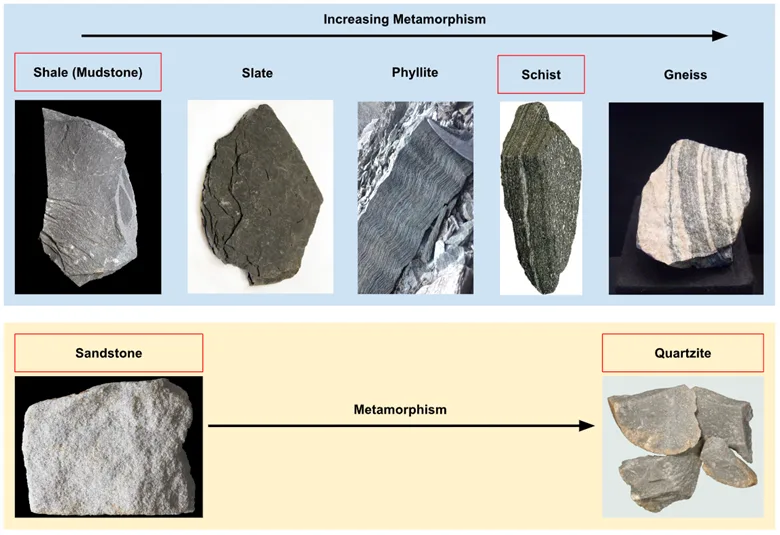
Metamorphic rocks form when existing rocks are changed by heat and pressure without completely melting.
Common features include:
- Mineral banding
- Foliation
- Aligned minerals
- Recrystallized textures
A common metamorphic sequence is:
Shale → Slate → Phyllite → Schist → Gneiss
Common Rocks and How to Identify Them
Granite
Granite is usually coarse-grained and contains visible quartz and feldspar crystals.
Basalt
Basalt is usually dark, dense, and fine-grained.
Sandstone
Sandstone commonly has a gritty texture and visible sand-sized grains.
Limestone
Limestone commonly contains calcite and often reacts with acid.
Shale
Shale is extremely fine-grained and commonly splits along thin layers.
Obsidian
Obsidian has a glassy surface and conchoidal fracture.
Pumice
Pumice contains many gas bubbles and is extremely lightweight.
Slate
Slate is fine-grained and commonly splits into flat sheets.
Schist
Schist contains abundant visible, shiny mica minerals.
Gneiss
Gneiss is characterized by distinct light and dark mineral bands.
Marble
Marble is crystalline, commonly calcite-rich, and reacts with acid.
Quartzite
Quartzite is extremely hard and commonly scratches glass.
Rock Identification by Color
Color can narrow down the possibilities, but should never be used alone.
Black Rocks
- Basalt
- Obsidian
- Anthracite
- Magnetite-rich rocks
White Rocks
- Marble
- Quartzite
- Chalk
- Light-colored granite
Red Rocks
- Red sandstone
- Jasper
- Iron-rich rocks
Green Rocks
- Serpentinite
- Greenstone
- Chlorite-rich metamorphic rocks
Pink Rocks
- Granite
- Rhyolite
- Some quartzites
Rock Identification by Texture
| Texture | Possible Rocks |
|---|---|
| Glassy | Obsidian |
| Full of holes | Pumice, Scoria |
| Large crystals | Granite, Diorite, Gabbro |
| Sandy or gritty | Sandstone |
| Thin layers | Shale, Slate |
| Strong bands | Gneiss |
| Shiny and flaky | Schist |
| Rounded pebbles | Conglomerate |
| Angular fragments | Breccia |
What Kind of Rock Did I Find?
Can You See Crystals?
Yes: Granite, gabbro, or diorite may be possible.
Does the Rock Have Layers?
Yes: Look at sandstone, shale, limestone, and other sedimentary rocks.
Does It Have Light-Dark Bands or Shiny Aligned Minerals?
Yes: Consider gneiss or schist.
Does It Look Glassy?
Yes: Obsidian is a strong possibility.
Is It Full of Holes?
Yes: It may be pumice, scoria, or vesicular basalt.
Does It Feel Sandy?
Yes: Sandstone may be likely.
Does It Fizz With Acid?
Yes: It may be limestone, marble, or another calcite-rich rock.
Can You Identify a Rock From a Photo?
Sometimes you can narrow down the possibilities, but a photograph alone usually cannot provide a certain identification.
A photo can show:
- Color
- Texture
- Grain size
- Layering
- Banding
- Crystals
- Vesicles
But it cannot directly show:
- Hardness
- Density
- Magnetism
- Acid reaction
- Streak
Simple Rock Identification Tools You Can Keep at Home
A basic rock identification kit can include:
- 10× hand lens
- Small strong magnet
- Steel nail
- Copper coin
- Unglazed ceramic tile
- Small ruler
- Flashlight
- Notebook
- Water
- Vinegar
Frequently Asked Questions
How Do I Identify a Rock I Found?
Start with color, texture, and grain size. Then check hardness, layering, magnetism, and acid reaction.
How Can I Tell if a Rock Is Igneous?
Look for interlocking crystals, glassy textures, or gas bubbles.
How Can I Tell if a Rock Is Sedimentary?
Look for layers, visible grains, fragments, or fossils.
How Can I Tell if a Rock Is Metamorphic?
Look for foliation, mineral alignment, recrystallization, or banding.
How Can I Tell if a Rock Contains Quartz?
Quartz is hard, often glassy or translucent, and can scratch glass.
Are Rock Identification Apps Accurate?
They can help narrow down possibilities, but photo-based identification should not be considered definitive.
Could the Rock I Found Be Valuable?
Possibly, but value depends on mineral content, rarity, quality, size, and collector demand.
Could a Black Magnetic Rock Be a Meteorite?
Possibly, but most black magnetic rocks are not meteorites.
Conclusion
Identifying rocks is often a little like detective work.
Color gives you the first clue, but texture, grain size, mineral composition, hardness, layering, magnetism, and other features provide the evidence needed to narrow down an identification.
Large crystals can indicate slow cooling underground. Fine crystals can indicate rapid cooling. Sedimentary layers record deposition, while mineral bands may preserve the effects of intense heat and pressure.
Rock identification is therefore more than simply giving a specimen a name. It is also a way of reading the geological history recorded inside it.