


















Facebook
Instagram
X
Youtube
Home
News
Branches
Economic Geology
Ore Genesis
Ore Minerals
Engineering Geology
Geochemistry
Geology Fundamentals
Historical Geology
Paleontology
Earth Interior
Geologic Time Scale
Plate Tectonics: How Earth’s Moving Plates Shape Continents, Mountains, and Oceans
Gallery
Geologic Lists
Geological Wonders
Canyons
Caves & Karst
Deserts & Dunes
Videos
Rocks
Igneous Rocks
Metamorphic Rocks
Rock Identification
Rock Textures & Structures
Sedimentary Rocks
Minerals
Gemstones
Gemstone Database
Gemstone Guides
Gemstone Identification
Rare & Unique Gemstones
Synthetic & Man-Made Gem Materials
Disasters
Avalanches
Earthquakes
Landslides
Tsunamis
Volcanic Eruptions
Forum
Search
Contact
Privacy Policy
Register
Facebook
Instagram
X
Youtube
Geology Science
Home
News
Deepest Known Explosive Volcanic Deposits Found Near Challenger Deep
Hawaiian Volcanic Rocks May Reveal Carbon From Earth’s Core
Unusual Crystals and Silica-Rich Rocks Offer Clues to Mars’ Watery Past
Underwater Volcanic Eruption Adds New Land to Japan’s Iwo Jima
Neutron Imaging Reveals a New 156-Million-Year-Old Reptile
Branches
Dynamic Penetration Testing (DPL, DPH, DPSH)
Deepest Known Explosive Volcanic Deposits Found Near Challenger Deep
Hawaiian Volcanic Rocks May Reveal Carbon From Earth’s Core
Ménard Pressuremeter Test
Cone Penetration Test (CPT and CPTu)
All
Economic Geology
Ore Genesis
Ore Minerals
Engineering Geology
Geochemistry
Geology Fundamentals
Historical Geology
Paleontology
Earth Interior
Geologic Time Scale
Plate Tectonics: How Earth’s Moving Plates Shape Continents, Mountains, and Oceans
Gallery
10 Places Where You Can See Tectonic Plate Movement
Siccar Point, Scotland
10 Incredible Landscapes Carved by Glaciers
Hormuz Island, Iran
10 Places Where Earth’s Mantle Is Exposed
All
Geologic Lists
Geological Wonders
Canyons
Caves & Karst
Deserts & Dunes
Videos
Rocks
Cataclasite
Mylonite
Serpentinite
Diamictite
Oolitic Limestone
All
Igneous Rocks
Metamorphic Rocks
Rock Identification
Rock Textures & Structures
Sedimentary Rocks
Minerals
Why Is My Rock Magnetic? 8 Rocks and Minerals Explained
Gold vs. Pyrite: 7 Ways to Tell the Difference
How Do Minerals Form? 7 Geological Processes
Quartz vs Calcite: What’s the Difference?
Why Do Some Crystals Grow Perfectly and Others Don’t?
Gemstones
Trapiche Sapphire
Trapiche Emerald
Maxixe Beryl
Star Ruby
Star Sapphire
All
Gemstone Database
Gemstone Guides
Gemstone Identification
Rare & Unique Gemstones
Synthetic & Man-Made Gem Materials
Disasters
Epicenter vs Hypocenter: What’s the Difference?
P-Waves vs S-Waves: What’s the Difference?
Can Geological Disasters Trigger Each Other?
Avalanches: Geologic & Environmental Triggers
Types of Faults and How They Trigger Earthquakes
All
Avalanches
Earthquakes
Landslides
Tsunamis
Volcanic Eruptions
Forum
Economic Geology
Engineering Geology
Environmental Geology
Field Methods
Geochemistry
Geochronology
Geology Fundamentals
Geomorphology
Geophysics
Glaciology
Historical Geology
Hydrogeology
Marine Geology
Meteorites & Impact Geology
Mineralogy
Mining geology
Natural Resources
Paleontology
Petroleum Geology
Petrology
Physical Geology
Planetary Geology
Sedimentology
Stratigraphy
Structural Geology
Volcanology
Featured posts
Latest
Featured posts
Most popular
7 days popular
By review score
Random
Why Do Some Rocks Break in Perfect Layers?
23/12/2025
Why Do Some Rocks Break Easily While Others Don’t?
22/12/2025
Mountain Building (Orogenesis)
01/11/2023
The Rock Cycle
16/06/2019
Plate Tectonics: How Earth’s Moving Plates Shape Continents, Mountains, and Oceans
03/05/2018
Physical Geology
Home
Geology
Physical Geology
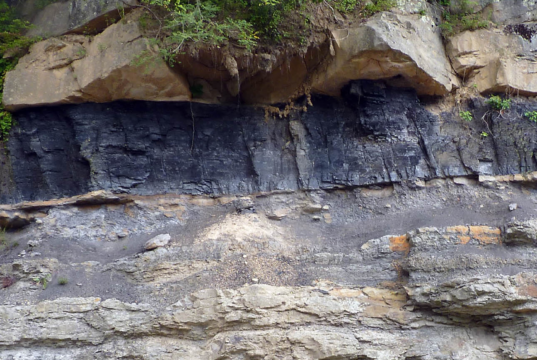
This branch deals with the study of Earth’s materials, including minerals and rocks, and the processes that shape and modify the Earth’s surface, such as weathering, erosion, plate tectonics, and volcanic activity.