














Fossil Library
Species and fossil profiles
Latest Articles
Discoveries and research
Geological Time
Stratigraphy and chronology
Evolution & Extinctions
History of life
Research Methods
Fieldwork and fossil analysis
Essential Paleontology Guides
Core reference topics in the study of ancient life.


Fossil Library
Marine invertebrates, fossil corals and individual fossil groups. · View all →


Latest Paleontology Articles
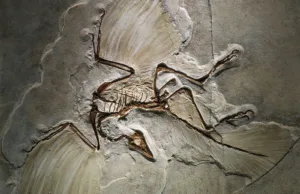
Fossil discoveries, ancient environments and evolutionary history. · View all →


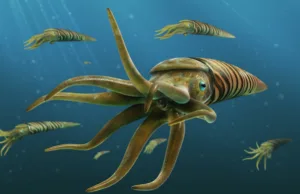
Paleontology: The Scientific Guide
Fossil preservation, geological time, evolution and research methods.
Fossil types · Fossilization · Fossil groups · Geological time · Index fossils · Methods · FAQ
What Is Paleontology?
Paleontologists study organisms and evidence of their activity preserved in geological materials. Fossils provide information about anatomy, biodiversity, behavior, evolutionary relationships and the environmental conditions under which organisms lived. The rock strata surrounding a fossil are essential for determining its age, depositional setting and preservation history.
| Discipline | Main subject |
|---|---|
| Paleontology | Ancient life, fossils and evolutionary history |
| Historical geology | Earth’s geological history and sequence of events |
| Archaeology | Past human societies through material remains |
| Neontology | Living organisms and modern biological systems |
Paleontology overlaps with all these fields but is distinguished by its emphasis on the fossil record. It includes abundant marine invertebrates and microorganisms as well as vertebrates, plants and microbial communities.
Fossil Types and Preservation

The main distinction is between body fossils and trace fossils. Body fossils represent preserved parts of organisms, whereas trace fossils record their interactions with the environment. Microscopic size and chemical preservation are additional ways to describe fossil evidence, rather than mutually exclusive biological categories.
| Category | Evidence | Examples |
|---|---|---|
| Body fossils | Preserved anatomical material or impressions | Teeth, shells, bones, leaves |
| Trace fossils (ichnofossils) | Evidence of biological activity | Footprints, burrows, coprolites |
| Microfossils | Remains studied with a microscope | Foraminifera, diatoms, pollen |
| Molecular fossils | Chemical evidence interpreted as biological in origin | Certain preserved lipid biomarkers |
See Fossils and Types of Fossils and the Fossilization Process for detailed classifications.
How Fossils Form
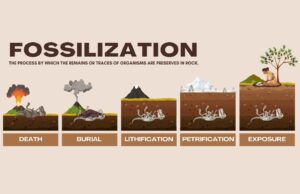
Fossilization is selective. Hard parts are generally more resistant to destruction than soft tissues, and burial can protect remains from scavenging and physical disturbance. Oxygen availability, water chemistry, microbial activity, sedimentation and subsequent burial conditions influence preservation. No single combination of conditions is required for all fossils.
| Preservation mechanism | Process | Representative material |
|---|---|---|
| Permineralization | Minerals precipitate in pore spaces | Petrified wood, bone |
| Replacement | Original material is replaced by another mineral | Silicified shells |
| Recrystallization | Original mineral structure changes | Recrystallized carbonate shells |
| Compression or carbonization | Burial produces flattened remains or carbon-rich residues | Leaves, some soft-bodied organisms |
| Molds and casts | An impression forms; later infilling can reproduce the shape | Shell molds and casts |
| Exceptional preservation | Resin, freezing, desiccation or rapid mineralization preserves unusual detail | Amber inclusions, frozen mammals |
Taphonomy and Preservation Bias
Taphonomy examines the processes that affect biological remains from death and burial to fossil recovery. Transport can disarticulate skeletons and sort remains by size. Chemical alteration can dissolve shells, and younger erosion can remove fossil-bearing strata. As a result, a fossil assemblage does not necessarily represent a complete ancient community.
Fossil-rich deposits known as Lagerstätten may preserve unusual concentrations of remains or exceptional anatomical detail. The Burgess Shale in Canada is a classic example of Cambrian soft-bodied preservation.
Major Fossil Groups
Trilobites
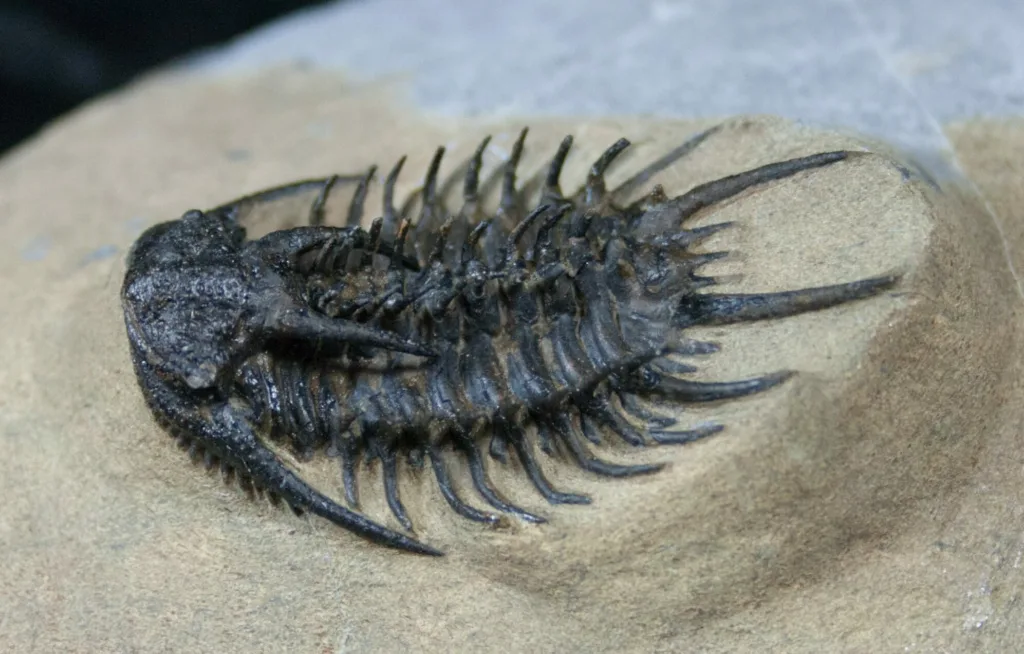
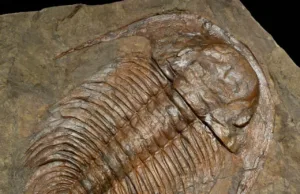
Trilobites are an extinct group of marine arthropods. Their hard exoskeletons are commonly preserved and their diversity makes many species useful in Paleozoic stratigraphy. Identifying them involves examining the cephalon, segmented thorax and pygidium. Trilobite fossils.
Ammonites
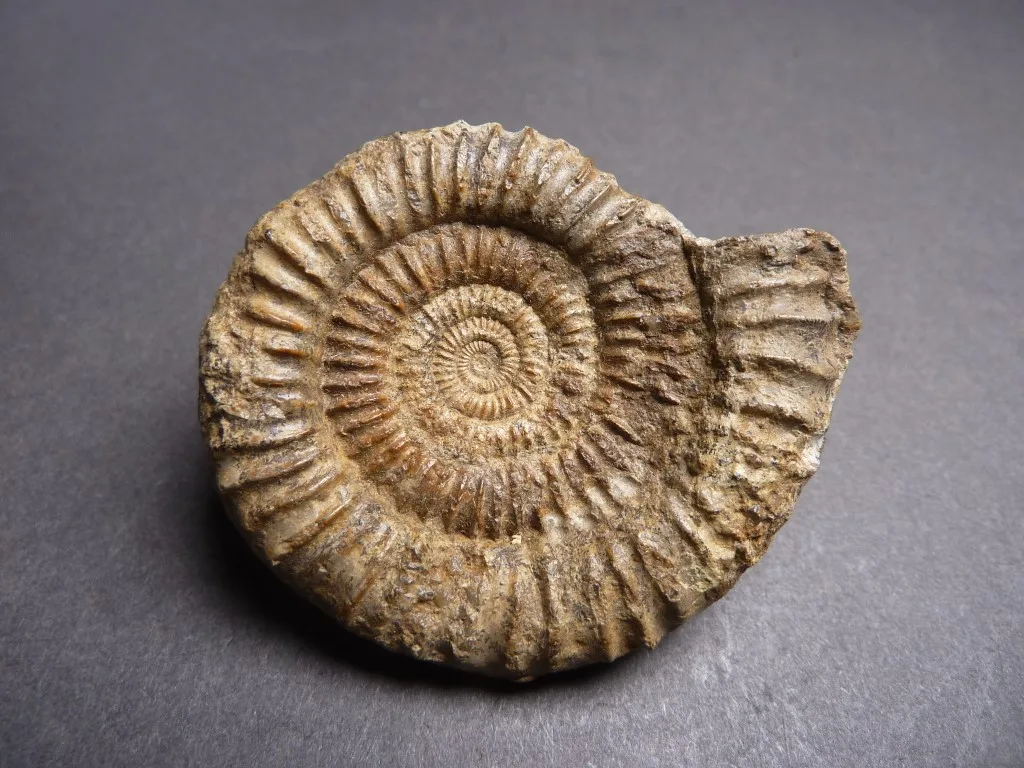
Ammonoids were marine cephalopods whose chambered shells often preserve diagnostic ornamentation and suture patterns. Ammonites are especially useful for subdividing Jurassic and Cretaceous marine strata because many species evolved rapidly and had broad geographical distributions. Ammonites.
Brachiopods, Corals and Other Marine Invertebrates
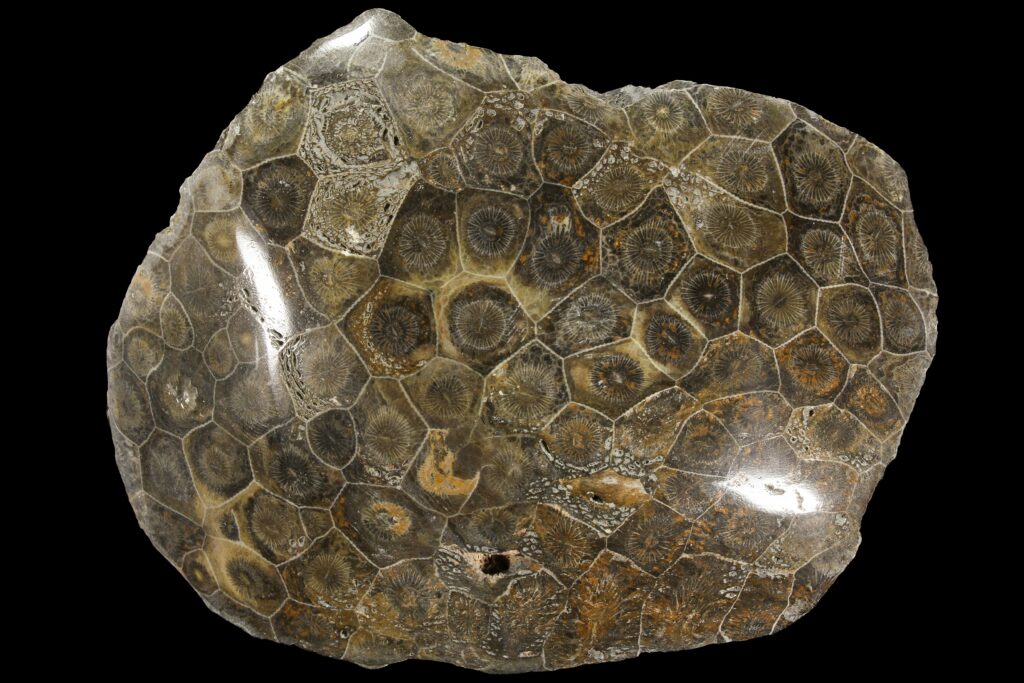
Brachiopods possess two valves and are distinct from bivalve mollusks. Corals preserve skeletal characteristics that help identify groups and, when interpreted with sedimentary evidence, ancient marine environments. Other common groups include gastropods, bivalves, crinoids and nautiloid cephalopods. Related guides: Brachiopods, Fossil Coral and Orthoceras Fossils.
Microfossils
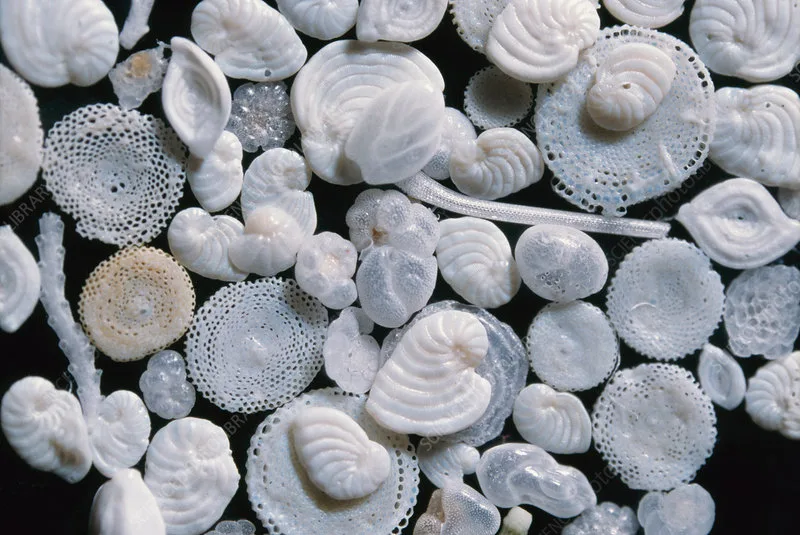
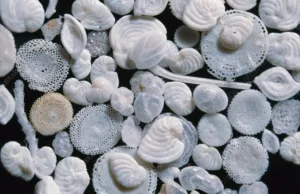
Foraminifera are single-celled organisms, many of which build shells or tests. Their abundance, species composition and test chemistry provide evidence for stratigraphic correlation and paleoenvironmental reconstruction. Diatoms, radiolarians, pollen and spores are other important microfossils. Foraminifera.
Vertebrates and Trace Fossils

Vertebrate fossils include fish, amphibians, reptiles, birds and mammals. Bones and teeth help reconstruct anatomy, but tracks can provide complementary evidence about locomotion, substrate conditions and behavior. Birds are living dinosaurs; the end-Cretaceous extinction eliminated non-avian dinosaurs, not all dinosaurs. See Dinosaur Ridge.
Plants and Microbial Structures

Fossil leaves, wood, pollen, spores and seeds record ancient vegetation. Stromatolites can preserve evidence of the activities of microbial communities and are particularly important in studies of Precambrian environments. See Stromatolites.
Geological Time and the History of Life
Geological time is divided into eons, eras, periods and epochs. Major boundaries are defined through internationally agreed stratigraphic standards. Numerical ages are refined as dating improves. The following table provides approximate ages, rounded for an introductory overview.
| Time interval | Approximate age | Selected biological developments |
|---|---|---|
| Archean | 4,000–2,500 Ma | Early microbial life; ancient stromatolitic evidence |
| Proterozoic | 2,500–539 Ma | Atmospheric oxygenation, diversification of eukaryotes, Ediacaran organisms |
| Paleozoic | 539–252 Ma | Marine animal diversification, land plants, terrestrial vertebrates |
| Mesozoic | 252–66 Ma | Dinosaurs, early mammals, birds and flowering plants |
| Cenozoic | 66 Ma–present | Diversification of mammals and birds; modern ecosystems and human evolution |
Ma denotes millions of years before present. The Cambrian diversification was a geologically prolonged expansion in animal diversity and ecological complexity, not the instantaneous origin of all animal life. For formal chronostratigraphic subdivisions consult the International Chronostratigraphic Chart and the GeologyScience Geologic Time Scale.
Index Fossils and Biostratigraphy
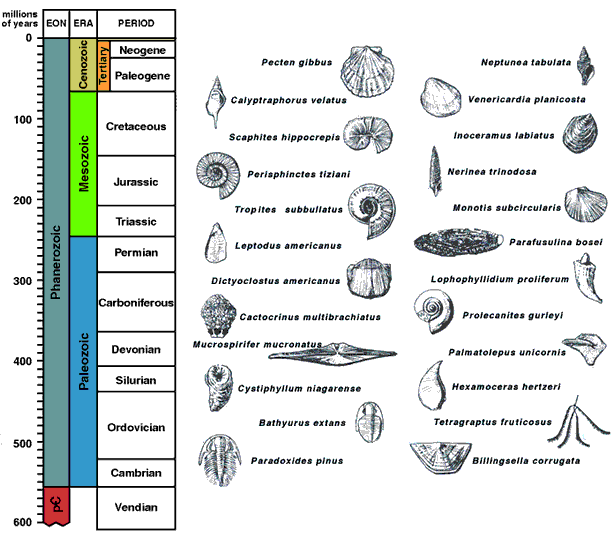
Biostratigraphy subdivides and correlates strata based on fossil occurrences. A useful index fossil generally has a restricted stratigraphic range, a broad geographical distribution within suitable environments, recognizable morphology and relatively common occurrence.
Ammonites, graptolites, conodonts, trilobites and foraminifera can be useful in particular intervals. A fossil occurrence alone does not yield a precise numerical age: reworking, ecological distribution and incomplete sampling must be considered. Radiometric ages from suitable materials such as volcanic ash beds can calibrate biostratigraphic correlations.
Detailed guides: Index Fossils and Full List of Index Fossils.
Evolution and Mass Extinctions
The fossil record documents evolutionary changes, the appearance and disappearance of lineages, shifts in species diversity and ecological recovery after extinction. Transitional fossils can preserve combinations of ancestral and derived traits, but are not necessarily direct ancestors of later species.
| Major extinction interval | Approximate age | Associated factors |
|---|---|---|
| End-Ordovician | 444 Ma | Glaciation, sea-level changes and oceanic environmental changes |
| Late Devonian | 372–359 Ma | Multiple extinction pulses; ocean oxygen depletion among proposed mechanisms |
| End-Permian | 252 Ma | Large-scale volcanism, climatic warming and ocean chemistry disruption |
| End-Triassic | 201 Ma | Large igneous province volcanism and environmental changes |
| End-Cretaceous | 66 Ma | Chicxulub asteroid impact and associated global environmental disruption |
Extinction severity and timing differ among marine and terrestrial groups, and proposed causal mechanisms are not equally certain for all events. Read Mass Extinctions in Earth’s History for more detail.
Reconstructing Ancient Environments
Paleoecology studies past communities and their interactions with the environment. Fossil assemblages are interpreted alongside sedimentary structures, grain size, rock composition and geochemical data. For instance, a coral-rich carbonate deposit can indicate marine conditions, but water depth, temperature and energy require additional evidence.
| Evidence | Possible interpretation | Important limitation |
|---|---|---|
| Fossil pollen and spores | Vegetation and climate | Transport and differential preservation |
| Foraminiferal assemblages | Marine depth, ecology or water masses | Species-specific ecological preferences |
| Stable isotopes in shells | Temperature or water composition | Diagenetic alteration and multiple controls |
| Tracks and burrows | Substrate and organism behavior | Trace maker may be uncertain |
| Fossil assemblages in sedimentary facies | Depositional environment | Transport, mixing and reworking |
How Paleontologists Study Fossils
Fieldwork and Excavation
Field investigation begins with geological mapping and the identification of fossil-bearing horizons. Specimens are recorded with geographic position, stratigraphic level, orientation, host rock, field photographs and collection information. Fragile fossils may require protective jackets or controlled extraction.
Fossil collecting is subject to local laws, landowner permissions and protected-site regulations. Removing a fossil without documenting its geological context can permanently reduce its scientific value.
Laboratory Analysis
- Mechanical and chemical preparation: carefully removing surrounding rock while preserving diagnostic structures.
- Microscopy and CT imaging: examining small structures and internal anatomy without unnecessary destructive sampling.
- Comparative anatomy and phylogenetics: testing relationships using anatomical characters and evolutionary models.
- Geochemistry and isotope analysis: evaluating environmental conditions, diet and preservation.
- Stratigraphy and radiometric dating: constraining the geological age of specimens.
- Photogrammetry and 3D reconstruction: recording shapes, surfaces and spatial relationships.
Branches of Paleontology
| Branch | Focus |
|---|---|
| Vertebrate paleontology | Fossil vertebrates and their evolution |
| Invertebrate paleontology | Fossils of animals without backbones |
| Paleobotany | Fossil plants |
| Micropaleontology | Microscopic fossil organisms and remains |
| Palynology | Pollen, spores and other organic-walled microfossils |
| Ichnology | Tracks, burrows and other traces |
| Taphonomy | Processes governing preservation and fossil assemblages |
| Paleoecology | Ancient ecological communities and environments |
Why Paleontology Is Important
Paleontology helps establish geological ages, correlate rock units, reconstruct environmental changes and test hypotheses about evolution. Micropaleontology is also applied in sedimentary basin studies, while fossil assemblages and isotope records help assess past climate changes. Fossil biodiversity patterns provide a long-term context for evaluating ecosystem resilience and extinction.
Related Paleontology Articles
- Top 10 Most Important Fossil Discoveries of All Time
- The Burgess Shale, Canada
- The Ice Age
- 10 Stunning Fossils That Provide Insights into Earth’s History
- Paradoxides Pinus
- Archaeocyathids
- Paleontology: Fossils and Ancient Ecosystems
Frequently Asked Questions
What does a paleontologist study?
Fossils, ancient organisms, their evolutionary relationships, geological setting and past environments.
Are all fossils turned into stone?
No. Some preserve original mineralized material or organic residues, while others are molds, casts, trace fossils or remains preserved in ice or resin.
Which rocks contain most fossils?
Sedimentary rocks generally preserve fossils more frequently than igneous or metamorphic rocks. Limestone, shale and sandstone can contain fossil remains or traces.
How old are fossils?
Fossils range from geologically recent remains to evidence of ancient microbial life billions of years old. There is no single universal minimum age used in every scientific and legal context.
How do scientists date fossils?
Scientists use stratigraphic relationships, biostratigraphy and numerical dating of appropriate fossil material or associated strata. Radiocarbon dating is limited to relatively young suitable organic materials.
What is the difference between a fossil and a pseudofossil?
A fossil records past life or biological activity. A pseudofossil is a nonbiological structure that resembles a fossil, such as certain mineral dendrites or concretions.
Are paleontology and archaeology the same?
No. Paleontology studies ancient life through geological evidence, while archaeology primarily studies past human societies and their material culture. The fields overlap in some studies of human origins.