

















A small Jurassic reptile preserved in Wyoming sandstone has been identified as a species previously unknown to science. Named Meilynodraco amonamarthi, the approximately 156-million-year-old animal was described in Royal Society Open Science on November 18, 2026. The Paul Scherrer Institute announced the findings the following day.
A fossil concealed in sandstone
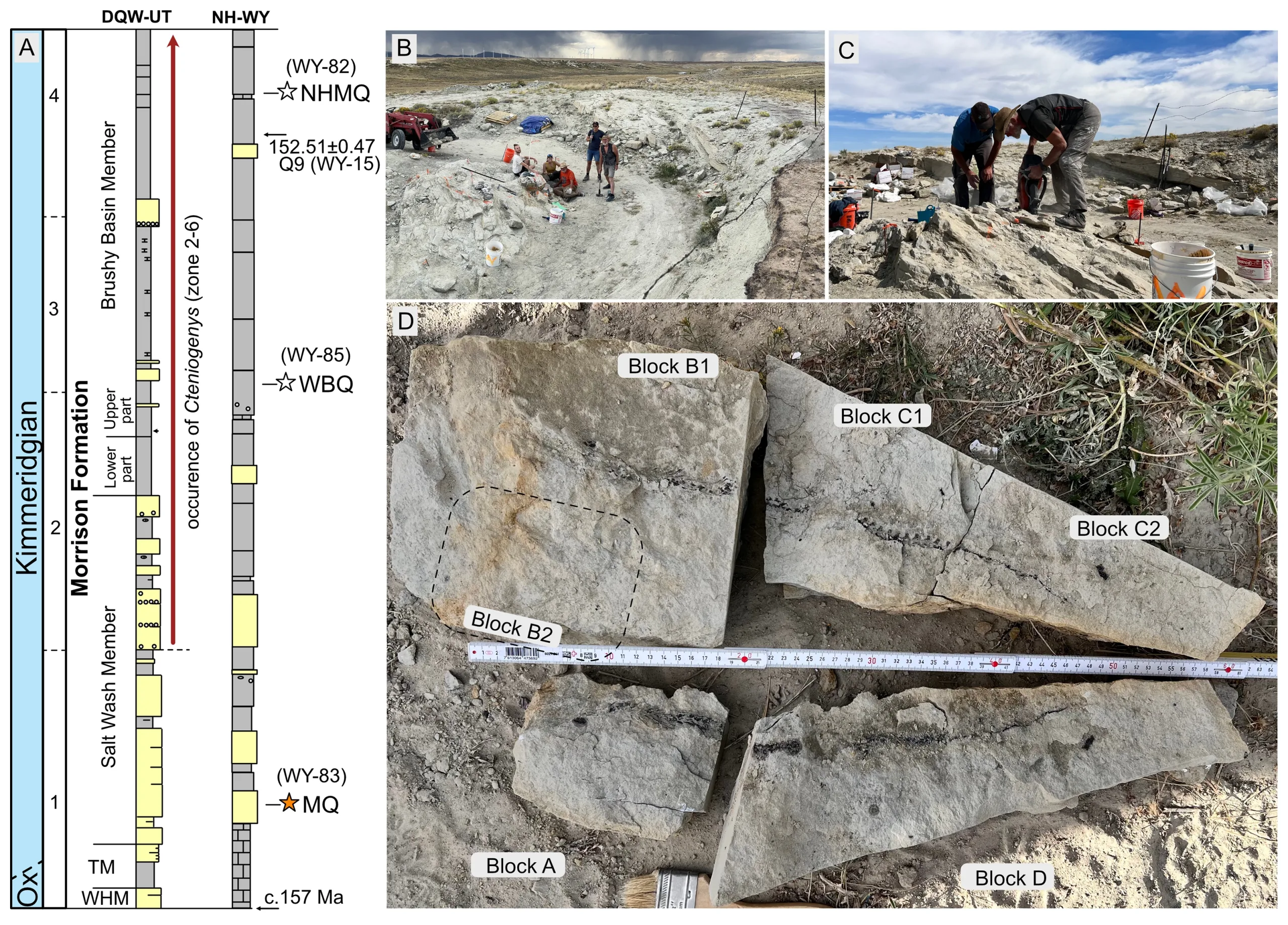
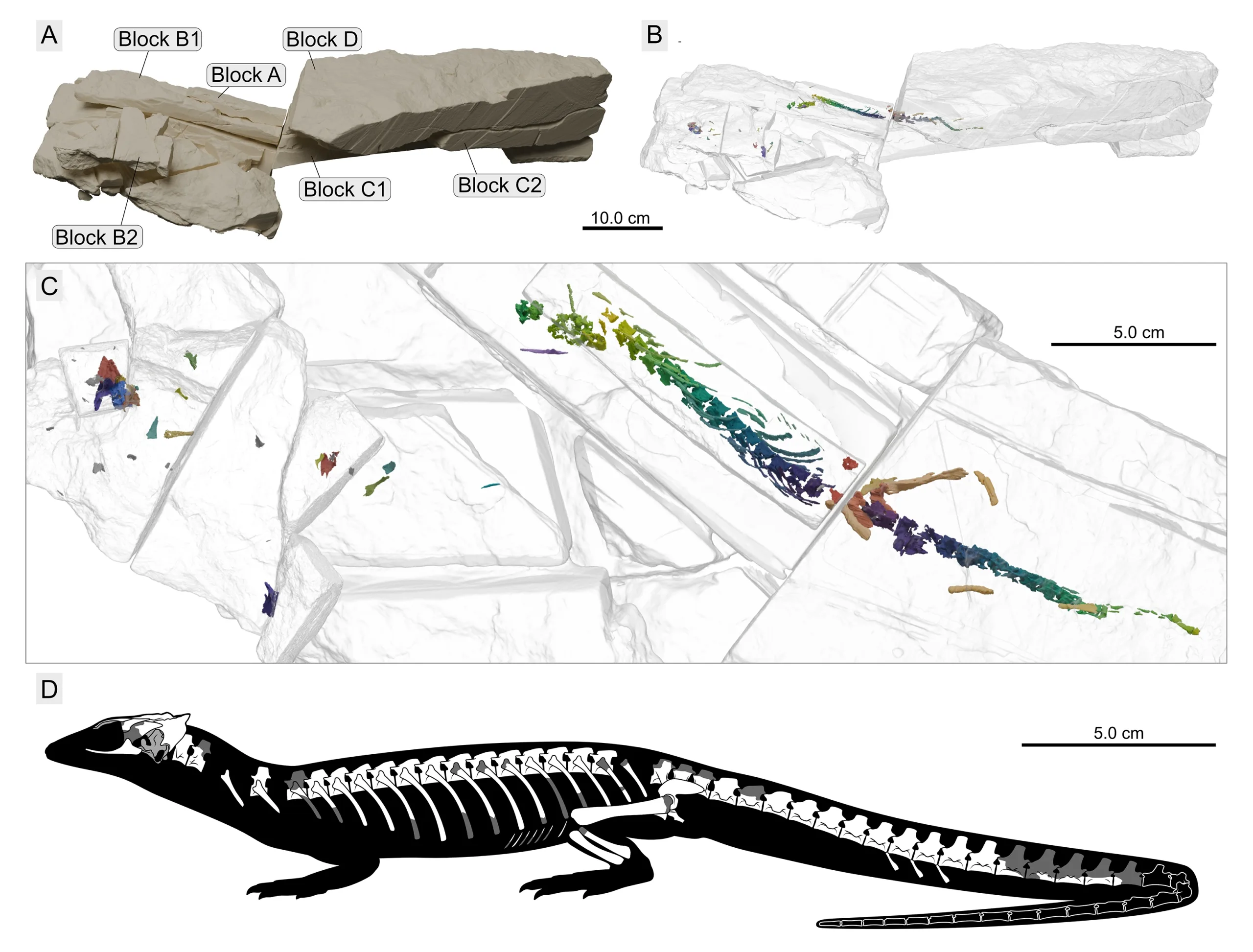
The specimen was discovered at Meilyn Quarry in 2022. Much of its skeleton was inaccessible beneath the rock surface. Researchers combined neutron and X-ray computed tomography to reconstruct skeletal elements, including the remarkably small skull and its braincase.
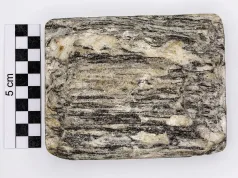
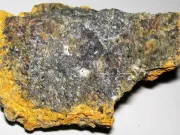
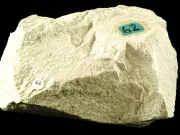
Sandstone develops when sand accumulates, becomes buried and undergoes compaction and cementation. Fossil preservation depends on conditions during burial and subsequent chemical alteration. A specimen may contain skeletal material, mineral replacements or impressions of original tissues. Its appearance at the surface can reveal only a small part of the preserved anatomy.
Why two imaging methods were needed
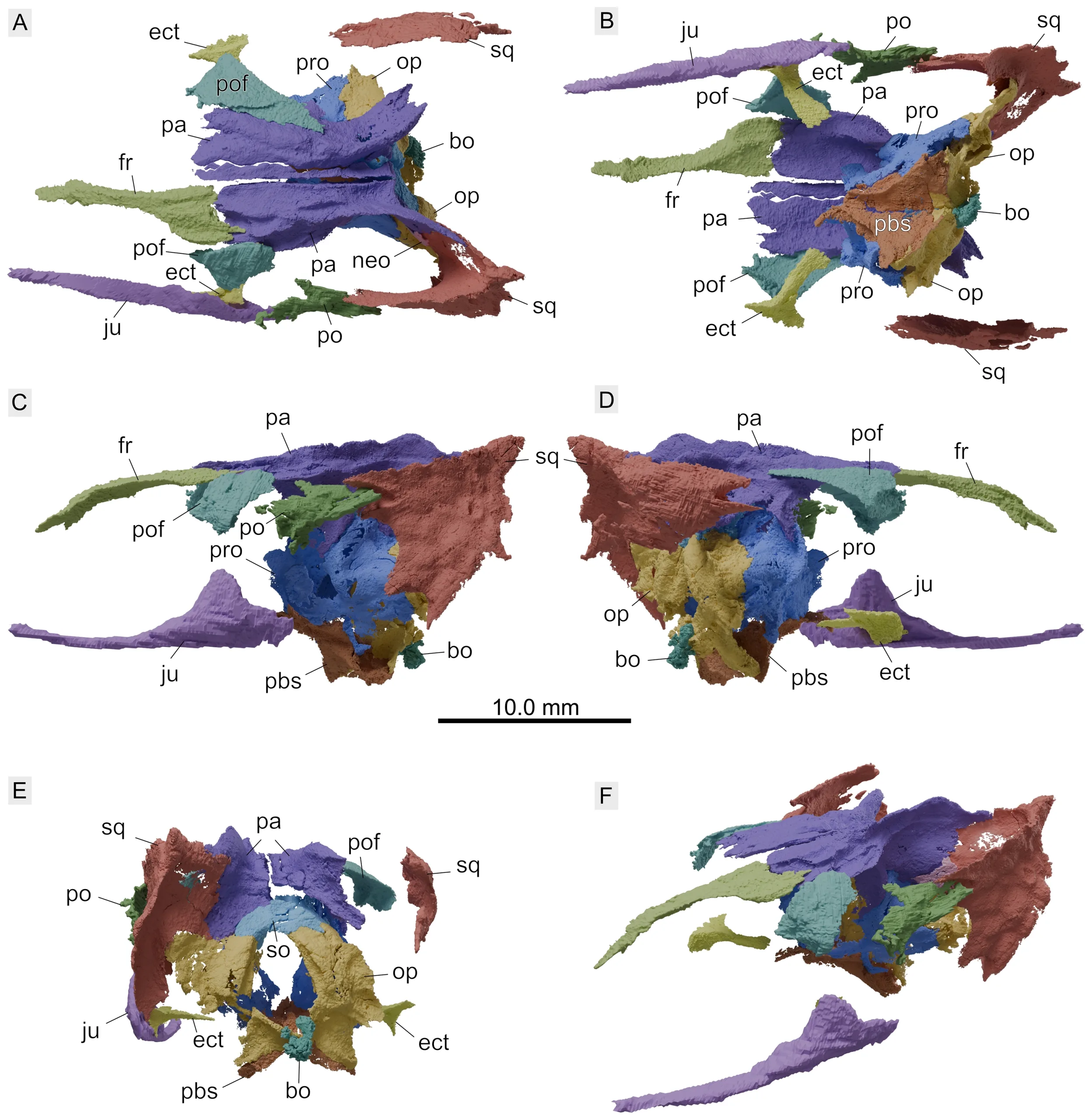
Computed tomography collects multiple projections of an object and reconstructs virtual slices through its interior. X-ray attenuation depends on material properties including density and elemental composition. Neutrons interact differently with atomic nuclei and can provide useful contrast for hydrogen-bearing components.
Combining these techniques can help researchers identify boundaries that are difficult to recognize with either technique alone. Digital segmentation then allows individual structures to be isolated and reconstructed in three dimensions. This approach reduces the need to remove surrounding rock mechanically, particularly when fragile bones are deeply embedded.
New evidence of reptile evolution
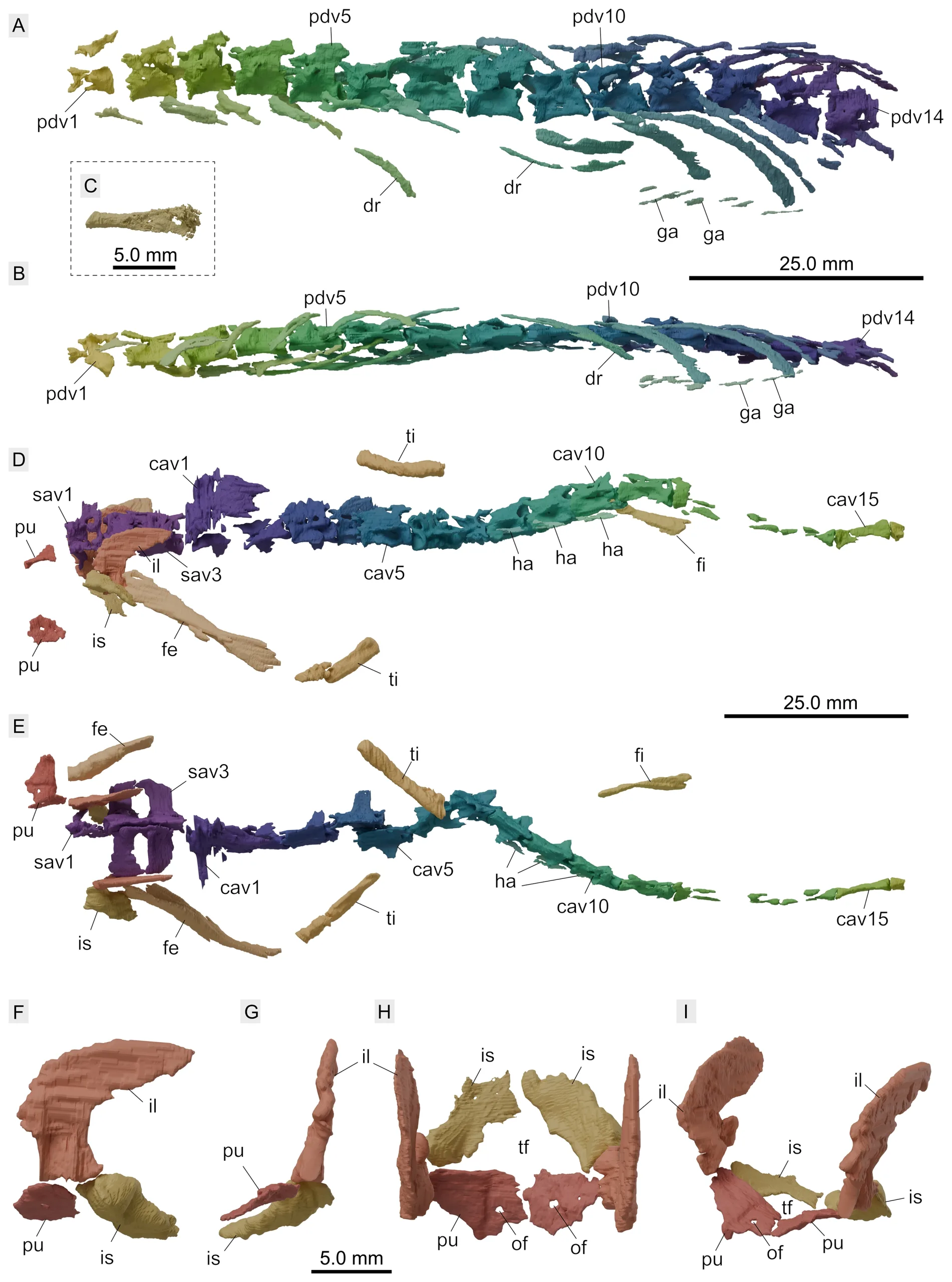
The animal belongs to Choristodera, an extinct reptile lineage. According to the research announcement, anatomical details of its inner ear provide additional evidence relevant to the group’s evolutionary relationships. The specimen represents the oldest known North American occurrence of the lineage and is unusually complete for an early-branching member.
Evolutionary relationships are evaluated using combinations of anatomical characters across species. A well-preserved skull can therefore be especially informative, although individual similarities do not automatically resolve all competing evolutionary hypotheses.
What this means for paleontology
The discovery illustrates the scientific potential of fossils that cannot be identified confidently from their exposed surfaces. Non-destructive imaging can preserve physical specimens while revealing internal structures for comparative analysis. It also allows researchers to revisit digital reconstructions as new questions arise.
Small vertebrate fossils can provide important evidence of ancient ecosystems alongside the more conspicuous remains of large animals. Discoveries like this broaden the known diversity of Jurassic reptiles and highlight the importance of carefully examining sedimentary deposits.
Explore further discoveries in Geology News.
The geological context of the Morrison Formation
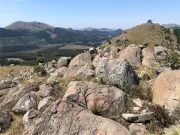
The find comes from the lower Morrison Formation, a succession of Jurassic sedimentary rocks in western North America. River channels and floodplains contributed to the accumulation of sediments in this basin. Sandstone beds can preserve transported skeletal material, although transport and reworking may separate individual bones before burial.
The relationship between fossils and their enclosing sediment is therefore important when reconstructing ancient environments. A disarticulated skeleton does not by itself identify the cause of death. Researchers must distinguish observations of the preserved specimen from hypotheses about the events that preceded burial.
Sources
Scheyer et al., Royal Society Open Science, November 18, 2026; Paul Scherrer Institute, November 19, 2026.