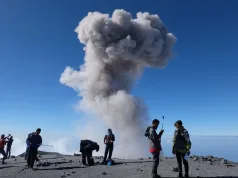





















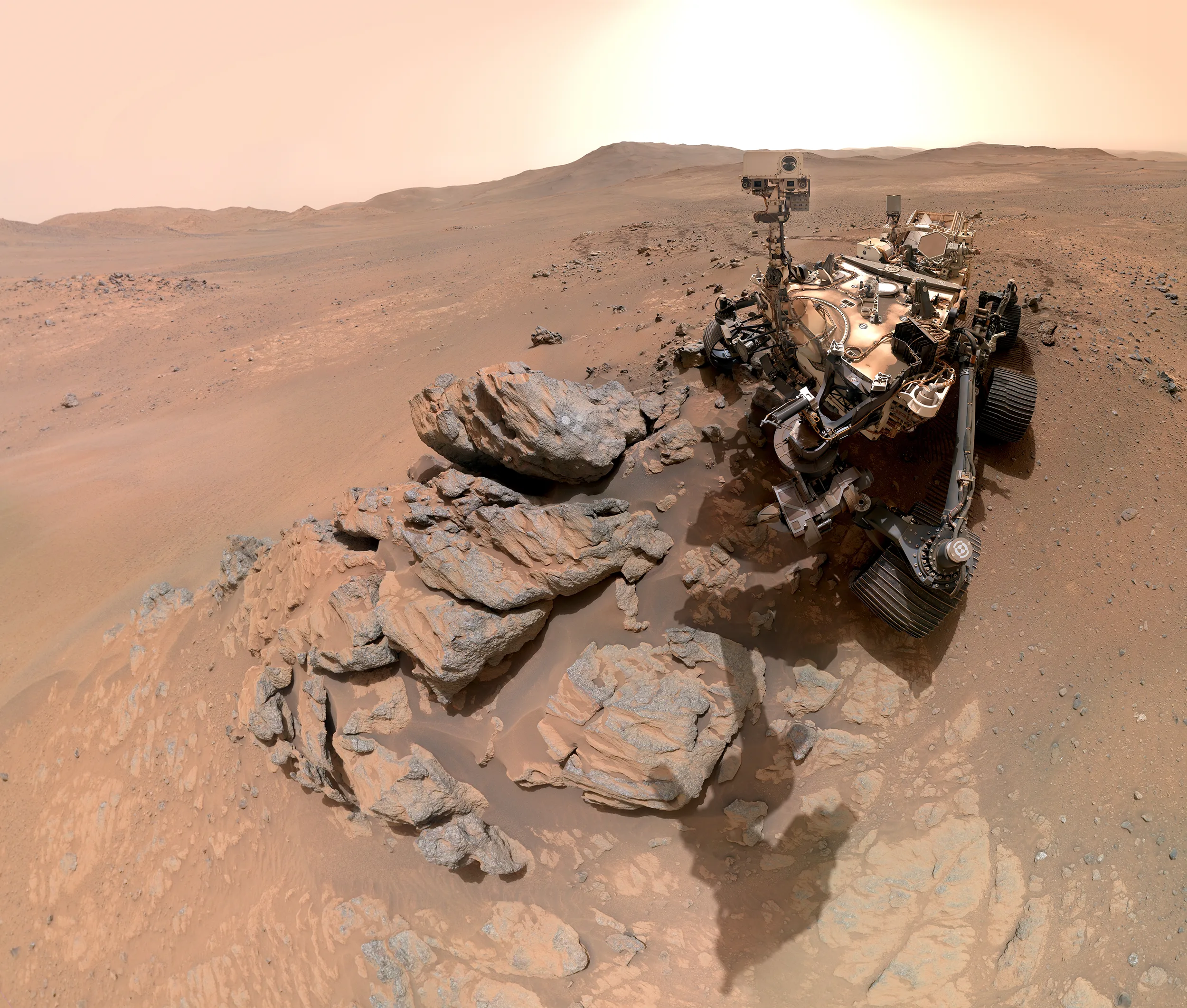
Image note: the featured photograph shows Perseverance at Lac de Charmes in March 2026, not the newly studied Idubi rock textures. The November 16 NASA mission update includes the October 29 close-up images.
Two NASA rovers are investigating contrasting geological materials on Mars. Curiosity has examined flattened crystal-like features at Nazca, while Perseverance has identified hydrated silica in pale rocks at Idubi beyond Jezero crater. The observations offer different ways to investigate the planet’s environmental history.
Bright rocks beyond Jezero crater
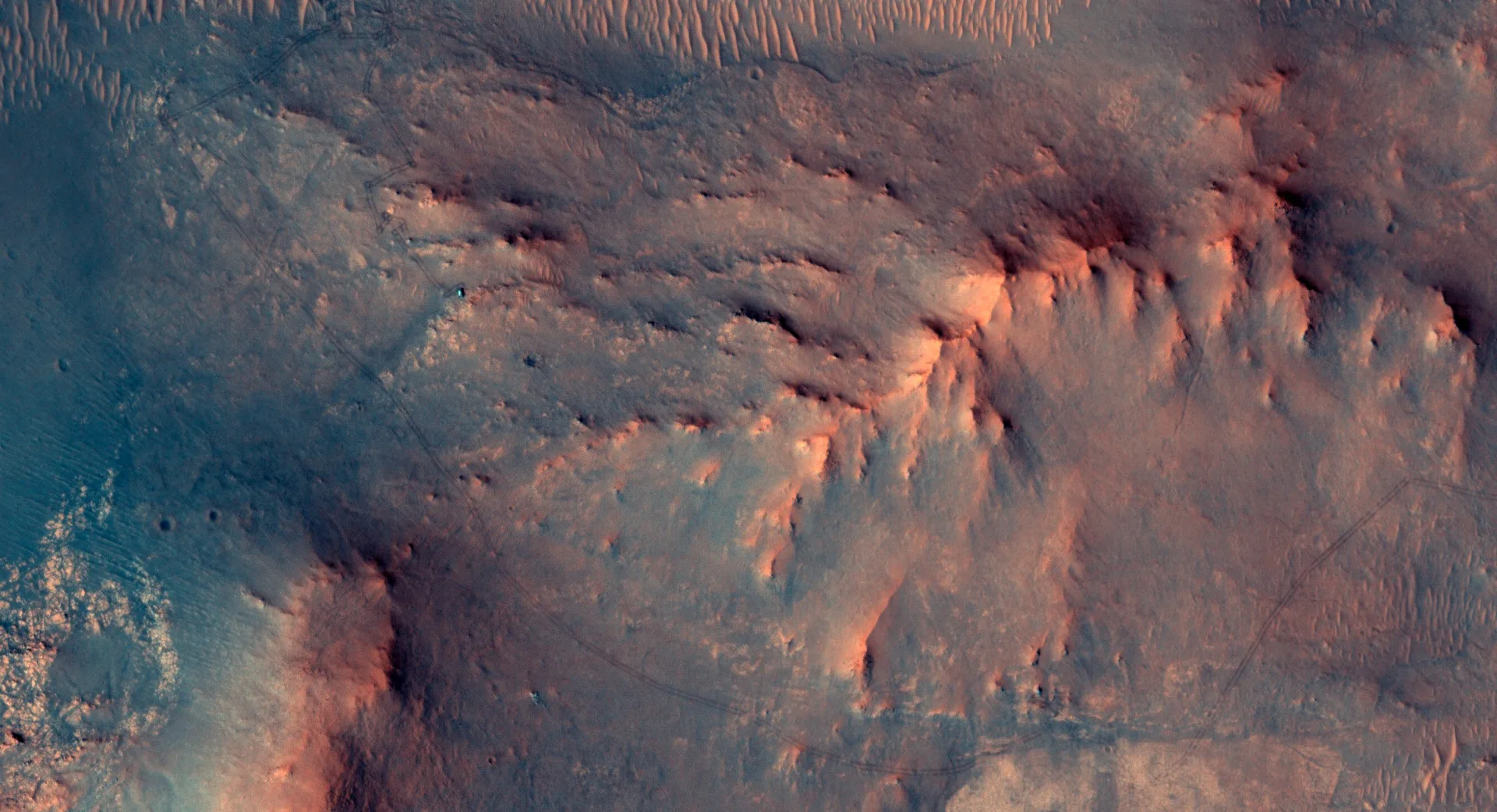
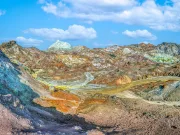
In a November 16, 2026 mission update, NASA reported that Perseverance’s SuperCam measurements identified hydrated silica in the unusually pale Idubi rocks. Images acquired on October 29 reveal fragments that contrast with the surrounding terrain. The team is conducting a closer investigation to constrain their origin.
What hydrated silica can reveal
Silica is a major constituent of many planetary materials. Hydrated silica contains water associated with its structure or internal surfaces. On Earth, silica may be mobilized by fluids and subsequently precipitate as conditions change. Temperature, acidity and dissolved chemical concentrations influence this process.
Several geological settings can generate silica-rich deposits, so a mineral identification alone does not establish a unique environmental interpretation. Investigators need geological context, relationships with adjacent rocks, textures and chemical measurements to distinguish potential origins.
Curiosity’s unusual crystal textures
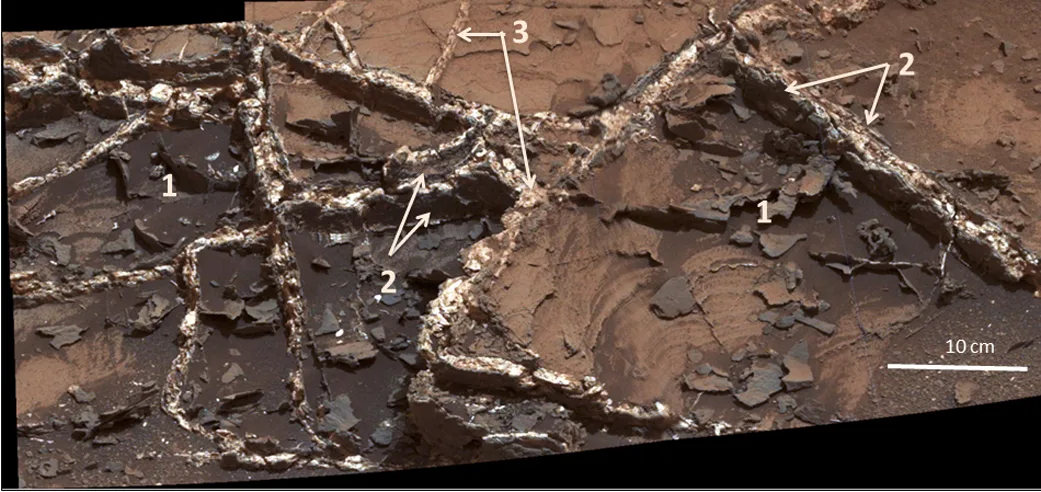
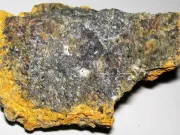
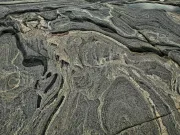
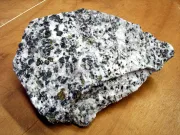
Separately, Curiosity examined thin, flattened features in bedrock at Nazca. Images taken on November 7 were reported in coverage published November 24. Their shape is striking, but external morphology alone cannot establish a mineral species or crystallization mechanism.
Crystal habit can be influenced by growth conditions, available space and chemical composition. Later alteration may replace an original mineral while retaining its shape. Such possibilities illustrate why microscopy and chemical analysis must be interpreted together rather than independently.
Searching for ancient habitable environments
Silica deposits are important in terrestrial studies because mineral precipitation can encapsulate microscopic structures. This makes certain silica-rich rocks valuable targets when investigating preservation potential on Mars. Nevertheless, hydrated silica is not evidence that organisms once inhabited the planet. Abiotic processes can produce these materials.
The two rover investigations are geographically separate and should not be interpreted as evidence of a single geological event. Their value lies in the complementary observations they provide. Further measurements will help researchers evaluate whether water-mediated alteration, deposition or other processes best account for individual features.
Follow our Geology News section for planetary discoveries.
Distinguishing primary minerals from later alteration
Geologists compare mineral distribution across grain boundaries, fractures and sedimentary layers to determine the relative timing of mineral growth. A mineral that fills a fracture must generally postdate the opening of that fracture. A mineral that replaces an earlier grain may preserve its external outline. These principles help mission scientists distinguish original rock formation from later chemical modification.
Remote measurements should also be assessed at their observational scale: a chemical signal from a small target need not represent the entire outcrop. Additional observations at nearby targets can test whether a feature is widespread or localized.
Sources
NASA Perseverance mission update, November 16, 2026; Space.com, November 24, 2026.