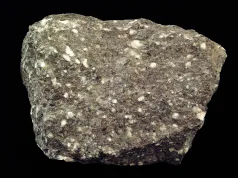





















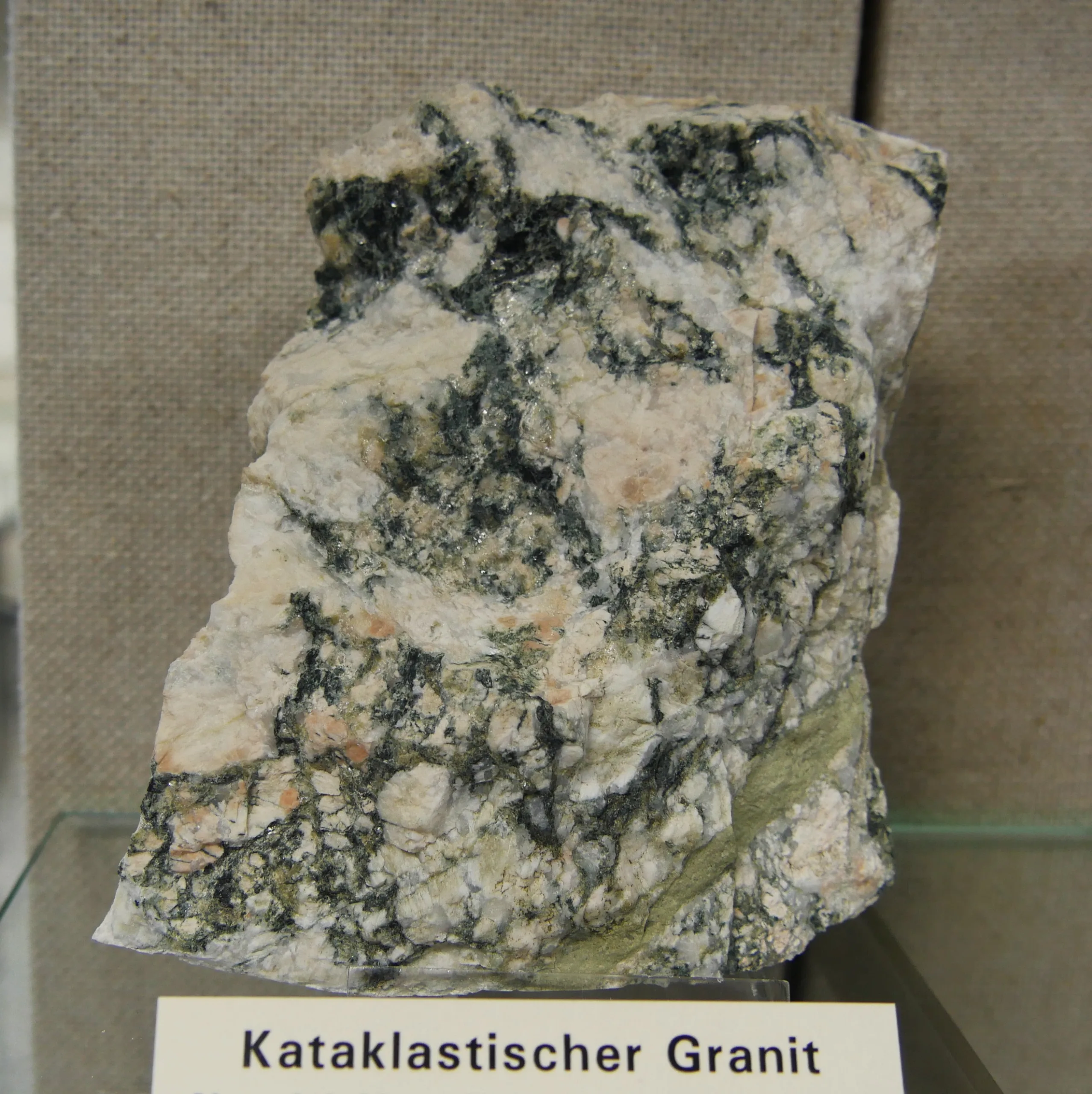
Cataclasite is a cohesive fault rock formed mainly by brittle fragmentation, crushing and frictional sliding of pre-existing rock during fault movement. It consists of angular mineral and rock fragments embedded in a finer-grained crushed matrix. The proportion of matrix, the nature of the clasts and the degree of cohesion distinguish cataclasite from fault breccia and fault gouge.
What Is Cataclasite?
Cataclasite records mechanical breakdown of a rock within a fault zone. Unlike sedimentary conglomerate or breccia, its fragments were produced largely in place by tectonic deformation rather than transported and deposited by water or gravity. A cataclasite may preserve recognizable pieces of its parent rock while showing progressively finer material between them.
The term is best applied to a cohesive, matrix-bearing fault rock whose fabric is dominated by cataclasis. Natural fault zones commonly contain several rock types together, and boundaries are not always sharp.
Formation: Brittle Deformation and Cataclasis
Cataclasite develops where differential stress exceeds the strength of rock, producing fractures and displacement. Repeated slip crushes grains, breaks larger clasts and redistributes fine fragments along shear surfaces. This process is called cataclasis. It may be accompanied by frictional sliding, grain rotation, dilation, compaction, fluid circulation and mineral cementation.
Although cataclasite is characteristic of brittle faulting, the depth of formation is not fixed: temperature, fluid pressure, strain rate, mineralogy and local stress conditions control whether a rock breaks or flows. Some fault zones record alternating brittle and crystal-plastic deformation.
Appearance and Diagnostic Textures
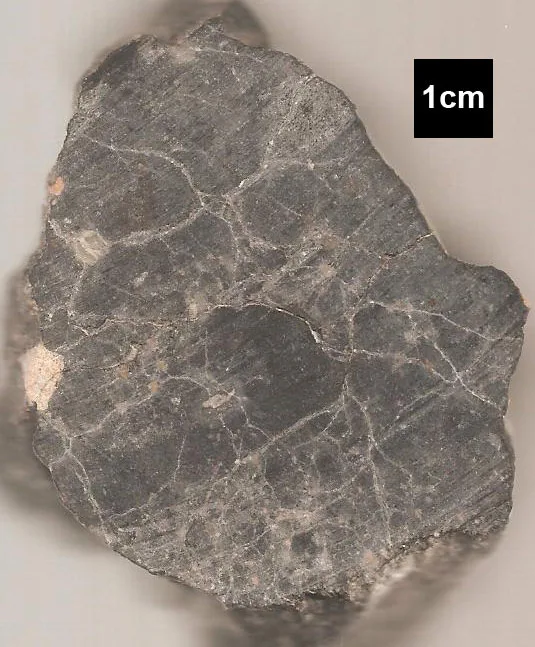
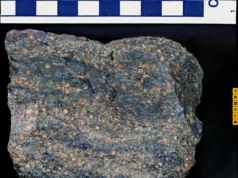
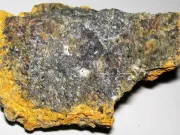
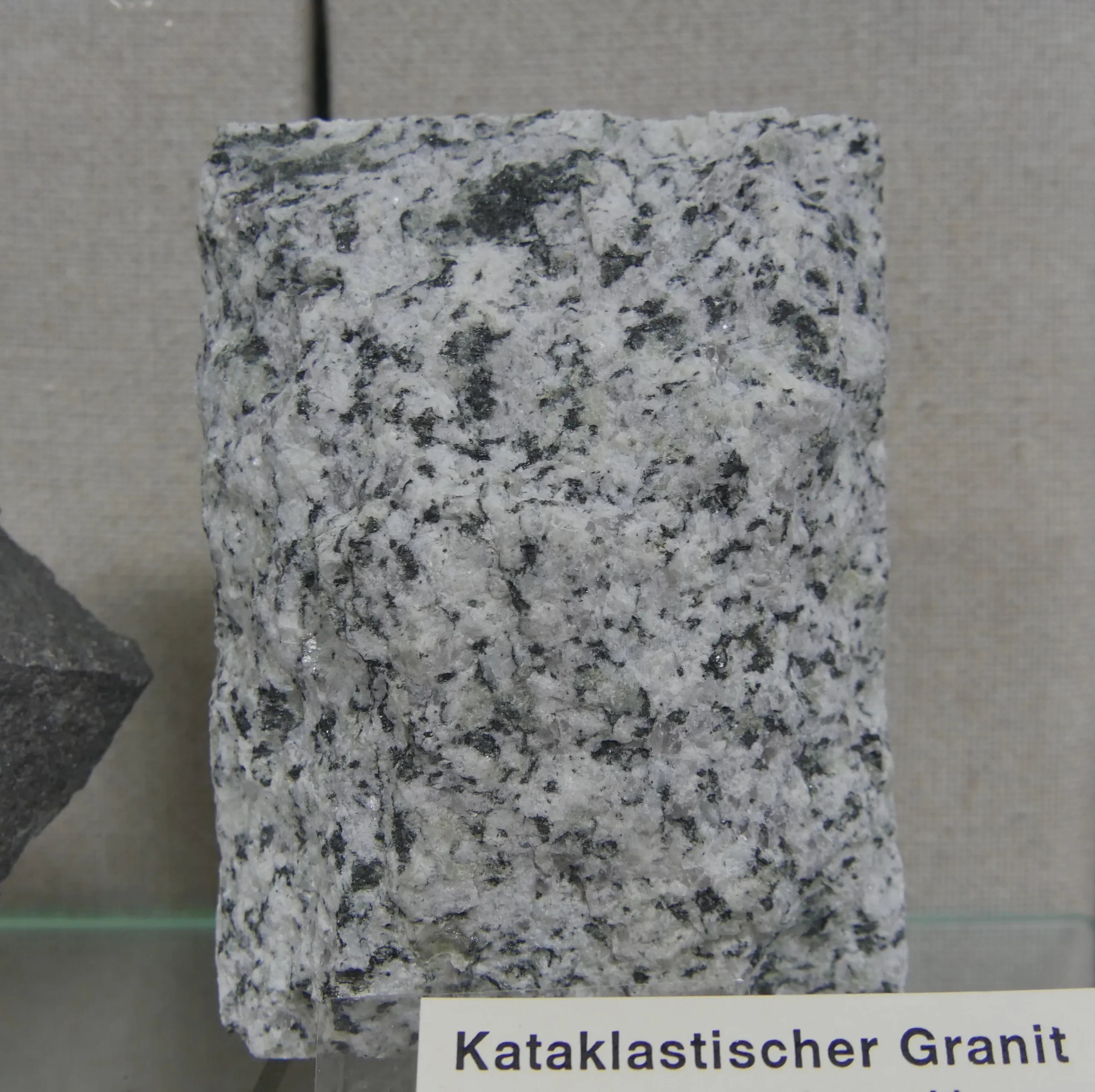
Hand specimens are commonly gray, dark gray, greenish or brown, depending on their protolith and alteration. Diagnostic features include angular clasts, a fine-grained matrix, crushed mineral grains, narrow shear bands and locally a weakly aligned fabric. Clast size can vary over millimeters to centimeters within a single exposure.
A fresh cut or thin section is often more informative than a weathered surface. Fine-grained dark material alone does not prove cataclasis; altered volcanic rocks, sedimentary breccias and pseudotachylyte can look similar.
Mineral Composition and Parent Rocks
Cataclasite has no single mineral formula. Its mineral assemblage usually reflects the source rock: quartz and feldspar in granitic cataclasite, calcite or dolomite in carbonate-derived examples, and mafic silicates in cataclasites derived from basalt or gabbro. Secondary chlorite, epidote, clay minerals, calcite or silica cement may record fluid-assisted alteration after fragmentation.
Because parent rocks differ widely, composition alone cannot identify a cataclasite. The fault-related microstructure and field setting are essential.
Cataclasite, Fault Breccia and Fault Gouge
| Fault rock | Typical distinguishing feature | Field caution |
|---|---|---|
| Cataclasite | Cohesive, crushed rock with significant fine-grained matrix | Matrix proportion and fabric vary |
| Fault breccia | Conspicuous angular rock fragments, commonly with less fine matrix | May be cemented and cohesive |
| Fault gouge | Very fine, commonly clay-rich and often incohesive material | Can become cemented after faulting |
These are descriptive distinctions, not universal hard boundaries. A single fault core may grade from coarse breccia into fine cataclasite and gouge over short distances.
Cataclasite vs Mylonite
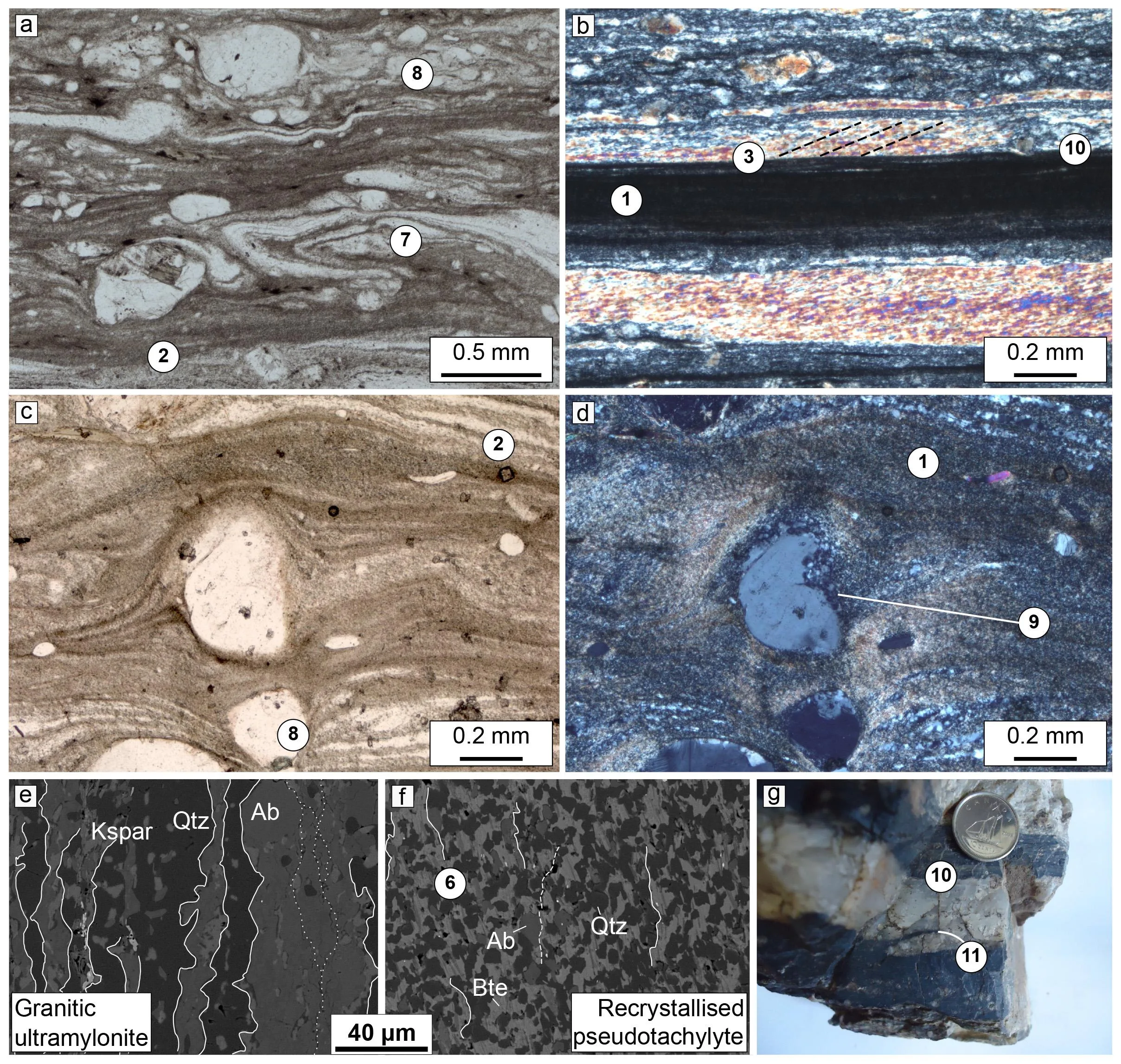
Mylonite is defined primarily by crystal-plastic deformation and dynamic recrystallization, commonly forming a foliated, grain-size-reduced rock. Cataclasite is defined primarily by brittle grain fracture and frictional movement. Both can be fine-grained and foliated, and mixed brittle–ductile fabrics occur. A confident interpretation may require thin-section evidence, especially where a mylonite has been overprinted by later brittle faulting.
Cataclasite vs Pseudotachylyte
Pseudotachylyte is typically associated with rapid fault slip and may preserve quenched frictional melt as dark veins or injection structures. Cataclasite forms by mechanical fragmentation without requiring melting. Dark color alone is insufficient to distinguish the two: look for melt-related microstructures and cross-cutting relationships.
Field Identification: A Practical Checklist
- Locate the suspected fault zone and map contacts with the surrounding intact rock.
- Check whether fragments are angular and whether their lithology matches adjacent wall rock.
- Inspect fresh surfaces for crushed grains, fine matrix and shear-related fabrics.
- Look for cross-cutting fractures, subsidiary slip surfaces and progressive grain-size reduction toward the fault core.
- Compare with sedimentary breccia, hydrothermal breccia, mylonite and pseudotachylyte.
- Collect oriented samples where permitted; thin-section examination can establish whether fracture or crystal-plastic processes dominate.
Safety: Fault exposures can be unstable. Avoid standing below loose fractured faces or entering unsupported excavations.
Cataclasite in Thin Section
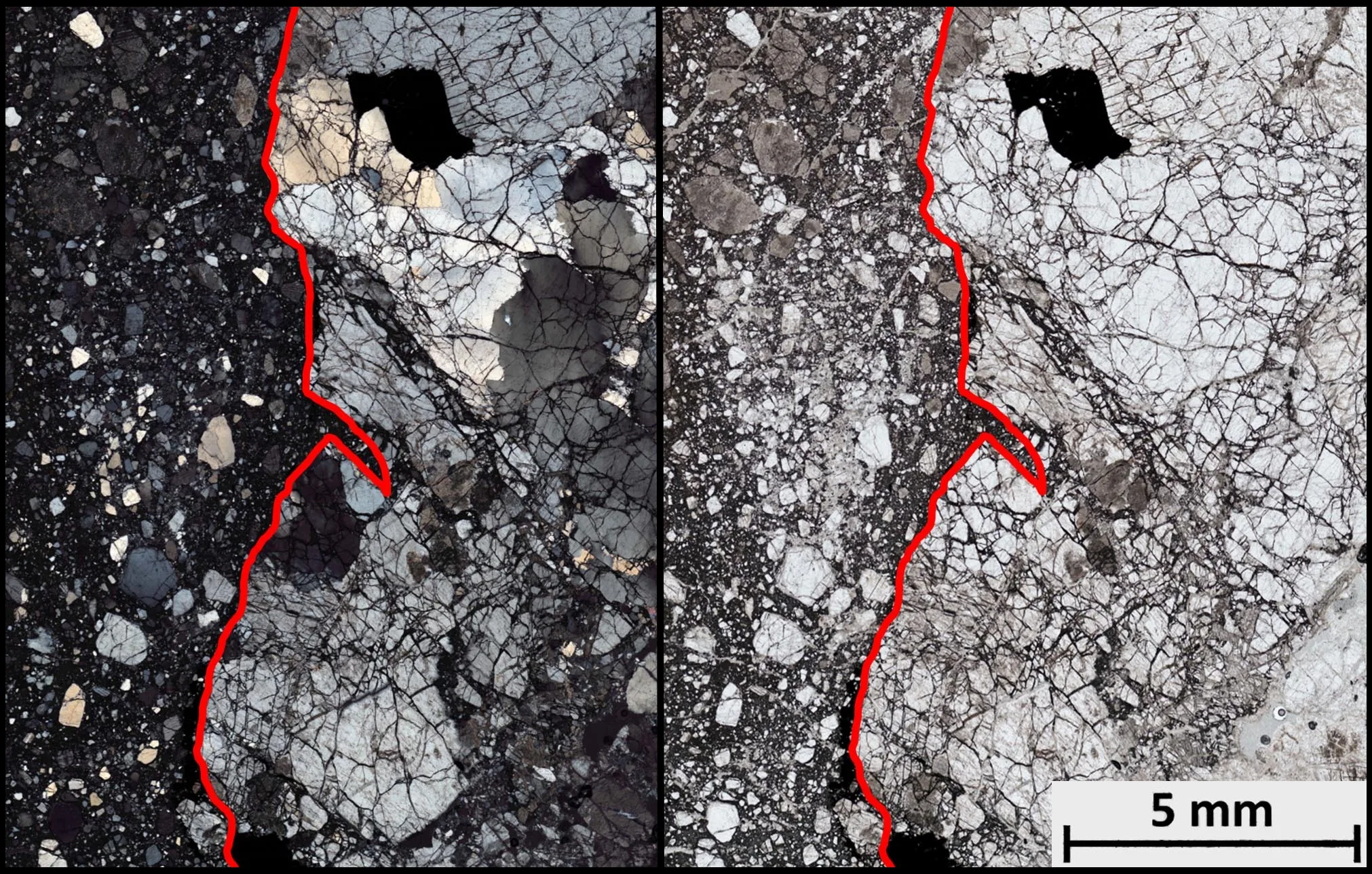
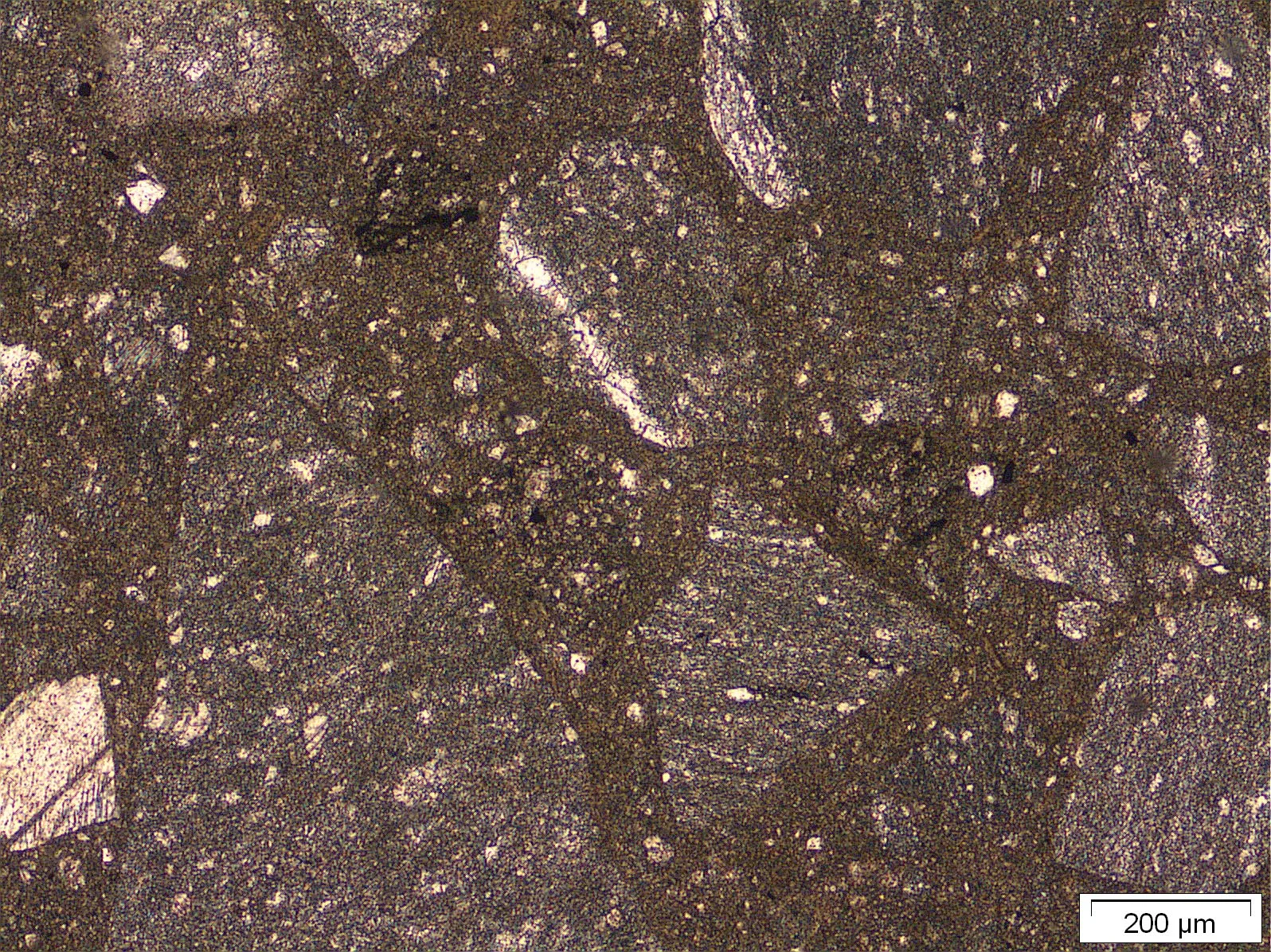
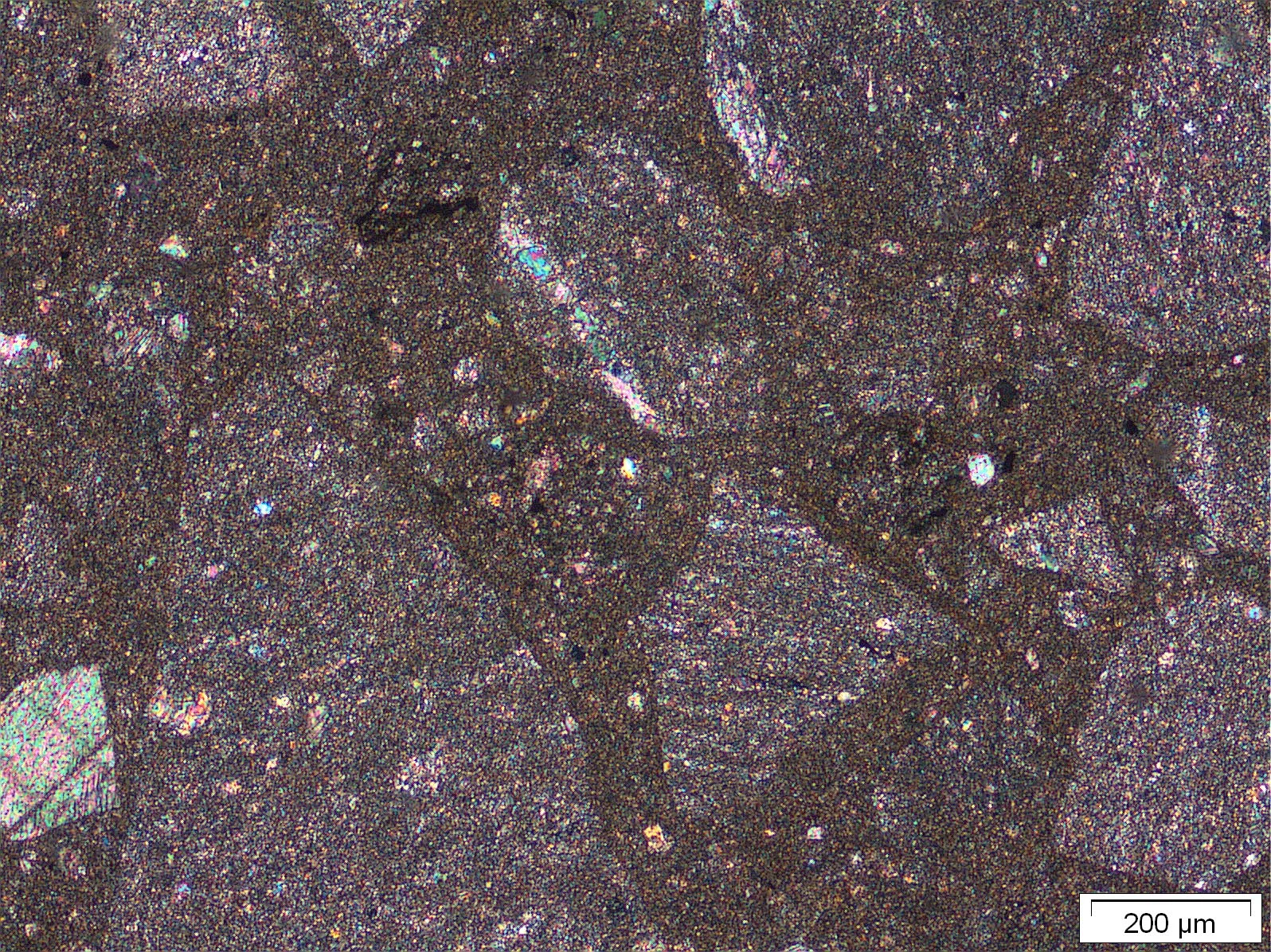
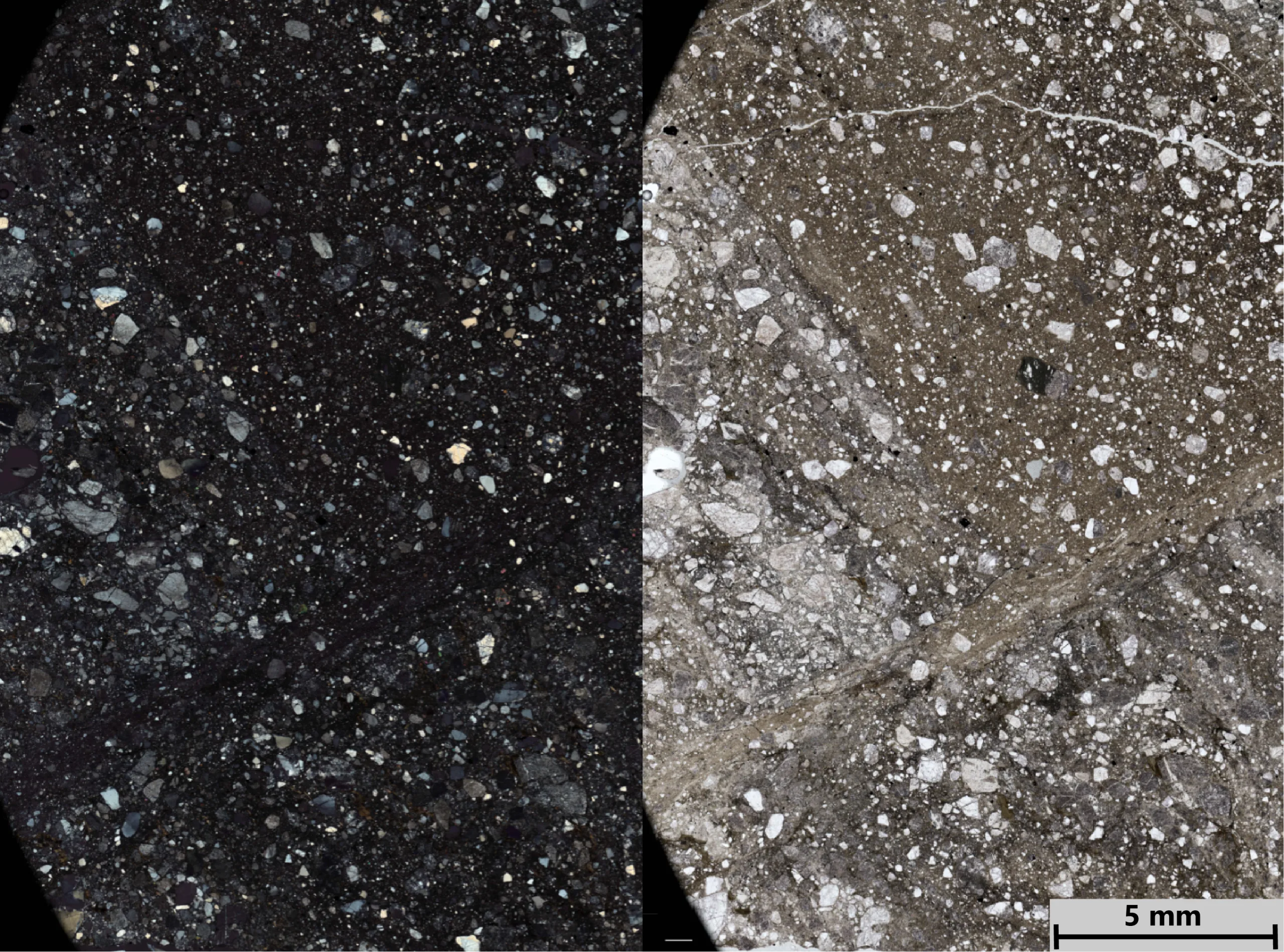
Under a polarizing microscope, cataclasite may show broken and offset grains, angular mineral fragments, intragranular microfractures and fine matrix derived from the same minerals as larger clasts. Some samples contain healed fractures, pressure-solution features or late mineral veins. Grain-size reduction alone is not diagnostic: examine the mechanism responsible for it.
Why Cataclasite Matters
Cataclasite helps reconstruct fault-zone evolution, deformation conditions and the sequence of brittle events. Grain crushing and subsequent cementation can strongly change porosity and permeability. In engineering geology, crushed fault zones may influence rock-mass strength, excavation stability and groundwater movement, but their behavior must be measured at the relevant site rather than inferred from the rock name alone.
Additional Cataclasite Specimens and Microscopic Textures
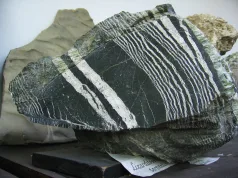
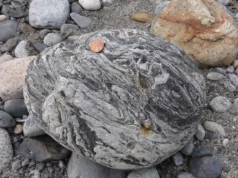
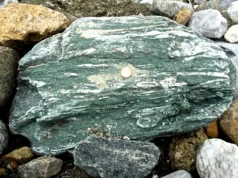
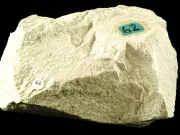
The following photographs document variations in cataclasite appearance from hand specimens to thin sections. Grain-size reduction, fractured clasts and the matrix are key observations.
Frequently Asked Questions
Is cataclasite a metamorphic rock?
It is commonly grouped with fault-related tectonites and discussed alongside metamorphic rocks, but its defining process is brittle mechanical deformation rather than a particular metamorphic grade.
Does cataclasite always form during earthquakes?
No. Cataclasis can accumulate during repeated fault slip; the presence of cataclasite alone does not establish a single seismic event.
Can cataclasite contain quartz?
Yes. Quartz-rich cataclasite commonly develops from granitic or quartz-rich parent rocks.
What is the difference between cataclasite and fault gouge?
Cataclasite is typically cohesive, whereas fault gouge is commonly fine-grained and incohesive. Natural examples may grade into one another.
References
Sibson (1977), Fault rocks and fault mechanisms: classification and implications; U.S. Geological Survey. Terminology should be evaluated with the observed fault-rock fabric and local geologic setting.