













November 21, 2026. Exploration company Brazilian Rare Earths has reported unusually high rare-earth assay results from shallow drilling at the Pelé South prospect in Bahia, northeastern Brazil. The November 18 announcement highlights multiple high-grade intervals within a prospective structural corridor. The results are geologically interesting, but they are exploration results, not a newly established mineral reserve.
What Was Reported at Pelé South?
Brazilian Rare Earths said systematic shallow auger drilling identified rare-earth mineralization over parts of a north–south corridor extending more than 2.5 kilometres. Among the highlighted intercepts was 6 metres averaging 13.2% total rare-earth oxides (TREO), including a 4-metre section reported at 16.6% TREO. Other notable reported intervals include 14.3 metres at 11.2% TREO.
TREO is an assay convention that expresses the combined concentration of rare-earth elements as their oxide equivalents; it does not mean that the rock contains that percentage of recoverable separated metal. The published grades are company-reported laboratory results, not independent verification of the economic value of a mine.
Where Is the New Exploration Area?
Pelé South lies approximately four kilometres south of Pelé North and around 50 kilometres south of the company’s Monte Alto project, in the Rocha da Rocha geological province of Bahia. The company describes rare-earth enrichment in weathered material known as saprolite, which forms when bedrock is chemically altered close to Earth’s surface.
Saprolite-hosted mineralization can sometimes be investigated with relatively shallow drilling, but its thickness and grade can vary quickly along strike and with depth. Establishing a continuous ore body requires more than a set of encouraging near-surface assays.
Which Critical Minerals Are Involved?
The company notes potential for heavy rare-earth elements such as dysprosium and terbium, along with gadolinium and yttrium, and associated scandium enrichment. Such elements are of interest in permanent magnets, advanced electronics and industrial applications. Their presence in assay results alone, however, does not establish a commercially viable method of extraction.
Geologists must evaluate mineral hosts, weathering profiles, recovery during processing, impurities, environmental constraints and the cost of moving material. Readers can explore the geological background in our rare-earth minerals guide and economic geology section.
What Still Needs to Be Confirmed?
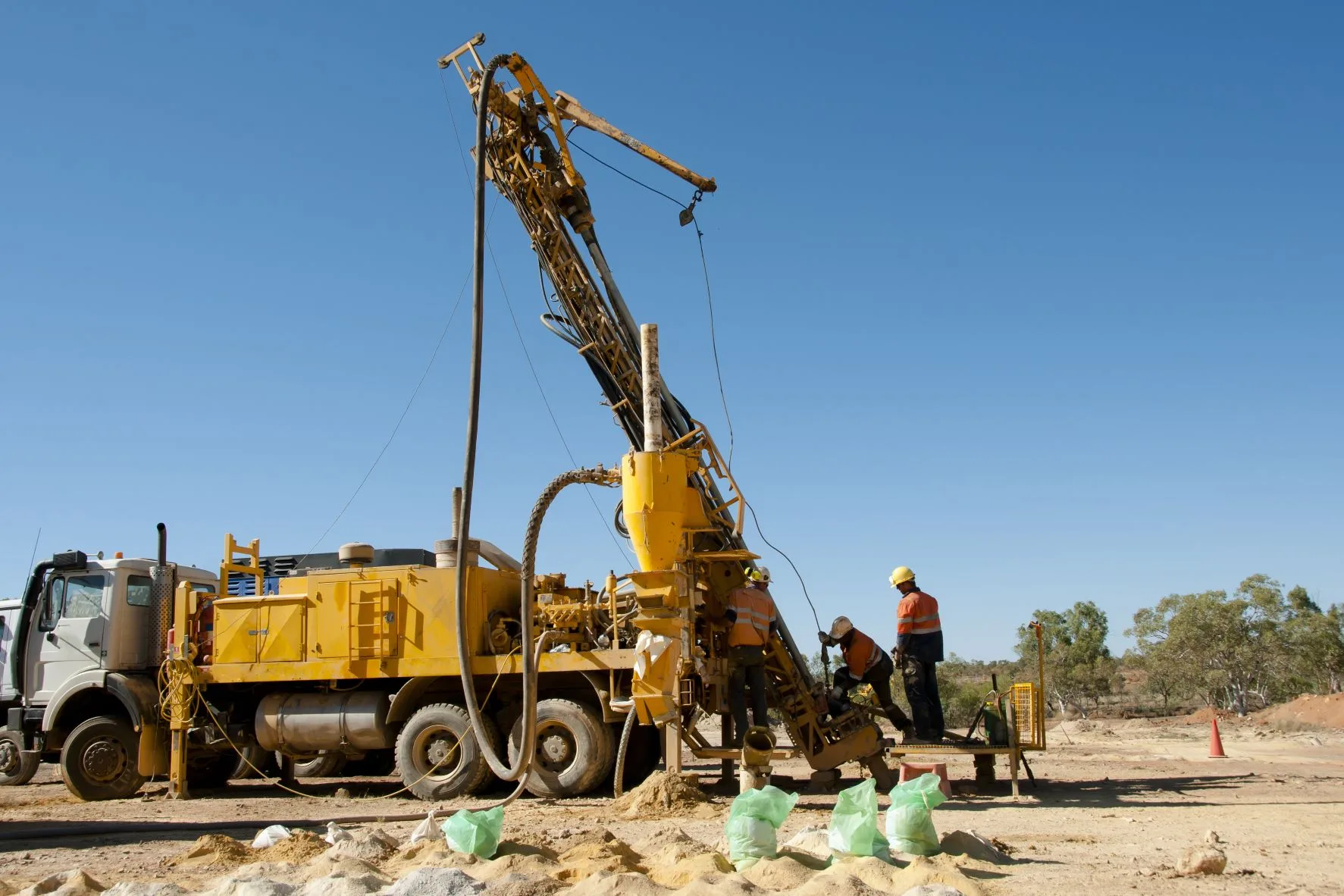
The company said angled diamond-core drilling was underway to test fresh bedrock beneath strong radiometric targets and high-grade auger zones. The next technical questions are whether mineralization persists at depth, whether its thickness is consistent, and how individual shallow intersections connect. Any future mineral-resource estimate would require additional data, geological modelling and appropriate technical reporting.
It would therefore be premature to call Pelé South a mine, calculate a reserve tonnage from the reported grades, or predict production. This is a promising exploration-stage result whose commercial significance remains uncertain.
Announcement and Image Credits
Primary source: Brazilian Rare Earths announcement, November 18, 2026.
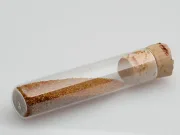
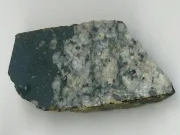
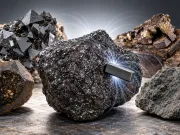
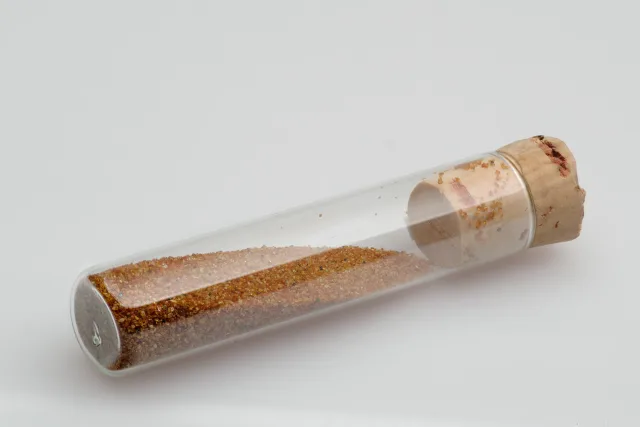
Featured photograph: Monazite-bearing sand from Brazil, shown as an illustrative rare-earth mineral sample and not a Pelé South specimen. Photo by Jan Czeczotka / Wikimedia Commons, CC BY-SA 4.0 (resized/converted).