







1. Yellowstone’s Last Supereruption Wasn’t as Simple as We Thought
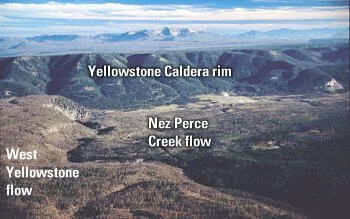
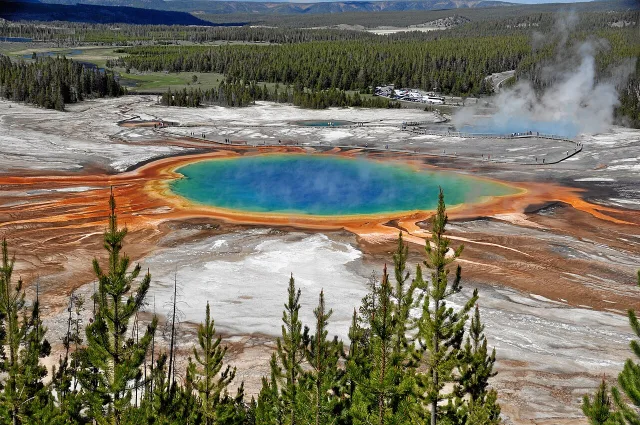
For years, textbooks and popular science accounts have painted Yellowstone’s last supereruption as one single, massive event that unfolded in a matter of hours. The story went something like this: a giant magma chamber emptied out, colossal pyroclastic flows swept across the landscape, and what remained collapsed into the Yellowstone Caldera we know today.
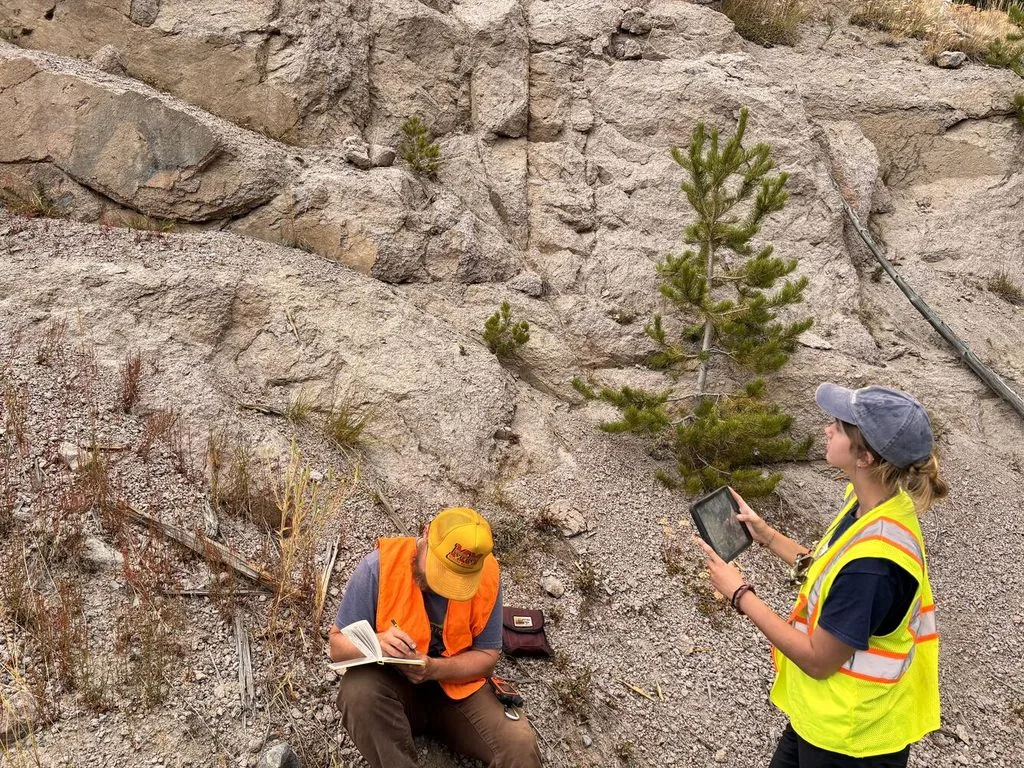
But detailed fieldwork by geologists with the Yellowstone Volcano Observatory (YVO) in the Sour Creek Dome area suggests that picture is far more complicated than we realized.
New findings indicate that the Lava Creek Tuff supereruption, which occurred roughly 631,000 years ago, wasn’t a single moment of catastrophe at all. Instead, it appears to have unfolded as a series of eruptive pulses, separated by real stretches of time.
And the research doesn’t just change how we think the eruption happened — it’s also raising new questions about how the caldera’s northeastern boundary should be interpreted, and even how Sour Creek Dome itself came to be.
Apparently, Yellowstone’s geological past is still an unfinished story.
2. What Was the Lava Creek Tuff Eruption?
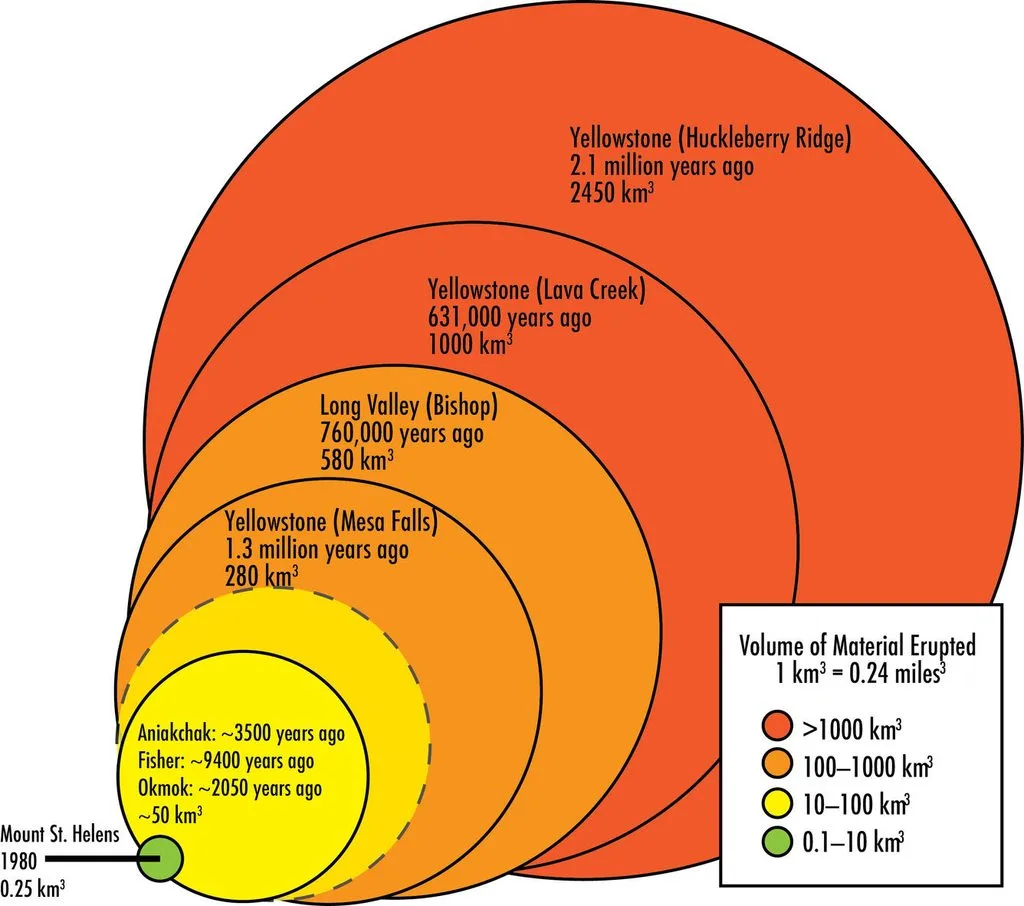
Lava Creek Tuff is the name given to the volcanic rocks produced by the enormous eruption that struck Yellowstone about 631,000 years ago.
The eruption is estimated to have ejected roughly 1,000 cubic kilometers of volcanic material — compare that to the roughly 1 cubic kilometer expelled during the 1980 eruption of Mount St. Helens, and the scale starts to sink in.
Put another way, Lava Creek Tuff was, by volume, on the order of a thousand times bigger than Mount St. Helens’ 1980 eruption.
It’s also the event credited with forming the Yellowstone Caldera that today makes up much of Yellowstone National Park.
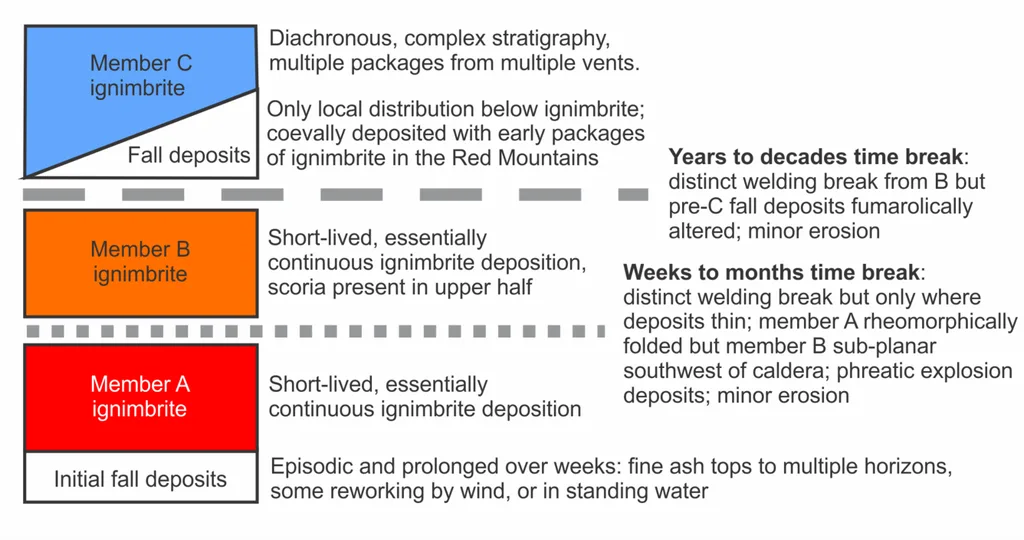
In traditional geological mapping, Lava Creek Tuff has generally been split into two major ignimbrite units, known simply as “Member A” and “Member B.”
Yellowstone’s roughly 2.1-million-year geological history includes three known caldera-forming supereruptions:
- Huckleberry Ridge Tuff — about 2.1 million years ago
- Mesa Falls Tuff — about 1.3 million years ago
- Lava Creek Tuff — about 631,000 years ago
The youngest of the three, Lava Creek, is also one of the most significant events in shaping the volcanic system we see today.
3. What Geologists Found at Sour Creek Dome
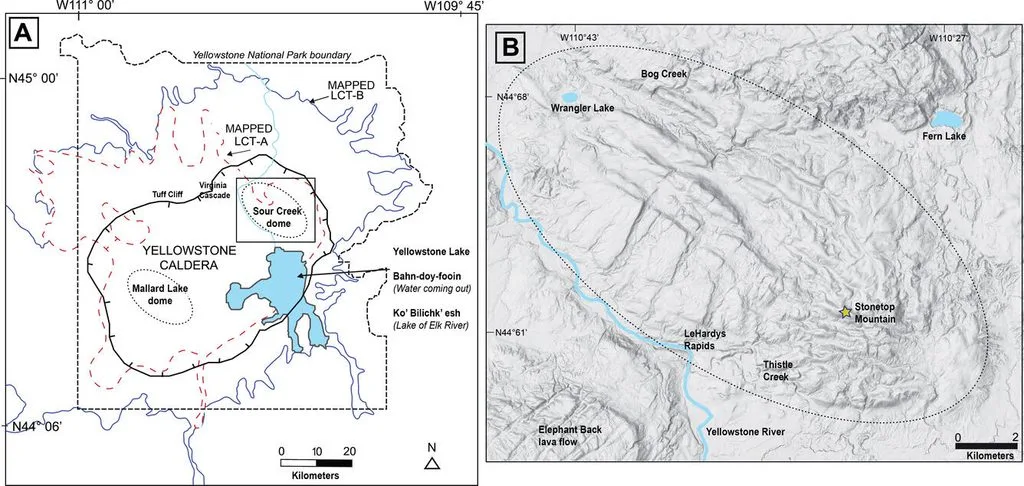
At the heart of this research is Sour Creek Dome, located in the northeastern part of the Yellowstone Caldera.
Some of the rock in this area was long believed to belong to Huckleberry Ridge Tuff — one of Yellowstone’s older, larger eruptions.
New dating work says otherwise.
Argon-isotope age analyses show that some of these rocks are actually around 631,000 years old — placing them squarely within the Lava Creek Tuff eruption, not the older Huckleberry Ridge event.
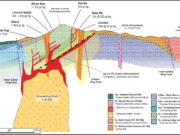
Over the past several years, geologists have painstakingly remapped the area and found that what was once treated as a single rock unit is actually made up of five distinct ignimbrite packages.
The average age of these units works out to roughly 631,500 years.
Field relationships also suggest that these ignimbrites may have erupted from more than one local vent within what is now mapped as the caldera boundary — hinting that Lava Creek Tuff wasn’t a simple, single-source event.
4. Evidence for Multiple Eruptive Pulses
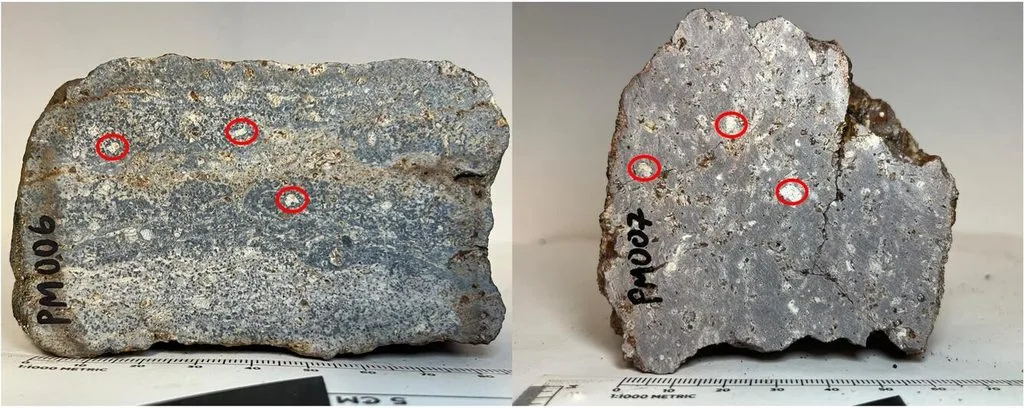
Some of the most compelling evidence sits inside the newly identified ignimbrites themselves.
Certain units contain fragments of older ignimbrite — material that had already cooled, solidified, and broken apart — embedded within younger pyroclastic flows.
That detail matters.
For older material to cool completely, harden, fracture, and then get ripped up and swept into a later flow, a meaningful amount of time has to pass in between.
This is a strong signal that the eruption wasn’t a single continuous blast lasting seconds or minutes, but something that played out across multiple distinct phases.
Current dating techniques aren’t yet precise enough to pin down exactly how long the gaps between phases lasted — they could have been days, weeks, months, or in some cases longer.
So instead of thinking of Lava Creek Tuff as one “moment” of eruption, it may be more accurate to picture it as a drawn-out, multi-stage volcanic process.
5. Yellowstone May Have Had Several Magma Bodies
The chemistry of crystals pulled from Sour Creek Dome’s ignimbrites offers another important clue.
Crystals from different ignimbrite packages don’t all share the same chemical fingerprint.
That variation suggests the eruption wasn’t drawn from one single, perfectly homogeneous magma body.
Instead, several chemically distinct pockets of magma may have existed beneath Yellowstone at the time.
Researchers now think at least four separate magma bodies may have contributed to the Sour Creek Dome eruption sequence — a striking idea for modern volcanology.
Older models tended to picture large caldera systems as one enormous, liquid-filled magma chamber sitting underground.
More recent research increasingly suggests that big volcanic systems are made up of interconnected but chemically and physically distinct magma regions.
The new Yellowstone findings fit neatly into that more complex picture.
6. How Long Could the Supereruption Have Lasted?
There’s no firm answer to this yet.
The new research shows time passed between different phases of the Lava Creek Tuff eruption, but pinning down exactly how much time is proving difficult.
A similar pattern shows up in Yellowstone’s older Huckleberry Ridge Tuff eruption.
Earlier studies found that this massive event also wasn’t one uninterrupted blast — its different eruptive phases appear to have been separated by real gaps in time.
The new field evidence from Lava Creek Tuff points toward a similar scenario.
The fact that some erupted material had time to cool, solidify, and then get mixed into later pyroclastic flows tells us that at least some of the phases were separated by a meaningful stretch of time.
Which means the old, simple story — “Yellowstone erupted all at once” — probably doesn’t hold up anymore.
A more accurate description is that this caldera-forming supereruption was a complex process that unfolded across multiple stages.
7. What Is an Ignimbrite?
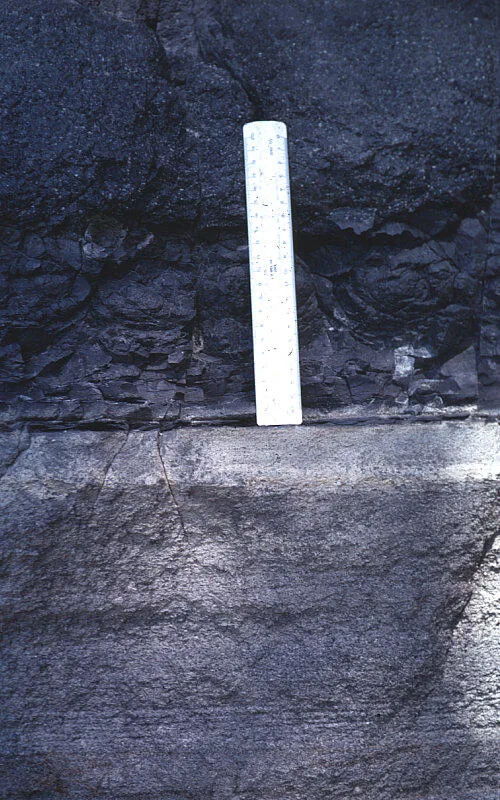
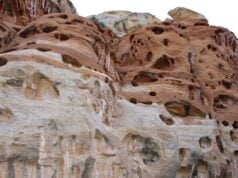
An ignimbrite is the volcanic rock left behind by a pyroclastic density current — the fast-moving, superheated mix of ash, pumice, crystals, rock fragments, and gas that pyroclastic eruptions produce.
During large eruptions, these currents can race across the landscape at extremely high speed, hugging the ground and covering huge areas.
As the material settles and compacts, it eventually hardens into the rock we call ignimbrite.
Some ignimbrites deposit while still so hot that the ash and pumice fragments actually weld together.
By studying an ignimbrite’s thickness, mineral content, crystal chemistry, and how it relates to surrounding rock layers, geologists can reconstruct past eruptions in remarkable detail.
That’s exactly why distinguishing five separate ignimbrite packages at Sour Creek Dome is such a big deal.
Each new layer represents another chapter in the story of what happened 631,000 years ago.
8. Is Sour Creek Dome Really a “Resurgent Dome”?
One of the more intriguing results of the new research concerns the origin of Sour Creek Dome itself.
For a long time, Sour Creek Dome has been interpreted as one of two large “resurgent domes” within the Yellowstone Caldera.
A resurgent dome forms when, after a large caldera collapses, pressure from underlying magma and hydrothermal systems pushes the caldera floor back upward, creating a broad, dome-shaped bulge.
But the new mapping work suggests at least part of Sour Creek Dome may have formed differently.
Researchers now think much of the area’s topographic high may simply be a structural feature — the product of thick ignimbrite packages stacking up on top of one another over successive eruptions.
There’s also evidence that some faulting in the region occurred hundreds of thousands of years after the Lava Creek Tuff eruption itself.
That finding could prompt a broader rethink of Yellowstone’s post-caldera deformation history.
9. Has the Yellowstone Caldera Boundary Been Mismapped?
Confirming that the new rocks at Sour Creek Dome belong to Lava Creek Tuff raised another interesting problem.
The northeastern boundary of the Yellowstone Caldera has been mapped according to a particular geological model for decades.
But the location of these newly identified ignimbrite units suggests parts of that boundary may need to be reconsidered.
Researchers now propose that the caldera’s northeastern edge may have a somewhat different geometry than previously thought.
If that reinterpretation holds up, the Yellowstone Caldera could turn out to be slightly smaller and more rounded than some existing maps show.
That doesn’t mean the caldera has been wildly mismapped overall.
But it’s a reminder that modern dating techniques and detailed fieldwork can still redraw boundaries that have stood, largely unquestioned, for decades.
That’s really one of the most fascinating things about geology: even places we think we know exceptionally well can still surprise us once someone goes back and looks closely.
10. Why This Changes the Traditional Yellowstone Model
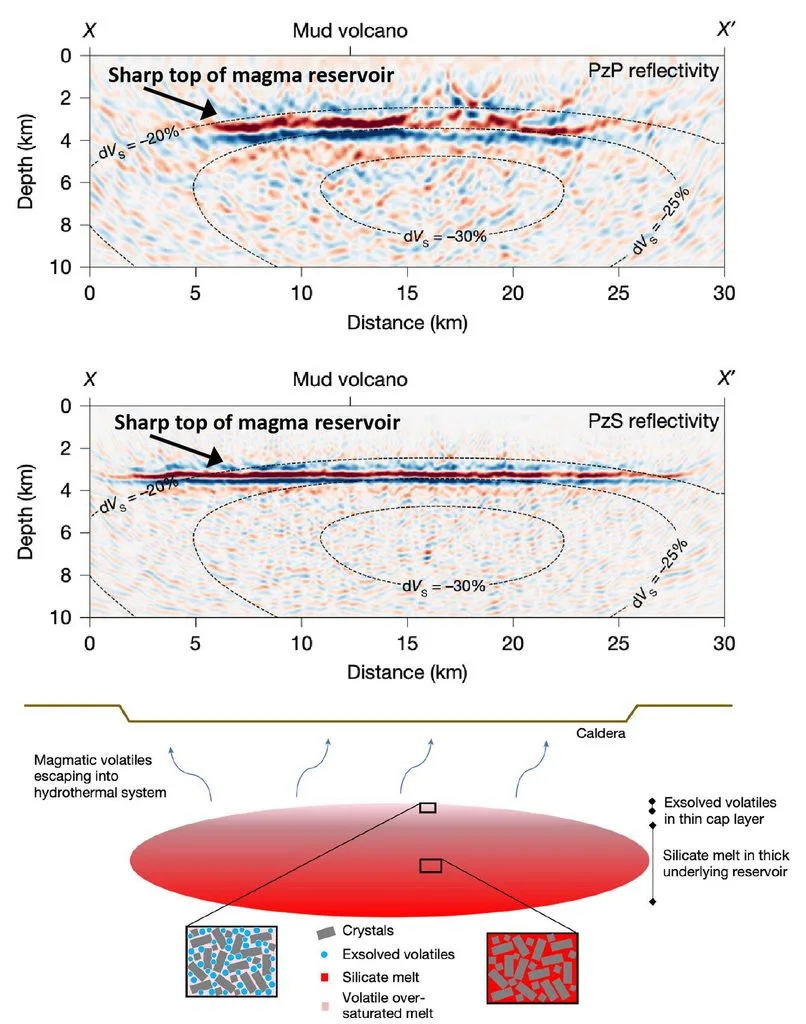
Supereruptions have long been described as the product of a huge magma chamber reaching a breaking point and suddenly emptying out.
That model isn’t entirely wrong — but the real geological process was very likely far more complicated.
Work on both Huckleberry Ridge Tuff and now Lava Creek Tuff suggests that caldera-forming eruptions can involve several distinct magma bodies and multiple eruptive centers, unfolding across multiple stages rather than a single blast.
Under this framework, a “supereruption” may be less a single event than a geologically connected sequence of eruptions.
That distinction matters well beyond understanding Yellowstone’s past.
It could also reshape how scientists interpret other large caldera systems around the world.
11. Does This Mean Yellowstone Is More Dangerous Today?
No.
This new research is about events that happened 631,000 years ago — it doesn’t point to any new signal that a major eruption is coming anytime soon.
The fact that the ancient eruption turned out to be more complex than previously thought doesn’t mean Yellowstone is any closer to erupting today.
Scientists’ goal here is to reconstruct past volcanic processes as accurately as possible, in order to better understand how large caldera systems evolve over time.
That knowledge can eventually help improve future hazard assessments, but the study itself is not a warning of an imminent eruption.
It’s worth separating this kind of careful scientific research from the “supervolcano is waking up” headlines that circulate online — the two are not the same thing.
12. What Yellowstone Is Doing Right Now
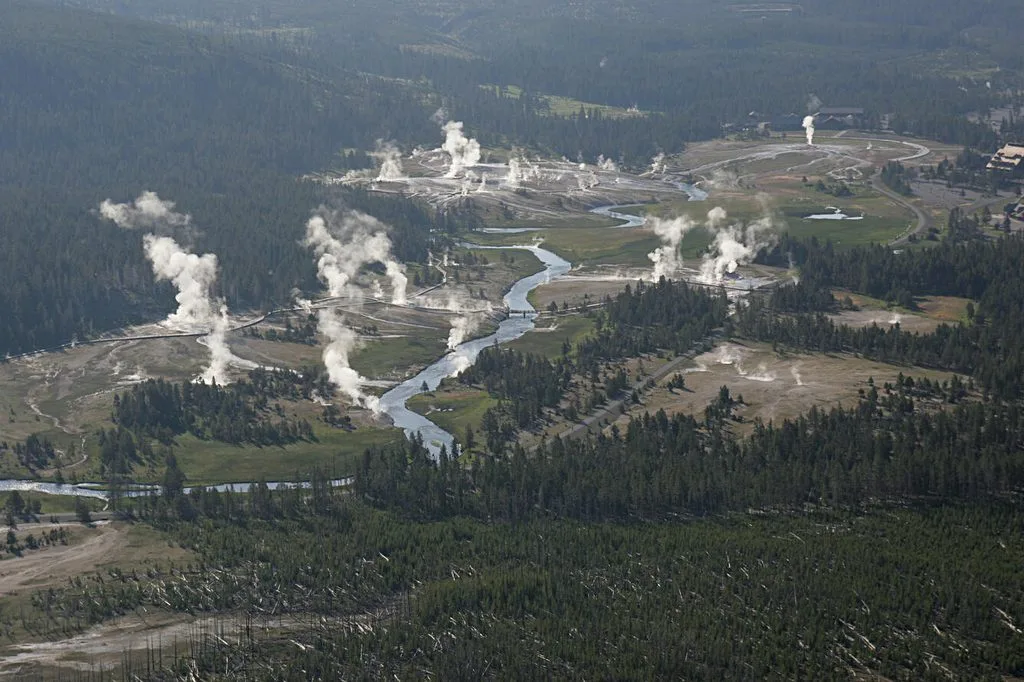
Yellowstone remains an active volcanic and hydrothermal system.
The area experiences numerous small earthquakes every year. Its geysers, hot springs, and fumaroles remain active. And the ground surface undergoes slow cycles of uplift and subsidence that can be measured with GPS instruments.
Most of this activity is entirely typical of Yellowstone’s normal behavior.
As of August 2026, the Yellowstone Volcano Observatory lists Yellowstone’s volcano alert level as NORMAL and its aviation color code as GREEN.
There is no unusual activity in the region pointing toward an imminent eruption.
Yellowstone is continuously monitored using seismometers, GPS stations, satellite measurements, hydrothermal observations, and various geochemical methods.
That web of monitoring means scientists have multiple independent ways of catching any significant change in the system, should one occur.
13. What This Discovery Tells Us About Supervolcanoes
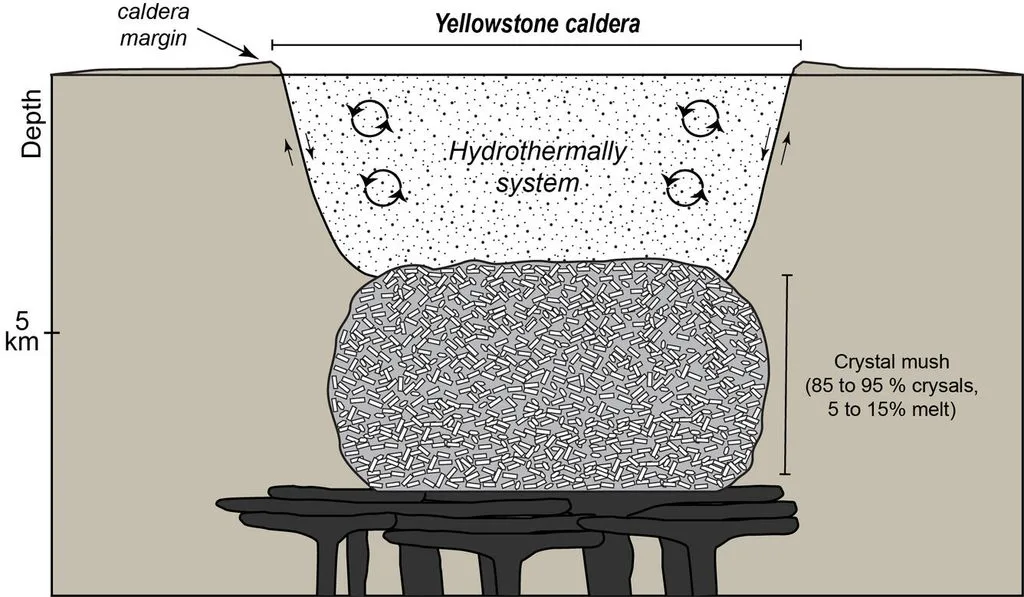
Perhaps the most important takeaway from this new Yellowstone research is that large volcanic systems are more complicated than we tend to assume.
“A giant magma chamber fills up and then suddenly erupts” is an easy story to tell — but real systems in nature are rarely that simple.
Large silicic magma systems can be made up of magma bodies at different depths, with different chemical compositions, interacting with one another over time.
Some of these bodies may take part in an eruption while others stay largely untouched.
Different regions of the system can activate at different times, turning what looks like a single big event into a sequence of eruptive phases.
The Lava Creek Tuff record at Yellowstone may be exactly this kind of system, preserved in the rock.
That’s likely to shift how future research approaches other large calderas too — paying closer attention to multi-stage volcanic processes rather than assuming a single, all-at-once explosion.
14. Final Thoughts
Yellowstone’s last supereruption, roughly 631,000 years ago, may have been a far more complicated event than we’ve long assumed.
New mapping and dating work at Sour Creek Dome has uncovered five previously unrecognized ignimbrite packages. The structure of these rocks, and the chemistry of the crystals within them, suggests multiple eruptive phases and several distinct magma bodies may have contributed to the sequence.
The findings are also raising new questions about how Sour Creek Dome formed and about the true position of the Yellowstone Caldera’s northeastern boundary — ideas that have gone largely unchallenged for decades.
It’s worth repeating: none of this means Yellowstone is about to erupt anytime soon.
What it really shows is something else entirely.
Even in one of the most heavily studied volcanic regions on Earth, geologists are still working out the details of events that happened hundreds of thousands of years ago.
Every new rock exposure, every crystal analysis, and every fresh age measurement brings the past a little more clearly into focus.
Yellowstone’s story may not be about one giant explosion after all.
Perhaps what the rocks are really telling us is a longer, messier story — one written across a whole series of eruptions, rather than a single moment in time.
Sources: U.S. Geological Survey (USGS) Yellowstone Volcano Observatory and Caldera Chronicles publications; recent field, geochronology, and volcanology research on Sour Creek Dome and the Lava Creek Tuff.