



Properties, Formation, Types, and Identification
Quartz is one of the most abundant and recognizable minerals in Earth’s continental crust. Found in mountain ranges, river sediments, beaches, and mineral veins, it plays a fundamental role in geology and numerous industries.
From transparent rock crystal and purple amethyst to smoky quartz and microscopic grains within sandstone, quartz occurs in an extraordinary variety of forms.
Quartz is a naturally occurring crystalline mineral composed of silicon dioxide (SiO₂). It belongs to the silicate mineral group and is characterized by its hardness, glassy luster, lack of prominent cleavage, and distinctive crystal structure.
Quartz is an essential component of many igneous, metamorphic, and sedimentary rocks. Its durability also allows it to survive weathering and accumulate in sediments over geological time.
Understanding quartz helps geologists interpret rock formation, sediment transport, hydrothermal systems, and the geological processes responsible for mineral deposits.
What Is Quartz?
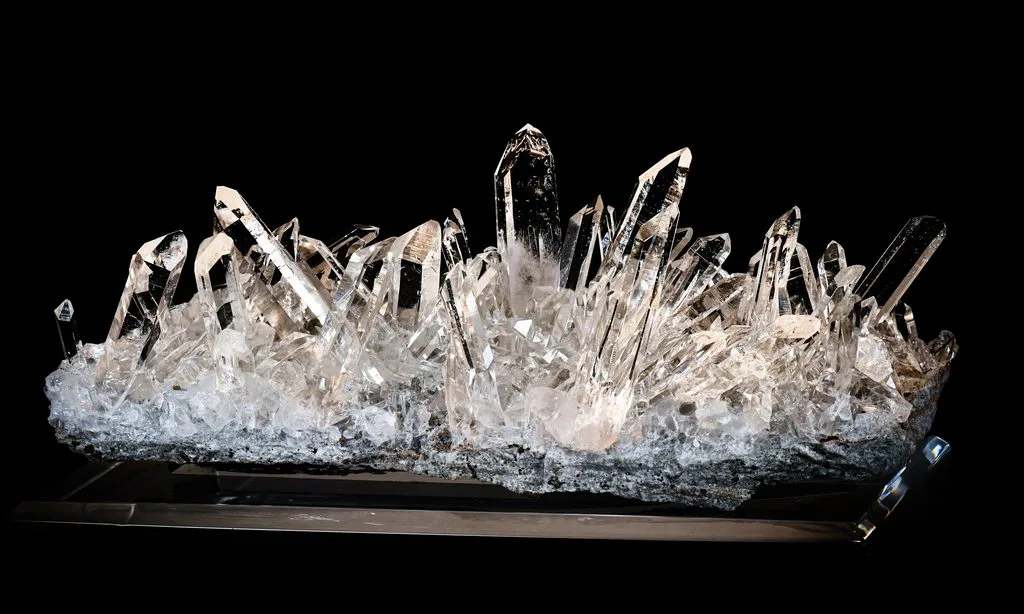
Quartz is a silicate mineral consisting of silicon and oxygen arranged in a continuous three-dimensional crystal framework.
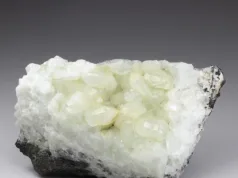
It commonly occurs as transparent or translucent crystals, irregular mineral grains, massive aggregates, and vein fillings.
Although pure quartz is colorless, natural crystals can develop numerous colors through trace elements, structural defects, irradiation, or microscopic inclusions.
Quartz is particularly common in silica-rich igneous rocks such as granite and rhyolite, as well as metamorphic rocks including quartzite and many gneisses.
It is also an important constituent of sandstone and other sedimentary deposits.
Quartz Mineral Properties
| Property | Description |
|---|---|
| Chemical formula | SiO₂ |
| Mineral class | Silicates – tectosilicates |
| Crystal system | Trigonal |
| Crystal family | Hexagonal crystal family |
| Common crystal habit | Six-sided prisms with pointed terminations |
| Color | Colorless, white, purple, pink, yellow, brown, gray, or nearly black |
| Mohs hardness | 7 |
| Specific gravity | Approximately 2.65 |
| Luster | Vitreous (glassy) |
| Streak | White |
| Cleavage | No prominent cleavage |
| Fracture | Conchoidal |
| Transparency | Transparent to opaque |
| Refractive index | Approximately 1.544–1.553 |
| Common occurrence | Igneous, sedimentary, and metamorphic rocks; hydrothermal veins |
These characteristics make quartz relatively easy to identify when several properties are considered together.
Crystal Structure of Quartz
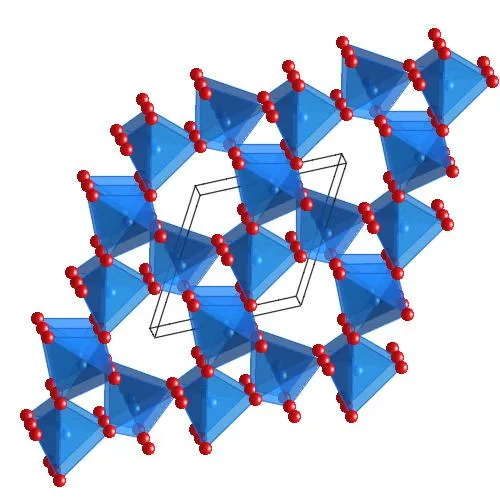
Quartz has a framework structure composed of linked silicon–oxygen tetrahedra.
Each silicon atom is surrounded by four oxygen atoms, forming a SiO₄ tetrahedron. These tetrahedra share oxygen atoms to create a continuous three-dimensional network.
The resulting chemical composition is SiO₂.
Is Quartz Trigonal or Hexagonal?
Quartz commonly develops six-sided crystals that appear hexagonal.
However, alpha-quartz, the stable form under ordinary surface conditions, belongs to the trigonal crystal system.
Its external hexagonal-looking shape reflects the symmetry and growth characteristics of the crystal.
This distinction is important because crystal habit and crystallographic symmetry are related but not identical.
Alpha-Quartz and Beta-Quartz
Quartz occurs in different structural forms depending on temperature and pressure.
At atmospheric pressure, alpha-quartz transforms reversibly into beta-quartz at approximately 573°C.
Alpha-quartz has trigonal symmetry, while beta-quartz has hexagonal symmetry.
This transformation does not require the mineral to melt.
At higher temperatures or different pressures, silica may form other mineral phases, including tridymite, cristobalite, coesite, and stishovite. These are distinct silica polymorphs rather than varieties of ordinary quartz.
How Does Quartz Form?
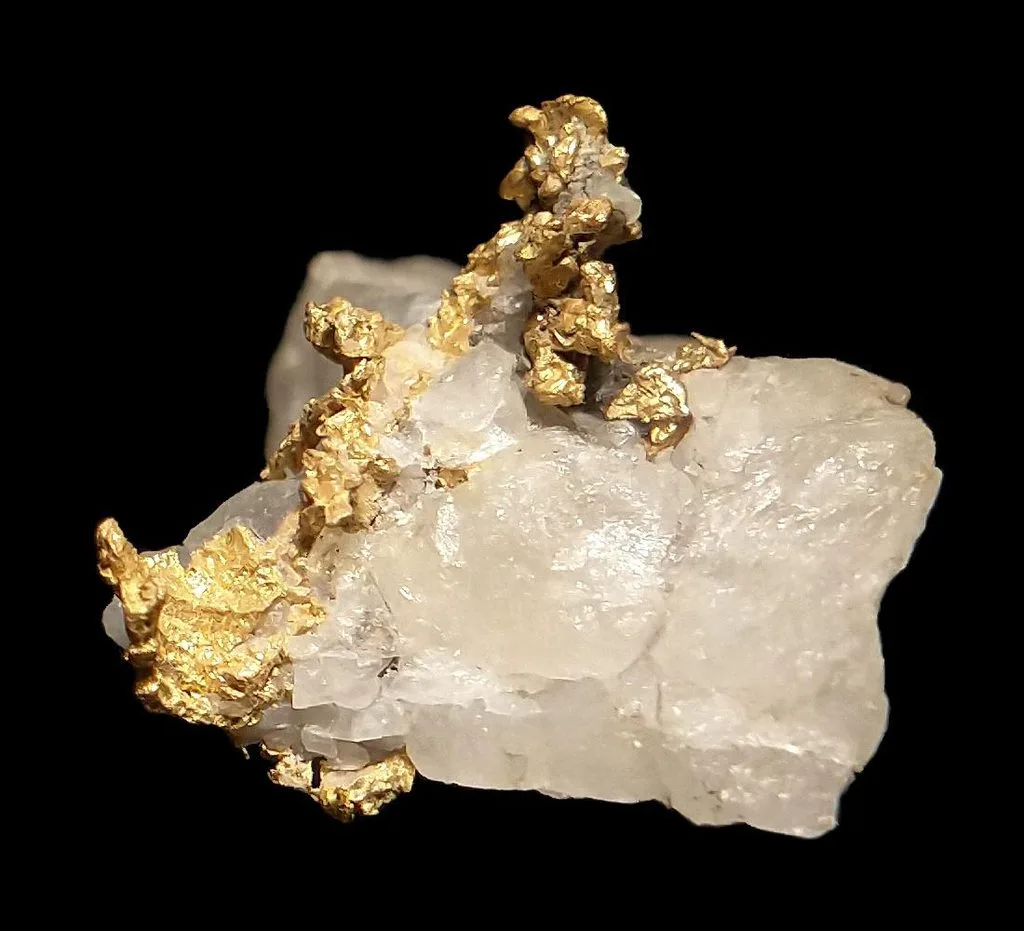
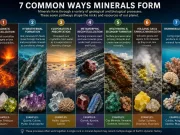
Quartz forms in several geological environments, including igneous systems, hydrothermal veins, metamorphic rocks, and sedimentary deposits.
Its formation depends on factors such as temperature, pressure, fluid chemistry, and the availability of silica.
1. Crystallization From Magma
Quartz commonly crystallizes during the cooling of silica-rich magmas.
In granitic magmas, quartz often crystallizes alongside feldspar and mica during the later stages of magmatic solidification.
Because crystals grow together within the magma, quartz in granite commonly occurs as irregular interlocking grains rather than perfectly shaped crystals.
In rapidly cooled volcanic rocks such as rhyolite, quartz may occur as phenocrysts surrounded by a much finer-grained or glassy groundmass.
2. Hydrothermal Quartz Formation
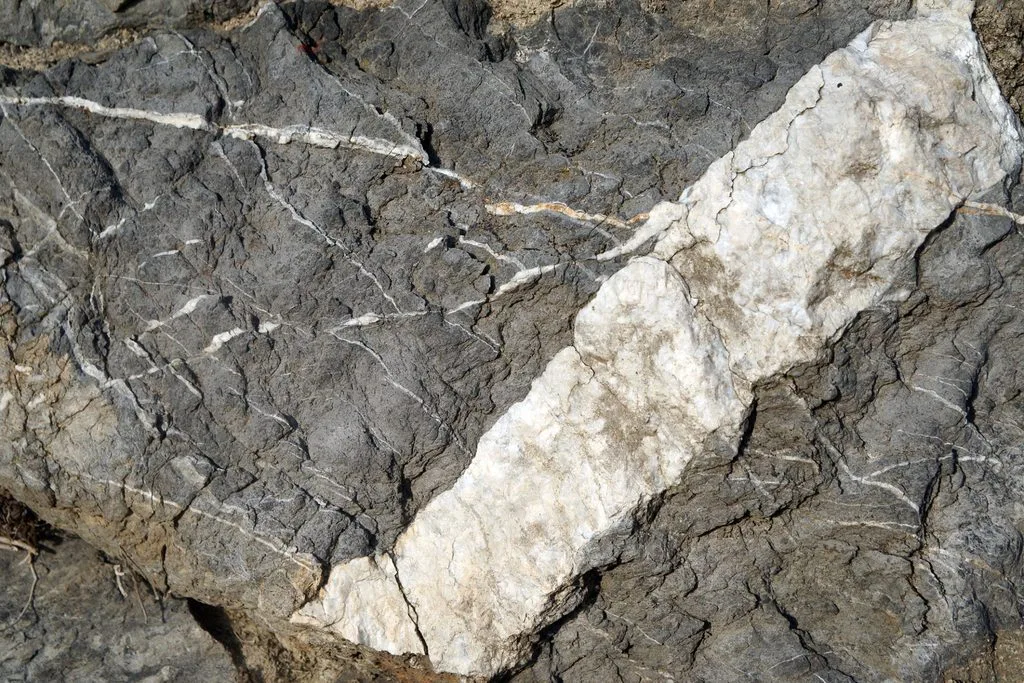
Hydrothermal quartz forms when silica-bearing fluids circulate through fractures, cavities, and other openings in rocks.
Changes in temperature, pressure, or fluid chemistry may cause dissolved silica to precipitate as quartz.
Over time, repeated mineral deposition can create massive quartz veins or well-developed crystal-lined cavities.
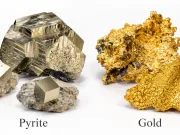
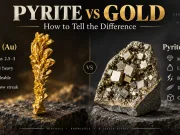
Hydrothermal quartz veins are common in many geological environments and may occur alongside minerals such as pyrite, galena, and other sulfides.
Some gold-bearing mineral systems also contain abundant hydrothermal quartz.
However, finding quartz in a vein does not automatically indicate the presence of gold.
3. Metamorphic Recrystallization
Quartz can recrystallize when existing rocks experience increasing temperatures, pressure, and deformation.
For example, quartz-rich sandstone may undergo metamorphism to form quartzite.
During this process, original quartz grains may develop into a tightly interlocking crystalline mosaic.
Quartz is also common in schist and gneiss, where it may recrystallize and deform during tectonic processes.
4. Sedimentary Formation and Cementation
Quartz commonly accumulates in sedimentary environments because it is relatively resistant to many weathering processes.
As rocks break down, quartz grains can be transported by rivers, wind, waves, and glaciers.
These grains may accumulate as sand and later become part of sandstone.
Quartz can also precipitate from silica-bearing pore fluids and form cement or overgrowths around existing sediment grains.
These processes influence the strength, porosity, and texture of sedimentary rocks.
Quartz in Different Rock Types
Quartz occurs in all three major rock groups, although its abundance varies considerably.
Quartz in Igneous Rocks
Quartz is common in silica-rich igneous rocks.
Granite typically contains quartz together with feldspar and smaller amounts of other minerals.
Rhyolite is a volcanic rock with a broadly comparable silica-rich composition and may contain quartz crystals.
Quartz is generally absent from many silica-poor igneous rocks, including typical basalt and peridotite.
Quartz in Sedimentary Rocks
Quartz is a major component of many sandstones and sandy sediments.
Its hardness and relative chemical durability allow it to survive repeated cycles of weathering, erosion, transportation, and deposition.
However, not all sand consists mainly of quartz. Some sediments contain abundant feldspar, volcanic fragments, carbonate grains, or other materials.
Quartz in Metamorphic Rocks
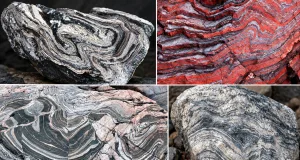
Quartz occurs in quartzite, gneiss, schist, and numerous other metamorphic rocks.
It may develop new crystal boundaries, recrystallize into larger grains, or become deformed during metamorphism.
In high-grade metamorphic rocks, quartz can preserve microstructures that help geologists interpret deformation and temperature history.
Types and Varieties of Quartz
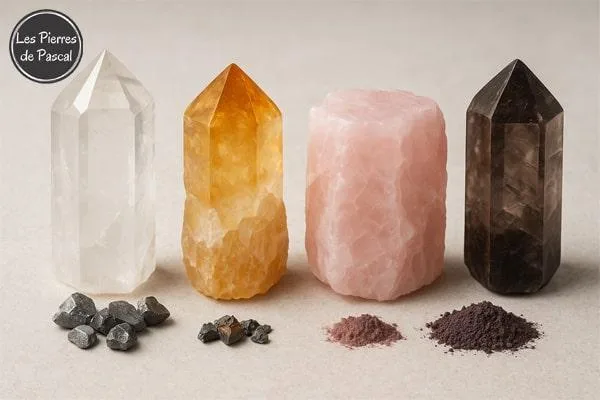
Quartz occurs in numerous varieties distinguished by color, inclusions, transparency, and crystal texture.
Some are transparent single crystals, while others occur as massive or microcrystalline aggregates.
Rock Crystal
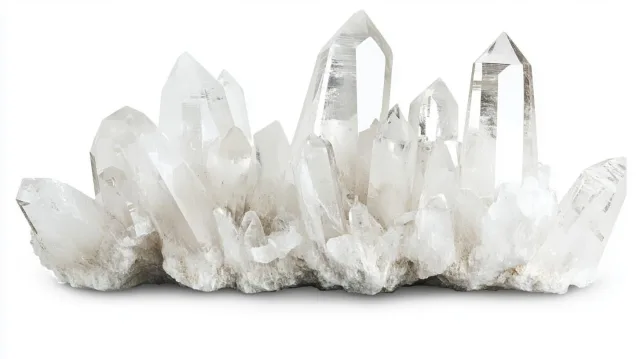
Rock crystal is the transparent, colorless variety of quartz.
It commonly forms well-developed prismatic crystals with pointed terminations.
Rock crystal is popular among mineral collectors and is also used in gemstones and decorative objects.
Amethyst
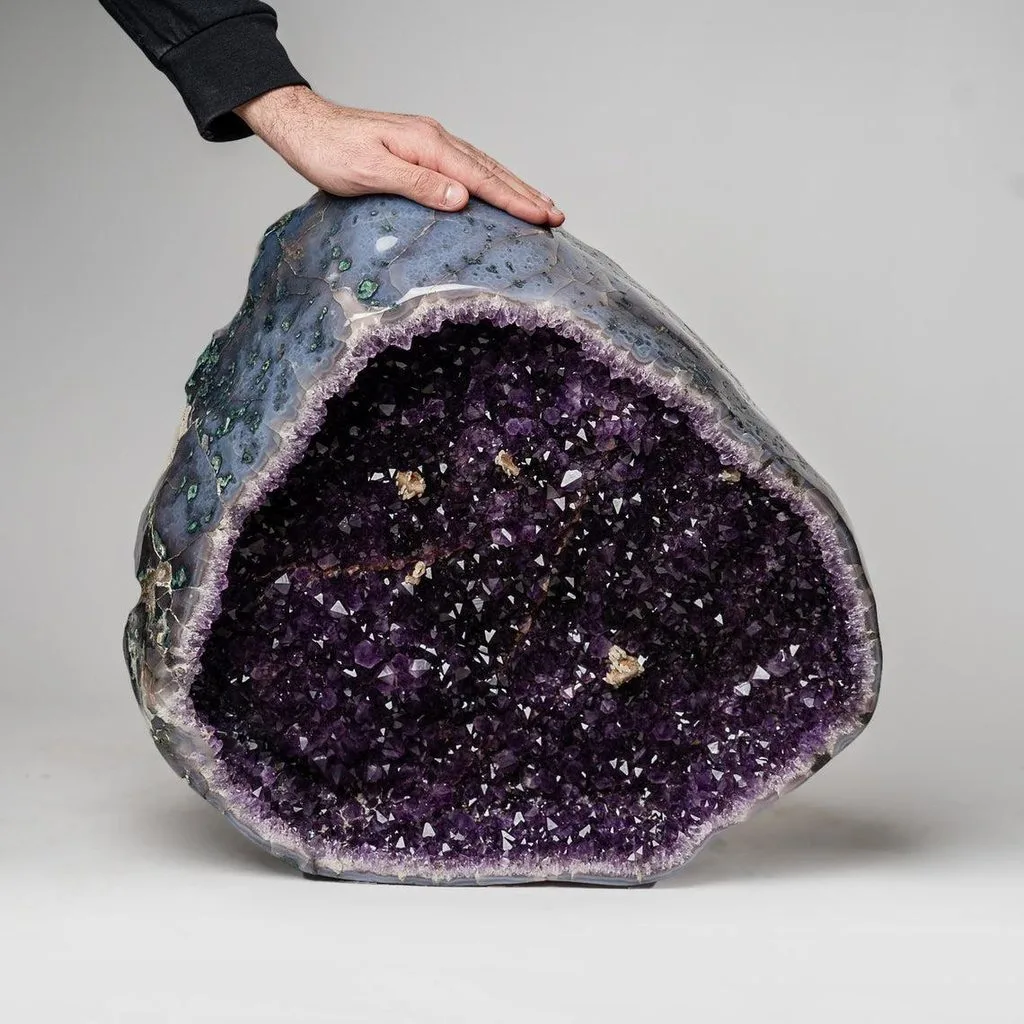
Amethyst is the purple variety of quartz.
Its color is associated with iron-related structural defects that are modified by natural ionizing radiation.
Amethyst commonly occurs in hydrothermal veins and crystal-lined cavities, including spectacular geodes in volcanic rocks.
Citrine
Citrine is the yellow to orange variety of quartz.
Natural citrine occurs in several geological environments, but some commercial citrine is produced by heating suitable amethyst.
Both materials are crystalline quartz, although their geological or treatment histories differ.
Rose Quartz
Rose quartz displays a pale to intense pink coloration.
Much of the familiar massive rose quartz owes its color to microscopic inclusions or related structural features.
Rose quartz is commonly found in pegmatites and other silica-rich geological environments.
Smoky Quartz
Smoky quartz ranges from pale smoky gray to dark brown or nearly black.
Its color is associated with radiation-related defects involving aluminum impurities in the quartz structure.
Smoky quartz commonly occurs in granitic rocks, pegmatites, and hydrothermal environments.
Milky Quartz
Milky quartz is white or translucent due primarily to numerous microscopic inclusions, commonly involving fluids or other internal features that scatter light.
It is widespread in quartz veins and massive mineral aggregates.
Ametrine
Ametrine contains purple amethyst and yellow-to-orange citrine color zones within a single quartz crystal.
Natural gem-quality ametrine is especially associated with Bolivia.
Chalcedony
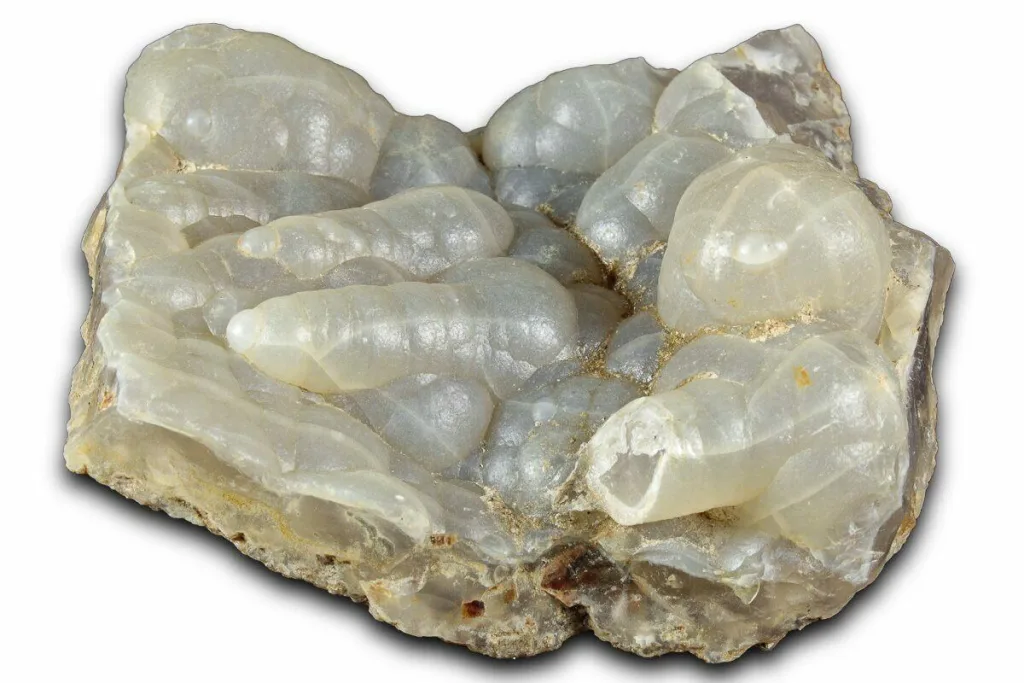
Chalcedony is a microcrystalline silica material composed predominantly of very fine quartz, commonly with the silica polymorph moganite.
It frequently has a waxy luster and may be translucent or opaque.
Agate, carnelian, and chrysoprase are familiar forms associated with chalcedony.
Agate and Jasper
Agate commonly displays banded patterns created during successive stages of silica deposition.
Jasper is generally opaque and is often colored by mineral impurities such as iron oxides.
Both are commonly discussed alongside quartz varieties because of their silica-rich, microcrystalline character.
Rutilated Quartz
Rutilated quartz contains visible inclusions of rutile, a titanium dioxide mineral.
The rutile crystals may appear as fine golden, reddish, or dark needles enclosed within transparent quartz.
Quartz Crystal Habits and Textures
Quartz can develop different appearances depending on the environment in which it grows.
Prismatic Crystals
Well-developed quartz crystals commonly have six-sided prisms terminated by rhombohedral faces.
They are especially recognizable in open cavities where individual crystals have enough room to grow.
Massive Quartz
Massive quartz consists of interlocking crystals without obvious individual crystal faces.
It commonly occurs in veins and large mineral aggregates.
Drusy Quartz
Drusy quartz consists of numerous small crystals covering a rock or mineral surface.
These crystal coatings often form inside cavities and along fractures.
Quartz Geodes
Quartz geodes contain crystals lining the interior of a hollow or partly hollow cavity.
Crystal size, color, and mineral associations depend on the geological environment and mineral-bearing fluids.
Microcrystalline Quartz
Microcrystalline quartz consists of crystals too small to distinguish individually with the naked eye.
It commonly occurs in materials such as chalcedony and chert.
How to Identify Quartz
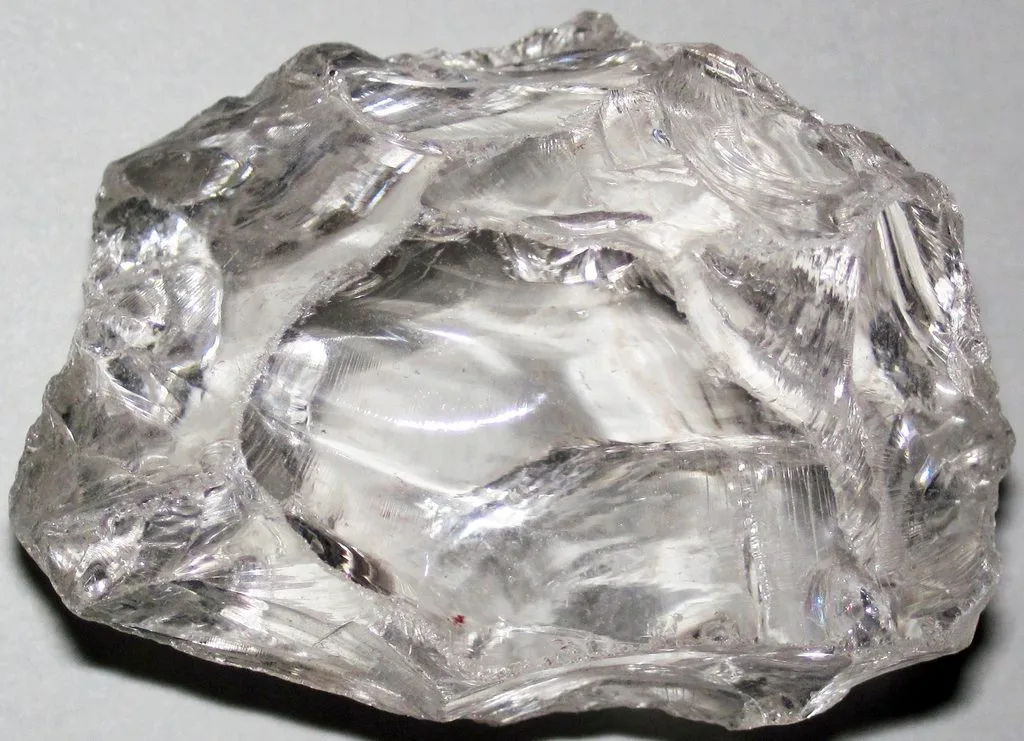
Quartz can often be identified using several simple physical observations.
1. Check the Hardness
Quartz has a Mohs hardness of 7.
It can scratch ordinary glass and is harder than most common steel knife blades.
Hardness tests should be performed carefully and should not be applied to valuable or finished specimens.
2. Examine the Luster
Fresh quartz surfaces commonly display a vitreous, glass-like luster.
Microcrystalline varieties may appear waxy or dull.
3. Look for Cleavage and Fracture
Quartz lacks prominent cleavage.
Instead of consistently splitting along flat planes, it often breaks along smooth, curved surfaces known as conchoidal fractures.
This is one of its most recognizable diagnostic properties.
4. Observe Crystal Shape
Well-developed quartz crystals often display six-sided prisms with pointed terminations.
However, quartz occurring as grains or massive vein material may not show recognizable crystal faces.
5. Check the Streak
Quartz typically produces a white streak, although its hardness makes it difficult to obtain a streak on many standard unglazed porcelain plates.
Streak is therefore not usually the best identification test for quartz.
6. Consider Associated Minerals
Quartz commonly occurs with feldspar, mica, calcite, sulfide minerals, and other geological materials.
Its mineral associations and host rock can help narrow down identification possibilities.
7. Use Geological Context
Examine whether the quartz occurs in a granite, sandstone, metamorphic rock, vein, or cavity.
The geological setting can provide clues about how the mineral formed.
Quartz vs. Similar Minerals
Quartz may resemble other pale or transparent minerals.
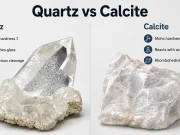
| Feature | Quartz | Calcite | Feldspar |
|---|---|---|---|
| Mohs hardness | 7 | 3 | Commonly around 6 |
| Cleavage | No prominent cleavage | Three perfect rhombohedral directions | Commonly two prominent directions |
| Typical fracture | Conchoidal | Often cleavage-controlled | Uneven or cleavage-controlled |
| Dilute HCl reaction | No effervescence | Commonly vigorous in calcite | No effervescence |
| Common appearance | Glassy, irregular grains or prisms | Rhombohedral crystals or masses | Blocky crystals or grains |
Quartz can also resemble natural or manufactured glass because both may display a glassy appearance and conchoidal fracture.
However, glass lacks a long-range crystalline structure, while quartz is crystalline.
Crystal habit, internal features, and appropriate laboratory tests may help distinguish them.
Quartz vs. Quartzite
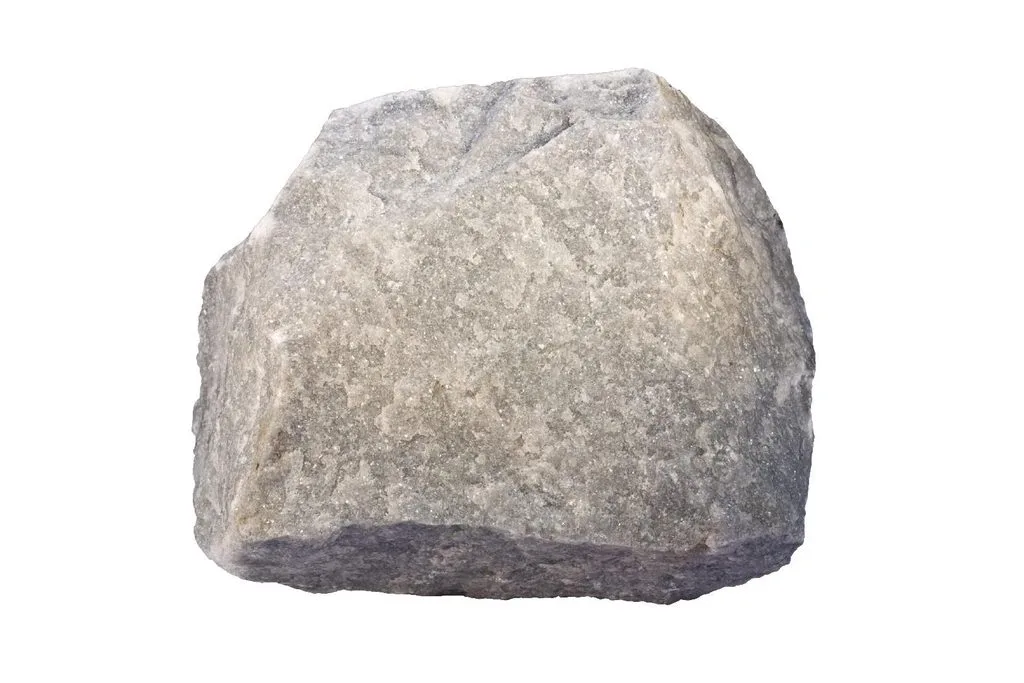
Quartz and quartzite are closely related but are not the same geological material.
Quartz is a mineral, whereas quartzite is a metamorphic rock composed predominantly of quartz.
Quartzite commonly forms through the metamorphism of quartz-rich sandstone.
During metamorphism, quartz grains recrystallize into a strongly interlocking texture.
Quartzite often resists mechanical breakdown because the original sediment grains become tightly bonded through recrystallization.
Although quartzite is generally described as a hard and durable rock, its behavior depends on mineral composition, fractures, and weathering.
Where Is Quartz Found?
Quartz is widespread across the world.
It occurs in major geological environments rather than being restricted to a few exceptional deposits.
Granitic Rocks and Pegmatites
Quartz is common in granite, pegmatites, and other silica-rich igneous rocks.
Pegmatite cavities may contain large, well-developed quartz crystals.
Hydrothermal Veins
Quartz veins occur in many mountain belts and mineralized regions.
They can form through the movement and cooling of silica-bearing geological fluids.
Sedimentary Deposits
Quartz grains are abundant in many river deposits, beaches, dunes, and sandstones.
Their distribution reflects sediment sources, transport processes, and depositional environments.
Metamorphic Terranes
Quartz occurs in metamorphic rocks such as quartzite, schist, and gneiss.
It is especially common in rocks derived from silica-rich protoliths.
Notable Quartz-Producing Regions
Brazil, Madagascar, the United States, Switzerland, and several other countries are well known for quartz crystal occurrences.
Specific deposits may produce unusually large crystals, distinctive inclusions, or highly valued colored varieties.
Industrial Uses of Quartz
Quartz and other silica-rich materials are important resources in manufacturing, construction, and technology.
Glass Manufacturing
Silica-rich sand is a major raw material used to manufacture many types of glass.
Its suitability depends on chemical purity, grain size, and the requirements of the intended glass product.
Electronics and Oscillators
Quartz is piezoelectric, meaning mechanical stress can generate an electrical response and an applied electric field can produce mechanical deformation.
Precisely cut quartz crystals are used in oscillators that provide stable timing signals.
Synthetic quartz crystals are particularly important for many electronic applications.
Construction Materials
Quartz-bearing sands and rocks are widely used in concrete, mortar, and other construction materials.
Their properties depend on particle characteristics and the overall composition of the aggregate.
Optical and Laboratory Applications
High-purity silica is used to manufacture specialized glass and optical materials.
Fused silica is an amorphous material produced from silica; it is not the same as a natural quartz crystal.
Ceramics and Industrial Fillers
Quartz and silica materials are used in ceramic formulations, engineered products, coatings, and various industrial fillers.
Jewelry and Decorative Objects
Colored quartz varieties, including amethyst, citrine, and rose quartz, are widely used as gemstones.
Well-formed crystals, mineral clusters, and geodes are also popular among collectors.
Quartz Dust and Health Risks
Quartz is generally safe to handle as an intact mineral specimen.
However, cutting, grinding, drilling, or crushing quartz-bearing materials can generate respirable crystalline silica dust.
Breathing this fine dust can cause serious health problems, including silicosis, lung cancer, and chronic obstructive pulmonary disease.
The main concern is repeated or significant inhalation of airborne respirable particles, not ordinary contact with an undisturbed quartz crystal.
Appropriate dust-control measures, including suitable wet methods, local exhaust ventilation, and occupational respiratory protection where required, are important when processing silica-containing materials.
Dry grinding or crushing quartz without adequate controls should be avoided.
Geological Importance of Quartz
Quartz is one of the most useful minerals for understanding Earth’s geological processes.
Its presence and abundance help geologists classify many igneous and metamorphic rocks.
In sedimentary geology, quartz grains provide information about weathering, sediment provenance, transportation, and recycling.
Quartz in hydrothermal veins may preserve fluid inclusions that record aspects of ancient geological fluids and mineral-forming conditions.
Quartz microstructures in deformed rocks can also reveal information about tectonic stress, recrystallization, and crustal deformation.
In some geological settings, quartz can be used in geochronological and thermochronological investigations through associated mineral phases or specialized analytical techniques.
Its widespread occurrence makes quartz an important mineral in field geology, petrography, economic geology, and geological research.
Frequently Asked Questions About Quartz
What is quartz made of?
Quartz is composed of silicon dioxide (SiO₂), consisting of silicon and oxygen atoms arranged in a crystalline framework.
Is quartz a mineral or a rock?
Quartz is a mineral. Rocks such as granite, sandstone, and quartzite can contain large amounts of quartz.
What is the hardness of quartz?
Quartz has a Mohs hardness of 7 and is one of the reference minerals used in the Mohs hardness scale.
Is quartz trigonal or hexagonal?
Quartz is trigonal under ordinary surface conditions, although its crystals commonly display six-sided, hexagonal-looking shapes.
How does quartz form?
Quartz can crystallize from magma or silica-bearing fluids, recrystallize during metamorphism, and form sedimentary cement or overgrowths.
What are the main varieties of quartz?
Common varieties include rock crystal, amethyst, citrine, rose quartz, smoky quartz, and milky quartz. Chalcedony and agate are also closely associated microcrystalline silica varieties.
Why does quartz occur in so many rocks?
Quartz is relatively stable under many surface conditions and forms in several geological environments, making it an abundant component of Earth’s continental crust.
Does quartz have cleavage?
Quartz does not have prominent cleavage and commonly displays conchoidal fracture.
Is quartz the same as glass?
No. Quartz has a crystalline atomic structure, while ordinary glass is amorphous.
Can quartz contain gold?
Yes. Quartz veins can occur in gold-bearing mineral systems, but most quartz does not contain economically significant gold.
Is quartzite the same as quartz?
No. Quartzite is a metamorphic rock composed predominantly of quartz, while quartz is the mineral itself.
Is quartz dangerous?
An intact quartz specimen is generally safe to handle. However, inhaling respirable crystalline silica dust produced during cutting, grinding, or crushing can cause serious diseases.
Conclusion
Quartz is a fundamental mineral in Earth’s crust, occurring in igneous, sedimentary, and metamorphic environments.
Its crystalline structure, hardness, chemical composition, and resistance to many weathering processes make it both geologically important and industrially valuable.
From transparent quartz crystals to amethyst geodes, sandstone grains, and quartzite, the mineral appears in many forms that reflect different geological histories.
Understanding quartz formation, physical properties, mineral varieties, and identification provides valuable insight into Earth’s rocks, mineral deposits, and surface processes.
Scientific References and Further Reading
- Mindat.org. Quartz: Mineral Information, Data and Localities. https://www.mindat.org/min-3337.html
- University of Cambridge, Department of Earth Sciences. Quartz – Mineral Collections. https://p1acollections.esc.cam.ac.uk/p1acollections/exhibits/show/minerals/quartz.html
- Geosciences LibreTexts. Quartz – Mineral Properties and Identification. https://geo.libretexts.org/Bookshelves/Geology/Gemology/16%3A_Gemstones/16.05%3A_Quartz
- International Gem Society. Quartz Value, Price, and Jewelry Information. https://www.gemsociety.org/article/quartz-jewelry-and-gemstone-information/
- Occupational Safety and Health Administration (OSHA). Silica, Crystalline – Overview. https://www.osha.gov/silica-crystalline