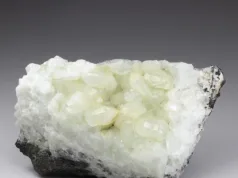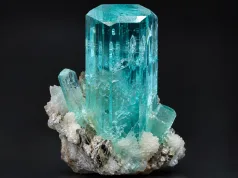



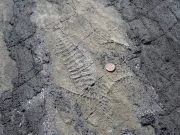























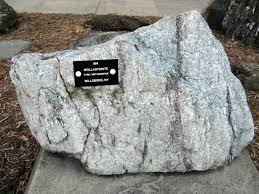
Wollastonite is a calcium silicate mineral with the ideal chemical formula CaSiO₃. It is a pyroxenoid, an inosilicate characterized by chains of silica tetrahedra with a three-tetrahedron repeat. It typically occurs as white to gray bladed or acicular aggregates in metamorphosed carbonate rocks and skarn deposits. Its chemistry and elongated particle shape make it an important industrial mineral.
Physical and chemical properties
| Property | Description |
|---|---|
| Formula | CaSiO₃ |
| Mineral class | Inosilicate; pyroxenoid |
| Crystal system | Triclinic for common wollastonite; monoclinic polytypes also occur |
| Color | White, gray, occasionally pale green or pink |
| Streak | White |
| Luster | Vitreous to pearly |
| Habit | Bladed, acicular, radiating or massive |
| Mohs hardness | 4.5–5 |
| Specific gravity | Approximately 2.9 |
| Cleavage | Distinct to perfect in several directions |
| Tenacity | Brittle |
| Transparency | Transparent to translucent |
Ideal wollastonite contains approximately 48.3 weight percent CaO and 51.7 weight percent SiO₂ when expressed as oxide equivalents. These are compositional conventions, not separate oxide minerals within the crystal. Iron, manganese and magnesium can substitute for some calcium. Wollastonite was named after English scientist William Hyde Wollaston (1766–1828).
Crystal structure and optical properties
Unlike pyroxenes, which have a two-tetrahedron chain repeat, wollastonite has a three-tetrahedron repeat. Different stacking arrangements produce polytypes, including triclinic and monoclinic forms. Pseudowollastonite is a distinct high-temperature CaSiO₃ polymorph with a different silicate structure; it should not be confused with ordinary wollastonite.
| Property | Description |
|---|---|
| Optical character | Biaxial, commonly negative |
| Refractive indices | nα 1.616–1.640; nβ 1.628–1.650; nγ 1.631–1.653 |
| Birefringence | Approximately 0.013–0.017 |
| Relief | Moderate |
| Pleochroism | Generally absent in colorless material |
In thin section, wollastonite commonly appears colorless in plane-polarized light and displays low-order interference colors under crossed polars. Elongated grains and cleavage are useful clues, but optical orientation and composition affect measured properties. X-ray diffraction can distinguish structural variants.
Geological formation and occurrence
Wollastonite commonly forms when silica-bearing limestone undergoes contact metamorphism near an igneous intrusion. A representative decarbonation reaction is:
CaCO₃ + SiO₂ ⇌ CaSiO₃ + CO₂
Calcite and quartz react to produce wollastonite and carbon dioxide. The equilibrium depends on temperature, pressure and fluid composition; there is no universal formation temperature. At a given pressure, a lower carbon dioxide activity generally favors wollastonite formation. Silica-rich fluids can also introduce silica into carbonate rocks during metasomatism, producing wollastonite-bearing skarns.
Associated minerals include calcite, quartz, diopside, grossular garnet and vesuvianite. Wollastonite can also occur in regionally metamorphosed calc-silicate rocks and some unusual igneous settings. Its presence helps geologists interpret metamorphic reactions and fluid-rock interaction.
Identification in hand specimens
Look for white or pale bladed aggregates in a calc-silicate rock. Wollastonite can scratch calcite but is generally softer than quartz. Fresh wollastonite does not show the vigorous effervescence typical of calcite in dilute hydrochloric acid, although associated carbonate minerals may react. Habit alone is not diagnostic.
| Property | Description |
|---|---|
| Calcite | Softer (Mohs 3); strong acid effervescence |
| Tremolite | Typically harder; amphibole cleavage near 56° and 124° |
| Diopside | Typically harder (5.5–6.5); pyroxene cleavage near 90° |
| Gypsum | Much softer (Mohs 2) |
For ambiguous samples, use petrography, Raman spectroscopy or X-ray diffraction. Avoid generating dust when handling fibrous-looking mineral specimens.
Industrial uses
Commercial wollastonite is processed into grades with different particle sizes, aspect ratios, brightness and impurity levels. High-aspect-ratio particles can reinforce polymer composites, while finely ground grades serve as functional fillers.
| Property | Description |
|---|---|
| Ceramics | Calcium and silica source; can reduce firing shrinkage and carbonate-related gas release |
| Plastics and composites | Reinforcement, stiffness and dimensional stability |
| Paints and coatings | Functional filler affecting film properties and rheology |
| Metallurgy | Component of selected flux and casting powder formulations |
| Friction materials | Reinforcing filler in engineered formulations |
Performance depends on particle geometry, surface treatment and the surrounding material. Wollastonite has been used in some asbestos-replacement formulations, but this does not mean all wollastonite dust is harmless. Industrial exposure controls and product-specific safety data remain important.
Deposits and production
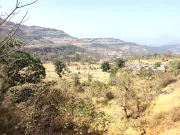
Notable occurrences include the Adirondack region of New York, the Pilares deposit in Sonora, Mexico, and deposits in Finland, India and China. Commercial viability depends on ore purity, recoverable tonnage, mineral liberation, processing costs and market requirements. Associated calcite, garnet and iron-bearing minerals may need to be separated through crushing, grinding and beneficiation. Production and reserve estimates change over time; the USGS commodity reports are preferable to historical price figures for current market context.
Frequently asked questions
Is wollastonite a pyroxene?
No. It is a pyroxenoid with a different silicate chain repeat.
Is wollastonite asbestos?
No. Wollastonite is not one of the regulated asbestos mineral types, although elongated particles and respirable dust require appropriate occupational exposure controls.
Why is wollastonite common in skarns?
Skarn formation brings calcium-rich carbonate rocks into contact with heat and often silica-bearing fluids, creating favorable conditions for calcium silicate reactions.
References
Handbook of Mineralogy; USGS — Wollastonite Statistics and Information.