






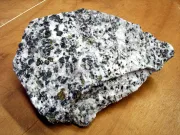











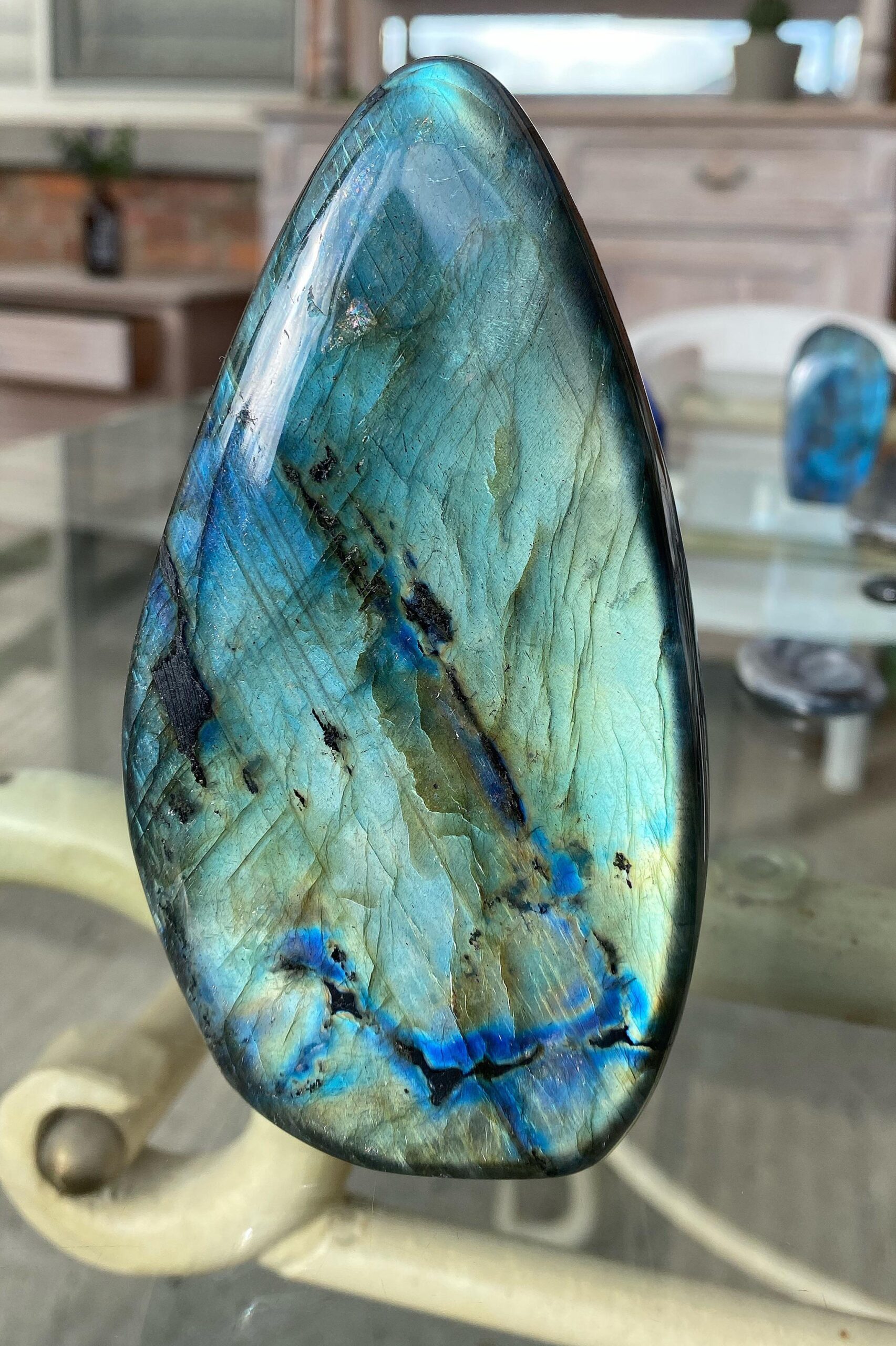
Labradorite is a calcium-rich plagioclase feldspar (An50–An70) known for labradorescence: vivid, angle-dependent flashes of blue, green, gold and other colors caused by nanoscale exsolution layers. It occurs in mafic igneous rocks and anorthosite and is widely used as an ornamental gemstone.
What Is Labradorite? Mineral Composition and Classification
Labradorite is a calcium-rich member of the plagioclase feldspar solid-solution series, between sodium-rich albite (NaAlSi₃O₈) and calcium-rich anorthite (CaAl₂Si₂O₈). The conventional labradorite composition is An50–An70: approximately 50–70 mol% anorthite component and 30–50 mol% albite component. Its generalized formula can be written (Ca,Na)(Al,Si)₄O₈, with Al and Si proportions adjusting to charge balance.
The name describes composition, not a guarantee of iridescence. A chemically identified labradorite can look gray, white or translucent without vivid flashes. The gem trade often emphasizes iridescent material, but mineralogical classification is based primarily on composition and structure.
Like other plagioclase feldspars, labradorite has a triclinic crystal structure and commonly shows repeated polysynthetic twinning. It is a rock-forming silicate, not a distinct mineral group unrelated to feldspar.
Physical and Optical Properties
Labradorite typically has Mohs hardness 6–6.5, vitreous to slightly pearly luster, white streak, and two prominent cleavage directions intersecting close to a right angle. Its specific gravity is commonly around 2.69–2.72, though measured values depend on composition and inclusions.
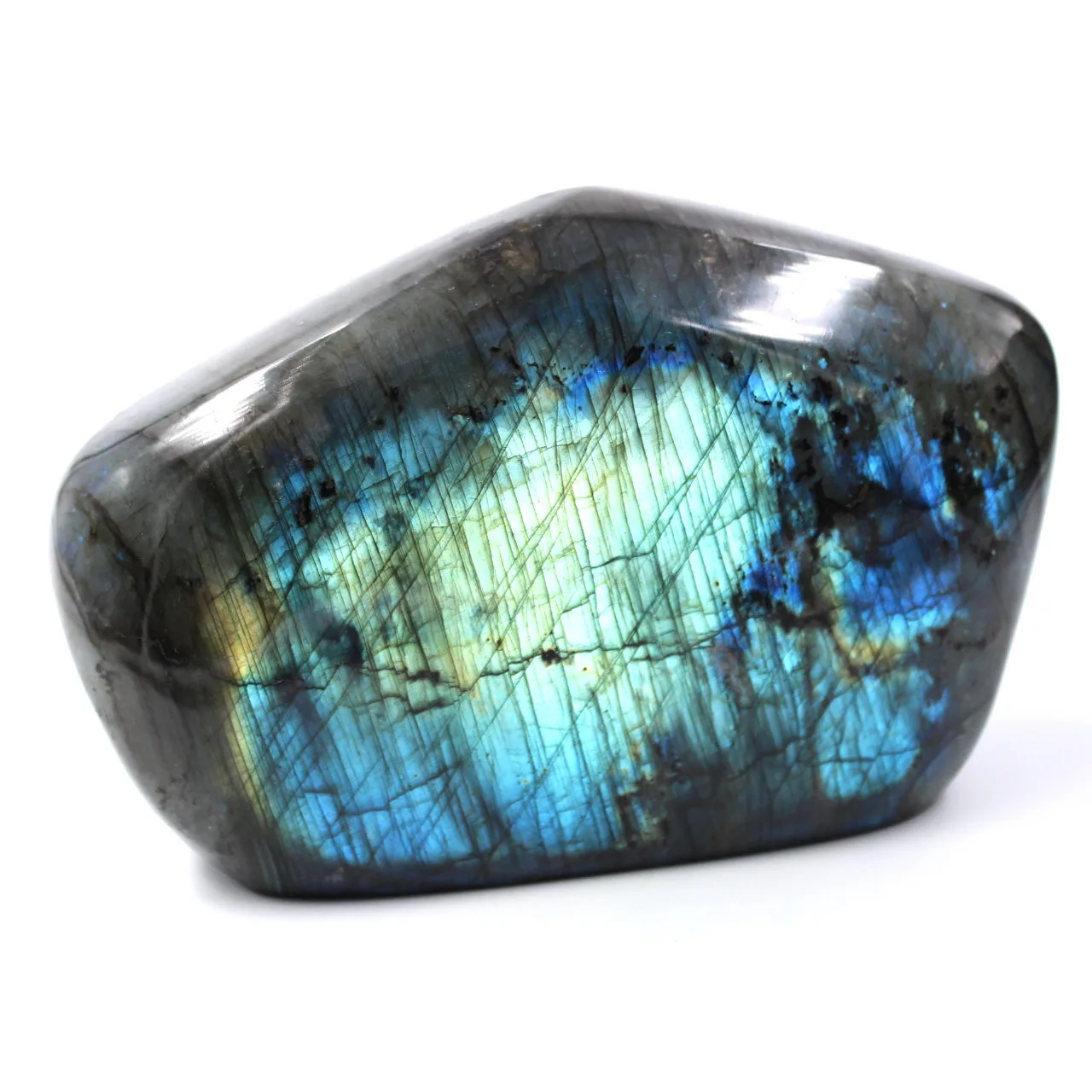
The mineral may be gray, greenish, colorless, yellowish or dark in ordinary light. Gem specimens can be translucent to opaque, while some transparent plagioclase is faceted. Labradorite’s refractive indices commonly fall around 1.56–1.57, varying with chemical composition.
Cleavage makes labradorite vulnerable to splitting under sharp impact even though it is harder than many common decorative stones. Strong iridescence does not imply exceptional scratch resistance.
Labradorescence: Why Labradorite Flashes Blue, Green and Gold
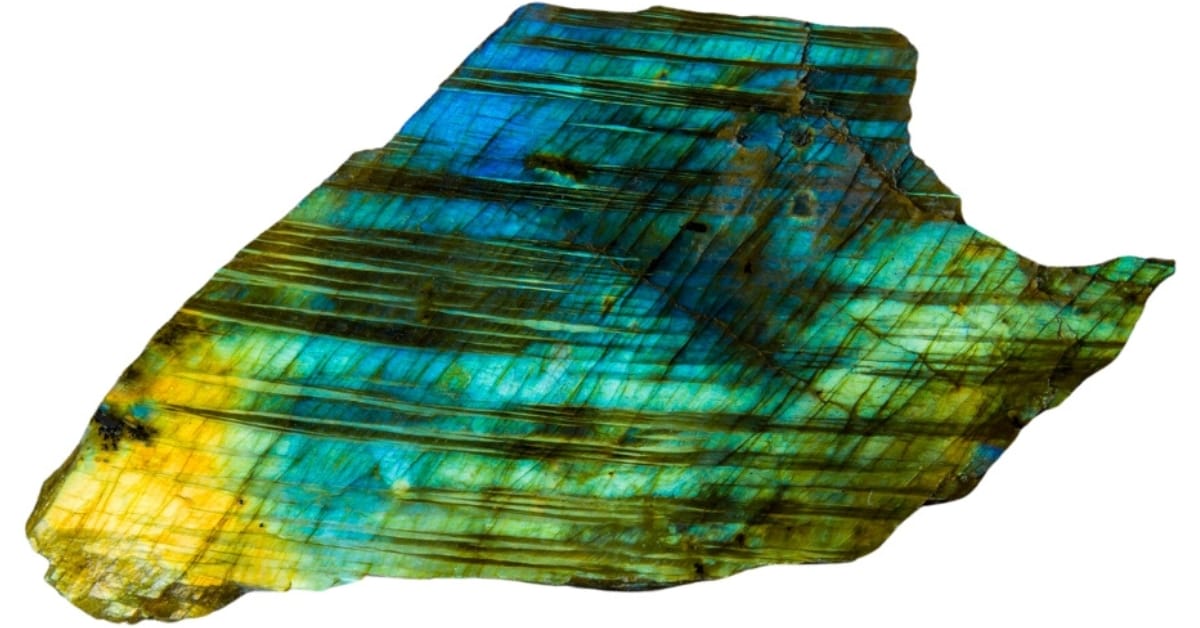
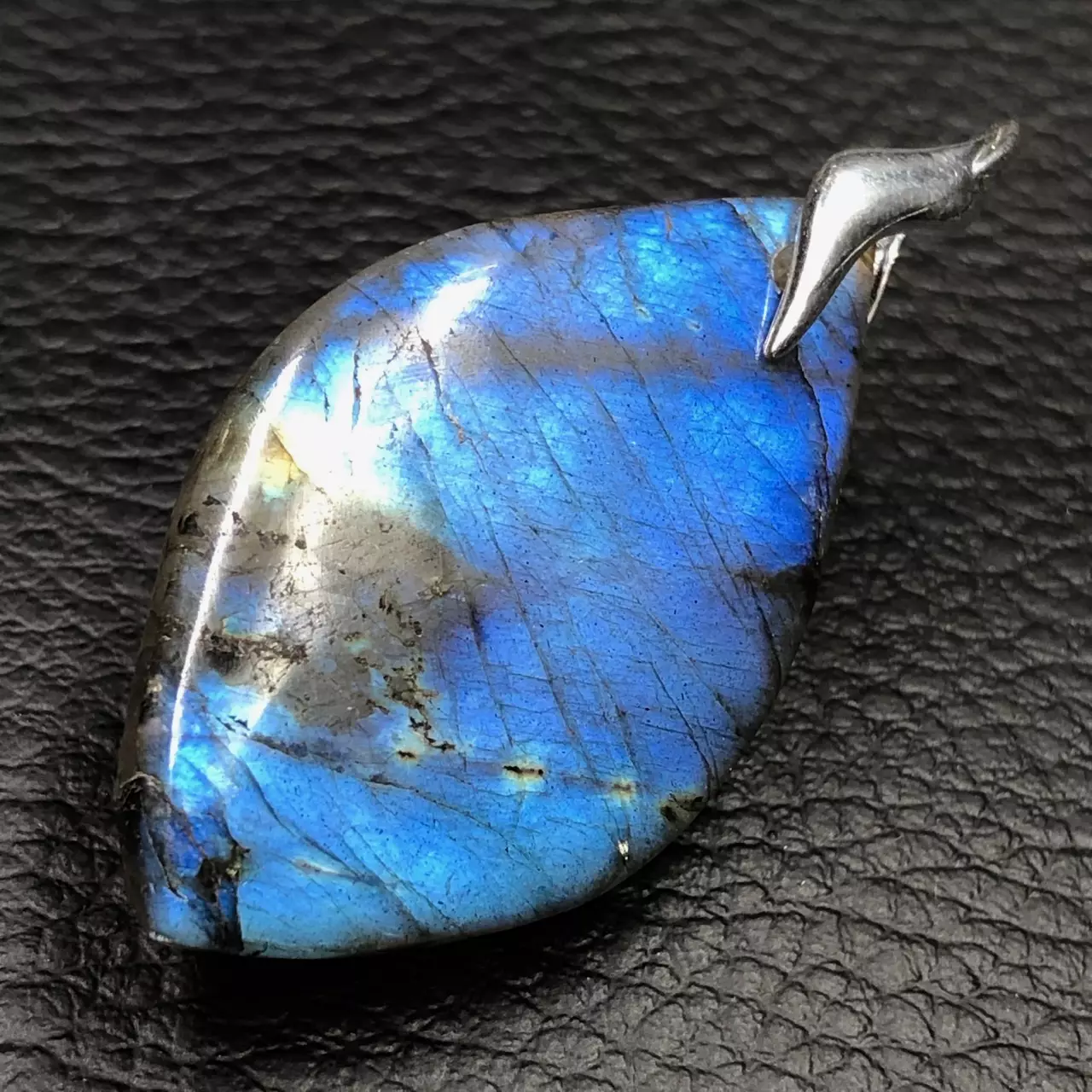
Labradorescence is a directional optical effect produced by light interacting with submicroscopic layers of slightly different feldspar compositions. During slow cooling, a once more uniform feldspar may develop alternating calcium-rich and sodium-rich exsolution lamellae. Interference and diffraction of reflected light from these layers produce vivid flashes.
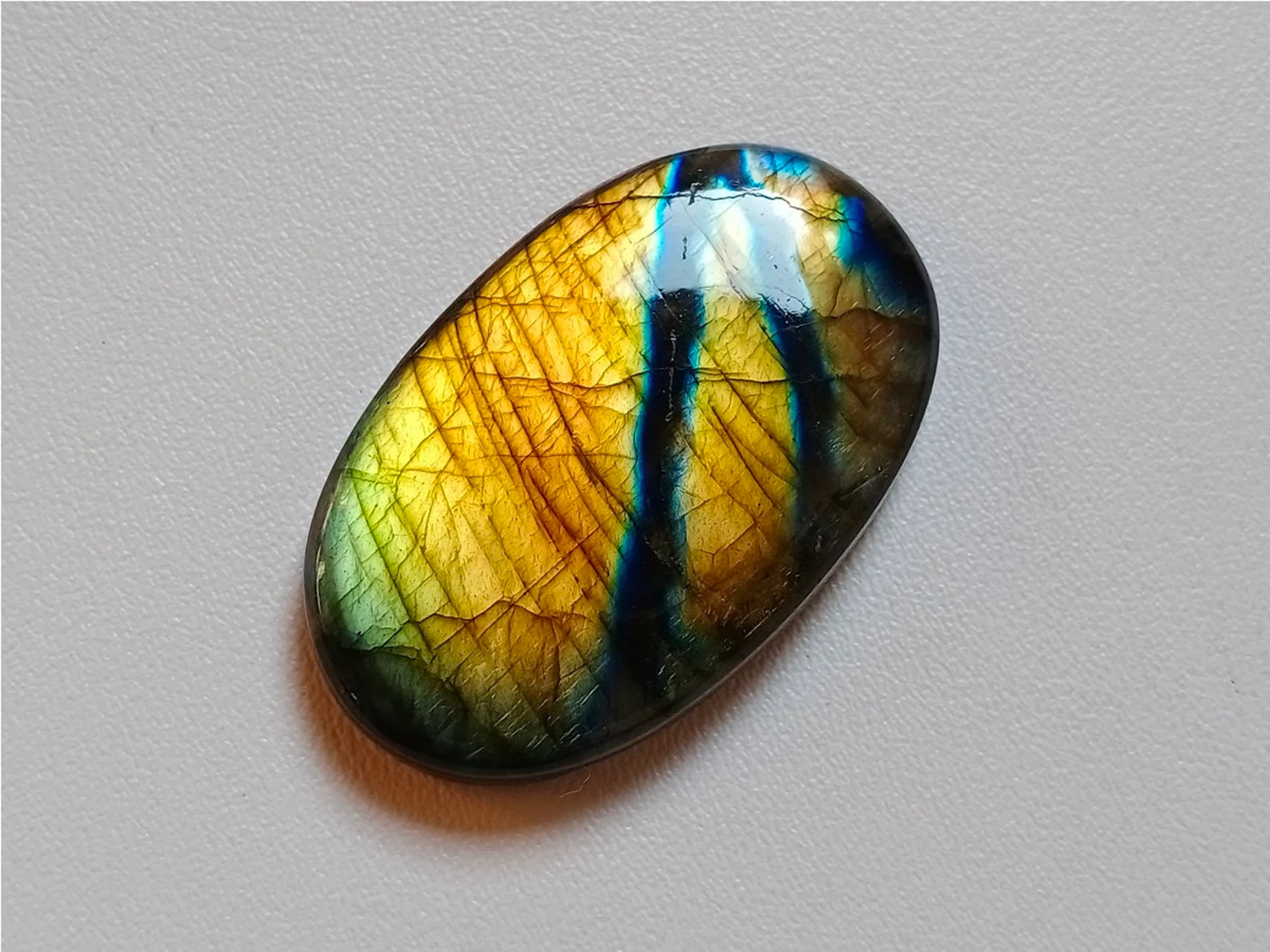
The effect depends on layer thickness, orientation, wavelength and the angle of illumination. Blues and greens are common; yellow, orange, red and multicolored flashes occur in some specimens. Turning the stone can make an intense flash disappear because the internal layers reflect light most strongly in certain directions.
This mechanism is different from pigment-based color, and it is not simply light bouncing off cracks or surface coatings. The GIA review of phenomenal gemstones discusses the nanoscale textures behind labradorescence and related feldspar effects.
Geological Formation and Host Rocks
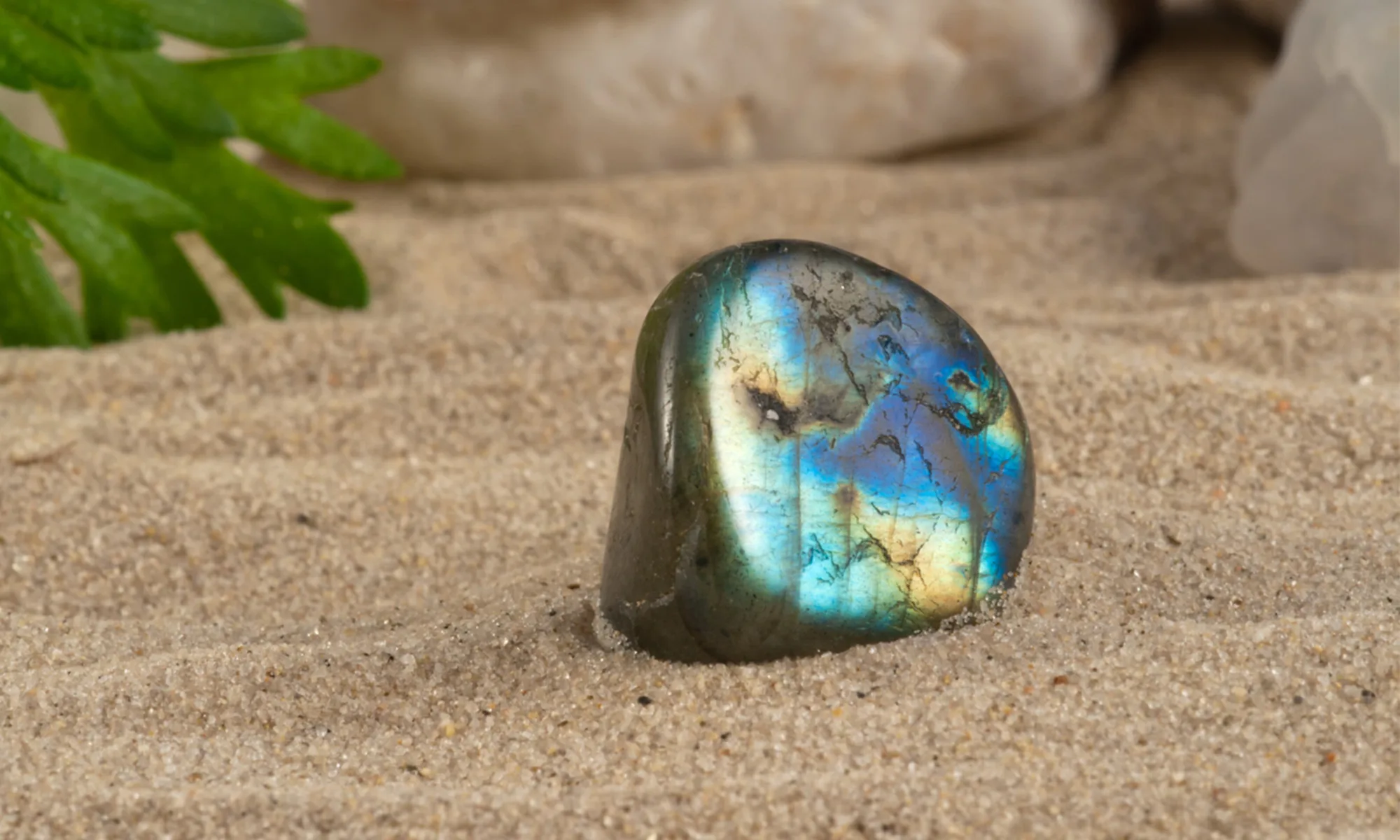
Labradorite crystallizes in a range of igneous settings, particularly in mafic intrusive and volcanic rocks such as gabbro and basalt, and is a major constituent of some anorthosites. It can also occur in metamorphic rocks where plagioclase compositions are appropriate.
Some of the most strongly iridescent labradorite forms in slowly cooled plutonic rocks, where diffusion allows exsolution textures to develop. Rapidly cooled labradorite may lack the necessary internal layering even when its overall chemical composition lies in the labradorite range.
Anorthosite is especially important because it may contain abundant plagioclase with large, well-developed crystals. Labradorite from the Nain anorthosite complex in Labrador, Canada, is historically significant.
Major Localities and Varieties: Labrador, Finland and Madagascar
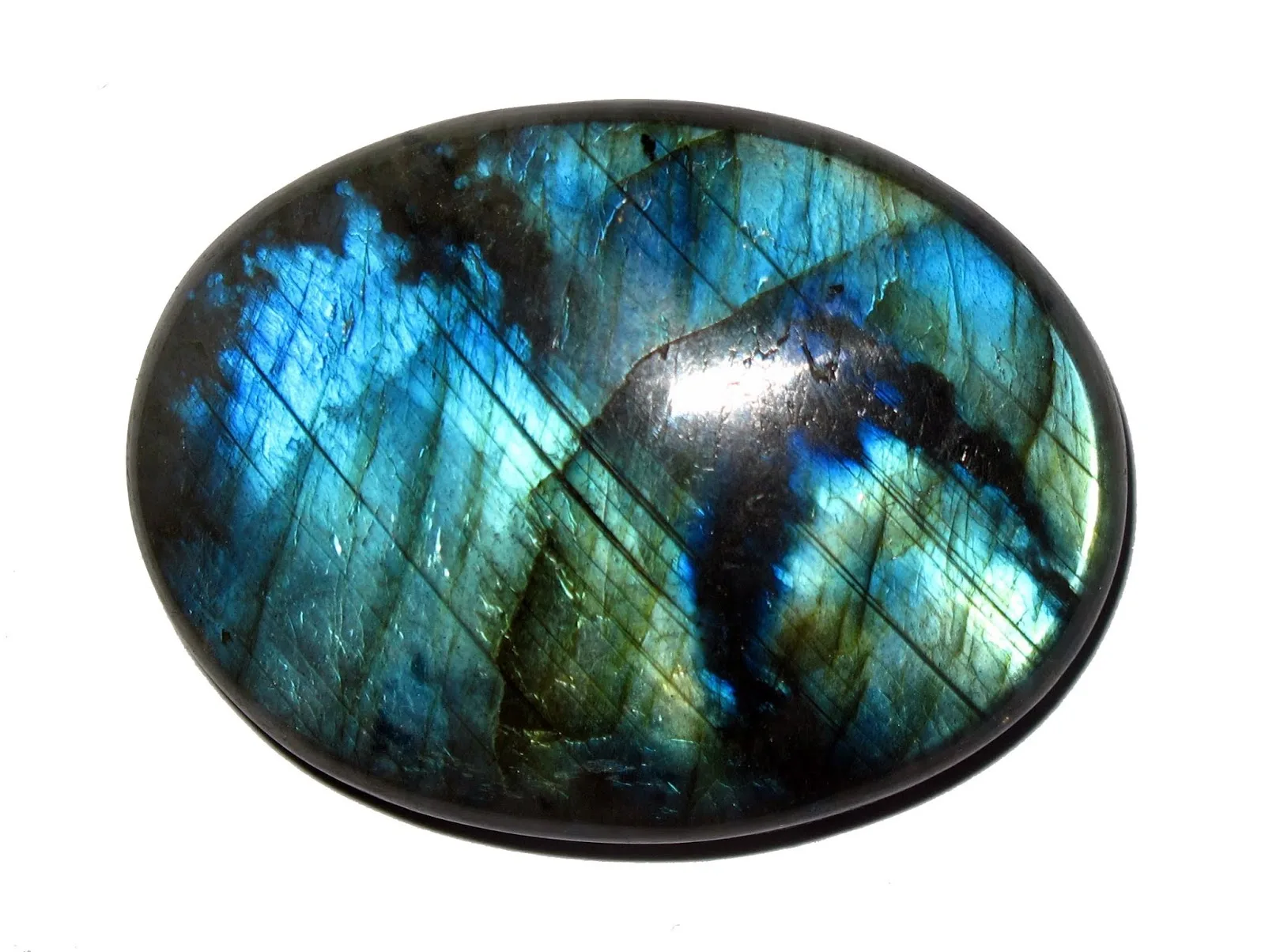
Labradorite was named for the Labrador region of Canada, where iridescent plagioclase became well known from the late eighteenth century onward. Other notable sources of ornamental and gem material include Finland and Madagascar; labradorite also occurs in many other countries as a common rock-forming mineral.
Spectrolite is a trade name especially associated with vivid, multicolored labradorite from Finland. It is not a separate mineral species. Material sold as rainbow moonstone is commonly a transparent plagioclase feldspar, often labradorite, whose iridescence differs from the classic adularescence of potassium-rich moonstone.
Golden and some Oregon sunstones can also have labradorite-range plagioclase compositions. Sunstone’s aventurescence, however, often results from reflective mineral inclusions rather than the same exsolution-driven optical effect.
Labradorite vs. Moonstone, Sunstone and Other Feldspars
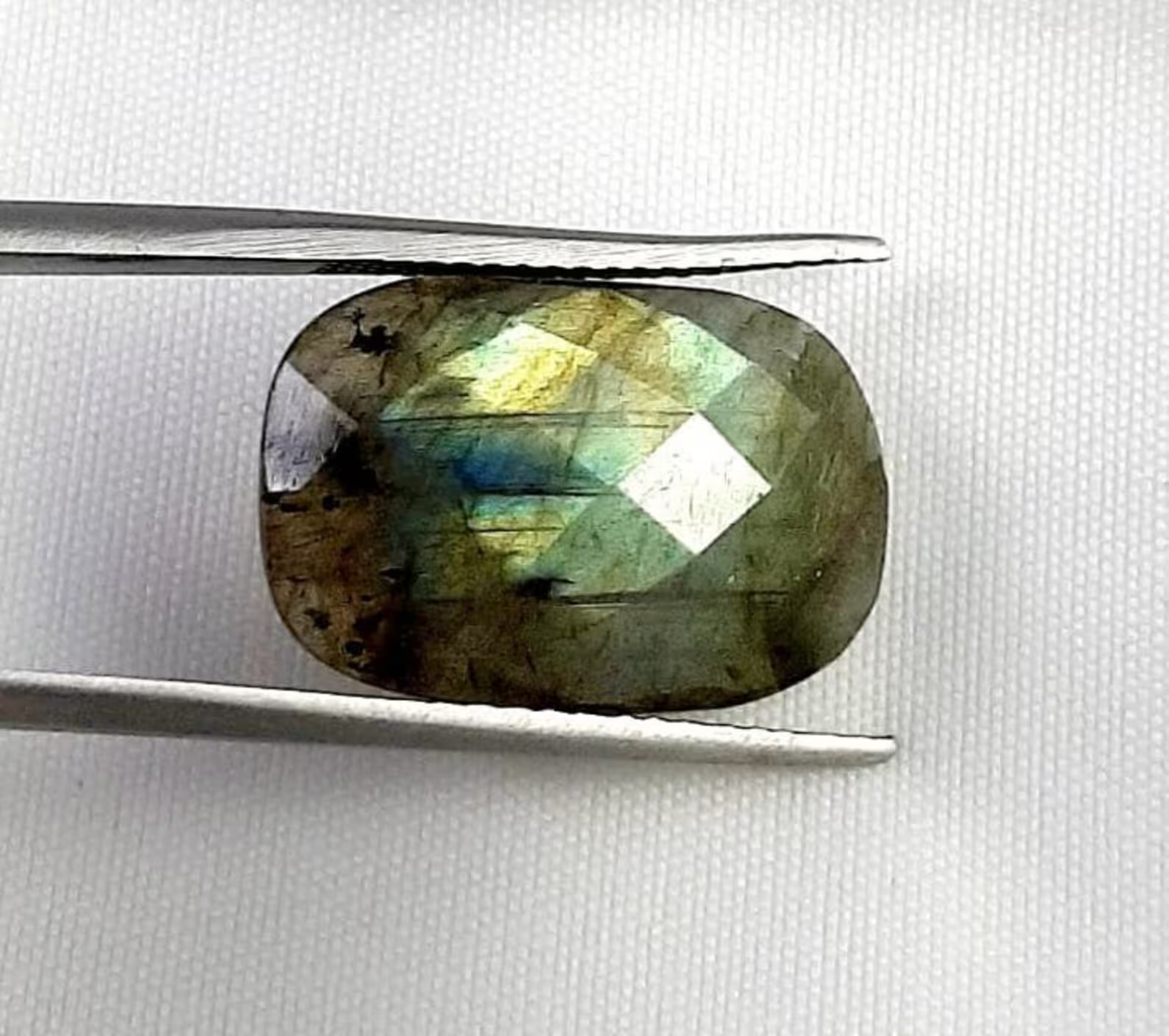
Moonstone, sunstone and labradorite are trade or gemological names that can overlap with different feldspar compositions. The terms should not be treated as a simple list of mutually exclusive mineral species.
Labradorescence is usually a colorful, sharply directional interference effect. Adularescence in typical moonstone is a softer floating sheen related to exsolution in other feldspar compositions. Aventurescence in many sunstones is glitter produced by oriented reflective inclusions such as copper or iron oxides.
Visual identification can suggest the effect but cannot always establish the exact albite–anorthite composition. For a definitive mineralogical classification, optical testing or laboratory analysis may be required.
Gem Cutting, Identification and Care
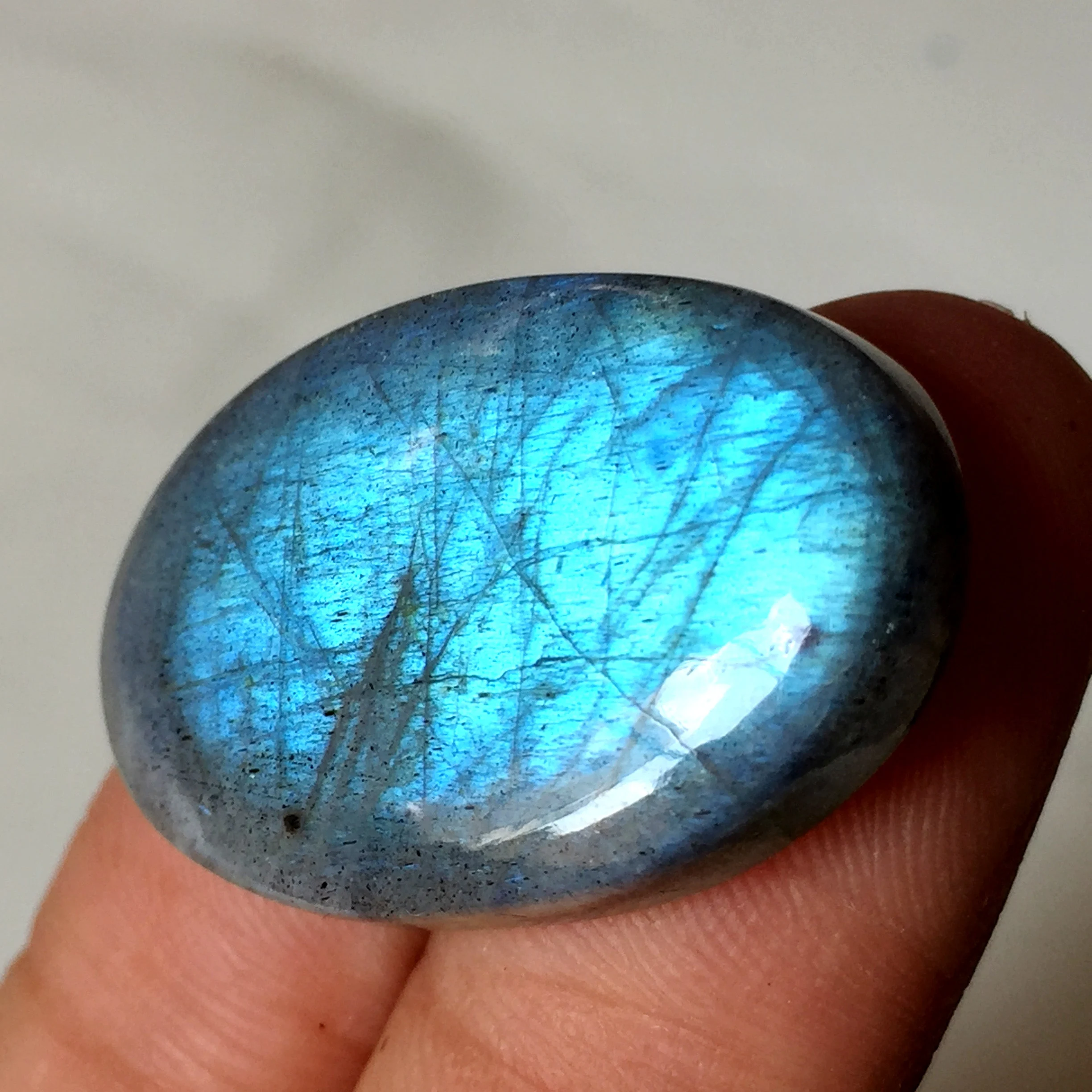
Cabochons, polished freeform stones and decorative slabs are commonly cut to show the strongest flash. Cutting orientation is crucial: a stone can contain excellent exsolution textures but display weak labradorescence if its polished face is poorly oriented relative to the internal layers.
For practical identification, look for a feldspar-like body color, directional flashes, characteristic cleavage and the expected hardness range. Compare with coated glass, synthetic imitations and other iridescent materials. Color alone, online photographs or a single scratch test are not definitive evidence of authenticity.
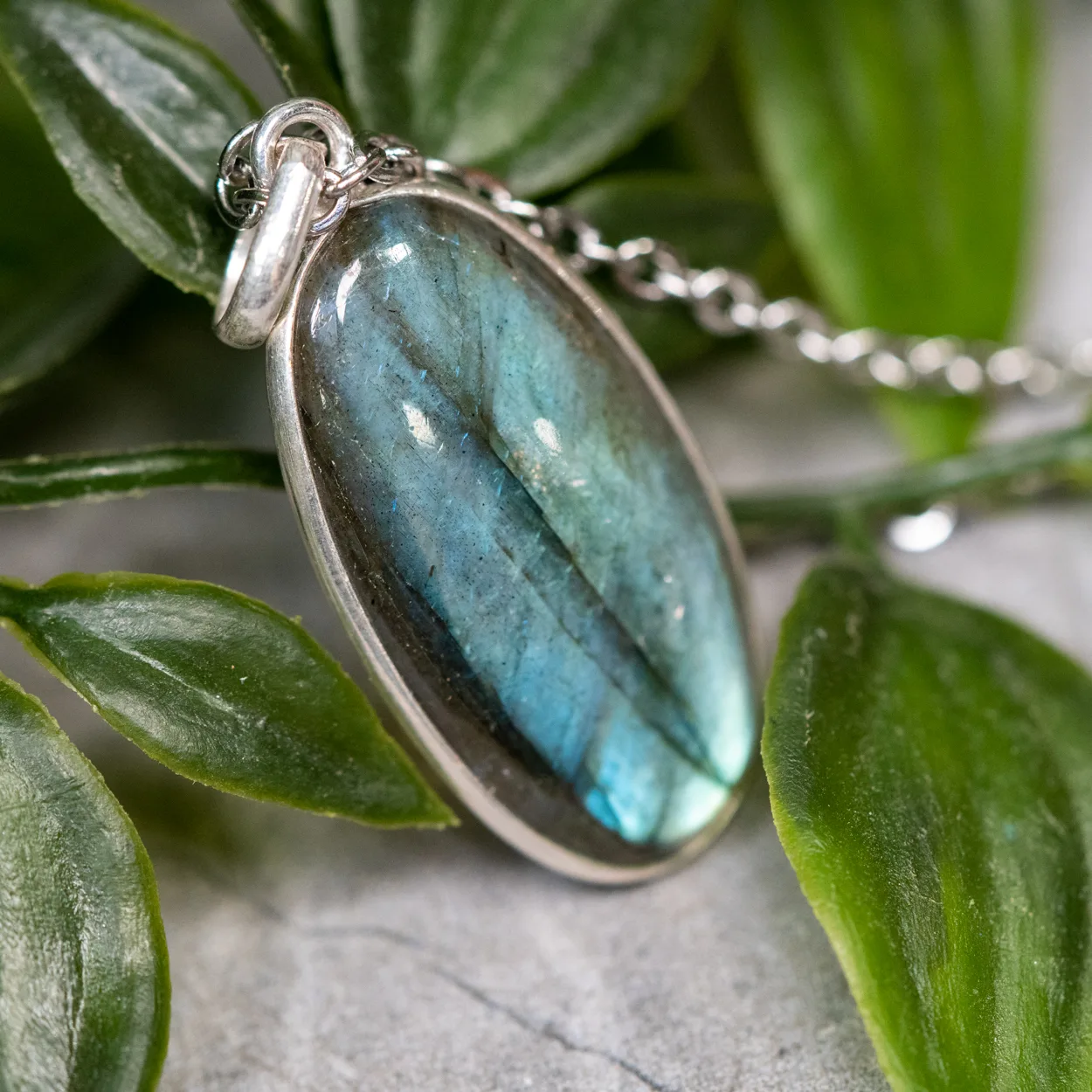
Clean labradorite with lukewarm water, mild soap and a soft cloth. Avoid ultrasonic and steam cleaning, hard knocks and abrasive storage alongside harder gemstones. Protective jewelry settings reduce the risk of cleavage-related damage.
Frequently Asked Questions
Is labradorite a mineral or a gemstone? Both terms can apply. Labradorite is a compositional variety of plagioclase feldspar, and attractive specimens are cut as gemstones.
Does every labradorite show labradorescence? No. The optical effect requires suitable internal exsolution structures and viewing geometry.
What causes the blue flash? Interference and diffraction of light from nanoscale feldspar layers formed by exsolution.
Is spectrolite different from labradorite? Spectrolite is a commercial name for particularly colorful labradorite, notably from Finland.
Can labradorite be scratched? Yes. Its Mohs hardness of roughly 6–6.5 and its cleavage mean it needs care in jewelry.
Scientific References and Related Articles
Mindat — Labradorite: composition, mineral classification, properties and labradorescence.
GIA, Gems & Gemology (2025): optical phenomena in gemstones, including nanoscale exsolution textures in iridescent feldspars.
GIA Gem Database — Labradorite specimen: measured gemological properties and documented optical phenomenon.
Related GeologyScience reading: Green Labradorite, Golden or Yellow Labradorite, and What Is Moonstone?.