
























In structural geology, hinterland and foreland describe positions relative to an evolving mountain belt. The hinterland lies toward the internal, commonly strongly deformed part of an orogen, whereas the foreland is the adjacent external region toward which a fold-and-thrust belt commonly propagates. The terms describe tectonic relationships rather than a fixed compass direction.
What Is the Hinterland?
The hinterland typically includes rocks that have experienced substantial shortening, crustal thickening, metamorphism or magmatism during mountain building. Deeply exposed crystalline rocks, ductile shear zones and complex folds may occur there. The details depend on the tectonic history: not all hinterland rocks are metamorphic, and a hinterland need not correspond exactly to the highest modern mountains.
What Is the Foreland?
The foreland lies beyond the advancing deformation front, on the external side of the mountain belt. It may contain relatively undeformed continental crust and its sedimentary cover, although faults, folds and flexural deformation can affect this region. As shortening progresses, parts of the former foreland may become incorporated into the thrust belt.
Fold-and-Thrust Belts
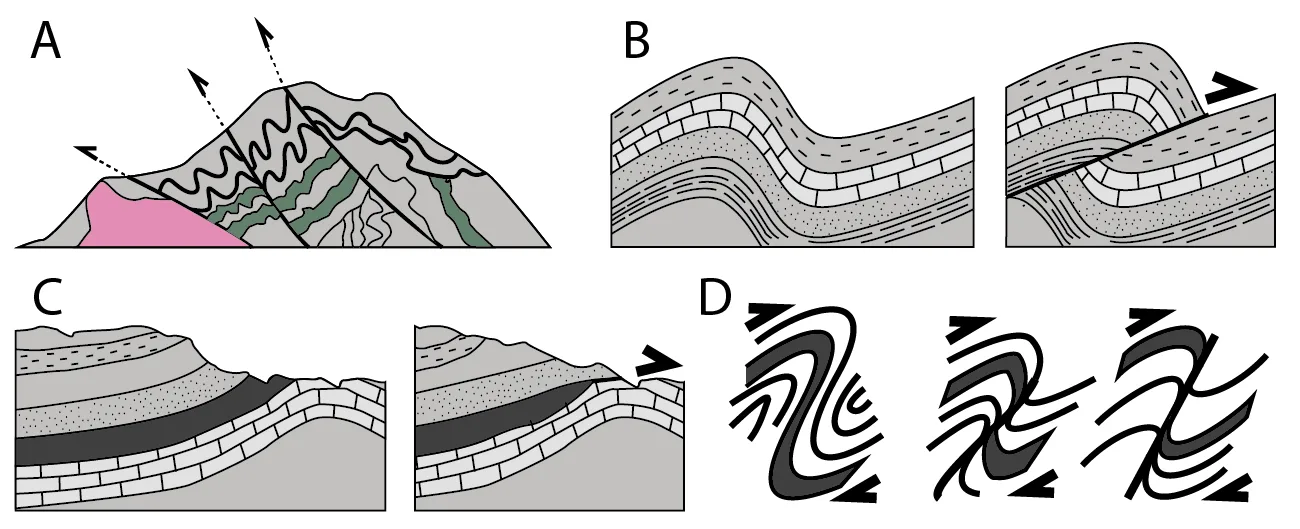
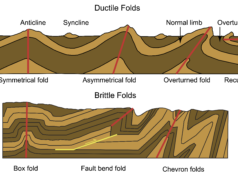
Convergence shortens the crust by folding strata and displacing rocks along thrust faults. In many belts, deformation advances outward from older internal structures toward younger external structures. Thin-skinned thrusting predominantly involves sedimentary cover above a detachment; thick-skinned deformation also involves basement rocks. See faults and folds for structural relationships.
Foreland Basins and Sedimentation
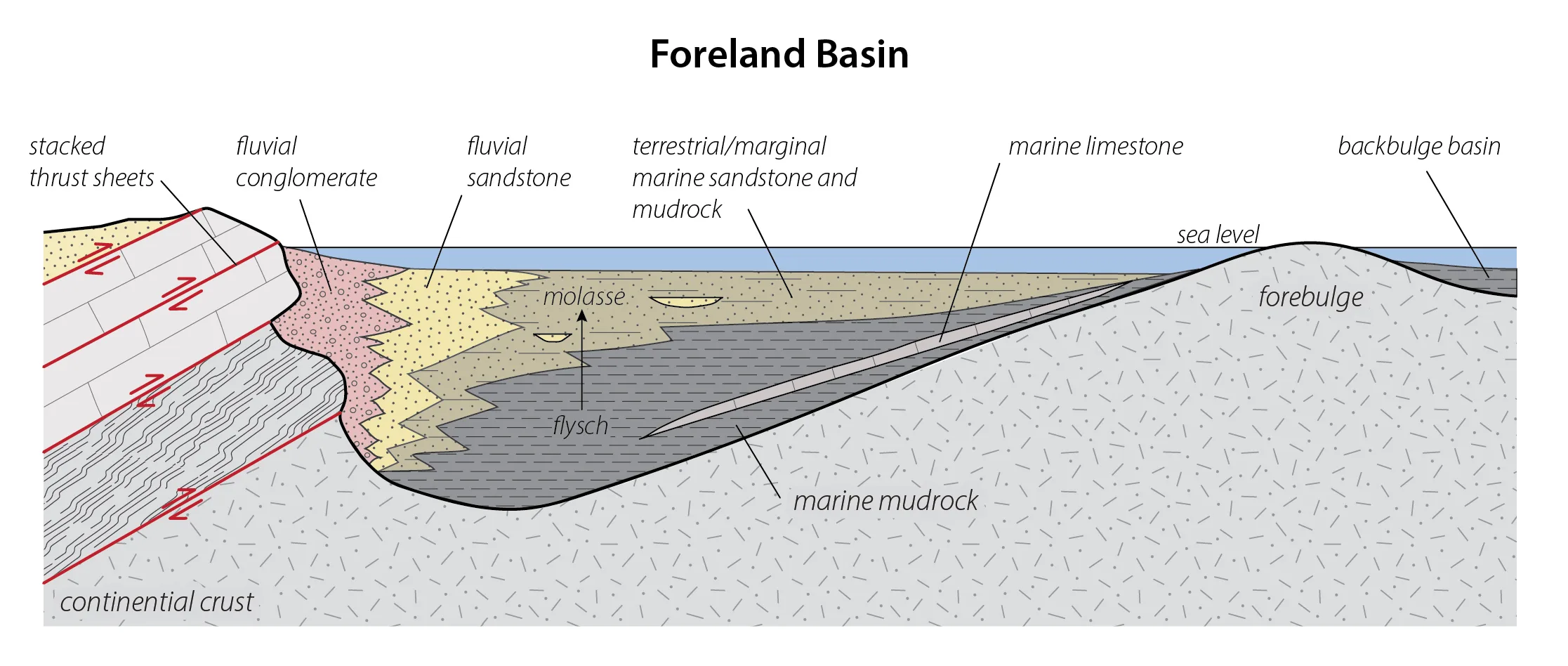
Loading by an evolving mountain belt can flex the adjacent lithosphere, creating space for sediment accumulation. Rivers, submarine systems and other depositional processes transport sediment eroded from the orogen into this accommodation space. Basin deposits preserve evidence of uplift, erosion, sediment routing and changing deformation.
A useful conceptual model distinguishes wedge-top deposits on the active thrust wedge, the foredeep near the mountain front, a flexural forebulge and a more distal back-bulge region. Actual basin architecture varies with lithospheric strength, loading history and tectonic setting.
Hinterland and Foreland: Comparison
Position: the hinterland is toward the interior of the orogen; the foreland lies toward the external continental region.
Deformation: the hinterland commonly preserves more complex or deeper deformation, while the foreland may retain relatively less deformed strata. Both regions can deform.
Sedimentation: erosion of the mountain belt provides sediment to nearby basins, including foreland basins. Sediment provenance can therefore help reconstruct the evolving relationship between the two regions.
Geological Examples
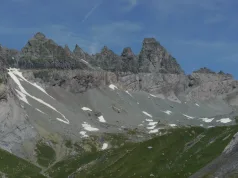
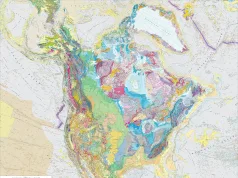
The Alps illustrate the relationship between internal crystalline domains, external thrust belts and adjacent sedimentary basins, including the North Alpine Foreland Basin. Along the Himalayan system, deformation and sediment delivery are associated with the Indo-Gangetic foreland basin. The North American Cordilleran thrust belts provide additional examples of shortening and associated basin evolution.
How Geologists Identify These Regions
Geological maps, cross-sections, stratigraphic ages, fault geometry, metamorphic assemblages and seismic reflection profiles help establish the position of the deformation front and reconstruct the internal structure. Sediment composition and age constraints help determine when source regions were uplifted and eroded. A single rock sample or elevation measurement is not enough to define a tectonic region.
Frequently Asked Questions
Is the hinterland always older than the foreland?
No. The terms refer to structural position, not the age of every rock unit.
Is every foreland a sedimentary basin?
No. A foreland is a tectonic region; a foreland basin is an accommodation system that can develop there.
Can the foreland become part of the mountain belt?
Yes. Advancing thrusts may incorporate formerly external rocks and sediments into the deforming wedge.
Scientific References
Fuentes et al. — Jurassic onset of foreland basin deposition in northwestern Montana
DeCelles and Giles — Foreland basin systems
Featured diagram: Page Quinton, Wikimedia Commons, CC BY-SA 4.0.