

























Taaffeite is a rare magnesium beryllium aluminum oxide, commonly magnesiotaaffeite-2N’2S (Mg₃BeAl₈O₁₆), with properties similar to spinel. Its identification depends on crystal structure and optical properties, not color or rarity alone.
Discovery and Mineral Classification
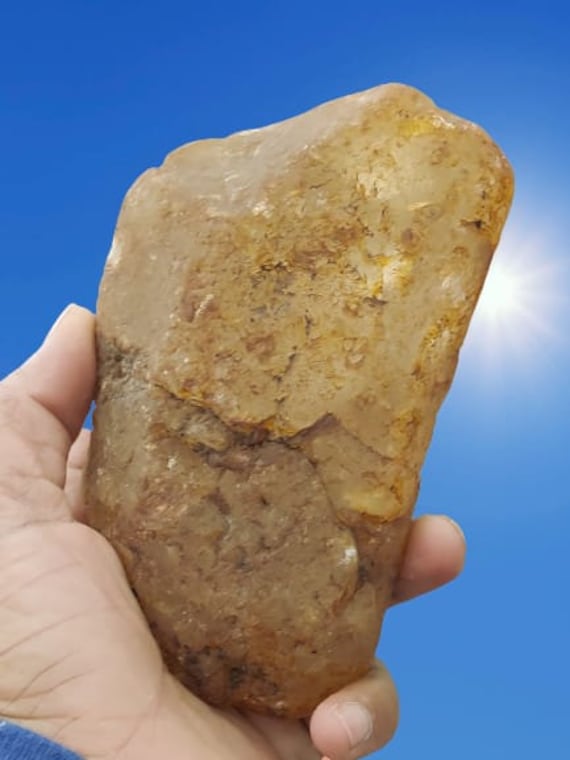
Richard Taaffe recognized an unusual faceted gem in 1945 while examining stones identified as spinel. Unlike ordinary spinel, the specimen showed double refraction. Subsequent mineralogical investigation established that it represented a distinct mineral. The gem name taaffeite remains in use; modern nomenclature distinguishes several related oxide species.
Chemical Composition and Crystal Structure
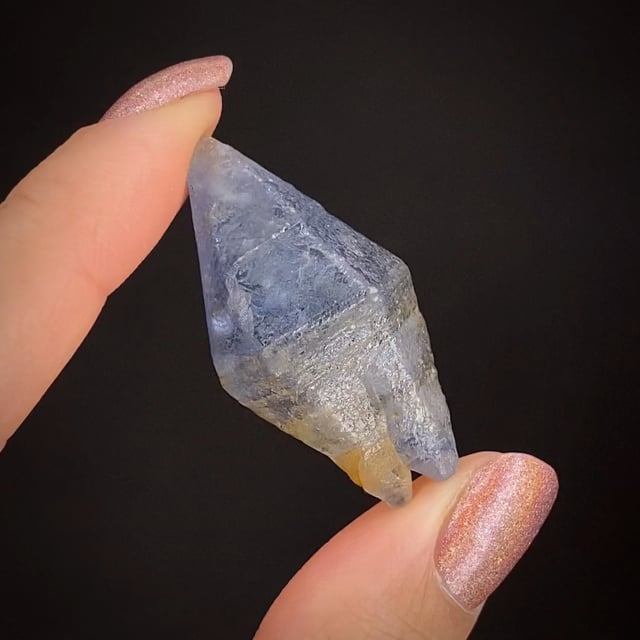
The species commonly associated with the gemstone name taaffeite is magnesiotaaffeite-2N’2S. Its ideal formula is Mg₃BeAl₈O₁₆. It is a complex oxide, containing magnesium, beryllium, aluminum and oxygen, rather than a beryl-group silicate or a borate. The commonly described structure is hexagonal; a trigonal polytype has also been reported. Its stacking sequence distinguishes it from the related musgravite species.
Physical and Optical Properties
| Property | Typical taaffeite characteristics |
|---|---|
| Modern species | Magnesiotaaffeite-2N’2S |
| Ideal formula | Mg₃BeAl₈O₁₆ |
| Mineral class | Oxide |
| Crystal system | Typically hexagonal |
| Mohs hardness | Approximately 8 |
| Refractive index | Approximately 1.716–1.730 |
| Specific gravity | Around 3.60–3.63; variable |
| Optical character | Uniaxial negative; doubly refractive |
| Color | Colorless, pink, lilac, violet, gray and other hues |
These are typical gemological values, not absolute diagnostic limits. A Sri Lankan taaffeite in the GIA Gübelin collection has refractive indices of 1.720 and 1.724 and specific gravity of 3.63.
Geological Occurrence

Gem-quality taaffeite has been recovered in Sri Lanka and Myanmar, often from secondary gem-bearing deposits. The primary geological origin of a particular alluvial gem cannot automatically be inferred from its recovery locality. Related minerals can occur in unusual beryllium-bearing, high-grade metamorphic assemblages.
Identification: Taaffeite, Spinel and Musgravite

Taaffeite and spinel can have similar colors, hardness and appearance. Normal spinel is cubic and optically isotropic, whereas taaffeite is anisotropic and exhibits double refraction. However, anomalous optical effects and overlapping physical properties make laboratory confirmation important.
| Gem material | Ideal composition | Key distinction |
|---|---|---|
| Taaffeite | Mg₃BeAl₈O₁₆ | Usually hexagonal; anisotropic |
| Musgravite | Mg₂BeAl₆O₁₂ | Trigonal; related but different stacking |
| Spinel | MgAl₂O₄ | Cubic; normally isotropic |
Taaffeite and musgravite cannot consistently be separated by refractive index or specific gravity alone. Raman spectra and structural methods are useful in professional laboratories; valuable specimens should have independent identification reports.
Gemstone Use and Care

Taaffeite is mainly a collector gemstone. Its relatively high hardness does not prevent chipping or breakage. Avoid impacts, abrasive cleaning and unverified treatments. Do not infer natural origin, treatment status or authenticity from appearance alone.
Frequently Asked Questions
Is taaffeite a beryl mineral?
No. It is a complex magnesium beryllium aluminum oxide.
Why was it mistaken for spinel?
The stones can resemble one another, but taaffeite is doubly refractive.
Is musgravite the same mineral?
No. Their stacking sequences and ideal compositions differ.
References
Mindat — Magnesiotaaffeite-2N’2S
Armbruster (2002), Revised nomenclature