























Musgravite is the historical gem name of magnesiotaaffeite-6N’3S, a rare trigonal magnesium beryllium aluminum oxide (Mg₂BeAl₆O₁₂). It is closely related to taaffeite, but their crystal stacking sequences distinguish the two mineral species.
Mineral Classification and Crystal Structure
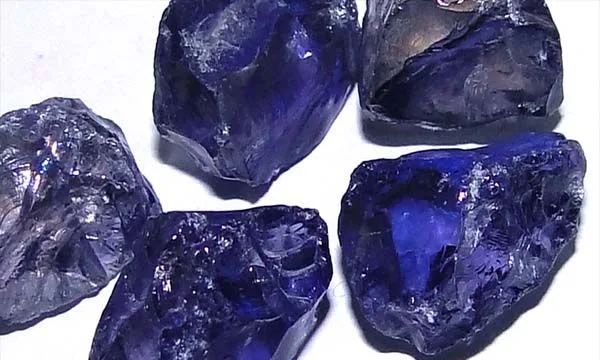
Musgravite was named for the Musgrave region of Australia. Revised nomenclature published by Thomas Armbruster in 2002 assigns the species name magnesiotaaffeite-6N’3S. The ideal composition is Mg₂BeAl₆O₁₂, and the crystal system is trigonal. The material belongs to the taaffeite group of complex oxides, not to the silicate family.
Its structure is built from metal-oxygen polyhedra arranged in ordered modules. Taaffeite and musgravite have related structures but distinct stacking periodicities; their identities cannot reliably be determined from color alone.
Physical and Gemological Properties
| Property | Musgravite |
|---|---|
| Modern species | Magnesiotaaffeite-6N’3S |
| Ideal formula | Mg₂BeAl₆O₁₂ |
| Crystal system | Trigonal |
| Mineral class | Oxide |
| Mohs hardness | Approximately 8–8.5 |
| Refractive index | Approximately 1.719–1.739; varies with composition |
| Specific gravity | Approximately 3.62–3.68 |
| Optical character | Uniaxial, doubly refractive |
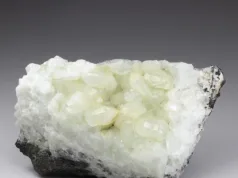
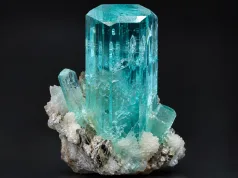
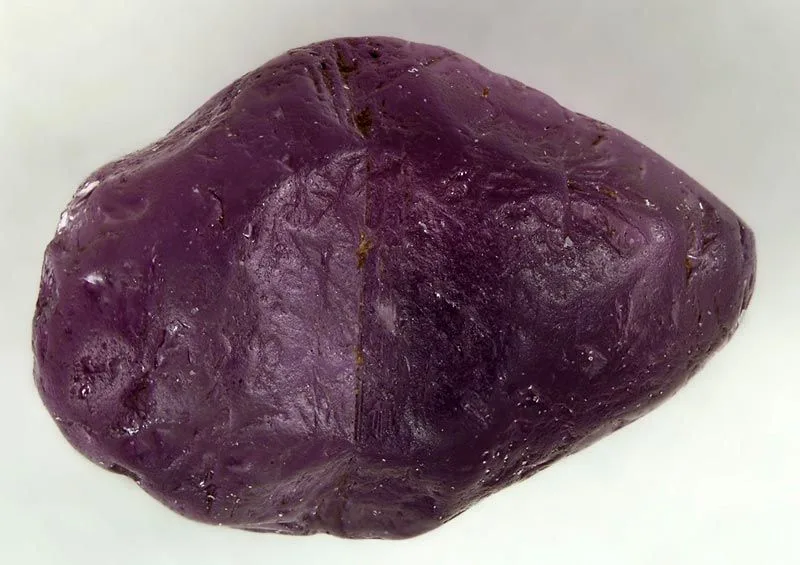
| Color | Variable, including gray, green, violet and brown |
Geological Occurrence
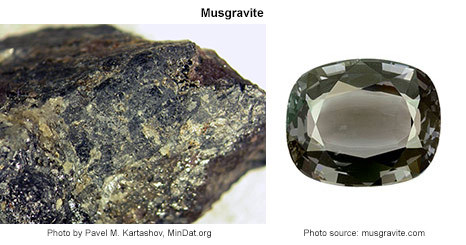
Musgravite was first described from the Musgrave region. Additional occurrences and gem material have been documented in other geological settings, including Myanmar. Some occurrences are associated with high-grade metamorphic mineral assemblages. Formation requires unusual combinations of beryllium, magnesium and aluminum; there is no single demonstrated formation pathway for every locality.
Distinguishing Musgravite from Taaffeite
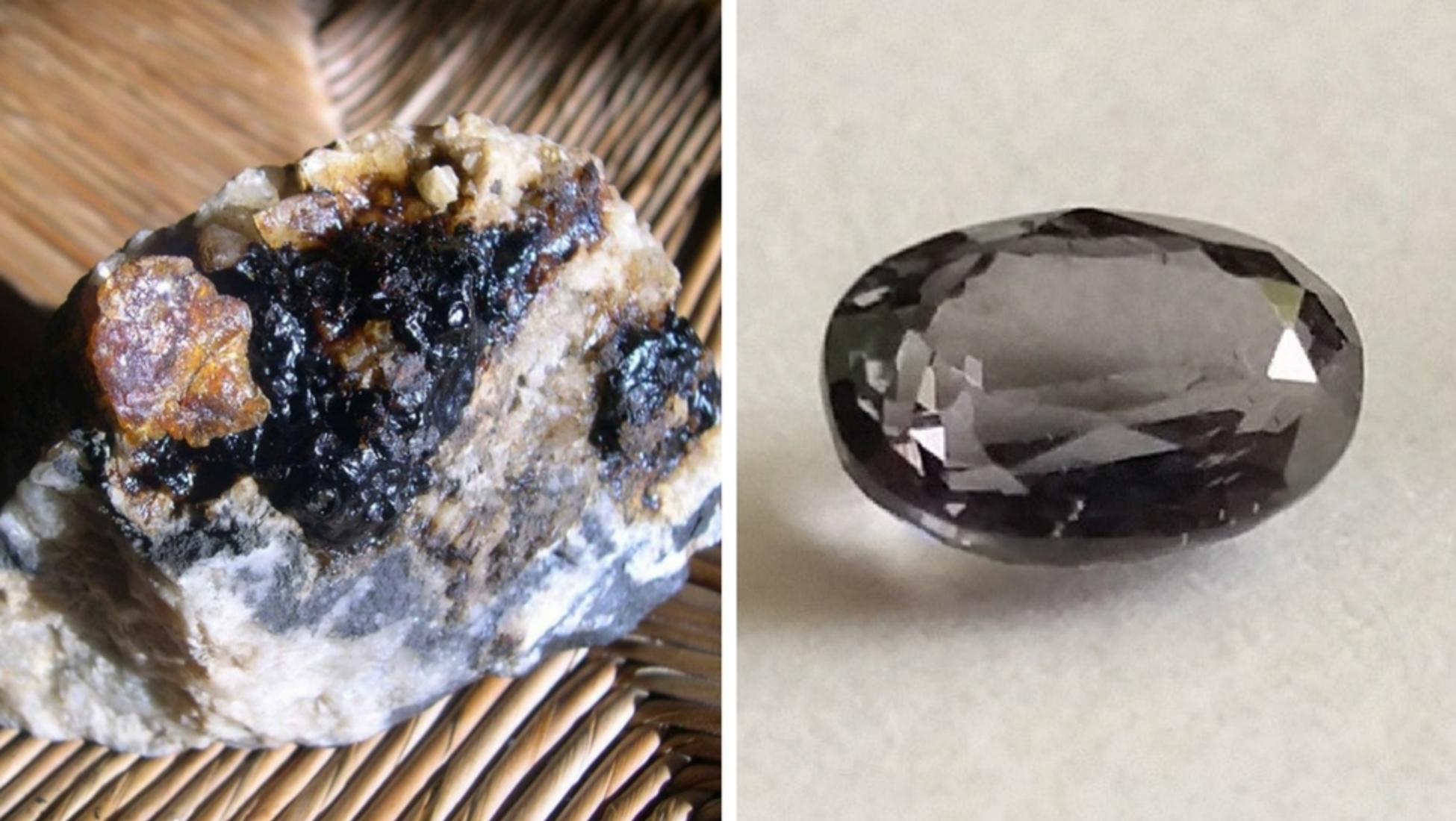
Refractive index, density and optical behavior provide useful screening information, but their ranges overlap with taaffeite. A GIA report on Myanmar material describes measured refractive indices of 1.718–1.723 and specific gravity of about 3.66, illustrating that conventional gemological tests alone cannot prove a musgravite identification.
Raman spectroscopy using appropriate reference spectra, combined with suitable structural or chemical analysis when needed, can distinguish related species. X-ray diffraction is particularly relevant to confirming the structural stacking sequence. For valuable gems, obtain a report from an independent qualified laboratory rather than relying on visual identification or a seller’s label.
Gemstone Use and Care
Because gem-quality material is uncommon, musgravite is primarily collected or used in fine jewelry. Its high hardness provides scratch resistance, not immunity to fracture. Protect it from impacts and have uncertain specimens professionally assessed.
Frequently Asked Questions
Is musgravite a form of taaffeite?
They are closely related but have distinct mineral structures and approved species names.
What is its chemical formula?
The ideal formula is Mg₂BeAl₆O₁₂.
Can color identify musgravite?
No. Gemological laboratory testing is necessary for a reliable distinction from taaffeite.
References
Mindat — Magnesiotaaffeite-6N’3S
Armbruster (2002), Revised nomenclature of högbomite, nigerite, and taaffeite minerals