











November 23, 2026. Researchers studying eastern Hebei Province in China have identified 3.95-billion-year-old trondhjemitic gneiss, among the oldest known preserved rocks in Asia. A study published in Nature on November 11, 2026, uses the ancient rock’s chemistry and zircon crystals to investigate the formation of early continental crust—and the possibility that some form of subduction occurred on Earth far earlier than direct geological records usually reveal.
A Rare Survival From Earth’s Earliest Crust
The rocks occur within the North China Craton, an ancient continental region that preserves evidence of repeated magmatic and metamorphic events. The reported trondhjemitic gneiss is about 3.95 billion years old, placing its original formation in the early Eoarchean, shortly after the end of the Hadean eon. Its surrounding geological relationships include younger gneisses and later granite intrusions.
Fragments of crust older than 3.9 billion years are very rare because most of Earth’s earliest rocks were recycled by melting, metamorphism and tectonic processes. The preserved Hebei material therefore provides unusually direct evidence about conditions in the early Earth. Although it has been described in media reports as Asia’s oldest known rock, superlatives depend on which rock bodies and dating criteria are compared.
What Is Trondhjemitic Gneiss?
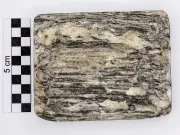
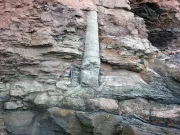
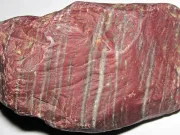
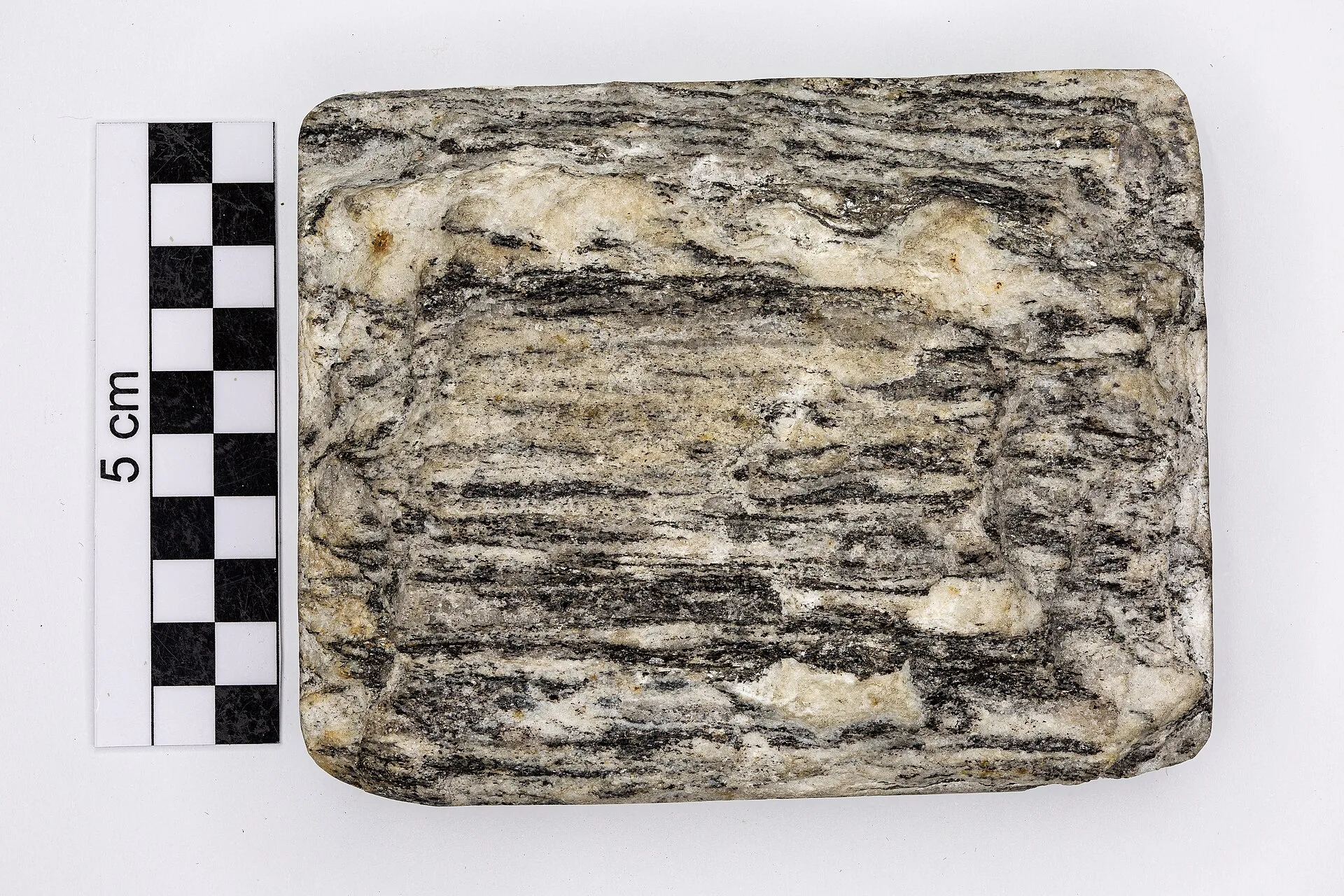
Trondhjemite is a light-coloured, silica-rich intrusive igneous rock related to the tonalite–trondhjemite–granodiorite (TTG) suite. Such rocks are central to debates over how Earth built its earliest continental crust. Gneiss develops when rocks are altered by high temperature and pressure, often producing mineral alignment and banded textures. The Hebei sample records both early magmatic crystallisation and later geological overprinting.
The presence of gneissic structure does not mean the metamorphism itself is 3.95 billion years old; zircon dating is used to constrain the older crystallisation event. For examples of rock textures, see our guide to naturally banded rocks.
Tiny Zircon Crystals Preserve the Dates
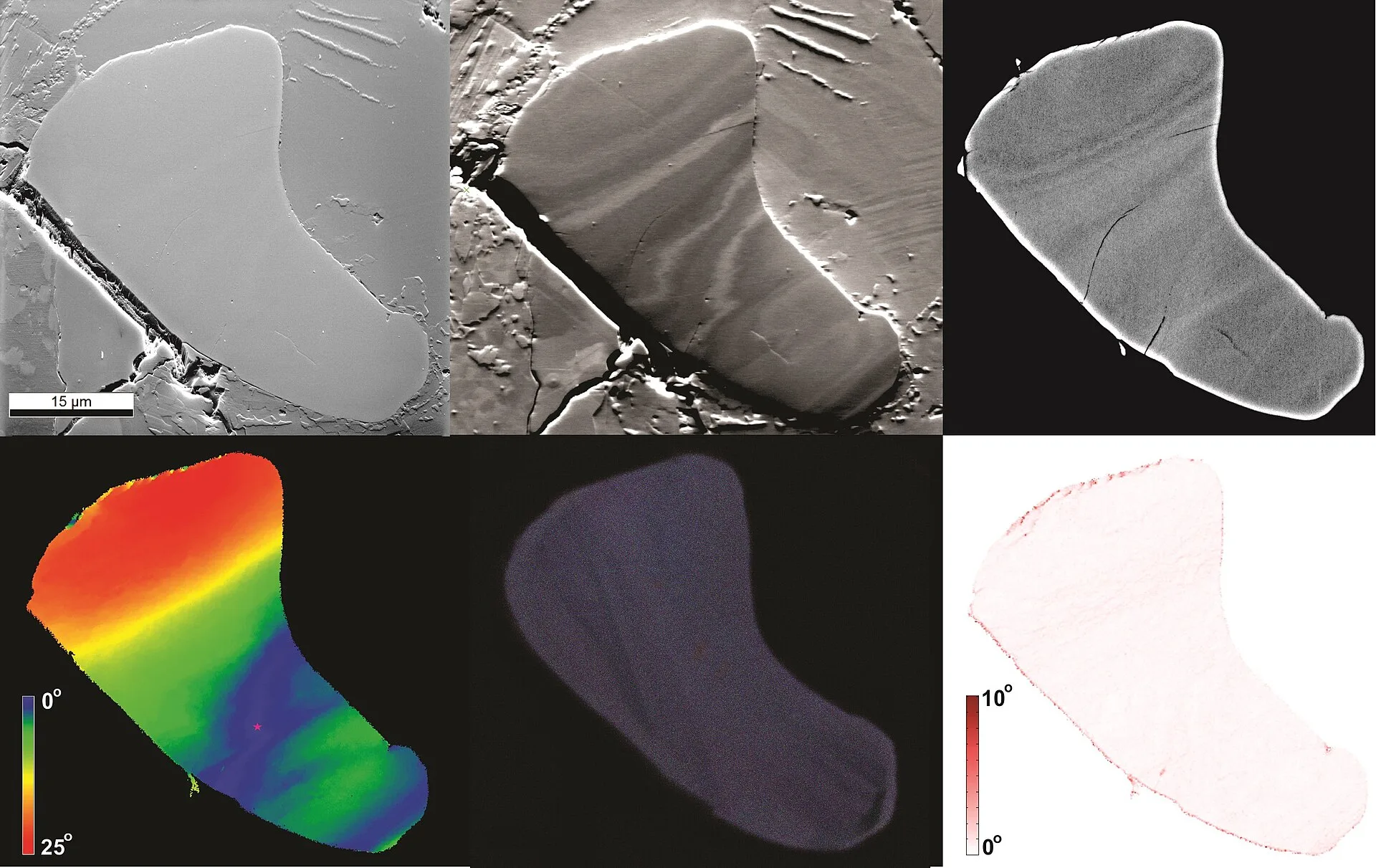
Zircon (ZrSiO₄) is exceptionally useful in geochronology because it can incorporate uranium during growth while excluding most common lead. Over time, radioactive uranium decays to lead. Measuring uranium–lead isotope ratios in carefully selected zircon domains allows geologists to estimate the age of crystallisation, even in rocks that later underwent metamorphism.
The research reports primary magmatic zircon with a mean oxygen-isotope signature of approximately δ¹⁸O = +6.77 ± 0.23‰ and a positive initial hafnium isotope value of εHf(t) = +1.45 ± 0.27. Those results provide constraints on the source material and its earlier history, rather than supplying a simple calendar date by themselves.
Evidence for Ancient Water–Rock Interaction and Deep Burial
The team interprets the elevated zircon oxygen-isotope values as evidence that the precursor rocks had interacted with water at relatively low temperature before being buried. Geochemical modelling suggests that altered basaltic material was carried to depths exceeding roughly 50 kilometres, where partial melting could have produced the trondhjemitic magma.
A transient subduction-like event offers one explanation for transporting surface-altered basalt to such depths. The authors also infer that the mantle source had already experienced chemical depletion during the Hadean. These are major implications, but they are model-based interpretations of the geochemical data—not direct observation of a continuously operating modern-style plate boundary 3.95 billion years ago.
Does This Prove Plate Tectonics Began 3.95 Billion Years Ago?
Not on its own. Geologists distinguish episodic sinking or burial of crustal material from the stable, globe-spanning network of moving plates operating today. The new Hebei evidence strengthens arguments that subduction-like recycling occurred extremely early, while the timing and global extent of modern-style plate tectonics remain debated.
The finding can be compared with early crustal records in the Canadian Acasta Gneiss Complex and Greenland’s ancient terranes. A 3.95-billion-year-old crystallisation date also must not be confused with isolated detrital zircon grains that can be older than their host rocks. Read more about the age of Earth and its oldest rocks.
Why This Discovery Matters
The rock is a rare geological archive linking water–rock alteration, mantle composition, partial melting and the creation of continental crust. By combining field mapping, petrography and zircon isotope measurements, the researchers describe a possible pathway from altered oceanic material to new crust at a time when Earth was less than 600 million years old. Additional ancient-rock discoveries will be needed to establish whether this was an isolated event or part of a broader tectonic system.
Primary Scientific Sources and Image Credits
Nature: Hadean mantle depletion and 3.95-Gyr subduction implied by North China rocks (November 11, 2026); Nature research briefing: Earth’s early history told by northern China rocks; PubMed research abstract.
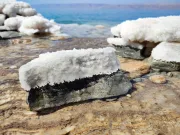
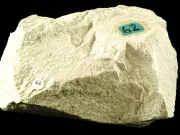
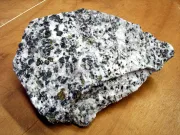
Featured image: an illustrative gneiss hand specimen at the University of Hamburg mineralogy museum, with unknown provenance, not the newly identified Hebei rock. Thorben Amann / Wikimedia Commons, CC BY-SA 4.0 (resized for web).