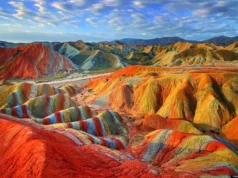

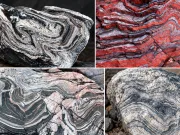
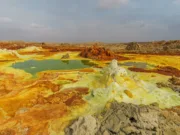
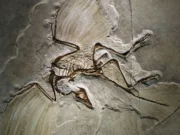
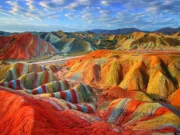







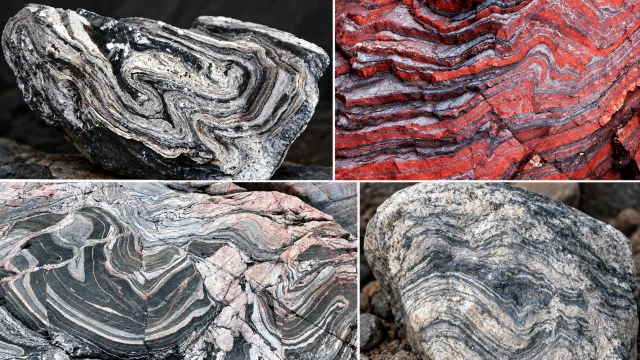
Some rocks in nature display remarkable patterns of stripes, wavy bands, and contrasting layers, almost as if they had been painted by an artist. Some feature striking black-and-white stripes, others contain alternating red and gray layers, and some preserve evidence of geological events that occurred billions of years ago.
These patterns are more than decorative features. Natural stripes and bands in rocks provide valuable clues about how they formed and the geological processes they experienced over time.
In some rocks, bands develop as sediments accumulate in successive layers. In others, high temperatures, pressure, and deformation cause minerals to reorganize into distinctive patterns. Volcanic rocks can also develop bands as molten material flows, cools, or accumulates during different stages of an eruption.
This illustrated identification guide explores 15 naturally striped and banded rocks, explaining how their patterns form, what makes them distinctive, and how to recognize them.
1. Gneiss
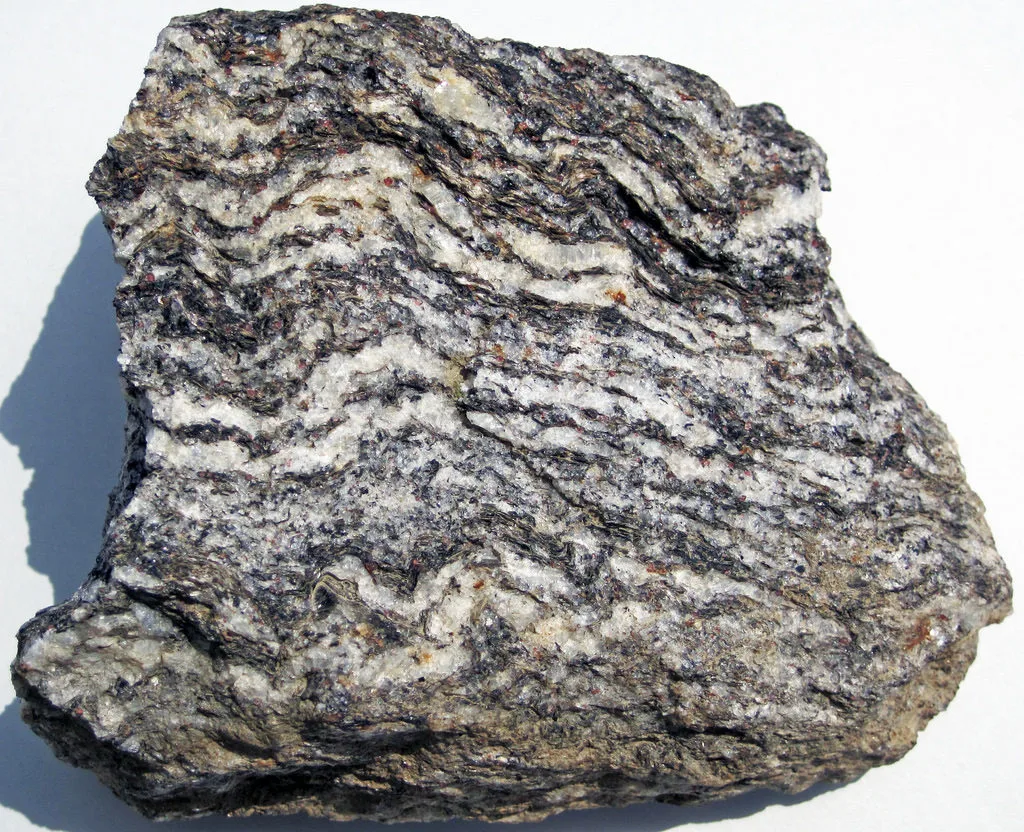
Rock type: Metamorphic
Gneiss is one of the most recognizable examples of natural rock banding. It typically displays alternating light- and dark-colored mineral bands that give the rock its characteristic striped appearance.
The lighter bands commonly contain quartz and feldspar, while darker bands may be rich in biotite, amphibole, or other dark minerals.
These patterns usually develop during metamorphism, when rocks undergo high temperatures, pressure, and deformation. Differences in mineral composition and the redistribution of minerals produce the distinctive texture known as gneissic banding.
How to Identify Gneiss
- Alternating light and dark mineral bands
- Bands may appear straight, wavy, or folded
- Individual mineral grains are often visible
- Hard, crystalline texture
One important difference between gneiss and layered sandstone is that gneissic banding generally reflects metamorphic mineral organization rather than ordinary sedimentary deposition.
2. Migmatite
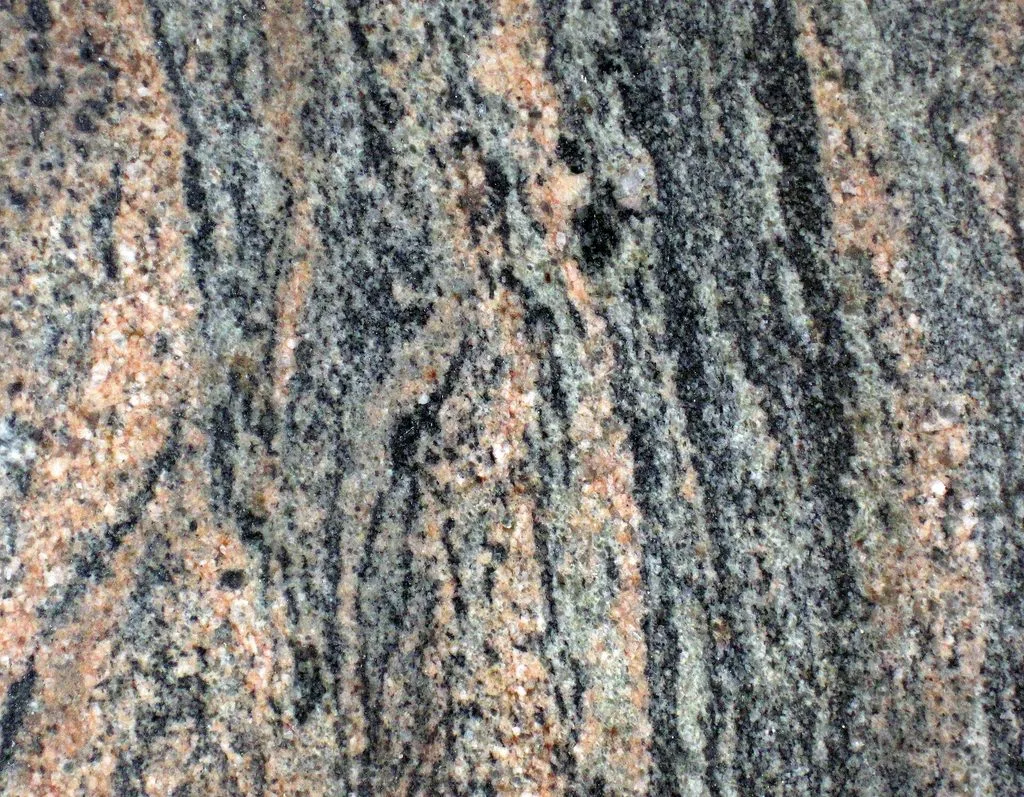
Rock type: High-grade metamorphic / partially melted rock
Migmatite is among the most visually striking banded rocks, often displaying complicated patterns of light and dark minerals.
It commonly forms when metamorphic rocks reach temperatures high enough for partial melting to occur. The resulting melt may produce light-colored zones enriched in quartz and feldspar, while darker regions contain minerals left behind or reorganized during metamorphism.
The resulting patterns can resemble flowing ribbons, swirling stripes, or irregular folded layers.
How to Identify Migmatite
- Irregular light and dark bands
- Complex folds and swirling patterns
- Light-colored quartz- and feldspar-rich areas
- Appearance that may resemble a mixture of gneiss and granite
Not all migmatites experience the same degree of partial melting, so their textures and patterns can vary considerably.
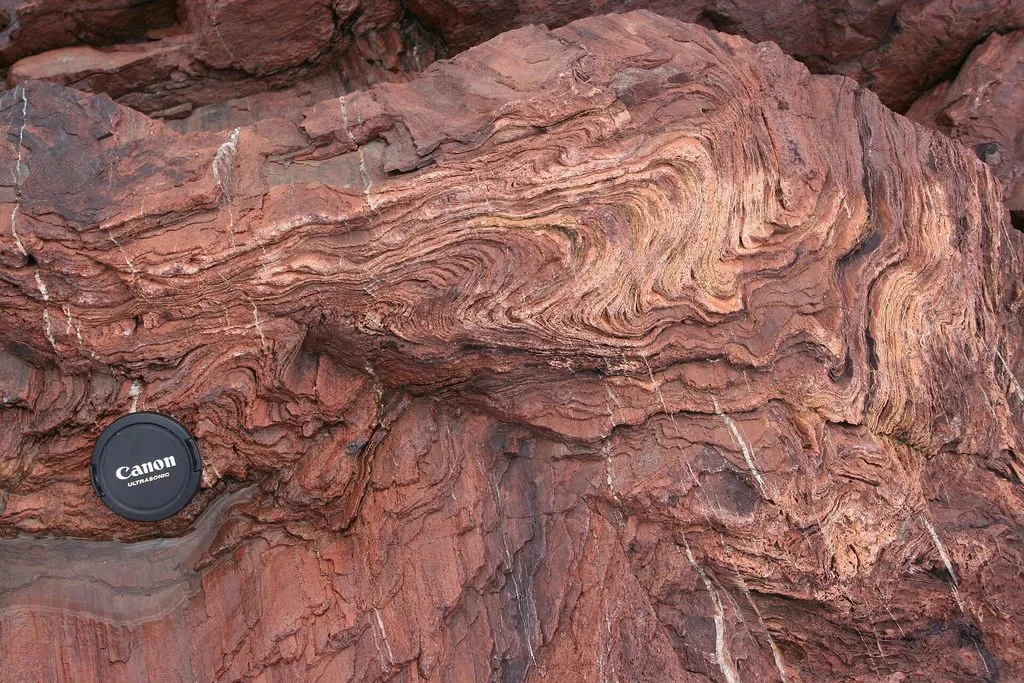
3. Banded Iron Formation (BIF)
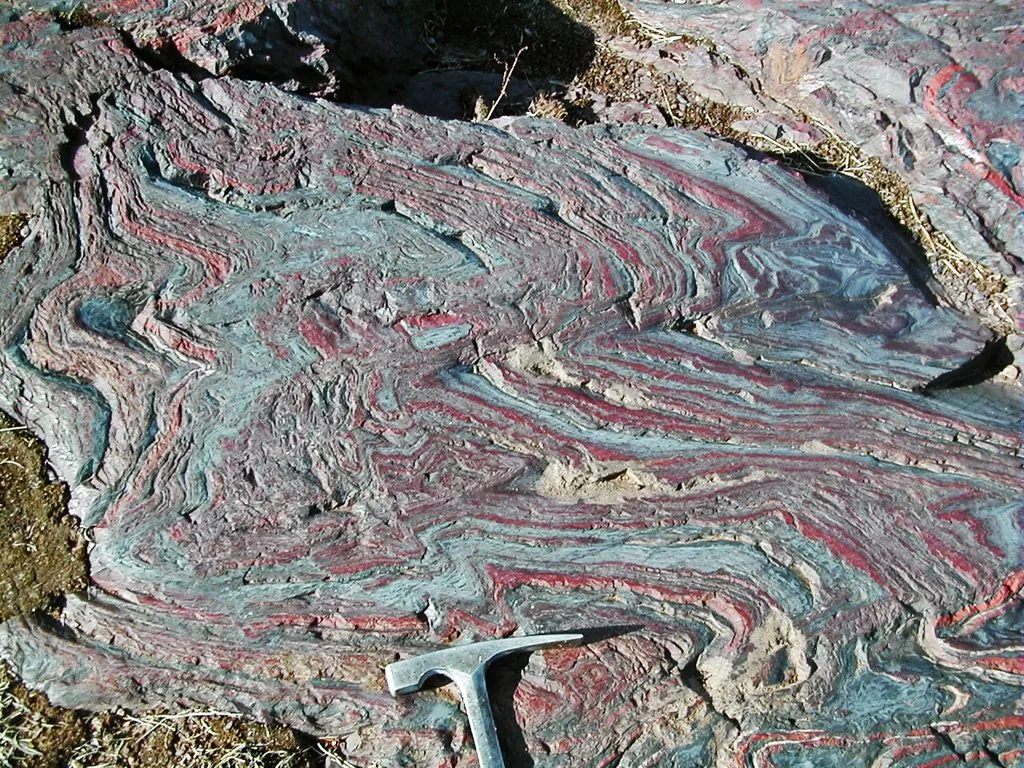
Rock type: Chemical sedimentary rock
Banded iron formations are ancient rocks that provide valuable information about Earth’s early oceans and the evolution of its atmosphere.
They consist of alternating iron-rich and silica-rich layers.
Dark gray or black bands commonly contain iron oxide minerals, while reddish layers may contain hematite, jasper-like silica-rich material, or other iron-bearing components.
Many banded iron formations developed through chemical precipitation processes in ancient marine environments billions of years ago.
How to Identify Banded Iron Formation
- Alternating red, black, gray, or brown layers
- Thin or thick, clearly defined bands
- Some layers may contain metallic-looking iron minerals
- Typically hard and relatively dense
These formations are important geological records of ancient iron cycling, ocean chemistry, and the development of oxygen-rich environments on Earth.
4. Banded Chert
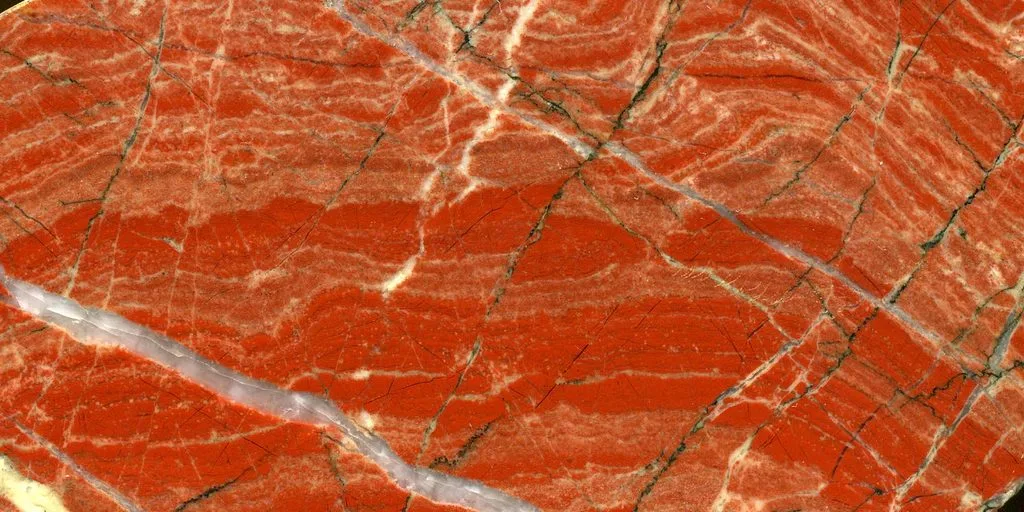
Rock type: Siliceous sedimentary rock
Chert is a hard, fine-grained sedimentary rock composed primarily of microcrystalline quartz.
Some chert specimens contain distinct bands of different colors. These bands may reflect changes in sediment deposition, variations in mineral impurities, or chemical alterations during diagenesis.
Banded chert commonly displays gray, black, reddish, or brown colors.
How to Identify Banded Chert
- Thin, regular, or wavy bands
- Extremely hard texture
- Very fine-grained appearance
- Often breaks with a conchoidal, shell-like fracture
Not all chert banding forms through the same process. Some bands preserve original depositional features, while others become more pronounced through later chemical changes.
5. Banded Sandstone
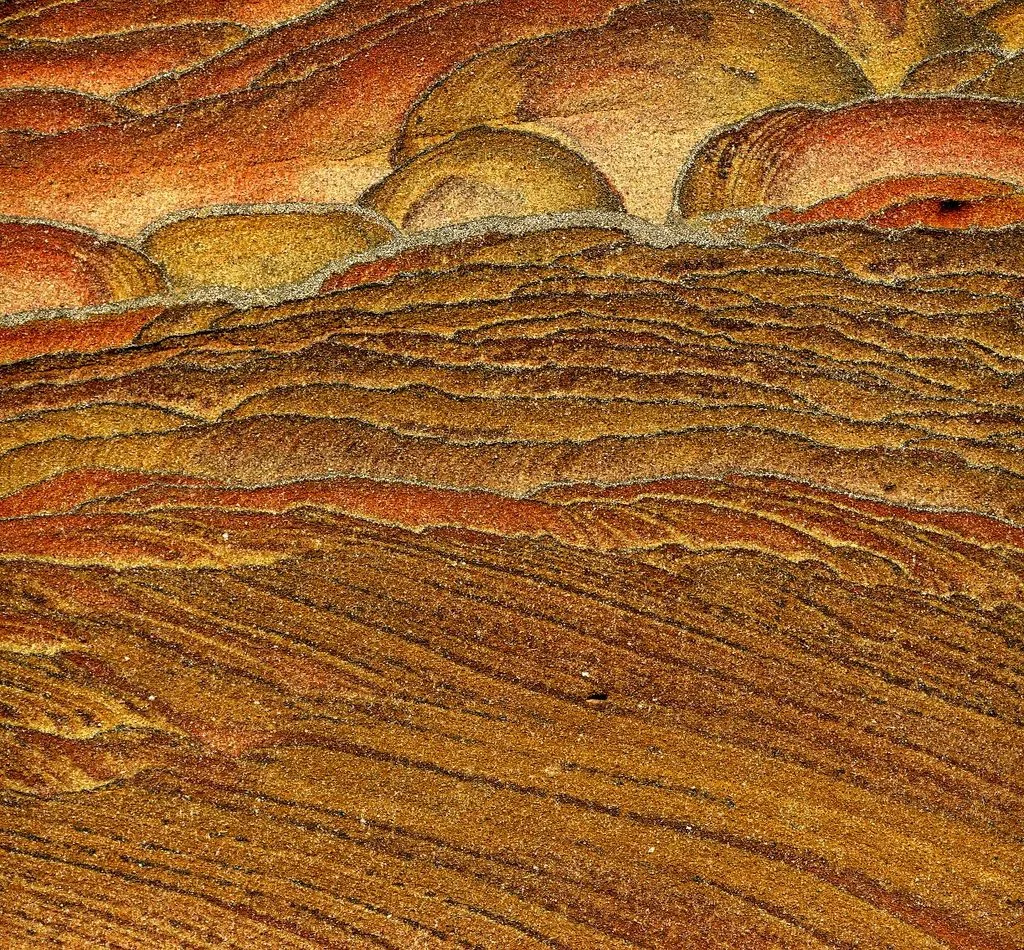
Rock type: Sedimentary
Banded sandstone develops its striped appearance through variations in sedimentary layers, mineral composition, and natural coloration.
As sand accumulates in rivers, deserts, coastal environments, or shallow seas, successive deposits may differ in grain size, mineral content, and sedimentary structure.
Iron oxides can create red, orange, and yellow colors, while variations in cementation and mineral composition may produce additional bands.
Some sandstones also display cross-bedding, which creates inclined or intersecting sets of layers.
How to Identify Banded Sandstone
- Red, yellow, white, or brown bands
- Sand grains may be visible under close inspection
- Straight, inclined, or wavy layers
- Commonly displays recognizable sedimentary structures
Sandstones formed in ancient desert environments can exhibit especially striking natural patterns.
6. Banded Quartzite
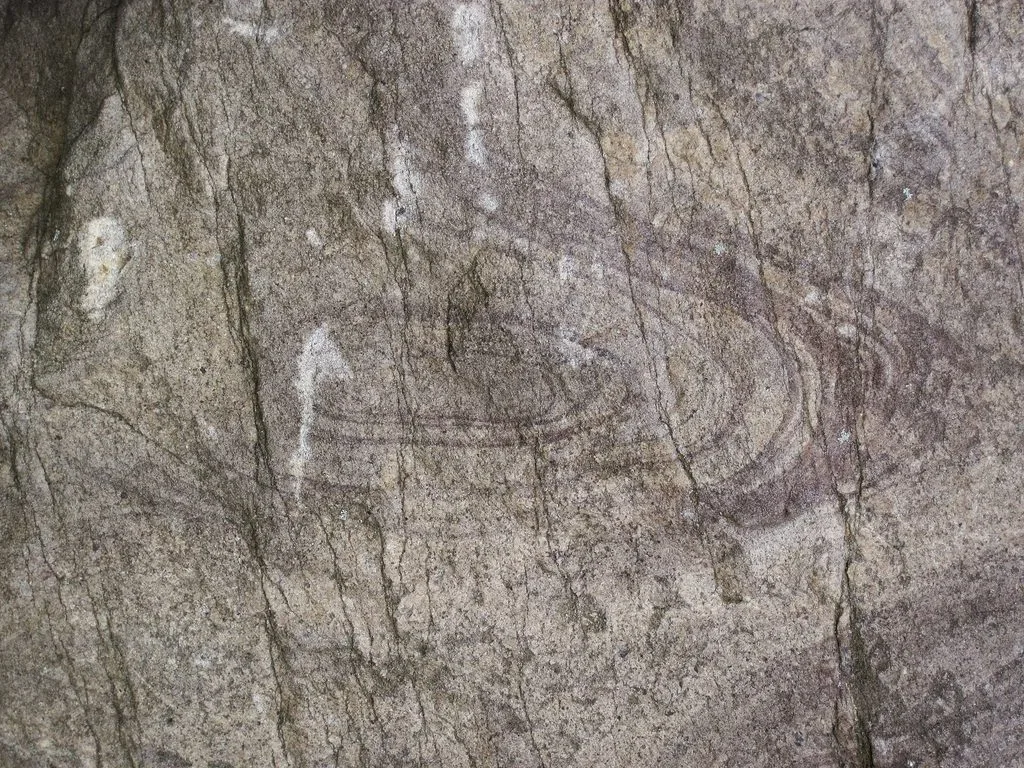
Rock type: Metamorphic
Quartzite is an extremely hard metamorphic rock that typically forms when quartz-rich sandstone undergoes metamorphism.
If the original sandstone contains layers with different mineral compositions, some of these differences may remain visible after metamorphism.
As a result, certain quartzites display white, gray, pink, reddish, or brown bands.
However, not all quartzite is banded. Many specimens have a relatively uniform appearance.
How to Identify Banded Quartzite
- Very hard, compact texture
- Quartz-rich composition capable of scratching glass
- Parallel color bands in some specimens
- Interlocking quartz grains
The texture and relationships between grains can help distinguish quartzite from its sedimentary precursor, sandstone.
7. Banded Marble
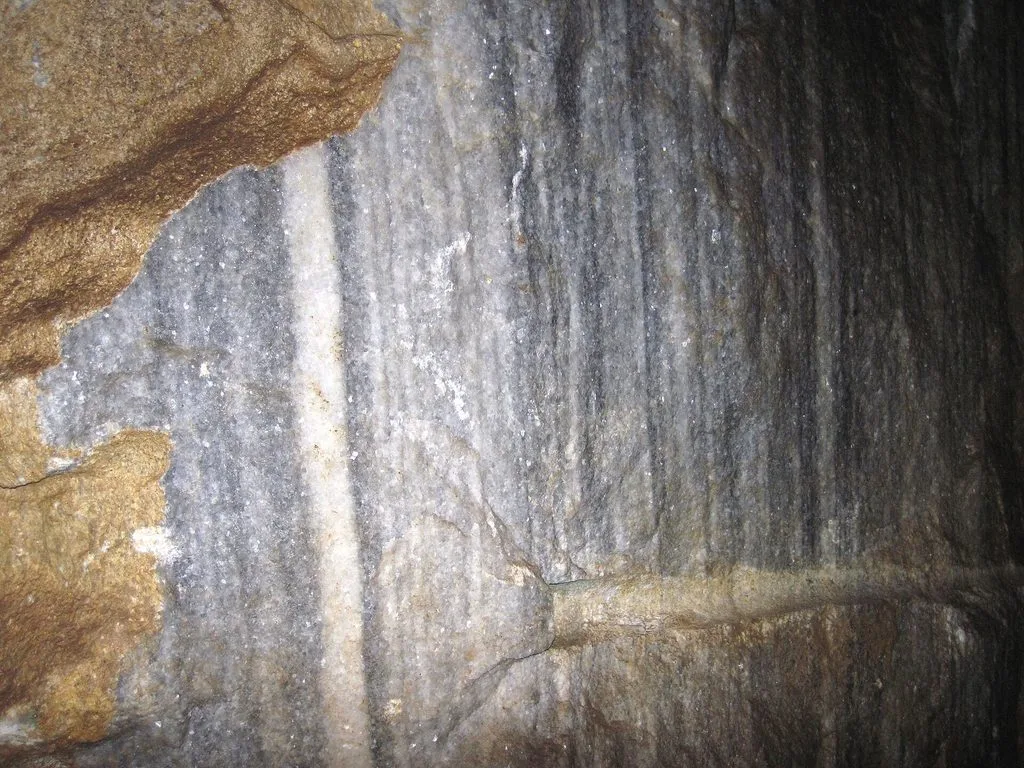
Rock type: Metamorphic
Marble forms when carbonate rocks, such as limestone or dolostone, undergo metamorphism.
Impurities in the original rock, including clay minerals, iron-bearing minerals, and other materials, may produce differently colored bands during recrystallization.
White, gray, greenish, pink, and black patterns can occur in marble.
Some specimens contain both compositional banding and mineral veins formed during later geological events.
How to Identify Banded Marble
- Crystalline carbonate texture
- Alternating light and dark bands
- Generally softer than quartzite
- Calcite-rich specimens react with dilute acid
Not every stripe in marble represents metamorphic banding. Some are mineral veins that formed after the original rock developed.
8. Flow-Banded Rhyolite
Rock type: Igneous – volcanic
Rhyolite is a silica-rich volcanic rock that is commonly light in color.
Some rhyolites contain narrow, distinctive bands formed during the movement and cooling of viscous lava. This feature is known as flow banding.
The bands may result from variations in glass composition, crystallinity, and the distribution of crystals or other components within the flowing lava.
They can appear straight, curved, or strongly folded.
How to Identify Flow-Banded Rhyolite
- Thin, wavy flow bands
- Commonly gray, pink, or brownish colors
- Usually fine-grained texture
- Flow patterns that may resemble sedimentary layering
Unlike layers in sandstone, these bands generally originate through processes associated with moving and cooling volcanic material.
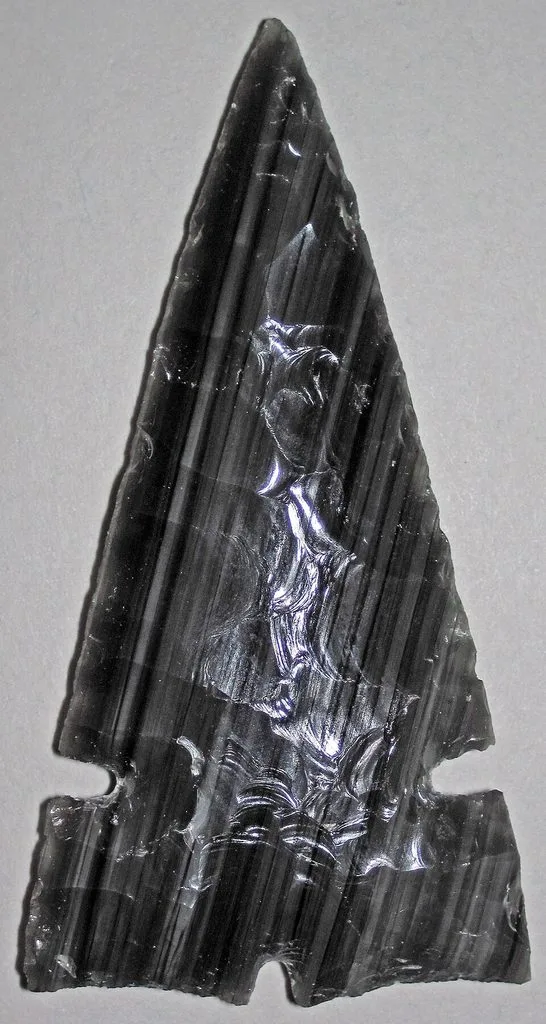
9. Banded Obsidian
Rock type: Igneous – volcanic glass
Obsidian is a natural volcanic glass formed when lava cools rapidly with little crystal growth.
Although obsidian is usually black and shiny, some varieties display gray, brown, or reddish bands.
These patterns may be related to flow textures, microscopic crystals, gas bubbles, or variations in the composition and structure of the volcanic glass.
Some specimens contain very fine parallel bands, while others show irregular or wavy patterns.
How to Identify Banded Obsidian
- Shiny, glass-like surface
- Conchoidal fracture
- Fine, parallel, or wavy bands
- Few or no visible mineral grains
The glassy texture of obsidian is an important feature that helps distinguish it from fine-grained flow-banded rhyolite.
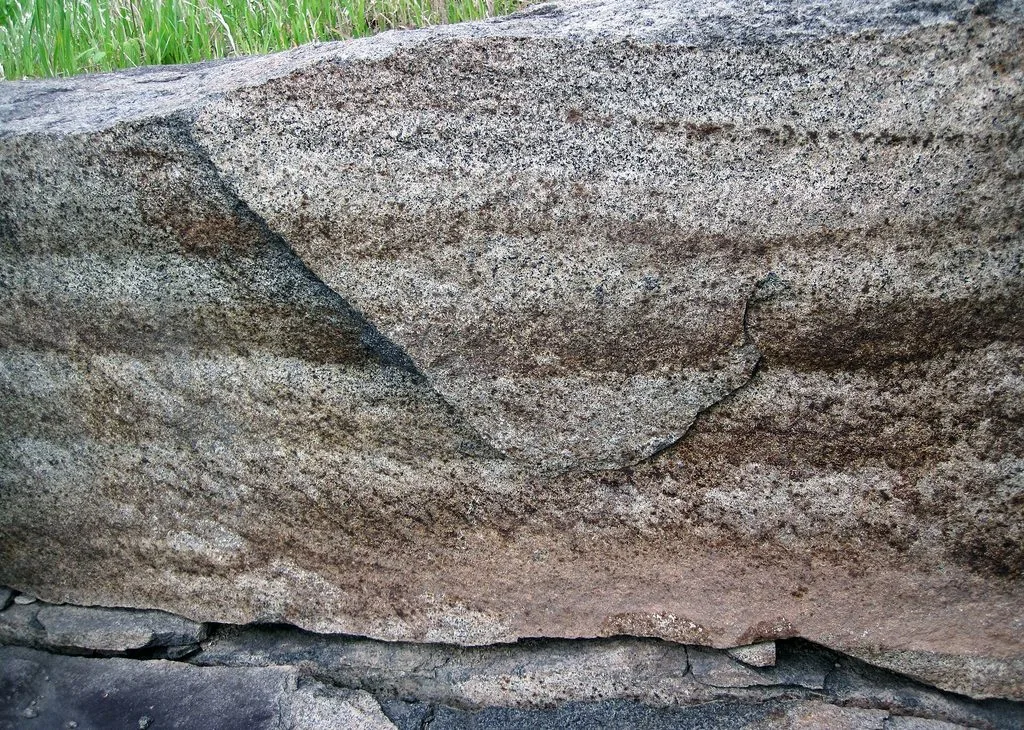
10. Layered Gabbro
Rock type: Igneous – intrusive
Gabbro is a coarse-grained mafic igneous rock commonly composed of plagioclase feldspar and pyroxene.
In some large igneous intrusions, variations in mineral proportions produce distinct layers.
Lighter layers may contain a greater proportion of plagioclase, while darker layers are richer in mafic minerals.
These layers can develop through complex magmatic processes involving crystallization, replenishment of magma, and the physical separation or redistribution of crystals.
How to Identify Layered Gabbro
- Coarse, visible mineral crystals
- Alternating light and dark mineral-rich layers
- Generally dark and relatively dense
- Higher proportions of mafic minerals than typical granitic rocks
Layered gabbro demonstrates that natural banding in igneous rocks is not limited to lava flowing across Earth’s surface.
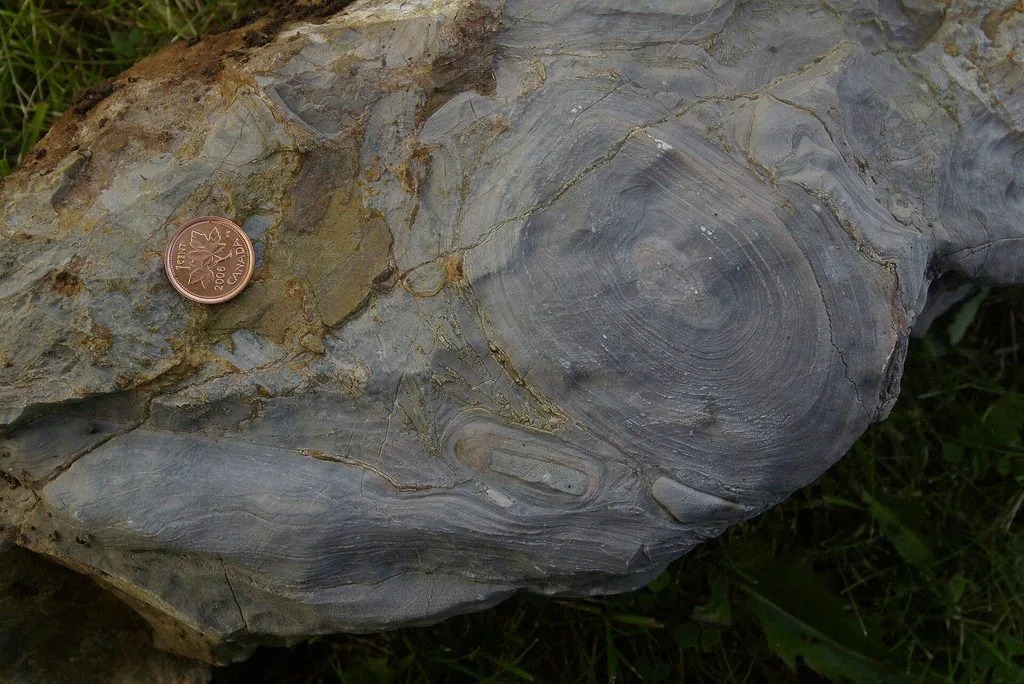
11. Stromatolitic Limestone
Rock type: Sedimentary carbonate rock influenced by biological activity
Stromatolites are layered sedimentary structures commonly associated with the activity of microbial communities.
Microbial mats may trap sediment particles or influence carbonate precipitation. Over time, repeated growth and sediment accumulation can produce wavy, domed, or column-shaped layers.
Stromatolitic limestones may preserve valuable evidence of ancient shallow-water environments and the early history of life on Earth.
How to Identify Stromatolitic Limestone
- Wavy or dome-shaped fine layers
- Repeated, sometimes curved lamination patterns
- Commonly rich in carbonate minerals
- Some specimens display nested or columnar growth structures
Not every layered rock that resembles a stromatolite has a biological origin. Reliable identification may require geological context and detailed examination.
12. Zebra Dolostone (Zebra Dolomite)
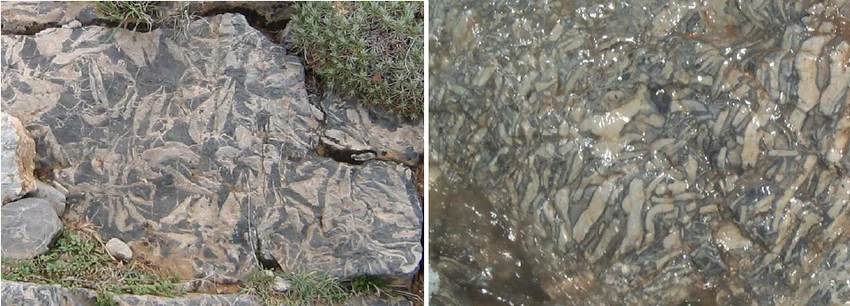
Rock type: Sedimentary carbonate rock with diagenetic banding
Zebra dolostone is known for its distinctive alternating light and dark bands.
The darker portions often consist of relatively fine-grained dolomite, while lighter bands may contain coarser, sparry dolomite crystals.
Zebra textures are associated with geological processes such as mineral replacement, fluid movement, dissolution, and recrystallization. Several geological models have been proposed to explain their formation in different deposits.
How to Identify Zebra Dolostone
- Alternating light and dark, approximately parallel bands
- Bands ranging from millimeters to centimeters in thickness
- Coarser dolomite crystals in lighter zones
- Occasional cavities and mineral-filled spaces
This distinctive texture illustrates how mineral reactions and fluid movement can produce striking patterns within carbonate rocks.
13. Banded Travertine
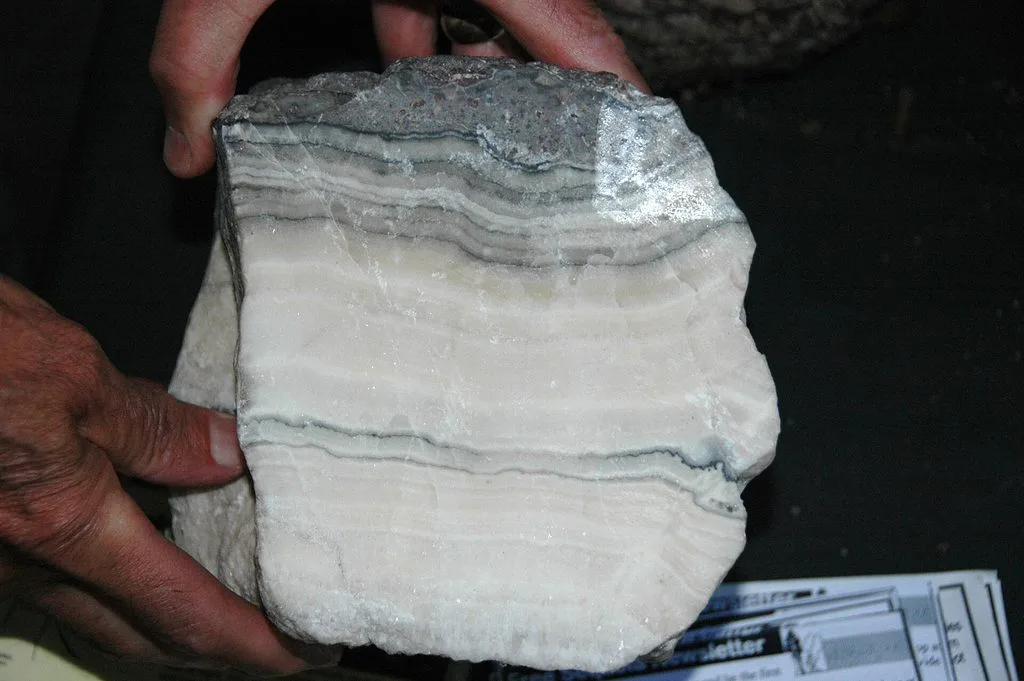
Rock type: Chemical sedimentary
Travertine forms through the precipitation of calcium carbonate, commonly from mineral-rich spring waters and other carbonate-depositing aquatic environments.
Changes in precipitation conditions can produce alternating light and dark layers.
Cream, white, yellowish, and brown bands are common. Some layers are extremely thin, while others are considerably thicker.
Travertine may be highly porous or relatively dense, depending on how it formed.
How to Identify Banded Travertine
- Parallel or wavy carbonate bands
- Cavities and pores of varying sizes
- Commonly light-colored appearance
- Calcite-rich specimens react with dilute acid
Travertine bands can record changing environmental and chemical conditions during deposition, although not every travertine deposit forms in the same way.
14. Banded Volcanic Tuff
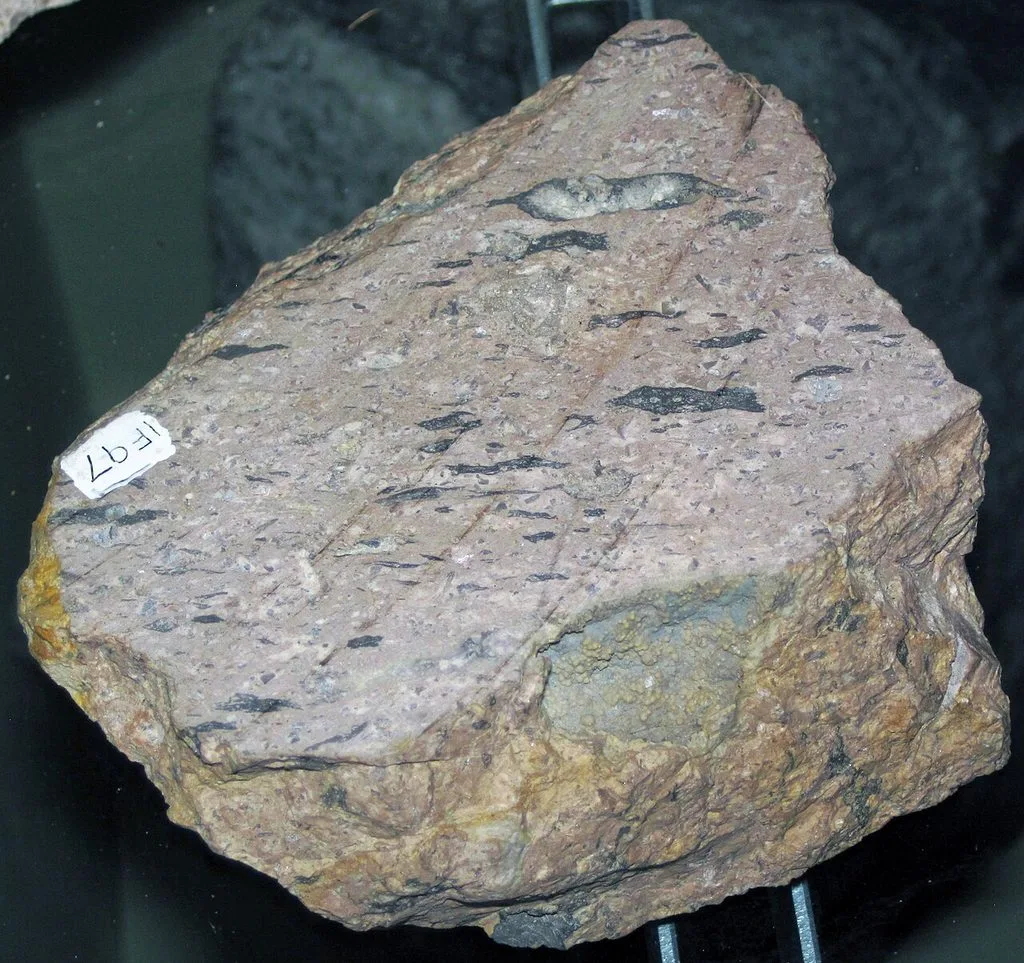
Rock type: Pyroclastic igneous rock
Volcanic tuff forms primarily from the accumulation and lithification of volcanic ash-sized material.
Successive eruption phases may deposit layers that differ in color, grain size, or mineral composition, producing a naturally banded appearance.
Some tuffs display thin, regular layers, while welded tuffs may contain flattened pumice fragments that create a strongly oriented texture.
These patterns should not all be attributed to the same geological process.
How to Identify Banded Volcanic Tuff
- Fine-grained volcanic material
- Differently colored ash layers
- Possible fragments of volcanic glass and crystals
- Flattened volcanic fragments in some welded tuffs
The layering of volcanic tuff can provide clues about past eruptions, ash deposition, and the conditions under which volcanic material accumulated.
15. Banded Slate
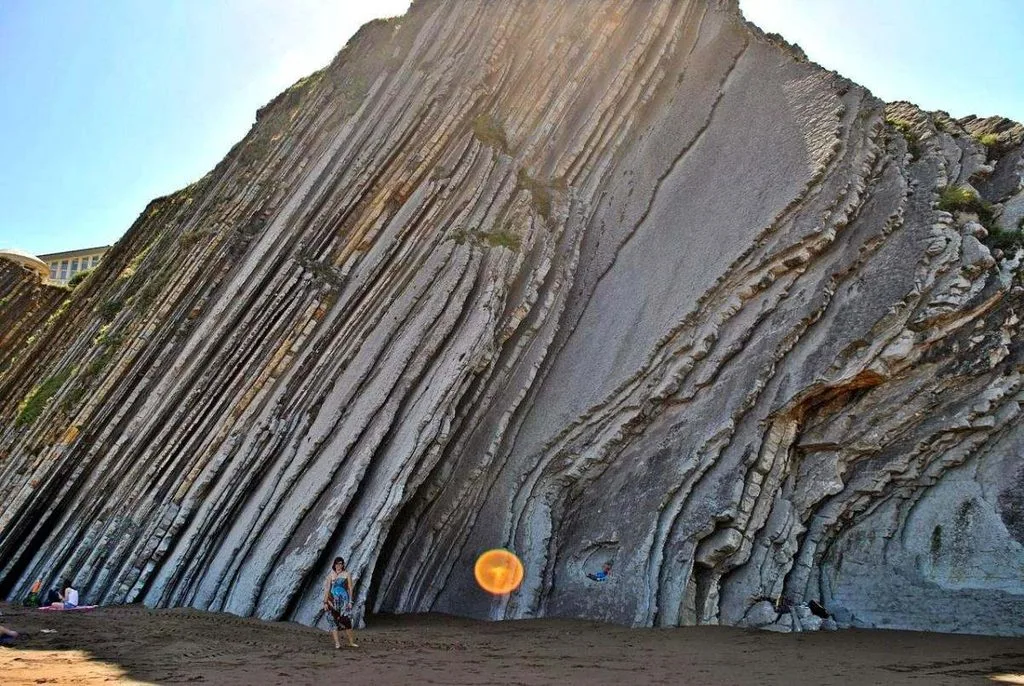
Rock type: Low-grade metamorphic
Slate commonly forms when clay-rich sedimentary rocks undergo low-grade metamorphism.
Some slate specimens preserve compositional differences inherited from the original sedimentary layers.
These may appear as fine gray, black, greenish, or purplish stripes.
One of slate’s most important characteristics is slaty cleavage, which allows the rock to split into relatively thin, flat sheets.
How to Identify Banded Slate
- Fine-grained, often dark-colored texture
- Tendency to split into flat sheets
- Fine color bands in some specimens
- Original sedimentary bedding may intersect metamorphic cleavage
Not every parallel line in slate represents an original sedimentary layer. Some visible surfaces or linear features are associated with cleavage developed during metamorphism.
How Do Natural Stripes and Bands Form in Rocks?
Striped and banded rocks form in a variety of geological environments. Their patterns can generally be explained through several major processes.
1. Sedimentary Layering
Sedimentary layers develop as sand, clay, carbonate, or chemically precipitated materials accumulate at different times.
Examples: Banded sandstone, banded chert, and some varieties of travertine.
2. Metamorphic Banding
High temperatures, pressure, and deformation can produce differences in mineral composition and texture, creating visible bands.
Examples: Gneiss and migmatite.
3. Volcanic Flow and Deposition
Moving lava can develop internal flow structures, while successive volcanic eruptions may produce layers of volcanic material.
Examples: Flow-banded rhyolite, banded obsidian, and volcanic tuff.
4. Chemical Precipitation and Mineral Replacement
Dissolved minerals may precipitate from water, while chemical reactions within existing rocks can generate distinct bands.
Examples: Banded iron formation, zebra dolostone, and travertine.
5. Biological Activity
Microbial communities can influence sediment trapping and mineral precipitation, producing repeated layers.
Example: Stromatolitic limestone.
How to Identify Striped and Banded Rocks
Finding stripes on a rock is not enough to identify it accurately. Several physical and geological characteristics should be considered together.
| Observed Feature | Possible Rock Identification |
|---|---|
| Coarse light and dark crystalline bands | Gneiss or migmatite |
| Red and black iron-rich layers | Banded iron formation |
| Colored layers containing visible sand grains | Banded sandstone |
| Shiny, glass-like surface with wavy stripes | Banded obsidian |
| Fine, curved volcanic flow bands | Flow-banded rhyolite |
| Alternating light and dark carbonate bands | Marble, travertine, or zebra dolostone |
| Dome-shaped, repeated fine layers | Possible stromatolitic structure |
Visual similarities can be misleading. Metamorphic banding, sedimentary bedding, and mineral veins may sometimes resemble one another.
For more reliable identification, examine the rock’s grain size, mineral hardness, fracture characteristics, reaction to dilute acid, and geological setting.
Natural Banding vs. Mineral Veins
Not every stripe visible in a rock represents true banding.
Natural banding commonly develops through repeated changes in mineral composition, crystal texture, or sedimentary layering.
Mineral veins, on the other hand, typically form when fractures in existing rocks become filled with minerals such as quartz or calcite.
Veins may cut across pre-existing structures, while bands often follow more continuous or folded patterns within the rock.
However, some geological environments produce both mineral-filled fractures and banded textures, making careful examination necessary.
Conclusion
Naturally striped and banded rocks are among the most visually fascinating examples of geological processes preserved in stone.
Gneiss and migmatite record high-grade metamorphic conditions, while banded sandstone and chert preserve evidence of sedimentary environments. Flow-banded rhyolite and obsidian reveal volcanic processes, and banded iron formations provide important clues about Earth’s ancient chemical and environmental history.
The patterns found in these rocks are not simply decorative. They represent the results of sediment deposition, mineral growth, chemical reactions, volcanic activity, deformation, and sometimes biological processes.
Learning to recognize these patterns can help identify different rock types while revealing important details about how they formed and changed through geological time.
Frequently Asked Questions (FAQ)
How do naturally striped rocks form?
Natural stripes and bands develop through geological processes such as sediment deposition, metamorphism, volcanic flow, chemical precipitation, and mineral replacement.
What rocks have black and white stripes?
Gneiss and some migmatites commonly display alternating light and dark mineral bands. However, color alone is not sufficient for a definitive identification.
What kind of rock has red and black bands?
Banded iron formations are among the best-known examples. Some cherts, sandstones, and other rocks can also display similar colors.
Are striped rocks rare?
Not necessarily. Rocks such as gneiss, layered sandstone, and banded carbonate rocks can be relatively common. However, certain distinctive banding textures develop only under more specific geological conditions.
Is agate a striped rock?
Agate is a commonly banded variety of chalcedony, composed primarily of microcrystalline silica. Although its natural bands can be visually striking, agate is not classified at the same level as a broad igneous, sedimentary, or metamorphic rock type.
How old can the stripes in rocks be?
The age of rock bands depends on when the rock formed and the geological processes that created the patterns. Some banded iron formations are billions of years old, while certain travertine layers are geologically much younger.
Are naturally banded rocks valuable?
Banding alone does not determine a rock’s economic value. However, unusual mineral compositions, attractive patterns, rarity, or scientific significance can make some specimens desirable for collecting, decoration, or research.
References
- U.S. Geological Survey (USGS). Gneiss — Geological Terminology. Geological classification of gneiss and its characteristic metamorphic banding.
https://apps.usgs.gov/thesaurus/term-simple.php?code=5.7&thcode=4 - U.S. Geological Survey (USGS). Rock, Glass, and Flowbands: Yellowstone’s Rhyolite Anatomy. Formation and characteristics of flow banding in rhyolitic volcanic rocks.
https://www.usgs.gov/observatories/yvo/news/rock-glass-and-flowbands-yellowstones-rhyolite-anatomy - Wallace, M. W., & Hood, A. v. S. (2018). Zebra textures in carbonate rocks: Fractures produced by the force of crystallization during mineral replacement. Sedimentary Geology, 368, 58–67.
https://doi.org/10.1016/j.sedgeo.2018.03.009 - Kelka, U., et al. (2017). Zebra rocks: Compaction waves create ore deposits. Scientific Reports, 7, Article 14260.
https://doi.org/10.1038/s41598-017-14541-3 - U.S. Geological Survey (USGS). Hydrothermal Zebra Dolomite in the Great Basin, Nevada. Geological characteristics of hydrothermal dolomite and zebra textures.
https://www.usgs.gov/publications/hydrothermal-zebra-dolomite-great-basin-nevada-attributes-and-relation-paleozoic