






Volcanoes are among the most powerful expressions of Earth’s internal activity. They build mountains, create islands, release gases from the planet’s interior, and sometimes transform entire landscapes within hours. Yet the spectacular eruption visible at the surface is only the final stage of a much larger geological process taking place deep underground.
Volcanology is the scientific study of volcanoes, magma, lava, volcanic eruptions, and the geological processes that produce them. It investigates how molten rock forms, why it rises toward the surface, what controls different eruption styles, and how volcanic activity affects the surrounding environment.
Modern volcanology combines geology, geochemistry, geophysics, remote sensing, and field observations. By studying ancient volcanic deposits alongside activity at modern volcanoes, scientists reconstruct the history of eruptions and identify changes that may indicate future volcanic hazards.
Understanding volcanology therefore means looking beyond volcanic mountains. It means understanding the relationship between Earth’s interior, tectonic plates, molten rock, volcanic landscapes, and the people who live near them.
What Is Volcanology?
Volcanology is a branch of geology concerned with the origin, structure, behavior, products, and hazards of volcanoes.
A volcanologist studies far more than erupting lava. The discipline includes the movement of magma beneath the crust, the chemical composition of volcanic rocks, the formation of volcanic landforms, and the interaction between magma, gases, water, and surrounding rock.
The main questions volcanology seeks to answer include:
- Where does volcanic magma come from?
- Why are volcanoes concentrated in particular regions?
- What causes magma to reach Earth’s surface?
- Why do some volcanoes release relatively gentle lava flows while others produce violent explosions?
- What can ancient volcanic deposits reveal about past eruptions?
- How can volcanic activity be monitored and future hazards assessed?
Volcanology has both a fundamental scientific role and a practical one. It helps researchers understand Earth’s internal processes while supporting volcanic hazard assessment, land-use planning, aviation safety, and emergency preparedness.
What Is a Volcano?
A volcano is a geological system through which molten rock, gases, and fragmented material can reach Earth’s surface.
Although volcanoes are commonly imagined as steep, cone-shaped mountains with summit craters, they occur in many forms. Some are broad and gently sloping, others consist of small cones or extensive fissures, and many lie beneath the oceans.
A volcano may develop through repeated eruptions that deposit lava and fragmented volcanic material around one or more vents.
Its structure can change dramatically over time. Lava flows build new layers, explosions excavate craters, and the collapse of unstable rock or the roof above a magma reservoir can reshape the volcanic landscape.
The Internal Structure of a Volcano
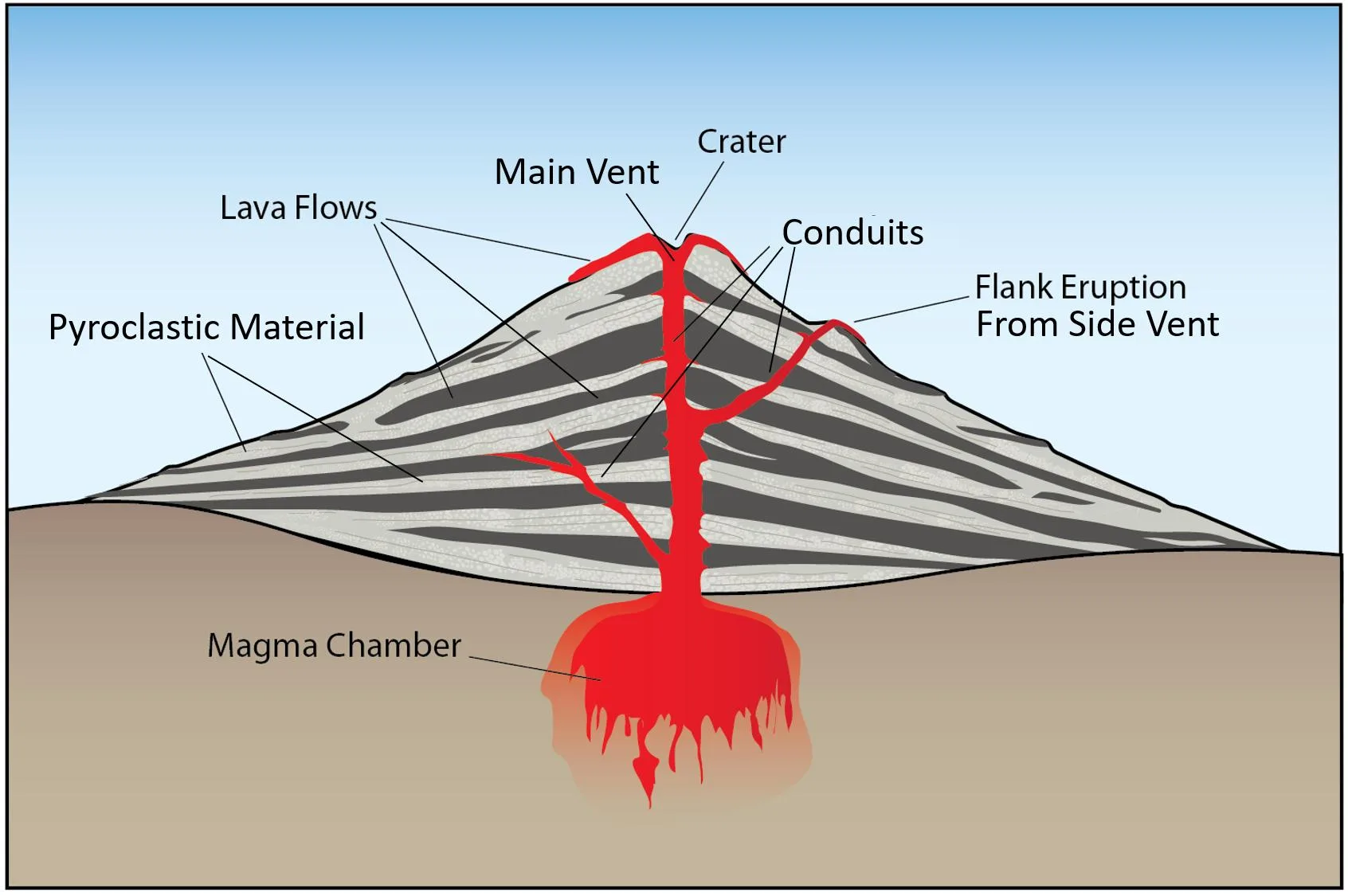
A volcanic system typically includes several interconnected features.
Magma reservoir: A region beneath the surface where molten or partially molten rock accumulates. Magma storage is often distributed among interconnected pockets, fractures, and crystal-rich zones rather than a single large chamber of liquid.
Conduit: A pathway that allows magma to move upward through the surrounding rock.
Volcanic vent: An opening through which lava, gases, or fragmented volcanic material escape.
Crater: A depression commonly formed around an eruptive vent by explosive activity, subsidence, or the removal of material.
Volcanic edifice: The landform constructed from accumulated lava, ash, and other volcanic deposits.
Fissures: Elongated cracks that may allow magma to erupt along a line rather than from a single central vent.
These features are not present in exactly the same arrangement at every volcano. Some eruptions occur through newly formed fractures, while others reuse established pathways.
How Do Volcanoes Form?
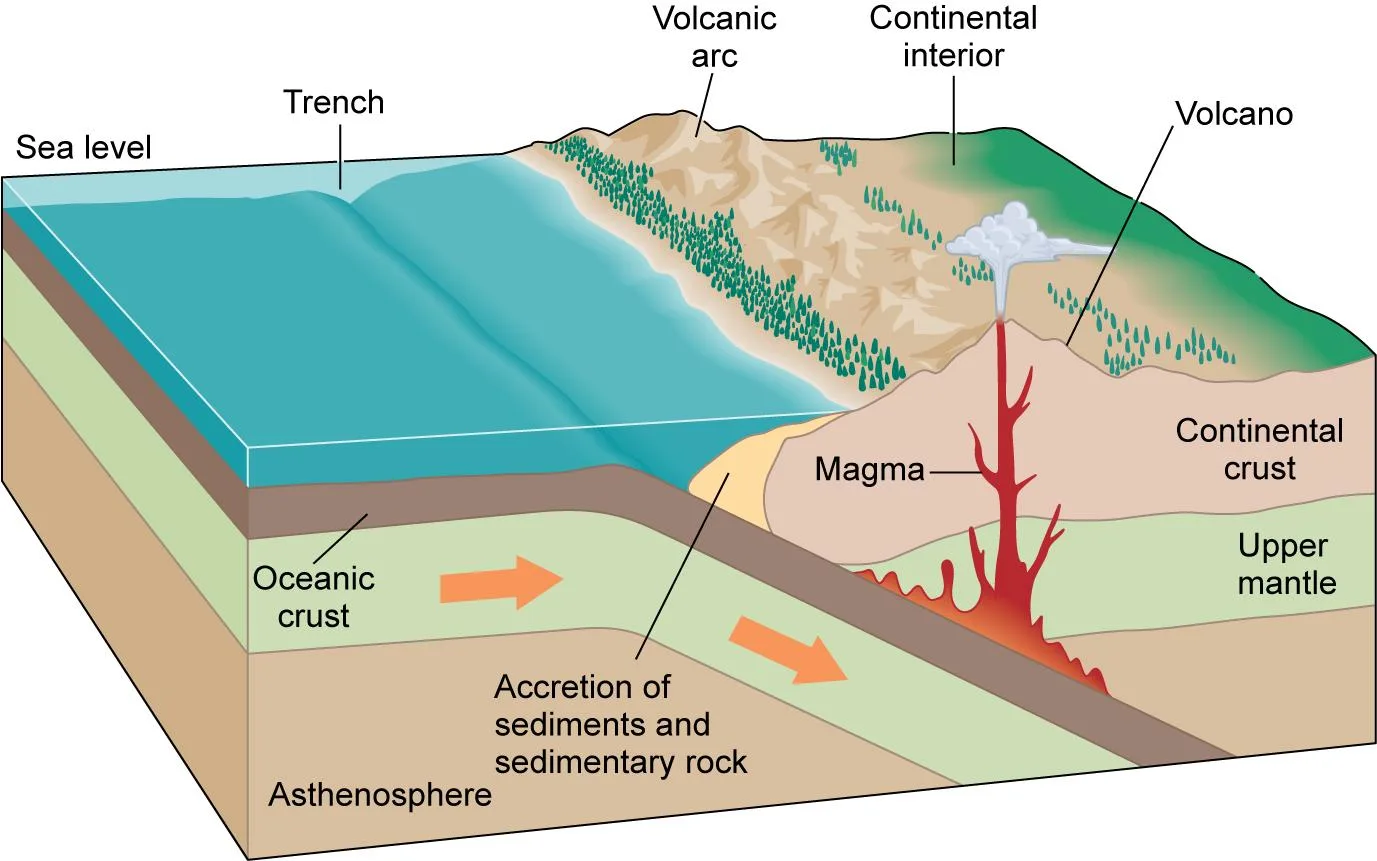
Volcano formation begins when geological conditions allow some rock within Earth to melt and the resulting magma moves toward the surface.
The mantle is mostly solid despite its high temperature. Magma forms when particular conditions cause partial melting, meaning that only a portion of the original rock becomes liquid.
Three important processes contribute to magma formation.
1. Decompression Melting
Deep mantle rock is subjected to enormous pressure. When sufficiently hot mantle material rises, the pressure decreases.
If the pressure falls enough, partial melting can occur without requiring a major increase in temperature.
This process commonly occurs at divergent plate boundaries and in some mantle upwelling regions associated with hotspots.
It is particularly important in the production of basaltic magma.
2. Flux Melting
At subduction zones, an oceanic tectonic plate descends beneath another plate.
As the descending plate heats and undergoes mineral transformations, it releases water-rich fluids into the overlying mantle.
These fluids lower the melting temperature of mantle rocks, promoting partial melting and magma generation.
The resulting magmas feed many volcanic arcs, including those around the Pacific Ocean.
3. Heat Transfer and Crustal Melting
Hot magma rising from depth can transfer heat to surrounding crustal rocks.
Under suitable conditions, this additional heat causes some crustal material to melt, producing new magma with a different chemical composition.
Magma mixing, crystallization, and interactions with crustal rock may subsequently modify the magma before it reaches the surface.
These processes help explain why volcanoes in different geological environments produce a wide variety of volcanic rocks.
Where Do Volcanoes Occur?
Volcanoes are not randomly distributed across Earth. Their locations are strongly influenced by plate tectonics, mantle processes, and the geological structure of the crust.
Three tectonic settings account for much of the planet’s volcanism.
Volcanoes at Convergent Plate Boundaries
Convergent boundaries occur where tectonic plates move toward one another.
When an oceanic plate is subducted, water-rich fluids released from the descending slab promote melting in the mantle above it.
The resulting magma may rise and form chains of volcanoes known as volcanic arcs.
Examples include the Andes in South America, the Cascade Range in North America, and numerous volcanic regions of Japan and Indonesia.
Volcanic arcs commonly contain stratovolcanoes capable of explosive eruptions, although their exact behavior depends on magma composition and other conditions.
Volcanoes at Divergent Plate Boundaries
Divergent boundaries form where tectonic plates move apart.
As hot mantle rises beneath the separating plates, decompression melting produces magma that can fill fractures and erupt onto the surface.
Much of this activity occurs along mid-ocean ridges, where magma cools to produce new oceanic crust.
Iceland is an especially important example because part of the Mid-Atlantic Ridge rises above sea level.
Continental rift systems, including the East African Rift, also contain active volcanic regions.
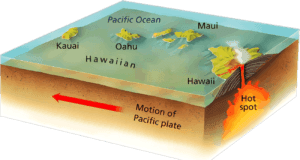
Hotspot Volcanoes
Some volcanoes form away from conventional plate boundaries.
Hotspots are regions of persistent volcanic activity that may be associated with mantle upwelling. Many are interpreted in terms of mantle plumes, although the origin of individual hotspots remains an active research question.
As a tectonic plate moves over a relatively persistent source of magma, successive volcanic centers may form.
The Hawaiian–Emperor volcanic chain demonstrates how volcanic activity and plate motion can create a long sequence of islands and submarine mountains.
Yellowstone is another well-known example of hotspot-related volcanism, although its volcanic system and eruptive history differ greatly from those of Hawaii.
The Pacific Ring of Fire
The Pacific Ring of Fire is a broad zone of tectonic and volcanic activity surrounding much of the Pacific Ocean.
It includes major subduction systems and volcanic arcs in the Americas, Alaska, the Aleutian Islands, Japan, the Philippines, and other parts of the western Pacific.
The concentration of volcanoes in this region reflects the movement and interaction of several tectonic plates.
Not all volcanoes belong to the Ring of Fire, however. Important volcanic regions also occur in Africa, the Atlantic Ocean, the Mediterranean, and other parts of the world.
Magma and Lava: The Foundation of Volcanic Activity
Magma is molten or partially molten rock beneath Earth’s surface. It commonly contains liquid silicate melt, solid crystals, and dissolved gases.
When molten rock reaches the surface, it is called lava.
The distinction is based on location rather than an entirely different substance. However, magma can undergo major physical and chemical changes as it rises, loses gases, cools, and erupts.
The Main Types of Magma
Magma composition strongly influences temperature, viscosity, crystallization, and eruption behavior.
| Magma type | Approximate silica content | Typical characteristics |
|---|---|---|
| Basaltic | 45–52% SiO₂ | Often relatively hot and fluid |
| Andesitic | 52–63% SiO₂ | Generally intermediate viscosity |
| Dacitic | 63–69% SiO₂ | Commonly more viscous and potentially explosive |
| Rhyolitic | Above 69% SiO₂ | Often highly viscous and capable of explosive fragmentation |
These chemical ranges are approximate, and natural magma compositions form a continuum.
Basaltic magmas commonly erupt at temperatures of roughly 1,000–1,200°C, while many silica-rich magmas erupt at lower temperatures.
Viscosity describes a fluid’s resistance to flow. Magma viscosity depends on temperature, chemical composition, crystal content, and the presence and behavior of gases.
Higher silica content often increases the viscosity of silicate melt, making it more difficult for gas bubbles to escape. However, magma composition alone does not determine whether an eruption will be explosive.
Why Volcanic Gases Matter
Magma contains dissolved volatile substances, particularly water vapor, carbon dioxide, and sulfur-bearing gases.
Deep underground, high pressure allows substantial quantities of these gases to remain dissolved in the melt.
As magma rises and pressure decreases, gas bubbles can form and expand.
If gas escapes gradually, magma may erupt relatively gently. If gas remains trapped and pressure builds rapidly, the magma may fragment into volcanic ash, pumice, and larger particles.
The interaction between magma viscosity, gas content, ascent rate, and surrounding conditions is central to understanding volcanic eruptions.
Types of Volcanoes
Volcanoes are classified according to their shape, construction, eruptive products, and geological history.
Their appearance often reflects how magma has erupted over thousands or millions of years.
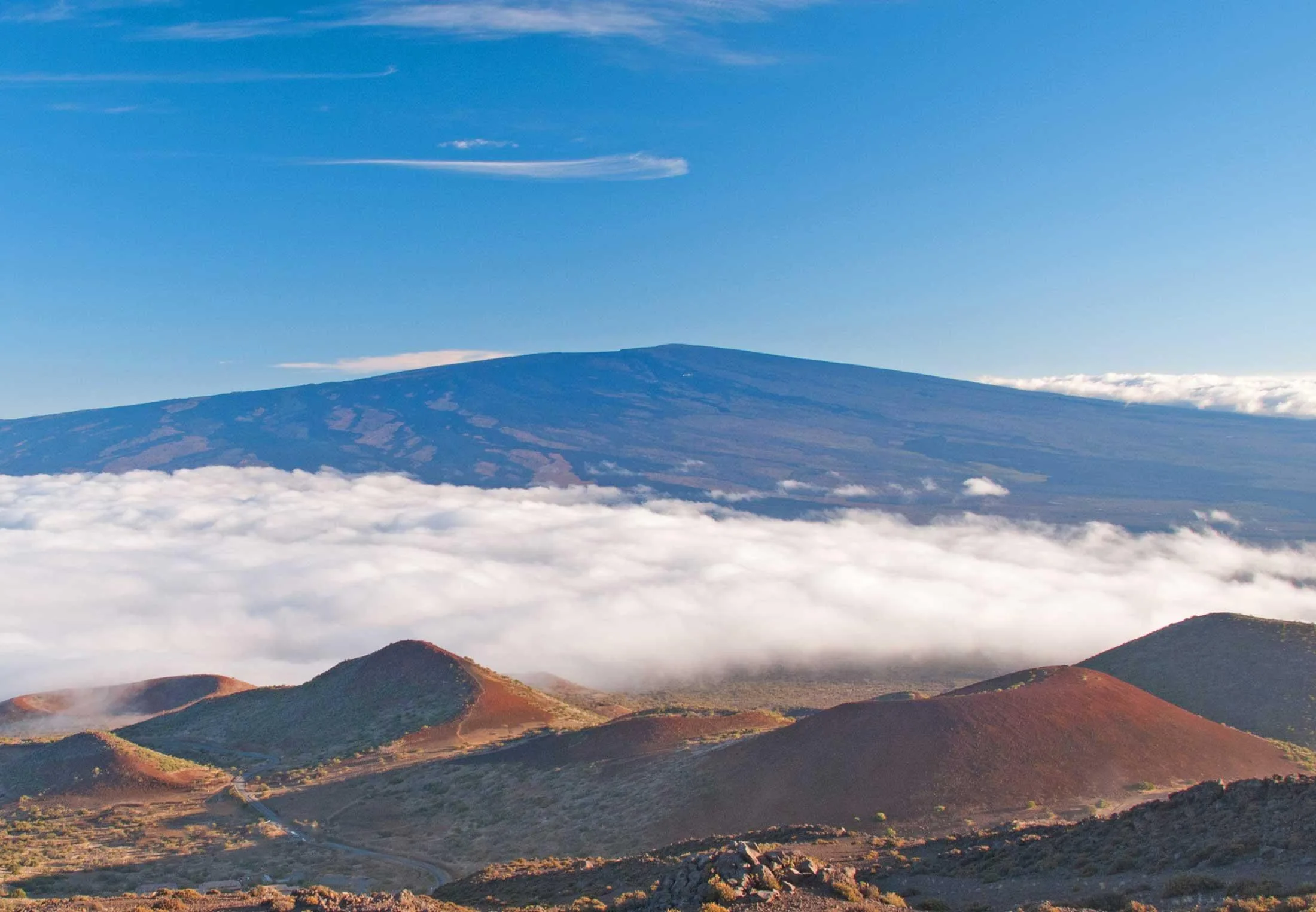
Shield Volcanoes
Shield volcanoes are broad volcanic landforms with relatively gentle slopes.
They are commonly constructed through repeated eruptions of basaltic lava, which can travel substantial distances before solidifying.
Mauna Loa in Hawaii is one of the best-known examples.
Shield volcanoes are frequently associated with effusive activity, although explosive eruptions can occur under certain conditions.
Stratovolcanoes (Composite Volcanoes)
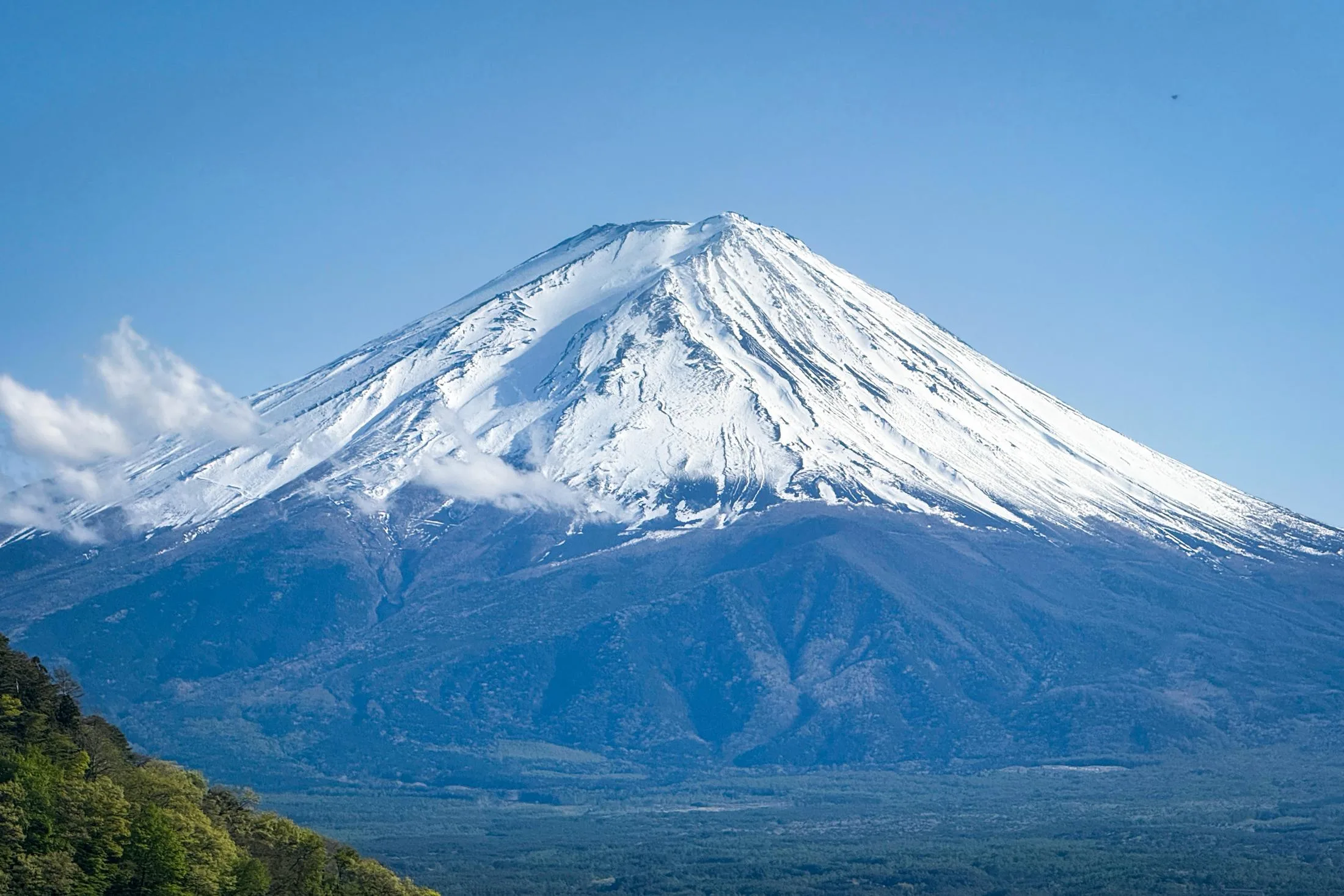
Stratovolcanoes are typically steep-sided volcanoes built from successive layers of lava flows, pyroclastic deposits, and other eruptive material.
They are common in volcanic arcs associated with subduction zones.
Mount Fuji in Japan, Mount St. Helens in the United States, and Mount Merapi in Indonesia are examples.
Many stratovolcanoes have complex plumbing systems and can produce lava flows, ash columns, pyroclastic density currents, and debris avalanches.
Cinder Cones
Cinder cones are comparatively small, steep-sided volcanoes constructed primarily from loose volcanic fragments, including scoria and other pyroclasts.
The fragments accumulate around an eruptive vent.
Many cinder cones form during relatively short-lived eruptions, although their histories can vary.
Parícutin in Mexico is a famous example. It began forming in a field in 1943 and continued erupting until 1952.
Lava Domes
Lava domes form when highly viscous lava accumulates close to its eruptive vent rather than flowing far across the landscape.
Dome growth can be slow or episodic.
Because domes may be unstable, the collapse of their steep flanks can generate dangerous pyroclastic density currents.
Lava domes are common in volcanic systems producing dacitic and rhyolitic magma.
Calderas
A caldera is a large volcanic depression commonly formed when the withdrawal or redistribution of magma reduces support beneath the surface and causes part of the volcanic structure to collapse.
Many calderas are associated with substantial explosive eruptions, although caldera formation can also occur in other volcanic settings.
Yellowstone in the United States and Toba in Indonesia are well-known caldera systems.
Unlike an ordinary summit crater, a caldera may extend across many kilometers and contain lakes, renewed volcanic activity, or smaller volcanic structures.
How Do Volcanic Eruptions Work?
A volcanic eruption occurs when magma, gases, or heated material escape to Earth’s surface.
The processes leading to an eruption can begin long before the first lava or ash becomes visible.
Magma may accumulate in subsurface storage regions, move through fractures, interact with surrounding rocks, and undergo changes in pressure and composition.
An eruption begins when material reaches the surface through an existing or newly formed pathway.
Volcanologists distinguish two broad behaviors: effusive and explosive eruptions.
Effusive Eruptions
Effusive eruptions are dominated by the outpouring of lava.
They commonly involve magmas that can move relatively easily and release gas without extensive fragmentation.
Lava may emerge as streams, fountains, or widespread flows.
Effusive eruptions can destroy roads, buildings, agricultural land, and infrastructure, even when people have sufficient warning to evacuate.
Explosive Eruptions
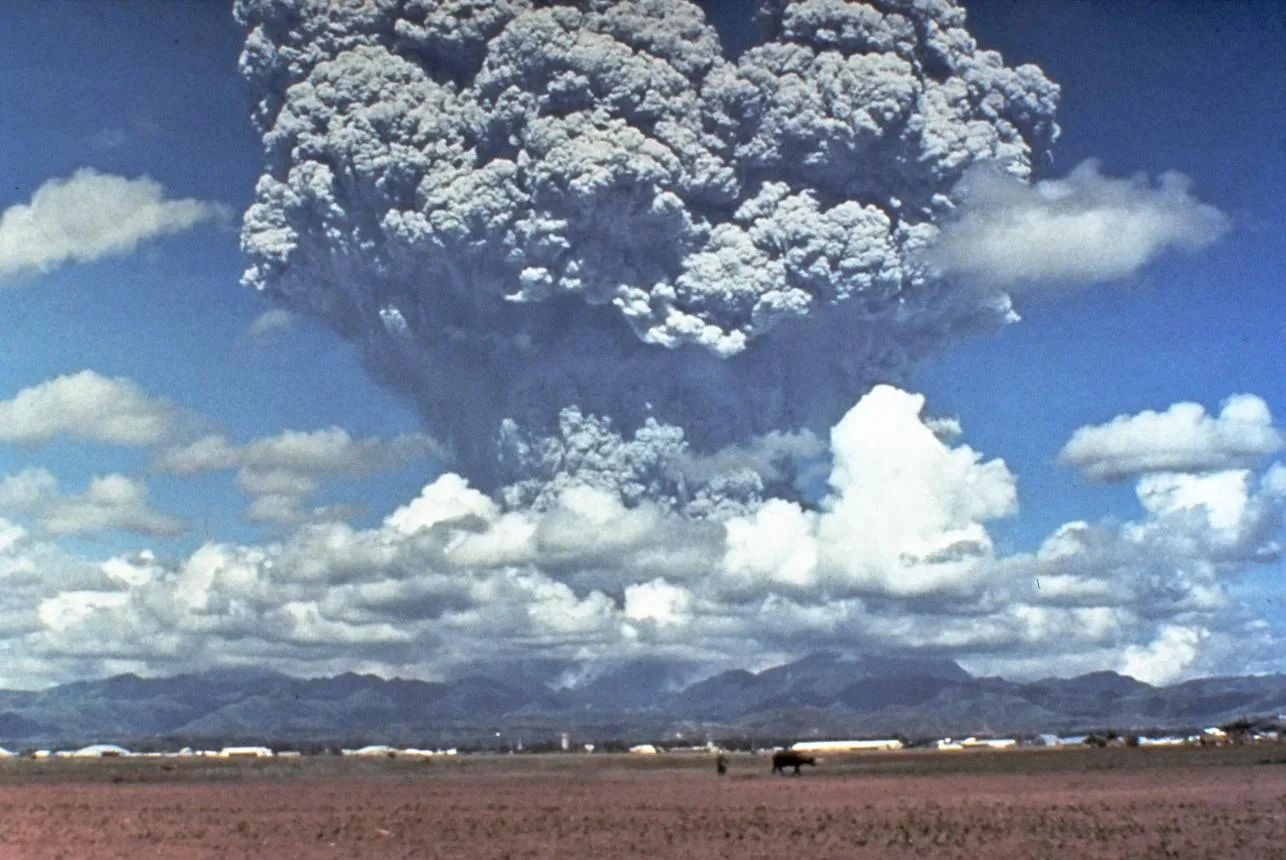
Explosive eruptions involve rapid fragmentation and ejection of magma or surrounding rock.
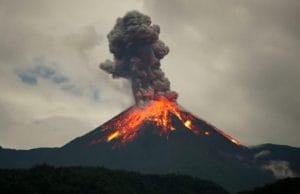
They can generate eruption columns, volcanic ash, pumice, ballistic fragments, and pyroclastic density currents.
Explosivity is influenced by several interacting factors, including dissolved gas, magma viscosity, magma ascent, and the presence of external water.
An eruption can change from effusive to explosive behavior—or the reverse—as conditions evolve.
Major Eruption Styles
Volcanologists commonly describe eruption styles using the following terms:
Hawaiian: Often characterized by fluid lava flows and sustained or intermittent lava fountains.
Strombolian: Characterized by discrete explosive bursts that eject incandescent fragments, commonly from gas-rich magma.
Vulcanian: Short, forceful explosions that may produce dense ash clouds and fragmented rock.
Plinian: Sustained, powerful explosive activity capable of producing towering eruption columns and widespread ash and pumice deposits.
Peléan: Commonly associated with viscous lava domes and destructive pyroclastic flows generated by dome collapse or explosions.
Surtseyan: Explosive activity produced when rising magma interacts with shallow water, as demonstrated during the formation of Surtsey in Iceland.
These names describe characteristic eruptive behaviors rather than rigid categories. A single volcano may exhibit several eruption styles during its lifetime or even during one eruptive episode.
Volcanic Materials and Rocks
Volcanic eruptions produce a wide range of materials that record the temperature, composition, gas content, and cooling history of magma.
Volcanic Lava and Igneous Rocks
Lava solidifies as it cools, forming extrusive igneous rocks.
Common examples include:
- Basalt: A dark, fine-grained volcanic rock commonly formed from relatively silica-poor magma.
- Andesite: An intermediate-composition volcanic rock frequent in many volcanic arcs.
- Dacite: A silica-rich volcanic rock often associated with viscous magma and lava domes.
- Rhyolite: A high-silica volcanic rock that can form lava flows, domes, and explosive deposits.
- Obsidian: Volcanic glass formed by rapid cooling with little crystal growth.
- Pumice: A highly vesicular volcanic glass or rock formed from gas-rich magma, commonly during explosive eruptions.
- Scoria: A dark, vesicular volcanic rock commonly produced from basaltic or basaltic-andesitic magma.
Lava can also develop distinctive surface textures.
Pāhoehoe lava typically has smooth, ropy surfaces, while ʻAʻā lava is characterized by rough, broken, angular material.
Both are especially associated with basaltic lava flows.
Pyroclastic Materials
Pyroclastic materials are fragments formed or expelled during volcanic activity.
They are classified partly according to particle size.
| Material | Particle size |
|---|---|
| Volcanic ash | Less than 2 mm |
| Lapilli | 2–64 mm |
| Volcanic blocks and bombs | Greater than 64 mm |
Blocks are generally solid fragments when ejected, whereas bombs are sufficiently molten or plastic during flight to develop characteristic shapes.
When ash and other pyroclastic fragments accumulate, they may eventually form deposits such as tuff, lapilli tuff, or pyroclastic breccia.
These rocks preserve valuable evidence of ancient eruptions.
Volcanic Hazards: Why Eruptions Can Be Dangerous
Volcanic hazards extend far beyond visible lava.
Some of the most destructive consequences of eruptions involve fast-moving hot material, volcanic gases, or mixtures of water and loose volcanic deposits.
Pyroclastic Density Currents
Pyroclastic density currents are rapidly moving mixtures of hot gases, ash, and rock fragments.
They travel under gravity and can move along valleys or across parts of the surrounding landscape.
Their high temperatures, speed, and concentration of debris make them among the most dangerous volcanic phenomena.
They may form through collapsing eruption columns, lava dome collapse, or other eruptive processes.
Volcanic Ashfall
Volcanic ash consists of very small fragments of rock, minerals, and volcanic glass.
Unlike ash from a wood fire, volcanic ash is not a product of combustion.
Ashfall can affect areas far from the eruptive vent. It may reduce visibility, damage machinery, contaminate water supplies, disrupt transportation, and increase the risk of roof collapse when thick or wet deposits accumulate.
Airborne volcanic ash is also a serious hazard to aircraft because it can damage engines and other systems.
Lahars
A lahar is a rapidly moving mixture of water, sediment, and volcanic debris.
Lahars may develop when volcanic material mixes with rainfall, melting snow or ice, or water released from lakes.
They can travel along river valleys well beyond the immediate volcanic slopes.
Importantly, lahars can occur during an eruption or long afterward, when rainfall remobilizes loose volcanic deposits.
Volcanic Gases
Volcanoes release gases such as water vapor, carbon dioxide, sulfur dioxide, and hydrogen sulfide.
High concentrations of particular gases can threaten human and animal health.
Carbon dioxide may accumulate in low-lying areas under certain conditions, while sulfur dioxide can irritate the respiratory system and contribute to volcanic air pollution, including vog.
Gas emissions are therefore important both as volcanic hazards and as indicators of changes within a volcanic system.
Landslides and Debris Avalanches
Volcanic mountains may become unstable because of steep slopes, fractures, hydrothermal alteration, earthquakes, or intrusion of magma.
A large collapse can produce a rapidly moving debris avalanche.
The 1980 eruption of Mount St. Helens demonstrated how a major flank collapse can influence the subsequent eruption and surrounding landscape.
Volcanic Tsunamis
Volcanic activity can also generate tsunamis.
Potential mechanisms include underwater explosions, landslides entering water, submarine slope failures, and the collapse of volcanic structures.
These events may create hazards for coastal communities located far from the volcano itself.
How Do Scientists Monitor Volcanoes?
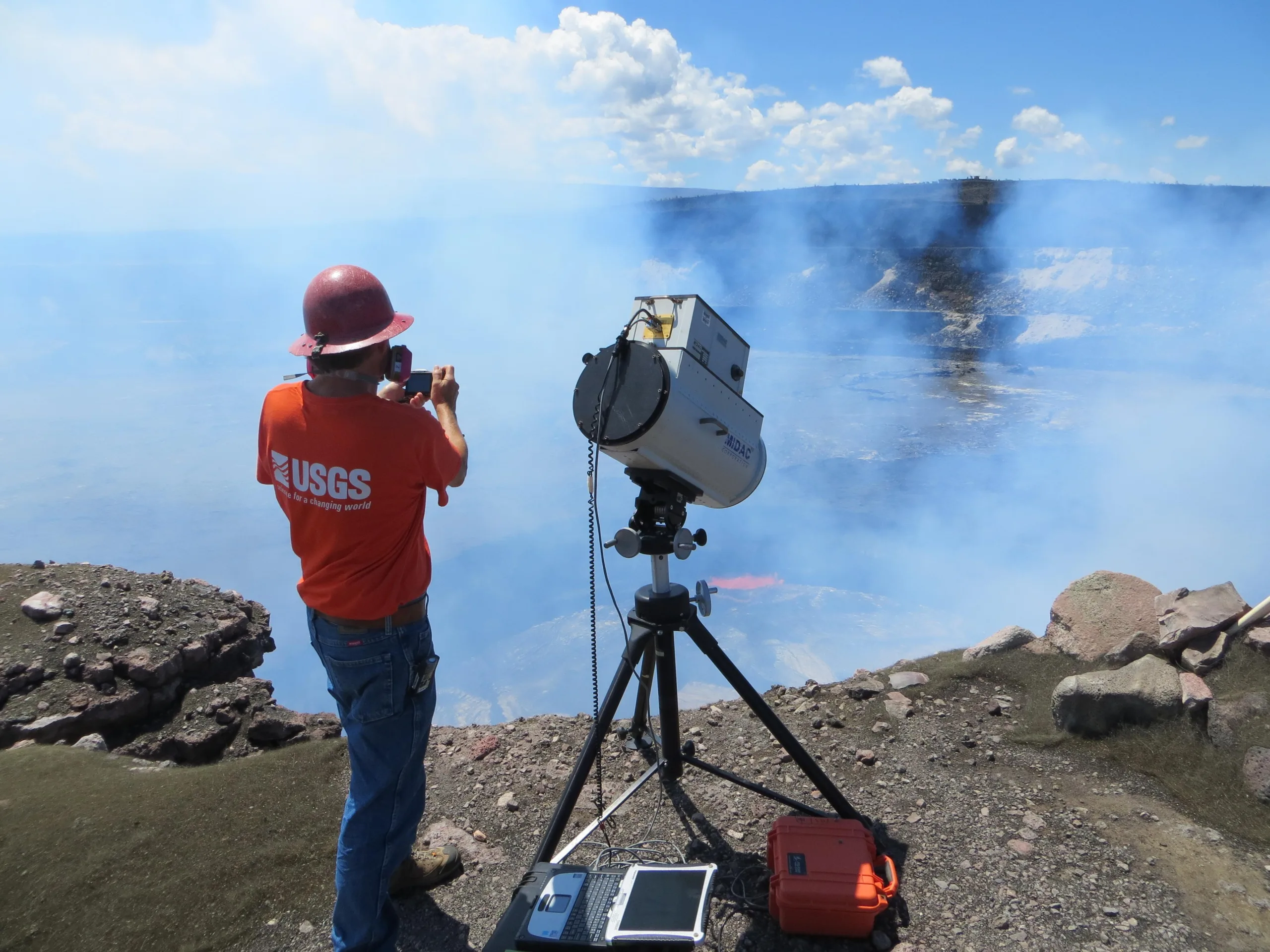
Volcano monitoring involves measuring changes that may reveal magma movement, pressure variations, or changes in hydrothermal activity.
No single instrument can reliably predict every eruption.
Volcanologists combine several monitoring techniques with knowledge of a volcano’s geological history.
Seismic Monitoring
Seismometers detect earthquakes and volcanic tremor.
When magma moves through surrounding rock, it can produce fractures and stress changes that generate earthquakes.
Changes in earthquake location, depth, frequency, or character may provide evidence of changing subsurface activity.
However, earthquakes alone do not prove that an eruption will occur.
Ground Deformation Measurements
Magma accumulation or movement can cause the ground to expand, rise, tilt, or subside.
Scientists monitor these changes using GNSS instruments, tiltmeters, and satellite radar techniques such as InSAR.
Ground deformation may be measurable even when it is too subtle to notice directly.
Volcanic Gas Monitoring
Changes in gas emissions can provide clues about magma movement and degassing.
Researchers measure the composition and amount of gases released from vents, fumaroles, and surrounding areas.
For example, changes in sulfur dioxide emissions may help scientists assess conditions within a volcanic system, although interpretation depends on the particular volcano.
Thermal and Satellite Monitoring
Thermal cameras and satellite instruments detect changes in surface temperature.
Other remote-sensing techniques track ground movement, volcanic gas plumes, ash clouds, and lava flows.
Satellite monitoring is particularly valuable for remote volcanoes where continuous ground-based measurements are difficult.
Field Observations and Geological Mapping
Direct observations remain essential.
Volcanologists collect rock samples, examine deposits, measure geological structures, and map the distribution of previous eruptions.
The geological record can show which areas were affected by lava flows, ashfall, lahars, or pyroclastic currents in the past.
This information is fundamental to volcanic hazard mapping.
Can Scientists Predict Volcanic Eruptions?
Scientists can sometimes forecast an eruption or identify a period of increased volcanic risk, but they cannot reliably predict the exact time, size, and behavior of every eruption.
Many magmatic eruptions are preceded by changes such as increased seismic activity, ground deformation, higher gas emissions, or temperature anomalies.
However, volcanic unrest does not always lead to an eruption.
Some volcanoes remain restless for years without erupting, and certain steam-driven explosions may occur with little warning.
The most reliable assessments combine real-time monitoring data, the history of the volcano, and an understanding of its subsurface processes.
A notable example is the 1991 eruption of Mount Pinatubo in the Philippines. Monitoring and scientific assessment helped authorities organize evacuations that saved thousands of lives.
The primary goal of modern volcano forecasting is not to predict an exact eruption date, but to recognize dangerous changes early enough to support informed decisions.
How Volcanologists Study Ancient Eruptions
Volcanic landscapes preserve evidence of events that occurred long before human observations began.
Scientists reconstruct these events through several methods.
Stratigraphy: Examining the sequence and relationships of lava flows, ash layers, and other volcanic deposits.
Geological mapping: Recording the distribution, thickness, composition, and geometry of volcanic materials.
Radiometric dating: Determining the age of suitable rocks and minerals through radioactive isotope systems.
Geochemistry: Measuring the chemical and isotopic composition of rocks to investigate magma sources and evolution.
Petrography: Studying minerals, glass, and rock textures under a microscope to understand crystallization and eruption conditions.
Experimental volcanology: Recreating aspects of magma behavior under controlled temperature and pressure conditions.
By combining these methods, researchers can estimate eruption histories, identify changes in magma composition, and investigate patterns of activity.
Such records are essential because the time between major eruptions can exceed the period covered by written history.
Famous Volcanic Eruptions and What Scientists Learned
Several historical eruptions have had an important influence on the development of volcanology.
Mount Vesuvius, Italy — AD 79
The eruption of Vesuvius buried Pompeii and other nearby settlements beneath volcanic deposits.
Its historical descriptions helped establish the concept of Plinian eruptions, named after Pliny the Younger, who documented the event.
The deposits provide important evidence of eruption dynamics and the effects of pyroclastic activity on populated regions.
Krakatau, Indonesia — 1883
The explosive eruption of Krakatau produced enormous atmospheric disturbances and destructive tsunamis.
It demonstrated how volcanic disasters can involve both eruptive activity and the movement or displacement of large volumes of water.
Mount St. Helens, United States — 1980
The eruption followed the collapse of part of the volcano’s northern flank.
The resulting lateral blast and other volcanic phenomena provided scientists with valuable observations of volcanic instability, explosive activity, and landscape change.
Mount Pinatubo, Philippines — 1991
Pinatubo produced a major explosive eruption that released large quantities of sulfur dioxide into the stratosphere.
The resulting sulfate aerosols temporarily affected Earth’s radiation balance and contributed to global cooling.
The eruption also became an important example of successful volcano monitoring and emergency preparedness.
Eyjafjallajökull, Iceland — 2010
The eruption produced ash clouds that caused major disruption to European air traffic.
It highlighted the importance of volcanic ash forecasting, satellite observations, atmospheric modeling, and international coordination.
Volcanoes and Earth’s Climate
Volcanic activity influences the atmosphere and climate through several distinct mechanisms.
Major explosive eruptions can inject sulfur dioxide into the stratosphere, where it forms sulfate aerosols that reflect incoming solar radiation.
This can produce temporary cooling of Earth’s surface, as observed after the 1991 Pinatubo eruption.
Volcanoes also release carbon dioxide, an important greenhouse gas. However, present-day human carbon dioxide emissions greatly exceed global volcanic carbon dioxide emissions.
Volcanic ash itself usually remains in the atmosphere for a shorter period than long-lived stratospheric sulfate aerosols, although the duration depends on altitude and atmospheric conditions.
Over geological timescales, exceptionally large episodes of volcanism may have contributed to substantial environmental and climatic changes.
Why Volcanoes Are Important to Earth
Volcanoes are not only sources of destruction. They are also essential contributors to Earth’s geological evolution.
Formation of New Land
Lava eruptions can create islands, extend coastlines, and build mountains.
Much of Earth’s oceanic crust forms through volcanic processes at mid-ocean ridges.
Development of Fertile Soils
Weathered volcanic materials can contribute important nutrients and minerals to soils.
In suitable environmental conditions, volcanic landscapes may support highly productive agricultural areas.
Geothermal Energy
Heat associated with magmatic and volcanic systems can be used for geothermal energy production.
Countries such as Iceland, New Zealand, and Indonesia make use of geothermal resources in volcanically active regions.
Mineral Deposits
Magmatic and hydrothermal processes are involved in the formation of many economically important mineral deposits.
Volcanic and volcanic-related systems can concentrate metals and other valuable materials through processes involving magma, circulating hot fluids, and chemical reactions with surrounding rock.
Understanding Earth’s Interior
Volcanic rocks provide direct and indirect evidence of processes occurring within Earth’s crust and mantle.
Their mineral composition, chemistry, and textures help scientists investigate mantle melting, magma evolution, and the movement of material through Earth’s interior.
The Future of Volcanology
Volcanology continues to develop as scientists gain access to increasingly detailed observations of Earth’s surface and interior.
Satellite radar allows researchers to measure subtle ground deformation across remote volcanic regions. New seismic networks improve the detection of small earthquakes, while advanced chemical instruments provide more detailed measurements of volcanic gases.
Numerical models help researchers investigate magma movement, gas expansion, eruption columns, lava flows, and pyroclastic density currents.
Machine learning is also being explored as a way to identify patterns in large monitoring datasets. However, automated systems still require careful scientific interpretation and validation.
One of the central challenges is understanding how changes deep inside a volcano translate into activity at the surface.
Every volcano has its own geological history and internal structure. Consequently, a warning signal that precedes an eruption at one volcano may have a different significance elsewhere.
The future of volcanology depends on combining improved observations, experimental research, geological evidence, and physical models to produce more reliable hazard assessments.
Frequently Asked Questions About Volcanology
What is the difference between geology and volcanology?
Geology is the broad study of Earth, including its materials, structure, history, and processes. Volcanology is a specialized branch of geology focused on volcanoes, magma, eruptions, and volcanic environments.
What does a volcanologist do?
A volcanologist investigates volcanic systems through fieldwork, laboratory analysis, geophysical measurements, geological mapping, and remote sensing. Some researchers focus on fundamental Earth processes, while others contribute to volcano monitoring and hazard assessment.
What causes a volcano to erupt?
An eruption occurs when magma, gas, or heated material reaches the surface through a volcanic opening. Magma buoyancy, gas expansion, pressure changes, and the mechanical properties of surrounding rock can all influence the process.
What is the difference between magma and lava?
Magma is molten or partially molten rock beneath Earth’s surface. Lava is molten rock that has erupted onto the surface.
Are all volcanic eruptions explosive?
No. Some eruptions primarily produce flowing lava, while others generate explosive ash columns and pyroclastic material. Many eruptions display combinations of both behaviors.
How many active volcanoes are there on Earth?
The answer depends on the definition of active. The Smithsonian Global Volcanism Program’s 2026 database identifies approximately 1,214 volcanoes with evidence of eruptions during the Holocene, covering roughly the past 12,000 years. This is not an exact count of every potentially active volcanic system, especially beneath the oceans.
Can an extinct volcano erupt again?
A volcano classified as extinct is considered unlikely to erupt again. However, such classifications involve geological interpretation and uncertainty. Long periods of inactivity do not automatically prove that a volcano is extinct.
Can earthquakes trigger volcanic eruptions?
Large earthquakes may influence volcanic systems under certain geological conditions, but most earthquakes do not trigger eruptions. A volcano generally must already have suitable magmatic conditions for earthquake-related changes to contribute to eruptive activity.
Can scientists stop a volcanic eruption?
There is no established method for stopping magma movement and preventing a volcanic eruption. Scientific efforts concentrate on monitoring, warning systems, hazard mapping, and reducing exposure to dangerous activity.
Conclusion
Volcanology reveals how processes deep within Earth shape the landscapes visible at the surface. From mantle melting and magma formation to lava flows and explosive eruptions, volcanic activity reflects the continuous interaction of Earth’s internal heat, tectonic movement, and geological materials.
The study of volcanoes connects several fundamental Earth science disciplines, including plate tectonics, petrology, geochemistry, geophysics, and natural hazard science.
By studying volcanic rocks, monitoring active systems, and reconstructing ancient eruptions, volcanologists improve our understanding of Earth’s evolution and the processes that create volcanic hazards.
Volcanoes may appear unpredictable from the surface, but the geological evidence they leave behind—and the changes scientists can measure today—offer increasingly valuable insights into how these remarkable systems work.
Scientific References and Further Reading
- U.S. Geological Survey (USGS). About Volcanoes. https://www.usgs.gov/programs/VHP/about-volcanoes
- U.S. Geological Survey (USGS). How Do Volcanoes Erupt? https://www.usgs.gov/faqs/how-do-volcanoes-erupt
- Smithsonian Institution, Global Volcanism Program (2026). Volcanoes of the World, version 5.4.0. https://volcano.si.edu/
- British Geological Survey. How Volcanoes Form. https://www.bgs.ac.uk/discovering-geology/earth-hazards/volcanoes/how-volcanoes-form-2/
- U.S. Geological Survey (USGS). How Can We Tell When a Volcano Will Erupt? https://www.usgs.gov/faqs/how-can-we-tell-when-a-volcano-will-erupt
- Poland, M. P., Lopez, T., Wright, R., & Pavolonis, M. J. (2020). Forecasting, detecting, and tracking volcanic eruptions from space. Remote Sensing in Earth Systems Sciences. https://doi.org/10.1007/s41976-020-00034-x
The history of volcanic eruptions
Biggest Volcanic Eruptions in History
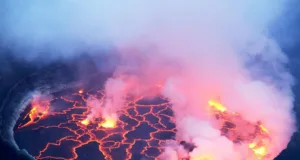
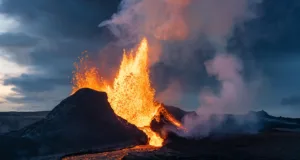
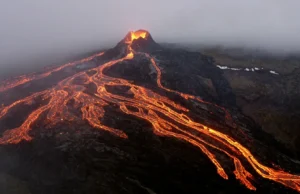
Fagradalsfjall Volcano, Iceland

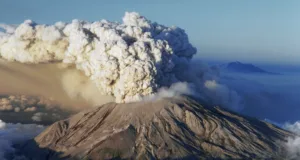
Mount St. Helens Volcano, Washington, USA
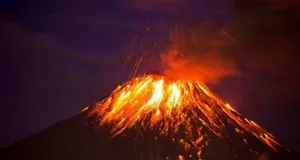
10 Most Powerful Super Volcanoes