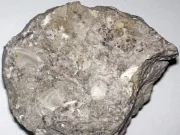
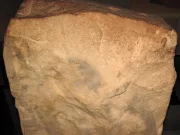


























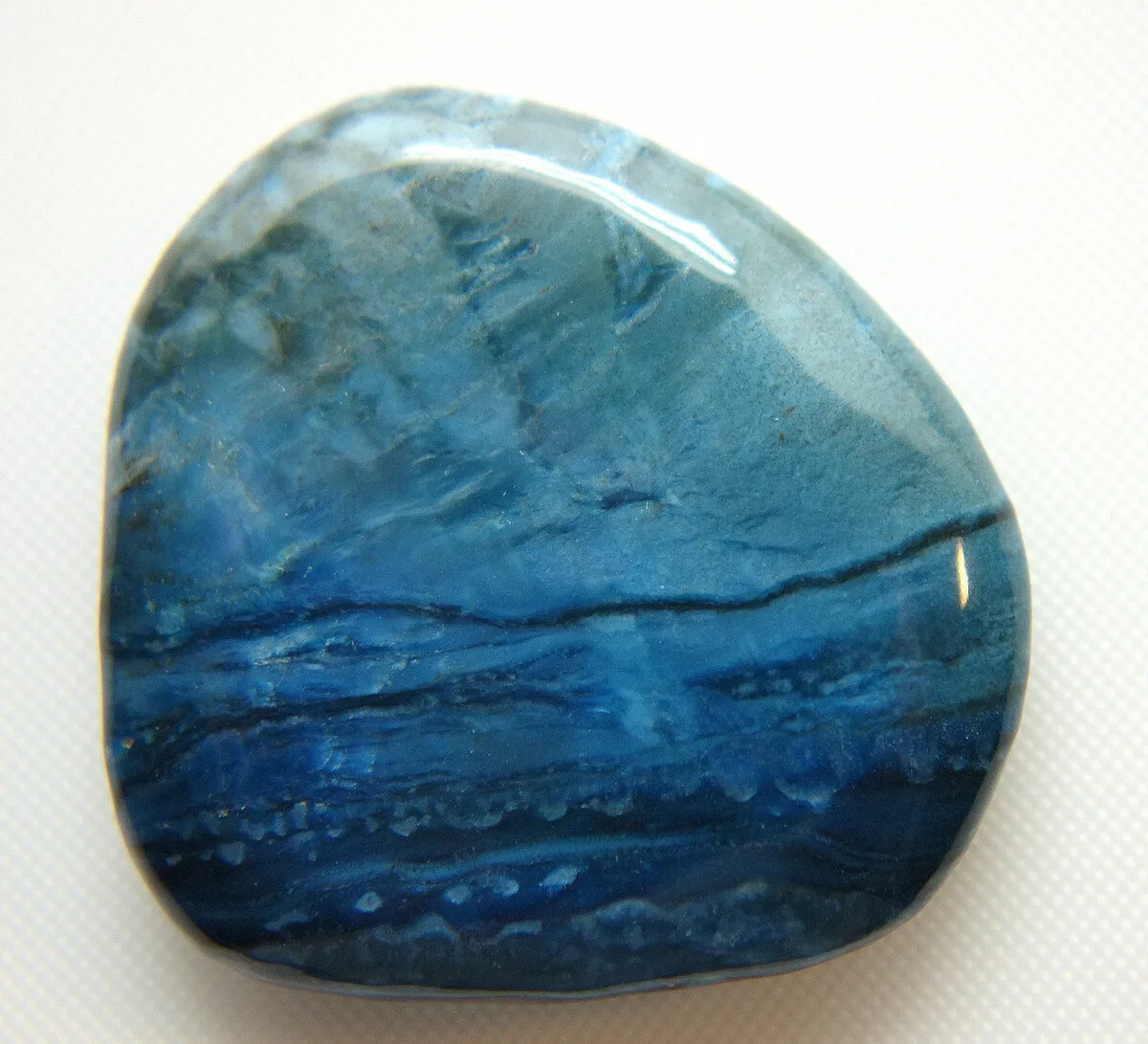
Dianite is a trade name for blue amphibole-rich rock from the Murun alkaline complex of Siberia, not a vesuvianite variety or distinct mineral. The ornamental material is sometimes marketed as blue jade, although its mineralogy differs from conventional nephrite and jadeite.
Mineralogy and Composition
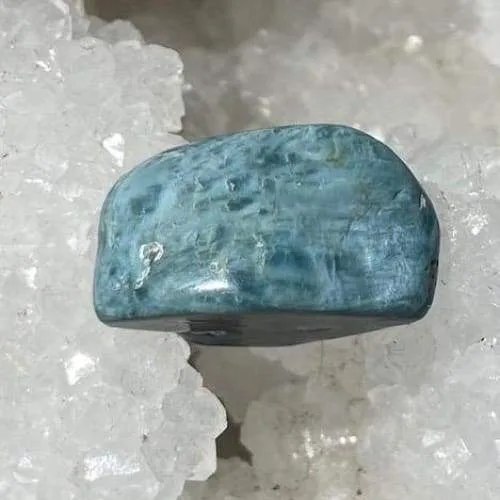
Studies of dianite from the Kedroviy stock of the Murun Complex describe a heterogeneous amphibole-rich rock. Blue to green amphiboles include potassic-richterite and potassic-magnesio-arfvedsonite; pargasite, magnesio-hastingsite and feldspar may also occur. The proportions and textures differ between samples. Consequently, dianite has neither a single mineral formula nor a single crystal system. Its amphibole constituents commonly have monoclinic symmetry.
Physical and Identification Properties
| Property | Dianite |
|---|---|
| Classification | Amphibole-rich ornamental rock; trade name |
| Color | Blue, blue-green, gray or mottled |
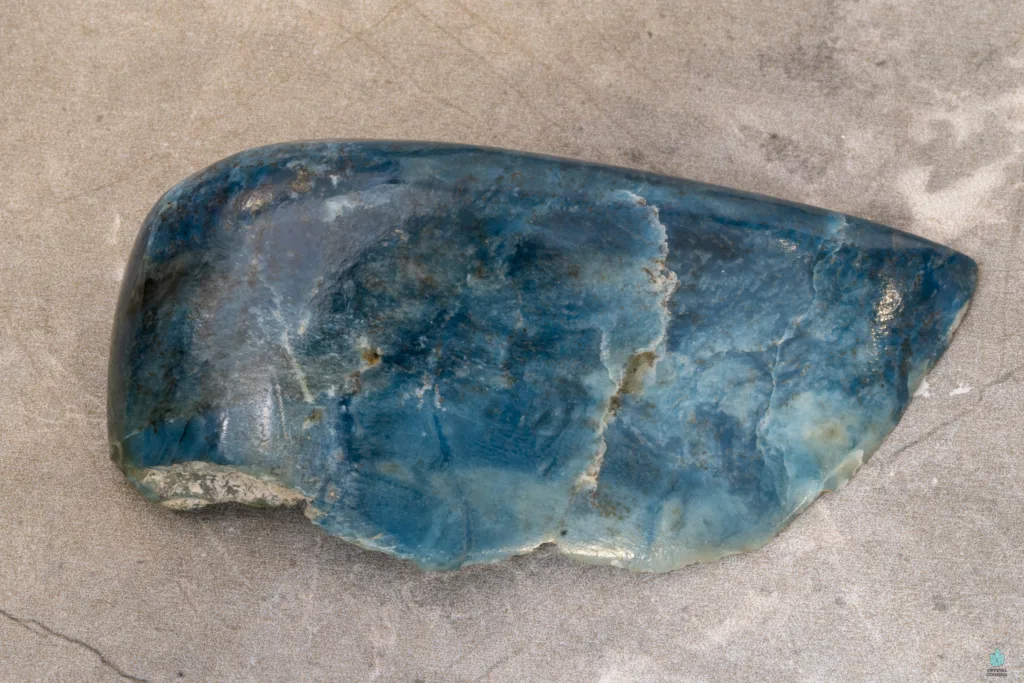
| Texture | Fine-grained, fibrous to intergrown mineral aggregates |
| Crystal system | Not applicable to the whole rock |
| Hardness | Variable; dependent on constituents |
| Luster | Variable; polished surfaces may appear silky or glossy |
Blue color alone cannot establish a rock’s identity. Similar-looking materials include amphibole-rich rocks, dyed stones, sodalite-bearing rocks and other ornamental silicates. Petrography, Raman spectroscopy and electron-microprobe analysis can establish which minerals are present.
Geological Occurrence
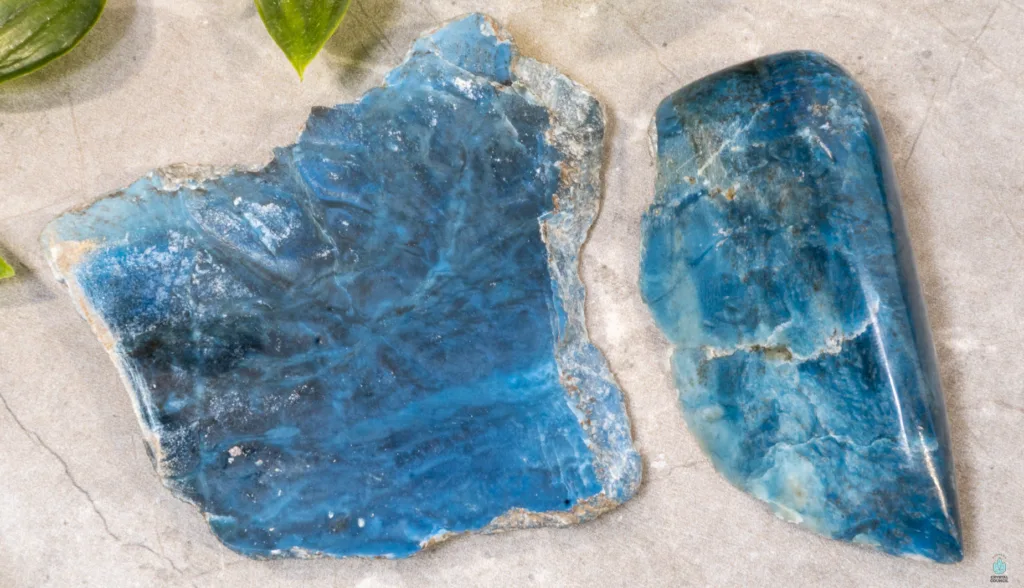
The documented Russian occurrence lies in the Kedroviy stock, Murun alkaline complex, Aldan Shield, eastern Siberia. Mineral assemblages reflect alkaline magmatism and subsequent reactions and alteration. The blue ornamental rock should not be described as a variety of vesuvianite or assigned to a specific mineral species without laboratory evidence.
Ornamental Uses and Care
Dianite may be cut into cabochons, beads and decorative objects. Its durability depends on mineral composition, texture and fractures. Avoid abrasive cleaning and dry cutting or grinding of fibrous amphibole-bearing material; dust exposure should be controlled by appropriate professional lapidary procedures.
Frequently Asked Questions
Is dianite a mineral species?
No. In the modern gemstone trade it is a name for amphibole-rich rock.
Is dianite blue jade?
Blue jade is a commercial description; conventional nephrite and jadeite have different mineralogical definitions.
Where does dianite occur?
A well-documented source is the Murun alkaline complex of eastern Siberia.
References
Mindat — Dianite outcrop, Kedroviy stock; includes the 2022 mineralogical study