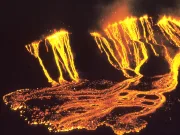























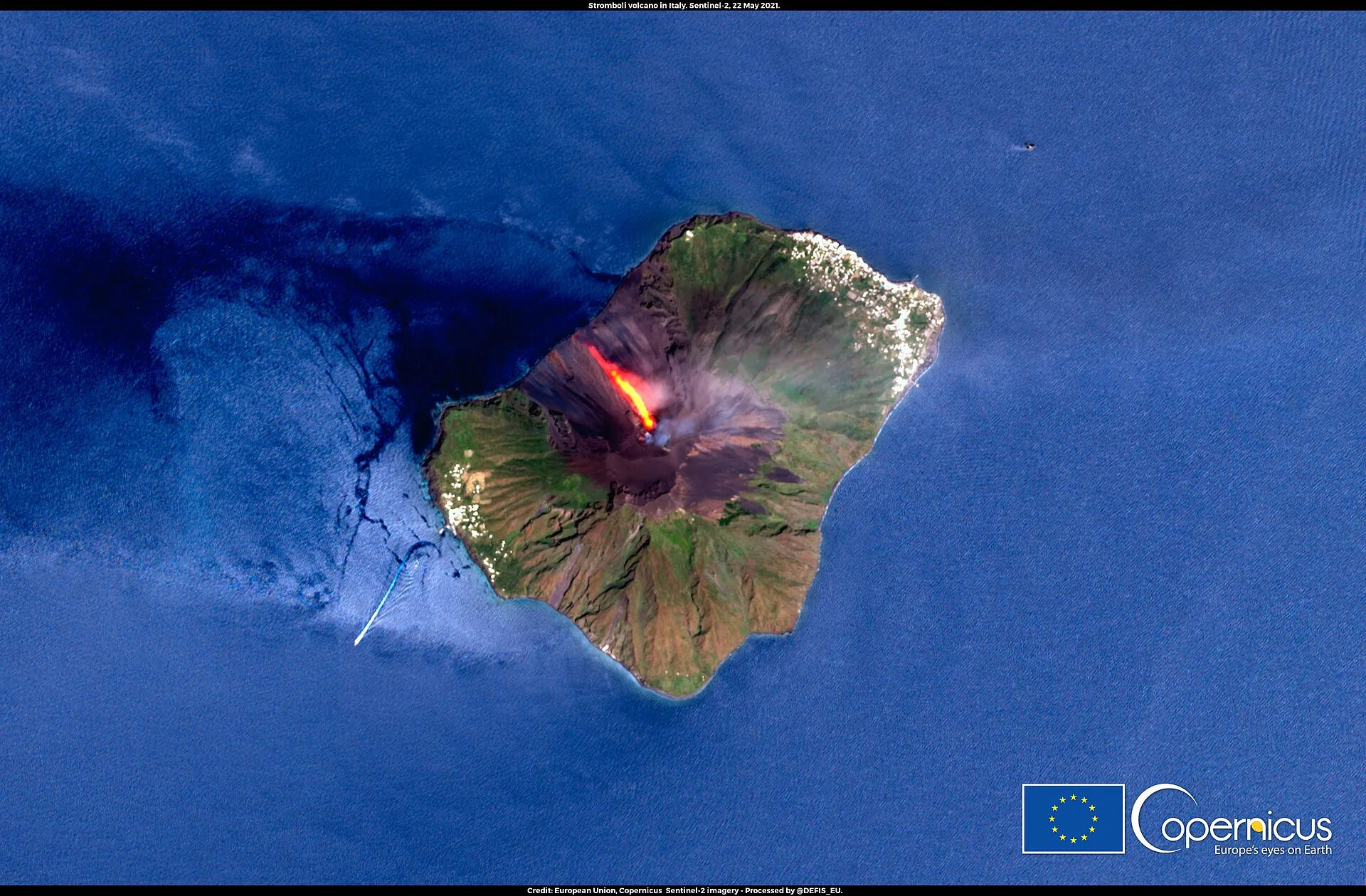
November 27, 2026 — Italy. Stromboli volcano produced a new lava overflow from its northern crater area on November 27, according to Italy’s National Institute of Geophysics and Volcanology (INGV). Surveillance cameras showed a modest stream of molten rock moving onto the Sciara del Fuoco, the steep, largely unvegetated volcanic slope on Stromboli’s northwestern side. In its early-morning bulletin, the monitoring agency placed the visible lava flow in the upper part of the slope; it did not report lava reaching the sea.
What INGV Observed on November 27
INGV’s Etna Observatory issued a volcanic activity communication at 04:18 UTC on November 27 after monitoring indicated a change at approximately 04:14 UTC. Thermal and visual cameras showed lava spilling from the north crater area. The initial communiqué characterised the lava flow as modest and confined to the upper Sciara del Fuoco. Ordinary Strombolian explosions continued; tremor amplitude, explosion-quake activity and ground deformation networks showed no significant changes in the initial assessment.
A separate aviation notice identified the volcano’s ORANGE aviation colour code, reflecting a potential airborne volcanic hazard. Aviation colour codes communicate conditions to flight operators and are not interchangeable with local civil-protection evacuation orders. Later monitoring updates can change the interpretation of a rapidly developing episode.
The Sciara del Fuoco: Stromboli’s Natural Drainage Slope
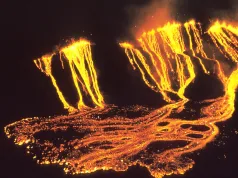
The Sciara del Fuoco is a steep sector descending from Stromboli’s summit crater terrace towards the Tyrrhenian Sea. Repeated lava flows, loose scoria, bombs and fragmented volcanic rock have accumulated here over many eruptive cycles. Because the slope provides a preferential route for volcanic material, lava overflowing the crater rim may follow its upper channels and terraces.
However, a lava overflow reaching the upper slope is not equivalent to a full-length flow reaching the coast. The distance and speed of the lava depend on discharge rate, temperature, viscosity, slope and whether the flow develops a cooled crust.
Why Stromboli Produces Frequent Explosions and Lava
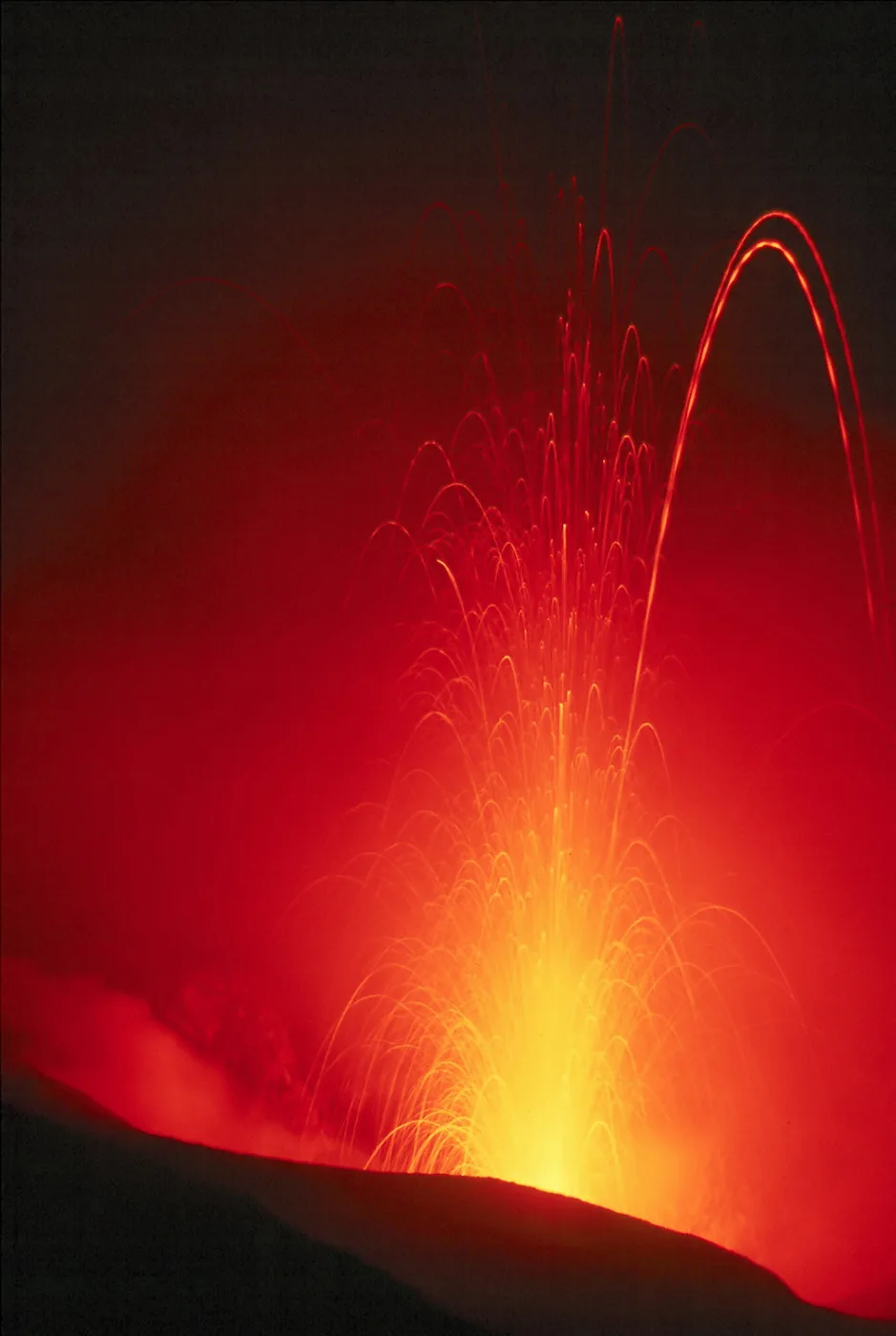
Stromboli is an active stratovolcano in Italy’s Aeolian Islands above the complex tectonic system where African lithosphere converges with Eurasia. Its magma commonly contains dissolved gases that collect in rising pockets. As gas-rich slugs reach the shallow conduit, rapid decompression may eject incandescent fragments in short, discrete explosions—the behaviour for which Strombolian activity is named.
Effusive lava overflow is a different but related expression of the same magmatic system. Magma rising at a sufficient rate can fill a vent or crater depression and spill over its edge. Strombolian explosions can continue during such an effusive phase, and the two behaviours should not be treated as mutually exclusive. For background, see Types of Volcanic Eruptions and Volcano Anatomy.
Rockfalls, Gas and Coastal Hazards
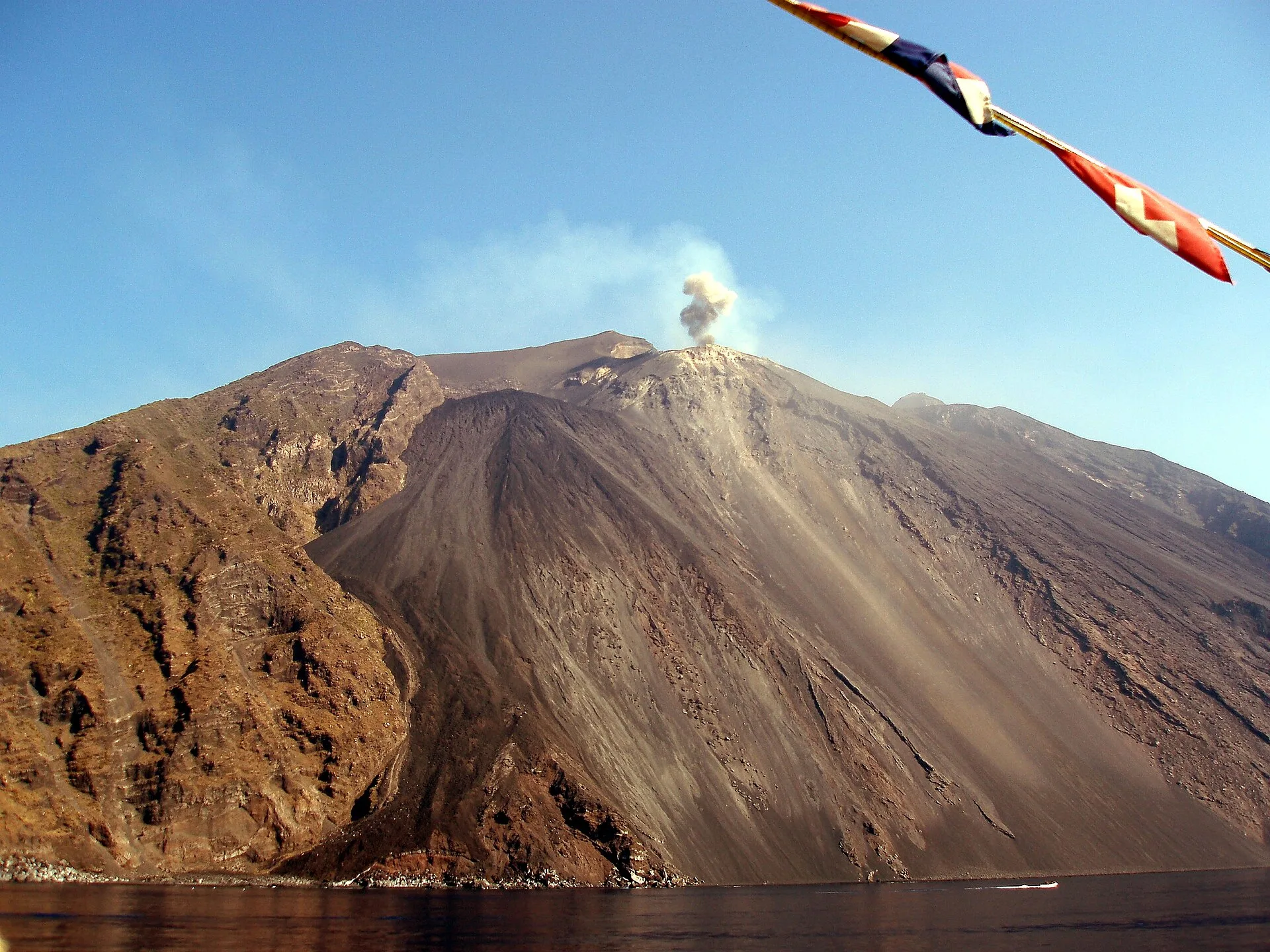
The volcano’s flanks can shed blocks and unstable deposits during activity. Loose volcanic fragments may fall down the Sciara del Fuoco, and volcanic gases can affect people downwind. Although rapid flank collapses into the sea are among the natural hazards studied at Stromboli, the November 27 initial bulletin does not establish a flank collapse or tsunami. Such scenarios should not be inferred from a small lava overflow.
What Monitoring Will Determine Next
INGV combines surveillance cameras, thermal observations, seismic measurements, volcanic tremor, deformation and gas monitoring to track activity. If the supply of lava continues, future updates may show the flow extending farther downslope; if supply diminishes, the overflow may stall and cool. The first report cannot determine the final extent or volume of erupted lava.
People visiting Stromboli or travelling by boat should consult current island access rules and the Italian Civil Protection and INGV bulletins, rather than assume that a published photograph shows the latest conditions.
Sources and Photograph Credits
Primary source: INGV Etna Observatory — Stromboli communication, November 27, 2026, 04:18 UTC; INGV volcanic ash aviation notices, including ORANGE notice; Smithsonian Global Volcanism Program — Stromboli.
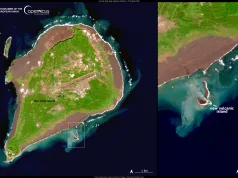
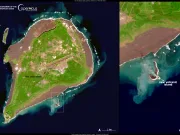
Featured image is a historical Copernicus Sentinel-2 satellite view of the May 22, 2021 Stromboli eruption, not the November 27, 2026 event. Copernicus / Wikimedia Commons, source. Image resized/converted for web use.