


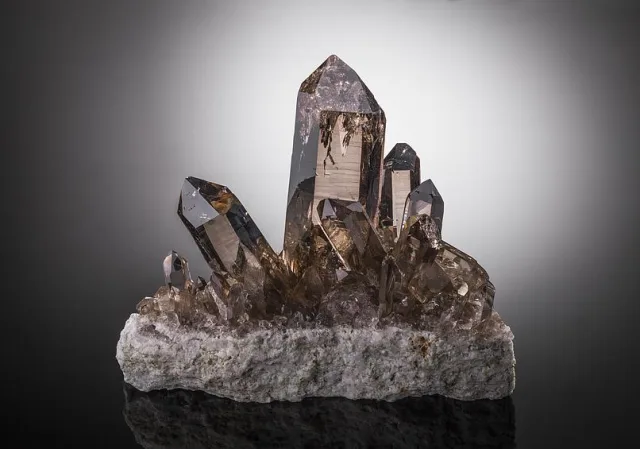
Smoky quartz is a gray-to-brown and nearly black variety of quartz, recognized for its transparent crystals, smoky coloration, and distinctive geological origins. Its colors range from pale smoky gray and warm brown to deep, almost opaque black.
Unlike many colored minerals, smoky quartz does not owe its characteristic appearance simply to the presence of a strongly colored impurity. Instead, its color develops when ionizing radiation interacts with aluminum-related defects in the quartz crystal structure.
This makes smoky quartz a fascinating example of how natural radiation can change the optical properties of a mineral without changing its basic chemical formula.
Smoky quartz occurs in granitic pegmatites, hydrothermal veins, and crystal-bearing cavities in mountainous regions. Particularly well-known specimens come from the European Alps, Scotland, Brazil, and other quartz-producing areas.
Its combination of attractive color, well-developed crystal shapes, and relatively good durability makes smoky quartz popular among mineral collectors, gem cutters, and jewelry designers.
What Is Smoky Quartz?
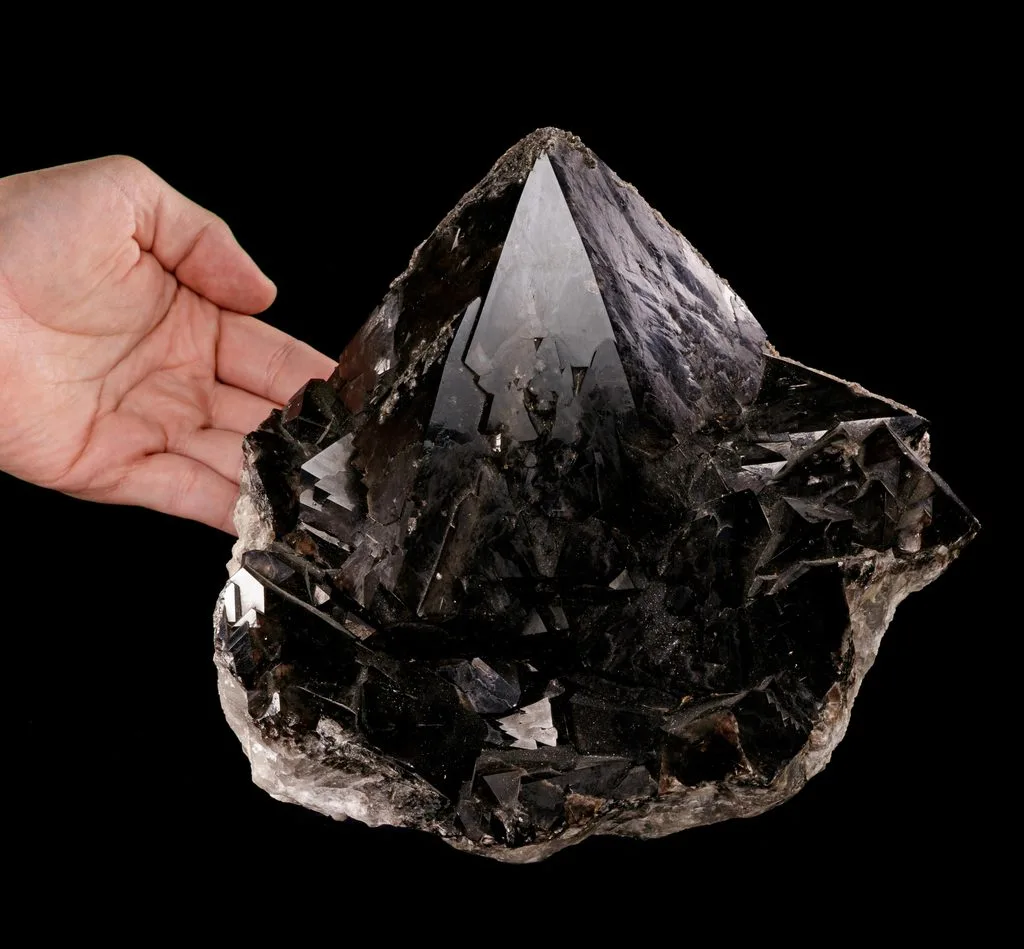
Smoky quartz is a naturally occurring color variety of crystalline quartz with gray, brown, or nearly black coloration.
Like other varieties of quartz, it consists of silicon dioxide (SiO₂) and belongs to the tectosilicate mineral group.
Its distinctive smoky color develops through the interaction of ionizing radiation with specific structural defects associated with aluminum impurities.
Most smoky quartz is transparent to translucent, although very dark specimens may appear almost opaque.
The variety is commonly recognized by:
- Smoky gray to dark brown coloration
- Transparent or translucent crystal interiors
- Vitreous, glass-like luster
- Well-formed prismatic quartz crystals
- Mohs hardness of 7
- Natural radiation-related color centers
- Occurrence in pegmatites and hydrothermal cavities
Smoky quartz is not a separate mineral species. It is a color variety of quartz, sharing the same fundamental crystal structure and most physical properties as clear quartz, amethyst, and citrine.
Chemical Composition and Mineral Properties
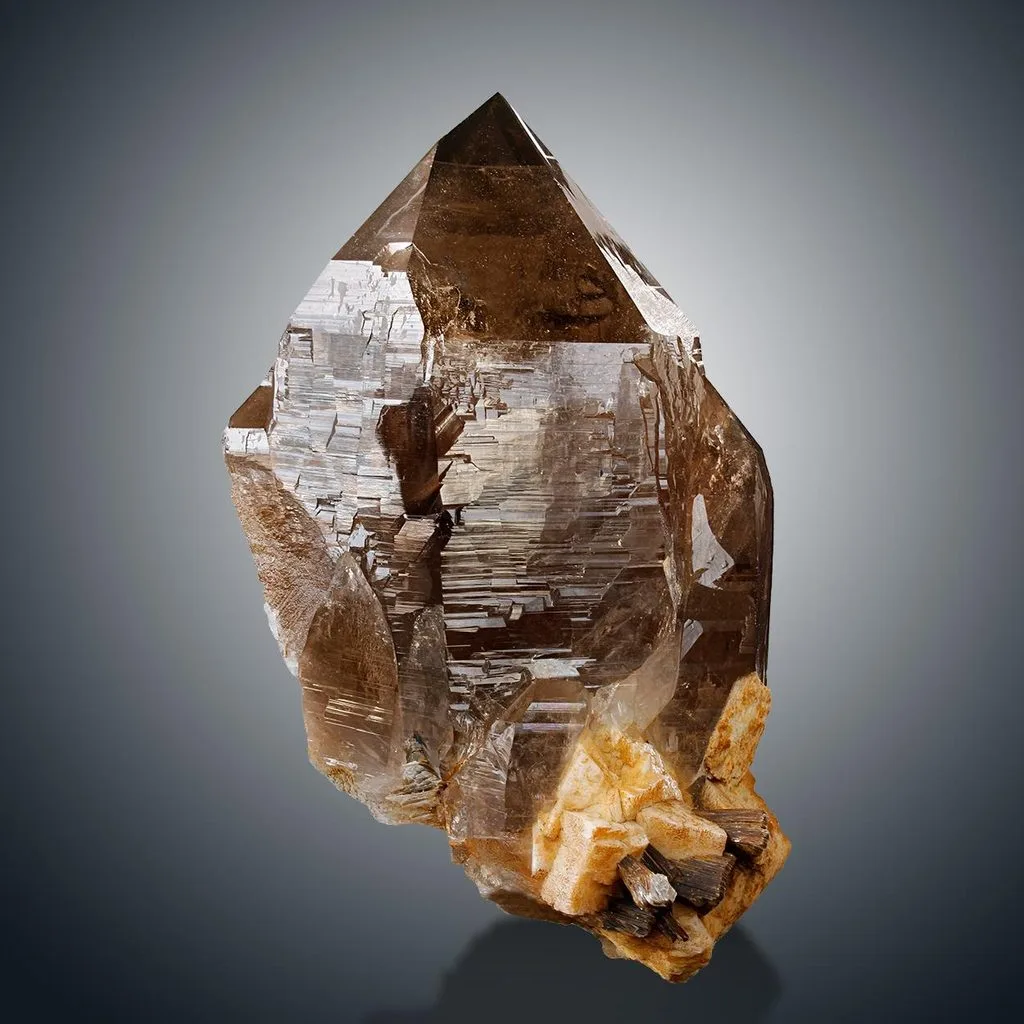
Smoky quartz has the chemical formula SiO₂, consisting of silicon and oxygen arranged in a three-dimensional framework of linked silica tetrahedra.
Small amounts of aluminum can substitute for silicon within the crystal structure.
These substitutions are important because they create conditions in which radiation-related defects can develop.
Physical and Optical Properties
| Property | Description |
|---|---|
| Mineral species | Quartz |
| Variety | Smoky quartz |
| Chemical formula | SiO₂ |
| Mineral class | Tectosilicate |
| Crystal system | Trigonal |
| Colors | Smoky gray, grayish brown, brown, dark brown, nearly black |
| Mohs hardness | 7 |
| Luster | Vitreous |
| Transparency | Transparent to translucent; very dark specimens may appear opaque |
| Streak | White |
| Cleavage | No distinct cleavage |
| Fracture | Conchoidal |
| Specific gravity | Approximately 2.65 |
| Refractive indices | Approximately 1.544–1.553 |
| Birefringence | Approximately 0.009 |
| Optical character | Uniaxial positive |
| Main color mechanism | Radiation-induced, aluminum-related color centers |
These are the standard properties of quartz. Natural inclusions and other imperfections can influence the appearance of individual specimens without changing their fundamental mineral identity.
Crystal Structure
Smoky quartz commonly forms six-sided prismatic crystals with pointed terminations.
Although quartz belongs to the trigonal crystal system, its external crystal habit frequently appears hexagonal.
Individual crystals can be small or exceptionally large, depending on the geological environment and available space for crystal growth.
Smoky quartz may also occur as irregular masses or intergrown crystal aggregates.
Why Is Smoky Quartz Brown or Gray?
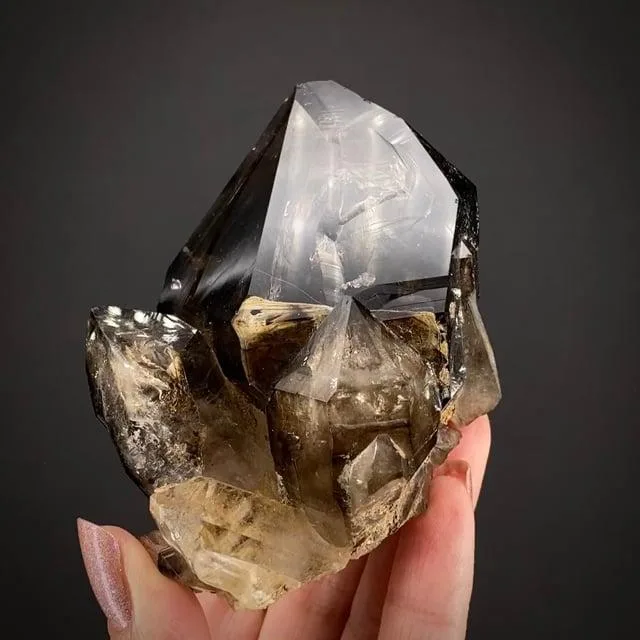
The origin of smoky quartz’s color is one of its most interesting mineralogical characteristics.
The characteristic smoky appearance is associated with defects involving aluminum in the quartz structure that have been modified by ionizing radiation.
Aluminum in the Quartz Structure
In pure quartz, silicon atoms occupy specific structural positions surrounded by oxygen atoms.
In natural quartz, small amounts of aluminum (Al³⁺) can substitute for silicon (Si⁴⁺).
Because aluminum and silicon have different electrical charges, this substitution requires charge compensation, often involving nearby ions or other defects.
These aluminum-related sites provide the structural conditions necessary for smoky coloration to develop.
The Role of Natural Radiation
Natural rocks contain small amounts of radioactive elements and isotopes, including uranium, thorium, and potassium-40.
Radiation emitted during their decay can interact with quartz over geological time.
Under suitable conditions, ionizing radiation changes the electronic state of aluminum-related defects.
These changes create color centers that absorb selected wavelengths of visible light, producing the smoky gray-to-brown appearance.
The aluminum impurity alone is not sufficient to explain the typical smoky color. The relevant radiation-induced changes must also occur.
Why Are Some Crystals Darker Than Others?
The color intensity of smoky quartz depends on several interacting factors, including the concentration and nature of suitable defects and the crystal’s radiation and thermal history.
Some crystals contain only a faint smoky tint, while others become dark brown or nearly black.
The relationship is not simply that darker crystals have always received more radiation. Different defect populations, temperature histories, and light exposure can influence their final appearance.
This explains why crystals from the same general geological region may show considerable variation in color.
Does Smoky Quartz Contain Radioactive Material?
The smoky color does not mean that the quartz itself is necessarily radioactive.
A crystal can retain radiation-induced color centers after exposure to natural radiation without becoming significantly radioactive as a result of that exposure.
However, radioactivity is a separate property that depends on the actual minerals and radioactive constituents present in a specimen.
A quartz specimen containing radioactive mineral inclusions should be evaluated separately from ordinary smoky quartz.
How Does Smoky Quartz Form?
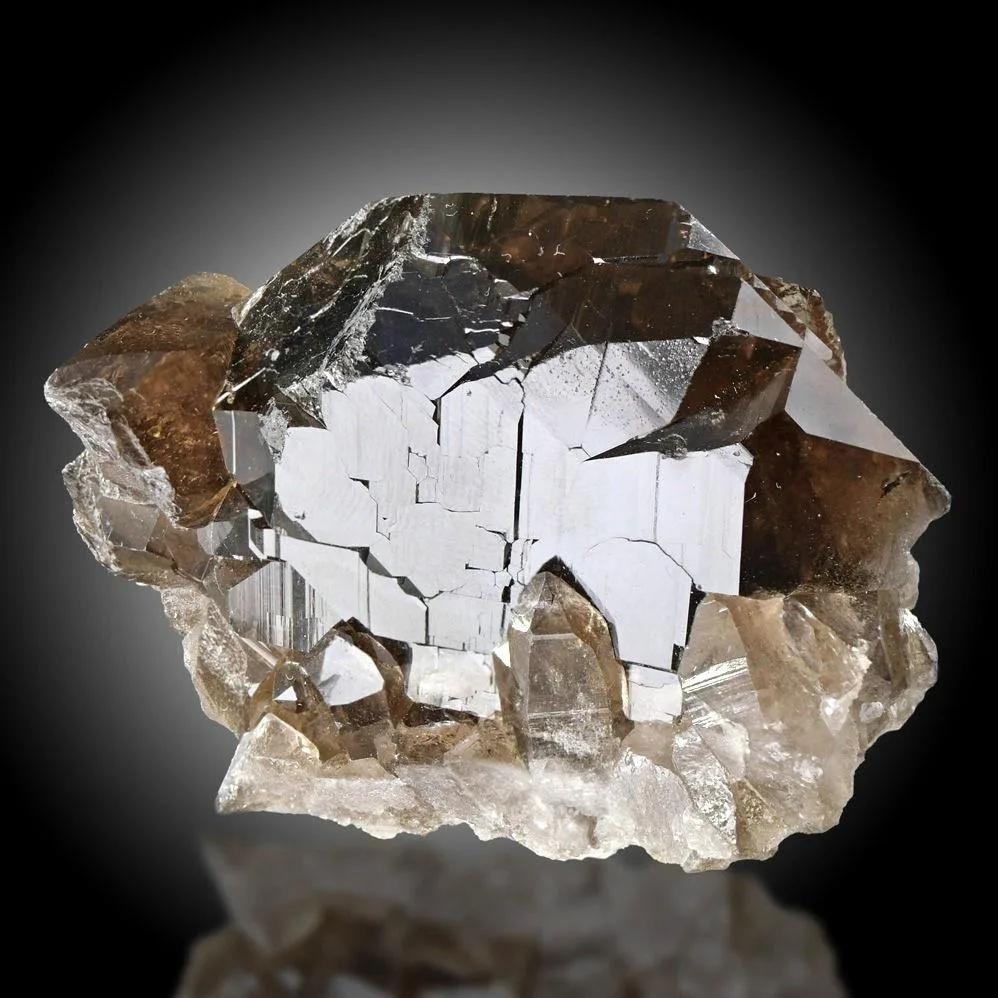
Smoky quartz forms when quartz crystallizes in a suitable geological environment and later develops its characteristic color through radiation-related processes.
It is important to distinguish between the formation of the quartz crystal and the development of its smoky coloration.
These processes do not necessarily occur at the same time.
Formation in Granitic Pegmatites
Granitic pegmatites are coarse-grained igneous rocks associated with evolved granitic magmatic systems.
They commonly contain quartz, feldspar, and mica, and may also host other minerals such as beryl and tourmaline.
Quartz can crystallize within cavities or larger zones of pegmatite.
Where sufficient space is available, individual crystals may grow to substantial sizes.
After crystallization, naturally occurring radiation within the surrounding geological environment can produce or strengthen the smoky coloration.
Hydrothermal Veins and Alpine Fissures
Smoky quartz is also well known from hydrothermal veins and crystal-lined fractures.
Mineral-bearing fluids move through openings in rock and deposit quartz as conditions change.
In mountain belts such as the European Alps, tectonic deformation can create fractures that subsequently serve as pathways for fluid circulation.
Quartz may crystallize within open cavities, producing well-developed crystal faces.
Some of these crystals later acquire smoky coloration due to naturally occurring radiation.
Formation of Large Crystals
Large smoky quartz crystals require favorable growth conditions.
Important factors include:
- Sufficient dissolved silica
- Appropriate temperature and fluid chemistry
- Space for uninterrupted crystal growth
- A suitable supply of mineral-bearing fluid
- Geological conditions allowing crystals to remain intact
The existence of large crystals does not necessarily mean the smoky color developed during crystal growth.
Weathering and Exposure
Tectonic uplift and erosion can expose smoky quartz-bearing rocks at Earth’s surface.
Weathering may release crystals from pegmatites or hydrothermal veins.
Because quartz is relatively resistant to many chemical weathering processes, crystals and fragments may survive in rock debris and sediment deposits.
Colors and Varieties of Smoky Quartz
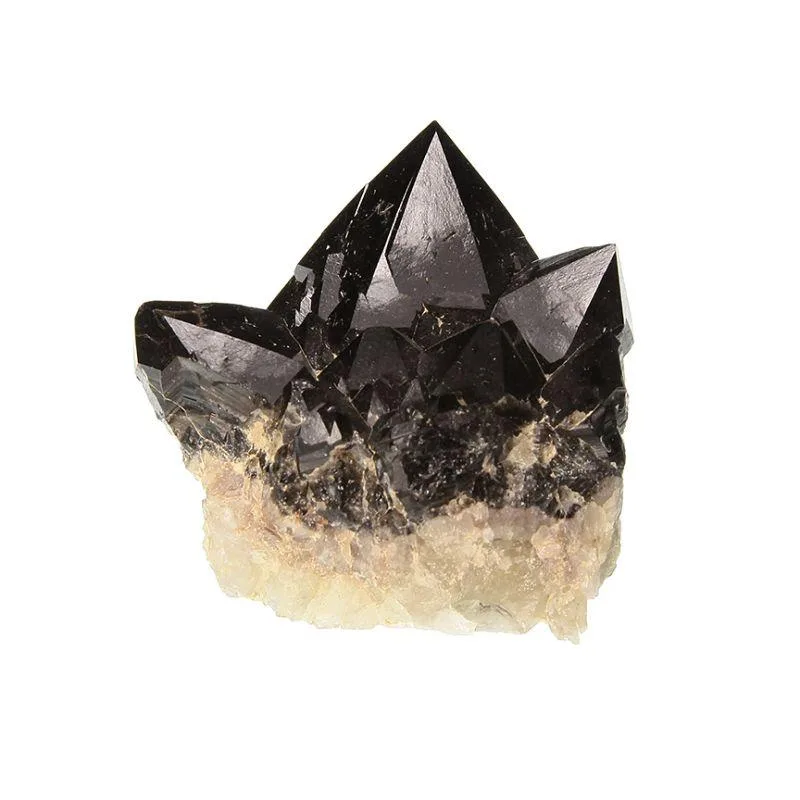
Smoky quartz exhibits a broad range of shades rather than one uniform color.
Light Smoky Quartz
Light smoky quartz appears pale gray, beige-brown, or lightly tinted.
These crystals are often highly transparent, allowing their internal structures and inclusions to be observed.
Brown Smoky Quartz
Brown smoky quartz commonly displays warm, earthy shades.
Some specimens have a golden-brown or reddish-brown appearance under certain lighting conditions.
The relative contributions of different absorption features influence the final color.
Dark Smoky Quartz
Dark smoky quartz may appear deep brown or grayish black.
Thicker portions of a dark crystal can transmit relatively little visible light, while thinner edges may remain translucent.
Morion Quartz
Morion is the traditional name for exceptionally dark smoky quartz.
It usually appears deep brown to nearly black and may transmit light only through thin edges or under strong illumination.
Morion is not a separate mineral species. It is a descriptive variety name for very dark smoky quartz.
The term has been used historically in European mineral collecting.
Cairngorm Quartz
Cairngorm is a historical gemstone name associated with brown and yellow-brown quartz from Scotland, especially the Cairngorm Mountains.
The name reflects a geographic and cultural tradition rather than a separate mineral species.
Cairngorm quartz became particularly important in Scottish jewelry and decorative objects.
Although the term is strongly associated with smoky quartz, historically named Cairngorm gemstones can include a broader range of yellow-to-brown quartz appearances.
Smoky Quartz in the European Alps
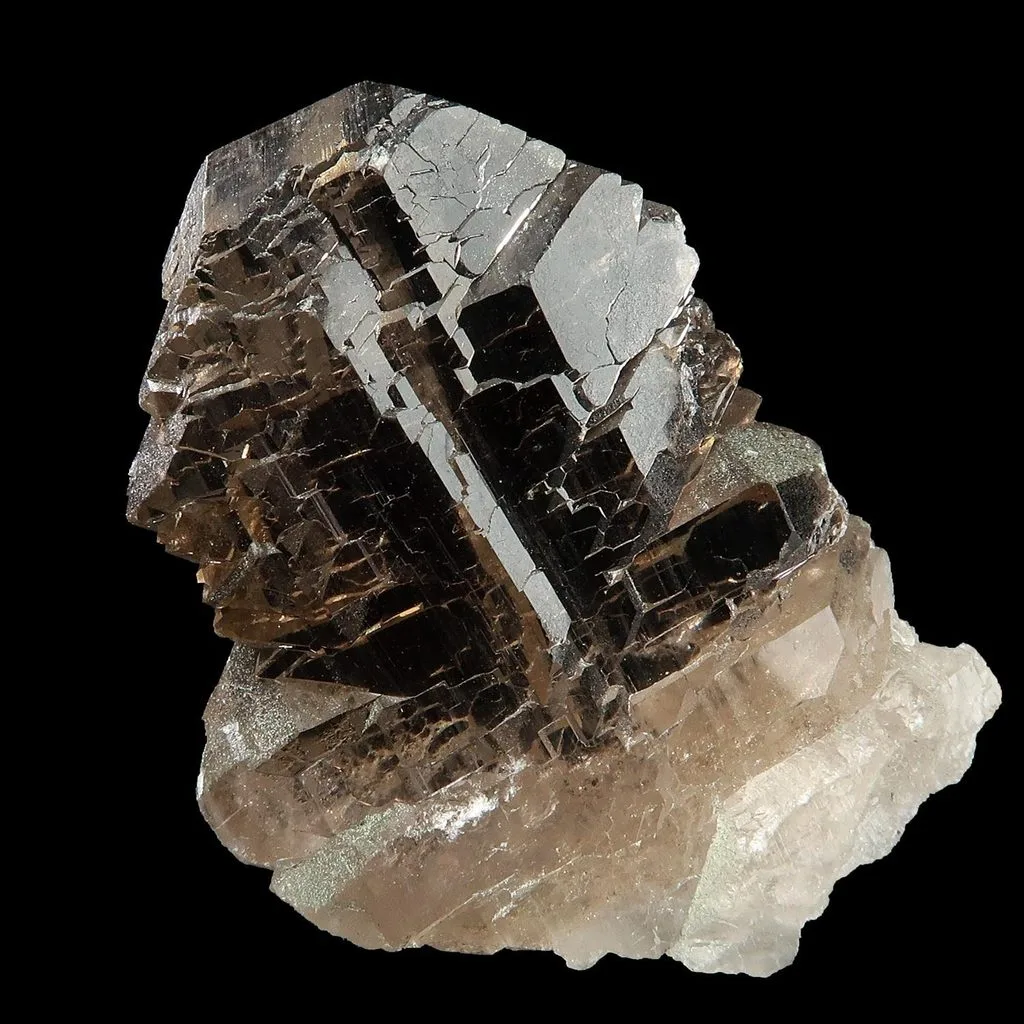
The European Alps are among the world’s best-known sources of attractive smoky quartz crystals.
Specimens occur in crystal-bearing fissures associated with tectonically deformed and metamorphosed mountain rocks.
These Alpine cavities can contain quartz alongside minerals such as feldspar, chlorite, and other locally occurring phases.
Swiss Alpine Smoky Quartz
Switzerland is particularly famous for high-quality smoky quartz crystals.
Well-known Alpine localities include parts of the cantons of Uri and Graubünden.
Some crystals are exceptionally transparent, while others display deep smoky coloration.
Gwindel Quartz
A distinctive Alpine crystal habit is known as gwindel.
Gwindels are quartz crystals or crystal aggregates exhibiting a characteristic twisted growth form.
Some of the most admired gwindels are smoky quartz specimens from Switzerland.
The term describes an unusual crystal growth habit rather than a separate mineral species.
French Alpine Smoky Quartz
Smoky quartz also occurs in the French Alps, including the Mont Blanc massif.
These crystals are associated with mineralized Alpine fissures and are valued for their distinctive crystal forms, transparency, and color.
Where Is Smoky Quartz Found?
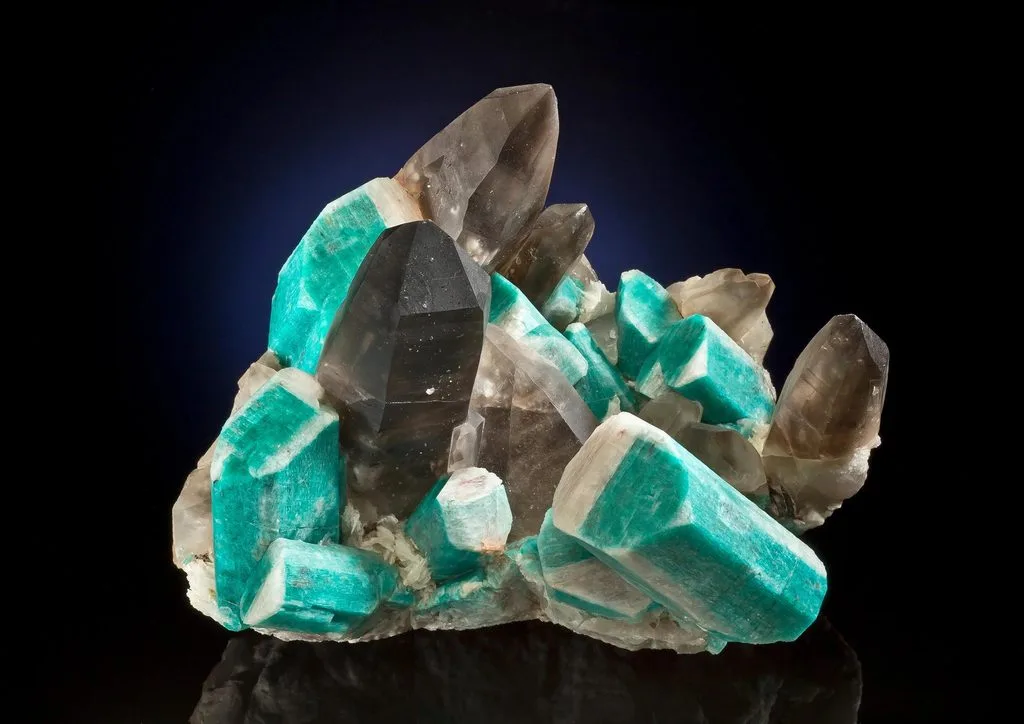
Smoky quartz occurs in many regions where quartz crystals form and suitable radiation-related color centers can develop.
Brazil
Brazil is an important source of quartz gemstones and mineral specimens.
Smoky quartz occurs in pegmatitic and hydrothermal geological environments, including areas of Minas Gerais.
Brazilian material is used for both mineral collecting and gem cutting.
Switzerland
The Swiss Alps are internationally recognized for smoky quartz specimens, particularly crystals from Alpine fissures.
Some localities are famous for gwindel formations and well-developed dark crystals.
France
The French Alps, including the Mont Blanc region, contain documented smoky quartz occurrences.
Specimens may develop in crystal-lined fractures associated with the Alpine mountain-building environment.
Scotland
Scotland has a long history of collecting brown quartz, especially from the Cairngorm region.
The material has been used for centuries in Scottish decorative objects and traditional jewelry.
United States
Smoky quartz has been documented in several parts of the United States.
Colorado is especially known for smoky quartz crystals associated with granitic environments, sometimes occurring alongside amazonite.
Other Localities
Smoky quartz is also documented from countries including Madagascar, Namibia, Russia, and Australia.
The appearance and quality of specimens vary according to local geological conditions.
Natural Smoky Quartz vs. Irradiated Quartz
Natural smoky quartz and artificially irradiated quartz can develop similar coloration because the fundamental color-producing processes are related.
Natural Smoky Quartz
Natural smoky quartz acquires its color through geological exposure to ionizing radiation.
The radiation originates from naturally occurring radioactive materials in the surrounding geological environment.
Artificially Irradiated Quartz
Some colorless or pale quartz can be exposed to artificial ionizing radiation to develop or intensify smoky coloration.
This is a gemstone treatment, not necessarily evidence of synthetic crystal growth.
A naturally grown quartz crystal can be artificially irradiated and still remain a natural mineral specimen with an enhanced color.
Can the Difference Be Identified?
Color intensity alone does not reliably establish whether smoky quartz formed its coloration naturally or through laboratory treatment.
Natural specimens can be very dark, and treated material can show lighter colors.
Standard gemological tests can establish that a gemstone is quartz but may not reliably determine the origin of its smoky color.
Reliable provenance information and appropriate treatment disclosure are therefore important when buying specimens sold as untreated natural smoky quartz.
Smoky Quartz vs. Citrine
Smoky quartz and citrine are both colored varieties of quartz, and some specimens can have overlapping brownish or yellowish appearances.
However, their typical colors and color-producing mechanisms differ.
| Feature | Smoky Quartz | Citrine |
|---|---|---|
| Mineral | Quartz | Quartz |
| Chemical formula | SiO₂ | SiO₂ |
| Typical color | Gray, smoky brown, nearly black | Yellow, golden yellow, orange, brownish orange |
| Important color mechanism | Radiation-induced aluminum-related defects | Iron-related coloration and other treatment-dependent color processes |
| Mohs hardness | 7 | 7 |
| Crystal system | Trigonal | Trigonal |
| Treatment considerations | Artificial irradiation can produce smoky colors; heating may lighten them | Much commercial citrine is produced by heating amethyst |
A specimen’s visible color alone does not always provide enough information to reconstruct its complete treatment history.
Some quartz in the trade is described as smoky citrine, but this is a descriptive term rather than a separate mineral species.
Smoky Quartz vs. Smoky Topaz
The expression smoky topaz is a misleading commercial name that has sometimes been used for smoky quartz.
Smoky quartz and topaz are different minerals.
| Property | Smoky Quartz | Topaz |
|---|---|---|
| Chemical composition | SiO₂ | Al₂SiO₄(F,OH)₂ |
| Mineral group | Tectosilicate | Nesosilicate |
| Crystal system | Trigonal | Orthorhombic |
| Mohs hardness | 7 | 8 |
| Cleavage | No distinct cleavage | Perfect basal cleavage |
| Specific gravity | Approximately 2.65 | Typically about 3.5–3.6 |
The name smoky topaz should not be used as a scientific identification for smoky quartz.
How to Identify Smoky Quartz
Smoky quartz can often be recognized by its color and crystal habit, but reliable mineral identification should consider several properties.
1. Examine the Crystal Shape
Quartz commonly forms elongated prisms with six-sided cross sections and pointed terminations.
Well-developed smoky quartz crystals may show the characteristic form clearly.
However, crystal shape alone is not conclusive because many minerals occur in similar-looking habits.
2. Observe Color and Transparency
Smoky quartz ranges from pale gray to deep brown or nearly black.
The color commonly occurs within transparent or translucent quartz.
Some specimens show variations in color intensity between different crystal zones.
3. Check Luster and Fracture
Smoky quartz has a vitreous luster.
Broken surfaces commonly display conchoidal fracture.
The mineral has no prominent cleavage.
4. Consider Hardness
Quartz has a Mohs hardness of 7, making it harder than ordinary glass and many common minerals.
However, scratch testing can damage specimens and should not be used unnecessarily on valuable or polished material.
5. Use Professional Gemological Testing
Gemologists may use refractive index, specific gravity, optical examination, and microscopic characteristics to identify quartz.
For particularly challenging specimens, spectroscopy and additional laboratory techniques may be useful.
These measurements identify the material but do not necessarily establish whether its smoky color was produced naturally or artificially.
Inclusions and Crystal Features
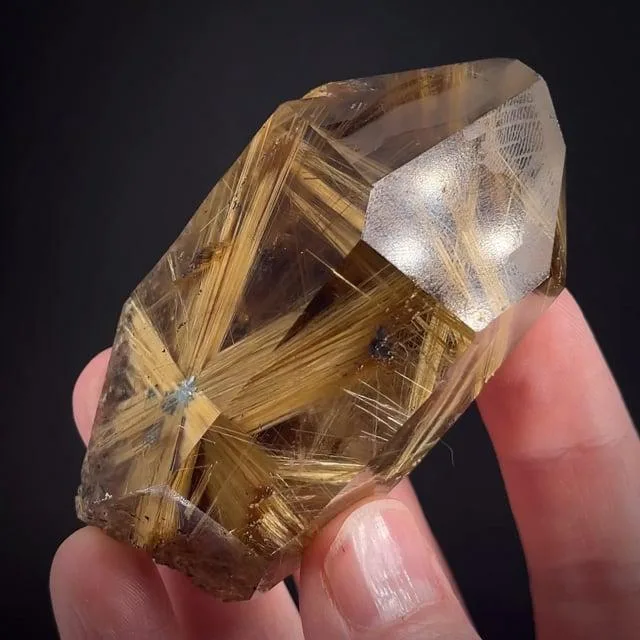
Smoky quartz crystals can contain visible or microscopic inclusions that record aspects of their growth history.
Depending on the geological occurrence, examples may include:
- Fluid inclusions
- Mineral inclusions such as chlorite
- Internal growth zones
- Fractures and healed fractures
- Unusual crystal-growth textures
Such features can be useful to mineral collectors and researchers.
However, a particular inclusion should not be identified from appearance alone when several minerals could produce similar patterns.
Uses of Smoky Quartz
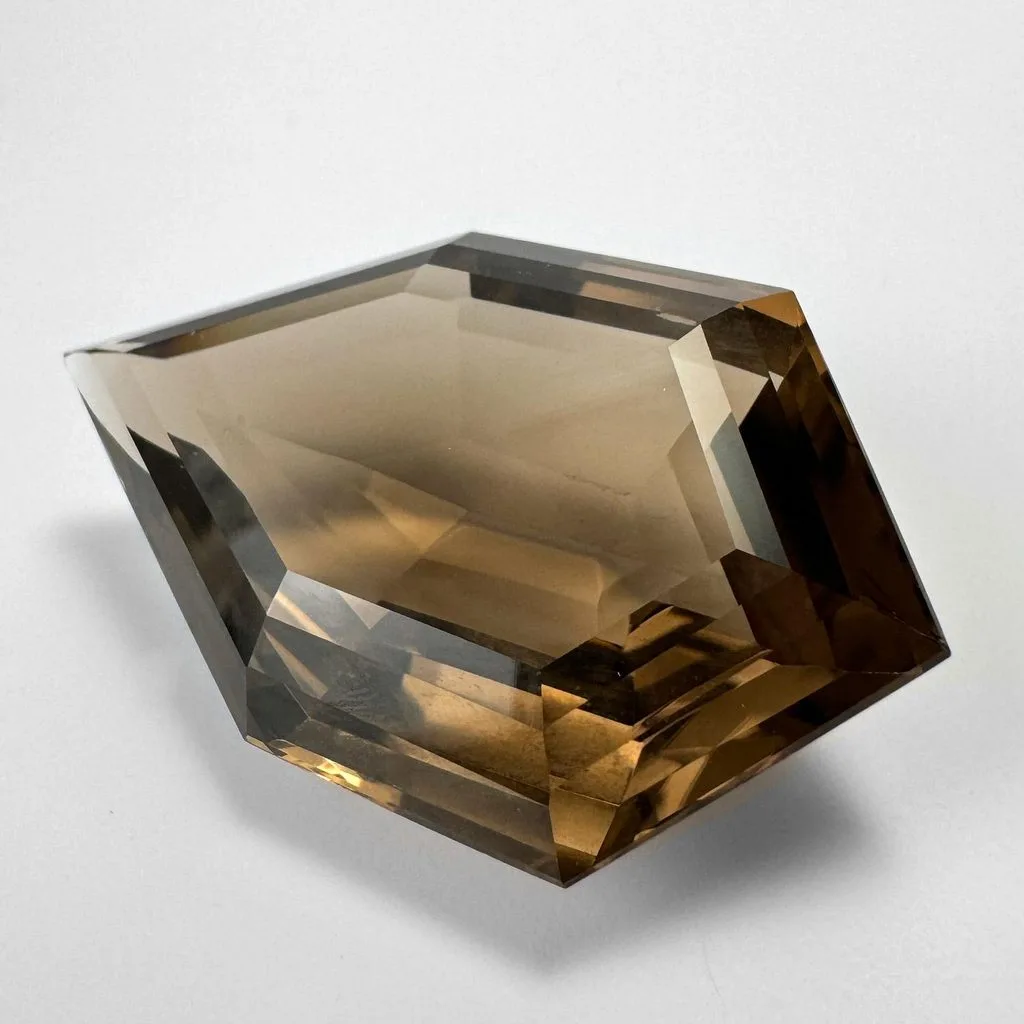
Jewelry
Transparent smoky quartz is cut into faceted gemstones for rings, pendants, earrings, and necklaces.
Its neutral gray and brown shades complement a wide range of jewelry designs.
Mineral Collections
Smoky quartz is popular among mineral collectors because of its crystal shapes, color variations, and geological associations.
Large Alpine crystals and gwindel specimens are particularly notable collector materials.
Decorative Objects
Larger crystals and masses may be polished into spheres, carvings, and ornamental pieces.
Transparent crystals are also displayed in their natural form.
Scientific and Educational Uses
Smoky quartz illustrates how ionizing radiation and crystal defects can modify the optical behavior of minerals.
It is useful for teaching mineral structure, spectroscopy, defects in solids, and the geological effects of radiation.
What Determines Smoky Quartz Value?
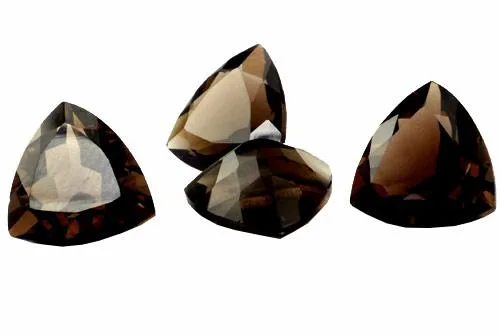
Smoky quartz is generally available at moderate prices, but individual specimens can differ significantly in collector and gemstone value.
Color
Desirable color depends on the intended purpose.
For faceted gemstones, an attractive brown or smoky shade that allows light to pass through the stone may be preferable to excessively dark material.
For mineral specimens, deep color may be valued when combined with good crystal form.
Transparency
Transparent crystals and clean faceted gemstones are often desirable.
Very dark specimens may appear nearly opaque unless illuminated strongly.
Crystal Form
Well-formed, undamaged crystals can be more desirable to mineral collectors.
Unusual habits, such as gwindels, may add collecting interest.
Size and Condition
Large, well-preserved crystals can be impressive display specimens.
However, large size alone does not establish rarity or high value.
Locality and Provenance
Specimens from documented, historically important mineral localities can attract collector interest.
Reliable locality information is especially important for Alpine mineral specimens.
How to Clean and Care for Smoky Quartz
Smoky quartz has a Mohs hardness of 7 and no distinct cleavage, making it suitable for many jewelry applications.
Nevertheless, it can be chipped or fractured by strong impacts.
Recommended care includes:
- Cleaning with lukewarm water, mild soap, and a soft cloth
- Avoiding abrupt temperature changes
- Keeping specimens away from excessive heat
- Limiting prolonged exposure to intense ultraviolet light
- Storing gemstones separately from harder materials
- Protecting delicate crystal terminations from mechanical damage
The smoky color is sensitive to heat and can also be affected by prolonged ultraviolet exposure.
Gentle cleaning and careful display conditions are therefore appropriate, particularly for valuable mineral specimens.
Frequently Asked Questions
Is smoky quartz a real mineral?
Smoky quartz is a natural color variety of quartz, not a separate mineral species. Its chemical composition is silicon dioxide (SiO₂).
What causes smoky quartz to become brown or gray?
Its color develops when ionizing radiation interacts with aluminum-related defects in the quartz crystal structure, producing light-absorbing color centers.
Is smoky quartz radioactive?
The smoky color does not itself mean that a crystal is radioactive. Exposure to ionizing radiation can modify the crystal’s color without making it radioactive. Radioactive inclusions, if present, are a separate consideration.
What is morion quartz?
Morion is the traditional name for very dark smoky quartz, often appearing nearly black.
Is smoky quartz the same as citrine?
No. Both are varieties of quartz, but smoky quartz is typically gray to brown, whereas citrine is typically yellow to orange. Their characteristic color mechanisms differ.
Does smoky quartz form naturally?
Yes. Natural smoky quartz occurs in pegmatites, hydrothermal veins, and Alpine crystal cavities, among other geological environments.
Can clear quartz be turned into smoky quartz?
Some suitably composed quartz can develop smoky coloration after artificial irradiation. The response depends on its defect chemistry and treatment conditions.
Can smoky quartz fade in sunlight?
Prolonged ultraviolet exposure can affect the smoky color of some specimens. The response depends on the crystal’s color centers and exposure history.
Is smoky quartz valuable?
Common smoky quartz is relatively abundant, but exceptional crystals, unusual growth forms, attractive faceted gemstones, and specimens with documented localities may be more desirable.
Is smoky topaz a real mineral name?
No. Smoky topaz is a misleading name sometimes used for smoky quartz. Quartz and topaz are different minerals with different chemical compositions and physical properties.
Conclusion
Smoky quartz is a remarkable variety of quartz whose gray-to-brown coloration reflects the interaction of crystal chemistry and natural radiation.
Although it shares the chemical formula and fundamental structure of other quartz varieties, its aluminum-related color centers provide a distinctive visual appearance.
Found in granitic pegmatites, hydrothermal veins, and Alpine crystal cavities, smoky quartz is also notable for its well-developed crystals and unusual growth habits.
From the nearly black appearance of morion to the historic Cairngorm gemstones of Scotland, smoky quartz combines mineralogical significance, geological history, and decorative appeal.
References
- Mindat.org. Smoky Quartz: Mineral Information, Data and Localities. Mineral classification, coloration, and physical characteristics.
- Nassau, K., & Prescott, B. E. (1977). Smoky, Blue, Greenish Yellow, and Other Irradiation-Related Colors in Quartz. Mineralogical Magazine, 41(319), 301–312.
- Gemological Institute of America. The Role of Radiation in Gemstone Color. Gems & Gemology, Spring 1988. Discussion of irradiation-induced colors and defects in quartz.
- Oak Ridge Associated Universities. Irradiated Quartz Crystal (Smoky Quartz). Natural and artificial irradiation and smoky coloration.
- Geology.com. Smoky Quartz: A Transparent Brown Gem Material. Geological formation, color, identification, and gemstone uses.
- National Museums Scotland. Geology to Jewellery: The History and Science of Cairngorm Quartz. Geological origin, historic Scottish quartz, and jewelry traditions.
- Gemological Institute of America. Citrine Gemstone Overview. Citrine characteristics and heat treatment.
- Gemological Institute of America. An Introduction to Gem Treatments. Gemstone irradiation and treatment disclosure.