








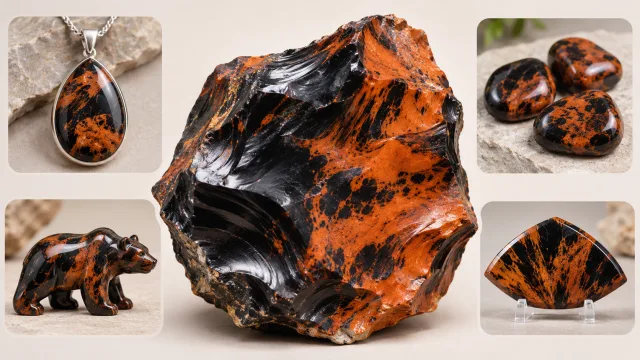
Pumpkin obsidian is an eye-catching variety of natural volcanic glass recognized by its warm orange, rusty brown, and sometimes black patterns. Its striking appearance makes it popular with rock collectors and lapidary enthusiasts, but the name can also lead to confusion with mahogany obsidian and artificial glass.
Unlike a true mineral, obsidian has no ordered crystal structure. Its distinctive glassy texture develops when silica-rich volcanic material solidifies with little crystal growth. Understanding its appearance, geological formation, and physical properties can help you recognize genuine obsidian and distinguish it from similar-looking stones.
What Is Pumpkin Obsidian?
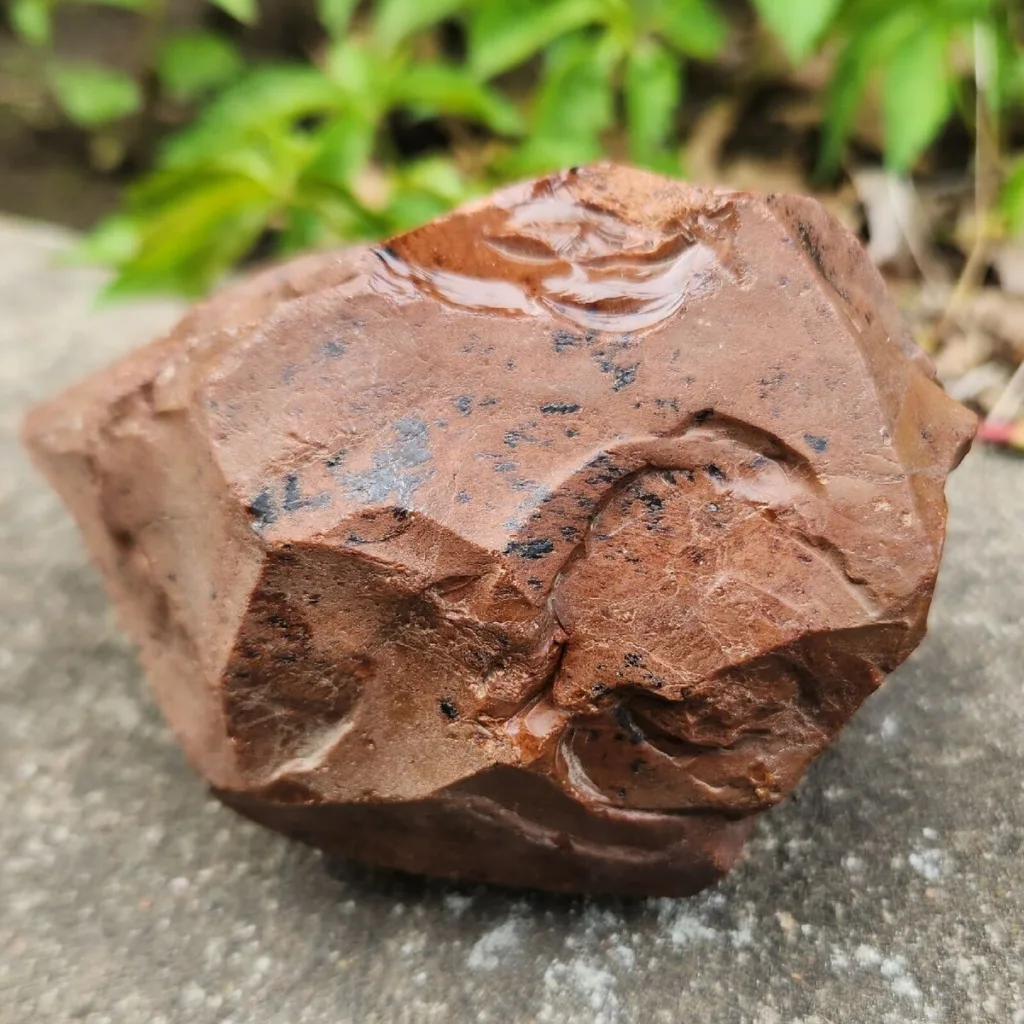
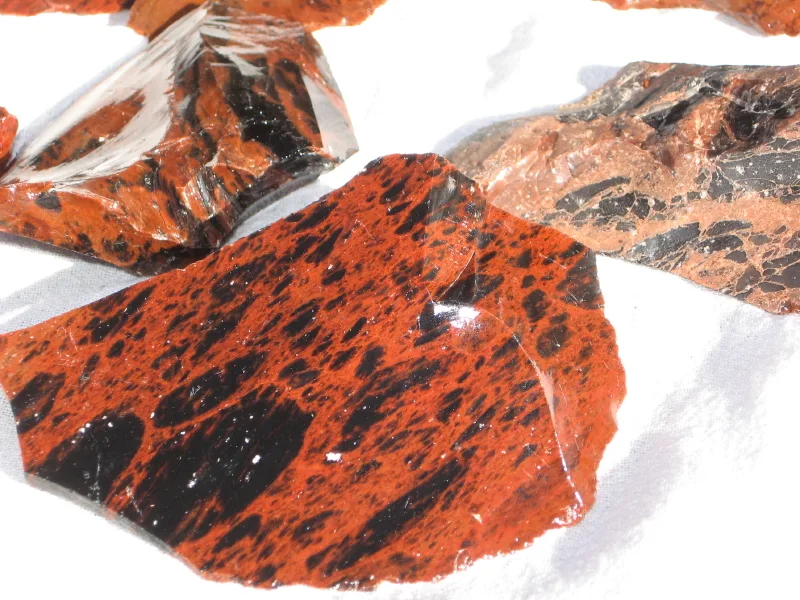
Pumpkin obsidian is a descriptive trade name applied to obsidian with orange, rust-red, or pumpkin-brown coloration. It is not a separate mineral species or a formally defined geological variety.
Natural obsidian is an amorphous volcanic glass, commonly associated with silica-rich volcanic rocks such as rhyolite. Its colors and patterns can vary according to microscopic mineral inclusions, the chemistry of the glass, flow structures, and later alteration.
In orange and reddish-brown varieties, iron-bearing particles and oxides can contribute to the warm coloration. Black areas may reflect differences in microscopic inclusions and glass composition.
The name is most useful as a description of appearance rather than a guarantee of chemical composition or geographical origin.
Pumpkin Obsidian Properties
| Property | Description |
|---|---|
| Material | Natural volcanic glass |
| Geological classification | Glassy volcanic rock; mineraloid material |
| Crystal structure | Amorphous |
| Typical colors | Orange, rusty brown, reddish-brown, and black |
| Luster | Vitreous (glassy) |
| Mohs hardness | Approximately 5–5.5 |
| Fracture | Conchoidal |
| Cleavage | None |
| Transparency | Usually opaque in strongly colored areas; thinner edges may be translucent |
| Major composition | Silica-rich volcanic glass |
| Common appearance | Mottled patches, streaks, and flow banding |
These are typical properties of obsidian rather than measurements from every specimen marketed as pumpkin obsidian.
How to Identify Pumpkin Obsidian
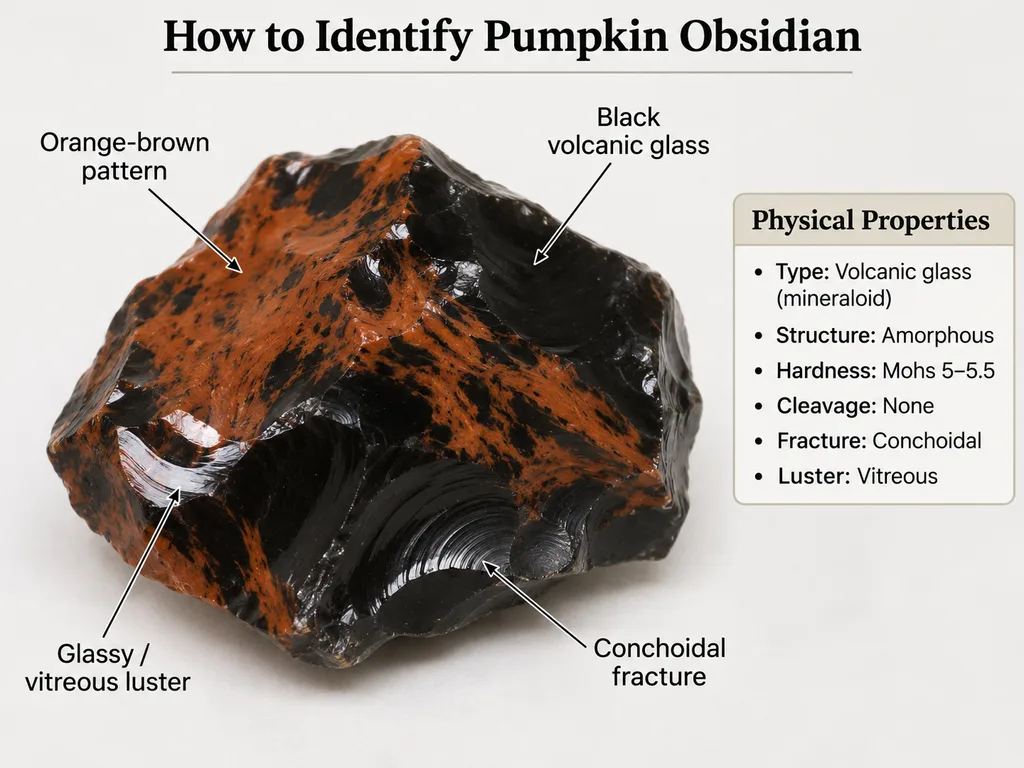
The most reliable approach is to examine several features together. Orange color alone cannot establish that a stone is natural volcanic glass.
1. Examine the Orange and Black Patterns
Pumpkin obsidian commonly displays rusty orange or reddish-brown coloration, sometimes combined with black patches, streaks, or irregular bands.
The appearance can vary substantially between specimens. Some pieces have broad orange areas, while others show narrow bands within dark glass.
Pay attention to the natural distribution of colors, but remember that artificial materials can imitate irregular patterns.
2. Check the Glassy Luster
Fresh obsidian has a vitreous surface that reflects light much like manufactured glass.
Polished material often displays a strong, smooth shine. An untreated specimen may have a dull weathered exterior while retaining glossy surfaces where it has naturally fractured.
3. Look for Conchoidal Fracture
One of obsidian’s most characteristic properties is conchoidal fracture.
When obsidian breaks, it commonly forms curved, shell-like surfaces with ripple marks. Broken edges can be extremely sharp.
Inspect an existing fracture with care. Do not intentionally break collectible specimens, and avoid touching sharp edges directly.
4. Consider Its Hardness
Obsidian generally measures about 5 to 5.5 on the Mohs hardness scale, making it softer than quartz, agate, and carnelian, which are approximately Mohs 7.
Hardness can help separate obsidian from some look-alikes, but it cannot reliably distinguish natural obsidian from ordinary manufactured glass.
Avoid scratch testing valuable polished specimens.
5. Inspect for Flow Banding and Inclusions
Obsidian can contain flow-aligned bands, microscopic mineral particles, and elongated gas bubbles.
These features may provide useful geological evidence, especially under magnification. However, gas bubbles can occur in both natural and manufactured glass, so their presence or shape alone is not a definitive authenticity test.
If the identity of a valuable specimen matters, professional gemological examination or laboratory analysis is more reliable than visual inspection.
How Does Pumpkin Obsidian Form?
Obsidian forms when volcanic melt solidifies without developing a substantial crystalline structure.
Silica-Rich Volcanic Magma
Many obsidian deposits are associated with rhyolitic volcanic systems. Their silica-rich magma is typically highly viscous, restricting the movement of atoms needed for crystal growth.
Cooling and Glass Formation
When this material solidifies under suitable conditions, much of it can remain glass rather than forming a fully crystalline rock.
Rapid cooling is important, but magma viscosity and composition also influence whether glass develops.
Development of Color and Patterns
Orange and reddish-brown colors may develop from iron-bearing inclusions, oxidation processes, or other changes within the material.
Some specimens also preserve flow banding created while viscous lava was moving and different portions of the melt remained incompletely mixed.
The precise cause of an individual specimen’s coloration cannot always be determined from a photograph.
Pumpkin Obsidian vs. Mahogany Obsidian
Pumpkin obsidian and mahogany obsidian can look remarkably similar. Both names describe appearances of naturally occurring volcanic glass, and the boundaries between them are not formally standardized.
| Feature | Pumpkin Obsidian | Mahogany Obsidian |
|---|---|---|
| Typical appearance | Orange to rusty brown | Reddish-brown to dark brown |
| Dark patterns | Black patches or streaks | Black swirls, spots, or bands |
| Material | Volcanic glass | Volcanic glass |
| Mohs hardness | About 5–5.5 | About 5–5.5 |
| Geological distinction | No formally defined boundary | No formally defined boundary |
The main difference is visual rather than mineralogical. Two sellers may describe similar specimens using different names.
For additional examples, explore our Mahogany Obsidian guide.
Is Pumpkin Obsidian Natural or Man-Made?
Natural orange-toned obsidian exists, but the commercial name alone does not prove authenticity.
Some orange decorative glass and other manufactured materials may be marketed as obsidian. A visually convincing imitation can share obsidian’s glossy surface, curved fractures, and approximate hardness.
Consider the specimen’s geological provenance and the seller’s description. Particularly bright, uniformly colored, or unusually inexpensive pieces deserve closer inspection, although these features are not proof of imitation.
For valuable specimens, expert examination or chemical comparison with known obsidian sources can help establish authenticity.
Where Is Pumpkin Obsidian Found?
One documented locality is Glass Buttes in central Oregon, United States, an area known for diverse obsidian colors and patterns.
Oregon State University’s Volcano World identifies pumpkin obsidian among the varieties associated with Glass Buttes, alongside mahogany, rainbow, and other forms.
Obsidian occurs in several volcanic regions worldwide, including Mexico, the western United States, and parts of Asia and Europe. However, these broader obsidian occurrences should not automatically be treated as confirmed pumpkin obsidian localities.
The commercial name does not establish where a particular specimen was collected.
Uses of Pumpkin Obsidian
The warm coloration and natural patterning of pumpkin obsidian make it appealing for decorative and lapidary work.
Jewelry and Cabochons
Selected specimens can be cut and polished into cabochons, pendants, beads, and earrings.
Because obsidian is brittle and can chip, protective settings and jewelry designs exposed to less impact are preferable.
Carvings and Collectible Specimens
Collectors value obsidian for its colors, glassy texture, and volcanic origin. Pieces with visually distinctive patterns may be displayed as specimens or shaped into small decorative objects.
Historical Uses of Obsidian
Obsidian was widely used in prehistoric toolmaking because its conchoidal fracture produces exceptionally sharp edges.
Archaeological discoveries also demonstrate its importance in ancient exchange networks.
These historical uses concern obsidian generally. There is insufficient evidence to claim that material specifically called pumpkin obsidian had a distinct ancient cultural role.
How to Clean and Care for Pumpkin Obsidian
Obsidian requires relatively gentle handling.
- Clean polished pieces with lukewarm water, mild soap, and a soft cloth.
- Avoid dropping specimens onto hard surfaces.
- Keep sharp, unpolished fragments protected during storage.
- Avoid sudden temperature changes, ultrasonic cleaners, and aggressive abrasives.
- Store polished pieces separately from harder gemstones such as quartz.
Dry the stone carefully after cleaning, particularly if fractures or porous inclusions are present.
Frequently Asked Questions
Is pumpkin obsidian a real gemstone?
Pumpkin obsidian is a commercial name used for orange or rusty-brown obsidian. The natural material is volcanic glass rather than a crystalline mineral. However, not every stone sold under this name is necessarily natural.
Why is pumpkin obsidian orange?
Iron-bearing particles and oxidation-related processes can produce orange to reddish-brown coloration in obsidian. The exact cause depends on the individual specimen.
How hard is pumpkin obsidian?
Natural obsidian typically has a Mohs hardness of approximately 5 to 5.5, making it softer than quartz.
Is pumpkin obsidian the same as mahogany obsidian?
They can overlap in appearance. Pumpkin generally describes warmer orange tones, whereas mahogany usually refers to reddish-brown patterns. Neither name establishes a separate mineral species.
Can pumpkin obsidian contain bubbles?
Yes. Natural obsidian can preserve trapped gas bubbles, including elongated bubbles associated with flow. Bubbles alone cannot establish whether a specimen is natural or artificial.
Is pumpkin obsidian rare?
The term is not a standardized geological classification, so there is no reliable universal rarity ranking. Availability depends on the specific color, quality, source, and commercial supply.
Final Thoughts
Pumpkin obsidian demonstrates the remarkable variety of colors and textures that can develop in natural volcanic glass.
Its orange and black patterns make it visually distinctive, but its geological identity is best understood through the characteristics it shares with other obsidian varieties: an amorphous structure, glassy luster, moderate hardness, and conchoidal fracture.
For collectors and geology enthusiasts, understanding these properties is more useful than relying on color or commercial names alone.