
























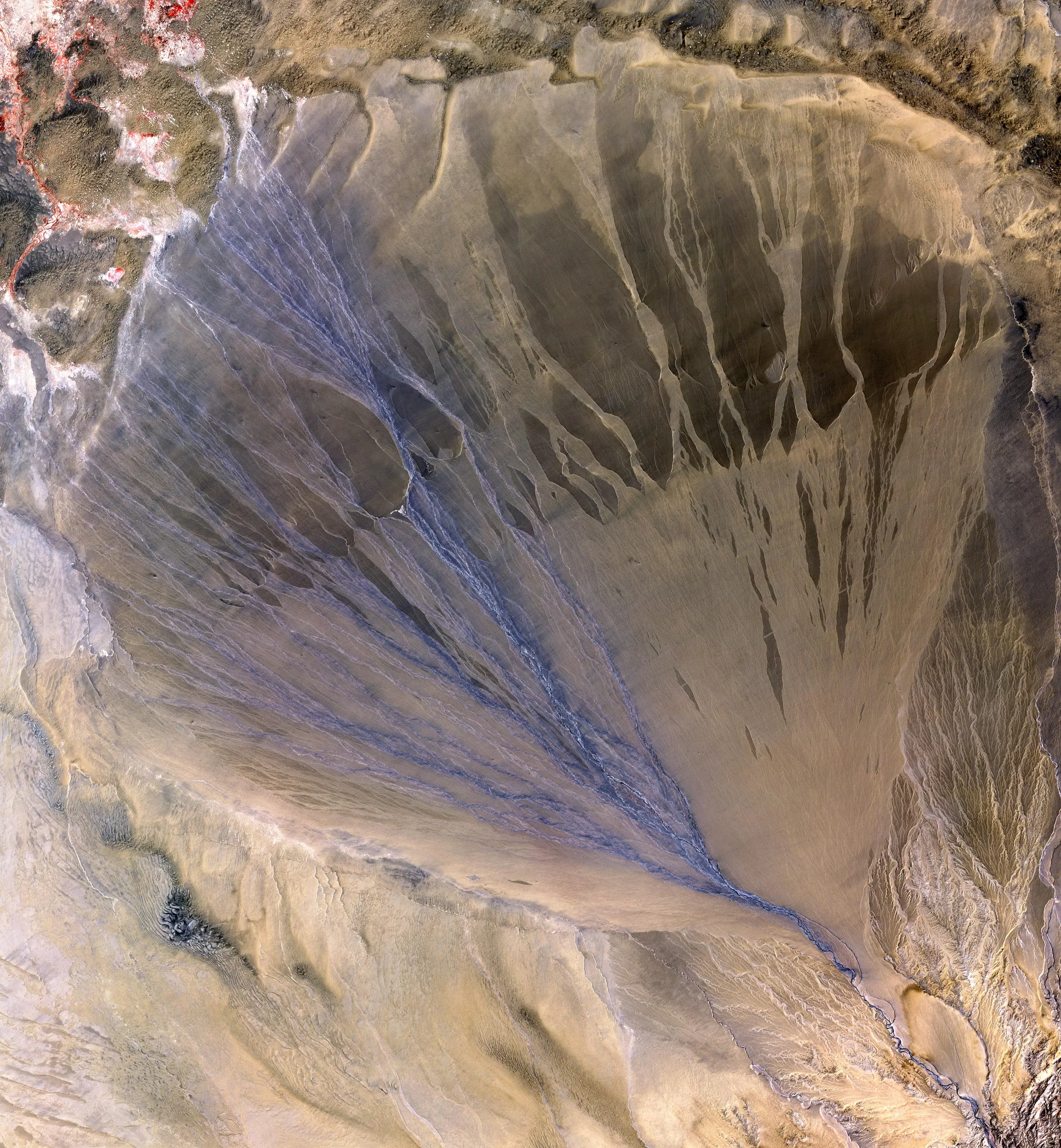
Deltas and alluvial fans are depositional landforms that develop when flowing water loses the capacity to carry sediment. A delta forms where a river delivers sediment into a standing body of water, while an alluvial fan typically develops where a confined stream emerges onto a flatter, less confined surface. Both can have branching channels and fan-shaped outlines, but their depositional settings and internal structures differ.
What Is a River Delta?
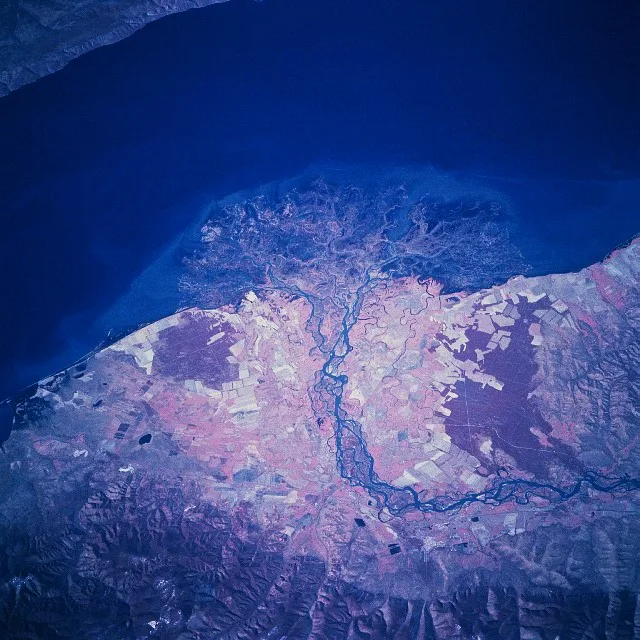
A river entering a lake, sea or other standing body of water commonly slows as its flow expands. Sediment settles, with sand often accumulating in channels and mouth bars and finer particles reaching quieter, more distal environments. A delta grows when sediment accumulation exceeds the losses caused by erosion, sediment export and changes in accommodation.
Deltas can contain a subaerial delta plain crossed by distributaries, a submerged delta front and a more distal prodelta. These environments vary with river discharge, sediment supply, tides, waves, subsidence and relative water-level change. River-dominated, wave-dominated and tide-dominated forms represent end members rather than rigid categories.
What Is an Alluvial Fan?
An alluvial fan forms where sediment-laden flows leave a confined valley and spread over a gentler slope. The reduction in gradient and flow confinement can lead to deposition. Successive floods, channel shifts and sometimes debris flows distribute sediment outward from an apex, building a roughly conical or fan-shaped deposit.
Alluvial fans are common along mountain fronts, including arid regions where episodic flows carry substantial sediment. They also occur in humid and glacially influenced landscapes. Coarse material is frequently deposited near the apex, with finer sediment farther downslope, although debris-flow deposits and changing channels may disrupt this general pattern.
Delta and Alluvial Fan Comparison
| Property | Delta | Alluvial fan |
|---|---|---|
| Typical setting | River mouth entering lake or sea | Valley outlet onto gentler terrain |
| Water environment | Commonly partly submerged | Usually subaerial |
| Main processes | River flow, settling, waves, tides | Streamflow, floods, debris flows |
| Sediments | Mud, silt, sand and sometimes gravel | Often gravel and sand, with finer deposits |
| Geometry | Lobate, arcuate or elongate | Commonly fan-shaped or conical |
A fan delta develops where an alluvial fan enters a standing water body. Its deposits may combine coarse terrestrial fan sediments with submerged deltaic deposits. This transitional environment shows why shape alone is not enough for classification.
Sedimentary Structures and Rock Record
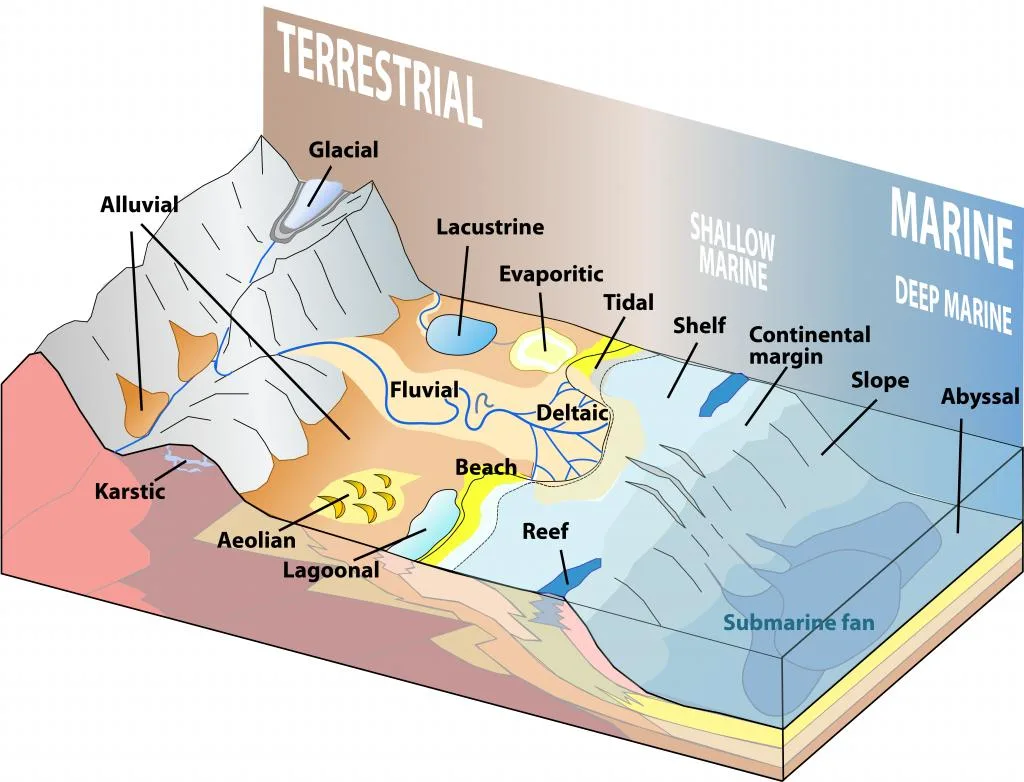
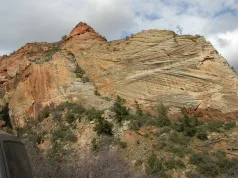
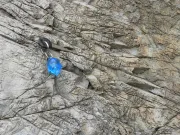
Ancient deltaic successions may preserve channel sandstones, mouth-bar deposits, mudstones, cross-bedding, ripple lamination and evidence of marine or freshwater organisms. Prograding deltas may produce coarsening-upward successions. Alluvial fan deposits frequently contain conglomerates, poorly sorted gravel, sandy channels and debris-flow beds. Neither environment has a single universal sedimentary succession.
Geologists reconstruct these environments using grain size, sorting, bed geometry, sedimentary structures and fossil evidence. See Sediment Transport and Deposition, Cross-Bedding and Rivers and Streams.
Examples and Geological Importance
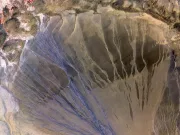
The Mississippi and Selenga deltas demonstrate sediment delivery into marine and lacustrine environments. The large alluvial fans at the southern margin of the Taklimakan Desert illustrate deposition where rivers descend from mountain ranges onto less confined terrain. Death Valley in California contains numerous smaller fans that may merge into extensive piedmont deposits.
Both landforms are important for groundwater, aggregate resources and sedimentary basin analysis. Flood hazards, channel migration and variable sediment properties must be considered in engineering investigations. Deltaic ground can be vulnerable to subsidence, while active fan surfaces may experience unpredictable sediment-laden flows.
Frequently Asked Questions
Are deltas and alluvial fans the same?
No. Both are depositional landforms, but deltas form at a standing water body and alluvial fans commonly form on land near a slope break.
Do all deltas have a triangular shape?
No. River discharge, waves, tides and shoreline geometry influence delta shape.
Can an alluvial fan form a delta?
Yes. A fan entering a lake or sea can build a fan delta.
Scientific References
USGS — Waters divided: A history of alluvial fan research
USGS — Mechanics of flow and sediment transport in delta distributary channels
Featured image: NASA/ASTER, 2 May 2002, Wikimedia Commons, public domain; converted to WebP.