



























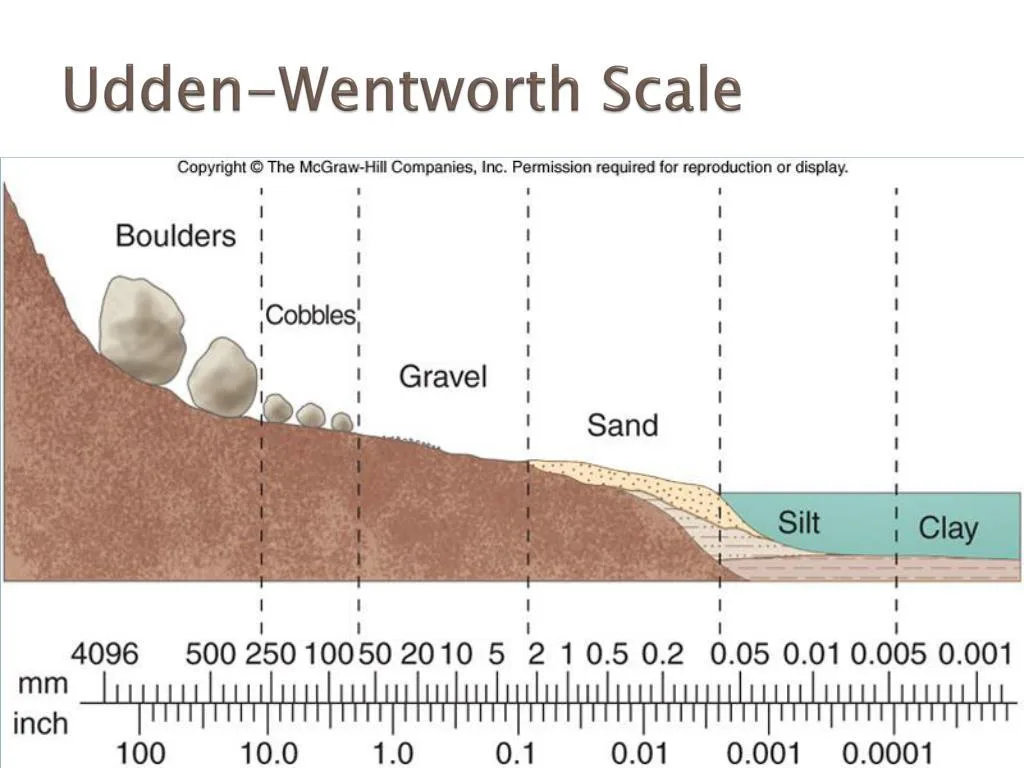
The Udden–Wentworth grain-size scale classifies sediment particles by nominal diameter. The standard sedimentological divisions distinguish gravel (2 mm and larger), sand (0.0625 to less than 2 mm), silt (1/256 to less than 0.0625 mm), and clay-sized material (smaller than 1/256 mm). The phi scale expresses these diameters on a base-two logarithmic scale. Both are useful in sedimentology, field descriptions and laboratory analyses.
Interactive Grain Size Calculator
Enter a particle diameter in millimeters or micrometers, or use the logarithmic phi scale.
Red marker: calculated size. Larger grains are on the left. Diagram limits: φ −10 to +10; larger and smaller values are indicated at the edges. Classification is based on nominal grain diameter, not mineralogy or plasticity.Wentworth Grain Size Classification Chart
| Size class | Diameter (mm) | Phi range |
|---|---|---|
| Boulder | ≥ 256 | ≤ −8 |
| Cobble | 64 – < 256 | -8 to -6 |
| Pebble | 4 – < 64 | -6 to -2 |
| Granule | 2 – < 4 | -2 to -1 |
| Very coarse sand | 1 – < 2 | -1 to 0 |
| Coarse sand | 0.5 – < 1 | 0 to 1 |
| Medium sand | 0.25 – < 0.5 | 1 to 2 |
| Fine sand | 0.125 – < 0.25 | 2 to 3 |
| Very fine sand | 0.0625 – < 0.125 | 3 to 4 |
| Coarse silt | 0.03125 – < 0.0625 | 4 to 5 |
| Medium silt | 0.015625 – < 0.03125 | 5 to 6 |
| Fine silt | 0.0078125 – < 0.015625 | 6 to 7 |
| Very fine silt | 0.00390625 – < 0.0078125 | 7 to 8 |
| Clay-sized | < 0.00390625 | > 8 |
The diameter convention in the table includes the lower diameter boundary and excludes the upper boundary. The phi interval reverses direction: for example, 0.25 mm is φ 2 and is included in medium sand. A value slightly below 0.25 mm is fine sand. Published tables commonly round 0.00390625 mm to approximately 0.004 mm, or 4 µm.
The Phi Scale and Unit Conversion
The phi transformation is φ = −log₂(d), where d is the nominal particle diameter in millimeters. Its inverse is d = 2−φ mm. One millimeter equals 1,000 micrometers. Increasing phi by one halves the particle diameter; decreasing phi by one doubles it. The logarithmic scale makes sediment size distributions easier to display and compare.
| Measured diameter | Phi | Classification |
|---|---|---|
| 16 mm | −4 | Pebble |
| 2 mm | −1 | Granule |
| 0.5 mm | 1 | Coarse sand |
| 0.25 mm | 2 | Medium sand |
| 0.125 mm | 3 | Fine sand |
| 0.0625 mm | 4 | Very fine sand |
| 0.00390625 mm | 8 | Very fine silt |
Sand, Silt and Gravel in Natural Sediments
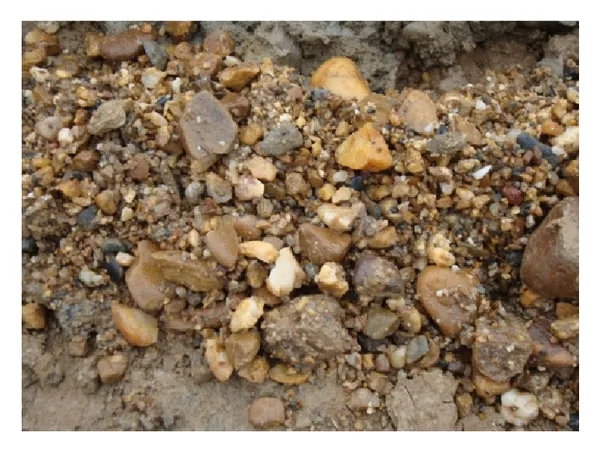
A natural sediment usually contains a distribution of particle sizes. A sample dominated by sand may include substantial silt or gravel. A single grain measurement is therefore not a classification of the whole deposit. Report the measured fractions, the sampling method and the basis of the percentages, such as mass or volume. Grain roundness and sorting are separate descriptive properties.
How Grain Size Is Measured
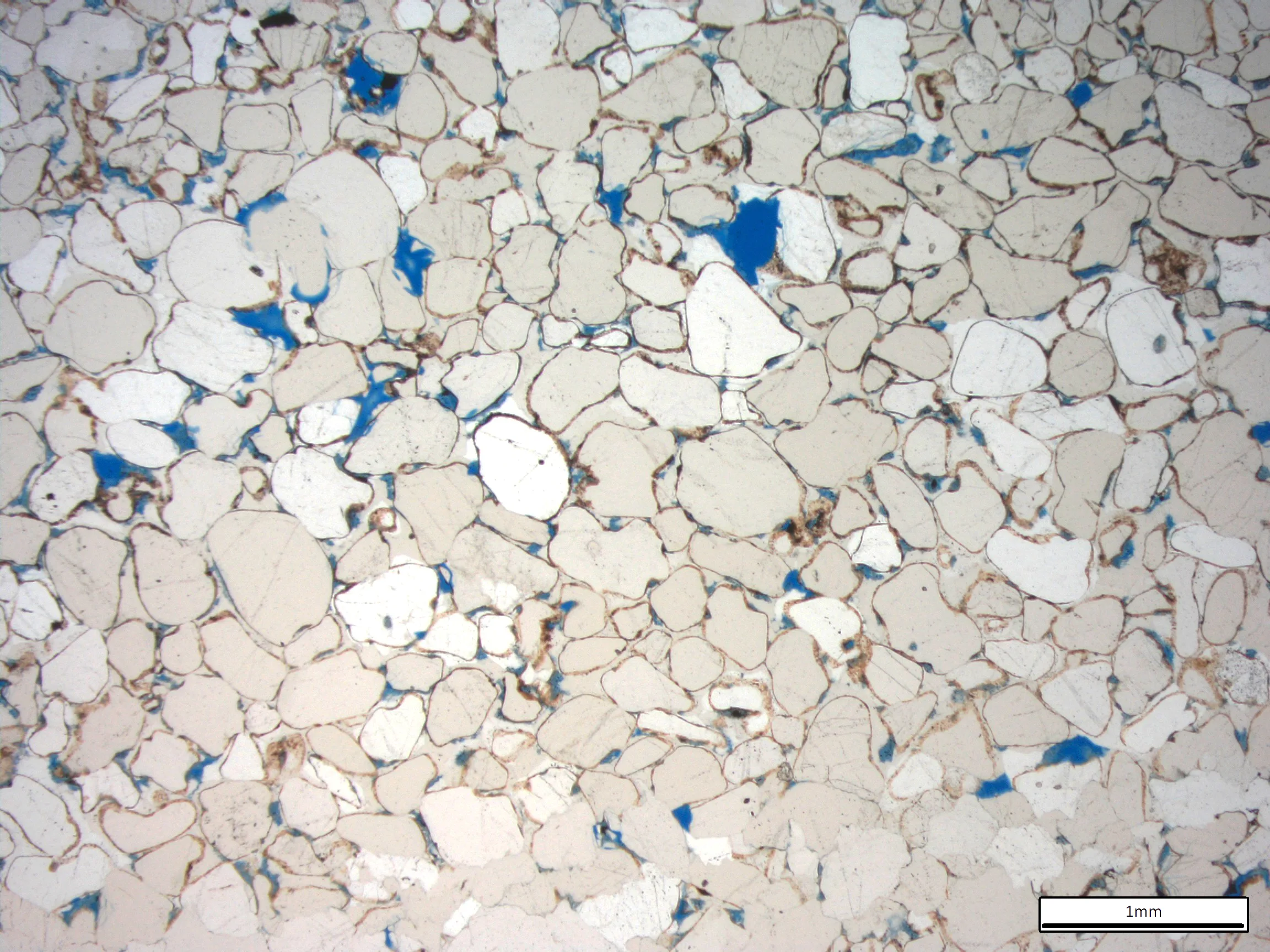
Field geologists use a ruler, hand lens or calibrated grain-size comparator for visible grains. Dry or wet sieving separates coarser material into size fractions. Sedimentation techniques and laser diffraction may be used for finer particles, subject to method-specific assumptions. In thin sections, apparent grain diameters depend on the position of the section through the grains, so two-dimensional measurements are not automatically equivalent to sieve diameters.
Grain Size Distribution and Sorting
A laboratory distribution reports the proportion of material in successive size intervals. D10, D50 and D60 represent diameters at 10%, 50% and 60% finer by mass when using a cumulative mass-percent curve. D50 is the median diameter, not necessarily the most frequent size. A well-sorted sediment has a relatively narrow distribution, while a poorly sorted sediment contains a broader range. Sorting in sedimentology must not be confused with the USCS engineering definition of well-graded soil.
For example, a sample with 10% gravel, 75% sand and 15% silt plus clay is dominated by sand but contains appreciable finer and coarser fractions. A formal mixture name requires an appropriate sediment-texture classification, such as the Folk or Shepard system, rather than a single Wentworth diameter.
Wentworth Versus USCS and ISO Particle Sizes
| Boundary | Wentworth | USCS | ISO 14688 |
|---|---|---|---|
| Gravel / sand | 2 mm | 4.75 mm | 2 mm |
| Sand / finer material | 0.0625 mm | 0.075 mm | 0.063 mm |
| Silt / clay-sized | 0.00390625 mm | Not defined by size alone | 0.002 mm |
The systems serve different purposes. USCS separates fine-grained soil behavior using plasticity criteria; a clay-sized grain need not be a clay mineral. ISO classification also considers properties beyond particle diameter. See the TAS diagram for an example of an unrelated classification based on chemical composition rather than grain size.
Frequently Asked Questions
What is medium sand?
Nominal diameters from 0.25 mm up to, but not including, 0.5 mm.
Why is coarse sediment represented by negative phi?
Diameters above 1 mm have a positive base-two logarithm, and phi is its negative.
Is clay-sized material always clay mineral?
No. Clay-sized describes diameter, whereas clay mineral identifies a mineral group.
Can one diameter describe an entire soil sample?
No. It can describe a particle or a specified percentile, but not the full size distribution.
Why do engineering and geological size limits differ?
They are separate conventions designed for different applications.
References
Wentworth, C. K. (1922). A scale of grade and class terms for clastic sediments. Journal of Geology, 30(5), 377–392.
Krumbein, W. C. (1934). Size frequency distributions of sediments. Journal of Sedimentary Petrology, 4, 65–77.
USGS — Sediment nomenclature and Wentworth size scale
USGS — Classification of sediment mixtures by gravel, sand, silt and clay ratios
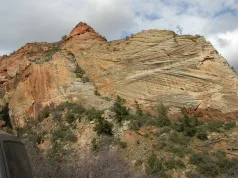
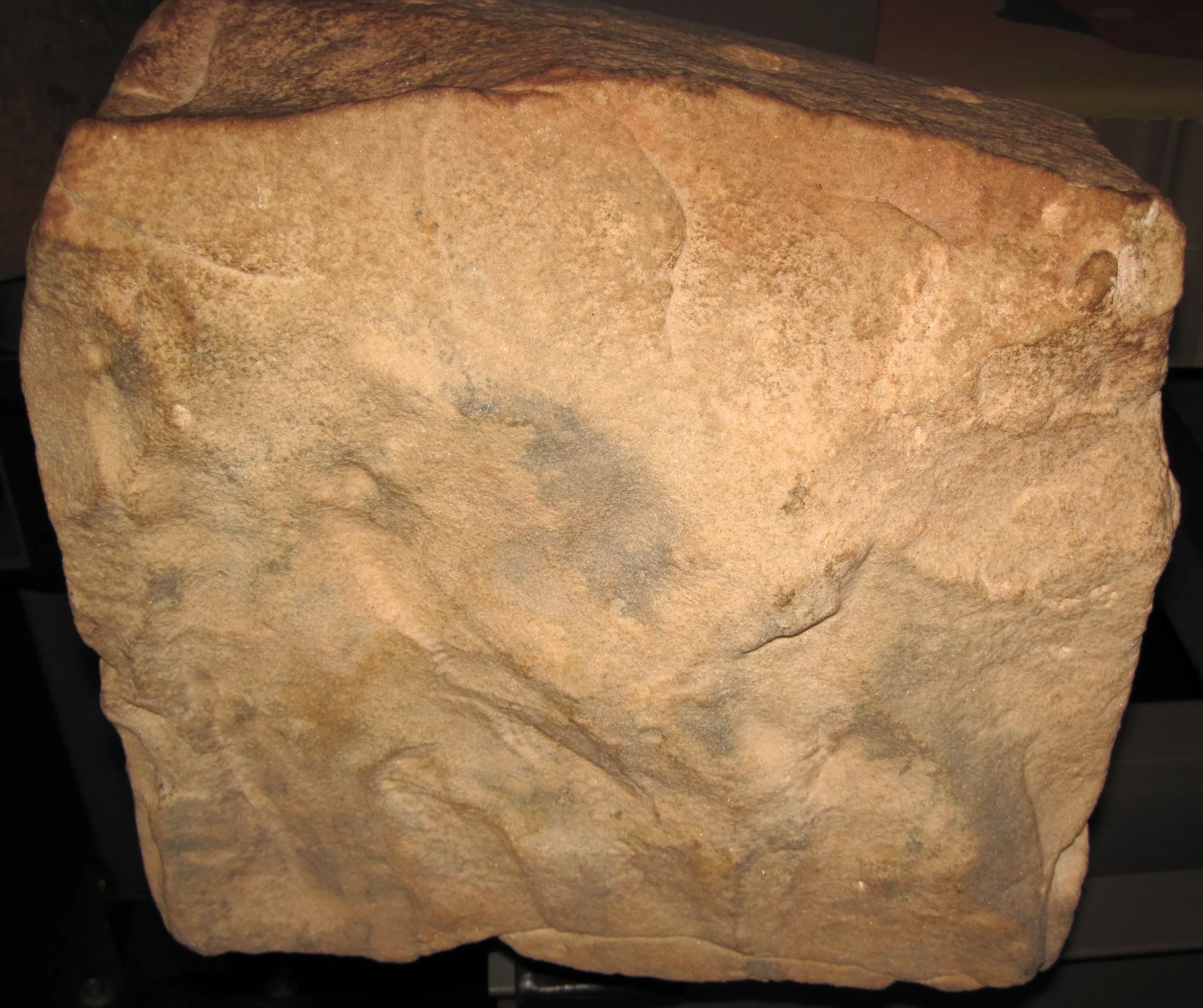
Featured image: quartz arenite from Hinckley Sandstone, Minnesota; James St. John, Wikimedia Commons, CC BY 2.0.