










Beneath the surface of our planet lies a secret world carved by time, water, and stone. Caves are among Earth’s most mysterious natural wonders — silent witnesses of geological history and shelters for life, art, and myth.
The word “cave” comes from the Latin caverna, meaning “hollow place.” But these are far more than empty spaces: they are dynamic systems shaped by the movement of water through rock, chemical reactions, and tectonic forces.
From Europe’s icy caverns to Southeast Asia’s limestone cathedrals, caves reveal how Earth’s landscapes evolve. Below is a journey through 10 of the most famous caves around the world, each with its own geological story, beauty, and mystery.
Mammoth Cave (USA)
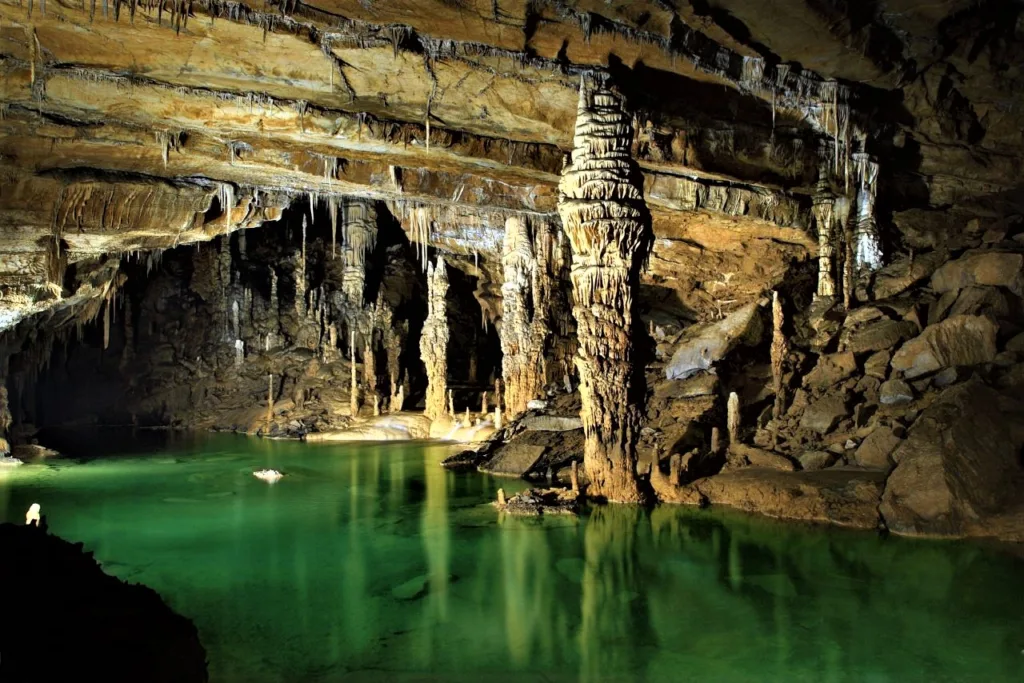
Located in Kentucky, Mammoth Cave holds the record as the world’s longest cave system, with over 680 kilometers (420 miles) of surveyed passages.
Formed in Mississippian-age limestone, it is a classic example of karst topography created by groundwater dissolution. The cave features massive chambers, narrow corridors, and ancient river channels.
Archaeological evidence suggests that Native Americans explored these passages over 5,000 years ago. Today, it is protected as a UNESCO World Heritage Site and part of the U.S. National Park System.
Geological type: Karst limestone cave
Highlight: The “Frozen Niagara” formation — a spectacular flowstone resembling a waterfall.
Caves of Aggtelek Karst and Slovak Karst (Hungary/Slovakia)
Straddling the border between northeastern Hungary and southern Slovakia, the Caves of the Aggtelek and Slovak Karst form one of the most spectacular underground landscapes in Europe.
This vast karst system includes more than 1,000 known caves carved into Triassic and Jurassic limestone, extending for over 55,000 hectares across both countries.
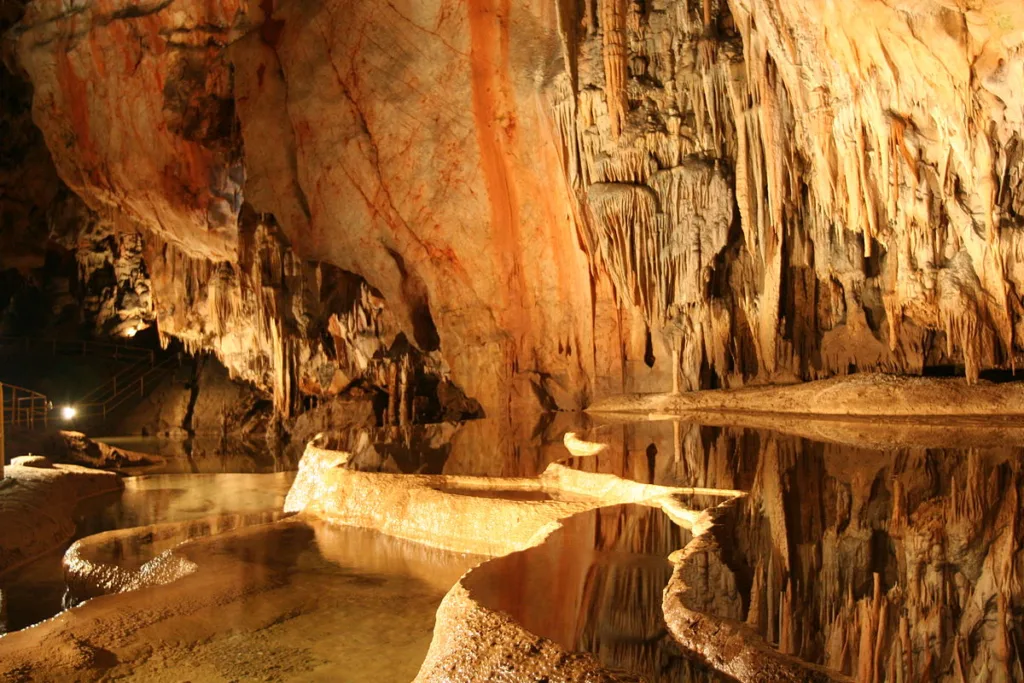
The caves display every imaginable karst feature — from giant domed chambers and dripstone columns to underground rivers and fragile soda straw stalactites. Among them, the Baradla Cave (in Hungary) and Domica Cave (in Slovakia) are the most famous, connected by a 25-kilometer-long passage system that crosses the national border underground.
Baradla–Domica Cave System features enormous halls like the “Concert Hall,” known for its exceptional acoustics, and richly decorated formations in shades of red and orange caused by iron oxide minerals.
This transboundary cave complex also contains prehistoric archaeological remains, evidence that humans explored and used the caves as early as 5000 BCE.
Recognized as a UNESCO World Heritage Site (since 1995), the Aggtelek–Slovak Karst region stands as a living laboratory for karst geomorphology, hydrology, and biodiversity.
Geological type: Karst limestone system (solutional caves and underground rivers)
Highlight: Baradla–Domica interconnected caves — one of Europe’s largest cross-border cave networks.
UNESCO status: World Heritage Site for its outstanding karst features and speleological importance.
Waitomo Glowworm Caves (New Zealand)
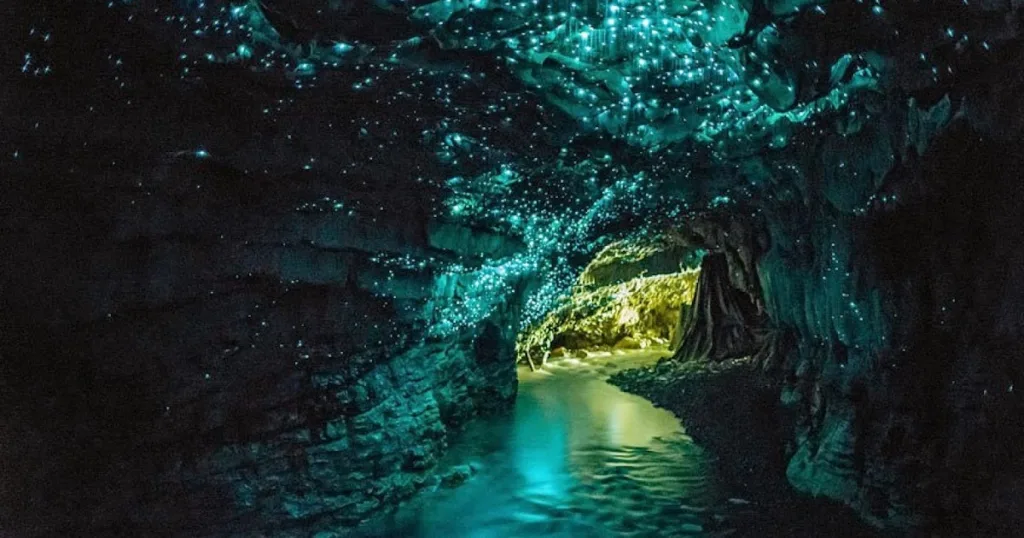
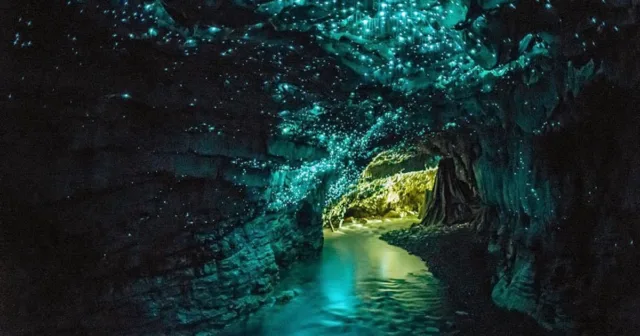
In the rolling green hills of New Zealand’s North Island lies the magical Waitomo Caves, famous for their glowing blue ceilings.
The light comes from the larvae of Arachnocampa luminosa, a bioluminescent fungus gnat native to New Zealand. Thousands of these tiny creatures illuminate the cave walls like a starlit sky.
The cave itself formed over millions of years as underground rivers dissolved Oligocene-era limestone. Stalactites, stalagmites, and flowing draperies decorate the chambers, while silent boats glide through the Glowworm Grotto — an experience unlike any other.
Geological type: Karst limestone
Unique feature: Bioluminescent glowworms creating natural light shows.
Son Doong Cave (Vietnam)
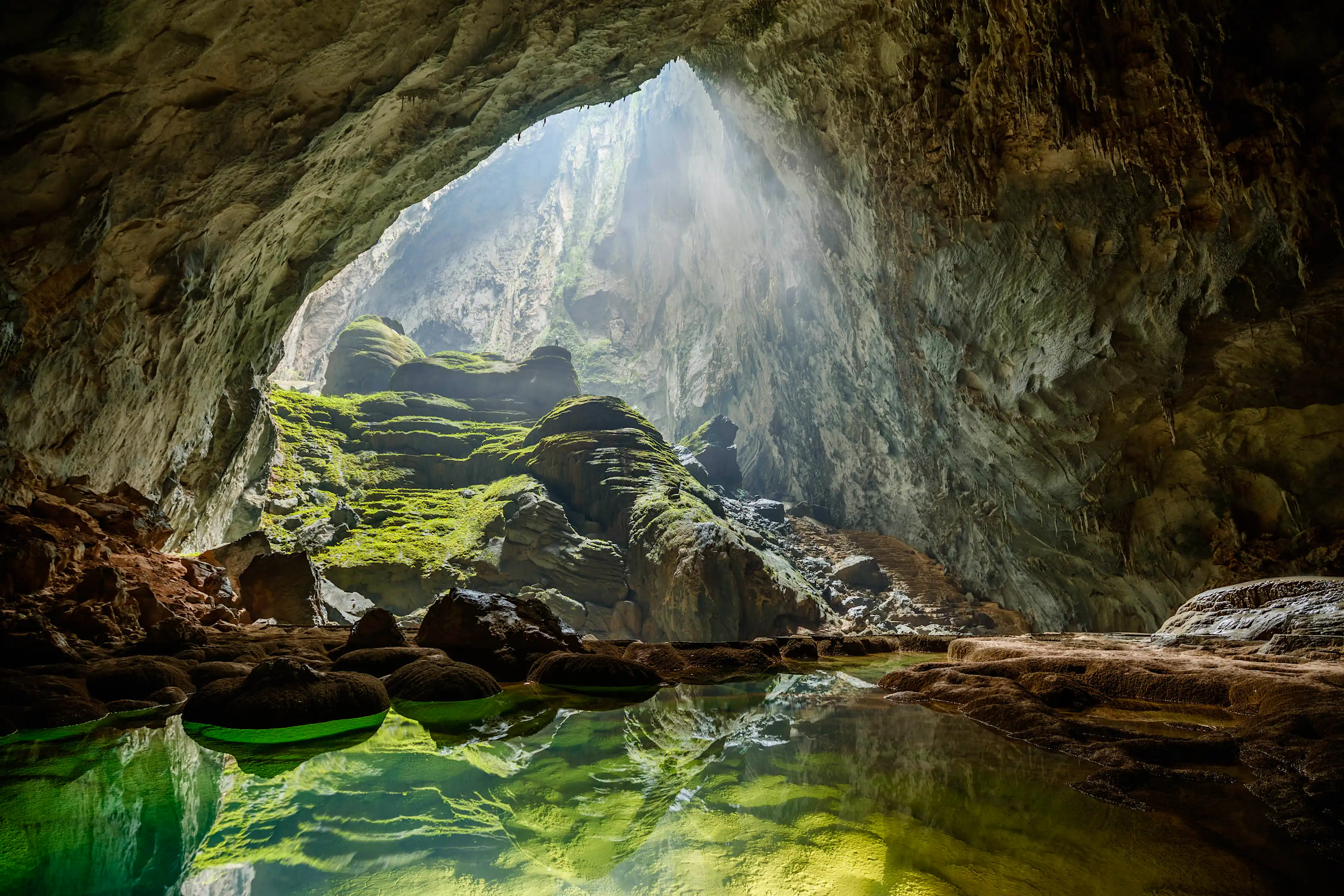
Hidden deep in Phong Nha–Ke Bang National Park, Son Doong Cave is the largest known cave on Earth. Measuring over 5 kilometers long and 200 meters high, it’s vast enough to fit a 40-story building inside.
Formed more than 2–3 million years ago, Son Doong was carved by the Rao Thuong River as it eroded through limestone beneath the Annamite Mountains. Inside, entire rainforests, underground rivers, and mist-filled skylights create a surreal ecosystem.
The cave’s enormous dolines (collapsed ceilings) let sunlight pour in, allowing trees to grow and clouds to form inside — a phenomenon unique in the world.
Geological type: Karst cave (limestone dissolution)
Interesting fact: Discovered accidentally in 1991 by local farmer Ho Khanh, explored fully only in 2009.
Caves of Agia Sofia (Greece)
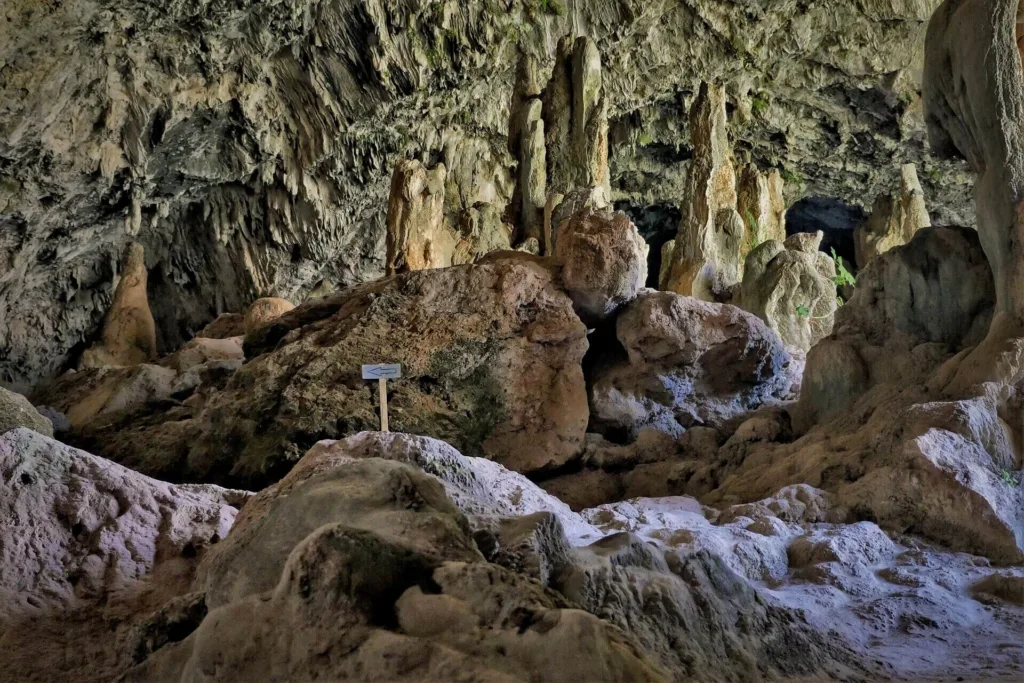
On the western side of Crete, near the village of Topolia, lies one of Greece’s most fascinating natural sanctuaries — the Caves of Agia Sofia.
Perched 285 meters above sea level, this enormous limestone chamber measures over 70 meters wide and 20 meters high, with stalactites and stalagmites shaped by thousands of years of dripping mineral-rich water.
Archaeological findings suggest that Agia Sofia Cave was used as a place of worship since ancient Minoan times. Pottery fragments and small shrines discovered inside reveal that early inhabitants of Crete viewed it as a sacred site, long before a small chapel was built at the entrance in the Byzantine period.
Today, sunlight streaming through the entrance illuminates its stone formations and the small church dedicated to Saint Sophia — blending geology, mythology, and spirituality in one setting.
Geological type: Limestone karst cave
Cultural note: Ancient Minoan religious site, now home to a chapel dedicated to Saint Sophia.
Carlsbad Caverns (USA)
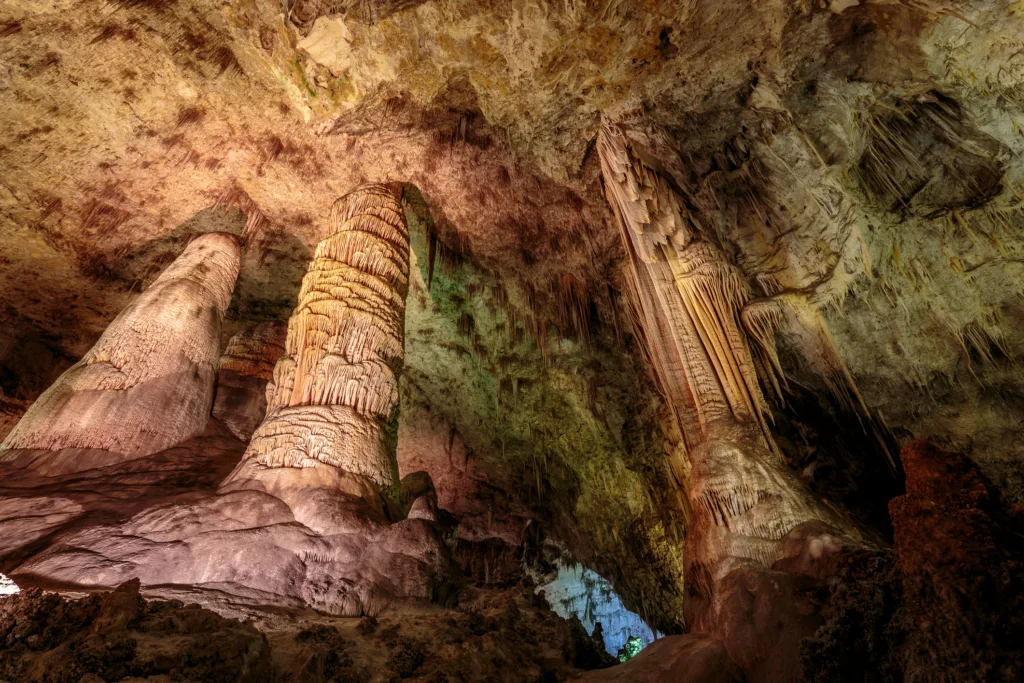
Deep in New Mexico’s Guadalupe Mountains, Carlsbad Caverns are a subterranean realm of colossal chambers and surreal formations.
Unlike most caves formed by carbonic acid dissolution, these were created by sulfuric acid — produced when hydrogen sulfide from petroleum deposits reacted with oxygen-rich groundwater. This rare process carved out vast halls like the Big Room, the largest chamber in North America.
Today, the cave houses unique ecosystems, including a famous colony of Mexican free-tailed bats that emerge in massive swarms each evening.
Geological type: Sulfuric acid dissolution cave
UNESCO status: World Heritage Site since 1995.
Jenolan Caves (Australia)
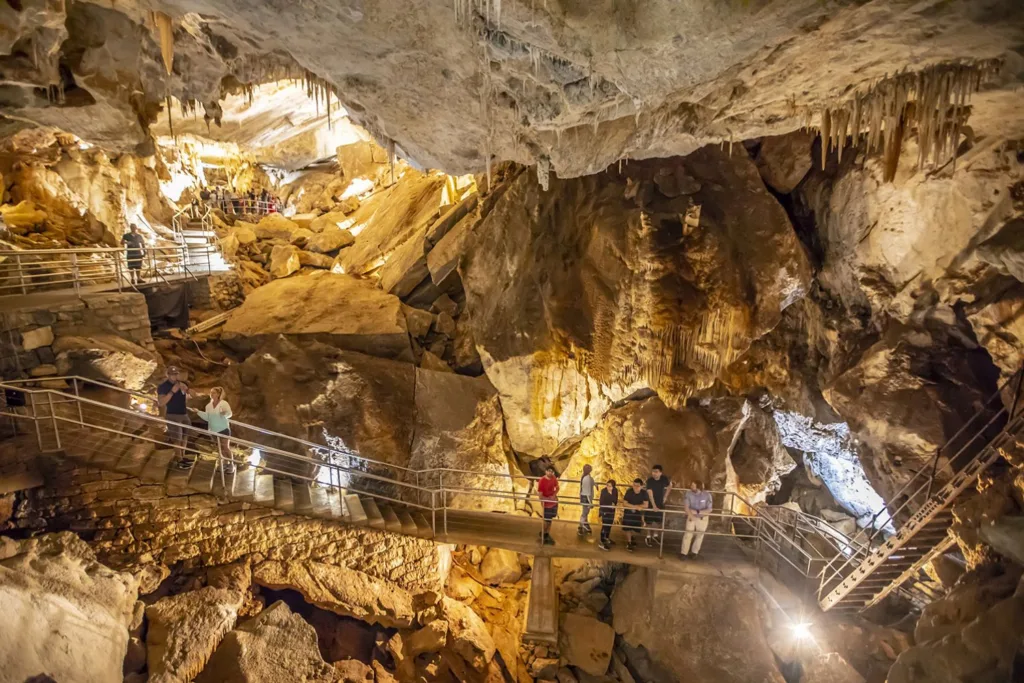
Among the oldest cave systems in the world, the Jenolan Caves of New South Wales date back more than 340 million years. Formed in Silurian limestone, these caves boast dazzling stalactites, stalagmites, and pure calcite crystals.
The Lucas Cave chamber, known as the Cathedral, reaches 54 meters high and offers incredible natural acoustics — sometimes used for concerts.
Jenolan Caves are also ecologically significant, home to rare troglobitic creatures that adapted to life in darkness.
Geological type: Karst limestone
Fun fact: Aboriginal people have known and revered these caves for thousands of years.
Postojna Cave (Slovenia)
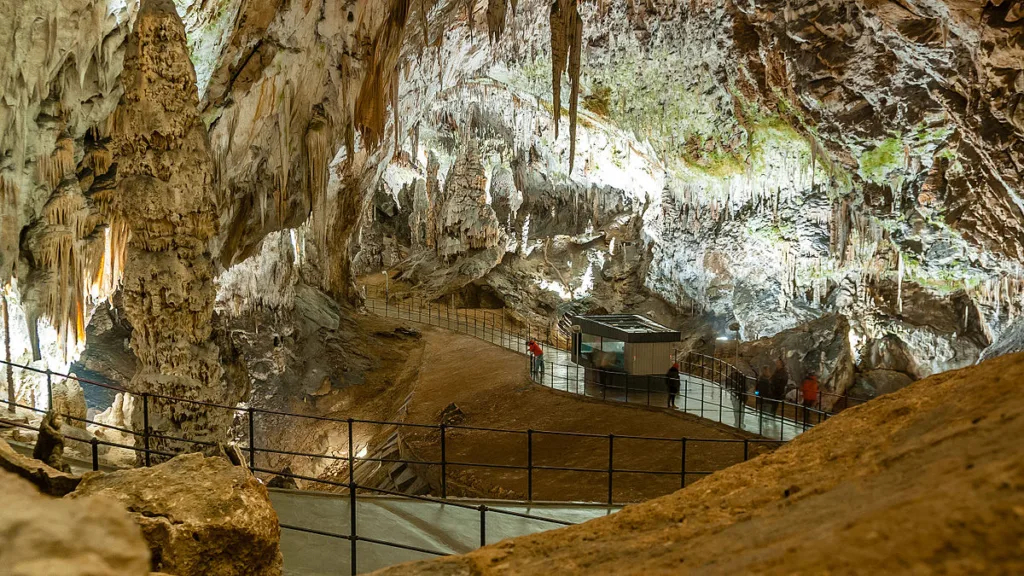
No list of the world’s famous caves is complete without Postojna Cave, one of Europe’s largest and most visited cave systems.
Stretching for 24 kilometers, this karst masterpiece formed from Pivka River’s steady erosion of limestone over millions of years.
What makes Postojna unique is its underground railway — built in 1872, making it the first of its kind. Visitors today ride electric trains through vast halls, galleries, and tunnels adorned with intricate stalactites and stalagmites.
The cave is also home to the olm (Proteus anguinus), a rare blind amphibian often called the “baby dragon” by locals. These pale, cave-dwelling creatures can live over 100 years and survive without food for years, perfectly adapted to total darkness.
Geological type: Karst cave system
Highlight: Underground railway and habitat of the rare olm amphibian.
UNESCO status: Tentative on the World Heritage list as part of the Classical Karst region.
Ellison’s Cave (USA)
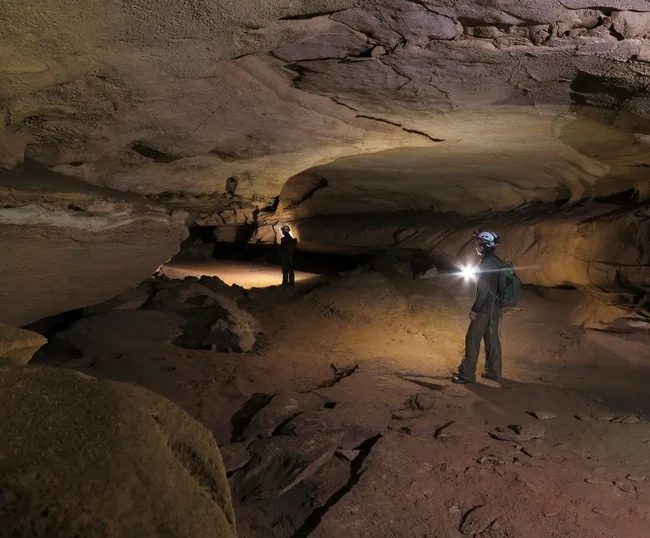
Deep within the Appalachian Plateau of Georgia, Ellison’s Cave stands as one of the most extreme vertical caves on the planet. It plunges to a depth of over 335 meters (1,063 feet), making it the deepest cave in the continental United States.
The cave is famous for two record-breaking vertical shafts — Fantastic Pit (179 meters) and Incredible Pit (136 meters) — both attracting experienced cavers from around the world.
Ellison’s Cave formed in Mississippian limestone through dissolution and collapse processes, typical of karst systems. Because of its extreme depth, the cave is dangerous and requires advanced rope techniques, making it a favorite challenge among professional speleologists.
Geological type: Karst limestone cave with deep vertical pits
Highlight: Fantastic Pit — one of the world’s deepest single-drop vertical shafts.
Cave of the Crystals (Mexico)
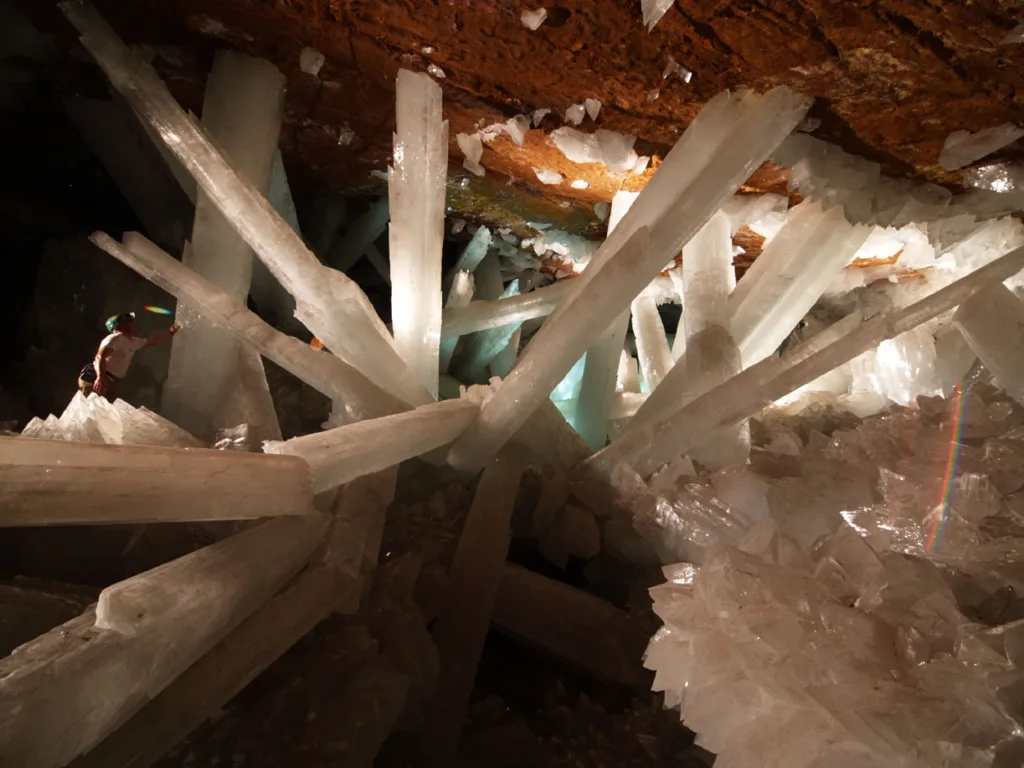
Located 300 meters below the surface in Naica, Chihuahua, the Cave of the Crystals (Cueva de los Cristales) is one of the most astonishing natural formations ever discovered.
This chamber contains enormous selenite (gypsum) crystals, some over 12 meters long and weighing 55 tons. Formed under extreme heat (≈58°C) and high humidity, the crystals grew slowly in mineral-rich water for hundreds of thousands of years.
Because of the lethal conditions, scientists can only enter wearing protective suits and breathing apparatus. The cave was discovered accidentally in 2000 during mining operations.
Geological type: Hydrothermal gypsum cave
Special note: The crystals’ transparency and size are unmatched anywhere on Earth.
The Science Behind Cave Formation
Caves are primarily shaped through chemical weathering and erosion, most often in soluble rocks such as limestone, dolomite, or gypsum.
The process begins when rainwater absorbs carbon dioxide from the atmosphere and soil, forming weak carbonic acid. This acid dissolves calcium carbonate in the rock, enlarging fractures over time.
Three main cave types exist:
- Solutional caves – Formed by acidic water dissolving limestone or dolomite.
- Lava tubes – Created by flowing molten lava leaving behind hollow tunnels (e.g., in Hawaii or Iceland).
- Sea caves – Carved by wave action in coastal cliffs, often in basalt or sandstone.
Over thousands or millions of years, these processes generate stunning underground landscapes filled with stalactites, stalagmites, flowstones, and columns — natural sculptures built one drop at a time.
Preservation and Threats
Caves are fragile ecosystems. They host specialized species — from blind fish to rare bats — that depend on constant humidity and temperature.
Unfortunately, many famous caves face threats from:
- Tourism and vandalism
- Pollution and groundwater contamination
- Climate change, which alters air circulation and humidity levels
Responsible tourism, scientific monitoring, and restricted access zones are essential for preserving these irreplaceable natural wonders.
Conclusion
From Son Doong’s rainforest chamber in Vietnam to the vertical depths of Ellison’s Cave in the United States, these 13 caves represent the full spectrum of Earth’s geological artistry.
Some are icy cathedrals or crystal palaces; others are sacred sanctuaries or the result of volcanic fury. Together, they reveal how water, pressure, time, and chemistry collaborate to sculpt the hidden wonders beneath our feet.
Every cave is a living record — a slow diary written in stone — chronicling the constant evolution of our planet.
Whether you stand before the glowing walls of Waitomo, ride the underground train of Postojna, or feel the humid air of Son Doong, you are witnessing millions of years of Earth’s silent creation.
Protecting these fragile environments is not just about preserving beauty — it’s about honoring the story of our planet itself.