













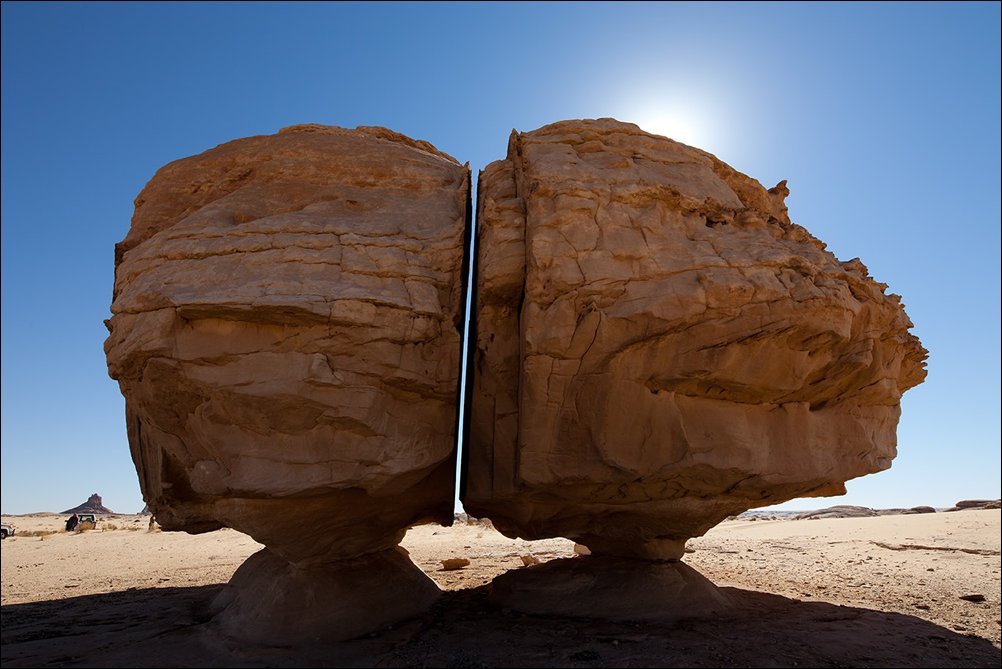
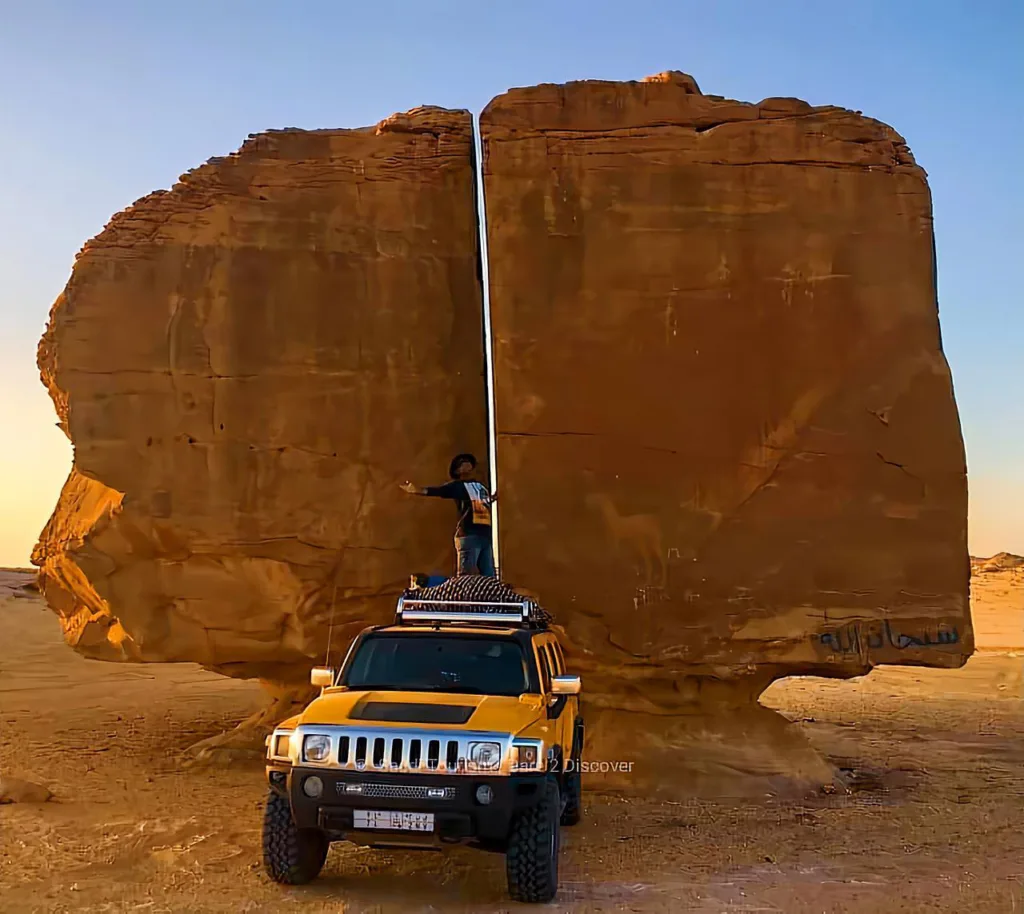
In the heart of the Saudi Arabian desert, near the ancient oasis of Tayma, stands a geological marvel that has puzzled both scientists and travelers for decades — Al Naslaa Rock.
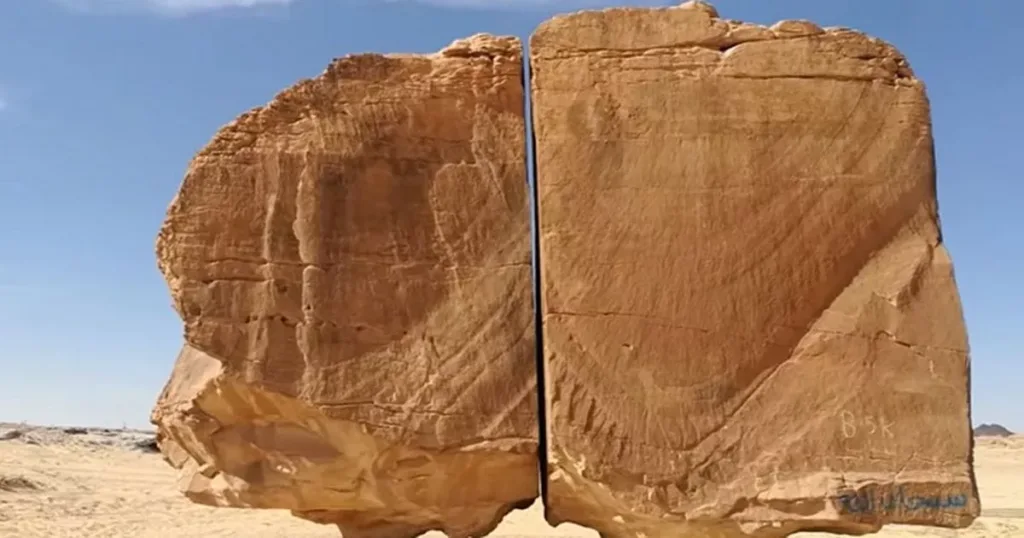
Two massive sandstone blocks balance delicately on small pedestals, divided by an almost laser-straight vertical cut so precise that it looks engineered rather than natural.
Standing before it, you can’t help but wonder — how could nature carve such perfection into stone?
A Geological Puzzle in the Desert
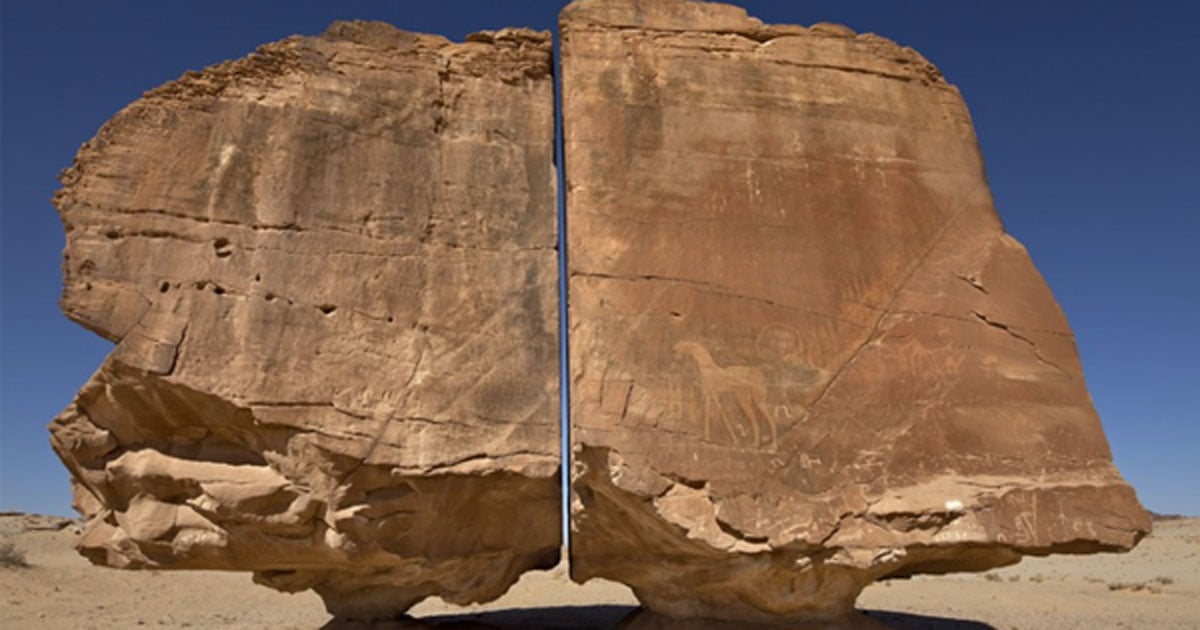
At first glance, Al Naslaa appears to be the work of human hands. The symmetry is uncanny: a clean vertical line, smooth on both sides, slicing a massive rock perfectly in half.
Yet geologists confirm that no human tools or markings are found on its surface.
Instead, the explanation likely lies in the desert’s long geological history — thousands of years of weathering, erosion, and tectonic movement shaping this unique formation.
The Formation of Al Naslaa Rock
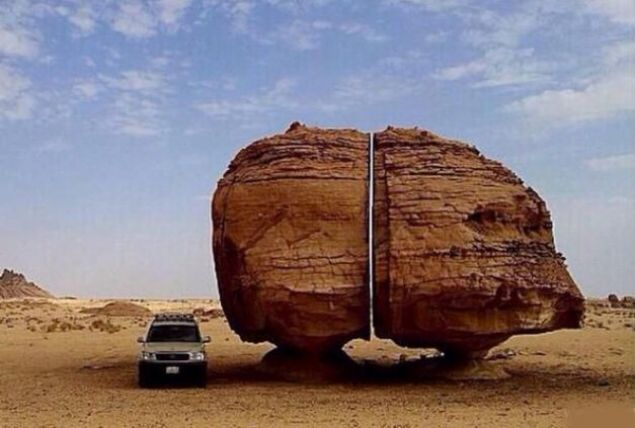
Over millions of years, the sandstone in this region was fractured by natural tectonic stress.
When tiny cracks form in rock, water seeps in and evaporates, allowing minerals to expand and contract with temperature changes.
This process — called frost wedging or thermal expansion — slowly widens cracks until entire blocks separate.
In Tayma’s desert environment, wind-blown sand acts like nature’s sandpaper, polishing the surfaces to smooth perfection.
The result is a breathtaking divide that looks engineered but is entirely natural — a testament to time and physics working together.
The Role of Wind and Erosion
The Arabian desert is a constant workshop of erosion.
During the day, temperatures soar above 40°C, expanding the rock; at night, the cold contracts it.
This endless cycle creates stress lines that gradually split formations apart.
Meanwhile, sand carried by strong winds continuously sculpts and refines the exposed surfaces.
In the case of Al Naslaa, these forces combined at the perfect angle — producing what may be one of the most visually precise natural splits on Earth.
The Mystery and Theories
Despite decades of observation, no single explanation satisfies everyone.
Some researchers point to ancient fault lines beneath the rock — small tectonic shifts that may have caused the clean fracture.
Others believe water erosion played a key role: when groundwater once flowed through the desert, it could have slowly dissolved a thin line of weaker sandstone.
Still, a few prefer the romantic notion that Al Naslaa might be a message from the Earth itself, a geological coincidence so perfect it blurs the line between art and science.
The Pedestals Beneath the Rocks
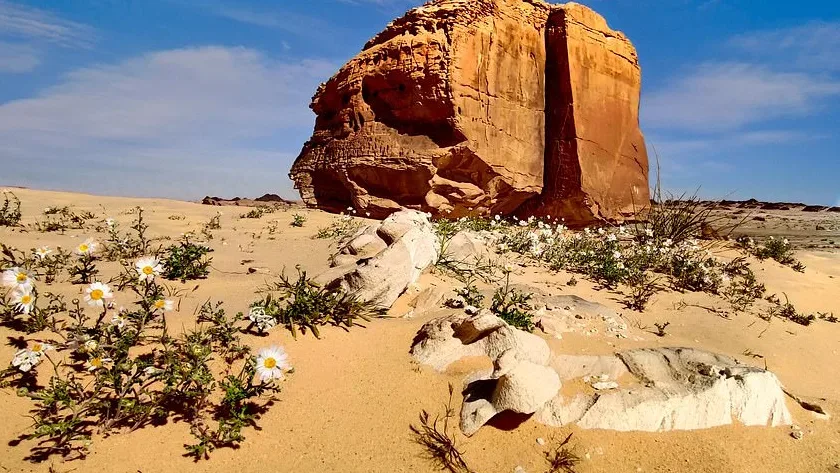
Another striking feature is the two small pedestals supporting each half.
These bases are made of a slightly harder layer of sandstone that resisted erosion better than the softer material around it.
As wind and sand removed the lower sediment, the harder bases remained, giving the illusion that the massive stones are floating above the desert floor.
This type of structure is known as a balanced rock formation — rare, but not entirely unique. What makes Al Naslaa exceptional is the combination of both balance and perfect division.
Human Presence and Historical Significance
Tayma has been inhabited for thousands of years, serving as a crossroads for ancient trade routes.
Near Al Naslaa, petroglyphs and inscriptions dating back to Bronze Age civilizations are carved into nearby stones.
It’s possible that early travelers also noticed the split and considered it sacred — a natural monument of divine symmetry in the endless desert.
Even today, locals regard Al Naslaa with awe, and visitors from around the world come to photograph its surreal beauty.
Scientific Interest and Preservation
Geologists continue to monitor the site, using 3D laser scans and drone mapping to study how erosion progresses.
Understanding how Al Naslaa formed could help researchers interpret similar sandstone structures across arid regions of the world.
Saudi Arabia has begun developing Tayma as a cultural heritage destination, ensuring that Al Naslaa remains protected for future generations.
A Symbol of Nature’s Precision
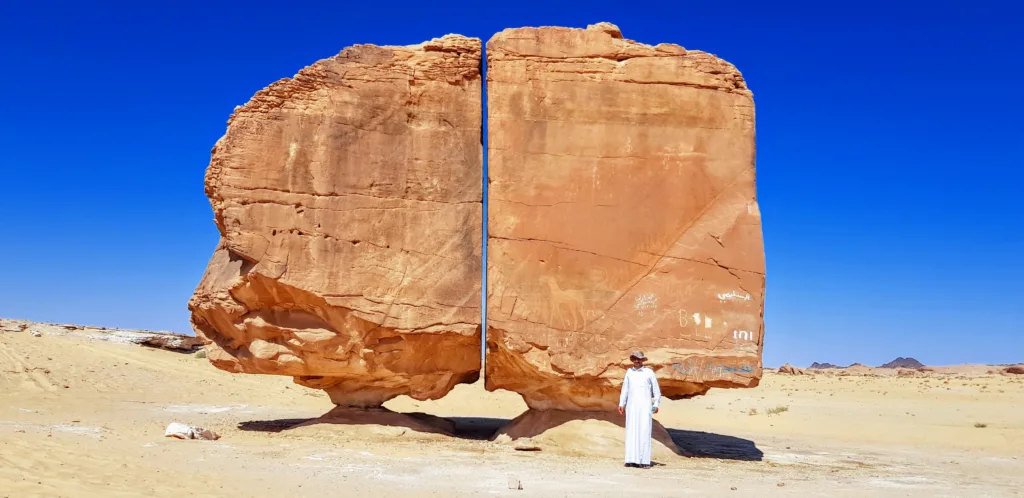
Al Naslaa Rock is more than just a split boulder — it’s a reminder of how geological forces can mimic human design.
Its beauty lies in the balance between chaos and order, between destruction and creation.
Like a natural sculpture carved over millennia, it shows that nature’s patience can achieve what even our most advanced tools sometimes cannot.
When you stand before it, in the quiet expanse of the desert, it’s hard not to feel a sense of wonder — a moment where science and mystery coexist perfectly, just like the two halves of Al Naslaa Rock itself.
Comparisons with Other Geological Wonders
While Al Naslaa Rock is unique in its precision and symmetry, it shares fascinating similarities with other natural formations around the world that reveal how Earth’s forces create beauty through balance and erosion.
1. The Balanced Rock, Arches National Park (USA)
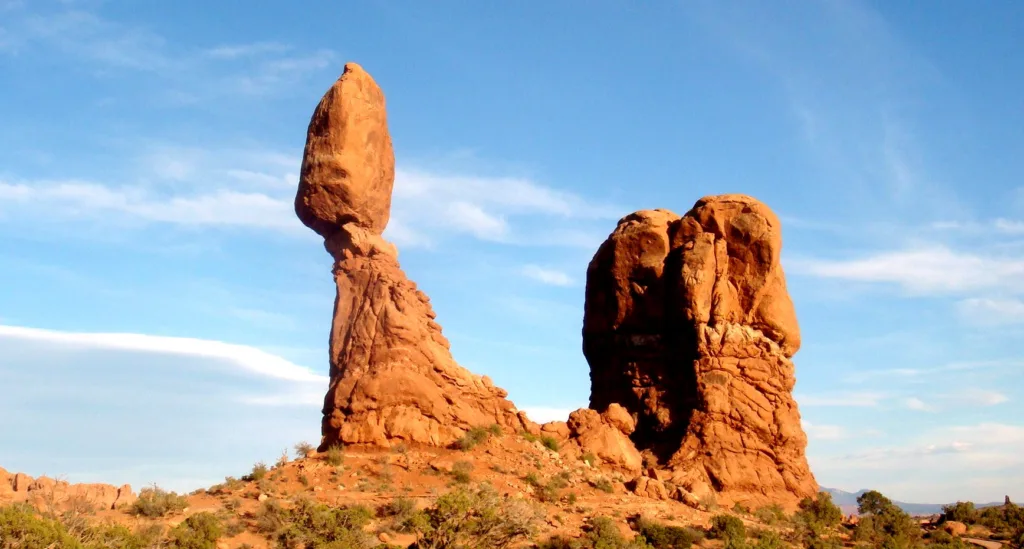
Perhaps the most famous comparison is Balanced Rock in Utah’s Arches National Park.
Like Al Naslaa, it features a massive sandstone boulder perched on a slender pedestal.
However, its shape was formed mainly through frost wedging and differential erosion, not a clean split.
Where Al Naslaa impresses with precision, Balanced Rock amazes with its fragility — both testaments to geological patience.
2. Split Apple Rock, New Zealand
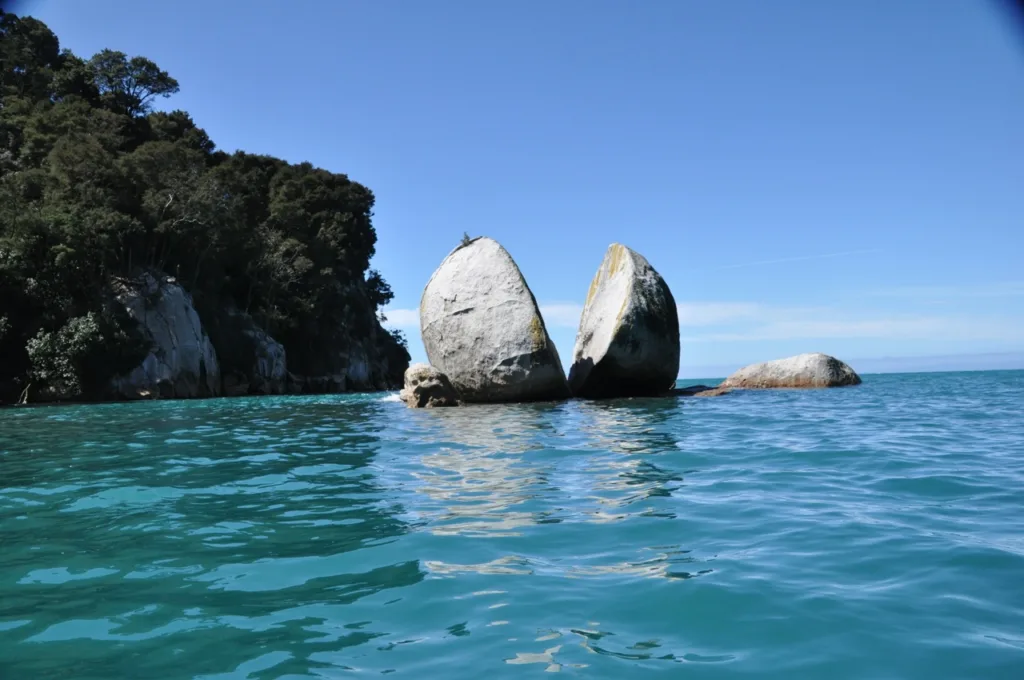
Located off the coast of New Zealand’s South Island, Split Apple Rock bears a striking resemblance to Al Naslaa’s divided symmetry.
It is a large granite boulder naturally split down the middle, believed to have separated during freeze–thaw cycles.
Unlike Al Naslaa’s sandstone structure, this one formed in a marine environment, where saltwater and temperature shifts played the key role.
3. The Mushroom Rocks of Egypt’s White Desert
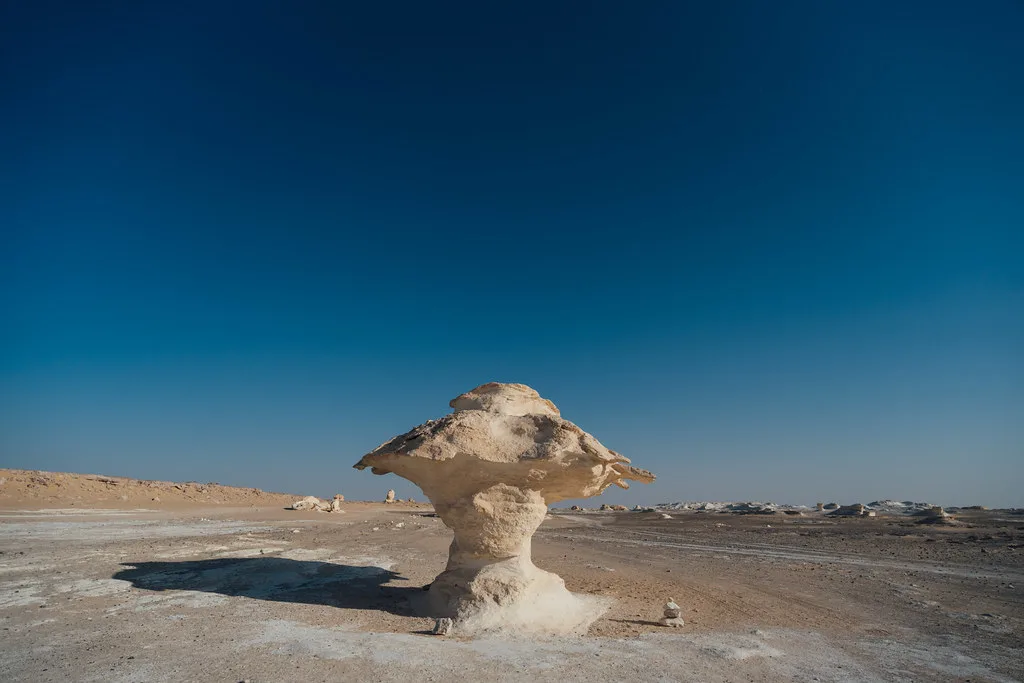
In Egypt’s White Desert (Sahara el Beyda), wind-blown chalk formations sculpted into mushroom shapes echo Al Naslaa’s balance and erosion-driven beauty.
These formations reveal how arid climates and wind abrasion continuously reshape sedimentary rock over time — similar processes that shaped the Saudi Arabian wonder.
4. The Pedestal Rocks of Cappadocia, Turkey

Cappadocia’s “fairy chimneys” were carved by volcanic tuff erosion and capped by harder basalt layers that protect the cones beneath.
While visually distinct, both formations — Cappadocia and Al Naslaa — demonstrate how rock hardness differences control erosion speed, creating balanced shapes and surprising stability in extreme environments.
5. The Devil’s Marbles, Australia
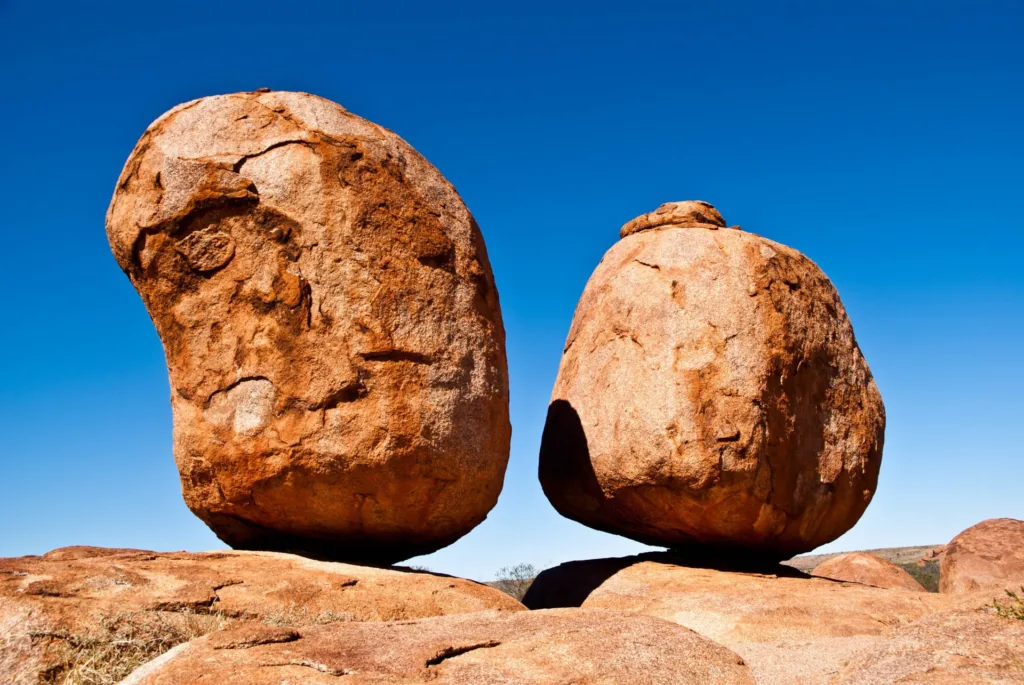
The Devil’s Marbles (Karlu Karlu) in Australia’s Northern Territory are giant granite boulders that have split naturally along joints — a process similar to Al Naslaa’s fracture.
Here, thermal expansion and contraction have slowly separated rocks into rounded halves over millions of years.
Both formations remind us that geology often repeats itself in stunningly different landscapes.
Across continents, these formations tell the same story — time, pressure, and patience can create perfect symmetry without human hands.
From Utah to Saudi Arabia, from New Zealand to Turkey, nature reveals its ability to sculpt stone with artistry that rivals technology.
Each of these wonders, like Al Naslaa, stands as proof that Earth itself is the ultimate sculptor, shaping masterpieces from chaos through slow, persistent change.
10. FAQs – Al Naslaa Rock
1. Where is Al Naslaa Rock located?
In the Tayma Oasis region of northwestern Saudi Arabia, approximately 220 km southeast of Tabuk.
2. How old is the formation?
The sandstone itself is millions of years old; the split likely developed gradually within the last several thousand years.
3. Is the split man-made?
No. Studies show no tool marks — it’s a natural fracture caused by erosion and tectonic stress.
4. Why are the rocks balanced on small bases?
Differential erosion left behind harder sandstone pedestals that now support the boulders.
5. Can tourists visit Al Naslaa Rock?
Yes. It’s accessible by road from Tayma, and visitors can explore the surrounding desert and ancient petroglyphs.
Visiting Al Naslaa Rock
A trip to Al Naslaa Rock is one of the most memorable geological experiences in Saudi Arabia.
Located near Tayma, in the Tabuk Province, the site is easily accessible by paved road and offers a rare chance to witness one of Earth’s most precise natural formations up close.
?️ How to Get There
- By Car: The rock lies roughly 220 km southeast of Tabuk and about 7 km south of Tayma town.
From Tabuk, follow Route 375 and then Route 70 toward Tayma. The drive takes about 2.5 hours through scenic desert terrain. - GPS Coordinates: 27.6413° N, 38.6195° E
- Parking: There’s an open desert parking area near the formation, suitable for small vehicles and tour buses.
?️ Best Time to Visit
The desert climate can be extreme, so the best time to visit is:
- October to March: Mild weather, clear skies, and ideal lighting for photography.
- Sunrise or Sunset: During golden hours, sunlight highlights the rock’s warm sandstone hues and sharp shadow between the two halves — creating spectacular photos.
? Tip: Bring a hat, sunscreen, and water — there are no facilities on-site.
? Photography Tips
- Use a wide-angle lens to capture both halves and their pedestals.
- A drone provides the best aerial perspective of the clean central split.
- Try low sunlight angles (morning/evening) to emphasize the texture and symmetry.
- Avoid standing directly between the two halves — erosion over time makes the base sensitive.
?️ Nearby Attractions
If you’re exploring the region, consider visiting:
- Tayma Archaeological Site: Ancient oasis town with Nabatean and Bronze Age ruins.
- Haddaj Well: One of Arabia’s oldest wells, once vital for desert caravans.
- Al Nafud Desert: Expansive red dunes perfect for off-road exploration and stargazing.
These sites reveal how geology and human history intertwine — from shifting sands to ancient civilizations that thrived around desert springs.
? Travel Experience
Standing beside Al Naslaa, surrounded by silence and golden sand, you feel as if time has stopped.
The air is still, the rock’s divide perfectly lit — and in that moment, you realize you’re looking at a masterpiece sculpted not by man, but by millions of years of wind and stone.
It’s more than a sightseeing stop; it’s a reminder of nature’s slow precision — and a humbling experience that connects science, art, and the deep time of Earth itself.