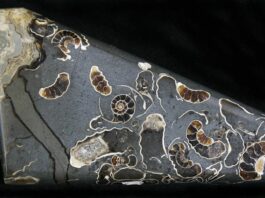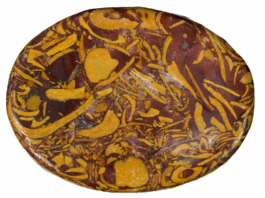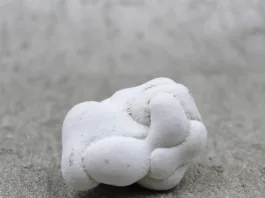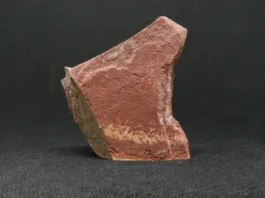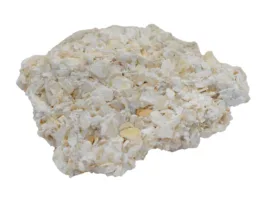


Shale is a laminated or fissile clastic sedimentary rock that composed of predominance of silt and clay other minerals , especially quartz and calcite. Characteristic properties of shale is breaks along thin laminae or parallel layering or bedding called fissility. It is most abundant sedimentary rock. The composition (silt and clay) of shale in a category of sedimentary rocks known as mudstone. Difference between shale to mudstone, It is fissile and laminated seen. Shale rock readily into thin pieces along the laminations.
Origin: Detrital/Clastic
Colour: Black, Grey
Group: Clastic Sedimentary Rock
Texture: Clastic; Very fine-grained (< 0.004 mm) Silty shale . Clay shale . Sandy shale
Mineralogical Composition: Feldspathic Shale, Quartzose Shale, Micaceous Shale
Minerals: Clay minerals, Quartz
Cementing Materials. Calcareous shale . Ferruginous shale. Siliceous shale
Depositional Environment Flood Plain, Lake (away from shore), Mid-continental Shelf, Delta, Tidal Flat, Lagoon, or Deep Marine
Contents
Shale Classification
Shales are fissile clastic sedimentary rocks formed from transportation, deposition and compaction of detrital materials of silt and clay. Fissility of the clay is its main distinguishing characteristic from other sedimentary rocks. Fissility is defined as the property of a rock to split easily along thin closely spaced (< 10mm approximately) parallel layers. This fissility factor is highlighted in that shows classification of sediments and sedimentary rocks based on sizes of fragments.
Classification based on texture
Shales characteristically contain fine-grained silt and clay particles (< 0.063mm). They are therefore classified as silty shale or clay shale, depending on whether silts or clays dominate in the constituents of the rock. Silty shale and clay shale may collectively be called argillaceous shales. Occasionally, shales may also contain appreciable amounts of sands, in which case they may be called sandy shale or arenaceous shale.
Classification based on mineralogical composition
Shales may be classified as quartzose, feldspathic or micaceous shale depending on the predominance of the minerals quartz, feldspar or mica, respectively, in the rock after appropriate XRD analysis (Pettijohn, 1957).
Classification based on type of cementation/cementing materials.
Shales like other sedimentary rocks are cemented by some minerals or elements after deposition and compaction. The dominant type of cementing material may be used in the classification of the shale since this may affect the properties or performance of the shale when used as an engineering material. The common cementing materials are silica, iron oxide and calcite or lime. Accordingly, shales may be classified as siliceous, ferruginous or calcareous (sometimes also called limy), respectively.
Classification based on depositional environment
The sedimentary environment of any sedimentary rock (including shale) is a natural geographical entity in which sediments are accumulated and later changed to rock (Reineck and Singh, 1980). Three depositional sedimentary environments are recognized, namely, continental, transitional or marginal and marine. Each depositional environment has various subdivisions. Shales are generally deposited in lacustrine (continental), deltaic (transitional) and marine depositional environments and may correspondingly be classified as such; that is, lacustrine, deltaic and marine shales (Compton, 1977; Boggs, 1995). Lacustrine deposits are characterized by mixture of clay, silt and sands; inorganic carbonate precipitates; and various fresh water invertebrate organisms including bivalves, ostracods, gastropods, diatoms and various plant deposits. Most lake deposits are less than 10m thick. Deltaic deposits are generally paralic (consisting of orderly sequences of shales and sandstones formed as a result of alternating marine transgressions and regressions). They are also characterized by shallow depth and concentration of kaolinite/illite/montmorillonite clay minerals. Deposits of marine environment are characterized by homogenous rock sequences (nonparalic), great depth, oxygen deficiency, and concentration of illite/montmorillonite clay minerals. Shales of marine depositional environment are generally darker in colour and richer in marine planktonic fossils than shales deposited in lacustrine and deltaic environments.
Classification based on organic matter content
Shales may be classified as carbonaceous or bituminous on the basis of their organic matter content (Krumbein and Sloss, 1963). The organic matter content of carbonaceous and bituminous shales are generally above 10%. The organic matter induces black or grey colour to the shales. The black colour of some shales may also be due to presence of iron sulphide. When the dominant organic matter content is from plant fragments such as pollen grains, stems and leaves, the shale is classified as carbonaceous, and the depositional environment is usually continental (lacustrine) or transitional (deltaic or lagoon). When the dominant organic matter content in the shale is from animal fragments such as fossils, the shale is classified as bituminous and its depositional environment is usually deltaic or marine. Both carbonaceous and bituminous shales are important source rocks for generation of petroleum oil and gas depending on their amount / type of kerogen content. Kerogen is that Mud Shale when laminated
Shale Composition
Shales are composed of silt, clay minerals and quartz grains. Generally typically crey color. In some cases the color of the rock is different. A minor constituents alters the color of the rock. Black shale result presenced of greater than one percent carbonaceous material and indicates a reducing environment.Red, brown and green colors are indicative of ferric oxide (hematite – reds), iron hydroxide (goethite – browns and limonite – yellow), or micaceous minerals (chlorite, biotite and illite – greens).
Clay Minerals are major component of shale and other similar rocks. The clay minerals represented are mostly kaolinite, montmorillonite and illite. Clay minerals of Late Tertiary mudstones are expandable smectites whereas in older rocks especially in mid- to early Paleozoic shales illites predominate. The transformation of smectite to illite produces silica, sodium, calcium, magnesium, iron and water. These released elements form authigenic quartz, chert, calcite, dolomite, ankerite, hematite and albite, all trace to minor (except quartz) minerals found in shales and other mudrocks
Organic matter
Very important component carbonaceous material in the shale rocks. This is the organic material that usually occurring in the rocks as kerogen (a mixture of organic compounds with high molecular weight). Although kerogen does not form more than about 1% of all the shales, the vast majority of kerogen is in mudstones. Shales that are rich in organic matter (>5%) are known as black shales. Black color is given to these rocks by organic matter. Organic matter should be decomposed in normal conditions by bacteria, but high productivity, rapid deposition and burial or lack of oxygen may preserve it. Pyrite is a common sulfide mineral in black shales. Organic matter and pyrite occur together in the same rock because both need oxygen-free conditions for their formation.
Some shales especially rich in organic matter. This type rock name is Oil Shale. Oil shale may be used as a fossil fuel, although it is relatively “dirty” fuel because it usually contains lots of unwanted (not burning) minerals.
Shales and mudrocks contain roughly 95 percent of the organic matter in all sedimentary rocks. However, this amounts to less than one percent by mass in an average shale. Black shales, which form in anoxic conditions, contain reduced free carbon along with ferrous iron (Fe2+) and sulfur (S2−). Pyrite and amorphous iron sulfide along with carbon produce the black coloration.
Shale Formation
Shale formation is fine partiles that can remain suspended in water long afrer the larger particles of sand have deposited. Shales are typically deposited in very slow moving water and are often found in lakes and lagoonal deposits, in river deltas, on floodplains and offshore from beach sands. They can also be deposited in sedimentary basins and on the continental shelf, in relatively deep, quiet water.
‘Black shales’ are dark, as a result of being especially rich in unoxidized carbon. Common in some Paleozoic and Mesozoic strata, black shales were deposited in anoxic, reducing environments, such as in stagnant water columns. Some black shales contain abundant heavy metals such as molybdenum, uranium, vanadium, and zinc.
Fossils, animal tracks/burrows and even raindrop impact craters are sometimes preserved on shale bedding surfaces. Shales may also contain concretions consisting of pyrite, apatite, or various carbonate minerals.
Shales that are subject to heat and pressure of metamorphism alter into a hard, fissile, metamorphic rock known as slate. With continued increase in metamorphic grade the sequence is phyllite, then schist and finally gneiss.
Diagenesis and hydrocarbons
The process of illitization (smectite is transformed to illite) is a major change that takes place in mudstones during the diagenesis. Illitization consumes potassium (provided usually by detrital K-feldspar) and liberates iron, magnesium and calcium, which can be used by the other forming minerals like chlorite and calcite. The temperature range of illitization is about 50-100°C3. Kaolinite content also decreases with increased burial depth. Kaolinite forms in hot and humid climate. The drier temperate climate tends to favor smectite. The reason is that lots of precipitation washes soluble ions out of the rock, while drier climate does not accomplish this task so effectively. Kaolinite is favored in humid climate because it contains only aluminum in addition to silica and water. Aluminum is highly residual while the constituents of smectite (magnesium and calcium, in addition to aluminum and iron) get carried away more easily.
Another major and economically very important process that takes place during diagenesis (sometimes this stage is referred to as catagenesis) is the maturation of kerogen into hydrocarbons. Kerogen is a waxy substance trapped in the rock, but it will mature into lighter hydrocarbons that are able to move out of the shale and migrate upwards. This process can take place at temperatures between about 50-150°C4 (oil window). This corresponds usually to 2-4 kilometers of burial depth. Lighter hydrocarbons liberated during the processes (known as catalytic and thermal cracking) are now free to migrate upwards. They can form exploitable oil and gas reservoirs if stopped by some sort of structural trap which may be an anticline or a fault boundary. The rock layer that stops the upward movement is in many cases another layer of shale because compacted shale is a tough barrier for liquids and gas. Shale can also form an aquiclude between water-bearing layers for the same reason — it does not allow water to flow easily through the rock (has low permeability).
This is also the reason why some of the formed hydrocarbons are not able to migrate out of the source rocks. This resource is still at least partly available to us if we drill holes and inject pressurized water into the rock which will cause it to fracture. This method is known as hydraulic fracturing (fracking). Cracks formed will be kept open by the sand-grains injected with the water and hydrocarbons trapped in the rocks will become recoverable. Fracturing actually is a common process in the crust. Mineral veins and dikes are cracks in the crust opened and sealed by a highly pressurized fluid or magma.
Importance Of Shales To The Petroleum Industry
According to Okeke (2003), the petroleum industry encompasses exploration, production, transportation, processing and marketing of petroleum oil and gas. The generation and accumulation of petroleum involve three stages, namely, generation in the source rocks, migration through geologic formations and storage in rock reservoirs. Petroleum source rocks are geologic formations that are capable of generating petroleum Coal, mudstone and shale are the recognized source rocks because of their organic carbon contents. These organic contents, depending on their nature, depositional environment, temperature, pressure, and depth of burial are capable of generating petroleum. Generally, petroleum gas is produced in high temperature/pressure, humic and plant dominant organic sediments such as coal while oil is produced from less humic, fossil dominant and moderate temperature/pressure marine shales. The source rocks have very low porosity and permeability, and thus the petroleum once formed is trapped in the rock but may move out due to hydrodynamic pressure conditions into a nearby porous rock from where it continues moving or migrating until it is trapped or stored in a suitable geologic reservoir formation. The petroleum oil or gas trapped in the reservoirs can then be exploited by drilling wells into the reservoirs. Such reservoirs include sandstones, limestones as well as fractured shales. Shales as impermeable rocks are also important seals in stratigraphic and structural traps. Shales are therefore important as source rocks, reservoir, as well as seal rocks. According to Roegiers (1993), about 90% of all formations drilled in the petroleum industry is shales and limestones. It is also known that shales can be problematic in the petroleum industry. Roegiers (1993) has it that about 75% of well drilling/completion problems are related to shale formations. Details of the positive as well as the negative aspects of shale to the petroleum industry are now reviewed.
Shale Characteristics and Properties
Here are different levels of definitions.
- soft, finely stratified sedimentary rock that formed from consolidated mud or clay and can be split easily into fragile slabs.
- a fissile rock that is formed by the consolidation of clay, mud, or silt, has a finely stratified or laminated structure, and is composed of minerals essentially unaltered since deposition.
- a rock of fissile or laminated structure formed by the consolidation of clay or argillaceous material.
None of these have anything to do with so-called “shale” oil & gas production. True shales, as above, are majorly clay minerals which are also defined as a size class (clay sized) and are commonly called gray shales. The hydrocarbon producing reservoirs are less than 50% clay minerals (sometimes much less), do meet the particle size definition and are organic rich. One of the most prolific “shales” in the US is the Woodford formation. It carries a very high level of organics and is typically about 30% clay minerals. The remainder is sand/clastic in most area. Other ‘shales’ are stronger in carbonates than clays.
Shale Uses
- Shale has many commercial uses. It is a source material in the ceramics industry to make brick, tile, and pottery. Shale used to make pottery and building materials requires little processing besides crushing and mixing with water.
- Shale is crushed and heated with limestone to make cement for the construction industry. Heating drives off water and breaks limestone into calcium oxide and carbon dioxide. Carbon dioxide is lost as a gas, leaving calcium oxide and clay, which hardens when mixed with water and allowed to dry.
- The petroleum industry uses fracking to extract oil and natural gas from oil shale. Fracking involves injection of liquid at high pressure into the rock to force out the organic molecules. Typically high temperatures and special solvents are needed to extract the hydrocarbons, leading to waste products that raise concerns about environmental impact.
Key Point
- Shale is the most common sedimentary rock, which accounts for about 70 percent of the Earth’s crust.
- Shale is a fine-grained rock made of compressed mud and clay.
- The defining characteristic of the shales is its fragility. In other words, shale is easily divided into thin layers.
- Black and gray shales are common, but the rock can appear in any color.
- Shale is commercially important. It is used in the construction of bricks, ceramics, tiles and Portland cement. Natural devil and oil can be removed from the oil shale.
- Rock can occur in the playas, rivers, basins and oceans.
- It is common to find limestone and sandstone lying near shale.
- Shale usually occurs on the leaves.
- Roughly 55% of all sedimentary rocks are shale.
- Some shales are probably high in calcium due to the fossils they contain.
- Shale with high alumina content is used in cement production.
- The shale with a high natural gas content has recently been used as an energy source.
- Quartz and other minerals are typically found in shale.
- Although the shale is normally gray, it may be black if it contains too much carbon material.
- Approximately 95% of the organic matter in the sedimentary rock is found in shale or mud.
- Shale is created by a process called compression.
- The shale exposed to extreme heat and pressure may vary in slate form.
- Once formed, the shale is usually released into lakes and rivers with slow-moving water.
- Clay is an important component in shale rocks.
A brief overview of rock names used to describe mudstones or rocks derived from them:
| Muddy rock | Description |
| Shale | A laminated and compacted rock. Clay should dominate over silt. |
| Claystone | Like shale but lacks its fine lamination or fissility. Clay should dominate over silt. |
| Clay rock | A synonym of claystone. |
| Argillite | A rather weakly defined rock type. It is a compact and indurated rock buried deeper than most mudrocks and can be considered to be a weakly metamorphosed mudstone. Argillite lacks the slaty cleavage and is not laminated as well as typical shale is. |
| Mudstone | An indurated mud lacking the fine lamination characteristic of shales. Mudstone has roughly equal proportions of clay and silt. “Mudstone” can be treated as a general term that includes all varieties of rocks that are mostly composed of compacted mud. |
| Siltstone | A mudstone in which the silt predominates over clay. |
| Mudrock | A synonym of mudstone. |
| Lutite | A synonym of mudstone although rarely used independently. Usually in combination with some modifier (calcilutite is a very fine-grained limestone). |
| Pelite | Another synonym of mudstone. May be used to describe unconsolidated fine-grained sediments. Is also used to decribe fine-grained carbonates just as lutite. |
| Marl | A calcareous mud. It is a mixture of clay, silt and carbonate grains in various proportions. May be consolidated but in this case it is often named marlstone. |
| Sarl | Similar to marl but contains siliceous biogenic grains instead of carbonate mud. |
| Smarl | A mixture of sarl and smarl. |
| Black shale | Black carbonaceous shale which owes its color to organic matter (>5%). It is rich in sulfide minerals and contains elevated concentrations of several metals (V, U, Ni, Cu). |
| Oil shale | A variety of shale rich in organic matter. It will yield hydrocarbons on distillation. |
| Alum shale | Similar to black shale but pyrite has partly decomposed forming sulfuric acid which reacted with the constituent minerals of the rock to form alum (hydrous potassium-aluminum sulfate). It is rich in several metals just as black shale and has been mined as a source of uranium. |
| Olistostrome | A chaotic mass of mud and larger clasts formed underwater as a gravity-driven mudslide. It lacks bedding. |
| Turbidite | A sediment or a rock deposited by a turbidity current. These deposits form underwater as a mixture of clay, silt and water sliding down the continental slope (in most cases). Turbidite is often composed of alternating silty and clayey layers. |
| Flysch | An old term nowadays largely replaced by turbidite. |
| Diamictite | Purely descriptive term used to describe any sedimentary rock containing larger clasts in a fine-grained matrix. Diamictite may be formed in many ways, but it seems to be a lithified glacial till in the majority of cases. |
| Tillite | A lithified poorly sorted (larger clasts in a muddy matrix) sediment deposited by a glacier. Tillite is a lithified till. |
| Slate | A fine-grained metamorphic rock that can be split into thin sheets (has slaty cleavage). Slate in the vast majority of cases is a metamorphosed shale/mudstone. |
| Metapelite | Any metamorphosed mudstone. Slate, phyllite, and various schists are common metapelites. |
| Phyllite | A metamorphic rock higher in grade than slate and lower than schist. It has a characteristic sheen on the cleavage surfaces given to it by platy mica and/or graphite crystals. |
References
- Bonewitz, R. (2012). Rocks and minerals. 2nd ed. London: DK Publishing.
- Okeke, O. C., & Okogbue, C. O. (2011). Shales: A review of their classifications, properties and importance to the petroleum industry. Global Journal of Geological Sciences, 9(1), 75-83.
- Helmenstine, Anne Marie, Ph.D. (2018, October 22). Shale Rock: Geology, Composition, Uses. Retrieved from https://www.thoughtco.com/shale-rock-4165848
- Wikipedia contributors. (2019, April 26). Shale. In Wikipedia, The Free Encyclopedia. Retrieved 02:01, May 9, 2019, from https://en.wikipedia.org/w/index.php?title=Shale&oldid=894256126