














Sedimentary Rocks
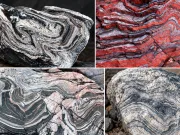
Sedimentary rocks are the record keepers of Earth’s surface processes: they form when sediments—whether fragments of older rock, organic remains or mineral precipitates—are deposited, compacted and cemented over time, often in water or by wind. From towering sandstone cliffs to smooth shale beds, from fossil-rich limestones to evaporite layers in dried-up lakes, each sedimentary rock type tells a story of environment, transport and transformation. Because they’re so tied to surface conditions—climate, sea level, source materials—and because their properties vary widely (grain size, sorting, cementation, matrix content), they matter a lot not just in geology but also in engineering and construction. When you’re on a building site, drilling a foundation, assessing slope stability or planning excavation, knowing whether you’re dealing with a brittle sandstone, a weak shale or a highly soluble evaporite can make the difference between disaster and success. In this category you’ll explore how sedimentary rocks form, how to distinguish major groups (clastic vs non-clastic), how to read their textures and features in the field or core, and why for geologists, engineers and all site professionals these rocks deserve careful attention.

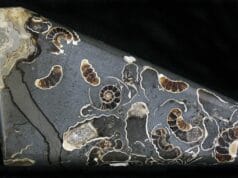
Fossiliferous Limestone
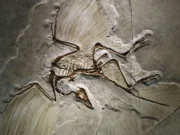
Fossiliferous limestone is a type of sedimentary rock that contains abundant fossils. It is formed through the accumulation and compression of organic remains, such...

Phosphorite
Phosphorite is a sedimentary rock that contains a high concentration of phosphate minerals. It is the primary source of phosphorus, an essential element for...

Coquina
Coquina is a sedimentary rock that is primarily composed of fragmented shell and coral debris. The name "coquina" is derived from the Spanish word...

Diatomite
Diatomite, also known as diatomaceous earth, is a naturally occurring, soft, siliceous sedimentary rock that is easily crumbled into a fine white to off-white...

Radiolarite
Radiolarite is a type of sedimentary rock that primarily consists of the microscopic remains of radiolarians, which are single-celled marine microorganisms belonging to the...

Arkose
Arkose is a type of sedimentary rock characterized by its high mineral content of feldspar, particularly orthoclase. It is often considered a type of...

Claystone
Claystone is a sedimentary rock composed primarily of clay-sized particles, which are minerals that are less than 0.004 millimeters in diameter. It belongs to...

Evaporites
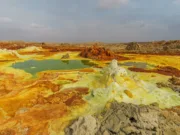
Evaporites are a type of sedimentary rock that forms through the evaporation of water, leaving behind dissolved minerals and salts. These rocks typically consist...

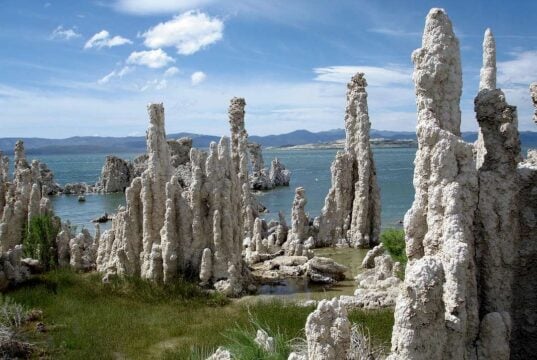
Travertine
Travertine is a type of sedimentary rock that is formed by the precipitation of carbonate minerals from groundwater. It is often found in and...

Septarian
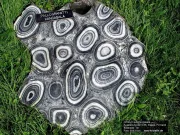
Septarian, also known as Septarian Nodule or Dragon Stone, is a distinctive type of sedimentary rock that is characterized by its unique, striking appearance....

Petoskey Stone
Petoskey Stone is a type of fossilized coral that holds significance and popularity, particularly in the state of Michigan, USA.
Origin: Petoskey Stone is...

Flint
Flint is a naturally occurring sedimentary rock composed primarily of microcrystalline quartz, or silicon dioxide (SiO2). It is renowned for its historical significance and...