

















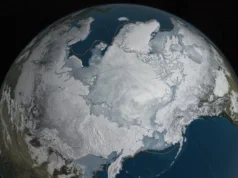
Historical Geology
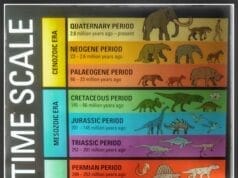
Historical geology is the branch of geology that focuses on Earth’s long and dramatic story, from the planet’s origins over 4.5 billion years ago to the diversity of life and landscapes we see today. It uses clues like rock layers, fossils, radiometric dating, and plate tectonics to piece together the sequence of events that shaped Earth’s surface.

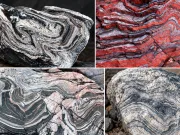
Age of the Earth and Earth’s Oldest Rock
How old is the Earth?Thanks to meteorites from space, rocks brought back by the Apollo astronauts from the Moon, and sundry other...
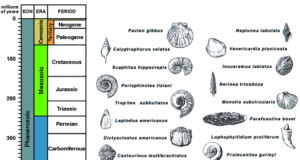
Index Fossils
Index fossils play a crucial role in the field of geology, aiding scientists in dating and correlating rocks. These fossils are valuable indicators of...
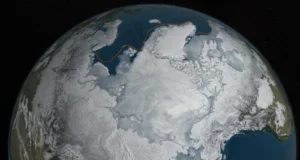
The Ice Age
The Ice Age, also known as the Pleistocene Epoch, was a period of geological time that lasted from about 2.6 million years ago to...

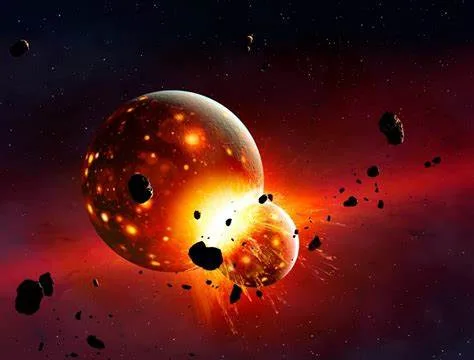
Formation of The Moon
The Moon, Earth's only natural satellite, has captivated human fascination for centuries and plays a crucial role in shaping our planet's dynamics.Characteristics of...
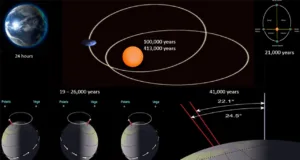
Milankovitch Cycles
Milankovitch cycles, also known as orbital or astronomical cycles, refer to the variations in Earth's orbit and axial tilt that occur over long periods...

Earth’s Early Atmosphere and Oceans
The Earth's early atmosphere and oceans play a crucial role in shaping the planet's evolutionary history and creating the conditions necessary for life to...
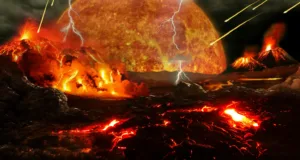
Formation of The Earth
In the vast expanse of the cosmos, our home, Earth, emerges as a remarkable celestial body, bearing the signature of a complex and awe-inspiring...

Greenhouse Gases in Geological History
Greenhouse gases are gases in Earth's atmosphere that trap heat. They allow sunlight to enter the atmosphere freely but prevent some of the heat...
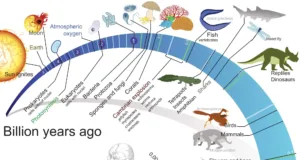
Evolution of Life
Evolution is a fundamental process that describes the changes in heritable traits of populations over successive generations. It is the mechanism by which life...

Paleoclimate Indicators
Paleoclimate indicators are various pieces of evidence from the past that scientists use to reconstruct past climatic conditions. These indicators help researchers understand natural...
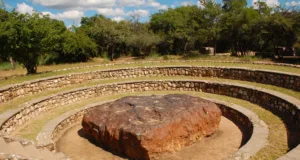
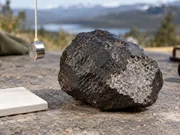
The Hoba Meteorite, Namibia: Largest Known Meteorite on Earth
The Hoba Meteorite, located near Grootfontein in Namibia, is the largest known meteorite on Earth, both by mass and volume. Discovered in 1920 by...
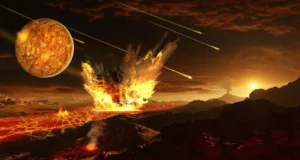
Origin of water on Earth
Water is a fundamental and indispensable component of Earth, playing a crucial role in the sustenance of life and the functioning of various geological...